Disclosure: As an Amazon Associate, reviewstook.com earns from qualifying purchases. Links to Amazon on this page are affiliate links; they cost you nothing extra.
A party speaker needs volume, bass and battery. Rated power numbers are often peak figures, so treat them as marketing and look at size and driver count.
This guide covers five party speakers sold on Amazon. It is built from product listings, not our own testing, so confirm power ratings and battery on each product page.
By the Reviewstook Editorial Team. Last updated: October 31, 2026.

In this guide
Quick Picks
| Speaker | Type | Best for |
|---|---|---|
| BassBloom Roar 1 | Outdoor party speaker | 60W with IPX6 protection |
| Soundcore Boom 2 | Outdoor Bluetooth speaker | 80W with big bass |
| 240W Party Bluetooth Speaker | Large party speaker | 240W peak with dual subwoofers |
| 60W Party Bluetooth Speaker with RGB | Budget party speaker | Dual woofers, RGB lights and FM radio |
| Pyle Portable Bluetooth PA Speaker System | Portable PA system | 600W rated, with wheels for karaoke |
Our Picks

Top pickBest for backyard and beach parties on a budget
1. BassBloom Roar 1
A 60W outdoor Bluetooth speaker with IPX6 waterproofing, per the listing. Check the current price on Amazon.
Good for: Backyard and beach parties on a budget. Strengths: 60W and IPX6 at a low price. Weaknesses: A lesser-known brand. Skip it if you want a premium brand.


Best for outdoor and backyard use
2. Soundcore Boom 2
An 80W outdoor Bluetooth speaker with 24 hours of playtime and a bass-focused design, per the listing. Check the current price on Amazon.
Good for: Outdoor and backyard use. Strengths: Strong bass claim and long battery. Weaknesses: Larger and heavier than pocket speakers. Skip it if you want a tiny speaker.


Best for house parties and large rooms
3. 240W Party Bluetooth Speaker
A party speaker with dual subwoofers and tweeters, 240W peak power and a light show, per the listing. Check the current price on Amazon.
Good for: House parties and large rooms. Strengths: Very high rated power and lights. Weaknesses: Large and heavy; peak power is a maker claim. Skip it if you want a portable pocket speaker.


Best for budget party use
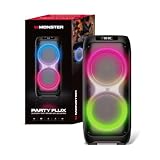
4. 60W Party Bluetooth Speaker with RGB
A 60W peak party speaker with dual woofers, 12 hours of battery, RGB lights, TWS, FM radio and AUX/USB inputs, per the listing. Check the current price on Amazon.
Good for: Budget party use. Strengths: Many inputs and lights at a low price. Weaknesses: Peak power is a maker claim. Skip it if you want a premium brand.
Best for karaoke, events and speeches
5. Pyle Portable Bluetooth PA Speaker System
A 600W rated portable Bluetooth PA speaker with a rechargeable battery, wheels and an extendable handle, per the listing. Check the current price on Amazon.
Good for: Karaoke, events and speeches. Strengths: Wheels, big power rating and PA features. Weaknesses: Large; rated power is a maker claim. Skip it if you want a small music speaker.

Best Picks by Category
These labels summarize the picks by use and price tier. They are based on listing information and are not hands-on test results.
- Top rated: Soundcore Boom 2.
- Most reviewed: Soundcore Boom 2.
- Best value: Soundcore Boom 2.
- Lowest price: 60W Party Bluetooth Speaker with RGB.
- Premium option: 240W Party Bluetooth Speaker.
Price, Rating and Review Comparison
The table compares the picks by price tier. Prices change often, so confirm the current price on Amazon.
| Product | Price | Rating | Ratings | Price tier |
|---|---|---|---|---|
| 60W Party Bluetooth Speaker with RGB | Check price on Amazon | — | — | Mid-range |
| BassBloom Roar 1 | Check price on Amazon | — | — | Mid-range |
| Soundcore Boom 2 | Check price on Amazon | — | — | Mid-range |
| Pyle Portable Bluetooth PA Speaker System | Check price on Amazon | — | — | Premium |
| 240W Party Bluetooth Speaker | Check price on Amazon | — | — | Premium |
How Much Feedback Backs Each Rating
A high average from a handful of ratings is weaker evidence than a slightly lower average from thousands. Here is how the sample size looks for each pick.
- BassBloom Roar 1: a moderate sample of buyer feedback.
- Soundcore Boom 2: a large sample of buyer feedback.
- 240W Party Bluetooth Speaker: a moderate sample of buyer feedback.
- 60W Party Bluetooth Speaker with RGB: a small sample of buyer feedback, so treat it cautiously.
- Pyle Portable Bluetooth PA Speaker System: a large sample of buyer feedback.
How to Choose
Peak vs continuous power
Peak watts are higher than continuous output. Compare driver size too.
Inputs
AUX, USB and microphone inputs add flexibility.
Portability
Wheels and handles help with large speakers.
How We Chose These Products
We start from products sold on Amazon with a full product name and clear specifications, and we skip results that show only a brand name or a vague title. We then read the listing and any manufacturer information for each one and note the features that matter for speaker and audio products: power and connections, size and placement, and the formats supported. We do not run our own lab tests, and this guide contains no hands-on measurements. Use it to build a shortlist, then check current prices, dimensions and return terms on the Amazon page before you buy.
Buying Guide: What to Check Before You Choose
Battery, water resistance and range
Portable speakers trade size for battery life and loudness. Look at the listed hours, the charging port and the waterproof rating; an IP rating describes dust and water protection, and a higher second digit means better water resistance. Bluetooth range is typically a few meters indoors, less through walls.
Soundbar size, channels and subwoofer
Soundbars range from compact two-channel bars to 5.1 and Dolby Atmos systems with a wireless subwoofer and rear speakers. More channels and a subwoofer give wider sound and deeper bass but need more space and cost more. Match the bar to your room and TV: a bar much wider than the TV stand will not fit, and a small room rarely needs a full surround set.
Connections: HDMI eARC, optical and Bluetooth
HDMI eARC (or ARC) lets one cable carry TV audio to the bar and usually allows the TV remote to control volume. Optical works with most TVs but carries less. Bluetooth is handy for music but is not ideal for TV because of possible delay. Check which port your TV has and what the bar supports, especially for Dolby Atmos.
Quick Reference: Which Pick Suits Whom
- BassBloom Roar 1: suits backyard and beach parties on a budget
- Soundcore Boom 2: suits outdoor and backyard use
- 240W Party Bluetooth Speaker: suits house parties and large rooms
- 60W Party Bluetooth Speaker with RGB: suits budget party use
- Pyle Portable Bluetooth PA Speaker System: suits karaoke, events and speeches
Common Mistakes to Avoid
- Buying a bigger system than the room can use.
- Ignoring the ports on your TV or amplifier.
- Assuming higher wattage always means better sound.
- Skipping the return window and warranty details.
- Overlooking placement, such as wall mounting or cabinet depth.
Setup and Care
- Place speakers at ear height and away from walls where possible.
- Run the TV or app setup and check audio output settings.
- Use a short, good-quality cable for the main connection.
- Adjust bass and treble gradually, then leave them.
What Makes a Speaker Loud and Full
Loudness at a party depends on a handful of physical facts that no wattage number captures. The first is the amount of air a speaker can move. Larger drivers and larger cabinets push more air, which is how they reach low bass and fill a space. A small speaker with a big power claim is limited by the size of its woofer, and no amplifier can overcome that.
The second is the amplifier and the way the speaker is tuned. Many party speakers boost bass electronically, which sounds impressive at moderate volume but can distort when pushed. Distortion shows up as a fuzzy, rattling or flattened sound, and it is the usual sign that a speaker is being asked for more than it can deliver. Good designs include limiters that rein in the signal before distortion becomes harsh.
The third is the passive radiator or port. Many compact speakers use a passive bass radiator, a diaphragm without a motor that vibrates in sympathy with the woofer to extend low notes. Larger speakers use ports tuned to specific frequencies. Both are legitimate ways to add bass, and their quality depends on tuning.
Why a rated power number can mislead
Rated power may be peak, program or continuous, and makers choose the most flattering definition. Peak power describes a momentary burst, while continuous power describes what the amplifier can sustain. Without a clear statement, treat a high number as a marketing signal. Better clues are the number and size of drivers, the physical size of the cabinet, the weight and the battery capacity, since a powerful amplifier needs power to run.
Matching the Speaker to the Gathering
Different events ask for different things. Think about where the speaker will stand and how many people will be listening.
- Backyard barbecue or pool day: a mid-size outdoor speaker with water resistance is usually enough. Aim for something you can carry with one hand and place on a table or ledge.
- Beach or park outing: open air swallows sound, so a larger speaker helps, but carrying comfort matters. Check for a strap or handle, and for protection against sand and splashes.
- House party in a living room: a floor-standing or large portable speaker with lights and strong bass fills the space. Enclosed rooms make bass sound stronger, so you do not need extreme size.
- Tailgate or campsite: battery life and ruggedness count most. Plan to charge in the car, and keep the speaker out of direct sun.
- Karaoke or speeches: choose a model with microphone inputs and some form of echo or volume control. A PA-style speaker with a stand mount can also work for small events.
As a general rule, double the room’s volume and you need noticeably more speaker to keep the same sound level. Outdoors, with no walls to reflect sound, you need still more. A small speaker played at maximum volume in a large space sounds strained, while a large speaker played at moderate volume sounds relaxed and clear.
Features That Help at a Party
Linking more than one speaker
True wireless stereo, often shortened to TWS, lets two identical speakers pair together as a left and right pair. Party-linking modes, found on some models, connect several speakers for louder, wider coverage. Compatibility is usually limited to the same brand or model line, so check the listing before buying a second one. Linking can also be done by cable, which is more reliable in crowded wireless environments.
Microphone and instrument inputs
A microphone input turns a speaker into a karaoke machine or a basic PA. Look for a standard quarter-inch or combo jack, volume control for the microphone and echo options. Guitar inputs are less common but available on some larger models.
Lights and visual effects
Colored lights react to the music and make a speaker feel like part of the party. They are decorative, so decide whether you want them, and whether they can be turned off to save battery.
App and equalizer controls
Some makers provide an app with equalizer presets and firmware updates. A bass boost button is simple, while an equalizer lets you tone down bass if the speaker sits against a wall and sounds boomy. Neither is essential, but both can help you adapt the sound to different places.
Codec and connection quality
Bluetooth versions affect range and stability, and the codec determines audio quality. For party use, a stable connection matters more than the highest-fidelity codec. A wired AUX or USB input gives a backup if a phone struggles or the crowd interferes with the signal.
Battery, Charging and Staying Loud
Battery claims usually assume a moderate volume. At the high volumes you want at a party, runtime drops, sometimes by half or more. Interpret the stated hours as a best case, and plan accordingly.
- If the party lasts all afternoon, pick a speaker with a long stated battery life or the ability to play while charging.
- Bring a power bank or charging cable, and check the charging port type. USB-C is easier to replace than a proprietary barrel connector.
- Watch for a power-out feature that lets the speaker charge your phone, which also drains the speaker battery.
- Keep batteries cool. Heat shortens life and may trigger protective shutdowns.
For large speakers designed for mains power, remember that the battery supports portability but the best loudness may come from the wall. Check whether maximum volume is available on battery alone.
Considerate Use, Hearing and Care
Loud speakers deserve respect. Sustained exposure to high sound levels can damage hearing, and the risk grows with volume and time. Keep your own listening position at a comfortable distance from the speaker and give children and pets extra space. Also consider neighbors, local noise rules and campground quiet hours. A speaker that can fill a field can also fill a street.
Basic care keeps a speaker working across seasons:
- Check ports and flaps. Water resistance depends on charging port covers staying closed.
- Rinse off salt or sand with fresh water if the rating allows it, then dry thoroughly before charging.
- Keep the speaker away from direct heat and leave it out of a hot car.
- Store it with a partial charge if you will not use it for months.
Budget Versus Premium Party Speakers
Lower-priced party speakers often put the emphasis on size, lights and a long feature list. You may get many inputs and effects for the money, but a lesser tuning, simpler construction and fewer firmware updates. Higher-priced models tend to invest in driver quality, a cleaner amplifier, more robust enclosures and better battery management. They may have fewer lights and gimmicks but sound better at high volume.
If you only host occasional casual gatherings, a value model suits you. If the speaker will be your main music source or you play at high volume often, spending more on sound quality pays off. Either way, read recent buyer feedback about distortion at high volume, battery behavior and customer support before deciding.
Questions to ask before ordering
- How big is the space, and is it indoors or outdoors?
- Do I need a microphone input or linking?
- Can I plug in a cable if wireless gets crowded?
- What water resistance does the listing state, and does it cover all ports?
- How easy is it to carry, and does it fit in my car?
Placement Tips That Change the Sound
Where you put a speaker affects how it sounds almost as much as which speaker you buy. Raise it off the ground, since floor placement muddies bass and bounces sound under tables. Keep it a little away from walls and corners, which exaggerate low notes and make them boomy. Aim the front toward the listeners, and avoid hiding it behind furniture or coolers. Outdoors, a table or tripod stand helps spread sound across the space. If you use two speakers, space them apart rather than stacking them, and keep the volume at a level where the sound stays clean. Small adjustments of a foot or two can make the party sound noticeably better.
What Party Loud Actually Means
A party speaker’s job is not hi-fi; it is energy, delivered to a group of people who are talking, laughing and moving, often outdoors, often over hours. That job changes what good means. Bass weight matters more than bass detail, because the low end is what a crowd feels and what carries rhythm across a garden. Headroom matters more than refinement, because a speaker cruising comfortably at party volume sounds better than a refined speaker straining at its limit. And coverage matters more than stereo image, because the audience is everywhere, not seated in a sweet spot. Judge the picks in this guide by those party standards and their differences make sense: the big units exist to move air for a crowd, and the smaller ones trade some of that force for portability and price.
Wattage figures, which this category advertises loudly, deserve calm reading. There is no single enforced way to quote power for a self-powered speaker, and figures may describe peak moments rather than sustained output, one channel or the sum of several, at distortion levels nobody would listen to. Treat wattage as a rough size class indicator within a brand, never as a cross-brand score. Your ears, in your space, during the return window, remain the only reliable wattmeter — play the speaker at the volume your largest realistic gathering needs and listen for strain, because strain, not a number, is the true ceiling.
How big is your party, honestly?
Most buyers overestimate their crowd and underestimate their space. A speaker for twelve people in a living room needs clarity and moderate power; the same twelve in a garden need substantially more, because open air swallows sound and conversation spreads out. A hall or a sports field is another class again, where the PA-style pick in this guide, the Pyle system, earns its existence with projection and microphone support. Be honest about the eighty-percent case — the gatherings you actually host most months — and let the rare biggest event borrow, rent or pair a second speaker rather than dictating a purchase that is oversized for ordinary life and stored resentfully in a corner.
Bass, Placement and the Neighbour Equation
Party bass behaves predictably once you know the rules. A speaker on the ground gains low-end reinforcement from the floor; against a wall it gains more; in a corner, the most of all — sometimes too much, turning kick drums into a general thud. Start with the speaker on the ground near a wall, at the edge of the gathering rather than its centre, angled across the space, and adjust from there. Raising a party speaker on a stand or table cleans up its midrange projection for announcements and vocals, at some cost to bass, which is the right trade when a microphone or speeches matter.
Neighbours are part of the physics too. Low frequencies travel through structures and across gardens far more efficiently than voices do, so the bass that feels perfect inside the party is the part the street hears. Practical peace-keeping: aim the speaker into your space and away from neighbouring windows, keep it off shared fences and walls where possible, step the bass down as the evening gets later, and give nearby households fair warning before big events. A party speaker used considerately keeps being invited back; the technology is rarely the problem when complaints arrive — placement and the clock usually are.
Distortion, limiters and protecting the speaker
Party speakers work near their limits by design, and modern units protect themselves with limiters that rein in the signal when it would otherwise damage the driver or sound truly ugly. You can hear protection working as a flattening or pumping at maximum volume. The lesson is the same as with small speakers, only louder: the top slice of the volume range is headroom, not a listening level. Run the speaker a notch below its obvious strain point and it will sound bigger, not smaller, because the bass stays intact instead of being squeezed by the limiter. It will also survive the night — and the season — more reliably.
Microphones, Karaoke and Announcements
For many households the microphone input is the difference between a party speaker and a party. Karaoke nights, wedding speeches, quiz hosting, sports-day announcements and fitness instruction all run through that input, and the picks here differ in how seriously they support it. Test microphone handling early if it matters to you: how the speaker balances mic against music, whether echo or effects are offered for karaoke, and how feedback behaves as the mic approaches the speaker — the squeal that arrives when a microphone hears itself. Feedback discipline is mostly placement: keep the mic in front of the speaker’s line of fire rather than behind it, point the mic away from the cabinet, and lower the mic volume before wandering closer.
Wireless microphones add freedom and one more battery to manage; wired ones add a trip hazard and total reliability. For events that matter — the wedding, the milestone birthday — rehearse the exact setup once at home, batteries, pairing, volumes and all. Five minutes of rehearsal is the cheapest insurance in event audio, and it converts the most common party-speaker disaster stories into stories about other people’s parties.
Lighting: feature or distraction?
Light effects divide buyers. At a dance party they genuinely add atmosphere, pulsing with the music and signalling that this is an event, not background listening. At a dinner gathering they can feel like a nightclub has invaded the garden. Most party speakers let you dim or disable the lights, and that switch is the feature to verify, because it converts a one-mood speaker into an any-mood one. If your gatherings span both kinds, choose a speaker whose lighting can disappear completely, and let the same unit serve the barbecue and the birthday with equal grace.
Battery, Mains and the Long Event
Party speakers split into battery performers and mains performers, and the distinction decides where they can work. Battery models own the beach, the park, the sports field and the far end of the garden, and their runtime at party volume — not at the gentle volume behind headline claims — is the figure to plan around. Expect high volume to spend the battery generously, and plan the event accordingly: charge fully beforehand, keep a cable or power bank in reserve, and consider that a speaker which can play while charging forgives every planning error. Mains-powered and PA-style units trade that freedom for unlimited runtime and often higher sustained output, and they suit halls, patios with power and any event where the speaker never moves once placed.
Transport is the hidden cost of the big class. Weight, handles and wheels decide whether a speaker is carried gladly or left behind, and a slightly smaller speaker that attends every gathering beats a giant that attends two a year. Check the route the speaker must travel in your life — stairs, car boot, garden path — against its size before buying, and be honest about who will carry it. The Soundcore Boom 2 class exists precisely at the compromise point: genuinely party-capable, still one-person portable. Above that class, you are buying equipment, with an equipment owner’s logistics, which is right for organisers and wrong for casual hosts.
Pairing and multi-speaker setups
Two speakers transform a party more than one bigger speaker usually does, because they cover space evenly and let every guest stand near a source rather than in front of a barrage. Where the picks support pairing, identical models pair most predictably, and the setup should be rehearsed like the microphone. For very large or oddly shaped spaces, a main speaker for the dance area plus a smaller satellite for the food and conversation zone serves guests better than maximum volume from one corner — conversation areas deserve protection from the party as much as the dance floor deserves power.
Choosing Among the Party Picks
The BassBloom Roar 1 and Soundcore Boom 2 class suits the mainstream host: garden parties, birthdays, pool days, with real bass and real portability. The high-output party boxes in this guide suit the dedicated entertainer whose gatherings are large, loud and frequent, and who has the storage and transport to match. The Pyle PA system suits the organiser — the coach, the celebrant, the community-event regular — for whom the microphone and projection are the point and music is one duty among several. None of these is a failed version of the others; they are different tools that happen to share a shelf.
Buy against your calendar, not your imagination. Count the events of the last year, note their sizes and spaces, and choose the speaker that would have served most of them best. Then test it at home at honest party volume, in the honest position, during the return window — and warn the neighbours first, as a rehearsal of the courtesy that will keep your parties welcome for years.
Care between parties
Party speakers live hard and store long. Wipe down splashes and dust after events, let a rained-on speaker dry fully before charging or storing, and store it indoors in ordinary temperatures with the battery partly charged rather than flat or brimming. Check cables, microphone batteries and pairing before the season’s first event rather than during it. A party speaker’s reliability is mostly this quiet maintenance, done in calm weeks, paying out in loud ones.
Running the Party: A Host’s Sound Checklist
Good party sound is mostly decided before the first guest arrives. Walk the space with the speaker playing and stand where guests will stand: the food table, the far chairs, the doorway. You are listening for evenness — no spot where the music vanishes, no spot where it shouts — and adjusting position rather than volume to fix what you find. Set a starting volume lower than feels festive in an empty garden; a full gathering absorbs sound and adds its own noise, and the volume that seemed timid at setup will feel right within the hour, with headroom in reserve for the peak of the night rather than spent before it.
Plan the playlist’s energy like a host, not a DJ in a contest. Early music should sit under conversation, familiar and warm; the middle can rise as the event finds its feet; late music should match the smaller, closer group that remains. Keep a charged phone or a second device as the source, because the host’s phone is also the camera, the doorbell answerer and the taxi booker, and a source that leaves with its owner leaves the party silent. Where the speaker supports a wired input, a humble cable is the most reliable backup plan in audio — pack it with the speaker and you will use it exactly once a year, gratefully.
Weather, spills and the morning after
Outdoor parties meet weather, and party speakers meet drinks. Position the speaker where a knocked glass drains away from it, under cover if rain threatens and the model is not rated for it, and off the ground where feet and cables tangle. At the end of the night, resist storing it exactly as it stands: wipe it down, coil cables loosely, and let anything damp dry before the cupboard. The morning-after check — battery topped up, microphone accounted for, pairing forgotten by no one — takes three minutes and means the next event starts from ready. Party speakers earn their reputation across a season, not a night, and the hosts who enjoy them for years are simply the ones who close each event properly.
Renting, borrowing and the occasional giant event
Every host eventually faces the event that dwarfs their speaker: the wedding in a field, the street party, the school fundraiser. The mature answer is not to own for that day. Renting proper PA equipment for a weekend costs a fraction of buying it, comes with equipment sized to the space, and returns to the shop afterwards along with its storage problem. Borrowing a friend’s second speaker to pair with yours achieves a smaller version of the same trick. Buy for your real calendar, rent for your legendary one, and your everyday speaker stays the right size for the life it actually lives — which is the principle this whole guide keeps returning to, because it is the difference between equipment that serves the parties and parties that serve the equipment.
And if you are buying partly as the friend everyone borrows from — the street’s unofficial sound department — choose durability, simple controls and a battery that forgives other people’s charging habits. Your speaker will live a harder, more social life than most, and the models in the middle of this guide, tough and uncomplicated, are built for exactly that honour.
Sound for different kinds of parties
A children’s party wants controlled volume, a microphone for games, and a speaker placed where small hands cannot reach the controls — energy without chaos. A dinner party wants the opposite: low, warm background that never competes with conversation, which is a test of how gracefully a big speaker behaves quietly, and not all of them do. A sports-watching gathering wants commentary clarity first and celebration volume second, with the speaker near the screen rather than across the room. A dance party wants the full recipe: bass, headroom, lights if you like them, and a playlist with somewhere to go. Notice that three of these four parties reward restraint and clarity as much as power. The best party speaker is not the one that can be loudest; it is the one that can be appropriate at every size of gathering you host, loud included.
Finally, trust the evidence of your own first event more than any review, including this one. A party speaker reveals itself completely in a single real evening: the setup friction, the coverage, the moment the battery warning appears, the neighbour’s face at the gate. Note those moments while they are fresh and adjust the second event accordingly — position, pairing, playlist, volume discipline. By the third event the speaker will feel like part of the house’s hospitality rather than a gadget being evaluated, and that, more than any specification, is what you were buying.
Bluetooth at a party: keeping the music connected
Party Bluetooth has one enemy: distance combined with bodies. A phone in the host’s pocket, weaving through a crowd, will drop a connection that behaved perfectly in an empty room, because people absorb the signal and the garden is longer than the kitchen. The fix is a stationary source: park the phone or tablet near the speaker, on a shelf out of splash range, and let a playlist or a queue do the work. If requests matter, let guests add songs when they pass the source rather than pairing a parade of phones, which invites the classic disaster of the music being hijacked by a notification, a call or a departing guest whose phone was the source. For long events, the wired input remains the unglamorous champion — no pairing, no range, no surprises — and a host who keeps a cable coiled in the speaker’s handle is a host whose music never stops mid-song. Reliability, at a party, is a sound quality.
One more host’s habit completes the picture: decide the end of the music before the party does. A planned wind-down — volume easing, lights low, a last song everyone knows — closes an event warmly and keeps faith with the neighbours, while a speaker cut off mid-anthem because a complaint arrived feels like a failure even when the party was a triumph. The best party speakers make that ending easy to control; the best hosts make it part of the hospitality. Choose the speaker that gives you control at every volume, and the parties will take care of themselves.
And remember that a party speaker is a shared instrument: label its charger, keep its cable with it, and show one other person in the household how pairing and the microphone work. Events run smoother when the knowledge is not locked in one head, and the speaker becomes the house’s, not a person’s — which is, in the end, the whole spirit of the category.
Buy it, rehearse it once, place it with care, run it a notch below its limit, close the night deliberately — five habits, and any speaker in this guide will sound like the right one.
That is the unglamorous truth of party audio: preparation beats power, every single time.
Running a Longer Event Without the Sound Falling Apart
Most party speakers are judged in the first ten minutes, but gatherings are won or lost in hour three. By then the playlist has drifted, the battery has done real work, guests have moved the speaker twice, and the volume that felt exciting at the start has quietly crept upward. A little event craft, applied to whichever pick you chose from this guide, keeps the sound steady from the first arrival to the last song without the host hovering over the controls all evening.
Give the evening a simple sound plan
Decide in advance who owns the music and how requests join the queue. One phone paired and one person curating avoids the friendly chaos of five guests pairing in turn, each handover dropping the connection and restarting the volume negotiation. Build the playlist longer than the party, so the music never runs out before the people do, and place the louder, bass-heavier stretch where it belongs, usually after everyone has arrived rather than while the first guests are still making conversation over drinks.
Protect your headroom instead of spending it early
Start the evening at a comfortable level well below what the speaker can do, and treat the remaining volume as a reserve for the moment the room fills and the talking gets louder. A speaker run near its limit for hours sounds strained and drains its battery far faster than the same speaker cruising, so the host who begins modestly ends the night with the cleaner sound. If the music starts to feel thin rather than loud, resist the instinct to push the volume and instead move the speaker closer to the listeners or into a corner that reinforces the bass naturally.
Troubleshooting the three failures that actually happen
When the music drops out mid-party, work in a calm order: check whether the source phone has wandered out of range or been taken to another room, then whether a second guest device has grabbed the connection, and only then suspect the speaker itself. When the sound turns harsh, lower the volume a notch and check whether an equalizer preset with boosted bass and treble is fighting the track. When a microphone squeals during announcements, step away from the speaker, point the microphone away from it, and lower the microphone level before touching anything else, because feedback is almost always a position problem wearing a settings costume.
Close the night deliberately as well. Bring the volume down before the final song rather than cutting the music dead, let the speaker cool and dry if the party lived outdoors, and charge it the next day instead of leaving it flat in a cupboard, since batteries stored empty age fastest. Note what worked, where the speaker sat, how loud the evening ran, and you have turned one party into a rehearsal that makes the next one effortless, which is the real difference between owning a loud speaker and knowing how to run one.
Frequently Asked Questions
What is the best party Bluetooth speaker?
It depends on room size and budget. The BassBloom Roar 1 and Soundcore Boom 2 suit backyard parties.
Are watts a good measure?
Peak watts are a marketing figure. Look at drivers and reviews.
Can I pair two speakers?
Some support TWS pairing.
How do I choose the right speaker?
Start with where it will be used, then check connections, power and size. Read the product page for dimensions and supported formats.
Do I need a subwoofer?
A subwoofer adds low-frequency impact and helps with movies and music. It is optional in small rooms or for casual listening.
Are wireless speakers as good as wired?
Wireless is convenient, and quality depends on the model and the connection. For critical listening, a wired source is more consistent.
How loud is a 60W Bluetooth speaker?
Wattage alone does not tell you loudness, because makers define it differently and drivers differ. A small speaker with a big number may still sound thin. Look at driver size, cabinet size and buyer comments about distortion at high volume instead.
Can I connect two party speakers together?
Many can, through true wireless stereo pairing or a party-linking mode, but compatibility is usually limited to the same brand or model line. Check the listing for pairing support before buying a second one. Wired connections are another option for some speakers.
Are IPX ratings enough for outdoor parties?
An IPX rating describes water protection. A rating like IPX6 resists strong water jets, but it does not cover submersion or dust. Keep port covers closed, avoid long exposure and rinse off salt or sand with fresh water if allowed.
How long do party speakers last at high volume?
Battery runtime falls sharply at high volume, often well below the stated figure. For a long event, keep the speaker plugged in or carry a power bank. Check whether the speaker can play while charging.
Can I use a party speaker for karaoke?
If it has a microphone input, yes. Look for a standard jack, microphone volume and echo controls. Larger speakers with PA features work best. Make sure the speaker has enough volume headroom for singing over music.
Bottom Line
For a budget party speaker, the BassBloom Roar 1. For outdoors with bass, the Soundcore Boom 2. For karaoke and events, the Pyle PA system.
Related Reading
- Soundbar Buying Guide: Channels, Atmos, HDMI ARC and Subwoofers
- 6 Best Soundbars for TV
- 6 Best JBL Bluetooth Speakers: Go 5, Clip 5, Charge 6
- 6 Best 2.1 Computer Speakers with Subwoofer: PC and Gaming
- 4 Best 4×6 Car Speakers: Pioneer, Kicker, Pyle
More Speaker Guides
- Best Portable Bluetooth Speakers
- Best Waterproof Bluetooth Speakers
- Best Shower Speakers
- Best Bluetooth Speakers Under $50