Disclosure: As an Amazon Associate, reviewstook.com earns from qualifying purchases. Links to Amazon on this page are affiliate links; they cost you nothing extra.
JBL covers pocket speakers to party speakers. Pick by size and how loud you need it.
This guide is built from Amazon product listings, not our own testing, so confirm specs on each product page.
By the Reviewstook Editorial Team. Last updated: October 31, 2026.

In this guide
Quick Picks
| Product | Type | Best for |
|---|---|---|
| JBL Go 5 | Ultra-portable speaker | IP68 pocket speaker |
| JBL Clip 5 | Clip-on waterproof speaker | Carabiner design |
| JBL Charge 6 | Mid-size waterproof speaker | Up to 28 hours of playtime |
| JBL Boombox 4 | Large portable speaker | Two woofers and deep bass |
| JBL PartyBox Encore Essential 2 | Party speaker | Light show and AI Sound Boost |
| JBL PartyBox 330 | Large party speaker | JBL One app and mic support |
Our Picks
Top pickBest for pocket use
1. JBL Go 5
An ultra-portable IP68 waterproof and drop-proof speaker with ambient edge lighting, per the listing.
Good for: Pocket use. Strengths: IP68 and lighting. Weaknesses: Small size limits bass. Skip it if you want party volume.
Best for backpacks and hikes
2. JBL Clip 5
An ultra-portable waterproof and dustproof speaker with a redesigned carabiner, per the listing.
Good for: Backpacks and hikes. Strengths: Carabiner and dust/water protection. Weaknesses: Small size. Skip it if you want deep bass.
Best for all-round outdoor use
3. JBL Charge 6
A portable waterproof and drop-proof speaker with AI Sound Boost and up to 28 hours of playtime, per the listing.
Good for: All-round outdoor use. Strengths: Long battery and JBL sound. Weaknesses: Mid-size. Skip it if you want a pocket speaker.

Best for beach and backyard parties
4. JBL Boombox 4
A portable waterproof speaker with two woofers and up to 34 hours of battery (with Playtime Boost), per the listing.
Good for: Beach and backyard parties. Strengths: Deep bass and long battery. Weaknesses: Large and heavy. Skip it if you want a small speaker.


Best for house parties
5. JBL PartyBox Encore Essential 2
A portable party speaker with a dynamic light show and AI Sound Boost, per the listing.
Good for: House parties. Strengths: Lights and loud sound. Weaknesses: Large. Skip it if you want a pocket speaker.

Best for bigger gatherings and karaoke
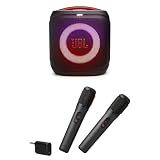
6. JBL PartyBox 330
A portable party speaker controlled by the JBL One app and compatible with EasySing mics, per the listing.
Good for: Bigger gatherings and karaoke. Strengths: App control and mic support. Weaknesses: Large. Skip it if you want a small speaker.

Best Picks by Category
These labels come from the information shown on each Amazon listing. They summarize listing data and are not hands-on test results.
- Top rated: JBL PartyBox Encore Essential 2
- Most reviewed: JBL Clip 5
- Best value: JBL Go 5
- Lowest price: JBL Go 5
- Premium option: JBL Boombox 4
Price, Rating and Review Comparison
The table groups the picks by price tier for a quick side-by-side comparison. Prices change often, so confirm the current price on Amazon.
| Product | Price | Rating | Ratings | Price tier |
|---|---|---|---|---|
| JBL Go 5 | Check price on Amazon | — | — | Budget |
| JBL PartyBox Encore Essential 2 | Check price on Amazon | — | — | Budget |
| JBL PartyBox 330 | Check price on Amazon | — | — | Mid-range |
| JBL Boombox 4 | Check price on Amazon | — | — | Mid-range |
| JBL Clip 5 | Check price on Amazon | — | — | n/a |
| JBL Charge 6 | Check price on Amazon | — | — | n/a |
How Much Feedback Backs Each Rating
A high average from a handful of ratings is weaker evidence than a slightly lower average from thousands. Here is how the sample size looks for each pick.
How to Choose
Size
Go and Clip are pocket-size; Boombox and PartyBox are large.
Waterproofing
Check the IP rating on each page.
Battery
Playtime figures are maker claims.
How We Chose These Products
We start from products sold on Amazon with a full product name and clear specifications, and we skip results that show only a brand name or a vague title. We then read the listing and any manufacturer information for each one and note the features that matter for speaker and audio products: power and connections, size and placement, and the formats supported. We do not run our own lab tests, and this guide contains no hands-on measurements. Use it to build a shortlist, then check current prices, dimensions and return terms on the Amazon page before you buy.
Buying Guide: What to Check Before You Choose
Battery, water resistance and range
Portable speakers trade size for battery life and loudness. Look at the listed hours, the charging port and the waterproof rating; an IP rating describes dust and water protection, and a higher second digit means better water resistance. Bluetooth range is typically a few meters indoors, less through walls.
Brand ecosystems and smart features
Some brands work best inside their own ecosystems, with multiroom playback, voice assistants and app control. Check which services and assistants are supported before buying, and whether features need a subscription or an account. Compare models across brands rather than choosing on a name.
Soundbar size, channels and subwoofer
Soundbars range from compact two-channel bars to 5.1 and Dolby Atmos systems with a wireless subwoofer and rear speakers. More channels and a subwoofer give wider sound and deeper bass but need more space and cost more. Match the bar to your room and TV: a bar much wider than the TV stand will not fit, and a small room rarely needs a full surround set.
Quick Reference: Which Pick Suits Whom
- JBL Go 5: suits pocket use
- JBL Clip 5: suits backpacks and hikes
- JBL Charge 6: suits all-round outdoor use
- JBL Boombox 4: suits beach and backyard parties
- JBL PartyBox Encore Essential 2: suits house parties
- JBL PartyBox 330: suits bigger gatherings and karaoke
Common Mistakes to Avoid
- Buying a bigger system than the room can use.
- Ignoring the ports on your TV or amplifier.
- Assuming higher wattage always means better sound.
- Skipping the return window and warranty details.
- Overlooking placement, such as wall mounting or cabinet depth.
Setup and Care
- Place speakers at ear height and away from walls where possible.
- Run the TV or app setup and check audio output settings.
- Use a short, good-quality cable for the main connection.
- Adjust bass and treble gradually, then leave them.
How JBL’s Speaker Lines Differ
JBL sells dozens of speakers, but the models in this guide fall into a few clear families. Understanding the family tells you what the speaker is built to do before you read a single spec.
Pocket and clip-on speakers
The Go 5 and Clip 5 are small speakers meant to travel in a bag or hang from a loop. They fill a desk, a bathroom or a campsite with sound but are not designed to fill a large room or produce deep bass. Their value is portability and the ability to survive splashes.
Mid-size portable speakers
The Charge 6 sits in the middle of the lineup. It is larger, usually has more bass and longer playtime than the pocket models, and many in this class can also charge a phone through a USB port. It is a good all-rounder for a patio, a picnic or a small party.
Large portable and boombox speakers
The Boombox 4 is a big, heavy speaker built to be carried by a handle and played outdoors at volume. Size brings stronger bass and more output, along with more weight and a larger charger.
Party speakers
The PartyBox Encore Essential 2 and PartyBox 330 are made for gatherings. They emphasize volume and lights, and some support microphone or guitar inputs. These are for yards, garages and events, not for quiet apartment listening.
Why the family matters
- Size and driver count set the practical maximum for bass and volume.
- Battery capacity usually grows with size, but so does power draw at high volume.
- Weight decides whether you will actually carry the speaker everywhere.
Matching a JBL Speaker to How You Listen
Commuters and travelers
If the speaker lives in a backpack, shrink your choices to the pocket class. A clip or loop lets you attach it to a bag, which keeps it accessible. You give up bass, but you gain a speaker you will really bring along.
Outdoor hobbyists
Hikers, campers and beachgoers want water and dust protection first. A speaker with a floating or sealed design, bright color and sturdy strap helps. Mid-size models also work well because their battery lasts through a full day.
Small apartments and bedrooms
Large speakers can be too much in a small room. A compact or mid-size model gives clear sound at moderate volume. Check for stereo pairing if you want a wider soundstage.
Backyard hosts
For a patio party, a larger speaker with strong bass and a handle makes sense. Think about where you will place it, as a speaker on a table or stand sounds better than one on the ground. Consider whether you need microphone input for karaoke or speeches.
Garage and workshop users
A durable, dust-resistant speaker that can run from a wall adapter is practical. Many large models can play while plugged in, which saves the battery for trips.
Event and band use
If you need loud music for a crowd, look at the party class. Check input options, such as microphone or instrument jacks, and whether multiple speakers can link for wider coverage.
Specs and Features That Actually Matter
Power ratings
Manufacturers publish power output in watts, but the number does not tell the whole story. Compare within a brand and class, because speaker design, driver size and enclosure all affect loudness. Real loudness also depends on whether the speaker is on battery or plugged in, since some models play louder on mains power.
Bluetooth version and codecs
Newer Bluetooth versions improve stability and range, while codec support affects audio quality on compatible phones. For casual listening the difference is small, but a recent version helps with fewer dropouts.
Auracast and multi-speaker modes
Some JBL models support linking many speakers at once through Auracast or a similar feature. This is useful for filling a large space, and it works across compatible models. Verify which speakers support it, because it is not universal across the line.
Water and dust ratings
IP ratings describe protection levels. A rating such as IP67 generally means dust-tight and able to survive brief immersion, while lower ratings cover splashes only. Ratings do not cover saltwater corrosion over time, so rinse after beach use.
Playtime and charging
Listed playtime assumes moderate volume. Louder listening shortens it, so treat the number as a best case. USB-C charging is convenient, and a power-bank function is a bonus on mid-size and large units.
App control and EQ
The JBL app can adjust equalizer settings, update firmware and pair speakers. If you care about tweaking the sound, check that the model you like works with the app.
Questions to Ask Before You Order
- Where will I use it most, and how loud do I need it to be?
- Will I carry it daily, or leave it in one place?
- Do I need water protection, or just a splash-proof body?
- Do I want to pair two speakers for stereo, or link many for a party?
- Do I need a microphone or instrument input?
- How will I charge it, and does it need a wall adapter?
- Is the battery user-replaceable, or sealed in?
Budget vs Premium: Where the Money Goes
Within JBL’s lineup, price mostly follows size, battery capacity and power output. The pocket models are inexpensive and easy to replace, while party speakers cost far more and are heavier to move.
Spending more usually buys louder output, deeper bass, longer battery life and extra features like inputs, lights and charging ports. It rarely buys dramatic gains in clarity at normal volume. A small speaker in a quiet room can sound as good as a large one.
A sensible approach is to match the speaker to the loudest and most demanding situation you will realistically face. Buying a party speaker for desk listening wastes money and space, while buying a pocket speaker for a backyard gathering leads to disappointment.
Getting More From a Portable Speaker
Placement changes the sound
A speaker on a shelf near a wall gains bass because the wall reinforces low frequencies. The same speaker in the middle of a table will sound thinner but clearer. Outdoors there is no such help, so a larger model often sounds disproportionately better in open air. Pointing the speaker toward listeners, not at a wall or ceiling, keeps vocals clear.
Stereo pairing and its limits
Two identical speakers paired in stereo widen the sound and increase volume, but they need to be placed apart to benefit. Putting them side by side defeats the purpose. Pairing usually works only between compatible models, so confirm that before buying a second unit.
Battery habits that help
Lithium cells age faster when kept hot or left fully drained. Do not leave a speaker on a car dashboard in summer. If you will not use it for weeks, charge it to around half and store it somewhere cool. Charging from a modest USB-C source is gentle on the battery compared with constantly topping it up while playing at full volume.
Caring for a water-resistant speaker
After beach or pool use, rinse the speaker with fresh water, wipe it dry and leave it with the charging port cover closed until fully dry. Keep the port cover seated, because the rubber seal is what maintains the rating. Do not charge a wet speaker. Sand, sunscreen and chlorine all wear materials down over time.
Common Buying Mistakes With Bluetooth Speakers
- Buying on peak wattage alone and ignoring the size and driver layout that actually determine output.
- Choosing a pocket speaker and expecting it to fill a large patio.
- Assuming any water rating means it can be submerged for long periods or used in salt water without rinsing.
- Ignoring weight: a big speaker that sits at home all year is an expensive indoor stereo.
- Overlooking whether a party speaker needs mains power to reach its loudest output.
- Forgetting that sealed batteries limit the speaker’s useful life.
The simplest correction is to write down the single place you will use the speaker most, and size the purchase to that place. A speaker that does one job well beats one that tries to be everything.
Reading Reviews and Spec Claims Critically
Speaker listings lean on a few numbers that sound precise but hide a lot. Playtime figures are measured at a moderate volume, often with features like lights turned off. Loudness claims may come from a mains-powered test. Frequency range figures say how low a speaker can reach but not how loud it is at that frequency.
When you read buyer feedback, look for patterns instead of single opinions. Several people mentioning the same complaint, such as a short battery life in cold weather or a charging port that loosens, is more informative than one glowing or angry review. Match the reviewer’s use to yours: a person using a speaker at a campsite will report different things than someone using it on a kitchen counter.
Size Is the Specification: Reading the JBL Ladder Honestly
Bluetooth speaker ranges are ladders, and JBL’s is unusually legible: each step up buys cabinet volume, and cabinet volume buys bass, loudness and battery in roughly that order. The honest way to read this guide is to start from the largest sound you actually need and buy the smallest speaker that produces it, because every step up the ladder is also a step up in weight, in bag space and in the chance the speaker gets left behind. The best portable speaker is the one present at the moment, and presence is a size decision before it is a sound decision.
At the ladder’s foot, the Go 5 and Clip 5 exist for the moments when any other speaker would be at home: the pocket, the backpack strap, the shower hook, the bike ride. Their sound is necessarily modest in the bass and remarkable in context, because the context is silence otherwise. The middle of the ladder, the Charge 6, is where most buyers should linger: enough cabinet to sound like music rather than a phone accessory, enough battery to stop being a consideration, and a size that still travels without negotiation. The top of the ladder, the Boombox 4 and the PartyBox models, stops pretending to be portable in the pocket sense and becomes transportable: speakers for gardens, gatherings and rooms without a stereo, carried deliberately and then played at levels the smaller rungs cannot approach.
Features follow the same ladder logic. Water resistance matters most on the speakers likeliest to meet water, which is why the small and mid rungs wear it proudly. Party features, inputs for microphones or instruments and light effects, belong to the top rungs because parties are where they are used. Reading the range this way turns a confusing catalogue into one question: how far, how loud, how wet?
Comparing the Six Picks by the Day They Are For
The JBL Go 5 is the everyday-carry pick: the speaker that lives in a bag and rescues hotel rooms, park lunches and workshop radios. Its owner values presence over performance and is right to. The JBL Clip 5 adds the carabiner idea executed properly, clipping to straps, rails and shower fittings, which makes it the hiker’s, cyclist’s and traveller’s version of the same thought. Between them, the choice is whether your speaker rides inside a bag or outside it, and that small logistical answer decides more satisfaction than any sound difference.
The JBL Charge 6 is the range’s centre of gravity and the default recommendation for a first or only portable speaker. It fills a room or a garden table with sound that has actual bass, plays for long stretches between charges, and survives weather and splashes as a matter of design. The JBL Boombox 4 is for the buyer who has felt a mid-size speaker run out of room outdoors: it is the garden-party and big-space answer, with the output and battery to be a venue’s only speaker, at the cost of being a deliberate carry.
The PartyBox Encore Essential 2 and PartyBox 330 change the subject from personal listening to events. These are speakers with a crowd in mind: inputs for a microphone, light shows, and output that treats a hall or a large garden as its brief. Buy them when events are your actual life, a regular class, a team, a family that hosts, rather than for the one party a year that a Charge-class speaker, honestly assessed, would have handled. The ladder’s discipline is to buy for your calendar, not your imagination.
Water, Dust and the Ratings That Protect Your Money
Ingress ratings are the least romantic and most valuable numbers on a portable speaker, because they describe survival rather than sound. A speaker rated for immersion can live by a pool and survive a dunking; one rated for splashes can survive the same afternoon only if it stays on the dry side of the edge. Sand and dust have their own figure in the rating, and beach buyers should read both numbers rather than the marketing word waterproof. The picks in this guide span the sensible range, and the right one depends on whether water in your life is weather, splashes or actual swimming.
Ratings assume the speaker is intact and its port covers are closed, and they fade as a speaker ages, is dropped or has its seals damaged. Rinse salt water and sand off a speaker that has been in the sea, let it dry before charging, and never charge a wet speaker, because the charging port is where water resistance goes to retire. Treated with that much sense, a well-rated speaker shrugs off summers that kill lesser electronics, which is why the outdoor picks here are bought once and used for years.
Battery care belongs in the same practical chapter. These speakers use rechargeable cells that prefer partial charges to permanent fullness or emptiness, and a speaker stored for winter should be stored with a middling charge in a cool place rather than flat in a hot garage. None of this needs a diary; it needs the same rough kindness you would give any rechargeable tool, and it is repaid in seasons of runtime.
Pairing, Party Modes and When One Speaker Is Enough
Most of these speakers can pair with a sibling for stereo or link into a larger group for coverage, and both features are better than their demonstrations suggest and less necessary than their marketing implies. Stereo pairing transforms a pair of mid-size speakers at a garden table or in a room, giving music a shape that one box cannot. Group linking solves the large-space problem by distribution: several speakers at moderate level cover a venue more pleasantly than one speaker at its limit, and guests can hold conversations inside the music rather than competing with a single loud point.
The discipline is to buy the second speaker for a reason you already have. A pair makes sense when the first speaker has a fixed post, the desk, the kitchen, the usual garden spot, where stereo will be enjoyed weekly. It makes less sense as insurance for a hypothetical event. Start with one from the right rung of the ladder, live with it for a season, and let its actual shortcomings, rather than a catalogue’s possibilities, tell you whether a partner or a step up the ladder is the real answer.
And remember the simplest pairing of all: one speaker, well placed. A portable speaker on a table, at ear height, away from the wall’s boom and the ground’s muddle, sounds dramatically better than the same speaker on the grass at your feet. Placement is free, it travels with the speaker, and it is the upgrade most owners never think to make.
The Travel Test: Airports, Beaches and Borrowed Cabins
Portable speakers earn their ratings in transit, and the travel test separates the ladder’s rungs more honestly than any listening room. In an airport hotel, the smallest speakers are perfect: the room is small, the hour is late, and the music is for one tired person. Their virtue is that they were in the bag at all, which is a virtue the larger rungs cannot claim, because nobody packs a Boombox on the chance of a hotel dance party. The mid-size speakers travel by car rather than by carry-on: the holiday house, the campsite, the borrowed cabin where they become the week’s stereo and their battery stops being a specification and becomes the difference between music and silence by Thursday.
The beach is the harshest examination in this guide. Sand enters everything, salt water corrodes what it touches, sun heats batteries and plastics, and the speaker that survives a season of it is the one whose seals were honest and whose owner rinsed it, dried it and kept it out of the worst heat. Volume expectations need adjusting too: a beach has no walls and a soundtrack of surf, so a speaker works harder outdoors than its owner expects, and the pair-at-moderate-levels trick from the pairing section serves better than one speaker straining. Choose the rung for the beach you actually visit, wind and all, rather than the deckchair in the advertisement.
Celebrations reverse the test. The speaker for a wedding garden, a sports club barbecue or a street party is bought on output, coverage and battery under load, and the PartyBox end of this guide exists because those days are real in many lives. The discipline is to count them. A household with six such days a year owns a legitimate need; a household with one owns a rental opportunity or a mid-size speaker played with commitment. The ladder rewards the honest count, as it rewards every honest count in this guide.
Battery Life in the Real World: Weekends, Winters and Old Age
Advertised runtimes are measured kindly, at volumes a garden party would call shy, so translate them before relying on them. A speaker that promises a long day at moderate level will give a loud outdoor afternoon and ask for its charger by evening, which is not dishonesty but physics: output costs energy, and bass costs the most. The practical habit is to plan charging like packing, the night before rather than the morning of, and to treat a speaker’s remaining charge as part of its readiness, checked when it is put away rather than when it is grabbed.
Winter storage is where batteries are quietly lost. A speaker put away flat in a cold garage in October may not wake in April, or may wake with a fraction of its former stamina. The kind routine is in this guide’s earlier sections: partial charge, cool dry storage, a midwinter top-up. It takes minutes and it is the difference between a speaker that ages gracefully over many seasons and one that becomes a mains-powered ornament with a handle.
Age itself is manageable. All rechargeable speakers lose capacity slowly, and the owners who notice least are the ones whose use fits inside the shrinking day: the kitchen speaker, the desk speaker, the garden-table speaker whose sessions were never marathons. The marathon uses belong to the ladder’s upper rungs partly for this reason, since a large battery ages into a medium one while a small battery ages into an errand. Buy the rung whose old age still suits your life, and the speaker will be a long companion rather than a brief one.
Sound Expectations by Rung: A Plain-Spoken Summary
It may help to state the ladder’s acoustics without any romance. The pocket rungs make speech, podcasts and background music pleasant at arm’s length and are silent about bass, because there is no cabinet to make it with. The clip rung adds location freedom to the same bargain. The middle rung is the first that sounds like a small stereo system, with bass that exists, volume that fills a room or a garden table, and composure at the levels social listening uses. The boombox rung adds the outdoors: real projection, bass that survives open air, and the ability to be one venue’s only speaker. The party rungs add the crowd: output, inputs and presence for events where the speaker is the entertainment’s engine.
None of these is a failed version of another. Each is the correct answer to a day in somebody’s life, and the guide’s comparisons have tried to name those days precisely. The buyer’s task is recognition, not aspiration: find your day in the descriptions, buy its speaker, and let the other rungs serve the other lives. That is how a range this size stays simple, and how its owners end up, rung by rung, with speakers that are always the right size for the moment they are in.
Buying the Second JBL: Pairs, Spares and the Family Set
Households rarely stop at one portable speaker, and the second purchase follows patterns worth planning for. The commonest is the satellite pattern: the main speaker holds its post in the kitchen or garden, and a smaller one is bought for everywhere else, the bag, the bathroom, the child’s room. The second pattern is the pair: two of the same mid-size model bought to play together in stereo or in coverage, which works best when the first has already proven where it lives, so the pair has a home rather than a hope. The third pattern is the ladder climb, where the first speaker revealed that the household’s real life was louder and more outdoors than expected, and the smaller one is retired to indoor duty with honour rather than sold in disappointment.
All three patterns argue for the same discipline at the first purchase: buy within the family whose pairing and grouping features you understand, from the rung your current life suggests, and keep the packaging until the pattern declares itself. JBL’s range is unusually forgiving of the learning process, because its rungs overlap in features and its pairing works across much of the line. The household that buys by evidence ends with a set of speakers that map onto its days, which is the portable category’s version of the whole-home planning the architectural guides preach, achieved without a single hole in a wall.
A Short Word on Grouping Speakers Across a Venue
The linking features on the larger models in this guide deserve a practical note, because they change what one purchase can cover. Several speakers spread through a garden, a hall or a market stall, each playing the same programme at a moderate level, produce a coverage that feels generous everywhere and loud nowhere, which is exactly what social events want and exactly what one heroic speaker at full volume cannot do. The setup discipline is to place the speakers where the people will be, set each level for its own patch of ground, and walk the venue once before the guests arrive, listening for the patches that are starved or doubled. Done that way, a linked set behaves like the venue’s own sound system, and the same speakers go back to being a kitchen radio and a garden pair on Monday, which is the flexibility the ladder’s middle rungs were bought for.
Frequently Asked Questions
Which JBL is best?
The Charge 6 is a good all-rounder by its specs.
Which JBL is loudest?
The PartyBox models are the largest here.
Are JBL speakers waterproof?
Most listed here are; check each page.
How do I choose the right speaker?
Start with where it will be used, then check connections, power and size. Read the product page for dimensions and supported formats.
Do I need a subwoofer?
A subwoofer adds low-frequency impact and helps with movies and music. It is optional in small rooms or for casual listening.
Are wireless speakers as good as wired?
Wireless is convenient, and quality depends on the model and the connection. For critical listening, a wired source is more consistent.
What does IP67 mean on a JBL speaker?
IP67 is a standard rating. The 6 means the speaker is dust-tight, and the 7 means it can survive immersion in up to one meter of water for about 30 minutes. It does not cover saltwater, soap or drops, so rinse the speaker with fresh water and let it dry after use.
Can I connect two JBL speakers together?
Many JBL speakers support pairing two units for stereo sound or linking several for a larger party mode, often through the Auracast feature or older PartyBoost. Compatibility depends on the model and firmware, so check the product page for which speakers can connect to each other.
Is JBL good for bass?
It depends on the speaker. Small models produce limited low bass because of their size, while larger ones such as the Boombox and PartyBox lines have bigger drivers and passive radiators that deliver stronger low end. Bass level also changes with placement, so a speaker near a wall will sound fuller.
Can I use a JBL speaker while it is charging?
Most JBL portable speakers can play while charging, though it will charge more slowly at high volume. Some manufacturers suggest limiting this habit to protect battery life over many years. If you plan to use the speaker plugged in, check the manual for any specific guidance.
How long do JBL speaker batteries last over the years?
Lithium batteries wear with charge cycles, so capacity gradually falls over several years of regular use. Avoid leaving the speaker fully discharged for long periods, keep it out of extreme heat, and store it partly charged if unused. Many speakers have sealed batteries that are hard to replace.
Which JBL should I buy as my only portable speaker?
For most people, the middle of the range represented here by the Charge 6: large enough to sound like music indoors and out, small enough to travel without planning, and with battery life that removes charging from the list of things to think about. Go smaller if the speaker must live in a bag or on a strap, and larger only if you regularly need to fill a big garden or a hall, because the larger models trade away the everyday portability that makes this category useful.
Can I leave a waterproof JBL speaker by the pool all summer?
It will survive splashes and rain, but permanent outdoor living ages any speaker: sun degrades materials, heat stresses the battery, and seals perish faster. Bring it in when it is not in use, store it out of direct sun, and it will give you many summers. Water resistance is insurance against accidents and weather, not an invitation to treat the speaker as garden furniture.
Do two smaller JBL speakers beat one bigger one?
For stereo shape and coverage of an awkward space, two mid-size speakers paired can be more satisfying than one large one, and they offer flexibility one box cannot, including serving two rooms on other days. For outright output and bass in one place, the larger speaker wins, because cabinet volume is physics. Choose by whether your problem is shape and coverage or sheer scale.
Why does my Bluetooth speaker sound worse outdoors than indoors?
Indoors, walls and ceilings return sound to you and reinforce the bass; outdoors that help vanishes, so the same speaker sounds thinner and quieter and you turn it up, which costs battery and composure. Placing the speaker near a wall, a fence or under a canopy outdoors borrows back some of that reinforcement. It is also why outdoor listening argues for one rung larger on the ladder than indoor listening does.
How long will a JBL portable’s battery stay healthy?
With the ordinary kindness described in this guide, avoiding permanent full charge in hot storage, avoiding being run flat and left, and being charged after use rather than before need, a portable’s battery should serve several seasons before its shortening day becomes noticeable in real use. When it does shorten, the speaker has usually aged into a different role gracefully, from marathon outdoor duty to kitchen and garden-table sessions that its remaining stamina still covers completely. Batteries age; well-chosen speakers age into usefulness rather than into cupboards.
Bottom Line
For pockets, the Go 5 or Clip 5. For all-round use, the Charge 6. For parties, the Boombox 4 or PartyBox.
Related Reading
- Soundbar Buying Guide: Channels, Atmos, HDMI ARC and Subwoofers
- 6 Best Soundbars for TV
- 5 Best Bluetooth Speakers Under $50: Cheap and Waterproof
- 5 Best Party Bluetooth Speakers: Loud, Bassy and Portable
- 6 Best Waterproof Bluetooth Speakers: IPX5 to IP68 Explained
More Speaker Guides
- Best Sonos Speakers
- Best Bose Speakers
- Best Klipsch Speakers
- Best Smart Speakers
- Best Portable Bluetooth Speakers
- All speaker guides
Related Guides
- 6 Best Portable Bluetooth Speakers: Pocket to Outdoor (2026)
- 6 Best Waterproof Bluetooth Speakers: IPX5 to IP68 Explained
- 5 Best Party Bluetooth Speakers: Loud, Bassy and Portable (2026)
- 5 Best Bluetooth Speakers Under $50: Cheap and Waterproof (2026)
- 6 Best Bluetooth Speakers For A Dorm Room (October 2026)