Disclosure: As an Amazon Associate, reviewstook.com earns from qualifying purchases. Links to Amazon on this page are affiliate links; they cost you nothing extra.
Powered (active) bookshelf speakers have amplifiers built in, so you connect a source directly with no separate receiver. They suit desks, TVs and turntables with the right inputs.
This guide covers six powered bookshelf speakers sold on Amazon. It is built from product listings, not our own testing, so confirm inputs and Bluetooth support on each product page.
By the Reviewstook Editorial Team. Last updated: October 31, 2026.

In this guide
Quick Picks
| Speaker | Type | Best for |
|---|---|---|
| Edifier R1280DBs | Powered Bluetooth bookshelf speakers | Optical input and a sub out |
| Edifier R980T | 4-inch active bookshelf speakers | A cheap wooden pair |
| Edifier MR3 | Powered studio monitor | Hi-Res certified with TRS and RCA inputs |
| Edifier R1700BTs | Bluetooth bookshelf speakers | Bluetooth with aptX HD and 66 W RMS |
| Saiyin Powered Bluetooth Bookshelf Speakers | Budget Bluetooth bookshelf speakers | Optical and coaxial inputs in the budget tier |
| Audio-Technica AT-SP3X | Bluetooth bookshelf speakers | Bluetooth plus dual RCA |
Our Picks
Top pickBest for tV, PC and music setups
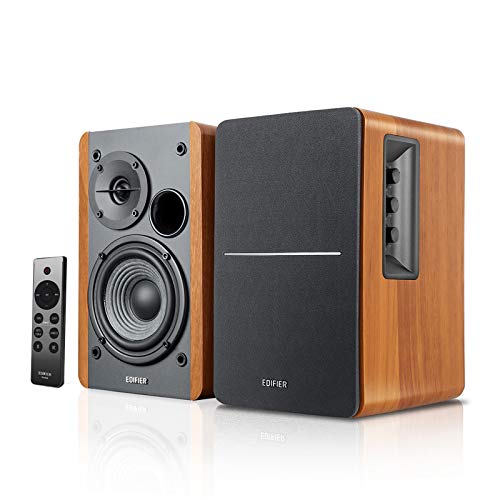
1. Edifier R1280DBs
Active Bluetooth bookshelf speakers with Bluetooth 5.0, optical and coaxial inputs, a subwoofer output and 42 W RMS, per the listing. Check price on Amazon.
Good for: TV, PC and music setups. Strengths: Many inputs and a sub out. Weaknesses: Large for a small desk. Skip it if you want a tiny speaker.
Best for small rooms and desks on a budget
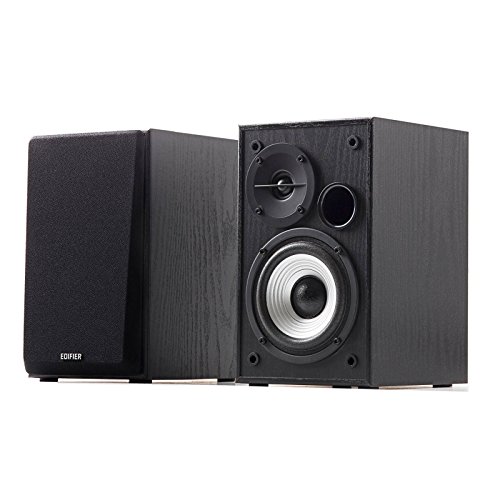
2. Edifier R980T
A pair of active bookshelf speakers with 24 W RMS and wooden enclosures, per the listing. Check price on Amazon.
Good for: Small rooms and desks on a budget. Strengths: Wood cabinets and budget tier. Weaknesses: Low power and no Bluetooth. Skip it if you want Bluetooth.
Best for desk setups and light production
3. Edifier MR3
A powered studio monitor with Hi-Res certification, 52 Hz to 40 kHz response and TRS, RCA and aux inputs, per the listing. Check price on Amazon.
Good for: Desk setups and light production. Strengths: Balanced and unbalanced inputs. Weaknesses: Not a big living-room speaker. Skip it if you want a subwoofer set.
Best for music listening in a living room
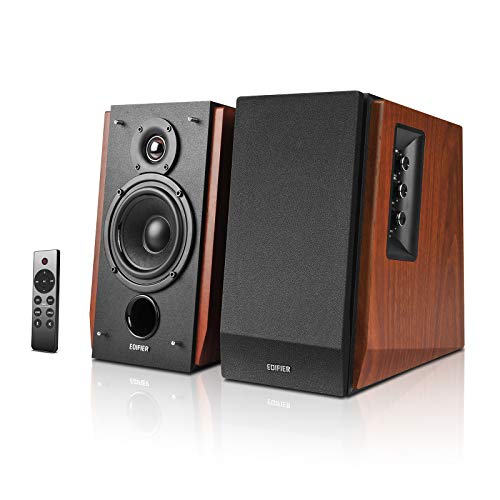
4. Edifier R1700BTs
Active Bluetooth 5.0 bookshelf speakers with aptX HD, a subwoofer output and 66 W RMS, per the listing. Check price on Amazon.
Good for: Music listening in a living room. Strengths: AptX HD and strong power. Weaknesses: A higher-tier pick. Skip it if you want the cheapest option.

Best for budget TV and music setups
5. Saiyin Powered Bluetooth Bookshelf Speakers
Powered bookshelf speakers with Bluetooth 5.3 plus optical and coaxial inputs, per the listing. Check price on Amazon.
Good for: Budget TV and music setups. Strengths: Bluetooth and digital inputs in the budget tier. Weaknesses: A lesser-known brand. Skip it if you want a known brand.
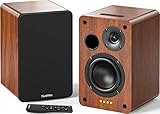

Best for vinyl and Bluetooth listening from a known audio brand
6. Audio-Technica AT-SP3X
Compact bookshelf speakers with Bluetooth and dual RCA inputs, per the listing. Check price on Amazon.
Good for: Vinyl and Bluetooth listening from a known audio brand. Strengths: Known brand, RCA inputs and Bluetooth. Weaknesses: A higher-tier pick. Skip it if you want the cheapest.

Best Picks by Category
These labels summarize listing data and are not hands-on test results.
- Best value: Saiyin Powered Bluetooth Bookshelf Speakers — a budget-tier pick with Bluetooth and digital inputs; check price on Amazon.
- Budget option: Saiyin Powered Bluetooth Bookshelf Speakers — a budget-tier pick; check price on Amazon.
- Premium option: Audio-Technica AT-SP3X — the premium-tier pick in this guide; check price on Amazon.
Price Tier Comparison
The table groups the picks by price tier. Prices change often, so check price on Amazon.
| Product | Price tier |
|---|---|
| Saiyin Powered Bluetooth Bookshelf Speakers | Budget |
| Edifier R980T | Budget |
| Edifier MR3 | Budget |
| Edifier R1280DBs | Mid-range |
| Edifier R1700BTs | Mid-range |
| Audio-Technica AT-SP3X | Premium |
How to Choose Powered Bookshelf Speakers
Powered (active) bookshelf speakers have an amplifier built into one of the speakers, so you plug them into a source and a wall outlet and you are done. The six pairs in this guide differ in power, inputs and character. This section explains what separates them. As with all our guides, it is built from product listings and manufacturer information, not our own testing, so confirm inputs and dimensions on each product page.
Power ratings (RMS) in plain language
RMS watts describe the continuous power the amplifier can deliver. The Edifier R980T lists 24 W RMS, the R1280DBs lists 42 W RMS and the R1700BTs lists 66 W RMS. More power gives more headroom for louder, cleaner sound in a bigger room, but it does not mean a speaker is better in a small space, where lower power is often plenty. Do not compare watts across brands too literally, because measurement methods vary. Match the power to the room: a desk needs little, a living room benefits from more.
Inputs decide what you can connect
Inputs are the most practical difference between these speakers. Bluetooth connects phones and tablets. Optical and coaxial digital inputs carry clean digital audio from a TV, console or PC; the R1280DBs and Saiyin list both. RCA inputs connect turntables with a preamp, CD players and many other devices; the Audio-Technica AT-SP3X lists dual RCA inputs. TRS inputs are balanced connections used in studios; the Edifier MR3 lists TRS, RCA and aux inputs. A subwoofer output, as on the R1280DBs and R1700BTs, lets you add a powered subwoofer later for deeper bass. Make a list of the devices you will connect and compare it with the inputs.
Bluetooth versions and codecs
Bluetooth 5.0 and 5.3 are modern versions with good range and stability. A codec is how audio is compressed over Bluetooth. The R1700BTs lists aptX HD, which supports higher-quality streaming when your phone or source also supports it. Without matching support on both ends, the speakers fall back to a standard codec. Wired inputs usually sound better and have no delay for video.
Size, placement and room
Bookshelf speakers are small compared with floor-standing speakers, but some are still large for a desk. The R1280DBs is flagged as large for a small desk. Place speakers at ear height, angled slightly toward you and a little away from walls to reduce muddy bass. A pair of desk stands can improve the sound and free desk space.
Wood, vinyl and build
The R980T lists wooden enclosures, which reduce unwanted vibration and often sound warmer than plastic. Vinyl-wrapped MDF is common in this tier and works well. Build quality shows in the cabinet and in the controls, so look at the remote and the knob placement.
Studio monitors versus hi-fi speakers
The Edifier MR3 is described as a powered studio monitor with Hi-Res certification and a 52 Hz to 40 kHz frequency response. Monitors aim for a flat, accurate sound that reveals detail, which suits mixing and critical listening. Hi-fi style speakers may add warmth or bass for enjoyment. Neither is better; choose by how you listen.
The Six Speaker Pairs in Depth
Edifier R1280DBs
Active Bluetooth bookshelf speakers with Bluetooth 5.0, optical and coaxial inputs, a subwoofer output and 42 W RMS. The input list is the draw: it suits a setup that combines a TV, a PC and a phone. It is a larger speaker, so check your desk space. It also has a subwoofer output if you want to add bass later.
Choose it if you want many inputs for TV, PC and music. Think twice if you want a tiny speaker.
Edifier R980T
A pair of active bookshelf speakers with 24 W RMS and wooden enclosures. It is the compact, budget choice with a wooden cabinet for a warmer sound. There is no Bluetooth, so you connect with a cable. It suits a small room or desk.
Choose it if you want wood cabinets in the budget tier. Think twice if you want Bluetooth.
Edifier MR3
A powered studio monitor with Hi-Res certification, 52 Hz to 40 kHz frequency response and TRS, RCA and aux inputs. It is the pick for desk setups and light music production, with balanced and unbalanced inputs. It is not a big living-room speaker, and it does not include a subwoofer.
Choose it if you want a flat, accurate desk monitor. Think twice if you want a big, bassy sound.
Edifier R1700BTs
Active Bluetooth 5.0 bookshelf speakers with aptX HD, a subwoofer output and 66 W RMS. The extra power and aptX HD make this a strong choice for music listening in a living room. It sits in a higher tier than the other Edifier models, so decide whether you need the extra power and Bluetooth quality.
Choose it if you want powerful, Bluetooth-capable speakers for a living room. Think twice if you want the cheapest option.
Saiyin Powered Bluetooth Bookshelf Speakers
Powered bookshelf speakers with Bluetooth 5.3 plus optical and coaxial inputs. The combination of Bluetooth and digital inputs is attractive for budget TV and music setups. The brand is lesser known, so check reviews for sound quality, reliability and support.
Choose it if you want Bluetooth and digital inputs on a budget. Think twice if you want a known brand.
Audio-Technica AT-SP3X
Compact bookshelf speakers with Bluetooth and dual RCA inputs. Audio-Technica is known for turntables and headphones, and these speakers suit vinyl and Bluetooth listening, particularly with a turntable that needs a preamp. It is the premium pick here, and the premium is largely for the brand and design.
Choose it if you want vinyl and Bluetooth listening from a known audio brand. Think twice if you want the cheapest option.
Which Pair Suits Which Listener
| You | Best match | Why |
|---|---|---|
| Connect a TV, PC and phone | Edifier R1280DBs | Optical, coaxial, Bluetooth and sub out |
| Small desk on a budget | Edifier R980T | Wood cabinets, budget tier |
| Light music production | Edifier MR3 | Studio monitor with balanced inputs |
| Living-room music | Edifier R1700BTs | 66 W RMS and aptX HD |
| Budget pick with Bluetooth | Saiyin Powered Speakers | Bluetooth 5.3 and digital inputs |
| Vinyl and Bluetooth | Audio-Technica AT-SP3X | Dual RCA inputs and Bluetooth |
Setting Up Bookshelf Speakers for Better Sound
- Place the speakers at ear height, with the tweeters aimed at your head.
- Form a rough triangle with you and the two speakers, spaced about as far apart as you are from them.
- Keep them away from walls if possible to reduce boomy bass.
- Use the best input available: digital optical or coaxial from a TV or PC, RCA from a turntable preamp.
- Set bass and treble modestly, then adjust by ear.
- Add a subwoofer through the sub output if you want more bass; see our 2.1 computer speakers.
- Use isolation pads or stands to cut desk vibration.
Common Mistakes When Buying Bookshelf Speakers
- Ignoring inputs. Check that the speakers connect to your devices.
- Buying too much power for a small desk. Loud is not better in a tiny room.
- Placing them on the floor or inside a cabinet. Sound will be muddy.
- Relying on Bluetooth for TV. Delay can occur; use optical.
- Skipping the return window. Sound is subjective.
Where to Go Next
Read our powered vs passive speakers and how to connect speakers to a turntable guides. Browse computer speakers, speakers for turntables, record players with speakers, Klipsch speakers and home theater systems.
How to Choose
Check the inputs
Aux, RCA, optical, coaxial and Bluetooth vary. Match them to your sources.
Placement
Place speakers at ear height, away from walls.
Subwoofer output
A sub out lets you add bass later.
How We Chose These Products
We start from products sold on Amazon with a full product name and clear specifications, and we skip results that show only a brand name or a vague title. We then read the listing and any manufacturer information for each one and note the features that matter for speaker and audio products: power and connections, size and placement, and the formats supported. We do not run our own lab tests, and this guide contains no hands-on measurements. Use it to build a shortlist, then check current prices, dimensions and return terms on the Amazon page before you buy.
Buying Guide: What to Check Before You Choose
Powered or passive, and where they go
Powered speakers have an amplifier built in and plug into a source. Passive speakers need a separate amplifier or receiver. In-wall and in-ceiling speakers save space but are harder to change later, while outdoor and marine speakers need weather and corrosion resistance. Check impedance and power handling when pairing passive speakers.
Soundbar size, channels and subwoofer
Soundbars range from compact two-channel bars to 5.1 and Dolby Atmos systems with a wireless subwoofer and rear speakers. More channels and a subwoofer give wider sound and deeper bass but need more space and cost more. Match the bar to your room and TV: a bar much wider than the TV stand will not fit, and a small room rarely needs a full surround set.
Connections: HDMI eARC, optical and Bluetooth
HDMI eARC (or ARC) lets one cable carry TV audio to the bar and usually allows the TV remote to control volume. Optical works with most TVs but carries less. Bluetooth is handy for music but is not ideal for TV because of possible delay. Check which port your TV has and what the bar supports, especially for Dolby Atmos.
Quick Reference: Which Pick Suits Whom
- Edifier R1280DBs: suits TV, PC and music setups
- Edifier R980T: suits small rooms and desks on a budget
- Edifier MR3: suits desk setups and light production
- Edifier R1700BTs: suits music listening in a living room
- Saiyin Powered Bluetooth Bookshelf Speakers: suits budget TV and music setups
- Audio-Technica AT-SP3X: suits vinyl and Bluetooth listening from a known audio brand
Common Mistakes to Avoid
- Buying a bigger system than the room can use.
- Ignoring the ports on your TV or amplifier.
- Assuming higher wattage always means better sound.
- Skipping the return window and warranty details.
- Overlooking placement, such as wall mounting or cabinet depth.
Setup and Care
- Place speakers at ear height and away from walls where possible.
- Run the TV or app setup and check audio output settings.
- Use a short, good-quality cable for the main connection.
- Adjust bass and treble gradually, then leave them.
What to Check Before You Buy
- Decide between powered and passive speakers.
- Check inputs: Bluetooth, optical, RCA, HDMI ARC.
- Match the size to your room and shelf.
- Look at the woofer size and frequency range.
- Consider a subwoofer output.
Placement: The Free Upgrade Every Bookshelf Owner Owns
More than any other speaker category, bookshelf speakers repay placement effort, because they are real hi-fi speakers operating in real rooms. Three principles govern almost everything. First, height: the tweeters should sit near ear level at your listening position, because high frequencies are directional and a speaker firing at your chest or over your head loses its clarity and imaging. Stands are the proper solution for room listening; for a desk, small risers or angled pads achieve the same geometry. Second, distance from walls: a speaker close to a wall or tucked into a bookshelf gains bass reinforcement that can flatter or bloat depending on the design, while a speaker given open space sounds leaner and clearer. Experiment in small steps — the difference between against the wall and a modest distance out is larger than the difference between many competing models.
Third, symmetry and angle. The pair should form a triangle with the listener, at equal distances, angled inward so their axes cross near or just behind the listening position. Asymmetric placement — one speaker in a corner, one in open space — produces a lopsided image that no balance control fully repairs. On a desk, keep the pair clear of the monitor’s shadow and at equal heights; in a room, keep them on matching stands rather than one on a shelf and one on a cabinet. These are unglamorous, zero-cost disciplines, and together they are worth more than the price step between the models in this guide.
Desks versus rooms: two different briefs
At a desk, you listen in the near field, where the speakers’ direct sound dominates and the room matters less; compact models like the Edifier MR3 and R980T are voiced and sized for exactly this, and their clarity at arm’s length is their party piece. In a room, the speakers must energise a volume of air and survive the journey to a sofa metres away, which favours the larger cabinets and stronger amplification of models like the R1700BTs. A pair can serve both lives — many do, moving from desk to room as homes change — but buy for the life it will live first, and be honest about listening distance, because distance is the variable that decides how much speaker you actually need.
Powered Convenience Versus the Passive Path
The powered design of every pick in this guide is a deliberate philosophy: amplifier, inputs and speakers engineered as one system, working the moment they are connected, with no receiver to buy, house or match. For most listeners this is simply the right answer in this size and price class — the amplifier inside is chosen for the drivers it feeds, the connections are the ones modern sources actually have, and the whole system occupies two boxes and a cable. The Audio-Technica AT-SP3X and the Edifier range embody the appeal: connect a phone, a computer or a turntable, and listen.
The passive path — separate amplifier, passive speakers, speaker cable — asks more and offers different rewards: the freedom to upgrade each part, to choose speakers from the entire hi-fi market, and to build toward a larger system over years. It costs more at every equivalent level of sound, occupies more space, and demands more knowledge. Neither path is a compromise; they are different relationships with the hobby. Choose powered for a complete, elegant answer today, which is what this guide curates. Choose passive only if the building itself is part of the pleasure — and if it is not, do not let anyone persuade you that you bought a lesser thing.
Turntables and the phono question
Vinyl is the connection that trips up new owners, so it deserves precision. A turntable’s output needs phono correction and amplification before any speaker can use it. Many modern turntables include a built-in phono stage with a switchable line output, and those connect directly to powered speakers like any other source. A turntable without one needs a phono preamplifier between it and the speakers — a small, inexpensive box that is not optional, because without it vinyl sounds thin, quiet and wrong in a way new listeners often blame on the records. Check which situation your turntable is in before ordering speakers, and if a preamp is needed, budget for it in the same purchase so the system works on its first evening.
Inputs and the Modern Source Mix
A powered bookshelf pair is usually the hub of a small system, and its inputs decide which sources it can serve gracefully. Optical from a television gives clean, lip-synced TV sound and turns the pair into a genuine soundbar alternative with real stereo separation. RCA and auxiliary inputs serve turntables, older devices and anything with a headphone output. Bluetooth serves phones and tablets with total convenience, at a small cost in delay that matters for video and not for music. USB, where offered, gives a computer a clean digital path that bypasses its internal audio entirely. Count your sources before choosing: the right pair here is the one with an input for each of your real sources and a painless way to switch between them, ideally from a remote when the speakers serve a television across the room.
Controls deserve the same practical eye. A remote is a luxury at a desk and a necessity from a sofa. Front-mounted controls suit desk pairs; side or rear controls are tolerable only where a remote exists. Tone controls, where fitted, are for gentle room correction — a touch less bass for a corner placement, a touch more treble for a soft, furnished room — and they should be set once, by ear, with familiar music, then left alone. A pair that needs constant adjustment is usually a pair asking to be moved, not tuned.
Bluetooth codecs and other fine print
Buyers sometimes worry about which Bluetooth audio codecs a speaker supports. In this class, the honest summary is that connection stability and the speaker’s own voicing matter far more than codec differences, which are subtle at these sizes and distances. Prioritise a current Bluetooth version for connection manners and range, confirm the speaker remembers its pairing so daily use is instant, and let the codec line on the specification sheet carry the small weight it deserves. The same calm applies to power figures: RMS ratings give a rough sense of capability, but cabinet size, driver design and voicing decide how a pair actually sounds in your room, which is why the return-window listening test outranks every number in this guide.
Choosing Among the Bookshelf Picks
The Edifier R1280DBs is the range’s all-rounder and the pair most buyers should start from: balanced sound, a remote, optical and Bluetooth, and a size that suits desks and small rooms alike. The R980T strips the formula to its wired essentials for the buyer whose sources are a computer and a turntable and who would rather pay for sound than connections. The MR3 aims at the desk and the creator, with a flatter, studio-leaning character that suits near-field listening and content work. The R1700BTs steps up in cabinet and authority for room listening and televisions. The Saiyin pair competes on value with a feature list that embarrasses its price class, and the Audio-Technica AT-SP3X brings a respected audio name and a compact, simple design for smaller spaces.
Match the pair to three facts: your listening distance, your source list, and your room’s size. Near-field and few sources point to the compact and wired picks; a television and a sofa point to the remote-controlled, optically fed pairs; a growing vinyl habit points to checking the phono path twice. Within those facts, flavour decides — some listeners prefer the warmer, fuller presentation, others the flatter, more literal one — and flavour is judged with your own records, in your own room, inside the return window. That is not a disclaimer; it is the method by which every good hi-fi purchase in history has been made.
Adding a subwoofer later
Several pairs here offer a subwoofer output, and the option deserves a plan rather than an impulse. A subwoofer added to bookshelf speakers extends the system downward for film and bass-heavy music, and in a room it can be placed where the bass behaves best rather than where the speakers must be. Add one when your listening proves the need — large room, film-heavy use, music that lives below what a small cabinet can do — and balance it with the same discipline as any 2.1 system: low, then up slowly, stopping below obviousness. Many desk and small-room listeners will never need it, which is precisely why the output is a nice option rather than a headline: buy the pair for the life you have, and let the subwoofer remain a door you can open later.
Care, Longevity and the Long Game
Bookshelf speakers are among the longest-lived electronics a home owns, because their job is mechanical and their designs mature. Keep them out of sustained direct sun, which ages finishes and surrounds; keep drinks off them, which is a rule their flat tops constantly tempt people to break; dust the cabinets and grills gently; and check cable connections if a channel ever crackles, since oxidation at a plug is a more common culprit than any failure inside the box. Foam or rubber driver surrounds age over many years, and a pair that has served a decade has usually repaid its cost so completely that its retirement, to a bedroom or a child’s room, feels like a promotion rather than an ending.
That longevity reframes the purchase. A pair of powered bookshelf speakers is not a gadget cycle; it is furniture-grade equipment that will outlast several phones and probably a computer or two. Buy the pair whose sound you love and whose inputs match your life, place them with the care this guide describes, and the question of speakers is settled for years — which, in a hobby that loves to keep people shopping, is the most valuable feature of all.
Listening Tests That Reveal a Pair’s Character
When a new pair arrives, judge it with material chosen to ask specific questions. A solo voice or a small acoustic recording asks about clarity and honesty in the midrange, where most music lives and where cheap speakers are most often exposed. A piano recording asks about evenness across the range, since the instrument spans nearly all of it and reveals bumps and dips as notes that leap or retreat. A well-recorded live album asks about imaging — whether the pair can place performers in space between and beyond the cabinets. A film scene with quiet dialogue over weather or traffic asks the television question: can you follow words at a natural volume without riding the remote? Play these four tests at your real listening distance, in your real positions, before any tone control is touched. A pair that passes them in your room is the right pair, whatever any chart says, and a pair that fails them has given you the information while returning it is still painless.
The first-week settling period
Give the pair, and your ears, a week. New speakers often sound slightly stiff on day one and, more importantly, your hearing is calibrated to whatever you listened to before, so the new pair is judged against a memory rather than on its own terms. Listen daily at ordinary volumes, revisit the test material at the week’s end, and only then decide. Many returned speakers would have become beloved by day five; many kept speakers were nearly returned on day one. Patience is a genuine audio skill, and it is free.
Bookshelf Speakers as a Television’s Sound
Using a powered pair instead of a soundbar is a choice more households should consider, and its logic is simple: two real speakers, separated by the width of the television, produce a genuine stereo image that a single bar approximates, and their larger cabinets give voices a natural body that small bar drivers strain for. The requirements are an optical or suitable input on the pair, a remote for volume from the sofa, and a television that can hand its volume control to the speakers or be set to a fixed output while the speakers’ remote rules. Dialogue clarity — the complaint that drives most television-sound purchases — is a midrange quality, and it is exactly what this category does best. The trade is tidiness: two boxes and cables against one bar. For a living room where music matters as much as film, the pair wins on sound and loses on invisibility, and households should choose knowingly between those honest goods.
Small rooms, shared walls and considerate volume
Bookshelf speakers in flats and shared houses carry the usual social physics: bass through walls is the complaint, never melody. Placement helps — speakers on stands or isolation pads rather than on a shared-wall shelf, kept from corners that amplify the low end — and so does the category’s near-field virtue: a good pair sounds complete at modest volumes, so the level that satisfies the room is lower than a lesser system would demand. Late-night film modes in sources, gentle bass reduction after hours, and a subwoofer deferred or omitted entirely are the considerate configurations, and none of them diminishes the owner’s enjoyment in any way that matters. Good sound and good neighbours are compatible; they just require the placement discipline this guide keeps recommending.
Stands, shelves and the truth about bookshelves
Despite their name, bookshelf speakers usually sound worst inside an actual bookshelf, where the cavity booms, the shelf edge diffracts the sound and the pair ends up at whatever height the books allowed. A shelf’s surface, with the speakers pulled to its front edge, is far better; stands are better still, because they put the tweeters at ear height and let the cabinets stand in open air at a chosen distance from walls. If stands are not possible, angled isolation pads on a desk or sideboard solve the height and much of the vibration problem for a fraction of the cost and space. The principle to keep is that the speaker’s position is part of the speaker. Budget a little of the purchase — money, or at least attention — for where the pair will stand, and the same pair will sound like a class above the one a careless shelf would have given you.
And when the pair is placed, connected and given its week, do the simplest thing in this entire guide: sit down and listen to a whole album, start to finish, at one sitting. Bookshelf speakers are bought for exactly that unfashionable pleasure, and a pair that makes you stay for side two has justified itself more completely than any measurement could. The rest — inputs, remotes, finishes — is logistics. The album is the point.
What powered bookshelf speakers cannot do
Honesty about limits completes the picture. A pair of this size will not fill a large hall, pressurise a room with cinema-scale bass, or serve as the upgradeable heart of a growing separates system, because it is a complete system by design. In a big room, the honest step is a larger pair or a subwoofer partnership, not louder hoping. In a home-theatre ambition, the honest step is a receiver-based system that can grow channels. Naming these limits does not diminish the category; it protects buyers from asking a bookshelf pair to be a concert hall, and it protects the pair’s real reputation, which is built in the rooms it was designed for — desks, studies, bedrooms, living rooms of ordinary size — where it is not a compromise at all but the correct instrument, complete in itself.
Within those rooms, the remaining decision is mostly temperament. Some listeners want analysis: every strand of a recording laid out plainly. Others want ease: a warmer presentation that flatters older recordings and long evenings. The picks in this guide lean in both directions across the Edifier range, the Saiyin and the Audio-Technica, and neither temperament is more correct. Play the test material, notice which presentation makes you stay in the chair, and buy that one. Hi-fi’s oldest rule survives every technology change because it was never about the equipment: the best system is the one that makes you listen to more music.
Choose by that rule and the logistics will follow: the inputs are on the product page, the placement is in this guide, and the album test takes one evening. What you are buying is not two boxes but a decade of evenings with your music presented properly — and measured that way, a well-chosen pair from this list is among the most reasonable purchases in the home.
A note for first-time hi-fi buyers
If this is your first pair of real speakers, welcome to a forgiving hobby entry point. You do not need special cables, special stands or special knowledge to enjoy what you have bought; you need the pair placed sensibly, a source you already own, and music you already love. Every refinement the hobby offers can wait, and most of it is optional garnish on a meal that is already complete. The listeners who stay happy longest are the ones who buy a good pair, place it well and then spend their money and attention on records, concerts and time — the inputs that were the point all along. Start there, and let the speakers do what the picks in this guide were chosen to do: disappear, beautifully, into the music.
That is the invitation this category extends, and it is open to anyone with a shelf, a desk and an album they have been meaning to hear properly.
Take it. Place the pair where your life is actually lived, press play on the record you know by heart, and hear what has been in it all along, waiting for speakers that could show you. That moment — not the unboxing, not the specifications — is the purchase, and everything in this guide exists to deliver you to it.
The rest is listening, which was always the plan.
One more practical reassurance belongs here, for the buyer reading this on a phone in a shop: you cannot really make a bad choice from this shortlist. You can make a mismatched one — the wired pair for a television across the room, the compact pair for a hall — and this guide has armed you against exactly those errors. Within a correct match, every pair here will be loved by someone, and the differences that remain are the pleasant kind, the flavour differences that make a system yours. So choose with confidence, place with care, and listen with patience. The music has been waiting for this.
Frequently Asked Questions
Are powered speakers better than passive?
They are simpler because the amplifier is built in.
Can I use them with a turntable?
Yes, if the turntable has a built-in preamp or you add a phono preamp.
Do they need a receiver?
No, powered speakers have amplifiers built in.
How do I choose the right speaker?
Start with where it will be used, then check connections, power and size. Read the product page for dimensions and supported formats.
Do I need a subwoofer?
A subwoofer adds low-frequency impact and helps with movies and music. It is optional in small rooms or for casual listening.
Are wireless speakers as good as wired?
Wireless is convenient, and quality depends on the model and the connection. For critical listening, a wired source is more consistent.
Do I need an amplifier?
Passive speakers do; powered ones have it built in.
Can I use them with a TV?
Yes, if they have an input your TV supports.
Bottom Line
For value, the Edifier R980T. For Bluetooth and digital inputs, the Edifier R1280DBs or Saiyin. For premium, the Edifier R1700BTs or Audio-Technica AT-SP3X.
Related Reading
- Soundbar Buying Guide: Channels, Atmos, HDMI ARC and Subwoofers
- 6 Best Soundbars for TV
- 4 Best 4×6 Car Speakers: Pioneer, Kicker, Pyle
- 4 Best 5.25-Inch Car Speakers: Pioneer, Kicker, BOSS
- 6 Best 6.5-Inch Car Speakers: Pioneer, JVC and Skar
- 6 Best 6×9 Car Speakers: Pioneer, Kicker, JBL
- 5 Best Bluetooth Speakers Under $50: Cheap and Waterproof
- 6 Best Bose Speakers: SoundLink Flex, Micro, Revolve, Max
- Edifier R1280DBs vs R1700BTs: Which Bookshelf Speakers?
- Edifier R980T vs Saiyin Bluetooth Speakers: Which?
- Is the Edifier R1700BTs Worth It? Listing-Based Review
- Is the Edifier MR3 Studio Monitor Worth It?
More Speaker Guides