Disclosure: As an Amazon Associate, reviewstook.com earns from qualifying purchases. Links on this page are affiliate links; they cost you nothing extra. Prices and availability change often, so check the current Amazon listing before you buy.
Choosing the best chair for valorant is a precision decision disguised as a furniture purchase. Valorant is a game of held angles and millimetres: you clear corners in slices, park your crosshair at head height and wait, then produce one small, exact mouse movement and take the shot. Anything that shifts beneath you during that wait, a seat that slowly sinks, an armrest a centimetre too high, a base that rocks when you breathe out, taxes the stillness the game rewards. Add ranked sessions where a single match can stretch past forty minutes and a best-of-the-evening queue can run five deep, and the chair becomes part of your aim whether you acknowledge it or not. This guide approaches seating from the tactical shooter’s side of the desk: repeatability first, comfort as the servant of repeatability.
Key Takeaways for Tactical FPS Players
- Repeatability beats plushness: the winning chair returns your body to the identical position every round.
- Armrest height level with the desk keeps shoulders down, which keeps low-sensitivity arm aim honest.
- A firm, stable base matters more in Valorant than in sprawling battle royale play.
- All three shortlisted chairs were confirmed against live listings before earning a link here.
- Write your settings down once dialled in; a borrowed chair reset should never cost you a ranked night.
Where Should You Buy, and What Needs Checking Beforehand?
Each chair below is available through Amazon, so sizes, finishes and delivery details can be compared on the listing itself before money moves. Valorant players should verify three things with unusual care. First, the seat height range, because your feet-flat, knee-angle geometry is the foundation the rest of the setup copies. Second, the armrest adjustment range, since your elbow height relative to the desktop decides whether your aim comes from the arm or from a shrugged shoulder. Third, the size variant, where a model offers one, because a shell that fits your torso keeps your back against the support instead of floating in front of it. Keep your desk’s thickness and underside clearance in mind while you read; a chair that cannot slide in square will twist your posture for every pistol round of the season.
In this guide
Quick Picks at a Glance
| Chair | Badge | Why it suits Valorant | Link |
|---|---|---|---|
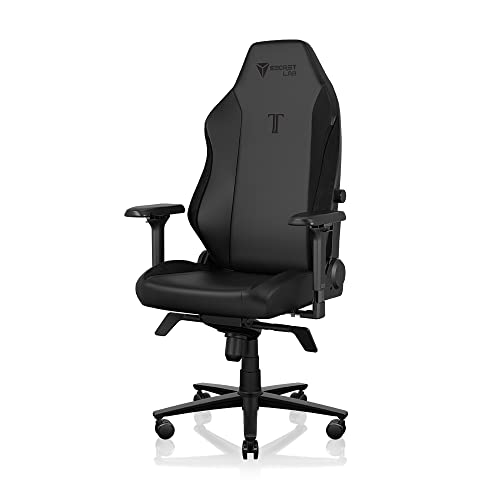
| Secretlab Titan Evo | Best for ranked precision | Dialled-in lumbar, 4D armrests, size options for exact fit | Check price on Amazon |
| Razer Iskur V2 X | Best for long scrim comfort | Wide seat, shaped lumbar, fabric that stays put | Check price on Amazon |
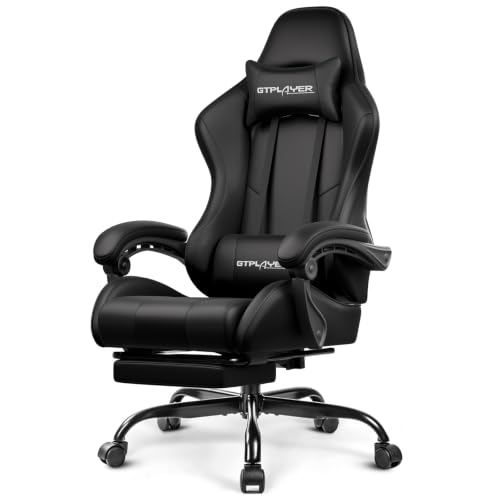
| Hbada P5 | Best dual-duty desk chair | Mesh back, adjustable support, footrest for VOD review | Check price on Amazon |
The Titan Evo tops this list because ranked Valorant is a discipline problem and this chair is the most adjustable instrument here: its lumbar system is built in and tunable, its armrests travel in four directions, and its sizes let a smaller-framed player sit correctly instead of adapting to an adult shell. The Iskur V2 X serves the player whose calendar is scrims and VOD review, where hours accumulate and a broad, fabric-covered seat prevents the fidgeting that creeps into late-evening aim. The Hbada P5 covers the student or office worker whose desk must behave all day and perform at night, trading gaming theatre for mesh freshness and an honest ergonomic shape.
How Was This Shortlist Built Around Valorant’s Demands?
The evaluation began with the round structure. Valorant asks for roughly ninety seconds of tension at a time, repeated twenty-odd times per match, with buying phases and half-time offering the only natural moments to reset your body. A suitable chair therefore had to do three jobs: hold an upright, forward-ready posture without effort during rounds, allow a genuine slump during the buy phase without sliding into a slouch that takes a minute to escape, and return to the fighting position identically when the barrier drops. Chairs that locked the sitter into one sculpted pose scored poorly, as did chairs so soft that the pelvis wandered.
Every candidate also had to survive verification. Models were included only where a live listing confirmed the exact product, its adjustment features and its upholstery, and anything that could not be confirmed cleanly was dropped rather than described from memory. Novelty seating, floor chairs and unbranded racing shells with no verifiable specification were excluded at the door. What remains is deliberately compact: three chairs, three philosophies, one shared standard of being properly checkable before purchase.
chairs for creative battle royale sessions
wrist support for long desk days

Secretlab Titan Evo — Best for Ranked Players Who Live by Routine
Badge: Best for ranked precision. Radiant-chasing players talk about crosshair placement, utility lineups and sleep schedules, but the ones who stay consistent also tend to be quietly obsessive about their desk geometry, and the Titan Evo rewards that temperament. Its verified listing describes a leatherette gaming chair with integrated adjustable lumbar support, a magnetic memory-foam head pillow, 4D armrests and a recline, sold in sizes including a regular rated for substantial weight. The integrated lumbar is the detail that matters most here: because it lives inside the backrest and adjusts with a dial, it cannot be knocked out of position by a teammate’s cat, a sibling, or your own halftime stretch, so round thirteen begins with the same back support as round one.
Mini spec box — Titan Evo
- Finish: leatherette on the listing checked for this guide
- Back support: integrated, adjustable from the chair
- Armrests: four-directional travel for exact elbow geometry
- Headrest: magnetic pillow, repositionable in seconds
- Sizes: more than one, so choose by body rather than by hope
Consider what happens during a long defensive half. You hold an angle for forty seconds at a time, breathing shallowly, mouse hand almost still. A seat that compresses unevenly will tilt your pelvis by degrees you cannot feel but your crosshair can: head-height placement drifts, and the first bullet goes over a shoulder it should have met. The Titan Evo’s firm, even base resists that slow betrayal. Then the half ends, you lean back, and the recline plus magnetic pillow give your neck an honest rest before the pistol round demands everything again. It is a chair built like a routine, and Valorant at any serious rank is a game that pays routines compound interest.
Strengths
- Built-in lumbar tuning stays exactly where ranked discipline sets it.
- Four-way armrests can match a low desk and a tilted keyboard precisely.
- Size choice lets lighter, smaller players sit with genuine back contact.
Trade-offs
- Firm cushioning feels businesslike to players who prefer a lounge chair.
- Leatherette warms up in a sunlit room during afternoon queues.
- The adjustment richness tempts endless fiddling instead of settling.
Best for: ranked grinders and team players who treat desk geometry as part of practice. / Not suited for: players wanting a soft, enveloping seat for mostly casual, reclined play.

Razer Iskur V2 X — Best for Scrim Blocks and VOD Review Evenings
Badge: Best for long sessions. Team Valorant is not only matches. It is two hours of scrims, a break, then an hour of watching the recording while a coach, or your own merciless notebook, explains why the retake failed. The Iskur V2 X is built for that fuller calendar. The listing checked for this guide highlights a wide seat, high-density foam, built-in lumbar support, a deep recline, 2D armrests and a plush fabric finish. Width sounds like a luxury until the third hour, when the ability to shift your legs without a bolster objecting is the difference between reviewing the next round attentively and counting ceiling tiles.
Mini spec box — Iskur V2 X
- Seat: broad, with dense foam that resists bottoming out
- Lumbar: contoured into the backrest itself
- Recline: deep enough for full VOD-watching slouch
- Armrests: height and angle adjustment, two directions
- Upholstery: plush fabric, black on the verified listing
Fabric brings a subtle aim benefit that leatherette cannot match: it holds your kit in place. A hoodie on leatherette slides a fraction with every micro-adjustment, and over a scrim block those fractions become a posture that has wandered inches from where warmup began. On fabric you stay planted, which suits a game where your pre-aimed angles assume your eye sits at a constant height above the desk. The compromise is housekeeping, since fabric asks for the occasional brush-down, and a spilled energy drink becomes a small project rather than a single wipe. Teams that eat at the desk, you know who you are, should weigh that honestly.
Strengths
- Broad seat keeps long scrim and review days free of pressure points.
- Fabric grip helps posture stay where warmup put it.
- Deep recline converts instantly into a review-the-round lounge.
Trade-offs
- Armrest travel is narrower than the Titan Evo’s four-way system.
- The generous frame demands a generous footprint under the desk.
- Very compact players may find the width more than they can use.
Best for: team players, coaches and grinders whose evenings mix play with study. / Not suited for: small desks, small players, or anyone who spills drinks as a hobby.

Hbada P5 — Best for Desks That Work All Day and Queue All Night
Badge: Best dual-duty pick. A large share of Valorant’s ranked population plays at a desk that spent the day hosting spreadsheets, lectures or design work, and the Hbada P5 is the chair on this page that respects that double life. Its verified listing describes an ergonomic office chair with a mesh back, adjustable lumbar support and seat height, a 2D headrest, swivel and tilt movement and a footrest that slides away beneath the seat. Nothing about it shouts esports, yet the shape underneath is sound: a contoured back that encourages the lower spine to settle, breathable mesh for rooms that stay warm under the pressure of a fifth overtime, and a footrest that turns agent-select downtime into genuine rest.
Mini spec box — Hbada P5
- Backrest: mesh, with lumbar support you can adjust
- Headrest: adjustable two ways for review sessions
- Footrest: stowed under the seat until wanted
- Motion: swivel plus tilt for between-round resets
- Listing colour: black
Where the P5 concedes ground is lateral drama. Valorant players rarely lean like racing drivers, so the missing bolsters matter less here than in other genres, but a player who throws their whole torso into wide swings may feel under-held. The mesh also has a fixed personality: supportive, cool, and unwilling to be softened. For the player whose chair budget must be defended to a partner, a parent or their own conscience as a work purchase first, those are acceptable trades, and the ranked performance on offer remains honest. Plenty of Immortal lobbies are being climbed from office chairs; the agent on screen cannot tell the difference, and neither can your crosshair.
Strengths
- Mesh ventilation suits marathon queues in warm rooms.
- Footrest makes agent select and VOD breaks properly restful.
- Office-appropriate looks ease the work-from-home negotiation.
Trade-offs
- Minimal side support for players who swing with their whole body.
- Mesh firmness cannot be tuned the way a cushion can.
- Fewer gaming-specific adjustments than the Titan Evo offers.
Best for: students and professionals whose Valorant desk moonlights as their workplace. / Not suited for: players chasing a pronounced racing-bucket feel or maximal adjustment.
How Do the Three Compare for a Tactical Shooter Desk?
| Criterion | Titan Evo | Iskur V2 X | Hbada P5 |
|---|---|---|---|
| Position repeatability | Highest, thanks to fixed integrated lumbar | High, helped by fabric grip | Good, with a more relaxed character |
| Armrest precision | Four directions of travel | Two directions | Standard office adjustment |
| Scrim-day endurance | Firm and supportive | Widest and most forgiving | Coolest, courtesy of mesh |
| Between-round recovery | Recline plus magnetic pillow | Deepest lounge feel | Footrest takes the prize |
| Desk sharing | Suits one dedicated player | Suits one player, generously | Suits a rotating cast best |
Notice what the table refuses to do: crown a universal champion. Valorant players differ in sensitivity, grip, desk depth and daily schedule, and each of those variables moves the answer. A low-sensitivity arm aimer should read the armrest row twice, because their entire technique leans on elbow geometry. A wrist aimer on a high sensitivity can weight endurance more heavily, since their body stays compact and still. A player in a hot climate with no air conditioning will find the mesh row quietly decisive. Let your own ranked week mark the table, not a stranger’s highlight reel.
What Should a Valorant Player Prioritise When Buying?
Begin with the elbow. Sit at your desk in your current chair, mimic your aim posture, and notice whether your shoulders creep towards your ears within ten minutes. That creep is the signature of armrests, or a desk, sitting too high, and it is poison for a game decided by relaxed precision. The chair you buy must let your forearms rest with shoulders fully dropped, elbows bent near a right angle, wrists floating level over the mouse and keys. If a chair’s armrests cannot descend to that geometry with your desk, no lumbar wizardry further down the feature list will rescue it, so measure armrest range against desk height before admiring anything else.
Second comes seat stability. Valorant’s decisive moments involve near-stillness, so a base that rocks, a lift that slowly sinks, or casters that drift on a hard floor all leak into your aim as micro-corrections you will misdiagnose as nerves. Prefer firm, even cushioning over deep softness, and test any new chair by holding an angle in a deathmatch for a full minute while paying attention to whether your pelvis stays put. Third, examine how the chair handles the buy phase. You will spend a meaningful slice of every match there, and a chair that lets you sit back, breathe and unclench without sliding into a slump you must climb out of will quietly protect your second-half performance.
Budget thinking for this genre is refreshingly simple. These chairs occupy the middle-to-upper tier of home seating, and what the money buys is adjustment range and consistency, not decoration. A cheaper chair with the correct size and armrest geometry will serve a ranked player better than an expensive chair that fits poorly, because Valorant exposes poor fit every single round. If funds are short, spend on fit and borrow comfort later; if funds allow, the integrated lumbar and four-way armrests of the top pick are the upgrades a tactical player will actually feel.
How Do You Dial In a Chair for Valorant, Precisely?
Set the chair up in a fixed order and resist improvisation. First, seat height: feet flat, knees at roughly ninety degrees, thighs parallel to the floor. Second, seat position relative to the desk: close enough that your elbows hang by your ribs when your hands rest on mouse and keys, with no reaching. Third, armrests: raise them until they just meet your forearms with shoulders dropped, then check both sides match, because an uneven pair tilts the whole aim platform. Fourth, lumbar: adjust until the support fills the small of your back without pushing you forward, then leave it alone for a week. Fifth, the headrest: position it for buy-phase leaning only, and ignore it during rounds.
Now validate with the game itself. Load a practice range session and hold head-height angles at common distances; your crosshair should rest where you intend without a conscious lift from the shoulders. Play two deathmatches and note where tension gathers: jaw and shoulders point back to armrest height, lower-back ache points to lumbar placement, numb legs point to seat height or a seat edge pressing behind the knees. Change one variable per day, photograph the settings with your phone, and keep a small note of the numbers that finally disappear beneath you. The goal state is a chair you stop noticing, because in Valorant the equipment you notice is the equipment that is costing you.
Between matches, use the downtime deliberately. Sit back into the recline during agent select, let your shoulders drop, unclench the mouse hand and look at the far wall for twenty seconds to reset your eyes. During the buy phase, resist the forward crouch over the shop menu; sit tall, breathe, and let the chair carry you. Players often blame their aim for late-match fade when the truer culprit is ninety minutes of accumulated tension that a few honest resets would have drained away. Build the resets into your routine and the same chair will feel like a better chair by the third match of the night.
keyboards built for first-person shooters
finding your next mouse in our pc gaming mice guide
What Mistakes Undermine Valorant Players When They Buy Seating?
Copying a professional’s chair is the most seductive error. Professionals sit in sponsor-provided furniture, on stages and in team houses, with desks built to a standard height and bodies that may share nothing with yours. Their chair choice carries almost no information for your bedroom setup. The second error is buying for the lounge and forgetting the round: a chair that feels glorious while watching a stream may hold your pelvis at an angle that makes held angles wobble, and Valorant will find that out within one ranked evening. Test chairs in your fighting posture, not your film posture.
Third, players neglect the floor. Hard casters on laminate let the chair retreat a few millimetres with every tap-strafe adjustment, and the player compensates by planting their feet and bracing, which stiffens exactly the muscles that should stay loose. A mat or suitable casters end the silent war. Fourth, they set the chair once and never revisit it, even as a new desk, a monitor arm or their own training changes the geometry. Revisit after any setup change. Fifth, they share the chair with a household and accept whatever adjustments they find each evening. If sharing is unavoidable, photograph your settings and restore them before the queue, every time, the way you would check your crosshair code after a settings reset.
Why Does Stillness Matter More in Valorant Than in Other Shooters?
Valorant’s gunplay punishes movement with inaccuracy, so the game’s best players cultivate a distinctive physical stillness at the moment of firing: counter-strafe, stop, click. That stop happens in the body before it happens in the keyboard. A player braced against a drifting chair, or sliding on a too-soft seat, carries residual motion into the shot that the game reads as movement error, and the spray blooms accordingly. This is the mechanical heart of this entire guide. The chair is not about comfort in the spa sense; it is about giving your counter-strafe a motionless platform to stop against, twenty rounds a match, five matches a night, all season long.
The same logic explains why small players suffer disproportionately in adult chairs. If your feet cannot anchor you, your body borrows stability from the desk edge, the armrests and your own shoulder tension, and every borrowed source adds tremor. Correct sizing is therefore an aim feature, and parents buying for a young ranked player should treat the size chart as seriously as the sensitivity settings inside the game. Conversely, a larger player squeezed into a narrow bucket will brace against the bolsters and arrive at the same tremor by another road. Fit is not a comfort luxury in this genre; it is the first page of the aim manual.
How Should Teams and Coaches Think About Chairs?
Anyone running a school club, a collegiate roster or a group of friends who scrim from the same room inherits a fleet problem rather than a personal one. Standardising on an adjustable model matters more than standardising on a prestigious one, because a roster spans body shapes and the chair must disappear beneath each of them. Coaches should add a two-minute chair check to the warmup routine: feet, armrests, lumbar, monitor, in that order, the way pilots run a checklist they could recite in their sleep. It feels fussy for exactly one week and then becomes invisible, while the alternative, a player quietly fighting their seat through a best-of-three, stays invisible in the worst way, surfacing only as inexplicable inconsistency that gets blamed on mentality.
VOD review culture gives teams a second seating consideration that solo players can ignore: the review posture. Hours spent dissecting rounds reward a chair that reclines honestly and supports a notebook or tablet without a wrestling match. If your programme reviews as much as it plays, weight that in the purchase, and consider that the wide fabric pick in this guide exists largely because that blended calendar is now the normal shape of serious amateur Valorant. The desk that develops players is a classroom half the week; buy the chair for the whole week, not only for match point.
How Do Sensitivity and Grip Style Interact With Your Chair?
Valorant’s sensitivity spectrum is wide, and where you sit on it changes what your chair must provide. Low-sensitivity players aim with the whole arm, sweeping the mouse across a large pad in arcs that begin at the shoulder. For them the armrest is a runway: it must sit level with the desk so the forearm glides without a step up or down at the desk edge, and it must be wide enough that the elbow does not fall off its inner edge during a long turn to check a flank. If you play this way, test any chair by performing your full one-hundred-and-eighty-degree turn and feeling for interruptions; a bump at the desk edge will appear in-game as a hitch in exactly the moment a flank arrives.
High-sensitivity wrist aimers live in a smaller world. Their forearm stays parked, their wrist does the travelling, and their chair requirement narrows to stillness and a consistent elbow height so the wrist’s pivot never changes altitude between sessions. For them, seat depth matters more: a seat that pushes the thighs forward changes the elbow’s resting place by enough to matter. Claw and fingertip grips add one more consideration, since those players often sit slightly higher and more forward, perched for micro-movements; a firm seat front that supports the perch without cutting circulation behind the knees becomes the detail to interrogate. None of this is visible on a product page, which is why this guide keeps returning to the same advice: know your own technique first, then interrogate chairs against it.
How Long Should a Tactical Player’s Chair Last, and How Do You Maintain It?
A chair in this class, used daily for ranked and study, should give several seasons of service before its foam or lift begins to fade, provided it receives the small attentions that gaming furniture rarely gets. Every couple of months, turn it over, clear the casters of the hair and fibre they inevitably harvest, and snug the bolts you can reach. Wipe leatherette down before skin oils settle into the grain; vacuum fabric before dust becomes part of its structure; let mesh dry fully after any spill rather than sealing moisture in with a cushion. Keep the chair out of punishing direct sun where the room allows it, since upholstery ages fastest in the window seat.
Diagnose decline correctly when it arrives. A slow sink during matches means the lift is tiring, and no amount of posture discipline compensates for a platform that descends mid-round. A new wobble usually traces to one loosened joint rather than general failure. A seat that feels harder in year three may simply reflect your own changed habits, especially if you have moved from wrist aim to arm aim and now load the seat differently. Replace the chair when its geometry can no longer be made repeatable, not when its looks fade; in this genre the chair is instrumentation, and instrumentation is retired when it stops measuring true.
What Happens to Your Body Across a Five-Match Ranked Night?
Track a ranked evening physiologically and the chair’s role sharpens. Match one begins fresh: posture is whatever you decide it is, and even a poor chair behaves. By match three, fatigue starts editing your position without permission. The pelvis slides a little, the head migrates towards the screen, and the aiming shoulder takes over work the armrest should be doing. Match five is where players report that their aim feels heavy, a description that usually means their body has been compensating for hours and the compensation budget is spent. A supportive chair does not abolish fatigue, but it slows the slide, literally: a backrest that meets you, a seat that holds its shape and armrests at the correct altitude all reduce the number of small corrections your muscles must fund each hour.
Breaks decide how much of that fatigue you carry forward. Valorant’s queue times are short enough to tempt players into staying seated for four straight hours, and the chair cannot save anyone from that decision. Stand during every second queue, roll your wrists, look out of a window, and sit back down into a chair whose settings you trust, so the return costs no adjustment time. Players who build that rhythm often discover their fifth match feels like their second, and they credit their mentality when the true authors were a water bottle, a hallway and a chair that resumed its shape the moment they did.
Which Desk and Monitor Choices Make or Break the Chair?
A chair exists inside a system, and Valorant exposes system faults mercilessly because the game is played at one desk distance for hundreds of hours. Monitor height is the most common saboteur: a screen set too low pulls the head forward and down, the torso follows, and the backrest’s support is abandoned by the second round. Raise the display so its centre sits near eye level when you sit tall, and the chair suddenly seems better designed. Desk depth is the second saboteur. A shallow desk forces the keyboard to the edge, the elbows into the air and the player into a perch; a deeper desk lets the forearms land and the chair do its work. If you can change only one thing beyond the chair, change the monitor height, because it is cheap, instant and transformative out of proportion to its cost.
Lighting and temperature join the conspiracy quietly. A bright window behind the monitor makes players lean in against glare; a room that warms through the evening makes them squirm against upholstery. Angle the desk, shade the screen, and favour mesh or fabric where summers are serious. None of these observations sells a chair, which is exactly why they belong in a chair guide: the honest answer to half the seating complaints brought to this page is a monitor riser, a curtain or a chair mat, and a guide that pretends otherwise would be steering you to spend furniture money on a lighting problem.
Three Ranked Players, Three Different Right Answers
Consider a Diamond duelist main who plays low sensitivity on a large pad, five nights a week, in a dedicated setup. Her technique is built on arm sweeps and a metronomic routine. She should take the Titan Evo, set its armrests with a ruler’s patience, and treat the settings note as part of her config. Consider next a university IGL who calls for a premier team, reviews as much as he plays, and shares a house desk with two flatmates. His evenings are marathons of mixed postures, and the Iskur V2 X’s width and fabric patience fit that life, provided he defends his settings with a photograph and restores them before scrims. Consider finally a working parent who queues two matches after the children are asleep, at the desk where the household admin lives. The Hbada P5 respects that reality completely, and its footrest will make those two matches feel like the rest they are supposed to be. Same game, same shortlist, three correct answers, because the variable was never the game; it was the life around the desk.
What Should Younger Ranked Players and Their Parents Know?
Valorant’s ranked ladder is full of teenagers playing adult-sized furniture in bedrooms, and the fit problem from the Fortnite guide reappears here in a sharper form, because this game punishes the compensations a too-large chair forces. A young player whose feet dangle will hook them around the chair base for stability, locking the hips at an angle; a player whose armrests sit too high will aim with raised shoulders for hours and call the resulting ache normal. Parents do not need to become ergonomists to help. They need to check three things monthly during growth years: feet flat without effort, shoulders down when the hands are on the controls, and the lower back touching the support when sitting tall. If any of the three fails, adjust; if adjustment runs out, the chair has been outgrown, whatever its condition.
There is a budget conversation worth having honestly in these households. A correctly sized chair from the shortlist above costs real money, and a teenager’s ranked ambitions can sound like a flimsy justification for it. Reframe the purchase as desk furniture for study as much as for play, choose the model whose size range covers the next growth phase rather than the current photograph, and the chair becomes the desk’s longest-serving component. What should not happen is the common compromise of an adult chair plus a cushion, which relocates the player away from every support the chair was designed to provide and teaches a forward-perched habit that later coaching must then dismantle.
How Do You Test a Chair in the First Fortnight?
The returns window is a testing instrument; use it like one. Days one and two are for geometry: set the chair by the sequence earlier in this guide and play deathmatches only, noting where tension gathers. Days three to five are for ranked reality, because only real matches produce the held angles and overtime stress that expose a wandering base or a sinking lift. Keep a one-line diary after each session naming the body part that complained loudest; patterns emerge fast, and a complaint that moves around usually means general fatigue, while a complaint with a fixed address means a specific setting is wrong. Adjust one variable, then give it two days. Players who twiddle everything nightly learn nothing and conclude wrongly that the chair is hopeless.
By the end of the fortnight you should be able to answer three questions with evidence. Does your crosshair rest at head height without shoulder effort at the start of a match and at the end of one? Do your feet and pelvis stay where the first round put them? Can you describe your settings well enough to restore them after the chair is borrowed? If the answers are yes, keep the chair and stop shopping; the remaining gains live in your practice routine. If a no survives honest adjustment, return the chair while the window is open and apply the diary to the next candidate, because a fortnight of notes is worth more than a month of reviews written by strangers with different desks.
A Note on Chairs at Clubs, Schools and Shared Gaming Spaces
Not every Valorant player owns their seat. School esports rooms, university gaming societies and internet cafes all present the same challenge: a row of identical chairs, a queue of different bodies, and ninety minutes to make the combination work. The transferable skill is the two-minute reset. Arrive, set seat height from your feet, set armrests from your shoulders, check the back support meets your spine, and only then open the game. Players who learn the reset at a club carry it to LAN events and friends’ houses for the rest of their playing lives, and it is worth more than any single purchase recommended here, because furniture will keep changing underneath a player while the habit of fitting it stays constant.
Organisers of shared spaces can help with embarrassingly cheap interventions. A laminated card on each desk showing the adjustment order, a footrest rail for shorter players, and a rule that chairs return to a neutral setting after each session all raise the floor for everyone. When a shared space does buy new chairs, the lesson of this guide applies at fleet scale: choose the model with the widest adjustment range and the most forgiving size options, not the model with the most dramatic styling, because a fleet chair’s job is to disappear beneath the broadest possible range of players, session after session, with the least possible fuss from whoever runs the room.
Why Do Players Blame Their Chair Last, and Themselves First?
There is a cultural quirk in competitive shooters worth naming before you spend anything: players treat physical setup as an excuse, so they under-invest in it and over-invest in blame. A missed shot becomes a whiff, a bad day becomes a mentality problem, and the chair that has been sinking two centimetres an hour since spring escapes suspicion entirely because suspecting it feels like making excuses. The mature position is duller and more useful. Equipment is a variable like any other: check it on a schedule, fix what fails the check, and then return to blaming your practice with a clear conscience, because at least the blame is now landing on the variable that remains.
Run the boring audit once a split. Sit in your match posture and have a friend photograph you from the side; compare the picture with your posture in the first week you set the chair up. Check the lift by sitting still for ten minutes with a book balanced against a mark on the wall. Roll the chair and listen for the caster that has stopped rolling and started dragging. Tighten what loosened, clean what collected, replace what genuinely died. The audit takes fifteen minutes, and it protects the hundreds of hours of practice that sit downstream of it, which makes it the highest-value quarter hour in a ranked player’s season, however unglamorous it looks beside a new crosshair or a fresh sensitivity.
What Does a Sensible Upgrade Path Look Like?
Few players buy their final setup in one purchase, and the order of upgrades matters more than the total spent. If your current chair is the wrong size, replace it first and change nothing else, because every other measurement at your desk is referenced to where your body sits. If the size is right but the platform wanders, spend on the floor next: a mat and honest casters cost little and stabilise everything above them. If the platform is stable but your shoulders live beside your ears, the fault is the chair-desk height relationship, and the money belongs to armrest range, a footrest or desk work, in whichever order your room allows. Only when the body is quiet does it make sense to chase refinements like a magnetic pillow or a plusher fabric, pleasant as those are.
Resist the parallel-upgrade trap, where a new chair, desk and monitor arm arrive in the same week and nothing can be evaluated because everything changed at once. Sequence the purchases a fortnight apart, keep the diary habit from the testing section, and let each change prove itself in ranked matches before the next arrives. Players who upgrade this way end up with setups that look unremarkable and perform beautifully, because every component was chosen against evidence from their own desk rather than against a photograph of someone else’s. That, in the end, is the whole argument of this guide compressed into one habit: measure, adjust, record, and let the game tell you what to buy next.
Final Recommendation for Valorant Desks
Take the Secretlab Titan Evo if ranked consistency is your religion: its integrated lumbar, four-way armrests and size range make it the easiest chair here to turn into a fixed, repeatable instrument. Take the Razer Iskur V2 X if your Valorant life includes long scrim blocks and longer review sessions, where width and fabric patience pay hourly dividends. Take the Hbada P5 if the desk earns its keep in daylight hours and your chair must justify itself to a household budget as work furniture that happens to climb ranked at night. Whichever you choose, set it once, set it precisely, write the settings down, and then forget it exists, because forgetting your chair is the surest sign it is doing its job.
Frequently Asked Questions About Chairs for Valorant
Does a gaming chair improve aim in Valorant?
Not directly, and anyone promising that is selling something. What a well-fitted chair does is remove sources of noise: drifting, bracing, shoulder tension and a pelvis that will not stay where warmup left it. Your aim training still does the improving, but it stops fighting the furniture while it works.
How high should my chair be for Valorant?
High enough that your feet rest flat, your knees bend near ninety degrees and your forearms meet the desk with shoulders fully relaxed. If your shoulders rise when you rest your arms, something in the chair-desk pair is too tall; if your knees point uphill, the seat is too low. Judge by those signals rather than by any universal number.
Are armrests good or bad for tactical shooters?
Correctly set armrests are good: they carry the forearms so the shoulders can stay down through long holds. Badly set armrests, too high, too low or uneven, are worse than none at all, which is why some players remove them entirely. If you remove yours, ensure the desk edge and your posture still give the aiming arm a consistent reference.
Should I lock my chair’s tilt while playing ranked?
Many players find a locked or near-locked tilt helps during rounds, because the platform cannot rock at the moment of the shot, then unlock it for buy phases and breaks. Experiment during deathmatch rather than during a promotion match. The right answer is the one that makes your held angles feel boringly stable.
Is mesh or padded better for long ranked sessions?
Mesh wins on temperature across a long evening, especially in warm rooms, while padded seats win on pressure distribution for players who sit heavily in one spot. Your climate and your sitting style decide it. Neither material fixes a wrong size, so settle fit first and material second.
Can a chair help with wrist or shoulder discomfort?
It can remove common causes: armrests that hold the forearms at desk height stop the shoulders carrying the arms all evening, and a seat height that keeps the elbows near ninety degrees reduces the wrist extension that creeps in at a badly matched desk. What a chair cannot do is treat pain. Discomfort that persists after a careful setup, or any numbness and tingling, deserves professional advice rather than another equipment purchase, and ranked will still be there after you have looked after yourself properly.
Do I need a headrest for Valorant?
Only for the parts of the session spent leaning back: buy phases, agent select, queue time and review. During rounds most players sit forward of the headrest entirely, so it neither helps nor hinders aim. Choose a chair whose headrest adjusts or detaches cleanly, set it for your leaning posture, and judge it on whether it stays put rather than on how impressive it looks in photographs.
What if my desk is too high for any chair?
Then the desk is the problem to solve, because raising the chair until your elbows clear the desktop will lift your feet off the floor and trade shoulder tension for hip trouble. A footrest restores the geometry in the short term, and it is a legitimate long-term answer for fixed desks in rented rooms. If the desk is yours, lowering it or choosing a slimmer desktop does more for your aim than any chair upgrade on this page.
How often should I recheck my chair settings?
After any change to the desk, monitor or flooring, after any growth spurt in younger players, and at the start of each competitive split as a matter of ritual. Settings also drift when chairs are shared. A two-minute check on a quiet evening is cheaper than a week of wondering why your crosshair placement feels unfamiliar.