Disclosure: As an Amazon Associate, reviewstook.com earns from qualifying purchases. Links on this page are affiliate links; they cost you nothing extra. Prices and availability change often, so check the current Amazon listing before you buy.
Finding the best chair for fortnite sounds like a joke until you have spent a Saturday bouncing between Creative maps, Zero Build lobbies and a ranked grind that refuses to end before dinner. Fortnite sessions sprawl. You lean in for build fights, slump back while a bus ride loads, perch on the edge during a tense endgame circle, then swivel round to argue about the replay. A chair that suits that rhythm needs to fit younger and smaller players properly, survive constant movement, and stay comfortable when a creative session quietly turns into three hours of map testing. This guide treats Fortnite seating as its own problem, not as generic office comfort with a logo on it.
Key Takeaways for Fortnite Players Choosing a Chair
- Seat height range matters more than padding thickness if the player is still growing, because feet that dangle change how the whole body sits.
- Fortnite rewards a chair that lets you shift position often, so easy recline and movable armrests beat a rigid, locked racing shell.
- Fabric upholstery tends to suit long creative sessions in warm rooms, while leatherette wipes clean after snack-heavy lobby nights.
- Every pick below was checked against a live Amazon listing, and each one is linked only where that check came back clean.
- Measure the desk first: armrest height against the desk underside decides whether any chair actually tucks in at your setup.
Where Can You Buy a Fortnite-Ready Chair, and What Should You Check First?
All three chairs in this roundup are sold through Amazon, which makes comparing sizes, upholstery options and delivery terms straightforward in one place. Before ordering, confirm the size variant on the listing matches the player who will actually use it, because two of these models come in more than one size and the wrong one quietly ruins the fit. Check the stated weight capacity against the player plus any habit of a younger sibling climbing aboard mid-session. Look at the returns window too, since chair comfort only reveals itself after a full evening of play, not after ten minutes on a showroom-style sit. Finally, photograph your desk underside clearance and keep that number beside you while you read the specifications further down this page.
In this guide
Quick Picks: Which Chairs Suit Fortnite Best?
| Chair | Badge | Standout trait | Link |
|---|---|---|---|
| Secretlab Titan Evo | Best overall for growing players | Size range with a smaller option, magnetic head pillow, 4D armrests | Check price on Amazon |
| Razer Iskur V2 X | Best wide-seat comfort | Broad seat base, built-in lumbar shaping, plush fabric finish | Check price on Amazon |
| Hbada P5 | Best mesh alternative | Breathable mesh back, fold-away footrest, office-chair manners | Check price on Amazon |
The Titan Evo leads because Fortnite households often share one chair between a teenager and a parent, and its size options plus deep adjustability cover both bodies without either person perching awkwardly. The Iskur V2 X answers a different complaint: players who sit cross-legged, sideways or with one leg folded under them during long creative builds need width more than they need gadgets. The Hbada P5 is the pick for bedrooms that double as homework stations, where a mesh office chair looks calmer, breathes better in summer, and still reclines far enough for replay watching. None of these is a child-sized novelty chair, and that is deliberate, because kids outgrow novelty long before they outgrow Fortnite.
How Were These Chairs Chosen for Fortnite Specifically?
The selection started from a simple question: what does Fortnite actually ask a body to do? Battle royale matches alternate between relaxed looting phases and sudden, twitchy build battles where players hunch forward and hammer keys. Creative mode stretches sessions out, with builders leaning back to survey a map, then leaning in to place pieces precisely. Ranked play adds longer, tenser sits where nobody wants to be the teammate who stands up mid-zone to stretch a numb leg. So the criteria weighted adjustability for different body sizes, freedom to change posture without fighting the chair, upholstery that survives daily use, and armrests that can move out of the way when a player switches to controller or sprawls during a replay.
Products earned their place only when a live listing check confirmed the exact model, its size options and its headline features. Chairs that appeared only in marketplace listings with unclear model years were left out. Anything marketed purely as a floor rocker or a beanbag was excluded too, because those cannot hold a desk posture for keyboard and mouse play, however fun they look in a bedroom corner. The result is a short list on purpose: three chairs that between them cover the small player, the sprawling creative builder and the shared family desk.
supportive desk accessories for long sessions
seating for tactical shooter desks

Secretlab Titan Evo — Best Overall for Players Who Are Still Growing
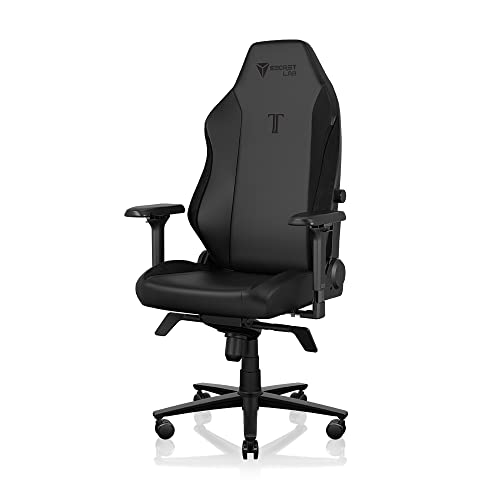
Badge: Best overall. The Titan Evo earns the top spot in a Fortnite household because it is the rare gaming chair sold in distinct sizes, including a smaller fit that lets shorter players plant both feet flat instead of dangling them above the floor. That single detail changes everything downstream: with feet grounded, the pelvis stays level, the back actually meets the lumbar support, and a young player stops sliding forward into the slouched shrimp posture parents keep nagging about. The listing confirms a leatherette finish, an integrated adjustable lumbar system, a magnetic memory-foam head pillow, 4D armrests and a stated capacity in the regular size that comfortably covers most adults who will inevitably steal the chair for their own sessions.
Mini spec box — Titan Evo
- Upholstery: leatherette on the verified listing
- Lumbar: built-in adjustable support dialled in from the chair itself
- Armrests: 4D, moving up, down, sideways and angled
- Extras: magnetic head pillow that stays where you park it
- Sizing: multiple sizes exist, so match the variant to the player
During creative sessions the Titan Evo behaves like a piece of studio furniture. Builders spend half their time leaning back to judge proportions of a half-finished map, and the recline range lets that happen without the chair tipping into a nap. When a build fight erupts, the seat base stays firm enough that quick mouse flicks do not wobble the whole body. The magnetic pillow sounds like a gimmick until a player realises it can be nudged two centimetres between matches and simply stays there, unlike strap pillows that migrate down the headrest by the third game of the night.
Strengths
- Size options mean a younger player can get a genuinely correct fit today.
- Integrated lumbar adjustment removes the loose cushion younger players always discard.
- Armrest movement covers keyboard play, controller play and tablet spectating alike.
Trade-offs
- Leatherette can feel warm against bare legs during summer creative marathons.
- The firm seat padding divides opinion among players used to sofa-soft chairs.
- Assembly is a two-person job if the player is small and the box is not.
Best for: households wanting one chair that fits a growing Fortnite player now and still fits them in three years. / Not suited for: players who strongly prefer a soft, sink-in seat or a fabric finish in a hot room.

Razer Iskur V2 X — Best for Sprawlers, Cross-Legged Sitters and Creative Builders
Badge: Best wide seat. Ask a room of Fortnite players how they sit during a long creative session and almost nobody describes textbook posture. One leg gets folded underneath, knees drift wide, somebody ends up sideways with a controller while a friend builds. The Iskur V2 X is shaped for that reality. Its verified listing highlights a wide seat, high-density foam cushions, built-in lumbar support, a recline that reaches well past upright, 2D armrests and a plush fabric finish. The width is the headline: there is room to change position without an armrest digging into a thigh every time you rearrange yourself.
Mini spec box — Iskur V2 X
- Seat: wide base with dense foam cushioning
- Back: built-in lumbar contour rather than a loose pillow
- Recline: generous range for replay watching and map planning
- Armrests: 2D adjustment, height and angle
- Finish: plush fabric in black on the checked listing
Fabric changes the Fortnite experience in small, cumulative ways. It grips a hoodie instead of sliding against it, so players stop readjusting after every build fight. It also forgives the creative-session snack situation better than expected, since crumbs brush off rather than smearing. The trade is that fabric asks for an occasional vacuum and a fabric cleaner after a spilled drink, whereas leatherette just wipes down. For a bedroom chair that hosts five-hour Saturday sessions, many families will happily accept that chore in exchange for a seat that never feels sticky in August.
Strengths
- Generous seat width suits the way Fortnite players actually lounge and build.
- Fabric finish stays comfortable against skin during warm-weather sessions.
- Built-in lumbar shaping means nothing gets lost behind the chair.
Trade-offs
- Armrest adjustment is simpler than the Titan Evo, with fewer directions of travel.
- The wide frame needs a wider desk gap, so measure before ordering.
- Players who like a tall, narrow racing bucket may find it too relaxed.
Best for: creative builders and relaxed Zero Build players who change sitting position constantly. / Not suited for: very small players who need a dedicated smaller size, or tight desks with narrow kneehole width.

Hbada P5 — Best Mesh Pick for Bedrooms That Double as Study Space
Badge: Best mesh alternative. Not every Fortnite desk lives in a gaming cave. Plenty sit in a family room or a bedroom where homework, video calls and parents working from home all share the same square metre. The Hbada P5 is an ergonomic office chair with a mesh back, adjustable lumbar support, a 2D headrest and a footrest that tucks away under the seat, per its verified listing. It looks like furniture a parent would choose, yet it reclines and swivels happily through a night of duos, and that footrest turns replay review into something close to a cinema seat.
Mini spec box — Hbada P5
- Back: breathable mesh with adjustable lumbar support
- Headrest: adjustable in height and angle
- Footrest: retractable, hidden beneath the seat when not used
- Movement: swivel with tilt function for relaxed spectating
- Colour on checked listing: black
Mesh earns its keep in shared rooms because air keeps moving through the back panel, so the second person to use the chair does not inherit a warm leatherette imprint of the first. For younger players, the P5 also teaches a posture habit gently: the shaped back encourages sitting into the chair rather than perching on its front lip. It will not thrill a teenager shopping purely for esports aesthetics, and the armrest and frame feel more office than arena. But for the household where the chair budget must justify itself across school, work and Fortnite, it is the most defensible seat on this page.
Strengths
- Mesh back keeps shared, all-day seating noticeably fresher.
- Retractable footrest is a genuine treat for replays and streams.
- Neutral styling passes in a family room without an argument.
Trade-offs
- Less lateral bolstering, so very active build-fight leaners feel less hugged.
- Mesh tension is fixed by design; you cannot soften it like a cushion.
- The look will not satisfy a player set on a bold gaming silhouette.
Best for: shared desks, warm rooms and players whose chair must also serve homework duty. / Not suited for: anyone chasing a race-seat aesthetic or deep side bolsters for dramatic leaning.
How Do the Three Chairs Compare Side by Side?
| Question | Titan Evo | Iskur V2 X | Hbada P5 |
|---|---|---|---|
| Who fits best? | Small through tall, via size choice | Average to larger, cross-legged sitters | Teens and adults at shared desks |
| Warm-room comfort | Leatherette can hold heat | Fabric breathes moderately | Mesh breathes most freely |
| Posture coaching | Adjustable integrated lumbar | Shaped built-in lumbar | Contoured mesh back |
| Creative-session lounging | Strong recline, firm base | Widest, most relaxed seat | Footrest wins for spectating |
| Cleaning reality | Wipes down fastest | Needs a vacuum now and then | Mesh shakes out easily |
Read the table through the lens of your actual week. A chair that hosts two hours of homework and one hour of Fortnite should be judged differently from a chair that exists only for Saturday creative marathons. The Titan Evo is the precision instrument, the Iskur is the comfortable hangout, and the P5 is the diplomat that keeps a shared room happy. Fortnite players often buy for the fantasy of ranked intensity and then spend most hours building, chatting and watching clips, so weight your lounging needs honestly when you choose.
What Should You Look for When Buying a Chair for Fortnite?
Start with the floor-to-seat measurement. A player whose feet rest flat with knees near a right angle can use the backrest properly; a player whose feet swing will slide, slouch and complain within a month. If the player is under average adult height, prioritise the lowest seat height and the smallest size variant over every flashy extra. Next, examine the armrests. Keyboard and mouse play wants armrests roughly level with the desk surface, controller play wants them lower or swung away, and creative building alternates between the two several times an hour. Armrests that adjust in more directions simply get out of the argument more often.
Upholstery is a household decision disguised as a comfort decision. Leatherette shrugs off juice spills and marker accidents, which matters in rooms shared with younger siblings. Fabric feels kinder during long, warm sessions and hides pet hair less guiltily, but it asks for cleaning effort. Mesh is the coolest and the least forgiving if a player likes to sit on one folded leg, because the frame edge can press. Then consider recline: Fortnite’s downtime, from bus rides to replay analysis, is long enough that a chair stuck near upright wastes half the game’s rhythm. Finally, check the base and casters against your floor. Hard casters on wood can wander during excited moments; a rug or a chair mat tames that and protects the floorboards at the same time.
Budget framing helps keep the decision sane. Chairs in this class sit in the mid-to-premium tier of home seating, well above flat-pack novelty chairs and well below bespoke ergonomic furniture built for offices. Spending at this level buys adjustability and replaceable-feeling durability rather than decoration. If the budget is tight, the honest move is to buy the simpler chair with the right size rather than the fancier chair in the wrong size, because fit is the feature a growing player feels every single day.
How Do You Set Up a Chair for Fortnite, Step by Step?
Begin with the chair alone, away from the desk. Set the seat height so the player’s feet rest fully on the floor with a slight, comfortable bend at the knee. Add the lumbar support next, positioning it where the lower back curves inward, and make small adjustments over the first week rather than chasing perfection on day one. Set the headrest or pillow only after the back position settles, since a pillow placed for a slouched posture will push the head forward once posture improves.
Roll the chair to the desk and align the armrests with the desktop, leaving the shoulders relaxed rather than shrugged. The monitor’s top edge should sit near eye level, and the keyboard should be close enough that elbows stay near the body during build fights. For controller sessions, drop the armrests a notch and recline slightly; Fortnite’s controller aim rewards a settled, repeatable position more than a dramatic one. Then play three matches and change exactly one thing. Players, especially younger ones, tend to twiddle every dial at once and conclude the chair feels weird, when a single patient adjustment per session finds the sweet spot within a week.
Habits around the chair matter as much as the chair itself. Between matches, stand, roll the shoulders and look at something far away while the next lobby loads; the game’s own downtime is a built-in break timer. Keep water at the desk rather than energy drinks that invite jittery, tense posture. Parents of younger players can make the setup a shared project, measuring the desk together and letting the player own the adjustments, which turns posture from a lecture into a piece of gaming gear knowledge. And revisit the fit every school term, because a growth spurt quietly invalidates last season’s perfect settings.
keyboard picks for fast-paced shooters
What Mistakes Do Fortnite Players Make When Choosing a Chair?
The classic error is buying the adult size for a child because it seems better value, then watching that child perch on the front edge for two years while the lumbar support presses into their shoulder blades. A chair that fits later fits never, because habits formed in the meantime stick. The second error is shopping by silhouette: copying a favourite streamer’s chair without noticing that streamers sit in sponsored furniture chosen for camera looks, in rooms with different desks and different body sizes. Your player’s body is the only reliable specification sheet.
A third mistake is ignoring the desk. A wonderful chair whose armrests collide with a thick desktop gets parked at an angle, and the player twists slightly for every session, which is worse than a modest chair that slides straight in. Measure the gap, compare it with the chair’s armrest height at its lowest setting, and save yourself the return. Fourth comes caster neglect: hard wheels on a bare floor let the chair creep backwards during excited endgames, and players brace their legs to compensate without realising why their calves ache. A simple mat fixes it. Finally, families often forget the second user. If a parent works from the same chair all day, buy for both bodies, or accept a compromise pick like the mesh option rather than a narrow bucket that only suits one of you.
A Short Word on Second-Hand and Hand-Me-Down Chairs
Plenty of Fortnite chairs arrive as hand-me-downs from an older sibling’s setup or a parent’s upgraded office, and there is no shame in that route when the chair still fits and functions. Inspect a second-hand chair like you would a used bicycle: sit and recline to test the mechanism through its full travel, check the gas lift by sitting and waiting to see whether it sinks over ten minutes, examine upholstery seams where thighs rub, and roll it to feel for a caster that drags. A chair that passes those tests and matches the player’s measurements is a sensible start, especially for a first setup whose desk and habits are still evolving. What a hand-me-down cannot do is shrink, so if the shell is simply too large for a young player, pass it along rather than padding it into a compromise, and put the saved money towards the correctly sized model when the budget allows.
Final Recommendation: Which Chair Should a Fortnite Player Actually Buy?
Choose the Secretlab Titan Evo if one chair must fit a growing player properly and keep fitting through the teenage years; its size range and integrated lumbar make it the safest long-term answer. Choose the Razer Iskur V2 X when the player’s Fortnite life is mostly creative building, relaxed lobbies and long social sessions where width and fabric comfort dominate. Choose the Hbada P5 when the desk is shared, the room runs warm, or the chair must look respectable on a work call at nine and host a duos run at seven. All three respect how Fortnite is really played: in bursts, in sprawls, and in sessions that always last one match longer than planned.
How Does Fortnite’s Session Shape Change What a Chair Must Do?
Think about the anatomy of an ordinary Fortnite evening and you will see why generic advice fails. The session opens in the lobby, where nobody sits properly at all: players lean sideways, check phones, half-watch a friend’s screen. Then comes the drop, a minute of total forward lean while choosing a landing spot and scanning for gliders. Looting phases relax the body again, punctuated by sudden fights where the torso locks, shoulders rise and the mouse hand does frantic work for twenty seconds at a time. Late-game circles invert the pattern once more, with long still minutes of holding angles broken by explosive build battles. A Fortnite chair therefore works more like a rally car seat than an office throne: it must tolerate constant transitions without punishing any single position.
Creative mode deserves its own paragraph because it now eats as many hours as the battle royale itself for plenty of players. Building a map is closer to using a design tool than to playing a shooter. The builder sits back to judge sightlines, leans in to nudge a wall piece by a fraction, stands to fetch a drink, returns and slumps while a friend playtests the jump course. Sessions run long precisely because nothing forces a stopping point. In that environment the chair’s recline quality, its armrest clearance for a keyboard pulled close, and the breathability of its back all matter more than any headrest logo. Players who mostly build should weight the Iskur’s width and the P5’s footrest heavily in their decision.
Zero Build players sit differently again. Without building, fights are about positioning, aim and movement, and many Zero Build fans play on controller from a more reclined, settled posture. For them the chair is closer to a cinema seat with desk duties: deeper recline, a headrest that actually meets the head at that angle, and armrests that support forearms during long aim holds. Ranked grinders sit at the opposite extreme, upright and forward, often for shorter but denser sessions where a firm seat and a lumbar system that survives being leaned against hard matter most. The honest conclusion is that Fortnite contains at least four seating problems wearing one name, and the right chair depends on which of those problems fills most of your week.
What Does Growing Up in One Chair Do to Fit Over Time?
Families underestimate how quickly a young player’s relationship with a chair changes. A twelve-year-old who fits a smaller size beautifully can add several centimetres of leg length in a single year, and the first symptom is subtle: the seat edge begins pressing into the backs of the thighs, circulation suffers during long sessions, and the player starts sitting sideways to escape the pressure, which parents then misread as fidgeting. The fix is boring and effective. Re-measure twice a year. Check that feet still land flat, that there is a small gap between seat edge and the back of the knee, and that the lumbar support still meets the inward curve of the back rather than the shoulder blades it has migrated towards.
This is where the Titan Evo’s approach earns its keep beyond marketing. Because the lumbar system is built into the frame and adjustable in depth, it can be re-tuned as the player’s back changes shape, instead of relying on a cushion that was positioned once and forgotten. Armrest height needs the same periodic attention, since a desk that was elbow-height in September can become a shoulder-shrugging trap by spring. Treat the chair like sports equipment that gets resized each season, and a single purchase stretches across the years when Fortnite is most likely to dominate a young player’s free time. When the smaller size is truly outgrown, the chair still serves a younger sibling or becomes the household’s second desk chair rather than landfill.
Parents shopping for a first real chair often ask whether to skip straight to an adult model and add cushions. The trouble is that cushions solve the wrong problem: they raise the player but also push them forward, away from the backrest and its support, and they slide during play. A smaller shell with correct geometry beats a padded approximation every time. If budget forces the adult-size route, choose the model whose seat height drops lowest and whose armrests descend furthest, then revisit the fit honestly every few months instead of assuming the problem solved itself.
How Should the Rest of the Room Support the Chair?
A chair does not work alone, and Fortnite exposes weak room setups quickly because players move so much. Lighting is the first accomplice: a screen-facing window behind the player throws reflections that make them lean and squint, drifting forward out of the backrest’s support zone within an hour. Angle the desk so daylight comes from the side, and the same chair suddenly feels more supportive because the player actually stays in it. The second accomplice is floor space behind the desk. Creative builders and replay watchers recline hard; a chair that bangs a wall or a bedframe at twenty degrees of recline will be sat in upright all evening regardless of its mechanism.
Cable behaviour matters too. A headset cable that tugs when the chair swivels teaches the player to sit still in a twisted compromise, and a charging cable draped across the caster path guarantees a yanked connector sooner or later. Route cables along the desk’s rear edge, give the chair a clear swivel circle, and keep a small bin within arm’s reach so snack wrappers do not migrate under the casters. Foot position deserves a mention as well: younger players whose feet do not quite reach comfortably will invent solutions, from sitting on one foot to hooking heels on the chair base, and a simple footrest or even a sturdy low box under the desk removes the temptation while they grow into the setup.
Finally, consider who else shares the room. A chair in a sibling-shared bedroom gets adjusted by other hands, borrowed for homework and occasionally used as a climbing frame. In that reality, chairs with simple, robust adjustment that survives fiddling, and upholstery that forgives spills, outlast delicate mechanisms. Write the player’s preferred settings on a note inside a desk drawer; when the chair comes back from a sibling’s weekend of use, restoring the fit takes thirty seconds instead of another week of vague discomfort nobody can explain.
Which Chair Fits Which Kind of Fortnite Week?
Concrete scenarios settle arguments better than spec sheets. Imagine first a thirteen-year-old who plays ninety minutes on school nights and most of Saturday, split between creative building with cousins and casual Zero Build lobbies, at a desk in a bedroom shared with a younger brother. That player’s chair must fit a smaller body today, tolerate constant adjustment by two children, wipe clean after juice accidents and recline for Saturday map sessions. The Titan Evo in its smaller size answers almost every line of that brief, and its integrated lumbar survives the brother’s habit of removing loose cushions and losing them under the bed.
Now picture a sixteen-year-old ranked grinder who plays in a dedicated corner setup, keyboard pulled close, monitor on an arm, sessions of two focused hours with breaks between. Width matters less here; stability and repeatable posture matter more. The same Titan Evo, sized up, still leads, but the reasoning flips: the firm base keeps the body planted during frantic edits, and the 4D armrests can be locked into the exact geometry that matches a low desk and a tilted keyboard. For this player the Hbada’s softer office character would feel vague, and the Iskur’s lounge-first width would invite slouching during the exact hours when discipline pays.
Third, consider the university student in a small flat whose desk hosts lectures all day and Fortnite all evening, mostly social squads and creative projects with friends. The Iskur V2 X shines in that life because the seat doubles as the flat’s most comfortable chair for watching films, its fabric suits a warm room, and its width accommodates the cross-legged sprawl of a player who is socialising as much as competing. If that same student’s flat is shared with two others who rotate through the desk, the Hbada P5 becomes the wiser buy, since mesh freshness and neutral looks keep the peace. There is no universal winner hiding in this guide; there is a correct answer per household, and it falls out of the week’s real habits rather than the highlight reel.
How Do You Keep a Fortnite Chair Comfortable for Years?
Chairs rarely fail dramatically; they fade. Foam compresses where the player always sits, casters collect hair and carpet fibre until rolling feels gritty, and one loose bolt introduces a wobble that the player unconsciously braces against. A light routine prevents most of it. Every couple of months, flip the chair, clear the casters, and check the bolts you can reach. Vacuum fabric upholstery during the same session, and wipe leatherette with a damp cloth before grime builds into the grain. Mesh mostly asks for a shake outside and an occasional pass with a soft brush.
Sunlight is the quiet enemy in bright bedrooms. Upholstery parked in direct afternoon sun ages faster, leatherette especially, so a chair that lives beside a south-facing window benefits from being spun round when not in use or shaded by a blind during the fiercest hour. Players can help by not treating the armrests as a vaulting horse; most armrest wobble stories begin with someone hauling themselves up by one pad. Teach younger players to stand from the seat, and the chair’s hardware will repay the courtesy for years.
When comfort fades, diagnose before replacing. A seat that feels harder after two years may simply need its tilt tension rebalanced, since players unconsciously adjust their sitting as they grow. A squeak during recline usually traces to a dry pivot that the maker’s support pages describe servicing. And a chair that suddenly feels too small for a teenager is not broken at all; it is delivering the clearest possible signal that the fit check described earlier in this guide is overdue. Replacing a chair at the right moment, for fit reasons, is money better spent than replacing it late after months of twisted sitting have taught habits that follow the player to the next chair.
Does Input Method Change the Chair You Need?
Fortnite is unusual among shooters because a huge share of its players compete on controller, many on the same desk as their keyboard-owning friends, and the two inputs ask opposite things of a chair. Keyboard and mouse play pulls the player towards the desk: elbows bent, forearms supported, torso close to upright so the mouse arm can travel freely. The chair’s job is precision support, and armrests that meet the desktop without bumping it become the deciding feature. Controller play pushes the player away from the desk: the pad rests in the lap, the torso reclines, and the screen distance grows. Now the headrest, the recline lock and the seat depth run the show, and armrests matter mainly as elbow shelves that stop shoulders creeping upwards during long holds.
Players who swap between inputs, which is most Fortnite households at some point in the week, should choose adjustability over specialisation. A chair that reclines smoothly and whose armrests drop low will serve a controller evening after a keyboard afternoon without a tools-out reconfiguration. This is also why the footrest on the mesh pick delights controller players disproportionately: with feet up and the pad in the lap, the whole arrangement mimics a living-room console setup while keeping the monitor, headset and desk snacks within reach. If the player competes seriously on one input only, weight the decision accordingly and ignore the other posture entirely; a dedicated keyboard player gains nothing from lounge features they will never engage.
One more input deserves a mention because Fortnite households often include it: the younger sibling playing on a tablet propped at the same desk, or on a console connected to the same monitor. The chair becomes a shared throne, adjusted constantly and sat in sideways as often as forwards. In that house, favour the chair whose adjustments are quick, obvious and hard to break, and accept that perfect fit for the main player will be re-dialled weekly. The note-in-the-drawer trick from earlier in this guide was invented for exactly this family.
When Is the Right Time to Buy or Replace?
Timing a chair purchase around a growing player is part art, part calendar. The worst moment is immediately after a growth spurt has already made the current chair uncomfortable, because the player has spent months adapting to a bad fit and will initially judge the new chair against twisted habits. The best moment is when the fit check starts failing in small ways: feet no longer landing as they did, the seat edge pressing, the lumbar pad missing its spot. Buying then turns the new chair into an immediate relief rather than a strange correction. School holidays make natural fitting windows too, since the player has long, relaxed sessions in which to dial the chair in without homework pressure compressing the experiment.
For a first Fortnite chair bought alongside a first desk setup, resist bundling every decision into one weekend. Set the desk and monitor up first, live with a borrowed chair for a fortnight, and note where the player’s body complains; that diary points directly at the features worth paying for, whether it is width, mesh or a smaller shell. Households replacing a worn chair should perform the same audit on the old one, because its wear pattern is a map of the player’s habits: compressed foam on one side reveals a lean, shiny armrest tops reveal where forearms truly rest, and a permanently reclined tilt lock reveals a lounger who should be bought a chair that lounges well on purpose.
What About Posture During Tournaments, LANs and Long Events?
Fortnite’s competitive calendar creates a peculiar seating problem: the most important matches often happen away from the player’s own chair, on venue furniture at a LAN, a school esports club setup or a friend’s spare desk chair during a sleepover grind. Players who understand their home fit can recreate its essentials anywhere. The transferable numbers are seat height relative to the desk, the distance from backrest to keyboard, and the armrest level that keeps shoulders down. A player who knows those three can spend two minutes adjusting a strange chair and recover most of their home posture, instead of spending a tournament day slowly folding into whatever shape the venue chair imposes.
At home, event days deserve a small ritual of their own. Before a long cash-cup session or a chapter-launch marathon, reset the chair to the noted settings, clear the caster circle, set water within reach and decide the break rhythm in advance, because mid-event nobody volunteers to be the one who suggests standing up. Duo partners can hold each other to it between matches. The chair supports the plan; it cannot substitute for it. Players who finish long events with stiff necks usually discover, on honest review, that they stopped reclining during downtime and stopped standing during queues, habits no purchase can fix on their behalf.
There is also a mental side worth naming. A familiar chair is part of a player’s pre-match routine, as real as a warm-up map. Sitting down in a correctly adjusted seat, in the same position as a thousand practice sessions, tells the body that it is time to perform. That is not superstition; it is the same reason athletes lace boots in a set order. Buying a chair that fits, setting it deliberately and keeping it consistent is therefore partly a performance decision, and it is the reason this guide treats fit checks and setting notes with a seriousness that might look excessive for furniture. For a game played in bursts of total concentration, the seat underneath the player is part of the equipment, and it deserves to be chosen like equipment.
Which Numbers Should You Measure Before Ordering?
Five measurements, taken with a tape and two minutes of honesty, prevent nearly every chair disappointment described in this guide. First, the player’s lower-leg length, from floor to the crease behind the knee while sitting on a hard chair with feet flat; the new chair’s lowest seat height must come in at or below that figure. Second, the desk’s underside height, floor to the lowest obstruction, which might be a drawer unit rather than the desktop itself. Third, the gap between armrest tops at their lowest setting and that underside, which decides whether the chair parks straight or lives at an angle. Fourth, the player’s hip width plus a comfort margin, checked against seat width, especially for the sprawlers who need the Iskur’s generosity. Fifth, the doorway and stair width the delivery box must survive, a humble measurement that has embarrassed more than one family on delivery day.
Record the numbers in the same note as the player’s preferred settings, and photograph the tape against the desk edge if your memory is as fallible as most. When comparing listings, treat maker size charts as the authority for that model rather than borrowing numbers from a different chair, because two regular sizes from two brands can differ by several centimetres in every direction. If the player falls between sizes, favour the one whose seat height range covers the measured leg length with room to spare at both ends, since growth will move the target. And if a measurement cannot be taken because the desk itself is being replaced, buy the desk first; chair geometry follows desk geometry, never the reverse, unless you enjoy owning two beautiful objects that refuse to cooperate.
Frequently Asked Questions About Fortnite Chairs
Is a gaming chair actually better than a normal chair for Fortnite?
It can be, when the gaming chair offers size options and movable armrests that a basic task chair lacks. Fortnite alternates tense desk posture with relaxed spectating, and chairs designed for that swing handle both ends better. A good ergonomic office chair, like the mesh pick in this guide, remains a perfectly respectable alternative.
What size chair should a younger Fortnite player get?
Pick the size whose seat height lets the player’s feet rest flat today, not the size they might grow into next year. Check the maker’s height guidance on the listing against the player, and favour models sold in distinct sizes. A cushion behind the back is a poor substitute for a correctly sized shell.
Does chair choice affect building and editing speed?
Indirectly, yes. A stable seat, armrests level with the desk and feet planted firmly remove small wobbles and slides that interrupt fast key sequences. No chair grants editing talent, but a chair that stops moving underneath you lets practice accumulate without fighting your own furniture.
How long should a Fortnite chair last?
A chair in this class should handle several years of daily play when its upholstery is cleaned occasionally and its bolts are checked each season. Growing players may outgrow a size before the chair wears out, which is another argument for the model with the broader size range. Keep the assembly tools; a five-minute tightening session silences most squeaks.
Should I buy a chair mat for a gaming setup?
If the desk sits on wood, laminate or tile, yes. A mat stops casters creeping during intense moments, protects the floor from wheel tracks and makes small position adjustments smoother. On deep carpet, a mat also helps the chair roll instead of ploughing. It is the cheapest comfort upgrade in this entire guide.
Can one chair suit both Fortnite and schoolwork?
Absolutely, and for many families that dual duty is the whole point. Look for a supportive back, a seat height that works at the desk for writing as well as gaming, and styling the household can live with. The mesh pick above was chosen with exactly that double life in mind.
Should a Fortnite chair have a headrest?
For players who recline between matches, watch replays or play on controller, a headrest earns its place by giving the neck somewhere honest to rest during downtime. For upright keyboard players who rarely lean back, it matters far less and can even nudge the head forward if set carelessly. Treat it as a lounging feature rather than a posture feature, and judge it by whether it stays where it is set.
How do I stop a gaming chair from rolling away during matches?
Start by checking whether the casters suit the floor; hard wheels on smooth boards are the usual culprits, and softer floor-friendly casters or a chair mat both calm the wandering. Locking the tilt during ranked matches also helps, because a chair that cannot rock is a chair the player stops bracing against. If the chair still creeps, look at the player’s feet: pushing against the floor to reach a far keyboard will drag any chair backwards, so pulling the keyboard closer is often the real cure.
What should I do if my child says every chair feels uncomfortable?
Take the complaint seriously and investigate in order: seat height first, then desk height, then monitor distance, because children report the whole stack as one vague discomfort. Change a single variable, give it three sessions, and keep notes. If discomfort persists across sensible adjustments, or involves pain rather than restlessness, stop treating it as a shopping problem and talk to a clinician, since furniture advice has limits and a child’s report deserves that respect.
Are wider chairs better for creative mode?
Often, yes, because building sessions involve constant informal repositioning: legs folded, torso twisted to talk to a friend, keyboard pulled onto the lap for a stretch of planning. A wider seat tolerates all of that without frame edges pressing into thighs. Players who sit in one disciplined position for ranked matches gain less from width and more from a firm, stable base.