Where to buy
Check the latest price, availability and delivery on Amazon. Orders are placed on Amazon. We may earn a commission from qualifying purchases.
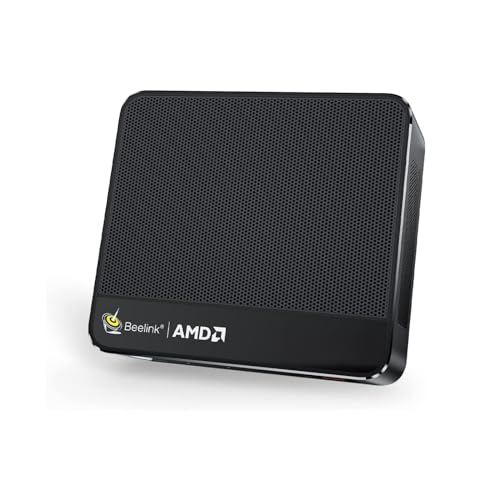
- Best small form factor gaming PC for beginners under $500 overall: Beelink SER5 MAX Mini PC, Ryzen 7 7735HS, Radeon 680M, 24GB RAM, 500GB SSD — Check on Amazon
- Strongest graphics here, when its deal price is live: GMKtec NucBox K6, Ryzen 7 7840HS, Radeon 780M, 32GB DDR5, 1TB SSD — Check on Amazon
- ACEMAGIC Mini Gaming PC, Ryzen 7 7735HS, Radeon 680M, 24GB RAM, 512GB SSD — Check on Amazon
- GMKtec NucBox M6 Ultra, Ryzen 5 7640HS, Radeon 760M, 16GB DDR5, 512GB SSD — Check on Amazon
See 2 more Amazon options
- GMKtec NucBox M6, Ryzen 5 6600H, Radeon 660M, 16GB DDR5, 512GB SSD — Check on Amazon
- GMKtec M5 Plus, Ryzen 7 5825U, 32GB RAM, 1TB SSD — Check on Amazon
Read the full guide ↓
Disclosure: As an Amazon Associate, reviewstook.com earns from qualifying purchases. Links to Amazon on this page are affiliate links; they cost you nothing extra. Listing details such as price and availability change often, so check the current Amazon listing before you buy.
If this is your first gaming PC, a small form factor machine is a genuinely kind place to start. Every pick below is a complete computer about the size of a thick paperback book: it arrives with its processor, memory, storage and Windows already installed, plugs into a monitor or TV with one cable, and can be playing games the same evening it arrives. There is nothing to build and no case to open first. The six picks are six versions of one honest trade: under $500, a genuinely small gaming PC does not contain a separate graphics card. The picture-making hardware lives inside the processor itself, and that sets a real ceiling on the newest, heaviest games — they will ask you for low settings and a helper technology called upscaling, explained in the glossary below. In exchange you get a quiet, cool, book-sized machine that can hide behind a monitor or under a TV and uses about as much electricity as a laptop.
Two habits will protect you through this whole guide. The first is to distrust the headline and read the configuration: several listings below sell cheaper and pricier versions of the same named machine under one title, and the version in your cart — not the version in the review — is the computer you actually get. The second is to respect the one deal rule in this guide. The strongest machine here, the GMKtec NucBox K6, usually sits above this budget at its everyday pricing and only belongs in a $500 guide when a deal brings it inside the budget; check price on Amazon, buy it at $500 or less, or buy something else. If you want one name to start with: the Beelink SER5 MAX — the best graphics class actually in budget every day, in the smallest box here. And if small size is not the point — if what you really want is the most gaming power $500 can buy and you have room for a full-size tower — that is a different and equally good purchase, covered in Best Gaming PC Under $500.
In this guide
Quick Picks
Short on time, or comparing several options at once? Each row below names a buyer type and the product that suits it, with a link to the listing. New to the vocabulary? The glossary below translates every term used here.
| Buyer type | Pick | Why it stands out | Link |
|---|---|---|---|
| Best overall for a first PC | Beelink SER5 MAX, Ryzen 7 7735HS, Radeon 680M | The strongest everyday graphics class here, in the smallest box — about 0.6 litres | Check on Amazon |
| Best graphics, only on deal | GMKtec NucBox K6, Ryzen 7 7840HS, Radeon 780M | A clear step above the rest — buy only at $500 or less | Check on Amazon |
| Best for a TV and extra screens | ACEMAGIC Mini Gaming PC, Ryzen 7 7735HS, Radeon 680M | Same graphics class as the top pick, three 4K displays — check price on Amazon | Check on Amazon |
| Best newest model, no deal needed | GMKtec NucBox M6 Ultra, Ryzen 5 7640HS, Radeon 760M | Newest chip generation and modern ports at an everyday price inside the budget — check price on Amazon | Check on Amazon |
| Best for learning and upgrading | GMKtec NucBox M6, Ryzen 5 6600H, Radeon 660M | Memory you can replace and two storage slots — the machine that can grow | Check on Amazon |
| Best if the PC also does everything else | GMKtec M5 Plus, Ryzen 7 5825U, 32GB RAM, 1TB SSD | Double the memory and storage of rivals — weakest graphics here, labelled as such | Check on Amazon |
How These Picks Were Chosen
The first rule was completeness, because a beginner’s first PC should be a PC. Every product below is a real Amazon listing that ships with memory, storage and Windows installed, so it can be unboxed, plugged in and played on the same evening. Half-finished kits called “barebones” — a case and a processor with memory and storage sold separately — were excluded however tempting their prices look, because a barebones price is not a computer price, and finishing one means a second shopping trip through exactly the parts whose prices have risen hardest lately. One pick, the GMKtec NucBox M6, is also sold in barebones form on related listings; its review flags that clearly.
The second rule was that “small” had to be measured, not marketed. Each pick’s size was worked out from the dimensions its maker publishes, and every machine here comes in under one litre — roughly a thick paperback. That ruled out the whole shelf of “compact towers” that wear small-form-factor words in their titles while taking up as much desk as an ordinary desktop. The third rule was honesty about graphics. With no separate graphics card at this budget, the processor you choose is the graphics you get, permanently, so the picks are ranked by a simple ladder: the Radeon 780M is the strongest integrated graphics in this class, the 680M a clear step below it and the strongest class actually in budget every day, the 760M a half-step behind the 680M, the 660M roughly two-thirds of the idea of a 680M, and the oldest Vega graphics in the M5 Plus the weakest here. Game expectations throughout are described by type of game rather than invented frame-rate numbers.
We did not use these products ourselves. We read the maker listings, manuals and specification pages, and compared processors, graphics, memory, storage, ports and published dimensions, favouring listings that print their numbers in full. Prices move weekly in this segment, so this guide does not print fixed prices — check price on Amazon for the current figure on the day you buy. One last judgement ran through everything: how the memory is built. In a machine whose graphics can never be upgraded, memory and storage are the whole future, so each review states plainly whether a pick’s memory is soldered (fixed forever), socketed (replaceable later), or — in two cases — not established by the maker’s published information, in which case this guide says so instead of guessing.
Words Worth Knowing Before You Buy
Thirteen terms explain nearly everything in this guide. Read these once and the reviews below will read like plain English.
- Processor (CPU): The computer’s main thinking chip. In every pick here it also contains the graphics, so its name is the most important line in any of these listings.
- Integrated graphics: Picture-making hardware built inside the processor, sharing the computer’s memory. All six picks use it — genuinely good for esports, indie and older games, and the reason these machines can be this small and this cheap.
- Graphics card (discrete GPU): A separate, powerful picture-making component found in bigger gaming PCs. No pick here has one, and none can ever be fitted with one — that is the honest ceiling of this whole category, stated once here so the reviews need not repeat it.
- RAM (memory): The computer’s short-term workspace, measured in gigabytes (GB). Games and Windows share it, and integrated graphics borrow from it too — which is why 24GB or 32GB picks breathe easier than 16GB ones.
- Soldered memory: Memory fixed permanently to the machine’s board at the factory. It can never be upgraded. The Beelink SER5 MAX’s 24GB is soldered: the amount it arrives with is the amount it retires with.
- Socketed memory (SO-DIMM): Memory fitted in little replaceable sticks that an owner can swap with a screwdriver. The K6, the NucBox M6 and the M5 Plus use it, so their memory can be doubled years from now.
- SSD (storage): Where games and files live permanently, also measured in GB — 500GB, 512GB and 1TB here. Modern games are huge, so this number decides how often you will be deleting one game to install another.
- Resolution and 1080p: How many dots make the picture. 1080p is the standard these machines are built for. A pick that can show a 4K desktop or video is describing the screen it can connect to, not the games it can run at that sharpness.
- Refresh rate (Hz): How many times per second your monitor redraws the picture. A 144Hz monitor can only show that smoothness if you actually set it — Windows often starts lower, and the walkthrough below includes the fix.
- Upscaling: A helper that renders a game at a lower sharpness and stretches it cleverly to fill your screen, so heavier games stay smooth on modest hardware. On the newest games here, that is not a cheat or a flaw — it is simply how they are meant to be played.
- Barebones: A half-finished kit — case and processor only, with memory, storage and Windows sold separately. None of the six picks is barebones as sold here, but one model (the NucBox M6) is also offered that way on related listings, and its low price is the trap this guide warns about loudest.
- Renewed: A used, refurbished machine sold with a fresh guarantee. None of the six picks is renewed — all six are new machines. Renewed towers fill the same search results at tempting prices, and they are a different purchase with a different risk.
- VESA mount: A standard pattern of screw holes that lets a small PC bolt to the back of a monitor or TV. Where a pick includes the bracket, its review says so.
The 6 Best Small Form Factor Gaming PCs for Beginners Under $500
Beelink SER5 MAX Mini PC — Ryzen 7 7735HS, Radeon 680M, 24GB RAM, 500GB SSD
Who it suits: The first-time buyer who wants the strongest honest gaming in the smallest box, with no deal-hunting and no homework beyond plugging it in.
Beelink’s own manual puts the SER5 MAX at 126 × 113 × 42 mm — about 0.6 litres, the smallest case in this guide — and a VESA mount is included in the box, so it can be screwed to the back of a monitor and simply cease to exist on your desk. Nothing about the inside is a toy, though: its Ryzen 7 7735HS is a proper eight-core processor, and its built-in Radeon 680M is the strongest graphics class you can buy at a genuine everyday under-$500 price. In plain terms: competitive and indie games are its home ground; big-budget games from a few years ago run well at 1080p on medium settings; the very newest releases will ask for low settings and upscaling. It will not run demanding games at 1440p sharpness — no machine in this guide will, whatever its headline implies.
The 24GB of memory is a step above the 16GB floor this class usually ships with, which matters because the graphics borrow from that same pool. The 500GB of storage is the guide’s smaller allotment: fine for Windows plus a rotating handful of games, tight if your library is a permanent collection. One warning: a different machine also called SER5 MAX, built on an older Ryzen 7 5800H with weaker Vega graphics, exists under a different listing — everything here describes the 7735HS version linked above, so check the processor name before you pay. Price-wise it lives right at the top of this budget tier, close enough to the ceiling that it is worth checking the live price on Amazon before you buy — a few days of patience can be worth real money when a deal appears.
- Smallest case in the guide: about 0.6 litres, with a VESA mount included for hiding it behind a monitor.
- Radeon 680M graphics — the strongest integrated class available at a true everyday sub-$500 price.
- 24GB of memory gives the graphics and your games more shared room than the usual 16GB.
Honest limitation: That 24GB of memory is soldered — fixed at the factory, never upgradeable — so the specification you unbox is the specification you keep; and 500GB of storage fills faster than game libraries shrink.
Choose it if you want the best all-round first small PC and size matters most. Skip it if you already know you keep computers for many years and like upgrading them — the socketed machines below have longer futures.

GMKtec NucBox K6 — Ryzen 7 7840HS, Radeon 780M, 32GB DDR5, 1TB SSD
Who it suits: The patient beginner — someone willing to let a price alert, rather than today’s shopping urge, pick the day they buy, in exchange for the strongest graphics in this guide.
This review has to start with money, not machinery, because the K6’s price is a rule, not a number. At its everyday pricing the machine sits in a higher tier, above this guide’s budget; only when a deal brings it inside the budget does it belong here, so check price on Amazon before you judge it. At $500 or less, it offers the strongest graphics in this guide. Above $500, this guide’s recommendation simply switches off: you would no longer be buying a clever deal, just a more expensive computer that belongs in a $700 guide. So the beginner move is specific — set a price alert, wait, and pounce; or, if you are buying this week regardless, buy the Beelink above and start playing. Paying the K6’s full everyday price inside a $500 hunt is the only bad decision.
What the patience buys is the Radeon 780M, a clear class above every other graphics chip here — the difference lands exactly where integrated graphics struggle most, in newer, heavier games at 1080p. Everything around it is equally generous: 32GB of memory in two replaceable sticks that can later grow to 64GB, a full 1TB of storage, the fast USB4 connector, and two wired-network ports. The case, at 128.8 × 127 × 47.8 mm by the maker’s figures, is about 0.78 litres — slightly bigger than the Beelink, still hideable behind a monitor. The honest cost of the stronger chip in a small box is heat and fan noise: the K6 works its cooling harder than the 680M machines do, and in a silent bedroom at midnight you will hear it.
- Radeon 780M graphics — the strongest integrated graphics in this guide by a clear margin.
- 32GB of replaceable memory and 1TB of storage: the fullest specification here, and one that can grow.
- About 0.78 litres, with USB4 and two wired-network ports for future extras.
Honest limitation: It is a deal-only pick — its everyday pricing sits above this budget — and at anything above $500 the case for it collapses; its stronger chip also makes it the hardest-working, most audible cooling here under a long gaming session.
Choose it if the live price on Amazon shows $500 or less on the day you buy and you want the most graphics this budget can honestly hold. Skip it if you are buying today at whatever it costs — at full price, the SER5 MAX is this guide’s answer.

ACEMAGIC Mini Gaming PC — Ryzen 7 7735HS, Radeon 680M, 24GB RAM, 512GB SSD
Who it suits: The living-room beginner — someone whose first gaming PC will live under a TV or drive more than one screen, and who wants the top graphics class at a price that is inside the budget today.
The ACEMAGIC runs the same Ryzen 7 7735HS and Radeon 680M as the Beelink, so the gaming story is identical: esports and indie games are home ground, older big-budget games play well at 1080p on medium settings, the newest releases want low settings and upscaling, and ray tracing is not on the menu. What differs is everything around the chip. The case measures 5.04 × 5.04 × 1.61 inches — about 0.67 litres, a shade larger than the Beelink — and the machine leans toward screens: it can drive three 4K displays at once, carries a fast 2.5-gigabit wired network port alongside Wi-Fi 6, and arrives with Windows 11 Pro installed.
Its positioning is straightforward: it sits in the upper part of this budget tier — check price on Amazon for the current figure — offering the full 680M class, in budget, with no deal-hunting required. The one skill this purchase demands is configuration discipline: listings in this family sell several versions under one title, so confirm in the cart that you have selected the Ryzen 7 7735HS version with 24GB of memory and 512GB of storage — a cheaper sibling in the same listing is a weaker computer wearing the same name. One honest unknown: the maker’s published information does not establish whether its memory is soldered or replaceable, so no upgrade promise is made for it either way. Judged on what is verified — chip, graphics, displays and budget fit — it is the most straightforward way to buy the 680M class today.
- Same Ryzen 7 7735HS and Radeon 680M as the guide’s top pick — the full everyday graphics class.
- Three 4K displays and a 2.5-gigabit network port suit a TV-shelf, multi-screen life.
- About 0.67 litres — check price on Amazon before you buy.
Honest limitation: Whether its memory can ever be upgraded is not established in the maker’s published information, so no promise can be made; and like every pick here, its graphics are integrated and final.
Choose it if your PC will live by a TV or feed several screens, at a price inside the budget right now. Skip it if a proven memory-upgrade path matters to you — that evidence exists for the GMKtec picks, not this one.

GMKtec NucBox M6 Ultra — Ryzen 5 7640HS, Radeon 760M, 16GB DDR5, 512GB SSD
Who it suits: The beginner who values buying the newest model over buying the strongest graphics — a current-generation machine at an honest everyday price, with no deal to wait for.
The M6 Ultra teaches the most useful lesson in this guide: newer is not the same as stronger. Its Ryzen 5 7640HS is a newer-generation processor than the 7735HS in the two picks above, but its Radeon 760M graphics sit a half-step behind their 680M. In game terms: esports and indie titles still comfortable, older big-budget games at 1080p medium-to-low, and the newest releases firmly in low-settings-plus-upscaling territory. What you receive in exchange is currency and price honesty: this configuration sits inside the budget at its ordinary pricing — check price on Amazon to confirm — with no coupon, no deal and no patience required. Around the chip sits the most modern set of connections here — USB4, two storage slots, two 2.5-gigabit network ports and Wi-Fi 6E — inside the same published 128.8 × 127 × 47.8 mm case as its K6 sibling, about 0.78 litres, with a VESA bracket included per the maker’s model pages.
One warning matters more than anything else in this review. This same listing family also sells a 32GB version, and that version sits in a higher price tier — far outside this budget. The under-$500 claim belongs to the 16GB/512GB configuration only, and the product title will not check the difference for you; the version in the cart is the purchase. Treat 16GB of memory honestly, too: it is the workable floor for this class, not a comfortable allotment, and since the maker’s published information does not establish whether it can be upgraded later, set your expectations at purchase and lean on the second storage slot as the growth path that is documented. Judged as a rival to the 680M machines on graphics, it is not one — and this guide will not pretend otherwise.
- Newest processor generation in the guide, with USB4 and two storage slots.
- This configuration sits inside the budget at its everyday pricing, without any sale — check price on Amazon.
- About 0.78 litres, VESA bracket included, two fast wired-network ports.
Honest limitation: The Radeon 760M is a half-step behind the 680M picks, 16GB of memory is the floor rather than a comfort, and the same listing’s 32GB version sits in a higher price tier, outside this budget — confirm the configuration in the cart.
Choose it if you want a current model at an honest everyday price and your games are esports, indie and older titles. Skip it if you play newer big-budget games — the 680M picks above are the better choice for you.

GMKtec NucBox M6 — Ryzen 5 6600H, Radeon 660M, 16GB DDR5, 512GB SSD
Who it suits: The beginner on the firmest budget who is happy to learn as they go — this is the cheapest complete entry here, and the one machine whose memory and storage story is deliberately unfinished.
The Ryzen 5 6600H’s Radeon 660M graphics are roughly two-thirds of the idea of the 680M: a machine for esports, indie games and the back catalogue at 1080p with settings chosen sensibly, and not a machine for this year’s heaviest releases. Its positioning matches that honesty — the complete 16GB configuration sits in the budget tier of this guide, making it the most affordable complete entry here by a wide margin; check price on Amazon for the current figure. The case is about 5 by 5 by 2 inches (the maker’s manual gives 12.8 × 12.7 × 4.8 cm, roughly 0.78 litres), and a second small fan helps its cooling at a cost: on the evidence of the maker’s own model documentation, this is the most audible mini PC in the guide under heavy load.
What makes it a beginner’s pick rather than just a cheap one is its construction. The 16GB of memory sits in replaceable SO-DIMM sticks, so it can be doubled later with a screwdriver and a YouTube video. There are two storage slots, so more space arrives by addition rather than replacement, and USB4 leaves a door open to fast external storage years from now. In a category where graphics are fixed forever, this is the one machine that can grow with its owner. Two disciplines apply. First, this model is also sold barebones — case and processor only — on related listings, and the suspiciously low price is almost always that kit; the complete 16GB configuration with Windows installed is the one described here, so read the listing until it confirms memory, storage and Windows. Second, buy it as the platform it is: if your games are new and heavy today, its graphics will disappoint you today, and no memory upgrade changes that.
- Replaceable memory and two storage slots — the most upgradeable machine in the guide.
- The most affordable complete way in — a budget-tier entry; check price on Amazon.
- About 0.78 litres, with USB4 for future external extras.
Honest limitation: The Radeon 660M is the second-weakest graphics here — a back-catalogue and esports machine — its extra fan makes it the most audible pick under load, and barebones versions of this model circulate on related listings, so confirm you are buying the complete PC.
Choose it if your budget is firm, your games are light, and you like the idea of a machine you can open and improve. Skip it if you want the strongest gaming available today — the SER5 MAX, or the K6 when its deal is live.

GMKtec M5 Plus — Ryzen 7 5825U, 32GB RAM, 1TB SSD
Who it suits: The beginner whose first PC has a day job — school, work, photos, media — with gaming as one job among several, and who would rather have double the memory and storage than the newest graphics.
This is the easiest pick in the guide to misunderstand, so its review leads with the limitation. The Ryzen 7 5825U carries older Vega-class integrated graphics, the weakest gaming graphics here by a clear margin: esports and older games at sensible settings, yes; anything recent and demanding, only with settings and expectations lowered together. If gaming is the whole purpose of your purchase, stop reading here and buy the SER5 MAX. But judged as a small all-round computer that also games, its arithmetic is hard to beat: 32GB of memory and a full 1TB of storage in the budget tier of this guide — double the memory and storage of several machines here — so check price on Amazon for the current figure.
The construction suits that double life: the 32GB of memory sits in replaceable sticks and can grow to 64GB, a second storage slot waits for more room, two fast wired-network ports make it a natural media box or home file server later, and it can drive three 4K displays for work. At published dimensions of 128 × 127 × 52 mm — about 0.85 litres — its case is the largest in this guide, which is another way of saying still very small. It closes this list because it answers a slightly different search — “a lot of small computer, some games, under $500” — and answers it better than anything else here.
- 32GB of replaceable memory and a 1TB SSD in this guide’s budget tier — the capacity bargain of the guide.
- Two fast network ports and a second storage slot give it a real second career as a media or file machine.
- About 0.85 litres — the largest here, and still smaller than a shoebox.
Honest limitation: Older Vega-class integrated graphics — the weakest in this guide — cap it at esports, older titles, and lowered settings in anything newer.
Choose it if this PC will work as hard as it plays, and your games are light. Skip it if gaming is the point — all five picks above it game better.

Comparison Table
| Product | Size (published dims) | Graphics | Memory | Best use | Link |
|---|---|---|---|---|---|
| Beelink SER5 MAX | 126 × 113 × 42 mm ≈ 0.6 L | Radeon 680M | 24GB, soldered | Smallest full-strength 680M machine | Check on Amazon |
| GMKtec NucBox K6 | 128.8 × 127 × 47.8 mm ≈ 0.78 L | Radeon 780M | 32GB DDR5, socketed | Strongest graphics here — on deal only | Check on Amazon |
| ACEMAGIC Mini Gaming PC | 5.04 × 5.04 × 1.61 in ≈ 0.67 L | Radeon 680M | 24GB | Living-room and multi-screen setups | Check on Amazon |
| GMKtec NucBox M6 Ultra | 128.8 × 127 × 47.8 mm ≈ 0.78 L | Radeon 760M | 16GB DDR5 | Newest platform at an everyday price | Check on Amazon |
| GMKtec NucBox M6 | 12.8 × 12.7 × 4.8 cm ≈ 0.78 L | Radeon 660M | 16GB DDR5, socketed | Cheapest entry, built to be upgraded | Check on Amazon |
| GMKtec M5 Plus | 128 × 127 × 52 mm ≈ 0.85 L | Radeon Vega-class | 32GB DDR4, socketed | Capacity and second careers | Check on Amazon |
Your First Evening: Setup, Step by Step
Every pick follows the same first evening. Work through these eight steps in order and you will finish with a machine placed safely, updated properly, and set to show the smoothness you paid for.
- Choose the spot before you plug anything in. These machines breathe through vents in their small cases, so give yours open air on a desk or shelf — not sealed in a closed cabinet or stacked under other warm electronics. If your pick includes a VESA bracket and your monitor has the matching screw holes on its back, mounting the PC behind the screen is the tidiest placement of all.
- Connect the power brick, and give it a home. A mini PC runs from an external laptop-style power brick, and the brick is part of the installation: it lives on the floor or behind the desk, needs its own air, and should not be buried under paperwork. Plug the brick into the wall, then its cable into the PC.
- Connect the monitor to the PC — and relax about which port. Use the HDMI or DisplayPort socket on the mini PC itself. The famous wrong-port trap belongs to tower PCs, where a separate graphics card has its own sockets and the wrong choice silently wastes the card. These small machines have no separate card — every display socket on the box is driven by the processor’s integrated graphics, so any of them is the right one.
- Add keyboard, mouse and a wired internet connection. Any USB keyboard and mouse will do. Then, even if your pick has Wi-Fi — and all of these do — run a network cable to your router for setup night if you possibly can. The first hour of a new PC’s life is a flood of downloads, and a cable makes that flood faster and far less likely to stall.
- Let Windows Update and the graphics driver finish before you judge anything. Switch on, follow the Windows setup prompts, then open Windows Update and let it work — repeatedly, restarting when asked — until it reports nothing left. Fresh machines routinely arrive several updates behind, and games launched mid-update stutter for reasons that have nothing to do with the hardware.
- Set your monitor’s real refresh rate. This is the step almost every first-time buyer misses. A monitor that can redraw 144 times a second often starts life in Windows set to a much lower rate. Open Settings, then System, then Display, then Advanced display, and choose the highest refresh rate your monitor offers.
- Verify you received the configuration you paid for. Open Settings, then System, then About, and read the processor name, memory and storage against your order. Listings sell several versions of one named machine, and an older SER5 MAX, a wrongly priced 32GB M6 Ultra, or a barebones M6 are all real ways a delivery can differ from a review. If the About screen disagrees with your order, you are inside the return window and the mistake is the seller’s to fix — check now, not in a month.
- Install one game store and one game. Install Steam (or the store your games live on), sign in, and download a single game you know well. Play it for twenty minutes. That first session confirms the machine works and surfaces any problem while returning it is still effortless.
What Else You Will Spend
The machines in this guide are complete computers, but a complete computer is not a complete setup, and honest budgeting means naming the rest before you order. The first and biggest item is a monitor, if you do not already own one — or a television, which every pick here can drive happily. Budget for the screen first, because it is the one purchase the PC cannot work without; this guide deliberately does not name monitor prices, since the right screen depends on your desk and your eyes, and a borrowed screen costs nothing at all. A keyboard and mouse come next if your household owns no spares — several listings sell the PC alone, so read the box contents rather than assuming.
Then come the catches, priced honestly as the machine plus its fix, never folded quietly into the headline price. If you buy the NucBox M6 Ultra, its 16GB of memory is a floor you will feel in heavier games and busy multitasking; since the maker’s published information does not establish that it can be upgraded, treat that 16GB as part of the decision itself — and if it worries you, the fix is choosing the 24GB Beelink or ACEMAGIC instead, before you order. If you buy any of the 500GB or 512GB machines — the SER5 MAX, the ACEMAGIC, the M6 Ultra or the M6 — modern game sizes make storage a when, not an if: on the M6, with its second slot, the future fix is an additional SSD bought as machine-plus-fix when the first drive fills; on the sealed machines the fix is discipline about deleting finished games. And if the K6 is your target, the spend to plan is patience rather than money: its price only works at $500 or less, so the real budget line is a price alert and the willingness to wait.
Upgrades, in Plain Terms
The graphics can never be upgraded on any machine in this guide. There is no separate graphics card to swap — the graphics live inside the processor — and no pick here documents the named power supply and standard desktop case that would make a card swap possible, because these are laptop-style machines powered by external bricks. Anyone who tells you a mini PC like these can be “upgraded to a real graphics card later” is describing an external graphics dock over USB4, whose dock and card together cost more than a complete gaming tower. Treat it as a curiosity, not a plan.
What can genuinely grow is memory and storage, and only where the construction is documented. The K6’s 32GB of memory can later become 64GB; the NucBox M6’s 16GB can be replaced and doubled; the M5 Plus’s 32GB can likewise grow to 64GB. Storage grows by addition on the machines with a second slot — the M6, the M6 Ultra and the M5 Plus. The SER5 MAX is the sealed machine: its soldered 24GB is final, full stop. For the ACEMAGIC and the M6 Ultra’s memory, the construction is not established, so this guide promises nothing — if upgradeability decides your purchase, buy one of the three machines whose sockets are documented. Buy the graphics for the games you play now, and the sockets only if you truly keep machines for years.
How to Choose a Small Form Factor Gaming PC as a Beginner
- Choose the graphics class first, because it can never change. 780M on deal, 680M at everyday prices, then 760M, 660M and Vega in descending order. In a machine like these, the processor choice is the graphics choice, permanently — it outranks every other line of the specification.
- Obey the one deal rule. The K6 earns its place here at $500 or less — not a dollar more. Set a price alert; if the deal is not live and the live price on Amazon sits above the budget, buy the SER5 MAX rather than paying the K6’s full everyday price.
- Confirm the exact version in the cart. These listing families sell several configurations — and, for the M6, barebones kits — under one title. The processor, memory and storage shown in the cart are the PC you are buying; the title is not.
- Match memory to your horizon. Keeping the machine two or three years: the sealed SER5 MAX’s 24GB is fine and it is the smallest here. Keeping it five years: socketed memory and a spare storage slot — the K6, M6 or M5 Plus — are worth real money.
- Budget storage honestly. Modern games are enormous and 500GB fills quickly. Either choose a 1TB pick, or choose a machine with a second storage slot and treat the future drive as part of the purchase.
- Decide where it will live before it arrives. Behind a monitor on its VESA mount, under a TV, or on a small desk — and remember the power brick needs a home too, and the vents need open air rather than a closed cabinet.
- Match the machine to the room’s ears. Small fans make themselves heard under load in a silent bedroom; across a living room, the same machine fades away.
Common Buying Mistakes
- Believing a “compact” title without checking dimensions — towers of ten to twenty litres wear the same words as the sub-litre machines in this guide.
- Paying the K6’s full everyday price because a guide listed it. Its place here rests on deal pricing inside this budget and a walk-away rule; at its everyday price it belongs to a different guide’s budget.
- Buying a barebones kit by mistake. A price far below the field usually means no memory, no storage and no Windows; the completion cost lands on you, in the parts market least friendly to buyers right now.
- Sealing a small PC in a closed cabinet or under a stack of gear on day one. Small cases live on airflow; give the vents room or the fans will announce the mistake at midnight.
- Skipping the first-evening basics — judging the machine before its updates finish, and never setting the monitor’s real refresh rate, so a good PC spends its life feeling slower than it is.
Final Recommendation
- Most first-time buyers: Beelink SER5 MAX — the full 680M class in the smallest case here, at an everyday price.
- Best graphics, if the deal is live: GMKtec NucBox K6 — $500 or less, or walk away.
- Living-room and multi-screen setups: ACEMAGIC Mini Gaming PC.
- Newest model, no deal needed: GMKtec NucBox M6 Ultra.
- Tightest budget, longest future: GMKtec NucBox M6.
- A day job plus games: GMKtec M5 Plus.
Our top two are the Beelink SER5 MAX, for putting the strongest honest graphics class at this budget into 0.6 litres with no deal-hunting required, and the GMKtec NucBox K6, which, when its live price sits inside this budget, is the most graphics $500 has ever held in a box this size — provided the price on the day is the price that earned it this place. Readers whose room is the real constraint should also see Best Small Form Factor Gaming PC For Small Spaces Under $500; anyone who wants their small PC to double as a stream source should see Best Small Form Factor Gaming PC For Streaming Under $500; and a bigger budget finds stronger graphics at Best Small Form Factor Gaming PC Under $700. Confirm the version in the cart, check the live price, plan where the little box and its brick will live — and your first evening will take care of itself.
Frequently Asked Questions
I have never owned a gaming PC. Can one of these really play games?
Yes — a specific kind of games. The Radeon 680M machines in this guide play esports and indie titles beautifully, older big-budget games well at 1080p on medium settings, and the newest releases at low settings with upscaling. What they cannot do is ray-traced showcases or demanding games at 1440p sharpness. That is the real capability of the strongest integrated graphics at this budget, in a case under a litre — not a substitute for a separate graphics card.
Do I need to build or assemble anything?
No. Every pick here is a complete computer with its memory, storage and Windows already installed; your first evening is cables, updates and one settings change. The half-finished alternative is called a barebones kit — case and processor only — and this guide excluded them on purpose. If a price somewhere looks impossibly low for one of these model names, check whether it is the barebones version before you celebrate.
Why is there no graphics card in any of these PCs?
Arithmetic. A new separate graphics card, plus the larger case, power supply and cooling it needs, consumes most of a $500 budget before the rest of the computer is paid for — and the result would not be small. Under $500, small size and a separate graphics card do not meet in a new machine. They meet in full-size towers at this price, and in small form factor machines at higher budgets.
Can I upgrade one of these machines later?
Memory and storage, on the machines whose construction is documented: the K6, the NucBox M6 and the M5 Plus take replacement memory sticks, and those three plus the M6 Ultra carry a second storage slot. The SER5 MAX’s memory is soldered and final, and for the ACEMAGIC and the M6 Ultra’s memory the maker’s information does not establish the construction, so no promise is made. Graphics, never — the graphics are part of the processor in every machine here.
Will one of these work under my TV?
That is arguably their best job. They are book-sized, quiet at viewing distance, sip power, drive 4K displays for video and menus, and play exactly the controller-friendly, couch-distance games — indie, esports, older big-budget titles — that living rooms favour. The ACEMAGIC and SER5 MAX are this guide’s living-room picks; see also Best Mini Gaming PC Under $500 and Best Compact Gaming PC Under $500.
Small form factor or a $500 tower — which should a beginner buy?
Buy the tower if frames per dollar and future graphics upgrades are the priority and you have the space: a tower with a previous-generation separate graphics card out-games every pick here, permanently. Buy small form factor if the PC must disappear — behind a monitor, under a TV, in a dorm or a small room — and if low power, low heat and an easy second career as a media box matter to you. Either answer is a good one when it is chosen on purpose; the wrong purchase is the one made without asking the question.
- Best Small Form Factor Gaming PC Under $500
- Best Small Form Factor Gaming PC Under $400
- Best Small Form Factor Gaming PC Under $700
- Best Small Form Factor Gaming PC For Small Spaces Under $500
- Best Small Form Factor Gaming PC For Streaming Under $500
- Best Small Form Factor Gaming PC For 1440p Gaming Under $500
- Best Mini Gaming PC Under $500
- Best Mini PC Under $500
- Best Budget Gaming PC Under $500


