Disclosure: As an Amazon Associate, reviewstook.com earns from qualifying purchases. Links on this page are affiliate links; they cost you nothing extra. Prices and availability change often, so check the current Amazon listing before you buy.
The 7 tier is where Sony’s televisions traditionally stop compromising in public: bravia 7 ii, as the refreshed generation of that tier, is the model line film-and-gaming households cross-shop against flagship sets from every rival. Interest in bravia 7 ii concentrates on the same questions every cycle — panel technology and brightness, the gaming specification in full, and whether the flagship above it still justifies its premium — and those questions deserve a framework grounded in what the tier has consistently meant.
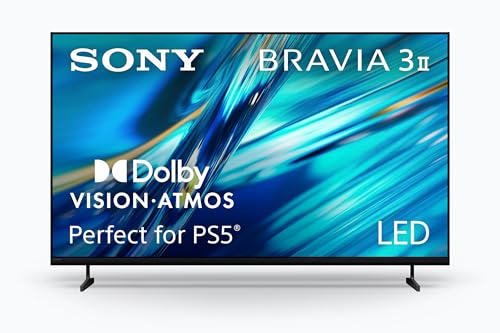
This explainer sets out what the 7 tier stands for in Sony’s range, which specifications define it, and how to verify claims as listings appear, with the verified Bravia 3 II from this series as one anchor for what is buyable today, alongside the current Bravia 7 (K-65XR70) linked below. It invents no launch details: where a specification cannot be confirmed, the guide says what to check and why it matters, which is the only honest treatment of a model line at the edge of a range refresh.
Key takeaways
- The 7 tier is Sony’s performance tier: expect the strongest LED-class picture and the full gaming suite, verified port by port
- Compare it against the flagship on brightness headroom and design, not on processing, which the tiers largely share
- Verify model codes and specifications on the manufacturer’s page before trusting marketplace copy
- For smaller or brighter rooms, the verified Bravia 3 II remains the rational buy today
- The II model itself has no verified listing yet; the current Bravia 7 (K-65XR70) linked below is the verified buy in this tier today — it is not the II model
In this guide
What the 7 tier has always meant at Sony
In Sony’s modern numbering, the upper-middle tier is the enthusiast’s tier: the place where the company deploys its best mainstream panel technology — in recent generations, high-zone-count Mini LED backlighting — together with the full processor feature set, while reserving only the extremes of brightness, design, and price for the flagship above. Owners of past 7-class sets tend to keep them for many years, because the tier’s historical trick is delivering nine-tenths of the flagship experience at a visibly lower price.
A refreshed II generation of that tier should therefore be judged against a demanding standard: not ‘is it good’, but ‘is the flagship’s remaining tenth worth its premium’. That framing disciplines the whole evaluation. Every specification the 7 shares with the flagship is an argument for the 7; every gap — peak brightness, viewing-angle layers, speaker ambition, industrial design — must be priced honestly against the money saved.
Panel and brightness: the tier’s battlefield
If the 7 II follows its lineage, its panel story is Mini LED with dense local dimming, and the measurements that matter are zone behaviour in dark scenes, peak brightness in small highlights, and how gracefully it handles the trade between the two. Blooming around bright objects on black backgrounds is the technology’s known tax; the best implementations make it a whisper. Reviews that count zones without filming real content miss the point — watch a night scene with subtitles and streetlights, and the panel confesses everything.
Brightness at this tier serves two masters: HDR highlights in films, and daylight defiance in real rooms. A set that excels at the first in a dark room but collapses in a bright lounge has chosen its customer. The 7 tier’s promise is to refuse that choice, delivering enough sustained brightness for genuine rooms while keeping dark-room manners. Verify both claims in measurements — small-window peak figures flatter; full-screen sustained figures tell the truth about Sunday-afternoon football.
The gaming specification, in full or not at all
The 7 tier is where Sony’s gaming story is supposed to become complete: 4K at high refresh, variable refresh rate, auto low-latency switching, and the PlayStation-specific tone-mapping features, on enough ports to serve a console and a PC simultaneously. The historical irritation has been port count — flagship gaming features concentrated on fewer HDMI ports than a two-console household owns. Any evaluation of the 7 II should count the full-specification ports explicitly, because that number decides whether a switch box joins the budget.
Input lag at high refresh, measured rather than quoted, is the other figure to demand. At this tier it should be low enough that no player can feel it, in both 60 Hz and high-refresh modes, with local dimming still active — some sets historically raised lag or crippled dimming in game mode, a trade the modern tier is expected to have abolished. A review that tests game mode with dimming engaged is doing the work; one that quotes the brochure is not.
Processing: the shared inheritance
What the 7 tier does not need to prove is processing. Sony’s XR image engine, in the form this tier carries, brings the upscaling, motion handling, and colour discipline that run through the whole range, refined at the top with the company’s best contrast and clarity controls. Broadcast sport, older films, and low-bitrate streams — the content that exposes weak processing — are where a 7-class Sony quietly outclasses rivals with brighter panels and dumber software. Panels photograph better in reviews; processing is what you live with.
Acoustic ambition usually rises with the tier as well, with multi-speaker arrangements that use the screen itself as a sound source on some Sony designs. Even so, a household buying at this level should regard a soundbar or separates as the completion of the purchase, because no television speaker system yet repeals physics. Budget the audio as part of the tier decision, and the 7’s price advantage over the flagship often survives the addition comfortably.
Verifying the 7 II before buying
Apply the same discipline as any new-tier purchase: confirm the model code and full specification on Sony’s own page, confirm the seller is authorised, and wait for at least one review with measurements of brightness, dimming behaviour, and input lag. Marketplace listings for refreshed tiers are notorious for carrying the previous generation’s text, and occasionally the previous generation’s product, beneath the new name. The model code on the box and the serial plate is the ground truth; photograph it on delivery day before the packaging leaves.
Timing matters too. Performance tiers launch at their highest price and descend steadily, with the steepest falls as the next refresh approaches. A buyer who can wait a season typically keeps a meaningful sum for the same television. A buyer who cannot wait should at least refuse the launch-week premium when the set will sit in the room for a decade — the difference funds the soundbar, the calibration, or the console the set was bought to flatter.
The 7 tier and the sound question
Performance-tier televisions are routinely paired with the audio they deserve a year late, because the picture consumes the budget’s attention. Plan the pairing at purchase instead: the tier’s own speakers, however ambitious the brochure, remain television speakers, and a soundbar or separates system chosen with the set completes the instrument. The economics often favour the 7 tier precisely here — the flagship’s premium, redirected into audio, buys a system whose improvement is audible in every scene rather than visible in the hardest ones, and many households find that allocation transforms the room more than any panel upgrade on the market.
If the set’s own audio must serve for a season, use its dialogue and night modes without embarrassment and place the set so its speakers are not firing into a cabinet void. Then save for the bar. A performance television with planned audio is a cinema in instalments; a flagship with neglected audio is a screening room with the sound of a kitchen radio, and no tier badge has ever fixed that arithmetic.
Calibration and the first month with a performance set
A performance-tier panel rewards an hour of setup more than any other tier, because its controls are deep enough to matter. Begin in the accurate preset, disable smoothing for film, and let the set live in your room’s light for a week before touching colour — panels settle, eyes calibrate to a new normal, and most early adjustments are the owner grading their own unfamiliarity. If the tier offers a calibration mode for streaming services or a professional mode, use it as the baseline before personalising; the studios’ intent is a reference, not a prison, but departures should be made from it knowingly.
Enthusiasts who go further — a meter, calibration software, a professional visit — will find this tier the cheapest point at which that investment makes sense, because the panel’s accuracy ceiling is high enough to reward precision. For everyone else, the accurate preset plus restraint is ninety percent of the calibrated result at zero percent of the cost, and the remaining ten percent is a hobby, to be enjoyed as one rather than mistaken for a requirement.
The mini-LED middle: why this tier exists and who it flatters
Between the attainable sets and the flagships sits the tier this article examines, built around mini-LED backlighting with many local dimming zones, and its existence answers a specific viewer: the one whose room is bright, whose content is mixed, and whose standards were formed by watching a flagship at a friend’s house. Mini-LED’s proposition is brightness with discipline: enough light to defeat a sunny room, divided finely enough that dark scenes keep their dignity.
| Criterion | What this tier is engineered to do | The question to ask of any specific listing |
|---|---|---|
| Peak brightness | Carry HDR highlights and daytime viewing with real authority | Is the figure quoted for a small window or a full screen, and in which picture mode? |
| Local dimming behaviour | Many zones, actively managed, keeping blacks deep beside bright objects | How does it handle the subtitle-over-dark-scene test, the classic blooming trap? |
| Colour volume | Bright colours that stay saturated instead of washing out at high luminance | Does the panel technology named in the listing support wide colour at brightness? |
| Processing | The maker’s current image engine: upscaling, motion, and tone mapping | Is the processor the same generation as the flagship’s, or a step behind? |
| Gaming features | High refresh, variable refresh, and low-lag modes as standard equipment | How many ports carry the full feature set, and does one of them double as the audio return? |
Because refreshed models like this one arrive with listings that evolve, the right column of that table is the durable part of this guide. A tier’s promise is stable; a specific model’s delivery is verified at the listing, at the manual, and in early independent measurements, in that order of trust.
Confirmed versus unconfirmed: reading a refreshed model’s launch
Refreshed models, the second marks of an established line, follow a pattern worth understanding. The panel class, the tier’s position, and the maker’s design language carry over; the changes concentrate in processing, feature support, and the details of the backlight’s control. Until a specific model is listed with full specifications by the maker and measured by independent reviewers, claims about its exact brightness, zone counts, and performance are lineage-based expectations, and this guide treats them that way: as informed expectations, clearly labelled, never as measured facts.
That discipline is not a hedge; it is how a careful buyer actually behaves in a launch window. The predecessor’s measured performance sets the floor of expectation, the maker’s announcements set the intended direction, and the gap between them is priced by patience: launch buyers pay for novelty, while buyers who wait a season pay for information. Neither is foolish, but they are buying different things and should know it.
- What lineage lets you assume safely: the tier’s role in the range, the panel technology family, the platform and its app support, and the general gaming feature set, because makers do not reposition a numbered tier mid-generation without saying so loudly.
- What lineage does not let you assume: exact brightness figures, dimming zone counts, port arrangements, and pricing, all of which move between marks and sometimes between sizes of the same model.
- What to do with the gap: if the predecessor already satisfies your room and your content, its discounts during a refresh window are among the most rational purchases in television. If the refresh promises a feature you specifically need, wait for its verification rather than buying the promise.
The bright-room flagship alternative: a viewing diary
Morning: news and sport in full daylight
This is the tier’s home fixture. High sustained brightness keeps presenters and pitches vivid against window light, and the dimming system has little to do because nothing on screen is dark. A flagship OLED in the same room is working against its nature here; this class of set is simply dressed for the weather.
Evening: a prestige drama with the lamps on
Mixed lighting is the subtle test: enough ambient light to see the room, enough darkness on screen to expose blooming and black levels. A well-tuned mini-LED at this tier holds the scene together, with halos visible only if you hunt for them during the darkest frames. Most viewers, watching the programme rather than the panel, simply see a rich image.
Midnight: the same drama, lights off
Here the technology pays its tax honestly. In a fully dark room, the best OLEDs produce a purity of black that mini-LED approaches but does not equal, and critical viewers will see the difference in the darkest scenes. The question is how much of your viewing life is midnight-critical; for most households it is a minority sport, and it should be weighted like one.
The verified pick available today: the current Bravia 7

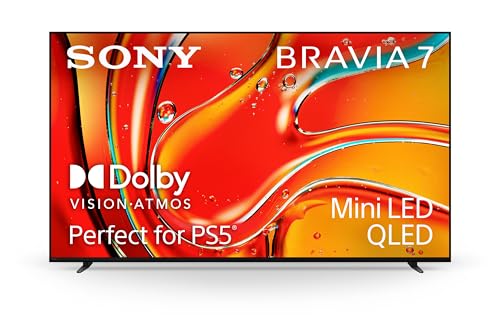
Sony 65 Inch BRAVIA 7 (K-65XR70) — the current verified Bravia 7, not the II model
The tier’s verified buy today, framed honestly: this is the current Bravia 7, not the unlisted II refresh
To be precise about what this pick is: no listing for a refreshed Bravia 7 II model has been verified, and this guide does not present the set below as one. What has been verified is the current Bravia 7 — a 65-inch Mini LED QLED 4K HDR Smart Google TV (K-65XR70) with Sony’s XR Processor with AI technology, Dolby Vision and Dolby Atmos, dedicated PS5 features, XR Backlight Master Drive local dimming, and 4K movie credits included. That is the 7 tier exactly as this guide describes it: the strongest LED-class picture in the mainstream range, the full gaming suite, and the backlight control the tier’s reputation rests on. Buy it as the current, measured generation — not as a stand-in for a refresh that has not been listed.
Key specifications (from the verified listing): 65-inch Mini LED QLED panel; 4K HDR; Google TV; XR Processor with AI technology; Dolby Vision/Atmos; PS5 features; XR Backlight Master Drive.
Strengths
- Mini LED brightness headroom that suits bright rooms OLED struggles in
- XR Backlight Master Drive dimming plus the XR Processor’s AI picture processing
- Dedicated PS5 features alongside Dolby Vision and Dolby Atmos
Trade-offs
- It is the current generation, not the II refresh — do not pay a refresh premium for it
- Mini LED blooming, however well controlled, is not OLED’s per-pixel black
- Only the 65-inch size is verified here; check other sizes against the same model-code discipline
Best for: film-and-gaming households in bright rooms who want the 7 tier now, verified and buyable
Not suited for: buyers specifically waiting on a named II-model feature — wait for that listing instead
Buying the refresh cycle without being bought by it
- Decide your tier from your room before any model launches. A decision made from light and content cannot be stampeded by a launch event; a decision made from launch coverage is marketing with extra steps.
- Price the predecessor on the same day you price the refresh. The outgoing model’s discount is the refresh’s true competitor, and comparing the two at real street prices converts hype into arithmetic.
- Verify the specific size’s specifications. Ranges routinely vary features and even panel details by size. The model in a glowing review may be a different size from the one in your basket, with a spec sheet that is similar rather than identical.
- Keep the return window sacred. Buy from a retailer whose returns let you live with the set through your room’s worst hour, the bright Sunday match or the midnight film, because those hours are the review that matters.
Followed calmly, the refresh cycle becomes what it should be: a periodic improvement in your options and a periodic discount on the proven ones, both of which pay the patient buyer.
The dimming system in daily life: blooming, subtitles, and starfields
Local dimming is this tier’s central technology and its central compromise, and it deserves a description in terms of what you will actually see rather than how many zones a brochure claims. The backlight is divided into zones that brighten and darken with the picture; where a bright object sits in a dark scene, the zones behind the object blaze while their neighbours rest, and the border between them is where blooming lives: a soft halo that the best algorithms minimise and physics refuses to abolish. Your eyes, adapted to the scene, are superb halo detectors in a dark room and nearly blind to them in a lit one, which is why this tier’s dimming debates are really debates about room lighting wearing technical clothes.
Subtitles are the everyday blooming test because they are small, brilliant, and sit in the darkest part of many frames. Every mini-LED owner develops a subtitle opinion within a week. The mitigations are real and worth knowing: subtitle appearance settings in streaming apps, choosing a dimmer text colour or a boxed background, transform the test’s difficulty, because a grey subtitle on a translucent box asks the backlight for a fraction of what a blazing white one demands. Owners who tune their subtitles report their blooming complaints halving, which is not the panel improving but the exam being fairly set.
Starfields and credits are the examination’s honours questions, and the honest expectation at this tier is very good rather than perfect: stars that read as stars, blacks that read as black, with halos visible to a viewer who pauses and hunts. The programme itself, watched at speed with attention on the story, rarely presents the problem at all, and the buyer’s task is deciding which kind of viewer they are during films, the hunter or the audience, because the tier below the flagship is priced for the audience and the flagship is priced for the hunter.
Processing: upscaling and motion, the tier’s daily labour
A television spends most of its life showing content below its native resolution and outside its showcase conditions, which makes the processing engine its hardest-working component and the least photographed. Upscaling decides how broadcast sport, older series, and the vast middle of streaming catalogues look on a large modern panel, and makers’ processing lineages differ enough that this, more than any panel statistic, is why experienced buyers stay loyal to a brand across tiers. A refreshed model in this tier inherits its maker’s current engine generation, and the sensible verification is a bad source in a showroom: the local news channel will tell you more about your next five years than the demo reel will.
- Motion handling is a taste the engine must serve twice. Sport wants clarity and no smearing in pans; film wants its native cadence untouched. Per-input and per-app motion memories, where the platform offers them, end the nightly argument between the two.
- Tone mapping decides how HDR grades translate. Content mastered brighter than the panel can show must be folded down, and the folding’s taste, preserving highlight detail or preserving overall brightness, is the engine’s signature. Two sets with identical panels and different mapping are different televisions for film.
- Low-quality streams expose the engine’s manners. Compression artefacts, banding in skies and shadows, and noise in old recordings are either civilised by the processing or displayed in high fidelity. Judge with the worst source you regularly watch.
These are the qualities that survive the honeymoon, because panel statistics are admired in the first month and processing is lived with for a decade. A buyer choosing within this tier should allocate their audition time accordingly: ten minutes of bad television is worth an hour of demo loops.
Sound and the bright-room system: completing the tier’s promise
A bright-room television is usually a family-room television, and family rooms have acoustic lives of their own: hard floors, open-plan echoes, and conversations competing with the match. The tier’s built-in sound should be judged there, on dialogue at realistic volumes against a dishwasher’s second act, rather than on a showroom’s hush. Makers equip this tier respectably, and for news, sport, and series the built-in system is frequently sufficient, which matters because the bright room is also the room least likely to welcome a soundbar’s extra box aesthetically.
When films migrate to this room, the soundbar question returns, and this tier’s audio return and lip-sync handling become the relevant specifications. Modern sets manage the partnership well, and the combined system, this class of panel plus a mid-range soundbar, is the bright-room benchmark against which flagships should be embarrassed to lose, and sometimes are. Buyers should therefore price this tier as a system from the start, panel first and sound as a planned stage, rather than discovering the second stage as a dissatisfaction.
The same system thinking applies to light itself. A bright room’s curtains, the television’s placement relative to windows, and a matte-surfaced choice within the range do as much for perceived contrast as a tier step, at a fraction of the price. The buyer who spends an afternoon on the room and an evening on the audition has understood this tier’s proposition completely: it is the engineered answer to real rooms, and real rooms reward being taken seriously.
Gaming at the bright tier: high-refresh play without the dark-room tax
This tier’s gaming proposition differs from OLED’s in emphasis: where OLED offers response and darkness, the bright mini-LED tier offers sustained luminance and freedom from static-element anxiety, which suits the way many people actually game, in lit rooms, in daylight, with HUD-heavy titles played for seasons. High-refresh support and variable refresh are the entry requirements, and the tier meets them as standard equipment; the differentiators are how the dimming behaves in game mode, because some sets simplify their backlight control for speed, and whether the local dimming’s game behaviour is a setting the owner can choose rather than a sacrifice the mode imposes silently.
HUD-heavy and bright gaming also reframes the panel-care conversation that follows OLED around. A mini-LED has no per-pixel ageing to manage, so the player whose year is one game, whose screen is a bright arena eight hours a day, is this technology’s natural citizen in a way no OLED counsel can fully accommodate. That freedom is a genuine feature, worth naming without derision in a market that sometimes treats any non-OLED virtue as marketing.
The console partnership features, automatic mode switching, genre-aware picture adjustments, and the rest, should be verified on the specific model as this guide has insisted throughout, because they are exactly the class of feature that varies by size and region within a range. The verification takes one console and ten minutes in a showroom or a return window, and it converts the gaming section of a listing from prose into fact.
The refresh’s likely engineering: reading a maker’s priorities
When a maker refreshes a successful tier, the changes follow the complaints. Owner forums and reviews of the predecessor constitute a public requirements document: the dimming behaviour in game mode, the port arrangement, the remote’s buttons, the platform’s pace. A refresh that addresses the documented complaints signals a maker listening to its installed base; a refresh that changes only the year and the launch price signals a maker harvesting it. Buyers can read this signal themselves in an afternoon, comparing the predecessor’s known-issue landscape against the refresh’s announced changes, and it is a more reliable predictor of satisfaction than any specification delta.
Processing generations are the refresh’s most common substantive cargo, because engines improve annually while panels improve in steps. A new engine generation brings its upscaling, motion, and tone-mapping refinements to every source the household owns, including the oldest and worst, which is why a processing-led refresh can matter more in daily life than a panel-led one despite sounding duller in headlines. The buyer’s audition should therefore weight the bad-source test even more heavily in a refresh year: the engine is the refresh, and the bad source is where engines are judged.
There is a final, quieter signal in how a maker prices the refresh against its own predecessor’s street price. A modest gap confesses modest changes honestly; a wide gap promises substance and should be held to that promise by measurements. Either way, the arithmetic is available to any buyer willing to do it, and this tier, the considered buyer’s tier, rewards exactly that willingness more than any other in the range.
Living with the set across a year: seasons of light
A bright-room television lives a seasonal life its specification never mentions. Summer evenings push daylight deep into the viewing hours, testing the panel’s brightness and the room’s curtains together; winter moves the same household into lamplight and early darkness, where the set’s dimming and near-black manners take over the judging. A tier engineered for brightness with discipline is, in effect, engineered for both seasons, and owners often report the curious experience of the television seeming to improve in winter, when its second set of virtues comes on duty.
The household’s calendar writes similar seasons indoors: the tournament month of sport, the holiday season of films and visiting family at wide seating angles, the quiet months of series in the evening. Each makes its own demand, brightness, viewing angle, dialogue clarity, and the set that serves the year is the one whose weaknesses never coincide with a season’s main event. That is the practical content of this guide’s room-first philosophy, extended across time: buy for your year’s worst mismatch, not its average evening.
Maintenance across the year is mercifully light at this tier: dust the vents, keep the firmware current, revisit the picture settings when the clocks change and the room’s light does. That twice-yearly settings ritual, ten minutes with the accurate mode and the brightness judged against the new season, keeps the set performing as the one you auditioned, and it is the sort of small, regular care that separates owners who love their televisions for a decade from owners who shop again in three years.
Mini-LED terms, translated for the bright tier
| Term | Plain meaning | Why it matters here |
|---|---|---|
| Mini-LED | A backlight of very many small LEDs behind an LCD panel | The tier’s engine: brightness in quantity, dimming in detail |
| Local dimming zones | The independently controlled groups of that backlight | More and smarter zones mean less blooming; the algorithm matters as much as the count |
| Blooming | The halo around bright objects on dark backgrounds, where zones meet | The tier’s known tax, judged by the subtitle test in a dark room |
| QLED / quantum dot | A colour-enhancing film that widens the palette the backlight can produce | Bright colour that stays saturated is this tier’s HDR signature |
| Sustained brightness | Brightness held across the whole screen over time | The figure your bright room actually experiences, distinct from peak highlights |
| Tone mapping | The processor’s folding of HDR content into the panel’s range | Decides whether highlights keep detail or blow out, daily and invisibly |
| Viewing angle layer | Films some panels use to widen the good seats | Family rooms should ask about it by name; it trades against native contrast |
| Refresh (model) | A mid-generation update of an existing line | Processing and features move; verify claims against the predecessor’s measurements |
That vocabulary is the bright tier’s whole technical plot: light in quantity, controlled in zones, coloured widely, and folded intelligently into the panel’s range. Every listing claim for a model in this tier is a sentence in that language, and it can now be read as one.
The bright-tier decision, compressed
- Buy this tier when your room is bright, your content is mixed, and your viewing includes the daylight hours as first-class citizens. It is the range’s answer to real rooms, engineered rather than compromised.
- Buy the predecessor when its measured performance already satisfies the room and its refresh-window discount is wide. That is not settling; it is arbitrage, and this tier’s buyers are the range’s natural arbitrageurs.
- Buy the refresh when a specific, verified improvement names your exact frustration, a game-mode behaviour, a port, a processing gain on your worst source, and measurements confirm the claim.
- Step to OLED instead when your audit reveals a dark-room film life wearing a bright-room costume. Rooms vote in this guide, and their votes should be counted honestly even when they surprise.
The compressed version loses none of the longer argument’s honesty, because the longer argument was always a machine for producing exactly these four sentences with your household’s facts inserted. Insert them, and the tier decides itself.
The tier’s rivals: what else the same money considers
A buyer at this tier owes themselves one honest look sideways before committing, because the same money reaches into three different philosophies. It reaches down into the attainable tier at a larger size, trading refinement for scale. It reaches across to OLED’s attainable tier, trading brightness and static-content freedom for per-pixel contrast. And it reaches up, with a stretch, into the flagship’s late-cycle discounts, trading newness for the top engineering of a previous season. None of those reaches is a mistake; each is a different answer to the question of what your room and your content value most, and the tier in this article wins its share of those contests fairly, in bright rooms with mixed diets, which is why it exists.
The discipline is to run the contest with your facts rather than the market’s. Your room’s light, measured by your curtains and your viewing hours; your content, counted across a real week; your size, derived from your seating distance rather than your wall’s ambition. A tier chosen by that audit stays chosen happily, because buyer’s remorse is usually just an audit performed after the purchase, with the evidence arriving too late to be useful and early enough to be painful.
Installation day: mounting, bias lighting, and the bright room’s finishing touches
The bright tier’s installation has its own small arts. Wall mounting in a bright room should reckon with the window geometry at the hours of viewing, because a tilt mount can aim the panel away from a reflection as surely as curtains can block one, and the cheaper solution is the one chosen before the holes are drilled. Bias lighting, a gentle glow behind the set, serves the evening half of this tier’s life by easing the eye’s work between bright panel and dark wall, and in a bright-room household it converts the set’s lamplight hours into something closer to its cinema manners.
- Route cables for the sound stage-two. Leave the audio return path and a power socket where the soundbar will live, even if it arrives at Christmas. Installation day is when future upgrades are made cheap or expensive.
- Set the two picture moods before the first family viewing. Day and evening presets, judged in their own lights, prevent the household’s first impression from being formed by a compromise setting that serves neither.
- Photograph the rear connections. Ports on a mounted set are archaeology within a year; the photograph is the map, and it takes ten seconds while the set is still on the floor.
Installation is the tier’s promise made physical, and an hour spent on it buys back the small daily frictions, reflections, remotes, cables, that erode satisfaction more reliably than any specification gap. The considered buyer this tier attracts tends to enjoy installation day for exactly that reason: it is the last, cheapest place where the room can be made right.
The refresh, judged a year from now: a note to the future reader
Guides to refreshed models are read at two times: in the launch window, when verification is scarce, and a year later, when the model is simply the set on sale and its measurements are public property. This article was written to serve both readers, and the second reader deserves a direct word. By your time, the confirmed-versus-unconfirmed ledger in these pages has been settled by the maker’s documents and the reviewers’ instruments, and you should read the earlier sections’ expectations as a checklist to mark against the record: which lineage promises were kept, which figures landed where, and whether the refresh addressed its predecessor’s documented complaints or merely its calendar.
That marking exercise is worth doing even if you buy the set, because it teaches the only durable skill in television buying: reading a maker’s refresh behaviour as a track record. Makers who keep their tier promises earn the next launch’s trust; makers who rename and reprice earn the wait-for-measurements discipline this guide applied here. Either way, the reader a year from now is the reader this guide was always for, because television buying is a decade-scale decision repeatedly made by people the launch cycle tries to rush, and slowness, armed with a framework, is the buyer’s one structural advantage.
The bright tier and the elderly viewer, the child, and the guest
A family-room television serves viewers who never read comparisons, and this tier’s virtues translate surprisingly well to them. Brightness that survives the room’s lamps means the elderly viewer’s programmes are legible without a darkened room’s gloom, which older eyes often dislike.
Children add the physical audit: a stand that resists the household’s knocks, a screen position that survives the room’s traffic, and a panel technology with no special fragilities to explain to a seven-year-old. This tier’s conventional, robust construction is a genuine family virtue, and the household that chooses it partly for its indifference to being lived around is making a sophisticated decision, not a philistine one.
Energy and heat in the bright room
Brightness is bought with watts, and a bright tier’s running story deserves the same honesty as its picture. At the high sustained outputs a sunlit room demands, a large mini-LED draws meaningfully more than its attainable cousins and warms its corner accordingly; at evening levels, with the brightness set for lamplight, the difference narrows to a footnote. The levers are the familiar ones, brightness matched to the hour, ambient-light sensing enabled where the model offers it, and quick-start standby weighed against its trickle, and they are worth setting once, deliberately, in the first week.
There is a seasonal symmetry worth noticing: the bright room’s summer, when the panel works hardest, is also when its waste heat is least welcome, while winter’s lamplight season lets it idle at its most efficient and warms a room that appreciates it. Owners in hot climates should count the summer term honestly in the tier comparison, because a technology chosen for daylight will be paid for, in part, by the air conditioning. It rarely changes the verdict; it belongs in the arithmetic all the same, and arithmetic, as this guide keeps concluding, is where good television decisions live.
The considered tier, argued in one sitting
This tier’s argument, compressed, is that most viewing lives are lived in real rooms under real light, and a television engineered for that reality, bright with discipline, processed with the maker’s current intelligence, and priced below the flagship’s ceremony, serves those lives better than either extreme of the range. Below it, the attainable sets concede the brightness and the dimming finesse that mixed rooms use daily. Above it, the flagship refines qualities that only the darkest rooms and the most critical hours fully exercise. Between them, this tier is not a compromise but a calibration, aimed at the centre of the distribution where the households are.
The refresh that this article examined will be judged, as all refreshes should be, by whether it sharpened that calibration or merely renamed it, and the measurements, when they are in, will tell. Either way the tier’s idea survives its models, because the idea is simply that a television should be designed for the room it will actually live in. Buy the room’s verdict, verify the model’s delivery, and the considered tier will do what it has always done for the buyers who choose it deliberately: disappear into years of programmes that looked exactly right.
The bright tier’s quiet second virtue: consistency
There is a virtue this tier rarely advertises and owners consistently praise after a year: consistency. The picture that impressed in the showroom is the picture that shows up on a grey Tuesday, in lamplight, on a poor broadcast, because the tier’s engineering margins, brightness headroom, processing, backlight control, are all sized with slack for real conditions. Lesser sets have moods, brilliant on demo content and diminished on the everyday; flagship sets have ceremonies. This tier has a temperament, and temperament, in an appliance a household uses for thousands of hours, is a form of quality that specifications struggle to name and owners have no trouble recognising.
That is the note to end this examination on, because it explains the tier’s loyal constituency better than any figure. Buyers who choose it deliberately, for their rooms and their audits, tend to keep it longest and recommend it most plainly, not because it won a comparison but because it never lost an evening. A television that never loses an evening is, in the end, the whole point of the exercise.
Keep the box for the first month if you possibly can. A large television’s box is its safest transport, its return ticket, and its moving-day armour in one, and the month is precisely when all three are likeliest to be needed.
A note on the showroom’s last trick
One showroom practice deserves a final warning for this tier’s buyers, because it is aimed precisely at bright televisions. Shops display them in lighting far brighter and cooler than any home’s, with demo content mastered to flatter peak brightness, and in that environment the differences between this tier and the flagship compress while the differences between this tier and a lesser set exaggerate. The defences are the ones this guide has issued throughout: your own content on a stick or a stream you control, the accurate picture mode requested by name, and a judgement formed at the seating distance and angle of your worst seat at home.
Questions readers ask about this topic
What is the Bravia 7 II’s position in Sony’s range?
It is the refreshed generation of Sony’s performance tier: the level where the range’s best mainstream panel technology and the full gaming specification are expected, one step below the flagship. Historically the tier delivers most of the flagship experience for notably less money, which is why enthusiasts cross-shop it against flagships from every brand. Confirm the exact specification for the current generation on Sony’s own page, since tier contents evolve.
Should I choose the 7 tier or the flagship?
List what the flagship adds — typically brightness headroom, design, and audio ambition — and price each item against your room. In a light-controlled room at normal distances, the performance tier usually wins the value argument outright. In a very bright room or a design-led space, the flagship’s extras stop being luxuries. The wrong way to choose is by tier pride; the right way is by which gaps you can actually see from your sofa.
Is this tier the right one for gaming?
It is designed to be. Expect the complete suite — high-refresh 4K, variable refresh, low-latency switching, console tone-mapping features — but verify the number of full-specification HDMI ports, because two-console households have been caught by port counts before. Also confirm measured input lag with local dimming active in game mode. If both check out, this tier is the natural home for a console-plus-PC setup.
How does it differ from the Bravia 3 II in this series?
Nearly everything except the brand’s processing philosophy. The 3 II is the verified entry LED tier for smaller rooms and budgets; the 7 II is the performance tier for main rooms, film lovers, and serious gaming. The price gap buys panel technology, brightness, gaming completeness, and build. A bedroom gains little from the jump; a main living room built around film nights gains the things it will notice every evening.
When is the best time to buy a performance-tier TV?
After launch. Prices for a new tier start at their peak and erode steadily, with the best value typically arriving as the following refresh approaches. If your current set works, patience is worth real money at this tier — money that funds the soundbar or the next console. If you must buy at launch, buy from an authorised seller with a clean returns policy and verify the model code on delivery.
What should I check on delivery day?
The model code on the box against your order, the serial plate on the set itself, and a quick dark-room test with a night scene to check panel uniformity before the returns window ages. Run the gaming mode with your console and confirm the refresh and variable-refresh indicators report what the specification promised. Delivery-day diligence takes twenty minutes and is the cheapest insurance in the whole purchase.
Should I buy the predecessor at a discount or wait for this refreshed model?
If the predecessor’s measured performance already matches your room and content, its launch-window discount is usually the rational buy, because a refresh typically refines processing and features rather than reinventing the tier. Wait for the refreshed model when it promises something specific you lack, such as a gaming feature, a size option, or a processing improvement aimed at your exact frustration, and even then let independent measurements confirm the promise before paying the launch premium. The error to avoid is buying the refresh for a generational feeling; buy it for a named, verified difference. The predecessor in question is the current Bravia 7 (K-65XR70), given the full pick treatment below.
How do I verify a new model’s real specifications?
Work through three sources in order of trust. The maker’s own specification page and manual for the exact size you are buying come first, because port counts, panel details, and feature support are stated there with legal weight. Independent reviewers with measurement equipment come second, for brightness, dimming behaviour, and input lag, which no spec sheet fully describes. Retail listings come third and should be treated as summaries that occasionally copy errors faithfully from one another. When the three disagree, the manual and the measurements outrank the listing, every time.
Related guides
the verified Bravia 3 II review
Bose QuietComfort 45 versus Sony WH-1000XM4