Disclosure: As an Amazon Associate, reviewstook.com earns from qualifying purchases. Links on this page are affiliate links at no extra cost to you; prices and availability change frequently, so check Amazon for the latest.
Is a Small Form Factor Gaming PC Worth It? The Value Question, Answered Properly
Is a small form factor gaming pc worth it? The question sounds like it wants a yes or a no, and it deserves better than either, because the worth of a small PC is not a property of the machine — it is a property of the match between the machine and a room, a monitor, a budget and a number of years. A small form factor gaming PC is worth it, emphatically, for the buyer whose space is real and whose horizon fits the format. It is a waste of money, just as emphatically, for the buyer with a spacious desk who pays the miniaturisation premium and receives nothing they needed in return. This analysis exists to work out which buyer you are, with the arithmetic done in the open.
The ground rule of the argument: small always costs more than big for the same frame rates. Miniaturisation is engineering, and engineering is what the premium buys — that, and the space, silence and portability that follow from it. So the worth-it question is never ‘is this machine good value as a computer?’ but ‘is what the size gives me worth what the size costs me?’ Both sides of that trade are priced below, in tiers and years rather than in figures, because prices move weekly while the shape of the trade does not. Every machine named was verified against Amazon’s own product data before inclusion. The companion pieces — Small Form Factor Gaming PC Pros And Cons for the trade-offs themselves, Small Form Factor Gaming PC Buying Guide for the machines — argue the neighbouring questions; this page argues the money.
In this guide
The Short Answer, With Its Conditions Attached
- Worth it if: your gaming space is small, shared, a living room, or mobile between rooms or homes — the size buys something real, every day.
- Worth it if: your monitor is 1080p or 1440p, your library is mainstream, and a three-to-five-year life as your main machine is your honest horizon.
- Not worth it if: you have a dedicated spacious desk, you chase maximum performance per unit of money, or you plan a decade of internal upgrades — a tower returns more for every coin.
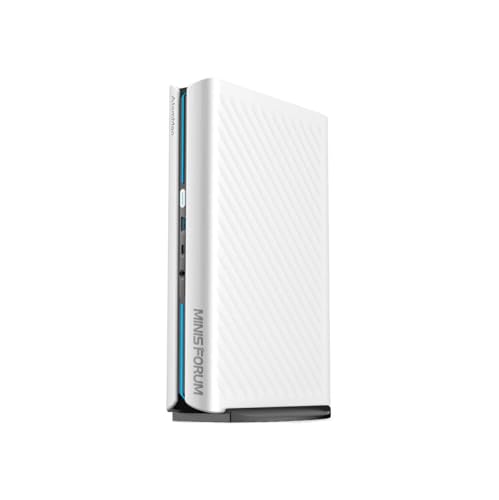
- The value sweet spot: the mid-tier mini, where the size premium is at its slimmest relative to what it delivers — in this analysis, the MINISFORUM G1 Pro’s territory.
- The deciding test: name the specific thing the smallness will do for you, in a sentence, before you pay for it. If the sentence is concrete, it is probably worth it. If it is a shrug, it is not.
Where to Buy
Six machines carry the value argument below, one for each way the worth-it question gets answered in practice — from the budget desktop that barely charges for its size to the premium mini that charges the most and must justify it hardest.
- The value sweet spot: MINISFORUM G1 Pro Gaming Mini PC (RTX 5060) — check the latest price on Amazon from the product page.
- The premium case: ASUS ROG NUC 16 Gaming Mini PC (RTX 5070 Ti) — check the latest price on Amazon from the product page.
- The budget case: Rmatamini SFF Gaming PC (i5-14400F, RTX 5060) — check the latest price on Amazon from the product page.
- The staged-spending case: GMKtec K12 Gaming Mini PC (Radeon 780M, OCuLink) — check the latest price on Amazon from the product page.
- The workstation case: GMKtec EVO-X3 AI Mini PC (Ryzen AI Max+ 395) — check the latest price on Amazon from the product page.
- The near-tower case: Cooler Master NR2 Pro Gaming PC (Ryzen 7 9800X3D, RTX 5070 Ti) — check the latest price on Amazon from the product page.
Every machine named on this page was checked against Amazon’s own product data before it was included, and the links above go to the listings on reviewstook.com’s retail partner, Amazon, where you can confirm the exact configuration, current availability and delivery options before you spend anything.
What Are You Actually Paying For? The Premium, Itemised
Strip a small PC’s price down and the premium over an equivalent tower buys four things. First, engineering density: flagship silicon, custom boards and designed cooling working in a fraction of the volume, which costs money to develop and to manufacture. Second, the silicon itself: laptop processors and graphics are premium components, built for efficiency that desktop parts never have to achieve. Third, finish and integration — a mini is a designed object with one warranty, not a crate of parts. Fourth, and most importantly, the consequences: the reclaimed room, the silent idle, the machine that travels. Buyers who itemise the premium this way stop asking whether small PCs are ‘overpriced’ in the abstract, because the question dissolves into the only one that matters — whether those four things are worth money to them.
Notice what the premium does not buy, because disappointed owners usually expected it to: it does not buy performance. At every tier, the tower is faster for the same money or cheaper for the same speed, and no honest analysis in this cluster has pretended otherwise. It also does not buy future-proofing in the mini family — the opposite, since a sealed machine’s ceiling is set at purchase. The premium buys a way of living with a computer. Priced as that, it is frequently a bargain. Priced as a benchmark score, it never is.
What Does the Size Actually Return? The Other Side of the Ledger
The returns are daily, which is why owners defend these machines out of proportion to their specifications. Space returned is used every day — a desk that fits work and life, a room that does not orbit a tower, a television unit that closes. Silence at rest is enjoyed every evening. Portability pays out monthly: the machine that goes to the other room, the other house, the friend’s session, without a planning meeting. And there is a subtler return accountants miss: a PC that fits a household gets used more, in more rooms, for more purposes — media, work, family computing — than a tower exiled to one desk. Cost per hour of use, the only value metric that touches reality, often favours the small machine that cost more and did more.
Set the returns against your actual life rather than an idealised one. A buyer who games at one large desk, alone, in a room of their own, receives almost none of them — the premium is nearly pure loss. A buyer in a studio flat, a shared house, a family living room or a two-address life receives all of them, compounded. Worth-it verdicts in this category are therefore autobiographical, and any review that issues one without asking about your rooms is guessing with your money.
The Cost of Ownership: Thinking in Years, Not Receipts
The purchase price is the first payment, not the whole bill, and the small-PC ledger has entries on both sides that towers do not. On the cost side for minis: a hub or dock for most setups; a storage expansion for the 1TB machines once the library grows; and the big one, an earlier whole-machine replacement, because when a sealed mini’s graphics age out, the successor is a new PC rather than a new card. On the saving side: lower electricity draw across years of idle and media hours; no mid-life graphics purchase, which is a real tower expense owners conveniently forget to forecast; and a longer useful afterlife — media box, server, family machine — that defers other purchases entirely.
Run the comparison across a realistic five years and the gap narrows in instructive ways. The tower’s path is a lower entry price plus a probable graphics upgrade in the middle years. The mini’s path is a higher entry price, small accessory costs, and no mid-life spend — followed, at the horizon, by a replacement the tower owner defers again. For horizons up to about four or five years, the totals are closer than the entry prices suggest, and the mini has paid its daily dividends of space and quiet throughout. Beyond that horizon the tower’s upgradability pulls decisively ahead, which is why the horizon question — how long will this be my main gaming machine? — is the most valuable question in this entire analysis. Answer it honestly and the worth-it verdict usually computes itself.
One more ledger line belongs to risk. A sealed machine concentrates risk in its warranty, so the worth-it calculation should price support: a three-year warranty on a mini, as listed for the ASUS machines discussed in this cluster, is worth real money against a shorter term, because it converts the machine’s most expensive failure mode into the maker’s problem for the years when failures are likeliest to be someone else’s fault. Cheap minis with thin support are more expensive than they look; the tier difference is partly an insurance premium, and it should be compared as one.
Six Machines, Six Answers to the Worth-It Question

The Sweet Spot’s Answer: Yes, Most Easily — MINISFORUM G1 Pro Gaming Mini PC (RTX 5060)
Strengths
- Mid-tier pricing keeps the size premium at its slimmest
- 16 cores mean the machine earns its keep at work as well as at play, doubling its hours of use
- Discrete RTX 5060 and modern networking give it a full, uncompromised specification at its tier
Trade-offs
- Its ceiling is fixed, so the yes depends on a three-to-five-year horizon being honest
- Audible under full load — the quiet dividend is partial, not total
- 8GB graphics memory will ask for settings judgement before the processor asks for anything
| Processor | AMD Ryzen 9 8945HX, 16 cores / 32 threads, up to 5.4GHz |
|---|---|
| Graphics | NVIDIA GeForce RTX 5060 8GB GDDR7 |
| Memory | 32GB DDR5 |
| Storage | 1TB SSD |
| Networking | 5GbE LAN, Wi-Fi 7 |
| Displays | Quad 4K output |
| Power | 245W (per listing title) |
If the worth-it question has a default answer, this is the machine it defaults to. The G1 Pro charges the format’s premium at its gentlest, delivers a specification with no apology in it, and — because it works as hard as it plays — racks up the hours of use that make any PC worth its money. For the broad middle of buyers, at 1080p and entry 1440p, in homes where space is a consideration rather than a crisis, the G1 Pro is where ‘worth it’ stops being an argument and becomes an observation.
Best for: the broad middle of buyers, for whom it is the easiest yes in the category / Not suited for: buyers with spacious desks and decade-long upgrade plans


The Premium Answer: Yes, If the Room Says So — ASUS ROG NUC 16 Gaming Mini PC (RTX 5070 Ti)
Strengths
- The smallest footprint and quietest idle in this analysis — the size dividends at maximum
- Three-year warranty prices the sealed-machine risk into the purchase, properly
- Flagship specification gives the fixed ceiling the longest possible distance
Trade-offs
- The steepest size premium here: this is the most expensive way to buy its frame rates
- 1TB storage schedules an accessory cost the value case must include
- For a spacious desk, almost none of its dividends can be collected
| Processor | Intel Core Ultra 9 290HX Plus |
|---|---|
| Graphics | NVIDIA GeForce RTX 5070 Ti (laptop GPU) |
| Memory | 32GB DDR5-6400 |
| Storage | 1TB SSD |
| Chassis | 3-litre, black |
| Cooling | Triple-fan QuietFlow |
| Operating system | Windows 11 |
| Warranty | 3 years (per listing title) |
The NUC is worth it under a condition, and the condition is a room. In a small flat, a shared house, a living room or a bedroom where a tower would be an intruder, its premium buys admission — a full gaming life in spaces that would otherwise refuse one — and admission is worth a great deal. At a large private desk, the same premium buys a smaller version of a thing that already fit, and the answer flips to no with equal confidence. No machine in this analysis demonstrates the autobiographical nature of value more cleanly. Our full review is at Small Form Factor Gaming PC Review.
Best for: space-constrained and living-room buyers who will use every dividend it pays / Not suited for: spacious-desk buyers, for whom it is a beautiful waste of money

The Budget Answer: Yes, Structurally — Rmatamini SFF Gaming PC (i5-14400F, RTX 5060)
Strengths
- The size premium nearly vanishes — a desktop RTX 5060 at the budget tier
- Upgradability means the ownership ledger’s biggest mini cost never appears
- Its compromises are the cheap-to-fix kind: storage first, everything else later
Trade-offs
- 512GB storage is an immediate, certain future expense to budget honestly
- Finish and support are budget-grade, so the risk line of the ledger is yours to carry
- 16GB DDR4 is adequate now and a planned conversation later
| Processor | Intel Core i5-14400F |
|---|---|
| Graphics | NVIDIA GeForce RTX 5060 8GB (desktop GPU) |
| Memory | 16GB DDR4 |
| Storage | 512GB M.2 NVMe SSD |
| Form factor | Ultra small form factor desktop |
The Rmatamini makes the worth-it case by barely asking the question: at its tier, small costs so little extra over big that the size is nearly free, and its desktop architecture deletes the format’s most expensive long-term con. What remains is a set of small, known, plannable costs — a bigger drive, perhaps more memory one day — against a real graphics card and a real future. For a first gaming PC, a child’s machine, or a second-room setup, it is the analysis’s most relaxed yes.
Best for: budget buyers and first-PC buyers who want the format without its premium / Not suited for: buyers who need capacity and polish included from day one

The Staged Answer: Yes, If You Finish the Plan — GMKtec K12 Gaming Mini PC (Radeon 780M, OCuLink)
Strengths
- Splits the spend across time: capable now, expandable when budget and ambition arrive
- OCuLink converts the replacement cost in the mini ledger into an upgrade cost
- Three M.2 slots and dual networking give it second-career value as a server
Trade-offs
- The full value only materialises if the external GPU is actually bought one day
- Day-one gaming is integrated-class, so the early years pay the least dividends
- The dock and card, when they come, are a second major purchase to forecast honestly
| Processor | AMD Ryzen 7 H 255 |
|---|---|
| Graphics | Radeon 780M integrated graphics |
| Memory | 32GB DDR5 |
| Storage | 512GB SSD, 3x M.2 2280 expansion slots |
| Expansion | OCuLink, USB4 |
| Networking | Dual 2.5G LAN |
| Displays | HDMI 2.1 |
The K12 is worth it as a financial structure as much as a computer: it lets a buyer with a small present budget and a growing future spread the cost of a serious gaming PC across two purchases, while using a capable machine in between. Its ledger balances only if the second purchase happens — an owner who never buys the dock has paid extra for a port — so its yes is a yes about the buyer’s own follow-through. For disciplined staged buyers, students especially, it is one of the smartest routes in the category.
Best for: staged buyers whose budget and ambitions will both grow / Not suited for: buyers who need the performance now, or who know they never finish upgrade plans

The Workstation Answer: Yes, If It Works for a Living — GMKtec EVO-X3 AI Mini PC (Ryzen AI Max+ 395)
Strengths
- 128GB of memory and a flagship integrated platform make it a serious work machine that also games
- No discrete GPU means one less ageing component and a compact, efficient daily driver
- OCuLink keeps a graphics future open if the gaming side of its life grows
Trade-offs
- For pure gaming, much of its price buys memory and AI capability that games cannot use
- Integrated graphics cap its gaming ceiling below every discrete machine here
- Its value case collapses if the heavy workloads never materialise
| Processor | AMD Ryzen AI Max+ 395, 16 cores / 32 threads, up to 5.1GHz |
|---|---|
| Graphics | Radeon 8060S integrated graphics |
| Memory | 128GB LPDDR5X, 8000MHz |
| Storage | 2TB PCIe 4.0 SSD |
| Expansion | OCuLink, USB4 |
| Networking | Wi-Fi 7, 2.5G LAN |
| Displays | Up to 8K output |
The EVO-X3’s worth-it answer is written in its hours. Bought by someone whose days involve large datasets, virtual machines, local AI experimentation or heavy creation work — and whose evenings involve the lighter half of a game library — it replaces two machines with one small one, and two-machine money is the easiest money in this analysis to justify. Bought as a pure games machine, it is an expensive way to reach a modest gaming ceiling. The machine does not change; the workload decides, as it should.
Best for: creator, developer and AI-curious buyers with lighter gaming libraries / Not suited for: pure gamers, who should spend the same tier on a discrete GPU instead
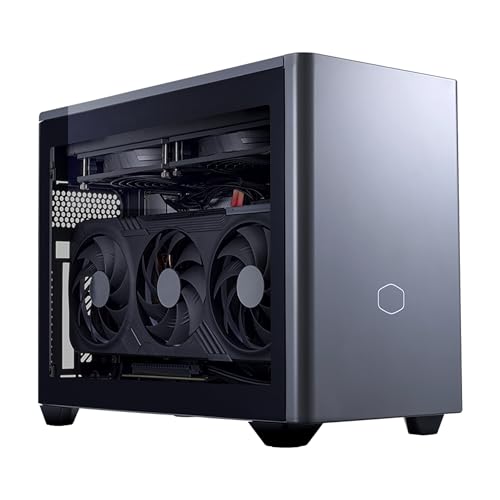
The Near-Tower Answer: Yes, on Almost Any Terms — Cooler Master NR2 Pro Gaming PC (Ryzen 7 9800X3D, RTX 5070 Ti)
Strengths
- Desktop performance and upgradability mean its ledger reads like a tower’s — because it is one
- Liquid cooling and flagship parts give it the longest gaming life in this analysis
- The size premium over a tower is the smallest here relative to the space it still saves
Trade-offs
- It saves the least space of any machine in this analysis — the dividend is modest
- Flagship tier pricing: worth it and cheap are different claims, and only the first applies
- Liquid cooling makes it a settled, single-room machine
| Processor | AMD Ryzen 7 9800X3D |
|---|---|
| Graphics | NVIDIA GeForce RTX 5070 Ti 16GB (desktop GPU) |
| Memory | 32GB DDR5 6000MHz |
| Storage | 2TB M.2 SSD |
| Cooling | 280mm AIO liquid cooler |
| Form factor | Mini ITX |
| Operating system | Windows 11 |
The NR2 Pro is worth it the way a good tower is worth it, with a modest surcharge for a case a fraction of the size. Its ownership ledger has no sealed-machine entries at all: no fixed ceiling, no early replacement, a graphics swap waiting in its middle years like any desktop’s. Buyers who want the small-PC life with the tower’s economics — and who have the Mini ITX room it needs — will find this the least conditional yes in the analysis. It wins the worth-it argument on points for performance-led buyers, while conceding the size argument to every mini here.
Best for: performance-led buyers who want tower economics at reduced scale / Not suited for: buyers whose space demands a true mini
Worth It, Household by Household
The studio flat and the shared house are the format’s home ground, and the verdict there is the strongest yes in this analysis. Space in those homes is not an aesthetic preference but a rationed resource, and a tower does not merely occupy it — it vetoes furniture, annoys housemates and anchors gaming to one contested corner. A mini returns the room to everyone, games at the desk or the television as the evening demands, and leaves no trace of itself at breakfast. Buyers in these homes should not ask whether the premium is worth it; they should ask which tier of mini their monitor justifies, because the alternative was never really a tower — it was no gaming PC, or a resented one.
The family living room runs it close. A small PC there is a console-priced-in-PC-currency decision: more expensive than a console, incomparably more capable, and the only machine that serves games, media, family computing and homework from one silent box under the television. Households that will actually use that breadth collect the dividend daily; households that only game should compare honestly against the console and let the library decide. The student’s two-address life splits by family, as this cluster keeps finding: the staged K12 or the mid-tier G1 Pro for the backpack, the LAN-class desktop for the car boot, both defensible, both worth it in a way a tower stranded at one address is not.
The dedicated gaming room is where the yes dies, and this analysis will not pretend otherwise. A buyer with a room, a big desk, a high-refresh 1440p or 4K ambition and a decade of tinkering ahead receives nothing from smallness except its bill. Even there, one exception survives: the NR2 Pro pattern, a Mini ITX desktop, which keeps the tower’s entire economic case while shrinking its footprint to something a shelf can hold — worth it, in that room, as tidiness rather than as necessity. Everywhere else in that house, the honest recommendation is a tower, bought with the money this page has saved you.
Running Costs, Resale and the Lines People Forget
Electricity is the forgotten line, and it mildly but genuinely favours the mini. Laptop-derived hardware idles and streams at a fraction of a gaming tower’s draw, and a household PC spends most of its powered life far from full load — browsing, media, downloads, homework, standing by as a server. Across years of that pattern the difference is not a fortune, but it is real, it always runs in the mini’s favour, and in homes where the PC is never really off it can quietly repay a noticeable slice of the size premium. Under full gaming load the advantage narrows to nothing, which is exactly why it belongs in an honest ledger rather than a headline.
Resale runs the other way, as the pros-and-cons analysis in this cluster notes: components hold individual value, sealed units hold a single depreciating whole. The practical mitigation is the afterlife — a mini handed down inside a household delivers its remaining value at full price, in kind, while a sold tower’s components deliver theirs at market price, in cash, minus the effort of selling them. Buyers who habitually sell to upgrade should weight resale properly and lean desktop; buyers who hand down should weight it barely at all. Previous-generation purchases, like the TOPGRO pattern reviewed elsewhere in this cluster, complicate the ledger once more: a lower entry tier buys a shorter horizon, which is a fair trade only when both sides of it are seen clearly at purchase — the discipline this entire cluster exists to teach.
The Alternatives Your Money Could Buy Instead
Worth-it is always relative, so consider the rival purchases honestly. A conventional tower is the value benchmark: more performance per coin, a decade of upgrades, and a presence in the room that is either free or expensive depending on the room. A gaming laptop is the portability benchmark: it costs a premium similar to a mini’s, includes a screen and battery the mini lacks, and gives up the mini’s sustained cooling, ergonomics and quiet desk life. A console is the simplicity benchmark: cheaper than any machine here, effortless in a living room, and a different, smaller library with different economics in its games and subscriptions. The small PC’s worth-it case is not that it beats any of these at their own game — it is that it is the only one that is simultaneously a full PC, a living-room citizen and a desk that stays tidy, and for households that need that combination, the rivals are not actually rivals.
The combination test is the sharpest tool in this analysis. List what the machine must be — PC library and mods, television-friendly, desk-tidy, movable, work-capable — and strike the alternatives that fail any line. Buyers whose list has one line should buy that line’s champion and stop reading. Buyers whose list has four lines will find the small PC standing alone at the end of it, at which point its premium is not a premium at all: it is the price of the only product that fits the specification, and things that are the only fit are worth their price almost by definition.
A Five-Year Comparison, Worked in Words
Take two buyers spending comparable serious money in the same season. The tower buyer pays less at the door for more performance, adds a graphics upgrade somewhere around year three to stay at the settings they love, draws more electricity throughout, and arrives at year five owning a machine with years of life left and a shelf of replaced parts behind it. The mini buyer pays more at the door for less performance, adds a hub and probably a drive, spends nothing in the middle years, draws less electricity throughout, and arrives at year five owning a machine ready for its second career and a replacement decision the tower buyer has deferred. Neither ledger is a rout. The tower buyer’s advantage is performance and longevity; the mini buyer’s is five unbroken years of space, quiet and portability that the tower buyer never had at any price. Which ledger wins depends — as this analysis has insisted from its first paragraph — on whether those five years of dividends were spendable in the buyer’s actual home.
Now shorten the horizon to three years, as students, renters and the fast-moving honestly should. The tower’s mid-life upgrade never happens, so its cost advantage shrinks to the door price, while the mini’s dividends have been paid in full and its replacement date sits comfortably beyond the horizon. At three years, the mini frequently wins the whole comparison for space-constrained buyers — which is why the horizon question outranks every other question in this analysis, and why sales advice that never asks it is not advice at all. Lengthen the horizon to eight years and the verdict inverts with equal force. The worth-it question has a clock inside it; set the clock before you shop.
The Emotional Line Item, Priced Honestly
There remains the line no ledger captures: people like these machines. A small, quiet, beautifully made object that contains a whole gaming life exerts a pull that a tower’s spec sheet does not, and owners’ satisfaction with minis runs ahead of what their frame rates justify — because satisfaction was never only frame rates. This analysis does not dismiss that pull as irrational. Delight is a real return on money, collected daily, and a buyer who knowingly pays a tier for an object they will enjoy looking at, lifting and living with has made a legitimate purchase. The mistake is only ever the unknowing version: paying for delight while believing you paid for performance, then feeling cheated by arithmetic you never did. Do the arithmetic in this page, and whatever you buy afterwards — mini, desktop or tower — you will buy it with the one thing that makes any of them worth it: an accurate idea of what your money bought.
The Three Tests, Stated Plainly
Everything in this analysis compresses into three tests you can run in a minute. The room test: can you point at the exact place the PC will live, and does that place punish size — a small desk, a shared shelf, a TV unit, a bag? If the place is indifferent to size, the premium buys nothing there. The horizon test: will this be your main gaming machine for three to five years, after which replacement or demotion to a second role is acceptable? If you demand seven-plus years of front-line service from one purchase, only the desktop family inside this category — or a tower outside it — passes. The combination test: must this one machine be several things at once — games library, living-room citizen, tidy desk, work tool, traveller? Each additional role is a dividend only the small PC pays.
Score them honestly. Three passes is the strongest yes in consumer electronics: buy the best small PC your tier allows and do not look back. Two passes is a yes with a tier decision attached — usually the mid-tier, where the premium is gentlest. One pass is a maybe that should be settled by the budget machines, whose small surcharge makes a single dividend worth collecting. Zero passes is a tower, bought without regret and without a backward glance at the charming little machines — which will be waiting, unchanged in their appeal, if your rooms ever change. The tests are the analysis; the rest of this page is their evidence.
Run the tests again whenever your life changes, because the verdict is indexed to a household, not to a person. The tower buyer of five years ago, in the big house with the dedicated room, may be the mini buyer of today in the smaller flat near better work — and the correct purchase changed the day the address did, without a single benchmark moving. That is why this analysis refuses to crown a permanent winner: worth is a relationship between a machine and a moment, and the most valuable habit it can teach is re-asking the question at each purchase rather than inheriting the last answer. Machines improve, rooms change, horizons shorten and lengthen; the three tests keep up with all of it, which is more than can be said for any individual recommendation, including the ones in this cluster.
How to Buy One Without Overpaying
If the verdict is yes, buy in the way that protects the value you have just argued for. Buy one graphics tier above your current monitor if the machine is sealed, because headroom is the only future-proofing a mini sells and it is cheapest on day one. Buy storage generously at purchase, when configuration prices are kindest, or confirm the free slot that makes it cheap later. Compare warranty terms as a priced feature, not fine print. Verify the exact configuration against the retailer’s product data — every machine in this analysis was verified that way — because variant grids are where value quietly leaks. And time the accessory purchases with the machine: the hub, the mount and the second drive are part of its price, and the buyer who budgets them upfront is the buyer whose worth-it calculation survives contact with the first month. The choosing method and the setup discipline that complete the picture live at How To Choose A Small Form Factor Gaming PC and How To Set Up Small Form Factor Gaming PC.
Common Mistakes in Judging Value
- Comparing a mini’s price against a tower’s frame rates only, and pricing the reclaimed room at zero because it cannot be benchmarked.
- Forgetting the tower’s own mid-life costs — the graphics upgrade, the larger electricity draw — while itemising every mini accessory.
- Buying a sealed machine one tier too low to save money now, and paying the format’s highest cost — early replacement — as the reward.
- Judging a premium mini’s warranty as boilerplate instead of as the insurance it functionally is.
- Asking ‘is it worth it?’ about a category instead of about a specific machine, in a specific room, over a specific number of years.
Final Recommendation
So: is a small form factor gaming PC worth it? For the buyer this analysis has described — space that matters, a mainstream monitor, an honest three-to-five-year horizon, and a sentence they can finish about what the smallness will do for them — yes, and the mid-tier machines like the G1 Pro make the yes easy, the budget Rmatamini makes it nearly free, and the NR2 Pro makes it on tower-like terms. For the buyer with the big desk and the long upgrade plan, no — and the same analysis that says yes to the first buyer protects the second from a charming, expensive mistake.
That is the complete answer, and it is a more useful one than a bare yes, because it travels: apply the room test, the horizon test and the combination test to any small PC, at any tier, in any future season, and the worth-it verdict will compute itself the same way it did here. When you are ready to act on a yes, the shortlist is waiting at Small Form Factor Gaming PC Buying Guide.
A last word for the buyer still hesitating at the edge of the decision: hesitation usually means one of the three tests failed quietly, and the useful move is to find which one rather than to keep reading reviews. If it was the room, measure it again with fresh eyes. If it was the horizon, say the number of years out loud. If it was the combination, write the machine’s jobs down and count them. The answer is in one of those three acts, and once it surfaces, the purchase — whichever way it falls — will be one you can defend to yourself in year three, which is the only definition of worth it that has ever mattered to anyone who has lived with a purchase.
Frequently Asked Questions
Is a small form factor gaming PC worth it for most people?
For most people whose gaming space is a normal room rather than a dedicated setup, yes — provided they buy in the mid-tier, where the size premium is slimmest, and their monitor is 1080p or 1440p. The MINISFORUM G1 Pro is this analysis’s example of the easy yes. The exception is the buyer with a spacious dedicated desk and a long upgrade plan, for whom a tower remains the better value on every line.
Why are small gaming PCs more expensive than towers?
Because miniaturisation is engineering: laptop-class silicon built for efficiency, custom dense designs, cooling systems that must work in a fraction of the volume, and the finish of a single integrated product with a single warranty. You are paying for the size and its consequences — space, quiet, portability — not for extra performance, and the purchase should be judged on whether those consequences are worth money in your home.
How long will a small form factor gaming PC last?
As a main gaming machine, plan on three to five years for a well-bought mini — longer at 1080p, shorter at the demanding end of 1440p — and longer still for a Mini ITX desktop, which can refresh its graphics card mid-life like any tower. After its main-machine life, a mini typically continues for years in lighter roles: media PC, emulation box, home server or a family member’s computer, which belongs in its value calculation.
Is a mini gaming PC or a gaming laptop better value?
They cost similar premiums for the same class of hardware, and the value depends on where you game. The laptop includes a screen and battery and travels between places; the mini offers better sustained cooling, a proper monitor and peripherals of your choice, a silent desk presence and no battery to degrade. One-room gamers get more from the mini; multi-place gamers get more from the laptop.
What is the cheapest way into small form factor gaming that is still worth it?
A budget small desktop with a real desktop graphics card — the Rmatamini pattern in this analysis — because it nearly eliminates the size premium while keeping the upgrade path that protects long-term value. The alternative budget route, an integrated-graphics mini, is worth it only for genuinely light libraries, or in its OCuLink form, like the GMKtec K12, as the first stage of a planned two-stage purchase.
Does a small gaming PC hold its value?
Less well than a tower’s components, which can be sold individually, and better than its critics suggest, because a capable mini remains desirable as a complete, tiny, working PC for second roles. Treat resale as a minor line in the calculation either way; the major lines are the purchase tier, the horizon, and the daily dividends of space and quiet, which no resale figure captures.
When is a small form factor gaming PC definitely not worth it?
When three conditions meet: a spacious dedicated desk, a priority on maximum performance per unit of money, and an intention to upgrade components over many years. In that situation every line of the small-PC ledger runs against you and the tower wins outright. It is also not worth it, at any desk, bought one tier too low — an underpowered sealed machine is the category’s one genuinely bad purchase, because its only remedy is replacement.