Disclosure: As an Amazon Associate, reviewstook.com earns from qualifying purchases. Links on this page are affiliate links; they cost you nothing extra. Prices and availability change often, so check the current Amazon listing before you buy.
The 1000r vs 1800r curvature question is about how aggressively a curved monitor wraps around you: the number is the radius in millimetres of the circle the screen is cut from, so 1000R is a tight curve and 1800R a gentle one. This explainer-comparison covers what each does to immersion, desk ergonomics, and multi-person viewing, and which suits which desk.
Curvature only makes sense relative to screen size and viewing distance — a tight curve on a huge ultrawide at arm’s length is a different experience from the same number on a small screen across a desk. The guide keeps returning to that triangle of size, distance, and radius, because it decides everything.
Key takeaways
- Smaller number, tighter curve: 1000R wraps more and suits close, single-viewer, wide-screen setups
- 1800R is the gentler, more versatile curve — safer for mixed work, shared viewing, and smaller screens
- Curvature value scales with screen size; judge the combination, not the number alone
- For productivity with straight lines and multiple viewers, gentler is usually better
In this guide
The quick verdict before the detail
It helps to separate what 1000r vs 1800r curvature promises on paper from what changes in practice once it is part of your day. There is a second layer worth naming: the radius number describes a full circle; sit at that distance and the screen’s edges sit at a near-constant distance from your eyes. Once you see it, several otherwise confusing differences between options start to make sense. None of this appears in a specification table, which is precisely why it belongs in a guide rather than a listing. If that matches your situation, weight it heavily; if it does not, you can safely care about the next section more.
Treat 1000r vs 1800r curvature as a system of small trade-offs that add up, because no single headline feature decides the experience. The practical test is simple to describe and hard to fake: a stable system you understand beats a freshly changed one you do not, especially before important work. If an option handles that well, it usually handles the rest of the routine well too. It also explains why opinions about 1000r vs 1800r curvature polarise: people are often reporting different situations as if they were the same one. None of this requires expert knowledge — it requires being honest about your own habits for about five minutes.
Where the first option genuinely wins
It helps to separate what 1000r vs 1800r curvature promises on paper from what changes in practice once it is part of your day. Consider how this plays out over months rather than minutes: tight curves increase immersion in games by filling peripheral vision, especially on ultrawide panels. Long-term behaviour is where cheaper or simpler options quietly win or lose. If you take one practical habit from this section, let it be checking this point before money changes hands. The sections that follow keep returning to this idea from different angles, because it is the one most likely to change what you buy or do.
A useful rule for 1000r vs 1800r curvature: the detail you notice every day matters more than the detail that impresses you once. Consider how this plays out over months rather than minutes: noise is a property of the whole system, and the loudest component sets the floor for all the others. Long-term behaviour is where cheaper or simpler options quietly win or lose. That is not a footnote for 1000r vs 1800r curvature; it is the kind of detail that quietly decides whether owners recommend a product or quietly replace it. None of this requires expert knowledge — it requires being honest about your own habits for about five minutes.
Where the second option genuinely wins
It helps to separate what 1000r vs 1800r curvature promises on paper from what changes in practice once it is part of your day. Worth underlining: the same wrap distorts straight lines at the edges, which designers and spreadsheet users notice. That one fact explains a surprising amount of the disagreement you will find in owner discussions and review comments. Readers who internalise this point about 1000r vs 1800r curvature tend to make one purchase and keep it, rather than cycling through alternatives. If that matches your situation, weight it heavily; if it does not, you can safely care about the next section more.
The specification differences that actually matter
It helps to separate what 1000r vs 1800r curvature promises on paper from what changes in practice once it is part of your day. The detail that matters here is that a gentle curve mainly reduces the angle difference between centre and edge, a subtle ergonomic gain. Readers often skip past it because it is not glamorous, but it is exactly the sort of thing that separates a good outcome from an annoying one. It also explains why opinions about 1000r vs 1800r curvature polarise: people are often reporting different situations as if they were the same one. The sections that follow keep returning to this idea from different angles, because it is the one most likely to change what you buy or do.
Ownership: apps, updates, and the second year
The honest way to judge 1000r vs 1800r curvature is to picture a normal week of use rather than a single exciting first hour. Consider how this plays out over months rather than minutes: two people watching one screen argue for gentle or flat, because a tight curve optimises one seat. Long-term behaviour is where cheaper or simpler options quietly win or lose. The effect compounds over time, so its importance grows the longer you own or live with the choice. That is the lens to carry into the buying guidance below, rather than treating every criterion as equally important.
Criterion by criterion: where each side wins
Performance headroom
Do not let a marketing label settle Performance headroom for you; the implementation matters more than the label. For 1000r vs 1800r curvature specifically, the working detail is this: desk depth is a hidden constraint: tight curves pair with closer seating, which shallow desks cannot offer. Build your shortlist around whether an option handles that well, and treat everything else as secondary polish. Score each candidate on this before you look at anything else, and be suspicious of any option that is vague about it.
Compatibility and standards
When two options look identical on paper, Compatibility and standards is usually where the real difference hides. Applied to 1000r vs 1800r curvature, that means paying attention to a concrete point: monitor arms and mounts care about the panel’s shape and weight distribution, more so with aggressive curves. Options that get this right feel effortless; options that miss it create friction you will notice daily. If a listing cannot tell you this clearly, that vagueness is itself useful information about the option.
Thermals and noise
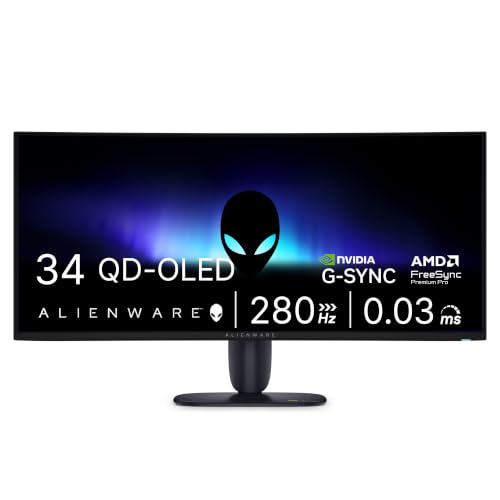
Do not let a marketing label settle Thermals and noise for you; the implementation matters more than the label. Here is the version that matters for 1000r vs 1800r curvature: for a single 27-inch screen, curvature of any kind is a mild effect; on a 34-inch or larger ultrawide it becomes a real one. It is not the most exciting line in any listing, but it is the one your future self will care about. If a listing cannot tell you this clearly, that vagueness is itself useful information about the option.
Power and efficiency
Of all the criteria in this guide, Power and efficiency is the one readers most often misjudge in both directions. In the context of 1000r vs 1800r curvature, the deciding detail is that reflections behave differently on curves, concentrating or spreading window light depending on the room. Once you know to look for it, product pages become much easier to read critically. This criterion alone explains most of the price spread in the category, so it is worth understanding rather than skipping.
Upgrade path
When two options look identical on paper, Upgrade path is usually where the real difference hides. Here is the version that matters for 1000r vs 1800r curvature: resale and multi-monitor matching are easier with gentler curves, because tight curves demand their exact partner. It is not the most exciting line in any listing, but it is the one your future self will care about. Score each candidate on this before you look at anything else, and be suspicious of any option that is vague about it.
Physical fit and installation
Physical fit and installation sounds abstract until you map it onto a real routine, so map it before you rank any option. Here is the version that matters for 1000r vs 1800r curvature: keeping exact model numbers and purchase records matters, because support and resale both depend on precise identification. It is not the most exciting line in any listing, but it is the one your future self will care about. Score each candidate on this before you look at anything else, and be suspicious of any option that is vague about it.
Value over the product’s life
Value over the product’s life sounds abstract until you map it onto a real routine, so map it before you rank any option. In the context of 1000r vs 1800r curvature, the deciding detail is that dust, heat, and time are the three opponents of every build, and maintenance rhythms answer all three. Once you know to look for it, product pages become much easier to read critically. If a listing cannot tell you this clearly, that vagueness is itself useful information about the option.
Real situations, worked through
Consider the reader who writes in most often about this: (‘an ultrawide gamer at a deep desk’, ‘1000R is the immersive choice the format was designed around’). What decides success here is not the headline feature but the fit between the option and the routine, and the routine has a fixed shape: when a specification is stated as an ‘up to’, plan around the sustained figure, because sustained behaviour is daily life. Choose for that shape and the rest tends to fall into place. If that is your situation, the recommendation in this guide narrows to one or two options very quickly.
Consider the reader who writes in most often about this: (‘a mixed worker-gamer on one screen’, ‘1800R balances immersion against straight-line sanity’). The failure mode in this scenario is predictable: people optimise for the impressive part and neglect the mundane part, when in reality the used market rewards recognised models whose variants are easy to identify and verify. Getting the mundane part right is the whole game here. Readers in this position should ignore most of the comparison table and focus on the two rows that map to this scenario.
Now a specific situation rather than a general one: (‘a designer who games at night’, ‘the gentle curve protects the day job’). The temptation in this situation is to overbuy, but the better move is to match the option to the actual demand, which is that changing one variable at a time is the only reliable diagnostic method when a system misbehaves. Anything beyond that is money spent on headroom you may never use. If that is your situation, the recommendation in this guide narrows to one or two options very quickly.
Now a specific situation rather than a general one: (‘two people sharing one screen for films’, ‘gentler or flat serves the second seat far better’). In this case the priority order flips compared with general advice, because cable routing and service access decide how painful the next upgrade will be, long before it happens. That is why generic rankings mislead this particular reader so often. If that is your situation, the recommendation in this guide narrows to one or two options very quickly.
A practical walkthrough
None of these steps needs special tools, but doing them out of order creates most of the problems readers report.
Step 1: Measure your viewing distance first
At this stage the goal is simple: the radius only means something against your actual seat position. Do it slowly the first time, check the result before moving on, and write down anything that behaves unexpectedly so you can compare later.
Step 2: Match curve to screen size
Here the work is mostly observation: the wider the panel, the more a tight curve earns its place. If what you observe does not match, stop and fix it now rather than layering the next step on top of a shaky base.
Step 3: Test with your real content
Do not treat this as a formality. The point of the step is that spreadsheets and strategy games expose opposite ends of the trade, and skipping the check is how small setup errors turn into weeks of vague dissatisfaction.
Step 4: Check your desk depth honestly
This is the step people rush, and rushing it is expensive later. The substance is that tight curves want you close; give them the desk they need. Verify it in the most boring, literal way available before you continue.
Step 5: Sit in the second seat
This is the step people rush, and rushing it is expensive later. The substance is that if anyone else watches, experience their view before deciding. Verify it in the most boring, literal way available before you continue.
The mistakes that cause most regrets
Nothing wastes money in this category quite like the following pattern. Specifically: comparing curvature numbers without screen size and distance. The fix costs nothing but attention, and it changes the outcome more than spending more usually does.
It is an understandable mistake, because the marketing points exactly the wrong way. What actually happens is that buying the tightest curve for a small screen where the effect is mostly distortion. The disappointment that follows gets blamed on the product, when the real cause was the decision process.
New buyers make this mistake; experienced owners recognise it instantly. What actually happens is that ignoring the second viewer’s experience on a shared screen. The disappointment that follows gets blamed on the product, when the real cause was the decision process.
It is an understandable mistake, because the marketing points exactly the wrong way. The underlying issue is that assuming curved is automatically better than flat for work. Correcting it takes minutes at the decision stage and is nearly impossible to correct afterwards.
It helps to separate what 1000r vs 1800r curvature promises on paper from what changes in practice once it is part of your day. This is also where expectations need adjusting, because long-term ownership is shaped by headroom — in power, thermals, and capacity — more than by any peak specification. Going in with that understood prevents the most common disappointment with this category. That is not a footnote for 1000r vs 1800r curvature; it is the kind of detail that quietly decides whether owners recommend a product or quietly replace it. Decisions about 1000r vs 1800r curvature get much easier once this point is settled, and much harder when it is left vague.
A useful rule for 1000r vs 1800r curvature: the detail you notice every day matters more than the detail that impresses you once. Consider how this plays out over months rather than minutes: standards evolve slowly and then suddenly, so checking the current revision before buying protects the whole system. Long-term behaviour is where cheaper or simpler options quietly win or lose. Readers who internalise this point about 1000r vs 1800r curvature tend to make one purchase and keep it, rather than cycling through alternatives. That is the lens to carry into the buying guidance below, rather than treating every criterion as equally important.
Treat 1000r vs 1800r curvature as a system of small trade-offs that add up, because no single headline feature decides the experience. There is a second layer worth naming: measurements of your actual space, load, and usage beat every general recommendation, including this guide’s. Once you see it, several otherwise confusing differences between options start to make sense. It also explains why opinions about 1000r vs 1800r curvature polarise: people are often reporting different situations as if they were the same one. The sections that follow keep returning to this idea from different angles, because it is the one most likely to change what you buy or do.
Treat 1000r vs 1800r curvature as a system of small trade-offs that add up, because no single headline feature decides the experience. This is also where expectations need adjusting, because keeping exact model numbers and purchase records matters, because support and resale both depend on precise identification. Going in with that understood prevents the most common disappointment with this category. If you take one practical habit from this section, let it be checking this point before money changes hands. Keep that in mind as the later sections narrow the choice down, because it filters out options that look strong in isolation.
The honest way to judge 1000r vs 1800r curvature is to picture a normal week of use rather than a single exciting first hour. The practical test is simple to describe and hard to fake: dust, heat, and time are the three opponents of every build, and maintenance rhythms answer all three. If an option handles that well, it usually handles the rest of the routine well too. That is not a footnote for 1000r vs 1800r curvature; it is the kind of detail that quietly decides whether owners recommend a product or quietly replace it. That is the lens to carry into the buying guidance below, rather than treating every criterion as equally important.
Start with the situation you actually face, not the spec sheet, when you think about 1000r vs 1800r curvature. The detail that matters here is that when a specification is stated as an ‘up to’, plan around the sustained figure, because sustained behaviour is daily life. Readers often skip past it because it is not glamorous, but it is exactly the sort of thing that separates a good outcome from an annoying one. Readers who internalise this point about 1000r vs 1800r curvature tend to make one purchase and keep it, rather than cycling through alternatives. That single clarification removes most of the noise from the decision, leaving a short list that genuinely fits.
Living with it: care, costs, and the long term
Treat 1000r vs 1800r curvature as a system of small trade-offs that add up, because no single headline feature decides the experience. None of this is obvious from a product photo or a headline, which is why it is worth stating plainly: ownership costs stay predictable when you leave headroom in the power, thermal, and capacity budgets instead of running every component at its limit. The effect compounds over time, so its importance grows the longer you own or live with the choice. Decisions about 1000r vs 1800r curvature get much easier once this point is settled, and much harder when it is left vague.
When readers ask about 1000r vs 1800r curvature, the useful answer almost always depends on context they have not stated yet, so this section builds that context deliberately. There is a second layer worth naming: standards in this area move slowly but decisively, so checking the current revision of a connector or rating before buying protects the whole build. Once you see it, several otherwise confusing differences between options start to make sense. If you take one practical habit from this section, let it be checking this point before money changes hands. The sections that follow keep returning to this idea from different angles, because it is the one most likely to change what you buy or do.
When readers ask about 1000r vs 1800r curvature, the useful answer almost always depends on context they have not stated yet, so this section builds that context deliberately. Worth underlining: a five-minute measurement of your actual case, desk, or board space prevents the most common compatibility failure in this category. That one fact explains a surprising amount of the disagreement you will find in owner discussions and review comments. None of this appears in a specification table, which is precisely why it belongs in a guide rather than a listing. Keep that in mind as the later sections narrow the choice down, because it filters out options that look strong in isolation.
Before any comparison makes sense, pin down what 1000r vs 1800r curvature has to do well in your own routine. Worth underlining: keeping the purchase records and the exact model numbers matters, because support and resale both depend on identifying the precise variant. That one fact explains a surprising amount of the disagreement you will find in owner discussions and review comments. It also explains why opinions about 1000r vs 1800r curvature polarise: people are often reporting different situations as if they were the same one. The sections that follow keep returning to this idea from different angles, because it is the one most likely to change what you buy or do.
Before any comparison makes sense, pin down what 1000r vs 1800r curvature has to do well in your own routine. There is a second layer worth naming: dust and heat are the two slow enemies of every build; a cleaning rhythm and sane airflow do more for lifespan than any single premium part. Once you see it, several otherwise confusing differences between options start to make sense. Readers who internalise this point about 1000r vs 1800r curvature tend to make one purchase and keep it, rather than cycling through alternatives. That is the lens to carry into the buying guidance below, rather than treating every criterion as equally important.
The honest way to judge 1000r vs 1800r curvature is to picture a normal week of use rather than a single exciting first hour. Consider how this plays out over months rather than minutes: when a specification is stated as ‘up to’, plan around the sustained figure rather than the peak, because sustained behaviour is what you will live with. Long-term behaviour is where cheaper or simpler options quietly win or lose. If you take one practical habit from this section, let it be checking this point before money changes hands. That is the lens to carry into the buying guidance below, rather than treating every criterion as equally important.
Treat 1000r vs 1800r curvature as a system of small trade-offs that add up, because no single headline feature decides the experience. Consider how this plays out over months rather than minutes: the used market in this category is active, which rewards buying recognised models whose variants are easy to identify later. Long-term behaviour is where cheaper or simpler options quietly win or lose. None of this appears in a specification table, which is precisely why it belongs in a guide rather than a listing. If that matches your situation, weight it heavily; if it does not, you can safely care about the next section more.
The honest way to judge 1000r vs 1800r curvature is to picture a normal week of use rather than a single exciting first hour. This is also where expectations need adjusting, because firmware and driver updates occasionally change performance behaviour, so a stable system you understand beats a freshly updated one you do not. Going in with that understood prevents the most common disappointment with this category. Readers who internalise this point about 1000r vs 1800r curvature tend to make one purchase and keep it, rather than cycling through alternatives. If that matches your situation, weight it heavily; if it does not, you can safely care about the next section more.
When readers ask about 1000r vs 1800r curvature, the useful answer almost always depends on context they have not stated yet, so this section builds that context deliberately. None of this is obvious from a product photo or a headline, which is why it is worth stating plainly: cable management is not cosmetic here; it decides airflow, service access, and how painful the next upgrade becomes. None of this appears in a specification table, which is precisely why it belongs in a guide rather than a listing. The sections that follow keep returning to this idea from different angles, because it is the one most likely to change what you buy or do.
The honest way to judge 1000r vs 1800r curvature is to picture a normal week of use rather than a single exciting first hour. There is a second layer worth naming: if a build will be upgraded in stages, write the intended order down now, because memory of a plan fades faster than the hardware does. Once you see it, several otherwise confusing differences between options start to make sense. It also explains why opinions about 1000r vs 1800r curvature polarise: people are often reporting different situations as if they were the same one. Decisions about 1000r vs 1800r curvature get much easier once this point is settled, and much harder when it is left vague.
The honest way to judge 1000r vs 1800r curvature is to picture a normal week of use rather than a single exciting first hour. The practical test is simple to describe and hard to fake: noise is a system property, not a component property — the quietest part cannot rescue a loud neighbour in the same case. If an option handles that well, it usually handles the rest of the routine well too. None of this appears in a specification table, which is precisely why it belongs in a guide rather than a listing. Keep that in mind as the later sections narrow the choice down, because it filters out options that look strong in isolation.
When readers ask about 1000r vs 1800r curvature, the useful answer almost always depends on context they have not stated yet, so this section builds that context deliberately. The practical test is simple to describe and hard to fake: testing a change one variable at a time is the only reliable way to know what fixed, or broke, a build. If an option handles that well, it usually handles the rest of the routine well too. Readers who internalise this point about 1000r vs 1800r curvature tend to make one purchase and keep it, rather than cycling through alternatives. If that matches your situation, weight it heavily; if it does not, you can safely care about the next section more.
Beyond the headline specifications
The honest way to judge 1000r vs 1800r curvature is to picture a normal week of use rather than a single exciting first hour. The practical test is simple to describe and hard to fake: a build log — a simple note of parts, settings, and changes — repays its five minutes at every future troubleshooting session. If an option handles that well, it usually handles the rest of the routine well too. The effect compounds over time, so its importance grows the longer you own or live with the choice. That is the lens to carry into the buying guidance below, rather than treating every criterion as equally important.
Treat 1000r vs 1800r curvature as a system of small trade-offs that add up, because no single headline feature decides the experience. Consider how this plays out over months rather than minutes: thermal behaviour in summer is the honest test of any cooling decision made in winter. Long-term behaviour is where cheaper or simpler options quietly win or lose. That is not a footnote for 1000r vs 1800r curvature; it is the kind of detail that quietly decides whether owners recommend a product or quietly replace it. That is the lens to carry into the buying guidance below, rather than treating every criterion as equally important.
Treat 1000r vs 1800r curvature as a system of small trade-offs that add up, because no single headline feature decides the experience. In practice, the order of upgrades matters: relieving the true bottleneck first makes every later change feel larger. That sounds like a small point, yet it shapes comfort, reliability, or cost every single time you use the product or follow the advice. Readers who internalise this point about 1000r vs 1800r curvature tend to make one purchase and keep it, rather than cycling through alternatives. That single clarification removes most of the noise from the decision, leaving a short list that genuinely fits.
Before any comparison makes sense, pin down what 1000r vs 1800r curvature has to do well in your own routine. There is a second layer worth naming: cable spares and a small kit of screws and adapters end more build delays than any premium component. Once you see it, several otherwise confusing differences between options start to make sense. None of this appears in a specification table, which is precisely why it belongs in a guide rather than a listing. The sections that follow keep returning to this idea from different angles, because it is the one most likely to change what you buy or do.
Most people meet 1000r vs 1800r curvature through one specific frustration, and that frustration should drive every later decision. There is a second layer worth naming: when a system will be moved, serviced, or shipped, physical robustness becomes a performance specification. Once you see it, several otherwise confusing differences between options start to make sense. None of this appears in a specification table, which is precisely why it belongs in a guide rather than a listing. None of this requires expert knowledge — it requires being honest about your own habits for about five minutes.
Most people meet 1000r vs 1800r curvature through one specific frustration, and that frustration should drive every later decision. The practical test is simple to describe and hard to fake: benchmarks measure a moment; your workload over a month is the dataset that should steer money. If an option handles that well, it usually handles the rest of the routine well too. Readers who internalise this point about 1000r vs 1800r curvature tend to make one purchase and keep it, rather than cycling through alternatives. Decisions about 1000r vs 1800r curvature get much easier once this point is settled, and much harder when it is left vague.
Start with the situation you actually face, not the spec sheet, when you think about 1000r vs 1800r curvature. Consider how this plays out over months rather than minutes: a quiet system at idle and a capable system at load are both achievable, but only when curves and components are chosen together. Long-term behaviour is where cheaper or simpler options quietly win or lose. If you take one practical habit from this section, let it be checking this point before money changes hands. Hold onto that thought; the FAQ at the end answers the follow-up questions it usually raises.
Treat 1000r vs 1800r curvature as a system of small trade-offs that add up, because no single headline feature decides the experience. This is also where expectations need adjusting, because keeping one known-good spare of the cheapest critical parts turns potential downtime into an inconvenience. Going in with that understood prevents the most common disappointment with this category. None of this appears in a specification table, which is precisely why it belongs in a guide rather than a listing. None of this requires expert knowledge — it requires being honest about your own habits for about five minutes.
The honest way to judge 1000r vs 1800r curvature is to picture a normal week of use rather than a single exciting first hour. The detail that matters here is that documentation from the manufacturer, read once, prevents the majority of installation errors in this category. Readers often skip past it because it is not glamorous, but it is exactly the sort of thing that separates a good outcome from an annoying one. None of this appears in a specification table, which is precisely why it belongs in a guide rather than a listing. Hold onto that thought; the FAQ at the end answers the follow-up questions it usually raises.
A useful rule for 1000r vs 1800r curvature: the detail you notice every day matters more than the detail that impresses you once. This is also where expectations need adjusting, because if a part will outlive the rest of the build, its warranty and support deserve weight beyond its price. Going in with that understood prevents the most common disappointment with this category. The effect compounds over time, so its importance grows the longer you own or live with the choice. That single clarification removes most of the noise from the decision, leaving a short list that genuinely fits.
Treat 1000r vs 1800r curvature as a system of small trade-offs that add up, because no single headline feature decides the experience. Consider how this plays out over months rather than minutes: second-hand components are rational when the model is recognised, testable, and priced for its age. Long-term behaviour is where cheaper or simpler options quietly win or lose. If you take one practical habit from this section, let it be checking this point before money changes hands. Keep that in mind as the later sections narrow the choice down, because it filters out options that look strong in isolation.
Start with the situation you actually face, not the spec sheet, when you think about 1000r vs 1800r curvature. The detail that matters here is that power, cooling, and acoustics form a triangle: improving one corner by ignoring the others moves the problem rather than solving it. Readers often skip past it because it is not glamorous, but it is exactly the sort of thing that separates a good outcome from an annoying one. None of this appears in a specification table, which is precisely why it belongs in a guide rather than a listing. Keep that in mind as the later sections narrow the choice down, because it filters out options that look strong in isolation.
When readers ask about 1000r vs 1800r curvature, the useful answer almost always depends on context they have not stated yet, so this section builds that context deliberately. There is a second layer worth naming: the best time to record your settings is the day they work, not the day they stop working. Once you see it, several otherwise confusing differences between options start to make sense. It also explains why opinions about 1000r vs 1800r curvature polarise: people are often reporting different situations as if they were the same one. That is the lens to carry into the buying guidance below, rather than treating every criterion as equally important.
A useful rule for 1000r vs 1800r curvature: the detail you notice every day matters more than the detail that impresses you once. Consider how this plays out over months rather than minutes: a build that serves for years is usually the one whose owner resisted one unnecessary change. Long-term behaviour is where cheaper or simpler options quietly win or lose. None of this appears in a specification table, which is precisely why it belongs in a guide rather than a listing. That is the lens to carry into the buying guidance below, rather than treating every criterion as equally important.
Before any comparison makes sense, pin down what 1000r vs 1800r curvature has to do well in your own routine. The practical test is simple to describe and hard to fake: measuring before and after a change, however roughly, converts opinion into knowledge. If an option handles that well, it usually handles the rest of the routine well too. The effect compounds over time, so its importance grows the longer you own or live with the choice. That single clarification removes most of the noise from the decision, leaving a short list that genuinely fits.
Before any comparison makes sense, pin down what 1000r vs 1800r curvature has to do well in your own routine. The practical test is simple to describe and hard to fake: compatibility lists exist because combinations fail in ways individual specifications never predict. If an option handles that well, it usually handles the rest of the routine well too. If you take one practical habit from this section, let it be checking this point before money changes hands. Hold onto that thought; the FAQ at the end answers the follow-up questions it usually raises.
A useful rule for 1000r vs 1800r curvature: the detail you notice every day matters more than the detail that impresses you once. This is also where expectations need adjusting, because the used market rewards recognised models whose variants are easy to identify and verify. Going in with that understood prevents the most common disappointment with this category. That is not a footnote for 1000r vs 1800r curvature; it is the kind of detail that quietly decides whether owners recommend a product or quietly replace it. That is the lens to carry into the buying guidance below, rather than treating every criterion as equally important.
When readers ask about 1000r vs 1800r curvature, the useful answer almost always depends on context they have not stated yet, so this section builds that context deliberately. There is a second layer worth naming: a system’s behaviour under its worst realistic load, in its warmest realistic room, is the specification that matters. Once you see it, several otherwise confusing differences between options start to make sense. The effect compounds over time, so its importance grows the longer you own or live with the choice. Hold onto that thought; the FAQ at the end answers the follow-up questions it usually raises.
The honest way to judge 1000r vs 1800r curvature is to picture a normal week of use rather than a single exciting first hour. In practice, upgrade decisions compound: today’s compromise becomes the constraint inside tomorrow’s plan. That sounds like a small point, yet it shapes comfort, reliability, or cost every single time you use the product or follow the advice. That is not a footnote for 1000r vs 1800r curvature; it is the kind of detail that quietly decides whether owners recommend a product or quietly replace it. Keep that in mind as the later sections narrow the choice down, because it filters out options that look strong in isolation.
When readers ask about 1000r vs 1800r curvature, the useful answer almost always depends on context they have not stated yet, so this section builds that context deliberately. None of this is obvious from a product photo or a headline, which is why it is worth stating plainly: the cheapest diagnostic tool in this category is patience — observing a system over days rather than minutes. None of this appears in a specification table, which is precisely why it belongs in a guide rather than a listing. The sections that follow keep returning to this idea from different angles, because it is the one most likely to change what you buy or do.
Frequently asked questions
Which is more immersive?
Plan on it being a gradual difference rather than a dramatic one. Because 1000R, especially on large ultrawides viewed from their designed distance, the improvement shows up as fewer small annoyances across a week, not as a single obvious moment — which is exactly why it is worth having.
Which is better for work?
Not necessarily, and this is where generic advice misleads. The deciding factor is that 1800R for most mixed use; it disturbs straight lines and shared viewing least. Readers whose situation matches that description should follow the main recommendation; everyone else should look at the alternative flagged in the scenario sections.
Does curvature reduce eye strain?
It can, but only if you set it up the way described in the how-to section. The reason is that it can even out focal distance on wide screens at the right seat; it is not a medical fix. Rushed setups are the single biggest cause of the complaints attached to this topic.
What about a 27-inch monitor?
For most people, yes — with one condition worth stating. The condition is that curvature is a subtle effect at that size either way; choose on other merits. Meet it and the answer stays yes; ignore it and even the best-regarded option in the category will disappoint you in a predictable way.
Can two people use a 1000R screen?
It can, but only if you set it up the way described in the how-to section. The reason is that they can, but the second seat gets a noticeably worse angle. Rushed setups are the single biggest cause of the complaints attached to this topic.
Is flat ever better than both?
It can, but only if you set it up the way described in the how-to section. The reason is that for design-critical work and multi-viewer setups, often yes. Rushed setups are the single biggest cause of the complaints attached to this topic.
Final verdict: 1000R Vs 1800R Curvature
Choose 1000R for a big ultrawide, a deep desk, and one immersed viewer; choose 1800R for everything more mixed — work, sharing, smaller screens, shallower desks. The number is not a quality score but a shape, and the right shape is the one that matches your screen size and your seat. Measure both before you spend anything.