Disclosure: As an Amazon Associate, reviewstook.com earns from qualifying purchases. Links on this page are affiliate links; they cost you nothing extra. Prices and availability change often, so check the current Amazon listing before you buy.
This machenike k500f b81 review begins with a disclosure most reviews bury: at the time of writing, this keyboard could not be verified through the marketplace data this site uses to confirm products, and no exact-match listing for the K500F-B81 was returned. Rather than invent a product page, a price or a set of specifications, this article does something more useful. It explains what the K500F-B81 is understood to be from the manufacturer’s own model naming and the descriptions circulating through regional retailers, sets out exactly how to evaluate a keyboard of this class before and after it arrives, and gives you the checks that separate a good unit from a disappointing one. Where a fact could not be confirmed, the article says so and tells you how to confirm it yourself.
That honesty matters because budget mechanical keyboards live and die on details that headline specifications conceal. Two boards can share a layout, a switch colour and a connectivity list while feeling completely different under the fingers — one tight, even and satisfying, the other hollow, uneven and fatiguing by the end of a working day. A review format that pretends to certainty it does not have would fail you precisely where this class of product is decided. So consider this a field guide to one specific model and to the judgement its purchase requires.
Key takeaways for this Machenike K500F B81 Review
- No verified marketplace listing for this exact model was available to this review, so the article links nothing and quotes no price — verify any listing you find against the manufacturer’s model page before paying.
- The K500F-B81 sits in Machenike’s line of affordable mechanical keyboards, a segment where case construction and stabiliser tuning matter more than headline features.
- Your evaluation should concentrate on five things: switch consistency across the board, stabiliser behaviour on the large keys, case acoustics, connectivity reliability and the return route if a unit disappoints.
- Keyboards in this class reward buyers who test methodically in the first days, while returning or exchanging is still simple.
- If you cannot verify the exact model through a seller you trust, the rational alternatives are the better-documented boards in the same class discussed later in this article.
In this guide
What the model name tells us, and what it cannot
Machenike is a manufacturer whose catalogue spans gaming laptops and peripherals, with keyboards positioned firmly at the value end of the mechanical market. The K500 family naming has been used across several of the brand’s full-size and near-full-size boards sold through regional marketplaces and the brand’s own channels, typically aimed at buyers who want mechanical switches, backlighting and gaming styling without the price of the enthusiast brands. The B81 suffix distinguishes a specific variant within that family — and variant suffixes are exactly where buyers get caught, because boards sharing a family name can differ in switch type, connectivity and even layout between suffixes.
That is the first practical lesson of this review: never buy a K500-anything on the strength of a review of a K500-something-else. Photographs, switch descriptions and feature lists must be matched to the full model string, character by character, on the manufacturer’s material and the seller’s page alike. Where those two sources disagree — and in this segment they disagree often — believe neither until the seller answers a direct question in writing. A keyboard is a five-year object you will touch thousands of times a day; ten minutes of pedantry at purchase is the cheapest quality control available to you.
The evaluation framework: five tests that decide this class
Test one: switch consistency across the whole board
Press every key slowly, then type at speed for ten minutes. On a good unit the force and sound stay even from the number row to the modifiers; on a poor one the rarely-pressed keys feel scratchier or heavier than the home row, revealing switches fitted from mixed batches or mounted unevenly. In budget boards this inconsistency, more than any single switch specification, is what owners describe months later as the keyboard feeling cheap. It cannot be detected from a listing. It can be detected in the first evening, which is why the return window matters so much in this class.
Test two: the large keys and their stabilisers
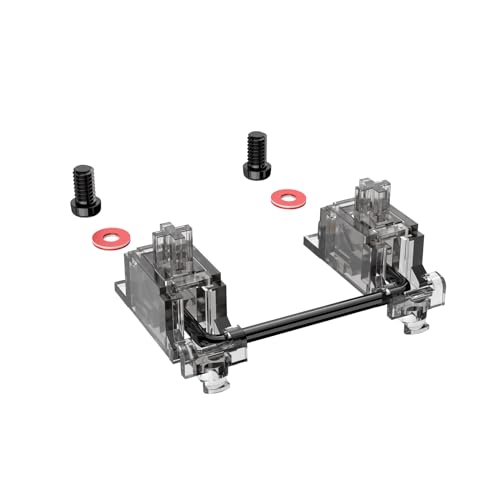
Spacebar, shift, enter and backspace ride on stabilisers, and stabiliser tuning is where affordable keyboards most visibly cut corners. Tap each large key at its far left and far right edges. A well-tuned key descends evenly and returns without rattle or ticking; a poor one rocks, clatters or feels mushy at the edges while behaving in the centre. Some rattle can be improved later with lubricant and patience, and the how-to section below covers the owner’s options, but a new keyboard should arrive close to right — you are buying a tool, not a project, unless the project is what you wanted.
Test three: case acoustics in your actual room
Type a paragraph at your normal speed and listen for the case rather than the switches: a hollow, pinging resonance underneath the keystrokes indicates a thin case with empty internal volume, while a deeper, shorter sound suggests damping or denser construction. Acoustics are partly taste — some typists love a bright, lively board — but the hollow echo that budget boards are known for tires many owners across long sessions. Record a voice memo of your typing in the first days; comparing it a week later, once novelty fades, tells you honestly whether the sound is one you can live with for years.
Test four: connectivity under your real conditions
If the variant you receive offers wireless modes, test them where you will actually use them: the dongle at its real distance, through your desk’s clutter, beside the router and the other wireless devices your home concentrates in one room. Note any lag, dropped characters or wake-from-sleep hesitation across several days rather than one enthusiastic hour. Wired behaviour deserves the same scepticism — a cable that disconnects when the board is nudged is a small defect that becomes a daily insult. Connectivity faults are the most common reason boards in this class are returned, and they are entirely detectable inside a normal return window if the buyer bothers to look.
Test five: the software and the small print
Where companion software exists for remapping or lighting control, install it once, set what you need, and note whether it demands to run permanently in the background. Check the warranty terms in your region and keep the seller’s listing page saved — in the value segment, the practical warranty is often the marketplace’s return process rather than the manufacturer’s, and knowing which one protects you changes how carefully you should test in week one. Photograph the model label on the board’s underside; if support is ever needed, that label is the conversation.
Buying guide: purchasing an unverified-variant keyboard safely
Choose the seller before you choose the board
For a model with thin official distribution in your region, the seller is effectively part of the product. Prefer channels with a returns process you have used before, listings that show the full model string in photographs of the actual box, and sellers who answer specification questions with specifics rather than enthusiasm. A slightly higher price through a channel that will take the board back is worth more than a discount through one that will argue, because in this class the probability that you need the return is not trivial — it is the mechanism by which budget buying stays rational.
Read listings for what they omit
Value-segment listings describe backlighting, key counts and styling at length while going quiet about switch brand, stabiliser type, keycap material and polling behaviour. Treat each omission as information. A listing that cannot name its switch maker is telling you the switches are unbranded; a listing silent on keycap material usually means thin caps that will shine and wear quickly under daily use. Neither is automatically disqualifying at the price these boards occupy, but both should be priced into your expectations — and both can be improved later, since keycaps are the easiest upgrade in the entire hobby, a path explored in our guide to macropads and standalone numpads for the adjacent question of expanding a setup.
Budget for the whole purchase
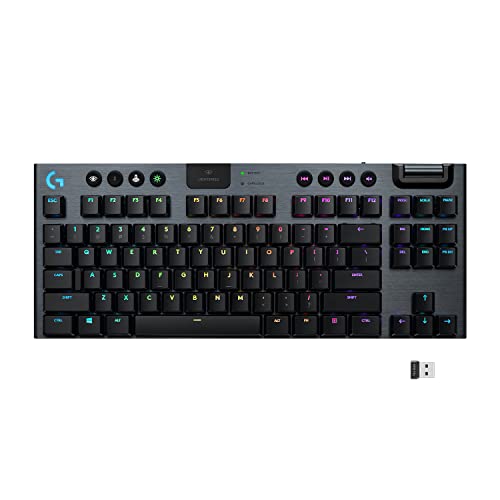
The honest cost of a budget keyboard includes the wrist rest your posture may want, the cable you prefer, and the possibility of a keycap set in year one. Totalled honestly, some budget boards approach the price of better-documented mid-range boards, which is the comparison that should be made before ordering rather than after upgrading. Readers weighing the wider keyboard landscape will find useful context in the Logitech G915 TKL review at the premium wireless end and the MelGeek Made68 Ultra line review in the enthusiast magnetic-switch corner — different classes entirely, but useful for calibrating what money buys as it climbs.
How to test and tune the keyboard in its first week
Step 1: The full-board audit on day one
Work through every key individually in a text document, then type for half an hour at working speed. Log anything uneven — a scratchy switch, a ticking stabiliser, a key that double-fires or occasionally misses — with the date. A single log turns a vague feeling into a return decision you can defend, and it takes less time than one coffee.
Step 2: Stabiliser first aid for minor rattle
If a large key rattles slightly but the board is otherwise good, the standard owner remedies are a small amount of dielectric grease or keyboard lubricant on the stabiliser wires, applied sparingly with a fine brush after removing the keycap with a puller. Work on one key at a time, test before moving on, and stop if a key begins to feel sluggish — overlubrication trades rattle for mush, which is the worse fault. Anything beyond this level of intervention on a brand-new board is a reason to exchange the unit instead; modification voids the easy return that protects you.
Step 3: Set your typing baseline
Run the same short typing test you might use on any new board — how to type faster collects the practice side of that exercise — and record your speed and error pattern after the first day and the first week. A new layout or switch weight commonly costs speed for several days before returning it with interest; knowing the trajectory stops you blaming the board for what is simply adaptation, or crediting it for what is simply practice.
Mistakes buyers make in this segment
The first is buying the family name rather than the variant, covered above and worth repeating because it causes more disappointment than any defect. The second is judging a keyboard by its first hour: factory lubricant settles, your fingers adapt, and boards that feel alien on Monday can feel like home by Friday — which is why returns should be decided by logged defects rather than first impressions. The third is the opposite failure, keeping a board with a genuine fault out of inertia until the return window closes, then living with a ticking spacebar for three years as a monument to a missed deadline. The fourth is chasing lighting features while ignoring the typing fundamentals; you will look at the board’s glow occasionally and feel its switches ten thousand times a day. Prioritise accordingly.
Frequently asked questions
Why does this review contain no purchase link for the K500F-B81?
Because no exact-match listing for the model could be verified through the product data available to this site at the time of writing, and this site does not attach purchase links to products it cannot confirm. If a listing appears through a seller you trust, apply the verification steps in the buying guide above before ordering.
Is Machenike a legitimate keyboard brand?
Machenike is an established manufacturer in its home market with a broad catalogue of gaming hardware, positioned at the affordable end. Legitimacy and local support are different questions, however: in many regions the practical route for warranty help is the selling marketplace, which is why seller choice matters so much for this model.
What should I check first when the keyboard arrives?
The model string on the box and the board’s underside label against your order, then the day-one audit: every key pressed, the large keys tested at their edges, and a half hour of real typing with any defects written down while the return window is wide open.
Can a budget board like this be improved over time?
Yes, within limits. Keycaps are a straightforward upgrade, stabilisers can be lubricated, and a desk mat under the board changes its acoustics noticeably. Switch replacement depends on whether the board is hot-swappable, a specification to confirm for the exact variant before counting on it.
How long should a keyboard in this class last?
The switches in mechanical boards are generally rated for far more keystrokes than most owners will deliver, so real lifespan is set by build details — cable strain relief, case rigidity, stabiliser condition — and by care. A well-kept unit should serve for years of daily typing; a neglected one can feel tired in one.
What are the sensible alternatives if I cannot verify this model?
Better-documented boards in adjacent classes: the enthusiast route represented by the MelGeek Made68 Ultra review, the premium low-profile wireless route of the Logitech G915 TKL, or the custom aluminium world touched on in the Luminkey75 by Createkeebs profile. Each costs more than a value-segment board; each also arrives with the documentation this model currently lacks in this market.
The final recommendation
The K500F-B81 should be bought, if it is bought at all, as an audited purchase: exact variant confirmed, seller chosen for its returns process, first week spent testing against the five checks in this article, and no hesitation about exchanging a unit that fails them. Bought that way, a value-segment Machenike can be a perfectly rational keyboard — the class exists because many of its units type well above their price. Bought casually, on a family name and a photograph, it is a lottery. This review’s refusal to invent a listing is, in the end, the most useful thing it can offer you: the same refusal, applied to your own purchase, is what separates the owners who got the bargain from the owners who got the lesson.
Understanding switch feel without a showroom
Buyers of regionally distributed boards rarely get to try before ordering, so switch literacy becomes a survival skill. Mechanical switches divide first by behaviour: linear switches travel smoothly from top to bottom, tactile switches pass a small bump that confirms the press, and clicky switches add an audible snap to that bump. Gaming marketing favours linears for their speed and consistency; typists often prefer a tactile confirmation that reduces bottoming-out and, with it, finger fatigue across long documents. Neither preference is correct in the abstract — they are answers to different hands and different work — and a buyer who knows which family suits them has already made the most important specification decision on any listing page.
Weight is the second variable, expressed as the force needed to press and to bottom out. Light switches feel effortless and forgive weak fingers, but punish heavy-handed typists with accidental presses when hands rest on the home row. Heavier switches demand intention and reward it with control. In the value segment these figures are not always published for the exact variant, which returns us to the audit method: whatever arrives, your first week’s typing log will tell you whether the weight suits your hands, and the return window exists precisely for the case where it does not.
Layout and the shape of your desk
Family names in this range have covered boards of differing sizes, so confirm the physical layout of the exact variant — full-size with number pad, or one of the reduced formats — against the space and the work it must serve. A number pad earns its desk width for anyone entering data, working spreadsheets or using accounting software, and is dead weight for a gamer whose mouse hand wants the room instead. Reduced layouts move the mouse closer to the body’s centre line, a small ergonomic change that shoulder and neck notice across months. If your work needs the pad only occasionally, the modern compromise is a compact board plus a separate pad you can position freely — the subject of our macropads and standalone numpads guide — placed on whichever side of the keyboard your hand prefers, or removed entirely on gaming evenings.
Keycaps: the wear item nobody budgets for
Keycaps are where daily use writes its diary. Thin caps with printed legends wear shiny and can lose their characters; thicker caps with legends formed through the plastic keep their looks for the board’s whole life. Because variant listings rarely specify which kind a board carries, inspect yours on arrival under a bright light: the underside thickness and the legend’s construction are visible in seconds, and they predict how the board will look in year two better than any other single detail. The good news is that keycaps are standardised across most of this class, so a worn or disappointing set is a replaceable part rather than a verdict on the whole keyboard — budget boards frequently become satisfying boards after exactly one such upgrade, provided the switches and stabilisers underneath were sound to begin with.
Gaming use: what matters and what is decoration
For gaming, the honest hierarchy of keyboard virtues runs: reliability of registration first, then key rollover behaviour during crowded moments, then switch consistency, then everything else. Rollover — how many simultaneous presses the board reports correctly — matters in titles where movement, abilities and modifiers overlap; the explainer tradition behind our Marvel Rivals settings guide treats in-game configuration with the same evidence-first approach this review applies to hardware. Lighting, by contrast, contributes exactly one functional benefit — finding keys in a dark room — and should be weighted accordingly when a listing spends paragraphs on it. Wired play remains the zero-compromise option for competitive sessions on any board that offers wireless, not because modern wireless is poor, but because a cable removes one variable from the evenings when you would otherwise blame it.
Office use and shared spaces
A gaming-styled board in a professional setting succeeds or fails on sound and manners. Switch noise carries in open offices and on calls; if your board will live at work, test its volume in a quiet room and consider whether your microphone makes your typing a soundtrack for colleagues. Many owners solve this with a desk mat, a moderate typing technique and, where the board allows, a quieter switch choice at purchase. Appearance cuts both ways: some workplaces read gaming styling as personality, others as noise, and the buyer knows their own office culture better than any review can. The board underneath the styling is the same either way, which is why this article keeps returning to the five mechanical tests — they are the part of the product that no context changes.
Maintenance that keeps a budget board honest
Mechanical keyboards reward small, regular care. Shake out and brush the board monthly, because the space under keycaps collects the evidence of every desk snack. Pull keycaps a few at a time a couple of times a year for a proper clean, washing the caps in mild soapy water and drying them completely before refitting. Keep liquids in lidded containers near any keyboard you care about; more boards in this class die by coffee than by switch failure. Cables should hang without sharp bends at the connector, the strain point where budget cabling most often gives up. None of this requires products or expertise — it requires only the habit of treating a daily tool as worth five minutes a month, a habit whose absence explains most premature replacements in every category of desk equipment.
Troubleshooting the faults this class actually develops
Double-firing keys — one press producing two characters — usually trace to a dirty or ageing switch contact, and can sometimes be settled by reseating the switch on hot-swappable boards or by a firmware setting where debounce controls exist; on a new board it is a return, not a repair. A key that stops responding entirely should first be tested in another position if the board allows switch swapping, which separates a dead switch from a dead socket. Wireless dropouts that appear after months of good behaviour often belong to the environment rather than the board: a dongle moved behind a metal case, a new router, a crowded desk of wireless devices. Work through the environment before condemning the hardware, and keep the day-one audit log — it is what lets you distinguish a fault the board arrived with from one your desk developed.
The value segment in context: why boards like this exist
It is worth understanding the economics that produce a keyboard like the K500F-B81, because they explain both its appeal and its risks. Manufacturing of mechanical switches and boards has consolidated around a mature supply chain in which perfectly serviceable components are inexpensive; the difference between a satisfying budget board and a disappointing one is increasingly assembly care and quality control rather than exotic parts. That is genuinely good news for buyers — the floor of the market has risen — and it is also why the audit approach outperforms brand loyalty at this level. Two units from the same production run can differ more than two brands’ flagships do, and the buyer who tests is insulated from that variance in a way the buyer who trusts is not.
The same economics explain the documentation gap this review opened with. Regional distribution through marketplaces is how these boards reach much of the world, and listings are written by sellers rather than by the manufacturer, with specifications copied, translated and occasionally garbled between variants. A buyer who understands that the listing is a rumour and the delivered unit is the fact will navigate this segment happily for years. A buyer who expects flagship-grade documentation at a third of flagship prices will be disappointed by every purchase the segment offers, including the good ones.
Who should buy this keyboard, and who should walk past
The natural buyer is a value-conscious typist or gamer purchasing through a channel with easy returns, willing to spend one evening auditing a unit in exchange for paying a fraction of enthusiast prices. Students furnishing a first serious desk, home users replacing a membrane board, and tinkerers who enjoy the keycap-and-lubricant improvement path all belong in that description. The natural non-buyer is anyone purchasing a gift that must simply work, anyone whose work cannot tolerate a return-and-replace cycle, and anyone buying from a channel where returns are a negotiation. For those buyers the premium of a thoroughly documented board is not snobbery; it is the price of certainty, and certainty is a real feature that the value segment, this model included, does not promise.
There is a third figure worth addressing: the enthusiast considering this board as a modding base. The calculus there is legitimate — an inexpensive chassis whose switches and caps will be replaced anyway — but it depends entirely on construction details, above all whether the exact variant is hot-swappable, that this review could not verify for the B81. Confirm that single specification in writing from the seller before building plans on it, because the entire project stands or falls on the answer.
Environmental and longevity notes
A mechanical keyboard is one of the more repairable objects on a modern desk, and choosing to maintain one for six years instead of replacing membrane boards every two is a small but real material saving. The value segment’s contribution to that story depends on the owner: a board whose stabilisers were tuned, caps replaced and cable treated kindly can serve far beyond its price’s implication, while a neglected unit becomes waste at the speed of its weakest detail. If sustainability figures in your buying at all, it argues for exactly the behaviour this article has recommended on quality grounds — buy carefully, test honestly, maintain lightly, keep for years. The cheapest keyboard, like the cheapest anything, is the one you only buy once.
Verdict restated
Strip this long review to its skeleton and three sentences remain. The K500F-B81 belongs to a class whose good units are bargains and whose bad units are detectable within days. This site could not verify an exact listing for it, so it links nothing and prices nothing, and any seller offering you the board should be made to pass the same verification standard before your money moves. Buy it as an auditor and it can serve you well for years; buy it as a believer and you are gambling at keyboard prices. The audit takes an evening. The keyboard, if it passes, takes your desk for half a decade. That exchange — one careful evening for five good years — is the best deal this segment offers anyone, and it is available on every unit, including the one that eventually arrives at your door.
A buyer’s diary: what the first fortnight feels like when it goes well
Day one is audit day, and a good unit announces itself quietly: every key registers once, the spacebar returns without a tick, and an hour of typing produces no entries in the defect log beyond a note that the switch weight feels unfamiliar. Days two to four are adaptation — your error rate wobbles as your fingers learn the board’s spacing and force, and the sound that seemed bright on Monday settles into the background of the room. By the second week the board has either disappeared into the work, which is the highest state a keyboard can achieve, or it has given you a specific, logged reason to exchange it. Both outcomes are successes of the method. The only failure mode is the unexamined middle: a board kept by default, its faults absorbed into your posture and patience for years. Everything in this review exists to keep you out of that middle.
Comparing the class honestly against the tiers above it
What does the extra money for a documented mid-range or enthusiast board actually purchase? Not primarily speed — switch registration is fast across the modern market — but certainty and finish: stabilisers tuned before shipping, cases damped and rigid, keycaps that will look right in year three, software that exists and is maintained, and a support channel that answers. Buyers who have lived with a rattling spacebar understand that those are not luxuries; they are the product, with the keyboard attached. The value segment sells the keyboard and leaves the certainty as homework. Neither model is dishonest, but they are different products wearing similar specifications, and the K500F-B81’s review has to be read in that light: its value is real precisely for the buyer willing to do the homework the price omits.
That is also why this article declines to score the board. A score implies a tested unit and a comparable field; what can honestly be offered is a method, a context and a warning label, and those have been given at length. If a verified listing with full specifications becomes available, the framework above converts into a conventional review in an afternoon — the five tests, applied to a confirmed unit, with results a reader can act on. Until then, the most truthful review of this keyboard is the one that teaches you to review it yourself, on your own desk, inside the window where your verdict still has consequences.
Questions to send the seller before you order
Because documentation is this model’s weak point, the buyer must manufacture it. Five questions, asked in the marketplace’s own messaging so the answers are on record, will do most of the work. Which exact switch model and colour does the B81 variant carry, and is it hot-swappable? Is the board wired only, or does this variant include wireless modes — and if so, which? What keycap material and legend process does it use? Which layout and language legends will be shipped? And what is the return process if a key is faulty on arrival? A seller who answers all five precisely is a seller whose listing can begin to be trusted; a seller who answers with a copied paragraph of marketing has told you, usefully, to shop elsewhere. Keep the exchange with your invoice. In the value segment, that little transcript is your warranty’s opening chapter.
How this keyboard fits a wider desk build
Few keyboards are bought into empty desks. If the Machenike would join a setup that is growing — an additional pad for data work, a mouse chosen for long sessions, a monitor arm reclaiming space — sequence the purchases by touch frequency: the keyboard and mouse first, because your hands live there; the display position second, because your neck lives there; expansion pieces like pads and docks last, because they serve the first two rather than replacing them. The companion pieces in this cluster — our standalone numpad and macropad guide for expansion, the Maya X esports mouse profile for the pointing side — were written to be read in that order alongside this one. A desk assembled by frequency of touch, rather than by whatever is discounted this week, ends up cheaper and better than one assembled by impulse, and it starts, almost always, with a keyboard that passed its audit.
The ergonomics of a budget board, without the marketing
Keyboards attract health claims the way magnets attract filings, and this review will make only the modest ones the evidence supports. A mechanical board does not cure anything. What it can do is reduce the force your fingers spend if its switches actuate before the bottom of the stroke and you learn to trust the actuation point rather than slamming every key into the case — a technique change, not a product feature, though tactile switches make the technique easier to learn because the bump teaches your fingers where the press has registered. Wrist posture matters more than switch choice: wrists floating or resting lightly, the board flat or gently sloped, elbows near a right angle. A wrist rest, if used, is for pauses between typing rather than a shelf to lean on while typing, a distinction that decides whether it helps or quietly harms. Readers building a fuller comfort setup should treat the keyboard as one element among chair, screen height and break habits, and should be suspicious of any single product — this one included — that promises to solve the whole system by itself.
Sound, neighbours and the shared-home test
The modern home is an acoustic commons: partners on calls in the next room, children asleep down the hall, flatmates separated by one partition wall. A keyboard’s sound profile is therefore a household feature, not a personal one, and the first week’s testing should include the question your household would ask — can this board be typed on during someone else’s meeting or sleep? Clicky switch variants fail that test in most homes regardless of their other virtues; linears and tactiles pass it more easily, and a desk mat plus a softer typing touch moves any board one class quieter. If the variant you are considering offers a switch choice, let the household cast the deciding vote. The best keyboard in a shared home is the one nobody else ever has to think about, and achieving that invisibility is a specification decision made before purchase, not a behaviour campaign waged after it.
What to do if your unit fails the audit
Act promptly and in writing. Message the seller through the marketplace with the defect log — dates, keys affected, behaviour observed — and a clear request: exchange or refund under the stated return terms. Keep the packaging intact until the resolution completes, photograph the board’s condition as it leaves you, and retain the return tracking until the refund lands. If the seller resists, the marketplace’s own dispute process is the next step, and your day-one documentation is what wins it. Then, with the refund secured, decide the follow-up purchase with the information the failure gave you: if the model itself disappointed, move to a documented alternative; if only the unit failed, a second attempt through the same channel is a defensible bet, because the audit method that caught the first failure will catch a second one just as cheaply. The system works when the buyer works it — promptly, politely and on paper.
A short history of the class this board competes in
Twenty years ago a mechanical keyboard was a specialist purchase with a specialist price, and the membrane board ruled every desk by default. The gaming boom changed the demand, the supply chain matured to meet it, and manufacturers in Shenzhen and beyond — Machenike among them — industrialised the mechanical board until its core experience became available at prices that would have seemed impossible to the hobbyists who kept the format alive. That history matters to a buyer of the K500F-B81 for one reason: the board you receive is the product of that industrialisation, with its genuine strengths — real switches, real customisation potential, real longevity — and its genuine weakness, which is that quality assurance across enormous production runs is a statistical exercise the end buyer completes. Understanding that you are the final inspector in the factory’s process is not cynicism. It is the operating manual for the entire segment, and the buyers who internalise it are the ones writing the satisfied reviews of budget boards five years later.
Final word before you decide
If this article has a temperament, it is respectful scepticism: respect for a segment that has put honest mechanical typing within almost everyone’s reach, and scepticism toward any individual listing that asks to be trusted without evidence. The K500F-B81 may well be one of the segment’s good units — its family occupies exactly the ground where bargains live — but “may well be” is a starting point for an audit, not a conclusion to purchase on. Verify the variant, choose the seller for the return you hope never to use, test the board like you mean it for one week, and let the log decide. Do that, and whichever way the decision falls, it will have been yours — made from evidence on your own desk — which is the only kind of keyboard decision that has ever reliably ended in five years of unconsidered, contented typing.
Reading switch specifications like an engineer for one paragraph
Listings in this segment sometimes quote actuation force, travel distance and lifespan figures, and a buyer benefits from knowing what those numbers can and cannot promise. Actuation force describes the press weight at the moment the key registers; total travel describes how far the key can descend; lifespan figures describe laboratory keystrokes under ideal conditions. All three are real measurements and all three are routinely copied between listings for different variants, which is why they function better as a consistency check — does the seller’s page match the manufacturer’s material for this exact suffix? — than as a buying argument in themselves. A board with modest published figures and honest assembly will out-type a board with heroic figures and sloppy stabilisers every day of the week, because your fingers meet the assembly, not the datasheet. Keep the numbers in their place: useful for detecting a listing that contradicts itself, useless for predicting whether Tuesday’s long document will feel good.
The second keyboard effect
An underappreciated benefit of the value segment is that it makes a second keyboard affordable — one for the desk at home, one for the office or the travel kit — and a second board changes the risk calculus of the first. A fault that would be a crisis for your only keyboard is an inconvenience when a spare exists, and the audit method becomes calmer because the alternative to keeping a marginal unit is not keyboardlessness. Households and small studios that standardise on one inexpensive model across several desks gain a further advantage: any unit can substitute for any other, keycaps and cables interchange, and the collective experience of the group quickly maps the model’s real character in a way no single review — this one included — can match. If your situation involves several desks rather than one, that fleet logic may be the strongest argument the K500 class has, provided each unit still passes through the same day-one audit before joining the pool.
One last practical scene is worth painting, because it is the moment this entire review is aimed at. The box arrives on a weekday evening. You open it at the kitchen table, check the model string against the order before the packaging cools, move to the desk, and spend forty unhurried minutes pressing, typing, listening and writing things down. Perhaps the log stays empty and the board takes its place for years, its low price becoming a story you tell about the desk. Perhaps the spacebar ticks, the log fills, and the board goes back inside the week with your refund intact and your standards sharpened for the next attempt. Either way you have spent one evening and no illusions. That is the whole promise this article can honestly make about the K500F-B81 — not that the keyboard is certainly good, but that a buyer armed with its method will certainly find out, in time for the answer to matter.
For readers who arrived here from a search box hoping for a star rating and a buy button, the absence of both is the review’s conclusion rather than its omission. Products earn links on this site by being verifiable; advice earns its length by being usable without one. If the K500F-B81 later appears through channels that can document it properly, this page’s framework will still be the right way to receive it — five tests, one log, one honest week. Keyboards are among the most personal objects in computing, touched more than any other component and judged, in the end, by hands rather than by pages. Let yours be the judge, with this article as its briefing rather than its substitute.
And if you do buy it and it passes — if the log stays empty and the board disappears into your work the way good tools do — consider leaving the kind of review this segment desperately needs wherever you bought it: specific, dated, naming the exact variant, describing the stabilisers and the switches after a month rather than the packaging after a minute. The next buyer of a thinly documented keyboard is standing exactly where you stood, and a hundred honest paragraphs like that would do more for them than any single article, including this one, ever could.
Keep the audit log even after the return window closes. It becomes the board’s service history — the note that a stabiliser was tuned in month two, that a keycap set arrived in month six — and if the keyboard ever changes hands, that small document is the difference between a used board with a story and a used board with a past.
That habit, kept faithfully, turns a bargain purchase into a documented, dependable instrument of daily work.
One more test worth adding: the loan test
Here is a final evaluation trick this review has not yet given you, and it is the most revealing of all. After your own audit week, lend the keyboard to the person whose typing you trust most — a colleague, a partner, a friend from the hobby — for one evening, and ask for their unfiltered report before sharing your own notes. A second pair of hands catches what familiarity hides: the stabiliser you had stopped hearing, the switch inconsistency your fingers had quietly routed around, the case note your ears had filed as normal. If their report matches yours, the board has passed the closest thing to an objective examination a home purchase can get. If it contradicts yours, the contradiction itself is the information — keyboards are personal instruments, and a board can be genuinely good and genuinely wrong for a particular pair of hands at the same time. Either way, you will know more than any listing, star average or review — this one included — could ever have told you, and you will know it while the knowledge can still change the outcome. That, in the end, is the whole method this article has been teaching, compressed into one borrowed evening: evidence over opinion, hands over headlines, and a verdict you reached yourself, in time for it to matter.
And if the loan test cannot be arranged, borrow its spirit instead: type one long, familiar passage on the new board and the same passage on your old one, back to back, and read both with fresh eyes for errors, rhythm and comfort. Comparison is the auditor’s oldest instrument, it costs nothing but ten minutes, and on a product this thinly documented it is worth more than every unverifiable claim ever written about it — including, it must be said, any claim this review could not confirm and therefore refused to make.