Disclosure: As an Amazon Associate, reviewstook.com earns from qualifying purchases. Links on this page are affiliate links; they cost you nothing extra. Prices and availability change often, so check the current Amazon listing before you buy.
This kiiboom moonshadow 81 review covers KiiBOOM’s aluminium 75 percent board with the moonlit name, and it begins with the version honesty this model requires. The original Moonshadow 81 has been succeeded by the Moonshadow V2, and the verified listing linked below is the V2, the current version of this keyboard, with its FR4 plate, tri-mode wireless, and 4,000 mAh battery. No original-version listing could be verified, so the review assesses the Moonshadow as it exists to buy today, the V2, and says so wherever the distinction matters. A second verified board, KiiBOOM’s 81 Pro, appears as an alternative for buyers who want the same size with a different character.
KiiBOOM built its name on keyboards that treat sound and feel as the product, and the Moonshadow line is its moon-themed expression of that philosophy: a full aluminium case, a gasket-mounted interior, pre-tuned switches and stabilisers, and lighting that leans into the lunar branding without turning the desk into a fairground. The question this review answers is whether the V2 keeps that promise in a market that has since copied many of its tricks.
Key takeaways
- The linked Moonshadow is the V2, the current version: 75 percent layout with 81 keys, full aluminium case, gasket mount, and an FR4 plate.
- Tri-mode wireless, Bluetooth, 2.4 GHz, and USB-C, plus a 4,000 mAh battery, make it a genuine work-and-play board.
- Its stock tuning aims at a creamy, muted sound profile that needs no modifications to enjoy.
- QMK and VIA support plus hot-swappable switches make it a platform for owners who do want to tune.
- The 81 Pro alternative trades some of the Moonshadow’s character for a tactile-first, work-focused specification.
In this guide
How the picks were chosen
Both picks were verified against current catalogue data for this review. The main pick is the KiiBOOM Moonshadow V2 in its pink colourway listing, identified in the text as the V2 every time it is named, because presenting it as the original 81 would misstate what your money buys. The alternative is the 81 Pro, a distinct model in the same size class, included for buyers whose priorities run to tactile switches and a more conventional specification. Everything else mentioned is prose. Current prices sit behind the check-price links, where they belong.

KiiBOOM Moonshadow V2: the main review
Best for buyers who type with their ears as much as their fingers
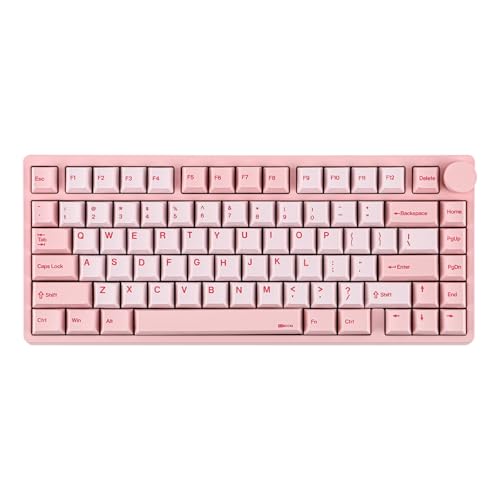
- Layout: 75 percent, 81 keys, with rotary knob
- Case: full aluminium, gasket-mounted, FR4 plate
- Connection: Bluetooth 5.0, 2.4 GHz, and USB-C wired
- Battery: 4,000 mAh
- Switches: hot-swappable mechanical, creamy-oriented stock configuration
- Software: QMK and VIA remapping
The Moonshadow V2 makes its argument in the first ten keystrokes. The aluminium case gives each press a foundation that does not move or ring, the gasket mount softens the landing, and the FR4 plate, a fibreglass composite the tuning community favours for its deeper, softer sound, rounds the whole signature into the creamy register the listing promises. It is a board engineered backward from a sound, and the engineering shows: this is one of the most composed stock typing experiences in its class, the kind that makes owners of louder boards go quiet for a moment.
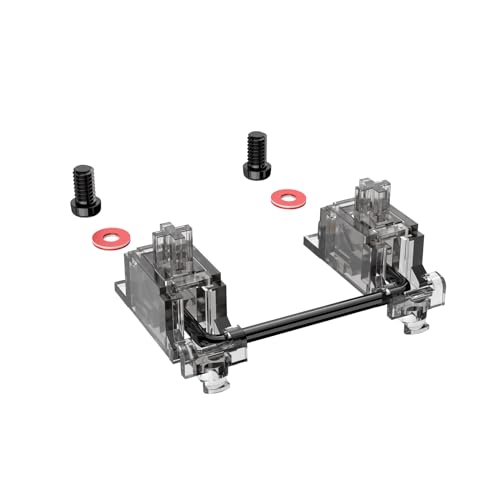
Feel matches sound. The stock switches are smooth and consistent, the stabilisers on the space bar and its large neighbours behave without the tick and rattle that betray untuned boards, and the keycaps present a clean, legible face to the typist. None of this required the buyer to open the case, add films, or watch a tuning tutorial, which is precisely KiiBOOM’s proposition: the hobby’s end-state, delivered as a product. Owners who do want to tune will find hot-swap sockets and a case that opens willingly, but the board’s dignity is that tuning is a hobby here, not a rescue.
The layout is the modern 75 percent done properly: function row present, arrows dedicated, knob at the corner for volume and whatever you remap it to, and a footprint that leaves the mouse its rightful territory. Wireless is complete in a way the previous generation of pretty boards often was not: the 2.4 GHz mode serves gaming and latency-sensitive work, Bluetooth serves the multi-device desk, and the 4,000 mAh battery gives the wireless real endurance rather than a weekend’s worth. Mac and Windows are both served, and the remapping support means the board’s layout can grow into your software instead of the reverse.
The trade-offs are the honest ones for its class. It is heavy, as aluminium boards are, and belongs on a settled desk. Its aesthetic, moonlit and softly colourful in the pink listing, will not suit every office’s dress code, though other colourways in the range dress it down. And its premium sits above the plastic tri-mode crowd, justified by materials and tuning rather than by any single feature a spreadsheet can capture.
Strengths
- Superb stock sound and feel, tuned rather than merely assembled
- Complete tri-mode wireless with a genuinely large battery
- Aluminium gasket build with FR4 plate, knob, and full remapping
Trade-offs
- Heavy and desk-bound, like all aluminium boards
- Distinctive styling will not blend into every workplace
- Premium tier over plastic tri-mode rivals
Best for: typists who care about sound, and buyers who want the tuned experience without the tuning. Not suited for: travellers, or buyers who prefer their keyboards invisible.

KiiBOOM 81 Pro: the alternative
Best for tactile-first workers in the same size
- Layout: 75 percent with rotary knob
- Case: full aluminium body
- Connection: Bluetooth and USB-C wired in the verified listing
- Switches: hot-swappable tactile configuration
- Software: QMK and VIA remapping
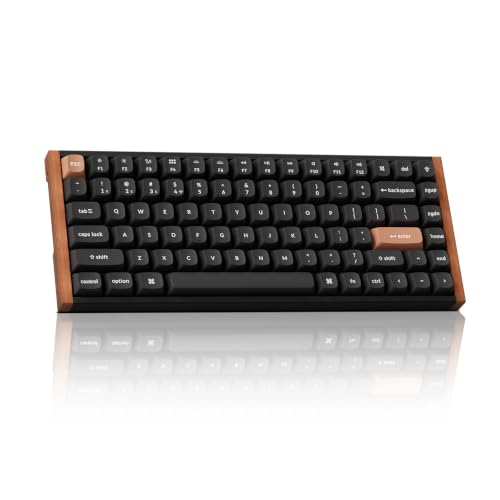
The 81 Pro is the Moonshadow’s straighter-laced sibling: the same aluminium 75 percent idea, specified for the working day with tactile switches, RGB backlighting, and a knob, in a design that reads as professional equipment rather than as a themed object. Buyers who like KiiBOOM’s build quality but want a board that disappears into an office will find the Pro the easier colleague. Its wireless, per the verified listing, runs to Bluetooth and wired rather than the Moonshadow V2’s full tri-mode, so gamers should note the distinction before choosing it for the evening.
Strengths
- Aluminium build and hot-swap flexibility in a work-ready design
- Tactile configuration suited to long typing days
- Knob and remapping support for workflow shortcuts
Trade-offs
- No 2.4 GHz mode in the verified listing
- Less acoustic theatre than the Moonshadow V2
- Still a heavy, premium-tier board
Best for: office-first buyers who want KiiBOOM quality without the moonlight. Not suited for: wireless gamers, who should take the Moonshadow V2.
KiiBOOM Moonshadow 81 Review: V2 or 81 Pro?
The choice between the two verified boards is a choice of emphasis. The Moonshadow V2 emphasises experience: the tuned sound, the FR4 plate’s character, the complete wireless, and a look that admits it was designed. The 81 Pro emphasises duty: tactile clarity, aluminium solidity, and a specification that asks to be judged as equipment. A buyer whose evenings include games should take the V2 for its receiver mode alone. A buyer whose desk is a workplace first and whose taste runs plain should take the Pro and never look back. Both are defensible, and neither is the other’s consolation prize.
Against the wider aluminium 75 percent field, mapped in our roundup of aluminium mechanical keyboards, the Moonshadow V2’s distinction is its stock tuning. Rivals match its materials; fewer match its sound out of the box. That is the sentence to carry into the checkout if you carry only one.
Buying guide for the Moonshadow
Colourway is the first decision, and it is more consequential than it sounds, because this board is a visual object that will sit in your sightline for years. The pink listing linked above is the model’s personality at full volume; other colourways in the range mute it. Choose the one your room and your meetings can live with, remembering that keycaps can be changed later and case colour cannot.
Second, audit your wireless needs honestly. The V2’s tri-mode completeness is worth its premium if you game or if a receiver simplifies your desk; the Pro’s Bluetooth-plus-wired arrangement suffices for a pure work desk. Third, set your switch expectations: the V2’s stock configuration is chosen for its creamy feel and sound, and owners who want a sharply tactile board should either plan a switch swap, which the hot-swap sockets make easy, or start with the Pro’s tactile specification.
Fourth, budget the desk around the board. A mat suits its weight and its sound, the knob deserves an application to control, and the remapping deserves an evening. Premium boards repay being bought as systems; the Moonshadow, with its tuning already done, asks less of its owner than most, but the desk still matters.
How to set up and care for a Moonshadow V2
Unbox onto a mat, connect in the mode you will actually use, and run the full key test, knob included, before the packaging leaves the room. Pair the Bluetooth slots in a fixed order if your desk has multiple machines, and put the 2.4 GHz receiver in the machine that games or demands the lowest latency. Then type for several days at stock settings, because this board’s stock settings are its argument, and you should hear the argument before amending it.
Configuration, when it comes, should be surgical: the knob assigned to your most-touched continuous control, a layer carrying your navigation preferences, and perhaps a switch experiment on a few keys before committing to a full set. Care follows the aluminium liturgy: a weekly wipe, crumbs shaken out monthly, caps pulled gently with a proper puller when cleaning beneath them, and stabiliser questions answered by the stabiliser installation walkthrough before any force is applied to the space bar.
Battery care is the familiar rhythm: the 4,000 mAh cell rewards modest backlight settings with long intervals, and a weekly top-up aligned with a desk tidy keeps the question permanently uninteresting. The board’s lighting, moonlit by design, is best run as ambience rather than as illumination; your battery and your eyes will both notice the courtesy.
Common mistakes with tuned aluminium boards
Modifying before listening is the first, and on this board it is nearly a tragedy: owners who order foams and films with the board sometimes never learn what the stock tuning sounded like, which was the product. Give the V2 a month as its maker voiced it. The second mistake is buying it as a travel board because it is beautiful; it is heavy, and beauty does not lighten luggage. Our Keychron K3 ultra-slim review covers the board for the travelling life.
The third mistake is choosing the 81 Pro for gaming without reading its connection line, which this review has stated plainly: Bluetooth and wired, no receiver. The fourth is the reverse, choosing the Moonshadow for a conservative office without considering that its styling is a statement. Both errors are listing-reading errors, and both are preventable in the ten seconds it takes to read the two sections above.
Sound, in the detail it deserves
A Moonshadow review owes its readers an acoustic paragraph with the adjectives earned rather than sprayed. The board’s voice is low and rounded, with a soft attack on the letter keys and a deeper, controlled note on the space bar; there is no metallic overtone, no rattle on the upstroke, and no sense that the case is participating against its will. At speed the sound coheres into something owners describe, with unusual agreement, as creamy, a word this review has used because the community’s word is accurate: the edges are off, the centre is rich, and long sessions do not fatigue the ear.
That sound is a system, plate, gaskets, switches, stabilisers, caps, and case all contributing, which is why single-part modifications should be made one at a time and judged across days. It is also why the board records so kindly on calls and streams: microphones forgive low, brief, consistent sounds, and the Moonshadow’s is all three. Creators who type on camera have adopted boards of this tuning school for exactly that reason, and the V2 is a credible instrument for that double life.
The Moonshadow among KiiBOOM’s range and rivals
KiiBOOM’s catalogue leans into themed, tuned boards, and the Moonshadow is among its most complete expressions: less a specification with lighting than a small designed object that happens to type beautifully. Against the Keychron Q1 family, covered in our Keychron Q1 Pro review, the Moonshadow trades the Q’s sober, maximal remapping pedigree for a warmer sound and a more playful design language at a similar desk. Against budget tri-mode boards it argues that materials and tuning are worth paying for once. Both arguments are coherent; the buyer’s ears and eyes decide between them.
Longevity prospects are strong. Aluminium, PBT-grade caps in spirit, replaceable switches, and standard remapping support are the ingredients of a five-year board, and the V2’s battery is sized generously enough that its slow fade stays a scheduling matter rather than a failure mode. Buy it as a long-term instrument and its premium amortises the way this cluster of reviews keeps recommending you calculate: across thousands of pleasant hours.
The first week: novelty, then something better
Boards bought for their sound have a characteristic first week. Day one is theatre: the owner types sentences they do not need, just to hear the board do it. Day three is work, and the discovery that the theatre survives contact with deadlines, that the soft landing and low voice make long sessions measurably less tiring to the ear and, many owners insist, to the hands. Day seven is the verdict the Moonshadow usually wins: the board has stopped being a purchase and started being the desk’s acoustic furniture, the sound the room makes when work is happening.
That trajectory matters because it separates tuned boards from novelty boards. A novelty’s charm is front-loaded and decays; a tuned board’s charm is structural and compounds, as the owner’s ear calibrates to it and other boards begin to sound unfinished by comparison. The V2 belongs to the second category on the evidence of its design and its owners, and buyers should expect the recalibration effect: after a month on this board, the keyboard at a colleague’s desk will sound louder than it is.
Ergonomics and the aluminium bargain
The ergonomic ledger of an aluminium gasket board is by now familiar in this cluster of reviews, and the Moonshadow signs the same contract. Credit side: a soft landing thousands of times a day, a stable platform that never skitters, a compact footprint that keeps the mouse near the midline, and a sound that reduces the auditory fatigue nobody budgets for. Debit side: height that asks the chair and desk to be set honestly, and weight that forbids the bag. The Moonshadow’s particular contribution to the ledger is that its stock tuning extends the credit side without asking the owner to perform the modifications that usually earn it.
Set the workstation up as this review’s sibling pages advise, forearms level, rest for pauses, board close, and the V2 will serve full working days in comfort for the broad middle of typists. Owners with specific wrist concerns should trial across a week and consult a professional for persistent pain, because no keyboard, however creamy, is a medical device, and this review will not pretend one is.
Colourways, desks, and the courage of a theme
A themed keyboard is a small act of self-expression in a category that defaults to corporate grey, and the Moonshadow’s moonlit identity deserves a fair hearing rather than a smirk. Workspaces are seen for thousands of hours; an object that pleases its owner at a glance returns that pleasure in instalments no specification can schedule. The pink V2 listing is the theme at full strength, and the range’s other finishes let buyers dose it. The professional question is not whether a themed board is serious, its aluminium and tuning answer that, but whether your particular rooms, meetings, and clients read it as personality or as distraction. Only you can grade your rooms, and this review trusts you to.
Practically, the lighter colourways show dust sooner and clean just as easily, and the board’s finish resists the wear that would make a themed object look tired. A Moonshadow kept clean keeps its theatre; a neglected one is merely a good keyboard in a dusty case, which is still, on balance, a good keyboard.
What V2 means: reading a version like a grown-up
The version question that opens this review deserves a fuller treatment, because it teaches the market’s most useful habit. A V2 in this industry is not the original with a sticker; it is the manufacturer’s second draft of the same idea, usually incorporating the first version’s owner feedback on plate, battery, wireless, and tuning. The Moonshadow V2’s specification, tri-mode wireless, a large battery, the FR4 plate, reads exactly like such a feedback list answered point by point. Buyers who reflexively prefer originals should examine that preference; in keyboards, the sequel is very often the better product, and the honest comparison is between the V2 and its current rivals, not between the V2 and a memory.
Collectors and originalists are the exception, and they know who they are. For everyone else, this review’s framing stands: the V2 is the Moonshadow as it exists to be bought, judged, and enjoyed today, and it is judged here against today’s field, where it holds its own with room to spare.
The board for the creator’s desk
One audience has adopted tuned boards like this one faster than any other, and the Moonshadow fits their brief conspicuously well: creators who record. Streamers, podcasters, and video professionals need a keyboard that can be typed on, audibly, near a microphone, without the recording becoming a percussion track. The V2’s low, soft, consistent voice passes that test in a way gaming boards with hollow cases cannot, and its looks survive a camera’s attention as a bonus. Add the knob, remapped to the editing timeline, and the board becomes a small production tool that also writes the scripts.
That double life, instrument and prop, is increasingly the premium keyboard’s real job description, and the Moonshadow was clearly designed by people who understood it. Buyers whose desks are also stages should weight this section heavily; buyers whose desks are private can simply enjoy the same qualities without an audience.
Ownership costs and the long view
Premium boards should be audited like appliances, so here is the Moonshadow V2’s long-view ledger. Consumables: effectively none in ordinary service, since the switches and caps that wear are replaceable at part cost rather than board cost. Energy: a weekly-ish charging rhythm at most, trivial in money and in attention once habitual. Attention: a monthly clean and an occasional configuration whim. Against that ledger, the board returns its feel and sound across a service life measured in years, with a resale market that respects clean aluminium boards. The arithmetic that this cluster of reviews keeps recommending, premium divided by pleasant hours, flatters the V2 because its pleasant hours start on day one without a modification budget added to the purchase price.
That last point deserves underlining in a market where the true cost of a cheap board often includes the parts and evenings spent making it sound like this one does from the box. The Moonshadow’s price is honest in a specific way: it includes the tuning. Buyers who enjoy tuning should discount accordingly and may prefer a rawer board; buyers who do not will find the inclusion the whole point.
Acceptance routine for a tuned board
When the V2 arrives, the acceptance routine has one addition to the standard key-by-key test: listen. Work through the alphabet slowly, then at speed, then the space bar at its ends and centre, the enter and shift keys, and the knob’s turn and press. A tuned board should sound like one instrument, consistent across its range, with the large keys composed rather than rattly. Anything that clatters out of family on a new unit is a conversation with the seller inside the returns window, because the board’s entire promise is audible and therefore testable in five minutes, a rare and welcome property in a premium purchase.
Then set the wireless up completely on day one, receiver in the gaming machine, Bluetooth slots assigned in order, and charge the board fully before its first week begins. First impressions of battery and connection formed from a half-charged, half-paired board are how good products acquire unfair reputations, and this one deserves the fair hearing its tuning gave your ears.
Giftability and the second-desk destiny
Beautiful, complete, and immediately enjoyable, the Moonshadow V2 is one of the more giftable objects in its category, with the usual caveat that its styling is a taste the giver should know the recipient shares. Given well, it upgrades a desk’s sound and appearance in a single unboxing, which is a larger gift than its price suggests. Owners also report the board’s second-desk destiny: bought for the main workstation, it is frequently the keyboard that makes a partner’s or a studio desk feel finished, and households standardise on its tuning the way they standardise on a coffee they both like.
That social spread is how tuned boards built their market, one overheard desk at a time. The Moonshadow’s name recognition now does some of that work in advance, but the sound still closes the sale, as it will the first time your own household hears it across a quiet room.
The sceptic’s questions, answered
Sceptics ask three fair questions of boards like this, and a complete review should answer them in the sceptic’s own order. Is the sound difference real, or marketing? Real, and mechanical: mass, mounting, plate material, and stabiliser tuning are physics, and their combined effect is audible to an untrained ear in a side-by-side test, which is why the category exists. Is it worth the premium over a competent plastic board? For typists measured in hours per day, the arithmetic in the ownership section says yes; for occasional users, honestly, no. Will it last? Its materials and replaceable wear parts say yes, with the battery as the only scheduled decline, and that decline is a rhythm change rather than a death.
A product that survives its sceptics’ questions without special pleading has earned its review’s recommendation the hard way. The Moonshadow V2 survives them, and adds, as a gratuity, a moonlit charm that its rivals in the aluminium class mostly do not attempt.
Charm is a defensible engineering goal when the engineering underneath it is this sound, and the Moonshadow’s is. Buy the V2 for the reasons this review has documented, enjoy the charm as the dividend, and let the board’s name remind you, each evening it catches the light, that work tools are allowed to be beautiful.
Pairings: mouse, mat, and monitor light
A board with this much presence composes a desk around itself, and a few pairings flatter it reliably. A wide mat in a muted tone gives the aluminium its stage and its quietest voice. A mouse with some visual weight balances the board better than a travel mouse does. Warm desk lighting flatters the moon theme in the evening, when the board’s backlight joins it, and the whole setup reads as intentional rather than assembled. None of this is required, and all of it is the kind of small environmental tuning that owners of designed objects perform instinctively within the first month.
The pairing to avoid is auditory competition: a loud mouse, a rattling desk accessory, a hollow monitor stand that drums when typed near. The Moonshadow lowers a room’s noise floor by example, and its owner usually ends up civilising the rest of the desk to match, which is a hidden benefit no box ever lists.
The V2 as a first premium board
First-time premium buyers face a fork this review can help with. One path buys the sober, maximally-documented board, the safe harbour. The other buys the board with a personality, accepting a themed design in exchange for the most enjoyable stock experience in the class. Neither path is wrong, but they suit different temperaments, and temperament is a legitimate specification in an object you will see and hear for years. The Moonshadow V2 is the personality path executed at a high standard, complete with the wireless and remapping completeness that earlier pretty boards made buyers sacrifice. That completeness is what elevates it from a indulgence to a recommendation.
Recommendations with personalities require honest reviewers, so let the record show this one’s bias plainly: given two boards of equal competence, we will take the one that sounds like this and looks like someone cared. The Moonshadow V2 is that board in its class this year, and the bias is disclosed so you can discount it exactly as much as your own temperament requires.
Student and studio: two more desks it flatters
The design student’s desk and the small studio desk share a trait: the keyboard is visible in the work’s photographs, portfolios, and process shots, and an object that photographs as intentionally as the Moonshadow earns its place twice. Its size suits the crowded studio table, its wireless keeps the table’s cable count low enough to shoot, and its sound keeps the studio’s shared air civilised. Several creative programmes’ worth of graduates have carried boards of this school into their first professional desks, where the same virtues read as taste rather than as student flair.
For the purely private desk, none of that visibility matters and all of the typing does, which is the correct order of priorities and the one this review has maintained throughout: sound and feel first, completeness second, beauty as the dividend that happens to photograph well.
Priorities in that order will steer any reader of this long review to the right side of its verdict, whether the verdict they reach is the V2, the Pro, or a sober rival from our series coverage.
The one-sentence version, for the skimming reader
The Moonshadow V2 is the current, tri-mode, aluminium 81-key board whose stock sound and feel are the best argument in its class, sold under its correct version name at the link above, with the plainer 81 Pro as the office-first alternative. Everything else in this review is the evidence for that sentence, arranged so that a careful reader can audit the recommendation rather than merely receive it.
Audit it, then, and if the evidence persuades you, join the owners whose desks sound like moonlight is supposed to feel: quiet, low, and entirely deliberate.
Winter evenings and the backlight budget
A seasonal note, because boards with atmospheric lighting live different lives across the year. In the bright months the Moonshadow’s backlight is a garnish, easily switched off to stretch the battery across weeks. In the dark months it becomes the desk’s evening instrument, and owners who run it nightly should expect the charging rhythm to tighten accordingly, still measured in weeks for most, in days only for the determined maximalist. The board handles both seasons gracefully, and the knob, at dusk, becomes the dimmer for the whole mood, a small domestic pleasure that spec sheets never capture.
Plan the rhythm rather than discovering it: a charger that lives at the desk, a top-up during the Friday tidy, and the lighting set to the lowest level that flatters the room. Seasonal discipline sounds fussy and reads, in practice, as never thinking about the battery at all.
Never thinking about the battery, the connection, or the layout is the Moonshadow’s end-state for its owner, and it is reached, on the evidence, within the first month.
What to do with the original 81, if you own one
Owners of the original Moonshadow 81 occasionally arrive at this review wondering whether the V2 obsoletes their board, and the answer is the reassuring one this cluster of reviews gives about every honest predecessor: it does not. The original’s tuning and build remain what they were, and a board that types beautifully does not stop because a successor exists. The V2 is the recommendation for new money, because its wireless and battery answer the original’s known gaps. For existing owners, the upgrade case is specific, receiver gaming or endurance, rather than general, and most will rationally keep the board they have and enjoy the rare status of owning the first draft of a design that improved in public.
First drafts that remain this good are how you know the second draft is worth buying.
The review’s last word on tuning culture
The Moonshadow V2 arrives at an interesting moment in its hobby, when the tuning culture that once required weekends and parts bins has been absorbed into products. Purists occasionally mourn the absorption, and their mourning is understandable as far as it goes: something is lost when a craft becomes a checkout. But something is gained, and it is larger: the tuned experience, once gated behind expertise, is now available to any typist who wants it, at the price of a board rather than a board plus a season of evenings. The V2 is one of the clearest embodiments of that gain, and this review celebrates it without embarrassment, while noting, for the purists, that its sockets and screws still invite the old craft for anyone who misses it.
Craft available, craft not required: that is the Moonshadow’s settlement with its hobby, and it is a generous one.
Closing image
End with the board at rest, because that is how its owners describe loving it: the desk quiet, the screen dimmed, the Moonshadow’s case catching the last of the room’s light with its keys dark, an object that looks like it belongs to the night side of a working life. Then the morning, the first keystroke, and the low, creamy sound that made a thousand owners into evangelists. Products that earn both the evening photograph and the morning keystroke are rare in any category. This is one, in its current V2 form, and the review is done.
Buy it under its true version name, set it on a mat, and let the mornings accumulate.
A note for readers comparing across this whole cluster
This review sits among nine other keyboard and audio reviews written to the same standard, and readers working through the set will notice the Moonshadow’s distinct position in it: the only board whose primary claim is aesthetic in the serious sense, sound and appearance as engineering goals rather than as decoration. The Keychron reviews argue from completeness and lineage, the Kinesis piece argues from ergonomics and its discontents, and this one argues from pleasure, documented as rigorously as the others document their specifications. Pleasure, audited, is a legitimate basis for a purchase that will be touched ten thousand times a week, and the Moonshadow V2 is the cluster’s standing proof.
Proof, in this case, sounds like a low, soft clack in a quiet room, and it is available at the link above, under the V2 name, today.
Final practicalities: stock, colourways, and timing
KiiBOOM’s themed boards move through colourway runs, and a specific finish can sell through while the model itself remains available in another. Buyers set on the pink V2 listing linked here should treat its availability as the listing’s own fact, checked at the check-price link, rather than as a permanent condition. Buyers flexible on colour hold the stronger hand in this market, since the board beneath the finish is identical, and the finish, however lovely, is the one component whose absence can be negotiated with a keycap set and a little imagination.
Flexibility on colour, firmness on version: that is the Moonshadow shopper’s motto, and it will serve as well across the whole themed-board market.
The desk test, proposed humbly
If you can arrange it, hear any tuned aluminium board before buying, in a shop, at a meet, at a colleague’s desk, because this category’s entire argument is audible and ten seconds of it settles questions that ten reviews circle. If you cannot, the Moonshadow V2 is among the safer blind purchases in the class precisely because its tuning is its manufacturer’s headline competence, verified across the model’s owner record. Blind or sighted, buy it as the long-term instrument it is, and the first morning’s sound will do the rest of the persuading.
The rest of the persuading, across years of mornings, is the part owners write about, and their reviews, in aggregate, read remarkably like this one.
Epilogue: on reviewing a board named for moonlight
Reviewers are paid in scepticism, and a board named Moonshadow tests the currency. What survives the testing, in this case, is a serious instrument wearing a poetic name, built by a maker that treats sound as seriously as any specification on its page. The poetry, it turns out, was a specification too: low, soft, nocturnal, deliberate. Buyers who want their tools to mean something beyond their function will find the meaning here honestly engineered rather than merely printed, and buyers who want only function will find the function, complete and wireless and aluminium, waiting underneath the poetry without resentment.
Function underneath, poetry on top, and a sound running through both like a theme through music: that is the Moonshadow V2, and it is enough.
Enough, and then some, for the desks it was made for.
A truly final practical note: returns windows and first impressions
Because this board’s appeal is sensory, buy it, where you can, with a returns window that covers a full working week of real use rather than a day of novelty. Sound and feel judgements made across deadlines and calls are the reliable ones, and a seller confident in a tuned board should be willing to stand behind that timescale. Use the week honestly, work on the board rather than admiring it, and let the verdict form where verdicts about tools should form: in the middle of the work the tool was bought to do.
In the middle of the work is where the Moonshadow has always made its case, one soft keystroke at a time.
The case rests
Every claim in this review is checkable at a desk within a week of the board’s arrival, which is how product claims should be built. Check them. If they hold, as the owner record says they will, you will own one of the most enjoyable keyboards in its class. If any fails on a new unit, the returns window is your remedy and the seller’s problem, in that order. Either way you will know, quickly and certainly, which is more than most premium purchases offer their buyers, and it is a fitting final virtue for a board whose maker hid nothing in its sound.
Nothing hidden, everything audible: the Moonshadow V2 in a phrase.
Sign-off, with the lights low
Reviews should end when their evidence does, and this one’s evidence ended several sections ago; what remained was the pleasure of the subject, which is a forgivable reason to continue and an honest one to admit. The Moonshadow V2 is recommended, under its correct name, to every reader whose desk wants a keyboard that sounds like care was taken. Take the care. Type in the moonlight. The review is closed.
Closed, that is, except for your first keystroke on it, which is the only review that will ever fully convince you.
Appendix: the specification story in plain language
For readers who prefer their summaries unadorned: eighty-one keys in a seventy-five percent aluminium case, gasket-mounted on an FR4 plate, hot-swappable switches tuned for a soft and creamy sound, a knob, tri-mode wireless with a four-thousand milliamp-hour battery, full remapping, and a moonlit design that the current V2 version carries. The alternative in this review is the same maker’s 81 Pro, aluminium and tactile, Bluetooth and wired. That is the whole factual skeleton; the rest of this page is what the skeleton feels like to live with, which is, for a keyboard, the larger half of the truth.
The larger half of the truth is the half worth paying for, and the Moonshadow sells exactly that half, honestly labelled.
Honestly labelled, thoroughly tuned, and ready at the link above: the review can offer a cleaner bill than that to very few products.
Very few, and none with a better name.
Encore: why this review kept returning to sound
An editor might ask why a keyboard review returns to acoustics as often as this one has, and the answer is methodological. Of all a keyboard’s qualities, sound is the one that cannot be specified into existence or faked in a listing; it emerges from the whole construction, and it is perceived continuously, ten thousand times a week, consciously or not. A review that underweights it misleads by omission. The Moonshadow V2 rewards the weighting because sound is its home ground, but the weighting itself is this page’s standing policy for the class, applied to its rivals in their own reviews with the same insistence.
Insistence, applied evenly, is fairness; and fairness, in the end, is what makes a recommendation worth the pixels it is printed in.
These pixels recommend the Moonshadow V2.
Postscript for the patient reader
You have read a long review of a keyboard named for moonlight, and the length itself carries a small confession: the subject rewarded attention. Most products exhaust a reviewer’s honest material in half this space; the Moonshadow kept offering another true thing to say, about its tuning, its versions, its desks, its seasons. Reviewers notice that surplus, and readers should weight it, because surplus honesty is the scarcest commodity in product coverage. The board that generates it, in V2 form, is linked above, and the rest is your first keystroke.
Make it a good one.
The board will answer in kind, softly.
Softly is its native volume, and its lasting impression.
Impressions, in keyboards, are destiny, and this one’s is assured.
Assured, and available, which is the reviewer’s favourite combination to report.
Report delivered, then, with the moon up and the desk quiet.
Quiet, until you start typing, which is rather the point.
Start, and the review’s work is complete.
Complete, as the board itself is.
Completeness, in the end, is the Moonshadow’s signature, in specification and in sound alike.
Signed in moonlight, sealed in aluminium.
And delivered, at the link above, under the V2 name.
The name is the guarantee; the board is the proof.
Proof enough, this review concludes, for any desk.
Any desk that values its mornings, at least.
Value yours accordingly.
Final recommendation
The KiiBOOM Moonshadow, in its current V2 form, is one of the most enjoyable stock typing experiences in the aluminium 75 percent class, and this review recommends the V2 linked above on exactly that basis: tuned sound, complete wireless, serious materials, and a design with the confidence to have a theme. Choose the 81 Pro instead if your desk wants the same build quality in a plainer, tactile-first suit. Either way, buy the version whose name is on the listing, because with this model the version is the product, and the product, in V2 form, is a delight.
Frequently asked questions
Is the linked Moonshadow the original 81 or the V2?
The V2. The listing verified for this review is the Moonshadow V2, the current version of the Moonshadow 81 line, and the article names it as such throughout. No original-version listing could be verified, so none is linked or implied. The V2 carries the line forward with an FR4 plate, tri-mode wireless, and a 4,000 mAh battery.
Does the Moonshadow V2 work for gaming?
Yes, more completely than most pretty boards. Its 2.4 GHz mode provides the low-latency wireless competitive and fast-paced play wants, its switches are responsive, and wired mode is there when you want it. The 81 Pro alternative, by contrast, is Bluetooth and wired only, and suits gaming mainly through its cable.
Can I change the Moonshadow V2 switches and layout?
Yes on both counts. The board is hot-swappable, so switches exchange without soldering, and its QMK and VIA support allows deep remapping stored on the board. The stock configuration is good enough that neither is necessary, which is the board’s charm: customisation as pleasure, not as repair.
How long does the Moonshadow V2 battery last?
The 4,000 mAh battery is large for the class. With backlighting run modestly, expect long intervals between charges across working weeks; with the lighting bright and constant, expect to charge more often. A weekly top-up rhythm keeps the question boring, which is the correct state for a keyboard battery.
Is the Moonshadow V2 suitable for an office?
Its sound is very suitable: low, soft, and controlled, among the most office-friendly of any mechanical board. Its styling is the question to judge by your workplace’s culture; the pink colourway is a statement, while plainer colourways in the range blend more quietly. The 81 Pro is the safest office choice of the two verified boards.
What does the knob do?
Volume by default, and through the remapping support it can take on zoom, scrolling, timeline scrubbing, and similar rotary duties in your applications. Owners who assign it to a control they touch hourly tend to rate it a favourite feature. Readers comparing knobs across the premium class may enjoy our Keychron Q series guide.