Disclosure: As an Amazon Associate, reviewstook.com earns from qualifying purchases. Links on this page are affiliate links; they cost you nothing extra. Prices and availability change often, so check the current Amazon listing before you buy.
The k2 he is Keychron’s answer to a question the keyboard hobby asked for years: can the beloved K2 — the 75% wireless board that introduced a generation to mechanical keyboards — grow Hall Effect magnetic switches without losing its soul? The K2 HE keeps the 75% layout, the Mac-and-Windows duality and the triple connectivity (2.4 GHz, Bluetooth and USB-C), then swaps the switch sockets for Gateron magnetic switches with rapid trigger, adjustable actuation and QMK-based customisation through Keychron’s Launcher web app. The result is a keyboard that wants two jobs at once: a civilised daily driver for writing and work, and a rapid-trigger gaming board for the evening. This review examines whether one keyboard can honestly hold both posts, what the magnetic switch technology actually changes under your fingers, and which of the two current listings belongs on your desk.
Key takeaways
- Hall Effect switches bring adjustable actuation and rapid trigger — press depth becomes a setting, and keys reset the instant they rise, which competitive players feel immediately.
- The 75% layout keeps the function row and arrows in a footprint that leaves room for a mouse — the K2 formula, unchanged where it matters.
- Triple connectivity (2.4 GHz for gaming, Bluetooth for devices, USB-C for certainty) covers desk, laptop and tablet without dongle drama.
- QMK support via the Launcher web app means remapping and rapid-trigger tuning happen in a browser, not in firmware-flashing rituals.
- Two listings exist — an Aluminum + Wood edition and an Aluminum rapid-trigger edition; they are siblings of the same model, differing in trim and switch emphasis, so choose by finish and switch preference.

Keychron K2 HE (Aluminum + Wood) — the flagship trim
Badge: Best for desk presence and all-round use
- Layout: 75%, wireless magnetic Hall Effect custom keyboard
- Switches: Gateron magnetic, rapid trigger capable
- Connectivity: 2.4 GHz / Bluetooth / Type-C
- Software: QMK via Keychron Launcher
- Compatibility: Mac, Windows, Linux
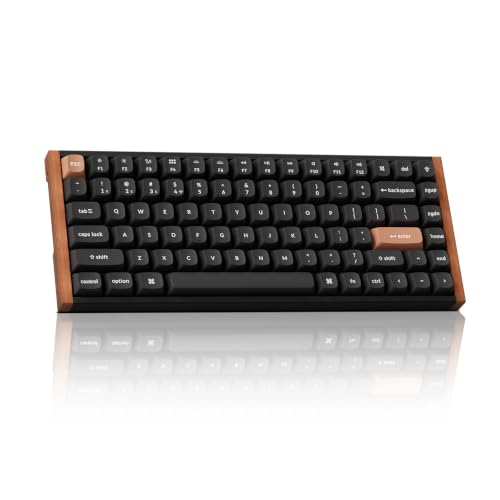
- Trim: aluminum frame with wood accents, black
The Aluminum + Wood edition is the K2 HE as a piece of desk furniture as much as an input device: an aluminum frame for rigidity and a wood accent that warms the whole object in a way the hobby’s aluminium-and-plastic norm rarely manages. Under the fingers, the magnetic switches deliver the K2 HE’s defining behaviour — actuation depth set in software, so the same key can be a hair trigger for a game and a deliberate press for prose, with rapid trigger resetting keys at the top of their travel for the repeated, dancing inputs that shooters and rhythm games reward. The sensation differs from a fine mechanical switch in a way typists should audition honestly: magnetic switches are smooth and linear in character, lacking the tactile bump or click that some writers organise their rhythm around. What they offer instead is tunability — the keyboard adapts its feel per key, per profile, per application, which no fixed mechanical switch can do.
For work, the K2 formula’s virtues persist untouched: the function row survives (unlike many 65% boards), the arrow cluster is where your hand expects it, and the Mac/Windows keycap duality means the board serves a mixed household without a settings safari. Wireless behaviour splits by need — Bluetooth for the laptop-and-tablet shuffle, 2.4 GHz for gaming-grade response, USB-C when only certainty will do — and the board’s battery and build suit it to being the one keyboard that travels between a home desk and an office. Sound is the considered, damped thock-adjacent character Keychron tunes for in this line: present enough to be satisfying, civilised enough for shared spaces and calls.
Strengths
- Adjustable actuation and rapid trigger make one board serve gaming and writing profiles genuinely.
- The wood-accented aluminum build looks and feels a class above its price band’s habits.
- Layout and connectivity preserve everything that made the K2 a default recommendation.
Trade-offs
- Linear magnetic feel will not convert lovers of tactile or clicky mechanical switches.
- Hall Effect tuning lives in software — buyers who want a keyboard that is only a keyboard should know the depth is there.
- 75% means no number pad; spreadsheet-heavy users should look at larger Keychron layouts.
Best for: hybrid worker-gamers, desk aesthetes, Mac/Windows switchers, and K2 owners ready to upgrade. / Not suited for: tactile-switch purists, number-pad dependents, and anyone who wants zero software in their keyboard life.

Keychron K2 HE (Aluminum, Rapid Trigger edition) — the gaming-leaning listing
Badge: Best for players who want the magnetic features front and centre
- Layout: 75%, wireless magnetic custom keyboard
- Switches: Gateron Double-Rail magnetic, Hall Effect
- Features: rapid trigger, adjustable actuation, QMK
- Connectivity: 2.4 GHz, Bluetooth 5.2, wired
- Lighting: RGB
- Compatibility: Mac, Windows, Linux
This listing presents the same K2 HE platform with the gaming specification in the shop window: Gateron Double-Rail magnetic switches (the double-rail design aims at stem stability and consistent sensing), rapid trigger named in the title, RGB lighting, and the full QMK customisation story. Functionally the two listings are the same keyboard family wearing different emphasis — this one speaks to the player who will live in the Launcher tuning actuation curves, while the wood edition speaks to the desk that also has to look like a room. Buyers should compare the two listings’ current details (switch variant, trim, included keycaps) and choose by the desk and the hand, not by imagining a performance gap the platform does not contain.
In gaming terms, what you are buying across both listings is the rapid-trigger advantage in a board that does not look or behave like gaming equipment the rest of the day — no aggressive chassis, no software suite with a dragon on it, just a handsome 75% keyboard whose keys happen to reset faster than mechanical ones can. For players whose desk is also their office, that discretion is the product.
Strengths
- Double-rail magnetic switches emphasise stability for fast, repeated inputs.
- RGB and the gaming-forward presentation suit a battlestation that works nights.
- Same platform virtues: QMK tuning, triple connectivity, Mac/Windows fluency.
Trade-offs
- Plainer trim than the wood edition for desks where appearance leads.
- Same linear-feel caveat for tactile loyalists.
- Choice between listings can confuse; the platform is shared, so decide on trim and switch details.
Best for: competitive-leaning players in shared or professional spaces. / Not suited for: buyers seeking a dedicated full-size gaming board with a number pad and wrist-rest ecosystem.
In this guide
Hall Effect, explained for mechanical keyboard people
A mechanical switch closes a circuit when two metal contacts meet at a fixed point in the key’s travel; the actuation point is physics, and it is the same on every press. A Hall Effect switch instead moves a magnet past a sensor, and the keyboard measures the key’s position continuously — so the actuation point becomes a number in software. Three consequences follow, and they are the K2 HE’s whole argument. First, adjustable actuation: set keys to fire at a whisper of travel for gaming or at a deliberate depth for writing, per key if you wish. Second, rapid trigger: the key resets the moment it starts rising, rather than at a fixed reset point, so rapid repeated inputs — counter-strafing, repeated ability keys, fast double-taps — register with a responsiveness mechanical switches structurally cannot match. Third, longevity of a different kind: no contacts to oxidise or chatter, though the honest note is that quality mechanical switches also last for years, so treat durability as a tie rather than a triumph. The cost of the technology is feel: the magnetic switch’s smooth linear travel lacks the engineered bump of a tactile mechanical switch, and no software setting can synthesise a bump that is not physically there.
Buying guide: who the K2 HE is for, and who should pass
The hybrid desk test
The K2 HE’s ideal owner works and plays at the same desk and refuses to own two keyboards. If your evenings include competitive games where rapid trigger is a felt advantage, and your days include long writing where a handsome, quiet, Mac-fluent board matters, the hybrid case is strong. If your life is only one of those, a specialist may serve better: pure gamers may want a board built solely around gaming (with the aesthetic to match), and pure writers who love tactile feedback should follow their fingers to a tactile mechanical board instead.
Layout literacy: what 75% keeps and cuts
Seventy-five percent keeps the function row, the arrows and a navigation cluster, compressed tightly, and cuts the number pad and the spacious separations of a full-size board. For most desk workers the trade is pure profit — the mouse sits closer, shoulders thank you — while data-entry-heavy roles feel the missing pad daily. Know which worker you are before the layout charms you.
The K2 owner’s upgrade question
Owners of the original mechanical K2 should upgrade for exactly two reasons: the magnetic feature set (actuation tuning and rapid trigger) and a tired battery or worn switches in the incumbent. If neither applies, the K2 on your desk remains a good keyboard and this review releases you from the itch. Upgraders will find the transition gentle — same layout geography, same connectivity habits — with the Launcher’s tuning as the new toy that justifies the ceremony.
Setting up the K2 HE: a tuning walkthrough
Step 1: Connect by the mode you will actually use
Pair Bluetooth for your secondary devices, keep the 2.4 GHz receiver in your main machine for gaming, and use USB-C for the first configuration session. Name the board consistently across devices to avoid the classic “which K2 is this” pairing archaeology.
Step 2: Build two actuation profiles in the Launcher
Create a work profile with a moderate actuation depth that forgives resting fingers and brushing touches, and a game profile with shallow actuation and rapid trigger enabled on the movement and action keys. The per-key granularity is the point of the platform — movement keys hair-triggered, rarely-used keys left deliberate so a stray brush never fires them.
Step 3: Remap with restraint
QMK’s power tempts over-engineering. Start with the two or three remaps your hands actually request (a media key where your hand looks for it, a layer for application shortcuts) and live with them a week before adding more. A keyboard’s map should be muscle memory, not a museum of possibilities.
Step 4: Set the Mac/Windows switch and keycaps once
The board serves both operating systems; set the mode switch to your primary system, install the matching keycaps from the box, and put the spares somewhere findable. Future-you, switching laptops in a year, will be grateful for the labelled bag.
Common mistakes with Hall Effect keyboards
The first is setting actuation to the shallowest possible depth everywhere and then drowning in typos — hair triggers are for game keys, not for prose. The second is enabling rapid trigger and never testing it in the game that motivated it, leaving the feature as a listing claim rather than a felt advantage; spend ten minutes in a practice range and feel the reset difference deliberately. The third is judging the linear feel in the first hour — magnetic switches reward a week’s adaptation, especially for typists arriving from tactile boards, though the honest corollary is that a week is also long enough to know if you simply miss the bump. The fourth is ignoring firmware and Launcher updates, through which switch behaviour and profiles are refined across this category’s fast-moving present.
K2 HE vs the mechanical K2, and vs dedicated gaming boards
Against its mechanical ancestor, the K2 HE trades switch variety and tactile options for tunability and speed — the mechanical K2’s ecosystem of swappable mechanical switches remains the tinkerer’s playground, while the HE is a sealed, software-defined instrument. Against dedicated gaming Hall Effect boards, the K2 HE trades gaming theatre and some esports-specific extremes for wireless versatility, Mac fluency and a design that survives a video call with a client. Neither trade is a defeat; they are the same platform question asked by three different desks, and this review’s job is to make sure you know which desk is yours.
Frequently asked questions
What does HE mean in the K2 HE?
Hall Effect — the magnetic sensing technology in its switches. Instead of metal contacts meeting at a fixed point, a magnet’s position is measured continuously, which enables adjustable actuation points and rapid trigger behaviour set in software.
Is the K2 HE good for typing, or only for gaming?
It is genuinely good for typing if you enjoy or can adapt to a smooth linear feel, with the bonus that actuation depth can be set to forgive heavy hands. If your typing joy depends on a tactile bump or a click, a mechanical board will make you happier and no tuning will change that.
What is rapid trigger, in plain terms?
The key deactivates the instant it begins to rise, rather than waiting to pass a fixed reset point on the way up. Rapid repeated presses therefore register faster and more reliably — most noticeable in movement-heavy games where keys are tapped in quick alternation.
Can the K2 HE work with both my Mac and my Windows PC?
Yes — Mac/Windows duality is a Keychron signature, with a mode switch, suitable keycaps and triple connectivity (Bluetooth for the shuffle, 2.4 GHz, and USB-C). Linux is also supported per the listings.
Which K2 HE listing should I choose?
The platform is shared; choose by trim and switch presentation. The Aluminum + Wood edition leads on desk presence, while the Aluminum rapid-trigger edition presents the gaming specification (Double-Rail switches, RGB) more directly. Compare the two listings’ current details and pick the finish your desk wants.
Do I need the Launcher software?
The keyboard works without it, but the HE features — actuation adjustment, rapid trigger configuration, remapping — live there. It runs as a web app (QMK-based), so there is no heavyweight suite to install; budget one configuration session to set up your profiles.
How should I set actuation differently for typing days and gaming nights?
Treat the two jobs as two saved profiles rather than one compromise setting, because the Launcher makes switching cheap and the difference is not subtle. For typing, set a deeper actuation point and switch rapid trigger off or make it conservative: the extra travel acts as forgiveness, so brushing a neighbouring key while reaching at speed stops producing stray characters in documents and messages. For gaming, bring the actuation point up, enable rapid trigger on the movement cluster first rather than the whole board, and test the change in a practice range before a ranked session. Give each profile a week of honest use before judging it, since your fingers need a few days to trust a shallower press, and keep a plain default profile untouched as the safe state you can always return to.
Will magnetic switches change how I clean and maintain the K2 HE?
In mostly welcome ways. There are no metal contact leaves inside the switches to oxidise or start chattering with age, which removes the classic mechanical failure that owners used to diagnose with dread. The new housekeeping rule is about what gathers around magnets and sensors instead: keep the board clear of metal filings, screws and workshop debris if your desk doubles as a bench, and use compressed air and a keycap puller for routine cleaning rather than tipping the board upside down and shaking it over the floor. Wash removed keycaps in mild soapy water, dry them completely before refitting, and check for firmware and Launcher updates occasionally, because on a board defined by software behaviour, an update is maintenance in the same sense that cleaning the case fans is.
The bottom line
The K2 HE is the K2 grown into the magnetic era without growing out of its character: same wise layout, same triple connectivity and dual-system fluency, now with keys whose behaviour is software and whose speed is a genuine competitive feature. Buy it as a hybrid desk’s single keyboard and it will feel less like a compromise than like the category finally catching up with how people actually use one desk for everything.
A week at the hybrid desk: the K2 HE in service
Monday to Friday, the board writes: reports in the morning profile, where the moderate actuation depth forgives the resting-finger habits of a thinker composing sentences, and the damped sound stays beneath notice on calls. The wood edition’s presence on the desk draws the one compliment per week that aluminium boards collect per year, which is not a performance metric and also not nothing — objects used eight hours a day are allowed to be pleasant to look at. Friday evening, the profile switch happens: movement keys go shallow, rapid trigger wakes, and the same object becomes the game board without a cable swap or a personality transplant, because the 2.4 GHz receiver never left the PC. The weekend adds a tablet pairing for a café writing session, where Bluetooth and the board’s portable footprint make it the keyboard that travels. Sunday night it returns to the desk and to Monday’s profile. The week’s verdict is the hybrid thesis proven in the only court that matters: no moment asked for the other keyboard, because there was no other keyboard — and no moment felt like a compromise extracted payment for that convenience.
Sound, stabilisers and the details under the keys
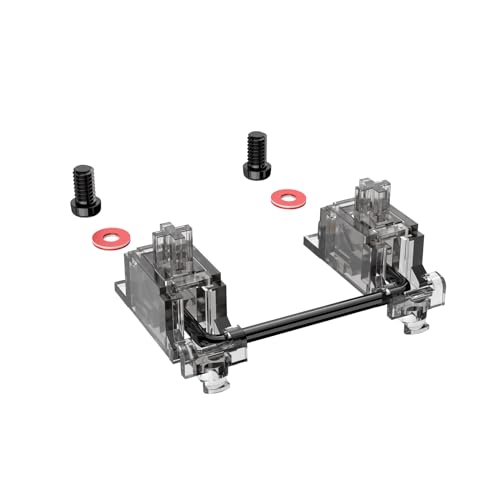
A keyboard’s quality hides in its large keys. The K2 HE’s spacebar and modifiers carry the stabiliser discipline this site covers elsewhere — no rattle that announces itself over the switch sound, no ticking on off-centre presses — and the board’s overall acoustic is the damped, low character that modern foam-and-gasket design has made the hobby’s expectation. Typists who record, stream or take calls over their keyboard will find the sound profile cooperative: present to the typist, unobtrusive to the microphone. Keycaps in this class are the standard Keychron fare — legended for both operating systems, profiled for comfort rather than sculpture — and the hot-swappable nature of the magnetic ecosystem should be understood correctly: HE boards accept compatible magnetic switches, not the mechanical switches in your drawer, a compatibility boundary worth knowing before planning experiments.
Battery and wireless behaviour in the real week
Wireless Hall Effect boards carry a power question mechanical boards dodge: sensing magnets and polling for games costs energy, and the honest pattern is that gaming profiles on 2.4 GHz spend the battery faster than Bluetooth writing weeks do. The K2 HE’s answer is the standard one — a battery sized for the platform, with wired play as the zero-anxiety fallback for tournament evenings and long sessions. Build the same rhythm as with any wireless desk: a weekly top-up habit beats a surprise flat battery before a deadline, and the board’s USB-C life means the rescue cable is the one already on your desk for your phone. Owners who treat the keyboard as wired-first and wireless-when-useful will never think about this section again; owners who run RGB bright on 2.4 GHz permanently should expect to think about it weekly.
The gaming chapter in full: what rapid trigger changes on screen
Abstract switch talk becomes concrete in a tactical shooter. Counter-strafing — tapping the opposite movement key to stop your character dead before firing — is a rapid-trigger showcase: the first key releases the instant it rises, the second fires at your chosen shallow depth, and the stop feels welded to your intention in a way that mechanical reset points smear by milliseconds that players at this level genuinely feel. Repeated ability casts, fighting-game inputs and rhythm titles tell the same story in different accents. The honest boundaries matter too: rapid trigger does not improve aim, game sense or the monitor’s refresh, and below a certain competitive level its advantage is smaller than the advantage of an extra hour of practice. Buy it as the final mechanical percent, not as a substitute for the first ninety-nine. For the hybrid desk, that calibration is perfect — the feature is there when the evening calls for it, invisible when the morning’s prose does not.
Ergonomics and desk geometry
The 75% footprint’s ergonomic gift is mouse proximity: the hand travels less, the shoulder stays nearer neutral, and long gaming or editing sessions accumulate less reach fatigue than a full-size board imposes. The board’s height and angle follow Keychron’s usual civilised geometry; pair it with a palm rest if your desk height makes your wrists float, and set your chair and monitor before blaming the keyboard for posture — input devices are the last link in an ergonomic chain that starts at the floor. Typists with existing wrist sensitivities should note that actuation tuning is itself an ergonomic feature here: a shallower, lighter actuation profile reduces the force and travel each keystroke demands, which across ten thousand keystrokes a day is a real variable, adjustable in software rather than by buying different switches.
The K family context: where the K2 HE sits among its relatives
Keychron’s K line is a small civilisation of layouts and price points, and the K2 HE’s citizenship needs placing. The original K2 remains the value mechanical gateway; the K2 HE is its magnetic flagship sibling, not its replacement. Below and beside sit slimmer low-profile K boards for travellers and minimalists, and above sits the Q series’ metal-and-gasket enthusiast tier for buyers whose hobby is the keyboard itself. The HE’s position — mainstream price band, magnetic technology, wireless versatility — makes it the line’s most complete answer for the hybrid desk, while the Q’s craftsmanship and the low-profile K’s portability serve their own parishes. Buyers torn between K2 HE and a Q-series board should ask whether they are buying a tool or joining a hobby; both are honourable, and they lead to different shelves. This site’s comparison of the K1, K2, K4 and K6 lays out the layout side of the family in full, and it pairs naturally with this review if your decision is really about size.
Long-term ownership: switches, software and support
Magnetic platforms age differently from mechanical ones. There are no contacts to develop chatter, and the switches’ sensing does not wear in the mechanical sense; what ages is the battery, the keycap legends under heavy fingers, and the software ecosystem’s attention. Keychron’s Launcher being web-based and QMK-rooted is a longevity asset — the configuration tool does not depend on a legacy desktop app surviving operating-system updates — and the board’s standard layout means keycap replacements remain a hobby-wide commodity rather than a proprietary hunt. Keep the firmware current, keep the spare keycaps bagged and labelled, and the K2 HE should serve the way the original K2 served its generation: as the board against which its owner’s next keyboard must argue a case.
Troubleshooting the magnetic learning curve
First-week K2 HE troubles follow a pattern worth pre-empting. Accidental keystrokes while resting fingers mean the work profile’s actuation is set for a gamer’s hair trigger — deepen it; the software exists precisely so this is a setting, not a flaw. Missed repeated inputs in a game mean rapid trigger is not enabled on those keys or the profile in use is the work one — check the profile before the hardware. A board that feels “too smooth” to a tactile refugee usually settles by day five as the fingers recalibrate to position rather than bump; if day ten still feels like typing on glass, believe your hands and shop tactile — the return window is a legitimate part of the HE buying process, because feel is the one specification no listing can transmit. Connection quirks across three modes resolve by the usual liturgy: one primary device per mode, firmware current, receiver on a short extension away from USB 3 noise if the desk is crowded with drives. None of these are defects; they are the platform’s grammar, and fluency takes a week.
Who competes with it, and how to choose among magnetic boards
The Hall Effect shelf now includes gaming-first boards from esports brands, minimalist HE boards from boutique makers, and Keychron’s own other layouts. The selection axes are consistent: layout first (your hands live there), connectivity second (the K2 HE’s triple mode and Mac fluency are differentiators, not defaults, in this category), software third (web-based QMK tuning versus proprietary suites of varying grace), and aesthetics last but not never — a board you see all day should please you. On those axes the K2 HE’s claim is balance: no axis is the category’s extreme, and no axis is a weakness. Buyers who need an extreme — the absolute fastest esports specification, the absolute smallest travel board — should buy that extreme from its specialist. Buyers whose life is the middle, which is most lives, are this keyboard’s constituency.
The writing test: ten thousand words later
Keyboards for writers are judged in a currency gamers rarely use: error texture. Over long documents, the K2 HE’s error pattern shifts in a characteristic way — fewer missed letters (the actuation is certain and consistent) and, in the first days, more accidental neighbours when a resting finger drifts past a shallow setting. The cure is the profile discipline this review keeps recommending, and once the work profile’s depth matches your hand’s weight, the error rate settles below most typists’ mechanical baseline, because the switch fires exactly where the software says it will, identically, forever. There is a subtler pleasure: the sound. Long-form writing is an auditory occupation whether writers admit it or not, and the board’s damped consistency — no spacebar rattle intruding on a sentence’s rhythm, no ping — supports concentration in the way a quiet room does. Writers who dictate or record will add the microphone’s verdict: civilised. The K2 HE will not write your book, but it removes the small frictions that make writers blame their tools, which is the most a keyboard can honestly promise literature.
Gifting and second-desk duty
As a gift for a student, a new graduate or a newly remote worker, the K2 HE is a considered choice: it flatters both operating systems a life might contain, looks grown-up on any desk, and carries a gaming secret that recipients discover with delight. For a second desk — the office satellite of a home setup — its triple connectivity makes it the natural traveller between sites, with profiles that live on the board rather than in one machine’s software. Households standardising on one board model across members gain the usual dividend: shared keycap spares, shared knowledge, one Launcher to learn. These are unglamorous virtues, and they are also the ones that decide whether a keyboard is still in service in year three.
Value and the cost of the magnetic premium
The K2 HE asks a premium over its mechanical ancestor, and the invoice itemises cleanly: magnetic switches and sensors, the tuning platform, and the flagship trims. Whether the premium is fair depends entirely on whether the two software-defined behaviours — adjustable actuation and rapid trigger — enter your actual week. For the hybrid desk they do, daily, and the premium amortises into pennies per profile switch. For the single-purpose desk they may not, and the mechanical K2 or a specialist board returns the change. This is the healthiest kind of premium in tech: one that buys named capabilities rather than a badge, and whose value each buyer can audit against their own calendar before spending. Audit yours, and the K2 HE’s price becomes either obviously fair or obviously skippable — both useful answers, and both preferable to the vague upgrade anxiety the keyboard industry usually sells.
Final scoring, in words rather than numbers
Feel: smooth, linear, tunable — a software personality rather than a fixed one. Speed: rapid trigger is a real, felt advantage in its genres. Layout: the wisest 75% compromise in the mainstream. Connectivity: complete, with Mac fluency as a signature. Looks: the wood edition in particular earns its desk. Value: fair for hybrids, unnecessary for purists of either single camp. The K2 HE is not the best gaming keyboard or the best writing keyboard in the world; it is the best argument that one keyboard can be both, made by the company that taught the mainstream what a good 75% board is.
Profiles for particular humans
The programmer will map a layer for symbols and never look back, and will appreciate that the configuration lives in a browser tab rather than a build chain — though QMK’s depth is there for those who want to descend. The competitive player will tune four keys and ignore the rest of the platform, which is a legitimate relationship with software: depth available is not depth obligatory. The writer will set one forgiving profile and forget the Launcher exists for a year, rediscovering it only when a new laptop arrives. The Mac-and-PC household will treat the mode switch as the hardest-working control on the board. The K2 HE accommodates all four without insisting any of them become keyboard hobbyists — a restraint that distinguishes tools from hobbies, and that explains why the K line keeps being recommended to people who ask for “just a good keyboard” and are then quietly delighted to discover it had a second talent in reserve.
The desk-photo test and other honest metrics
There is a metric the industry is embarrassed to use and users apply instinctively: whether the object makes the desk feel finished. The wood-trimmed K2 HE passes it conspicuously — visitors ask about it, photographs flatter it, and its owner keeps the desk tidier around it, a halo effect with real ergonomic dividends. Sceptics are right that beauty is not performance; they are wrong that it is nothing, for an object touched ten thousand times a day. Buy the trim your eyes want, set the profiles your hands want, and let both judgements be first-class. The K2 HE is unusually able to satisfy both courts at once, which may be the most complete summary this review can offer.
What could still be better
A review that finds nothing to improve is an advertisement, so here is the honest list. The magnetic ecosystem’s switch variety remains narrower than the mechanical world’s — tinkerers who swap switches monthly will feel the fence. The linear-only feel, however tunable its depth, cannot serve the tactile faithful. Battery life under full gaming load is a discipline rather than an afterthought. And the two-listing situation, while offering real choice, asks buyers to do comparison work that a single clear edition would spare them. None of these are hidden flaws; all are the platform’s known borders, and they define the neighbouring products a disappointed K2 HE shopper should visit — mechanical Keychrons for the tinkerers and tactiles, dedicated esports boards for the extremes. A product whose weaknesses point so clearly to their remedies is a product whose strengths can be trusted to be equally real.
Analogue futures: where Hall Effect keyboards go from here
The K2 HE sits early in a technology curve worth understanding, because it affects how long the board will feel current. Continuous position sensing invites features beyond today’s pair — keys that report how far they are pressed, enabling analogue-style inputs where a half-pressed key walks and a fully pressed key runs, per-key thresholds that adapt to the application in focus, and profiles that travel with the user rather than the machine. Some of this exists in corners of the market already; the mainstream story is that boards like the K2 HE normalise the sensor platform on which those features will arrive, often by firmware rather than by replacement. Buying early in a curve is usually a warning; here the curve’s direction is software, the board’s update path is a browser, and the underlying keyboard — layout, build, connectivity — is deliberately conservative. That combination is the safest form of early adoption the hobby offers, and it is a final, structural reason the K2 HE is easy to recommend to a hybrid desk that keeps its keyboards for years.
The decision, compressed
Own one desk that does everything? The K2 HE is the strongest single-board answer in its class. Love tactile switches the way some people love vinyl? Buy mechanical and never apologise. Play at a level where equipment is specified by a coach? Buy the esports extreme. Everyone else — the vast, hybrid, Mac-and-Windows, work-and-play middle — should put the K2 HE at the top of the list, choose the trim their desk deserves, spend one evening in the Launcher, and then enjoy the rare technology product that becomes less noticeable and more valued the longer it serves. That trajectory, from novelty to infrastructure, is the signature of a correct purchase.
Sharing the board: households, hot desks and hand-me-downs
Keyboards get shared more than their personal tuning suggests, and the K2 HE’s profile system turns sharing from a compromise into a configuration. A household board can carry a parent’s forgiving work profile and a teenager’s hair-trigger game profile, switched in the Launcher in seconds; a hot-desking office worker can pair the same board to the office PC by receiver and the home laptop by Bluetooth and never re-pair anything. When the board eventually hands down — and Keychron boards do, because they survive — the recipient inherits a platform whose feel they can reset to factory and retune to their own hand, a second life that fixed-feel keyboards cannot offer as completely. Even the keycaps’ dual legends serve the hand-me-down: the board speaks both operating systems to whoever receives it. Durability plus reconfigurability is the formula for equipment that stays in a family, and the K2 HE has both halves.
A note on buying the right listing, safely
Two listings for one model is an invitation to confusion that a careful checkout dissolves. Verify the exact title’s trim words (the wood edition names its materials; the rapid-trigger edition names its switch line), confirm the layout language and keycap set match your region and system, and buy from a seller whose returns honour the feel test this review keeps prescribing — because with any keyboard, and doubly with a new switch technology, the return window is part of the product. Keychron’s popularity also makes it a counterfeited and grey-imported brand in some marketplaces; the genuine listings are the ones whose details match the manufacturer’s own description, and the small diligence of comparing them is the cheapest insurance in the hobby.
The first evening: an onboarding script
Unbox onto the desk it will live on. Charge it while you work through this script on your old keyboard, so the new board’s first session is not interrupted by its own battery. Set the operating-system switch, fit the matching keycaps, and type one honest page — a real email, a real document — before opening any software, because the out-of-box feel is the baseline every later tuning decision references. Then open the Launcher, build the work profile by deepening actuation a step at a time until resting fingers stop firing neighbours, and save it with a name you will recognise in a year. Only then build the game profile, and test it in a practice range rather than a ranked match — the first impression of rapid trigger should be curiosity, not a lost game. Finish by pairing the second device and labelling the spare keycaps bag. Total time, about an hour; total benefit, a keyboard that starts its life as yours rather than as a default you never questioned.
Sound checks for streamers and call-heavy workers
If your voice is broadcast or billable, your keyboard is part of your audio chain whether you planned it or not. The K2 HE’s damped profile keeps key noise beneath speech at normal microphone distances, and its lack of stabiliser rattle removes the specific clatter that listeners identify as “cheap keyboard” on recordings. Position still matters — a microphone between you and the board will report more than one behind the board — and the board’s wireless freedom helps here too, letting it sit outside the microphone’s most sensitive zone without a cable negotiation. Streamers who play on the same board they type on gain the profile trick as a production tool: a deeper, quieter actuation for talk segments, a shallow one for gameplay, switched with the same hand that hits the scene change. It is a small paragraph for a niche, but niches are where flagship features stop being brochures and start being workflows.
Travel and the second-location life
A 75% wireless board is the largest keyboard that still travels gracefully, and the K2 HE’s build suits the commute between home desk, office and the occasional café or co-working day. In a bag it wants a sleeve or a hard case — aluminum and wood reward protection rather than bravado — and its battery rhythm across a week of mixed Bluetooth days is undemanding. The profiles travel with the board, so the café session inherits your work tuning without any laptop-side software, a detail that matters when the second machine is not yours to configure. For digital-nomad desks, the Mac/Windows duality ends the two-keyboard era some travellers still endure. It is not a travel keyboard in the low-profile sense — it has height and presence — but for workers whose travel is between desks rather than between continents, it is the one-board answer carried in a tote rather than checked in luggage.
The verdict for the reader who scrolled
The K2 HE takes the most recommended 75% keyboard formula of the last generation and gives its keys a memory, a sensor and a settings page — without taking away the layout, the looks or the dual-system manners that made the formula famous. If your desk works and plays, it is the board to beat; if your heart belongs to a bump, a click or a number pad, it will happily lose to the board that has them, and it told you so itself, several sections ago.
One more audience: the returning mechanical sceptic
Some readers arrive at Hall Effect boards as refugees from a mechanical disappointment — a board that pinged, rattled or chattered its way out of favour — and wonder whether magnetic is a refuge or another fad. The K2 HE’s answer is that its virtues are boring in the best way: consistency. Every key fires where it is set, resets when it should, and sounds like its neighbours, and that uniformity is what the disappointed were actually seeking under the name of feel. Sceptics should still use the return window as an audition, because uniformity is a value only if your hands enjoy the tune it is uniform in. But of all the boards a burnt mechanical buyer might try next, one built by the company whose mechanical boards set the mainstream standard — now applying that standard to sensors — is the most rational next experiment in the hobby.
Maintenance: keeping the magnetic board honest
Care for the K2 HE is the usual keyboard liturgy with two magnetic footnotes. Dust and debris remain the enemy of any switch’s travel, so the compressed-air and keycap-pulling routine still applies on a seasonal rhythm; the sensors themselves want no lubrication adventures, and owners arriving from the mechanical modding scene should resist importing its rituals wholesale — this platform’s tuning is digital, and its physical maintenance is deliberately minimal. Keep the firmware and Launcher habits current, wipe the wood and aluminum with the gentle cloths their materials prefer, and store the board away from the magnetic clutter of a tool drawer if it travels. A board maintained this lightly will outlast several generations of the games and documents it serves, which is the only maintenance outcome worth wanting.
Expectations for the first ranked weekend
New owners often schedule their judgement for the first competitive weekend, so here is the honest script. The first session will contain one accidental activation and one moment where a counter-strafe lands cleaner than it ever has; both are the product teaching you its grammar. By the third session the movement keys’ tuning will either feel like an extension of intention or like a sensitivity setting that is simply too high — and the correct response to the second feeling is to deepen those keys a fraction, not to abandon the platform, because actuation taste is a dial with your name on it. Judge the board at the end of the weekend, with profiles adjusted once, and the verdict will be about the keyboard rather than about its factory defaults. Defaults are starting points; the K2 HE, more than most boards, is the sum of its settings.
Closing note: the keyboard as a kept promise
The original K2 made a promise the whole category now keeps — that a compact wireless board could be a person’s only keyboard without apology. The K2 HE renews that promise in the magnetic dialect: one board, every system, every hour of the desk’s double life, with keys that can be taught new reflexes as your games and your hands evolve. Promises in tech are usually marketing; this one is a layout, a sensor and a settings page, and you can verify all three within a week of the box arriving.