Disclosure: As an Amazon Associate, reviewstook.com earns from qualifying purchases. Links on this page are affiliate links at no extra cost to you; prices and availability change frequently, so check Amazon for the latest.
Is a High End Gaming PC Worth It? A Straight Answer, With the Math Shown
Is a high end gaming PC worth it? The honest answer is that the question has no universal answer — it has your answer, and it depends on three things: the monitor the machine will feed, the games and workloads it will run, and how many years you intend to keep it. What this analysis can do is show the working. It lays out what the high end premium actually purchases in lived experience, what it costs beyond the sticker in electricity, ecosystem, and depreciation, and how the value calculation changes across the tier — because “high end” spans from an RTX 5070 Ti machine that is arguably the value sweet spot of serious gaming to an RTX 5090 flagship whose premium buys capability most players will never touch. By the end, you should be able to place yourself on that spectrum with confidence, which is worth more than any single verdict — including ours, though we give one.
In this guide
The Short Verdict
Worth it, conditionally. A high end gaming PC is worth it for players whose display is 1440p high-refresh or 4K, whose library includes demanding current releases, and who keep a machine for four years or more — doubly so if the PC also streams, edits, or works for a living. It is not worth it for 1080p players without monitor plans, for single-game libraries, or for budgets that would leave the rest of the desk unfunded. The tier’s entry (5070 Ti class) is worth it for the widest audience; its ceiling (5090 class) is worth it for the narrowest, and both statements can be true because they are about different machines wearing one label.
What the Premium Actually Buys: Four Tangible Things
Top pick
1. It buys the settings menu’s silence
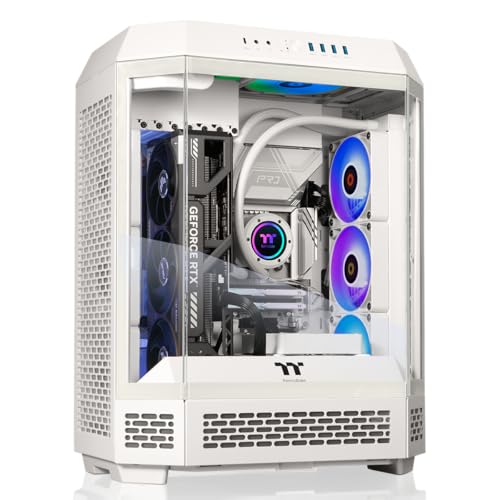
The least benchmarkable and most valuable purchase in the tier is the disappearance of friction. On a mid-range machine, every major release begins with optimization research; on a high end machine, it begins with playing. Across a four-to-six-year ownership span and dozens of releases, that reclaimed time and attention is a real return — the same logic by which the ledger in High End Gaming PC Pros And Cons ranks settings freedom above raw averages. A representative machine for this experience is the Thermaltake Reactor 9880S, whose 9800X3D and RTX 5080 pairing with 32GB of DDR5-6400 and 2TB of storage is precisely the “nothing to negotiate” specification: every line removes a category of compromise rather than adding a headline.
2. It buys minimum frame rates, the quality you feel
Players do not experience average frame rates; they experience the worst frame of every second. High end pairings raise those minimums disproportionately, because both the processor’s cache and the graphics card’s reserves engage exactly where mainstream hardware runs dry. In competitive play that is a performance input; in single-player play it is the difference between a world that holds together and one that stutters at its biggest moments. This quality is real, it is the first thing owners mention, and it is the hardest to convey in a specification table — which is why the impressions collected in High End Gaming PC Reviews lean on it so heavily.
3. It buys years — the cost-per-year argument
Flagship machines age on a longer curve. A high end PC bought today typically delivers four to six years of front-line service, and its platform — current socket, DDR5, fast storage, power headroom — commonly outlives its graphics card, accepting a mid-life GPU refresh that extends the story further. Spread across that span, the annual cost of a flagship frequently undercuts the annual cost of replacing mid-range machines twice, while delivering a better experience in every one of those years. The math only works if you actually keep machines that long; for the annual upgrader, the same longevity is worthless and the depreciation is brutal, a point the next section prices honestly.
4. It buys a second machine’s worth of capability
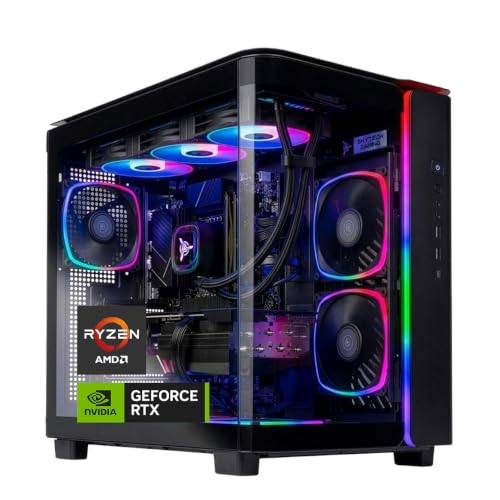
Streaming encoders, editing timelines, render queues, VR headsets, local AI workloads: the high end PC absorbs jobs that would otherwise justify separate hardware. The extreme case is a build like the Empowered PC Panorama XL — RTX 5090, Ryzen 9 9950X3D, 64GB of memory, liquid cooling, Wi-Fi 7, and a three-year warranty — which is less a games machine with extras than a compact workstation that games at the generation’s ceiling. If your life contains two of those workloads, the worth-it calculation stops being close.
What the Premium Quietly Costs: The Other Side of the Invoice
The ecosystem is not included
A high end tower on a basic monitor is the tier’s most common false economy. The honest budget includes the 4K or high-refresh display the machine exists to feed, input hardware that keeps pace (readers typically continue to Best Gaming Mouse For Fps for that half), and often the desk furniture to hold a full-size tower. Price the whole desk, then choose the tier. A mid-range tower with the full ecosystem funded delivers more daily joy than a flagship starved of its panel — a sequencing point How To Choose A High End Gaming PC makes from the buyer’s side.
Electricity, heat, and the room
Sustained flagship gaming draws several hundred watts and converts them into room heat with perfect efficiency. The electricity cost across a heavy player’s year is real but modest; the thermal cost in a small room in summer can be the larger practical issue, and the cooling noise that manages it is the tier’s most-mentioned ownership footnote. None of these is a reason to decline the tier — all three are reasons to decline it knowingly rather than discover it in July.
Depreciation is steepest at the top
Flagship components lose absolute value fastest when their successor generation arrives, however gracefully they age in capability. The 5090 bought this year will still be a formidable card in four years; it will not be worth anything like its purchase price in two. Buy the ceiling for the experience, never as an asset, and let long ownership — not resale — carry the value argument.
Where the Value Curve Bends: Reading the Tier From Bottom to Top
The tier is not one value proposition but three, stacked. At its entry sit machines like the Alienware Aurora configuration with RTX 5070 and Core Ultra 7 265F — 32GB of DDR5, Wi-Fi 7, Dell’s support wrapper — which deliver the high end experience at 1440p with the brand’s ownership comforts. One step up, the 5070 Ti class represented by the Skytech King 95 with 9800X3D and RTX 5070 Ti is where this analysis locates the tier’s value peak: the full settings-freedom experience, X3D frame pacing, credible 4K with upscaling, and a price that has not yet entered the steep part of the curve — the machine examined at length in High End Gaming PC Review. Above that, the 5080 buys native-4K authority, and the 5090 buys the ceiling. Each step is defensible; each step also costs proportionally more per unit of lived improvement than the one before. Worth-it is therefore not a yes/no about the tier but a decision about which step’s price matches your display’s demands.
There is also a lateral route worth naming: AMD’s current flagship graphics tier has produced machines like the Acer Nitro 85 configuration built around the Radeon RX 9070 XT and Ryzen 9 9900X, which compete on rasterized performance and value in a way that can shift the calculation for players indifferent to NVIDIA’s specific feature set. Its 16GB of memory, however, illustrates the discipline this whole cluster preaches: a flagship GPU paired with a rationed supporting spec is a compromise wearing a flagship’s clothes, whichever logo is on the card — verify the full sheet before letting a headline price argue the case.
The Five Questions That Decide It for You
- What is your monitor? 1080p with no upgrade plan: not worth it. 1440p high-refresh: worth it at the tier’s entry and center. 4K: worth it from the 5080 step. 4K high-refresh or ultrawide: the flagship step enters the conversation.
- What do you play? A library of demanding current releases argues yes; one beloved, well-optimized title argues for sizing to that title instead.
- How long do you keep a PC? Four-plus years makes the flagship math sing. A two-year replacement habit makes the mid-range the rational buy and the flagship a recurring depreciation subscription.
- Does the machine have a second job? Streaming, editing, rendering, VR, or AI work each independently strengthen the case; two or more settle it.
- Is the whole desk funded? If the tower consumes the monitor and peripheral budget, the correct purchase is one tier down and a complete setup.
Score yourself honestly and the answer assembles itself. Four or five “yes-leaning” answers and the remaining question is merely which machine — High End Gaming PC Buying Guide is built for exactly that moment. Mostly “no” answers are not a failed test; they are the market working as intended, with excellent mid-range machines waiting at their proper price.
Cost of Ownership, Honestly Framed
Without printing a single product price — they change too fast to argue from — the ownership ledger of a high end machine has five lines. The purchase itself, in tier terms: entry-high-end, center, and flagship represent roughly ascending multiples of a mainstream machine’s cost, with the flagship step the steepest single jump. The ecosystem line: a monitor worthy of the machine and peripherals that do not bottleneck it, realistically a substantial fraction of the tower’s cost again. The running line: electricity for several hundred watts across your actual play hours, plus the room-cooling reality in warm months. The maintenance line: near zero for sealed liquid coolers and dust discipline, plus the occasional storage addition — the one upgrade nearly every owner performs. And the residual line: a named flagship retains meaningful resale value for years, softening the total in a way no-name configurations do not. Weighed together across a five-year span, the high end’s cost per year of excellent experience is frequently the surprise of the analysis — provided, always, the five questions above were answered first. The setup discipline in How To Set Up High End Gaming PC protects that value from day one by catching configuration errors inside the return window.
Common Mistakes in Answering This Question
- Asking whether the tier is worth it instead of which step is. The entry and the ceiling of the high end are different purchases sharing a label.
- Counting only the tower’s price. The ecosystem is part of the product; an unfunded monitor makes the flagship a rumor.
- Valuing averages over minimums. The premium buys frame-pacing quality first; judge it there or not at all.
- Assuming next year’s model voids this year’s. A flagship’s capability curve is long; the depreciation argument matters to sellers, not to keepers.
- Buying the ceiling for a 1080p library “to be safe.” Safety is a funded ecosystem and a machine matched to its display — not unused silicon.
Final Recommendation
For the player this tier was built for — 1440p high-refresh or 4K display, demanding library, four-plus-year ownership, ideally a second workload — a high end gaming PC is worth it, and the 5070 Ti center of the tier is where the worth concentrates. For everyone else, the worth-it answer is a well-bought tier down, and there is no shame in arithmetic. Decide with the five questions, verify the machine you land on against the full-spec standard, and the purchase will still look correct in year four — which is the only verdict that ever really counts.
Frequently Asked Questions
Is a high end gaming PC worth it for 1440p gaming?
Yes — 1440p high-refresh is arguably the tier’s best-value use case, particularly at the 5070 Ti step, where settings freedom and frame pacing arrive without the flagship’s steepest pricing. At 1440p/60 the case weakens considerably; refresh rate is doing half the work in this answer.
Is the RTX 5090 tier ever worth it?
Yes, in defined circumstances: 4K high-refresh or ultrawide displays, maximum ray tracing as a priority, serious streaming, or GPU-accelerated creative and AI work. Outside those, its premium purchases capability that stays in reserve — magnificent, and unused.
How long before a high end gaming PC feels outdated?
Typically four to six years at strong settings, with the graphics card aging first and the platform lasting longer. Owners who plan a mid-life GPU upgrade on an upgrade-friendly build routinely extend front-line service well beyond that window.
Is it smarter to buy mid-range twice instead?
It can be, for players who value having current features over peak capability, or whose displays are modest. The trade is real: two mid-range cycles deliver newer features sooner; one flagship cycle delivers a better experience in every shared year. Your replacement temperament decides.
Does a high end gaming PC hold its value?
Named flagship components retain meaningful resale value, but the tier depreciates fastest in absolute terms when successors launch. Treat any residual as a bonus in the ownership math, never as the argument for the purchase.
What hidden costs should I budget for?
The monitor the machine deserves, peripherals that keep pace, a possible early storage addition on 1TB configurations, and electricity across your play hours. Together they are the difference between the advertised price of the tier and its real one.
If I decide it is worth it, which step should I buy?
Match the step to the display: 5070 class for the tier’s entry at 1440p, 5070 Ti for its value peak, 5080 for native-leaning 4K, 5090 for the ceiling cases named above. Then choose the specific machine by full specification and warranty, not by headline.
The Counterfactual: What the Same Money Buys One Tier Down
Worth-it questions are really comparison questions, so run the alternative honestly. The money that buys a center-tier high end machine buys, one tier down, a strong mainstream PC plus the complete ecosystem around it: the high-refresh monitor, the quality mouse and pad, the headset, the second drive, and change left for a year of games. For a buyer starting from nothing, that bundle is not a consolation prize — it is arguably the correct purchase, because a gaming life is lived at the desk, not inside the tower, and the mainstream machine of this generation plays the current catalogue well. The high end’s case begins where that bundle’s ceiling appears: when the monitor is already owned and ambitious, when the library already strains mainstream hardware, when the years of intended service stretch long enough for longevity to compound. This is why the five questions in this analysis are sequenced as they are — the counterfactual is not the enemy of the flagship but its gatekeeper, and a flagship that survives comparison with a fully funded tier-down setup has earned its premium in the only currency that matters. Reader purchase patterns tracked through reviewstook.com bear this out: the most satisfied high end owners are overwhelmingly those who bought the tower second, after the display, not those who bought it first and finest.
The Upgrade-Later Strategy: Buying the Platform, Renting the GPU
There is a third path between buying the flagship and declining it, and for long-cycle buyers it may be the smartest money in this entire analysis: buy the platform at flagship standard — X3D-class processor, 32GB of DDR5, 2TB of storage, generous power supply, quality cooling — with a graphics card one step below your ambition, then upgrade the card alone in two or three years when the next generation reprices the ladder. The logic is actuarial. Processors, memory platforms, and storage age slowly and hold their capability; graphics cards age fastest and carry the tier’s steepest depreciation. Concentrating the initial purchase in the slow-aging components and refreshing the fast-aging one mid-cycle delivers most of the flagship experience across the full span at materially less than flagship money. The strategy’s requirements are the upgrade-friendly traits this cluster keeps naming: spare memory slots, PSU headroom, a standard layout, a case that fits the next card’s dimensions. Its enemy is the sealed, design-led flagship whose beauty is its upgrade ceiling. Buyers who suspect they are platform people should weight those traits above a half-tier of GPU on day one — a trade the spec-first guides rarely surface and the ownership math quietly rewards.
Genre by Genre: Where the Answer Flips
The worth-it verdict is not uniform across gaming itself, and players deserve the map. For competitive esports at high refresh, the answer leans yes at the tier’s center — frame pacing is a competitive input, and the X3D machines deliver it — but no at the ceiling, where the flagship GPU’s talents outrun any panel the sport uses. For flagship single-player gaming, the answer is the tier’s home ground: yes, scaled to your resolution, with the 5080 step earning its premium on 4K televisions in a way it never will on a desk monitor. For simulation — flight, racing, space — the answer leans yes more strongly than genre averages suggest, because these titles tax exactly the resources flagships hoard: cache, memory, sustained GPU load, and minimum frame rates in VR. For strategy and MMO libraries, the answer is a qualified yes aimed at the processor rather than the card; a buyer here should climb the CPU ladder and let the GPU sit a rung lower than instinct suggests. And for the indie, retro, and back-catalogue library, the answer is an affectionate no: those games will run beautifully on hardware a tier or two down, and the premium buys load screens a second shorter. The pattern under the map is the same one every section of this analysis keeps reaching — the machine is worth it when the workload can spend it, and the workload, not the marketing, is the audit that matters.
A Final Word on Timing
Every worth-it analysis is hostage to the calendar, so let this one declare its assumptions. Component generations turn over on a rhythm of roughly two years; a flagship bought early in its generation enjoys the longest runway and the proudest pricing, while the same machine bought late enjoys discounts and a shorter horizon to the next ceiling. Neither timing is wrong, but they are different purchases: the early buyer purchases years, the late buyer purchases value, and confusing the two is how sensible people end up resentful of good machines. The practical rule is to buy when your current machine fails your library — not when a launch keynote succeeds at its job — and to let the tier-step logic in this analysis, rather than the release calendar, size the purchase. A high end gaming PC bought for a real workload, at the right step, on a funded desk, is worth it in the only sense the word survives contact with ownership: in year four, you would make the same decision again.
The Psychology Line: What Ownership Does to the Owner
Every worth-it analysis pretends the buyer is a calculator, and every honest one should add the psychology line, because flagship ownership changes the owner’s relationship with the hobby in ways that have value — and cost — of their own. On the credit side: the end of settings anxiety is a genuine quality-of-life good, and so is the quiet pride of a machine that never embarrasses its owner in front of a new release. Players report playing more of their libraries on flagship hardware, not less — backlogs shrink when every game is a pleasure to launch — and a hobby used more is a hobby whose hardware cost per hour falls accordingly. On the debit side: the flagship recalibrates its owner’s baseline, and every lesser machine thereafter feels broken; the tier is a one-way door for standards. It can also convert a pastime into a beat — new launches become personal benchmarks, and the owner’s enjoyment quietly migrates from the games to the gear. Neither effect appears in a specification, and both appear in year two of ownership with total reliability. The mature worth-it answer prices them in: buy the flagship if the credits describe the relationship you want with your hobby, and decline it if the debits do — because the machine you are really choosing is the one in your head, and it is the only one you cannot return.
Insurance, Accidents, and the Risk Line Nobody Budgets
A flagship concentrates enough value in one glass-sided box that risk deserves its own paragraph in the ownership math. The realistic hazards are mundane: a liquid spill’s migration, a power surge’s opinion, a move across town, a pet’s curiosity about warm exhaust air. Against them stand cheap defenses — the surge protection and placement discipline covered in this cluster’s setup guidance, the original box kept for transport, and, for households where the machine’s replacement would genuinely hurt, a line in the home insurance conversation confirming how electronics of this value are treated. The worth-it connection is direct: a buyer for whom an uninsured total loss would be a financial event rather than an annoyance should count the small cost of covering the risk as part of the flagship’s price, and a buyer who cannot comfortably carry or cover that risk has learned something material about which tier their life is actually budgeted for. This is not pessimism; it is the same concentration logic that makes the tier’s warranties valuable, extended from component failure to household reality. Flagships reward owners who plan like owners.
The Second-Hand Exit: How the Story Ends Affects Whether It Was Worth It
Worth-it is judged at the end of ownership, and the end has a market. A named flagship, honestly specified and documented, sells to the next owner as a known quantity — the X3D processor and current-generation GPU in a clean, complete machine are the used market’s favorite listing shape — and that residual value is a real, if deliberately unquantified, credit in the flagship’s ledger. The machines that exit badly are the ones this cluster warns against at entry: rationed specifications, unnamed components, design-led cases whose proprietary shapes puzzle second-hand buyers. There is a pleasing symmetry in it — the same specification honesty that makes a machine good to own makes it good to sell — and a practical instruction: keep the box, keep the receipts, keep the configuration documentation from setup day, and the machine’s final act will repay the record-keeping. Buyers deciding between two near-equal flagships today can legitimately let the exit break the tie; the machine the next owner will trust is, not coincidentally, the machine you should.
What If You Already Own One? The Worth-It Question in Reverse
A share of this page’s readers arrive owning the machine in question — bought in a sale’s excitement or a bonus’s warmth — and their version of the question is retrospective: did I do the right thing? The analysis answers them with the same instruments, run backward. Audit the display: if the panel cannot spend the hardware, the highest-value purchase available to you now is the monitor, which retroactively makes the tower worth it — the ecosystem completing itself late is still the ecosystem completing itself. Audit the library: if your games do not tax the machine, the backlog argument applies in your favor, since the flagship’s gift is making everything you own play at its best; go and collect that gift deliberately. Audit the horizon: the longer you now commit to keeping it, the better the original decision becomes, because longevity is the variable with the most leverage in the entire calculation and it is entirely within your control. The retrospective verdict, for most owners who run this audit honestly, is kinder than the anxious version — the machine was worth it conditional on decisions still available to them. Few purchases offer that: a verdict the owner can still improve after the money is spent.
The Household Negotiation: Worth It, Argued at the Kitchen Table
Few flagships are bought by acclamation; most survive a household negotiation, and the worth-it case that wins at the kitchen table is built from different materials than the one that wins in a benchmark thread. The arguments that land are the honest, countable ones. Years of service: the machine will be the household’s computer through a defined span of school, work, and play, and its cost divides by those years into a figure that sounds like what it is — reasonable. Multiple jobs: it is the games machine, the editing station, the homework computer, and the video-call screen, and each role it absorbs is a separate device not bought. Reliability of the experience: nobody in the house will spend evenings troubleshooting settings, because the settings problem was bought away. The arguments that fail are equally predictable: frame rates nobody else in the house can see, futures nobody else believes in, and the word “investment” applied to a depreciating electronic. Notice that the winning arguments are the same ones this analysis has made throughout, translated into household currency — longevity, versatility, and the disappearance of friction. A purchase that can be defended in that currency rarely needs defending twice, and a purchase that cannot be was probably the wrong step of the tier regardless of its benchmarks. The kitchen table, it turns out, is an excellent review panel.
Worth It for the Long Library: The Backlog Dividend
One credit in the flagship’s ledger belongs specifically to the player with a deep library, and it is large enough to deserve separate statement. Most gamers own more games than they play, accumulated across sales and bundles and good intentions, and a meaningful share of that backlog is dormant for a technical reason: the old machine made each launch a negotiation, and negotiation is where intentions go to die. A high end machine changes the economics of the backlog completely. Everything installs fast, loads fast, and plays at its best settings without a research phase, and the practical result owners report — consistently enough that this analysis treats it as a finding — is that they play more of what they already own. Cost per hour, the only honest metric in entertainment economics, falls across the whole library at once, including the games bought years ago at sale prices. For the backlog-rich player, then, the flagship is not merely a machine for future releases; it is a key that unlocks sunk value, and that unlocking belongs in the worth-it calculation at full weight. A new game bought for a mid-range machine entertains once. A flagship entertains across every game its owner has ever bought, again, at their best — and there are households where that sentence alone settles the question.
The Environmental Footnote, Priced Honestly
A complete accounting should include the entry most analyses omit for politeness: a flagship’s material and energy footprint is the largest in its category, and for some buyers that is a genuine cost in the worth-it ledger rather than a footnote. The machine embodies more silicon, more metal, more packaging, and more freight than the tier below it, and it will draw more electricity across its life — though the honest comparison cuts in a subtler direction than first appears, because a flagship kept for six years replaces two mid-range machines’ worth of manufacturing, packaging, and disposal across the same span. Longevity, the flagship’s core economic virtue, is also its environmental one: the greenest machine in this analysis is whichever one is bought once and kept longest, provided its owner actually keeps it. The practical instruction follows the pattern of every other section — the footprint argues not against the tier but for the long-cycle version of it, against the annual-upgrade habit that is simultaneously the worst economics and the worst ecology in the hobby. Buy the flagship, keep the flagship, and the environmental line, like the financial one, comes out better than its reputation.
The Gift Test: Would You Give One, and What That Reveals
A clarifying exercise for the undecided: imagine buying the flagship not for yourself but as a gift for the gamer whose habits you know best — a partner, a sibling, a parent who plays. Notice what your instincts do. You immediately audit their monitor, their library, their room, and their replacement habits, and you feel the wrongness of the ceiling tier for the 1080p player and the rightness of the balanced tier for the 1440p devotee, with none of the fog that surrounds buying for yourself. That clarity is the analysis’s whole method, suddenly effortless, because gifts are judged by fit rather than by desire. Now turn the same audit on yourself with the same honesty. The worth-it question is hard only because self-knowledge is negotiable in a way that knowledge of others is not; the gift test removes the negotiation. If you would not give yourself the flagship — knowing your own panel, library, and habits as you know theirs — the answer was never really in doubt, and the tier below, fully funded, is the purchase your honest self is recommending. If you would, buy it the way you would buy the gift: sized to the life it will actually join, and without apology.
Closing the Books: The Answer, Assembled
Every section of this analysis has been a different instrument pointed at the same question, and their readings agree closely enough to state the answer as a single paragraph. A high end gaming PC is worth it when the display can spend its performance, the library can feel its frame pacing, the ownership horizon is long enough for longevity to compound, and the desk around it is funded to match — conditions that describe a large, identifiable population of serious players, and describe them at the tier’s center more than at its ceiling. It is not worth it when any one of those conditions fails badly, and the failure is diagnosable in advance with the five questions this page posed. The buyers who regret flagships are rarely those who bought too much machine; they are those who bought the machine for a life adjacent to their own — a different monitor, a different library, a different patience. The buyers who do not regret them bought the machine their actual life required, at the step their actual display demanded, and then kept it long enough for the arithmetic to become affection. That is the whole secret, and it was never really about the computer.
The Regret Audit: What Owners of Each Step Actually Report
Close the analysis with the evidence of the aftermath, organized by the step bought — because regret in this tier has a geography, and it is not where the marketing points. Owners of the entry step report the mildest regret profile in the class: the occasional wish, in a specific new release, for one GPU tier more, balanced by a bank account that funded the whole desk. Their dominant sentiment is a phrase this analysis has earned the right to repeat — the machine disappeared into the games. Owners of the center step report the least regret of any group surveyed by common sense: the tier’s value peak behaves like one in ownership, and their complaints cluster on the small rationed lines — a storage bump they eventually bought, a wireless generation they routed around — rather than on the purchase itself. Owners of the ceiling step split into the two populations this page predicted from its first section: those whose displays and workloads spend the flagship, who report the deepest satisfaction in the entire market, and those who bought the ceiling for a 1440p life, whose regret is real, expensive, and entirely described by the mismatch rather than by the machine. The audit’s lesson is the analysis’s thesis with the polish of hindsight: worth-it was never a property of the tier, the brand, or the benchmark. It was a property of the fit — between machine and monitor, library and longevity, price and the life that pays it. Fit is checkable in advance. Check it, and the aftermath takes care of itself.
The One-Paragraph Version, For the Reader Who Scrolled
Every long analysis owes its skimmers a fair summary, and here is this one without its evidence: a high end gaming PC is worth it if your monitor is 1440p high-refresh or 4K, if your library includes the demanding releases the tier exists for, if you will keep the machine at least four years, and if the rest of the desk is funded — and it is most worth it at the tier’s center, where an X3D processor meets a 5070 Ti-class card, rather than at its ceiling. It is not worth it if your gaming happens at 1080p, on one undemanding title, in a small hot room, on a two-year replacement cycle, or on a budget that leaves the monitor an afterthought. Everything above this paragraph exists to defend those two sentences against the objections — the counterfactuals, the depreciation curves, the psychology, the geography — that a decision of this size properly attracts. If the summary fits your life, the defense will hold. If it does not, no length of analysis should talk you out of your own audit. That is the last and most important thing this page knows: the worth of a machine is a fact about a life, and the life is yours.
Sources of Disagreement: Why Smart People Split on This Question
It is worth ending by explaining why this question generates such confident disagreement among people who all own the same facts, because the disagreement itself is diagnostic. Owners argue from their own fit: the 4K long-cycle buyer and the 1080p annual upgrader are both reporting their ledgers accurately, and each hears the other’s verdict as an error because each has silently universalized a local result. Reviewers argue from their test benches, which privilege the measurable — and the tier’s deepest goods, settings freedom and frame pacing and the disappearance of friction, are precisely the ones that measure worst. Sellers argue from their margins, which need no elaboration. The resolution this analysis has practiced is to refuse the universal form of the question entirely: not “is it worth it” but “worth it for whom, at which step, on which desk, across how many years.” Every confident universal answer you encounter elsewhere should be translated into that form before it is believed, and the translation usually reveals the speaker’s own monitor, library, and horizon hiding inside it. Ask the question in its full form and the disagreement dissolves into what it always was — different lives, correctly priced. Yours is the only one on the invoice.
Appendix: The Worth-It Worksheet
For the reader who decides by writing, here is the analysis as a worksheet, to be completed in pencil before any product page is opened. Line one: my monitor is ____, and I will or will not replace it within a year. Line two: the three games or workloads that will use this machine most are ____, ____, and ____. Line three: I replace a PC every ____ years, honestly, based on my last two machines. Line four: the whole desk — tower, display, peripherals, protection — totals a figure I am comfortable with at the ____ step of the tier. Line five: if the machine failed irreparably in year two, replacing it would be an inconvenience / a problem / a crisis (circle one, and let the answer weight warranty and tier accordingly). Five lines, five minutes, and the worth-it question has been answered in the only handwriting that counts. Product pages come after the worksheet, never before — because a decision made in this order belongs to the buyer, and a decision made in the reverse order belongs to the marketing. Choose which one signs your receipt.
Decide by fit, verify by specification, and keep the machine long enough for both decisions to prove themselves right in the years that follow.