Disclosure: As an Amazon Associate, reviewstook.com earns from qualifying purchases. Links on this page are affiliate links; they cost you nothing extra. Prices and availability change often, so check the current Amazon listing before you buy.
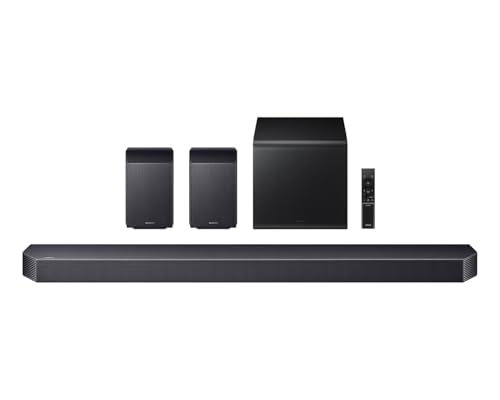
The hw q900h is Samsung’s 2026-model Q-Series soundbar with a wireless subwoofer, and it arrives in a part of the catalogue where Samsung’s naming has trained buyers to be careful: one letter separates model years, one number separates whole tiers, and last year’s Q900F is still on sale beside it. This review sorts out what the HW-Q900H is, what its listing actually confirms, how it differs from the Q900F it succeeds and the Q800H beneath it, and which living rooms its particular combination of bar and wireless subwoofer genuinely suits.
A note on evidence before anything else, because this class of product attracts invented detail. The confirmed facts here come from the manufacturer’s own listing title for the HW-Q900H: a Samsung Q-Series soundbar, sold with a wireless subwoofer, designated a 2026 model. Where this review discusses the Q-Series features the bar belongs to, Q-Symphony pairing with Samsung televisions, wireless Dolby Atmos as the family’s signature capability, and room calibration, it says so as family context, and it flags every place where the specific model’s full specification sheet has not been published or verified. You deserve to know which sentences are facts and which are informed expectations.
What can be judged confidently is the proposition. A flagship-adjacent Q-Series bar with a separate wireless subwoofer is Samsung’s answer to the most common home-theatre request: cinema-scale sound from two boxes, no receiver, no speaker wire, and no rear speakers to place. Whether that answer is worth its tier’s money depends on your room, your television, and your feelings about the rear speakers this system deliberately omits, and those are the questions the following sections take in order.
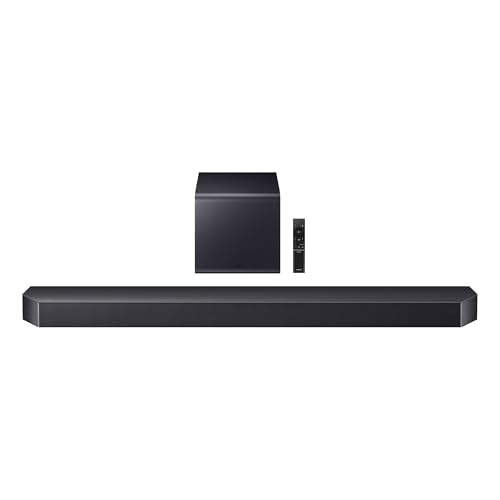
Key takeaways
- The HW-Q900H is confirmed by its listing as a 2026-model Samsung Q-Series soundbar with a wireless subwoofer
- Its closest comparisons are its own family: the 2025 Q900F it succeeds and the Q800H one tier below
- A bar-plus-subwoofer system trades the true rear surround of multi-box systems for radical simplicity of placement
- Samsung television owners gain the most, because Q-Symphony is designed to marry the bar to the TV’s own speakers
- Buy on the confirmed proposition and the room it must fill, not on specification details that listings have not yet published
In this guide
The HW-Q900H and the two alternatives that frame it
A single-product review earns its keep by comparison, so the main subject is followed by the two bars a real buyer will cross-shop it against: last year’s Q900F, which the market will discount as the new model lands, and the Q800H from the same 2026 line, which asks whether the tier below is enough. All three listings are verified; the differences discussed are the ones their model positions support.
- Samsung Q-Series Soundbar HW-Q900H with Wireless Subwoofer (2026 Model) — The subject: 2026 Q-Series bar with wireless subwoofer
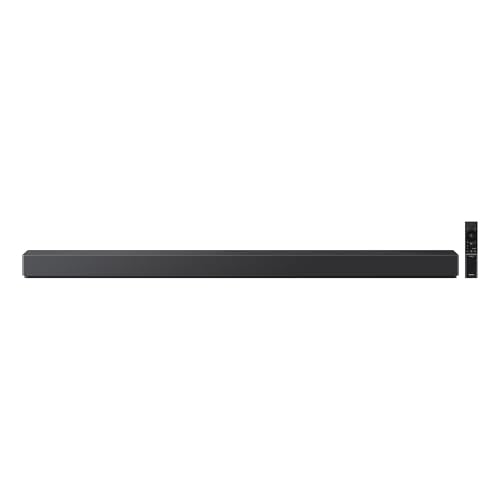
- Samsung Q-Series Soundbar HW-Q900F (2025 Model) — Last year’s 7.1.2 model: the value rival
- Samsung Q-Series Soundbar HW-Q800H with Wireless Subwoofer (2026 Model) — The same-year tier below: is it enough?

Samsung Q-Series Soundbar HW-Q900H with Wireless Subwoofer (2026 Model)
The subject: 2026 Q-Series bar with wireless subwoofer
- System: soundbar with wireless subwoofer
- Series: Samsung Q-Series
- Model year: 2026, per the manufacturer listing
- Form: two-box system, no separate rear speakers in this configuration
Position first, because Samsung’s tiers are a language. The Q900 line sits near the top of the Q-Series, beneath only the Q990 flagship systems that add dedicated rear speakers, and its proposition has been consistent across generations: take the flagship’s bar-and-subwoofer core, with the family’s wireless Dolby Atmos capability and Q-Symphony television pairing as the line’s established features, and sell it to buyers who want the big sound without placing rear speakers around the sofa. The HW-Q900H is the 2026 statement of that proposition.
The two-box form is the point and the limit in a single fact. Two boxes mean a ten-minute installation, a subwoofer that can live wherever the room’s acoustics flatter it, and a clean television wall with no wire runs. Two boxes also mean the surround effect is created from the front, by the bar’s drivers and processing, rather than by speakers physically behind you. Owners who understand that trade before purchase are almost always satisfied; owners who discover it afterwards feel misled by physics. The sections below keep returning to that distinction because it, more than any specification, decides whether this bar is right for a given room.
Strengths
- Flagship-adjacent Q-Series position without rear-speaker placement demands
- Wireless subwoofer gives real low-frequency weight with flexible positioning
- 2026 model year brings the line’s current processing and television pairing
Trade-offs
- Surround is synthesised from the front; no dedicated rear channels in this configuration
- Full detailed specifications were still limited at listing time
- Premium tier pricing invites comparison with discounted previous-year models
Best for: a living room that wants cinema weight from two boxes and a Samsung TV pairing / Not suited for: a dedicated theatre room ready to place rear speakers for true surround

Samsung Q-Series Soundbar HW-Q900F (2025 Model)
Last year’s 7.1.2 model: the value rival
- System: 7.1.2-channel bar with subwoofer, per its listing
- Features listed: Wireless Dolby Atmos, Q-Symphony, Smart Integration
- Model year: 2025
- Role: the discounted predecessor
The Q900F is the comparison that will decide many real purchases, because it is the same proposition one year older: its listing confirms a 7.1.2-channel configuration, wireless Dolby Atmos, and Q-Symphony. When a successor launches, the predecessor’s price falls, and the buyer’s question becomes whether the new model’s year of refinements, in processing, in tuning, in the details Samsung has not yet fully published for the Q900H, is worth the premium over a known quantity at a discount.
There is no universal answer, but there is a reliable method: if the Q900F’s discount is modest, the newer model’s longer software-support runway and current-year refinements argue for the Q900H. If the discount is deep, the Q900F is one of the safest value plays in the category, because its proposition and its features are confirmed rather than promised. Either way, this is the comparison to make in the shop, and a buyer who skips it has not finished shopping.
Strengths
- Confirmed 7.1.2 configuration with the family’s signature features
- Previous-year pricing as the successor lands
- A known quantity with an established owner record
Trade-offs
- One year less of model-year refinements and support runway
- Being succeeded means stock will thin as the season progresses
- Same two-box surround trade-off as its successor
Best for: a value-focused buyer happy to take last year’s flagship-adjacent bar at a discount / Not suited for: buyers who keep equipment longest and value the newest processing
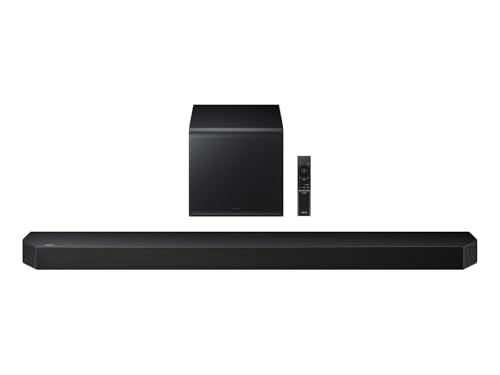
Samsung Q-Series Soundbar HW-Q800H with Wireless Subwoofer (2026 Model)
The same-year tier below: is it enough?
- System: soundbar with wireless subwoofer
- Series: Samsung Q-Series
- Model year: 2026, per the manufacturer listing
- Role: the step-down alternative in the same line
Every tiered range asks the same question, and the Q800H is this range’s version of it: how much of the flagship experience survives the step down? The confirmed facts are its Q-Series membership, its 2026 model year, and its bar-plus-wireless-subwoofer form, the same architecture as its bigger sibling. Historically, Samsung’s Q800 tier has carried the family’s core features with fewer channels and less output than the Q900 tier, and a buyer should verify the current model’s exact channel configuration on its listing before assuming the pattern holds.
The honest way to choose between the Q800H and the Q900H is by room and by listening, not by tier anxiety. A smaller room, a lower listening volume, and a television used mostly for broadcast and streaming will rarely expose the difference between the tiers, and the saving is real money. A large room, a film-heavy diet, and a listener who notices sound will justify the Q900H’s headroom every week. Tiers exist to be matched to rooms, and matching them is the buyer’s actual job.
Strengths
- Same 2026 Q-Series architecture and two-box simplicity for less
- Wireless subwoofer preserves the system’s low-frequency foundation
- The sensible tier for smaller rooms and moderate volumes
Trade-offs
- Historically fewer channels and less headroom than the Q900 tier
- Exact specifications need confirming on the current listing
- Heavy film use in a big room may expose the step down
Best for: smaller living rooms and television-first households in the same model year / Not suited for: large rooms with a film-heavy diet and a listener who plays loud
The three bars in one view
| Model | Year | Confirmed form | Choose it when |
|---|---|---|---|
| HW-Q900H | 2026 | Bar plus wireless subwoofer | You want the current flagship-adjacent proposition |
| HW-Q900F | 2025 | 7.1.2 bar with subwoofer | The predecessor’s discount is deep |
| HW-Q800H | 2026 | Bar plus wireless subwoofer | Your room is smaller and your volumes moderate |
Read the table as a decision tree rather than a ranking. The Q900H and Q900F are the same idea separated by a model year and a price gap that will move all season. The Q800H is a different idea about sufficiency, separated by room size and listening habits. A buyer who knows their room’s dimensions and their household’s volume habits can walk this tree in a minute; a buyer shopping by tier prestige alone will wander it for weeks.
What is confirmed, what is family context, and what is unknown
This section exists because soundbar listings, especially for newly launched models, attract a fog of copied specifications from other regions, other years, and other tiers. For the HW-Q900H, treat as confirmed only what Samsung’s own listing states: Q-Series, a wireless subwoofer in the box, and the 2026 model designation. Treat as family context, highly likely but to be verified on the full specification sheet when it matters to you, the Q-Series’ established features: wireless Dolby Atmos, Q-Symphony pairing with compatible Samsung televisions, and the line’s room-calibration and voice-enhancement processing.
Treat as unknown, whatever forums may claim, the exact channel count, total power figure, driver complement, and connectivity list of this specific model until Samsung publishes them in your market. The Q900F’s listing confirms 7.1.2 for that model, which sets an expectation for its successor and nothing more. This discipline may feel pedantic in a review, but it is the difference between a review and a rumour, and it protects the one decision this page exists to inform: whether to buy this bar, its predecessor, or its smaller sibling, with the money amounts these tiers command.
When the full specifications are published, the numbers worth your attention are few. Channel configuration tells you the system’s architecture. HDMI eARC is the connection that matters for full-quality television audio. A wireless subwoofer’s driver size hints at its low-frequency reach. Beyond those, specification sheets in this category are mostly marketing arithmetic, and the room-based reasoning in the rest of this review will serve you better than any wattage total.
The two-box proposition: what bar plus subwoofer does brilliantly
Start with what this architecture is genuinely great at, because it is a great deal. Dialogue clarity leaps from television speakers to a dedicated centre-focused bar is the single largest sound upgrade most households ever make, and it arrives with the first evening’s news broadcast, not just with films. The wireless subwoofer then adds the physical dimension television speakers cannot fake: the weight under an explosion, the body in a score, the room-filling ease at volumes where a lone bar would strain. Together, bar and subwoofer cover the frequency range and the clarity that constitute most of what people mean by cinema sound at home.
The wireless part of the subwoofer deserves its own appreciation. Bass is the least directional part of sound and the most room-dependent, so the freedom to place the subwoofer where the room flatters it, often a corner for reinforcement or along a wall to tame a boom, rather than where a cable forces it, is an acoustic feature disguised as a convenience. The subwoofer-crawl technique in the how-to section exists because that freedom is real and worth an evening’s experiment.
Simplicity compounds across ownership. Two boxes mean one remote relationship to manage, one firmware story, no receiver’s menus, no speaker wire to run or hide, and a system a household’s least technical member can operate without a briefing. For the living rooms most people actually have, as opposed to the theatre rooms magazines photograph, that operability is not a compromise feature. It is the feature, and the Q900H’s tier exists to deliver it at the highest quality the two-box form allows.
And what it cannot do: the rear-speaker question, honestly
A bar creates surround by projecting and processing: angled drivers bounce height and side information off walls and ceiling, and psychoacoustic processing persuades the ear that sound has a geography. In a cooperative room, rectangular, with reflective surfaces in the right places, the effect can be genuinely enveloping. It remains, however, a simulation authored from the front of the room, and a helicopter that should pass over your shoulder will be suggested rather than placed. Systems with physical rear speakers, Samsung’s own Q990 line among them, do not suggest; they place.
Room shape is the silent variable in every soundbar review ever written. A bar’s reflected effects depend on walls at plausible distances and a ceiling at a plausible height; open-plan spaces that bleed into kitchens, vaulted ceilings, and rooms where the sofa sits in the middle of the floor all tax the simulation. If your room is one of those, calibrate expectations toward the bar’s other virtues, dialogue, weight, music, simplicity, which no room shape can take away, and away from surround spectacle, which your architecture has already voted on.
None of this is an argument against the Q900H; it is an argument for buying it with the right hopes. Households that want the film to feel big and the dialogue to be effortless, in a room that seats the family facing a television, are this system’s delighted natural owners. Households building a dedicated cinema around a projector and rows of seats should spend their surround money on speakers that can be placed where surround speakers belong, and this review would rather lose the sale than the reader’s trust.
Q-Symphony and the Samsung television marriage
Q-Symphony is Samsung’s name for its bars and televisions playing together rather than the bar simply replacing the set’s speakers: on compatible Samsung televisions, the TV’s own drivers join the system under the bar’s direction, widening the soundstage and anchoring dialogue to the screen. It is the strongest argument for brand-matching in this category, and for a household that already owns or is buying a recent Samsung television, it belongs near the top of the Q900H’s case, because no rival brand’s bar can offer that specific integration with that specific screen.
The same logic extends to setup and control. A Samsung bar behind a Samsung television typically means one remote governing volume, the television’s menus recognising and configuring the bar, and eARC handling the audio path without the handshake quirks that occasionally haunt mixed-brand pairings. None of these conveniences is individually dramatic; together they describe a system that disappears into the household’s routines, which, as the two-box section argued, is the actual product being sold at this tier.
Owners of other television brands should read this section as information rather than exclusion. The bar will work over eARC with any modern set, and its core virtues do not depend on the badge across the room. What a non-Samsung owner cannot claim is the Q-Symphony layer, and they should therefore weight the Q900H against rivals on its bar-and-subwoofer merits alone, where it remains competitive but loses its home-field advantage.
Living with it: music, sport, games, and the news at midnight
Films audition a soundbar, but television owns it. The daily verdict on a system like this is delivered by the newsreader’s voice at breakfast, the football commentary under crowd noise on a Saturday, and the drama dialogue at a volume low enough not to wake the house. Bars at this tier carry voice-enhancement and night modes in the family toolkit, and they matter more across a year than any demo scene: dialogue that stays intelligible at low volume is the difference between a system the household loves and one it subtitles.
Music is the second life these systems lead, streamed while cooking or filling a room at a gathering, and a bar-plus-subwoofer at this level is a respectable music system by the standards of rooms that are not dedicated listening rooms. Stereo separation is bounded by the bar’s width, because physics is physics, but tonal balance, bass foundation, and sheer room-filling ease are all present. Households whose music listening is serious and seated should audition with their own recordings, as they would any speaker, and judge the bar as the compromise it honestly is: one system for everything, excellent at the television’s work, good at music’s.
Gaming sits between the two: game worlds reward exactly the bar’s strengths, a wide front stage, weighty effects, and dialogue that survives action, and modern consoles pass their audio over the same eARC path as everything else. Input lag concerns belong to the television’s picture processing rather than the bar’s audio, provided the console connects to the television and the bar takes audio from eARC rather than sitting in the video path. Set it up that way and the Q900H is a gaming upgrade with no asterisks worth printing.
How the Q900 tier got here: a short, useful history
Samsung’s Q-Series naming has been stable enough across recent generations that its tiers have become a shorthand the market understands. The Q990 line carries the flagship systems with dedicated rear speakers. The Q900 line takes the flagship’s front half, bar and subwoofer, as a complete system for rooms that stop there. The Q800 line steps the same architecture down for smaller rooms and budgets. A buyer who learns that three-tier grammar can read any year’s range in a minute, including the year this review covers, where the H suffix marks the 2026 generation as F marked 2025 before it.
That grammar also explains why the Q900H’s most dangerous rival is never another brand. It is the Q900F at a clearance price and the Q990 on promotion, the two directions in which a Q900 buyer’s money wobbles. Rival brands compete for the households Samsung’s ecosystem has not already claimed; within the ecosystem, the contest is internal and decided by the calendar and the discount. This review’s structure, main subject flanked by predecessor and smaller sibling, mirrors the way these systems are actually bought, which is why it refuses to pretend otherwise.
Soundbars and the room’s furniture: the unglamorous variables
Two identical bars in two different living rooms are, measurably, two different systems. Soft furnishings absorb the reflections that surround processing relies on and deaden the top end; hard floors and bare walls do the opposite, sometimes to the point of harshness. Curtains drawn or open change the room between afternoon sport and evening film. None of this is a reason for despair or for acoustic panels in a family living room; it is a reason to run the system’s calibration in the room’s real evening state and to prefer a bar whose tuning you can adjust in broad, friendly strokes, centre level, bass level, a night mode, over one that demands laboratory precision.
Television placement interacts with the bar more than buyers expect. A screen wall-mounted high, in the style that puts its centre above seated eye level, tilts the whole sound picture upward with it when the bar follows the screen. Where the furniture allows, the bar belongs at the height of the listeners’ ears when seated, centred on the screen’s horizontal middle even if that is not the screen’s vertical middle. Dialogue anchoring, the sense that voices come from faces rather than from beneath them, is decided by these few centimetres more than by any processing badge on the box.
The subwoofer has its own furniture politics. It needs a home that is acoustically sensible, reachable for its power socket, and acceptable to everyone who shares the room, and those three requirements negotiate with each other in every household. The wireless design exists to widen that negotiation’s solution space. Use the freedom early, during the return-friendly first week, to test the two or three candidate positions properly, because a subwoofer’s position, once furniture has been arranged around it, tends to become permanent by inertia rather than by merit.
Streaming, formats, and the alphabet on the box
A modern bar lives downstream of streaming services, and the formats that matter are the ones those services and discs actually send. Dolby Atmos is the headline format of this tier and the Q-Series’ signature, delivered by streaming services in a compressed form that any eARC connection carries easily, and by discs and some players in a lossless form that eARC also handles and older optical connections do not. DTS formats matter chiefly to disc collectors, whose libraries may lean on them, and a buyer with shelves of discs should confirm the current model’s format support on its specification sheet, because soundbar makers’ DTS support has varied by year and tier in ways that catch collectors out.
For the majority household, whose diet is streaming, broadcast, and games, the practical format questions end quickly: eARC from the television, the bar decoding what the services send, and everything else is the television’s problem. That simplicity is itself one of the things this tier’s price buys, the absence of a receiver’s format matrix from your life. Buyers migrating from older bars will feel the upgrade less in any single format than in the general vanishing of the small incompatibilities that used to require a drawer of workarounds.
Voice assistants and multiroom audio ecosystems appear in this class as secondary features, present in the family’s toolkit in recent generations. They are worth a line in a comparison if your household already lives inside one ecosystem, and worth ignoring if it does not, because a soundbar’s decade of service will be judged by its sound on ten thousand evenings and by its assistant on perhaps ten. Prioritise in that proportion and the specification sheet falls into its proper place as a supporting document.
What to audition, if you can, and how to judge it fairly
If a shop demo is possible, bring your own material on your phone: a dialogue scene you know by heart, a piece of music you have heard a hundred times, and a bass moment whose weight you can judge. Showroom floors flatter every bar with volume and isolation, so judge comparatively rather than absolutely, the same scene on the Q900H, its predecessor, and the tier below, at matched volumes, listening for dialogue effort rather than spectacle. The bar that lets you follow whispers without reaching for the remote is winning the test that matters.
At home, the return window is the real audition room, and it should be used with the seriousness of a fitting. Set the system up properly, calibrate it, and live the week described in the setup section before deciding. Most returns in this category are not of bad bars but of good bars judged in their first uncalibrated hour against a household’s unexamined hopes. The Q900H, like its siblings, deserves the week; and if after the week the rear-speaker question still nags, believe it, because that nagging is information about your room and your taste that no review can supply.
Ownership over years: updates, support, and the second room
A soundbar at this tier is a five-to-ten-year appliance, and its ownership story is written by software as much as by drivers. Firmware updates arrive through the maker’s app or the television connection, occasionally improving eARC manners and format handling, and a current-year model stands at the front of that support queue, which is the concrete form of the Q900H’s runway advantage over its discounted predecessor. Keep the system connected, let it update, and resist the folk wisdom that updates are to be feared; in this category they are mostly the manufacturer finishing the product.
Plan the system’s second life at purchase time and the economics improve further. A bar of this quality, retired from the main room by some future upgrade, becomes a bedroom or study system of absurd quality, or follows a child to a first flat with a decade of service left. Two-box systems migrate especially well because they ask nothing of the new room but a television and a socket. The households that get the most from flagship-tier bars are the ones that think of them as furniture-grade infrastructure rather than as gadgets, and buy the tier whose sound they can live with for the whole of that long service.
The dialogue problem, and why this tier exists to solve it
Ask households what actually frustrates them about television sound and the answer is rarely a lack of spectacle. It is dialogue: mumbling in modern film mixes, commentary buried under crowd noise, the volume yo-yo between whispered scenes and explosive adverts that sends a hand to the remote every few minutes. Television speakers, thin and firing at walls or downwards, lose this fight structurally. A dedicated bar with a centre-focused design and voice processing wins it by architecture, which is why so many owners describe their soundbar purchase, months later, not as a cinema upgrade but as the end of asking each other what was just said.
Judge any bar in this tier, the Q900H included, first on that duty. The action scenes will take care of themselves; every system here can be loud and heavy. The differentiator is speech at ordinary volumes in ordinary rooms, and the features that serve it, centre level adjustment, voice enhancement, night compression, are the ones to find in the menus during your first week and set with care. A bar that makes the news effortless and the drama intelligible at the volume of conversation has justified its tier to the whole household, including the members who never asked for a soundbar at all.
When the right answer is a different Samsung entirely
A review that cannot name its subject’s betters is a brochure, so here they are plainly. If your room is a dedicated cinema space and your budget reaches, the family’s flagship systems with physical rear speakers will place surround sound in a way no bar-only system can, and the Q900H’s simplicity is then a limitation rather than a virtue. If your room is small and your listening is broadcast television at modest volumes, the Q800H in this review, or even a tier below it, will satisfy you completely and the Q900H’s headroom will spend its life unused. If your television is not a Samsung and never will be, rival bars deserve a hearing on level terms, because the Q-Symphony argument has left the room.
The Q900H’s ground is the wide, populous middle: family living rooms, film-and-television diets, Samsung screens present or planned, and households that want the best sound two boxes can make without a placement project. That middle is not a consolation prize; it is where most of the television-watching world actually lives, and a product that serves it at this level, with the honesty about its limits that this review has tried to model, is a product most of its buyers will keep for a decade.
Setting up a bar-and-subwoofer system properly
Ninety percent of this system’s performance is decided in its first hour. These steps are written for the HW-Q900H’s two-box form and apply to its two alternatives in this review as well.
Place the bar centred, forward, and unobstructed
Centre the bar under the screen, bring it to the front edge of the stand so its upward and side-firing drivers, where fitted, have clear paths to the ceiling and walls, and keep soft furnishings, ornaments, and the television’s own stand legs out of those paths. A bar pushed back into a cabinet cubby is a bar with its surround simulation switched off by furniture. If the bar must live inside an unit, pull it flush with the unit’s front edge and accept the aesthetic compromise as an acoustic necessity.
Connect by HDMI eARC and let the television be the hub
Run one HDMI cable from the television’s eARC socket to the bar, connect your consoles and players to the television, and enable eARC and the television’s external-audio setting in its menus. This arrangement passes full-quality audio, keeps the bar out of the video path, and lets one remote run the household. Optical cables are the fallback for older sets without eARC, serviceable for broadcast television and a compromise for the newest formats, which is a fair summary of optical’s whole career at this point.
Position the subwoofer by ear with the crawl
Place the subwoofer temporarily at your main seat, play a bass-heavy scene, and move around the room’s candidate positions listening for where the bass sounds fullest and most even; that spot is where the subwoofer should live, because acoustics are reciprocal between seat and source. In practice the winner is usually along the front wall or in a front corner, with corner placement adding reinforcement that can tip into boom, which the system’s calibration and a small distance from the walls can then tame.
Run the room calibration and then adjust by hand
If the system offers automatic room calibration, run it with the room arranged as it will be when you watch, curtains and doors in their evening positions, and yourself out of the measurement’s way. Then fine-tune with real material: raise the centre or dialogue emphasis until speech is effortless at your normal volume, set the subwoofer level so bass supports scenes without announcing itself in dialogue, and save the night-mode settings as a separate habit for late viewing rather than a compromise imposed on everything.
Live with it for a week before the final verdict
Sound judgements made in the first hour are hostage to novelty in both directions, the thrill of the new and the strangeness of a presentation different from the television speakers your ears called normal. Watch a week of your ordinary mixture, a film, sport, a drama, the news, and only then adjust levels a final time. Systems at this tier are bought for years of evenings, and the week is the smallest honest sample of those evenings you can take before the settings settle.
Buying and setup mistakes with flagship-tier bars
Paying the new-model premium without checking the predecessor
The Q900F exists, it is confirmed and capable, and its price will move as its successor lands. A buyer who never compares the two has skipped the single most valuable minute of research in this category. Sometimes the new model wins it honestly; sometimes the discount is the story. Either way, the comparison is the diligence, and this review has deliberately kept the predecessor in the frame for exactly that reason.
Expecting rear speakers that the box does not contain
A bar-plus-subwoofer system simulates surround from the front, and no processing tier repeals that geometry. Buyers whose dream is sound physically behind them should buy a system with rear speakers, possibly from the same family one tier up, and place them. The Q900H’s proposition is different and, for its intended rooms, better judged on its own terms than mourned on another system’s.
Burying the bar inside furniture
Upward and side-firing drivers need air and reflection paths; a cubby swallows both and turns a flagship-tier bar into an expensive centre channel. If the furniture cannot change, lower your tier expectations and budget accordingly, because the room and the cabinet, not the bar, will be authoring the sound you hear.
Judging the system on its first evening’s settings
Factory defaults are tuned for a showroom’s noise floor and a demo reel’s dynamics, not for your room or your evenings. A flagship-tier bar uncalibrated is a fraction of itself. Run the calibration, set dialogue and subwoofer levels against real programmes, and only then decide what you bought.
Ignoring the television pairing you already own
Brand integration, Q-Symphony above all, is a real feature with real value, and it belongs to one ecosystem. A Samsung television owner who buys a rival bar for a marginal specification advantage may have traded away the feature they would have used daily. Count the pairing in the comparison, at its honest weight, before the specification sheet talks you out of it.
Final recommendation
The HW-Q900H is the current statement of a well-understood proposition: Samsung’s Q-Series at its flagship-adjacent tier, a bar and a wireless subwoofer, two boxes that turn a television into a cinema-fronted living room in an afternoon. Buy it if your room is a living room, your television is a Samsung or soon will be, your household values effortless dialogue and real bass weight over placed rear surround, and you prefer the newest model’s refinements and support runway to a discount. Take the Q900F instead if its price falls far enough to make last year’s identical idea the smarter money, and take the Q800H if your room and volumes are modest enough that the tier below is not a compromise at all.
What this review will not do is pretend the unpublished specifications away. The proposition is confirmed, the comparisons are real, and the reasoning about rooms and households will still be true when the full specification sheet lands. Judge the bar by those, and the HW-Q900H will either earn its place under your television or lose it to a sibling for reasons you can articulate, which is all any honest review can arrange.
One sentence for the reader who has skimmed to the end, as end-skimmers at this tier usually have a television waiting: if your room is a living room and your screen is a Samsung, put the HW-Q900H at the top of your audition list, check the Q900F’s price before you pay for it, and give whichever bar you bring home one calibrated week before you believe a word anyone, including this review, has said about it.
Frequently asked questions
Is the HW-Q900H a 7.1.2 system like the Q900F?
The Q900F’s own listing confirms 7.1.2 channels for that 2025 model. For the HW-Q900H, Samsung’s listing at the time of this review confirms the Q-Series soundbar and wireless subwoofer and the 2026 model year, without the full channel specification published in the material available here, so this review does not assert a channel count for it. The Q900 line’s established architecture makes a similar configuration the reasonable expectation, and the exact figure should be confirmed on the model’s full specification sheet when it is published in your market, particularly if channel count is a deciding factor for you.
Do I need a Samsung television to use the HW-Q900H?
No. The bar connects to any modern television over HDMI eARC and will deliver its core performance, dialogue clarity, bass weight, and its own processing, regardless of the badge on the screen. What a Samsung television adds is the integration layer: Q-Symphony, which lets compatible sets’ speakers join the system, plus the setup and single-remote conveniences of a matched ecosystem. Owners of other brands should judge the bar on its two-box merits, where it competes fairly, while Samsung owners can legitimately count the pairing as an extra argument in its favour.
Can I add rear speakers to the HW-Q900H later?
Samsung has historically offered wireless rear-speaker kits compatible with parts of its Q-Series range, which many owners use to grow a bar-and-subwoofer system toward true surround over time. Compatibility is model-specific and changes between generations, so for this 2026 model the honest answer is to verify the current rear-kit compatibility on Samsung’s own listing or support pages before counting on the upgrade path in your purchase decision. If rear speakers are a certainty rather than a possibility in your future, consider starting with a system that includes them, such as the family’s flagship tier, where the integration is designed in from the first day.
HW-Q900H or HW-Q900F: which should I buy?
Decide by the size of the price gap on the day you buy, because the two are the same proposition a model year apart. If the Q900F is discounted deeply, it is the value answer, with confirmed specifications including its 7.1.2 configuration and the family’s wireless Atmos and Q-Symphony features. If the gap is narrow, the Q900H’s current-year refinements, whatever Samsung details in its full launch material, and its longer support runway justify the newer model. Either purchase is defensible; the indefensible one is paying the new-model price without ever having looked at the predecessor’s, which is why both are reviewed on this page.
Where should the wireless subwoofer go in a small room?
Start along the front wall, near a corner but not hard into it, and adjust in small steps while playing material you know. Small rooms excite bass unevenly, so a position that sounds boomy at the sofa may be cured by moving the subwoofer a modest distance along the wall or pulling it slightly into the room, and the system’s calibration should be rerun after any significant move. Keep it off shared walls where a neighbour’s evening is the other side of your film’s climax, if your building gives you the choice, and set its level for support rather than spectacle; in a small room, restraint is what makes bass sound expensive.
Is a soundbar at this tier worth it over a receiver and separate speakers?
For the rooms and households this system is designed for, usually yes, on the evidence of total experience rather than peak capability. A receiver and five speakers can out-perform any bar in a dedicated room, at the cost of space, wiring, setup complexity, and a household learning curve. The bar concedes the last measure of surround placement and upgrade flexibility and wins on installation, operation, and domestic harmony. The honest dividing line is the room’s purpose: a living room that sometimes becomes a cinema belongs to the bar; a cinema that occasionally hosts the living room belongs to the separates.
Does the HW-Q900H work for music streaming on its own?
As part of the Q-Series family, bars of this class are built to double as the room’s music system, taking streamed audio from the television’s apps, a phone over the household’s usual wireless routes, or the maker’s own app, with the exact connection menu worth confirming on the model’s published specifications. Judged as a music system, expect the strengths described in this review: real bass foundation from the subwoofer, clear midrange for voices and acoustic material, and room-filling ease, with stereo width bounded by the bar’s physical span. For a household whose music life is streamed and social rather than seated and critical, that is a complete answer; the seated critical listener is the one buyer this review keeps gently redirecting toward separates.
How big a room can the HW-Q900H fill?
Systems of this tier and architecture are designed for the mainstream of living rooms, small to large, at the listening distances televisions impose, roughly two to four metres from the screen. In that envelope, a flagship-adjacent bar and subwoofer have ample headroom for film dynamics at domestic volumes. The limits appear at the extremes: a very large open-plan space with the sofa far from the screen will ask more of the bar’s output and of its reflected surround effect, while a small room asks for restraint in the subwoofer’s level rather than more power. If your room is at either extreme, weight the in-home trial week in this guide heavily, because room interaction at the extremes is the one variable no specification sheet can settle for you.
Should I wait for the full specifications before buying?
If a specific unpublished figure would change your decision, a particular channel count, a format your disc collection depends on, a connection your setup requires, then yes, wait for the sheet, because buying a flagship-tier appliance on an assumption you could have verified is an unforced error. If your decision rests on the proposition, the room fit, and the comparisons this review lays out, the sheet is unlikely to reverse it, and the predecessor’s discount clock is ticking meanwhile. The disciplined middle course is to confirm the two or three specifications your setup genuinely depends on through the maker’s support channels, and let the rest of the alphabet go.
What will I notice first coming from television speakers?
In order, most owners report: dialogue that no longer needs the volume raised and lowered scene by scene; bass that is felt as much as heard, in scores, weather, and the room tone of films; and a soundstage that is plainly wider than the television, so that a door closing off-screen left sounds like it happened in a place rather than in a speaker. Those three impressions arrive on the first evening and are the system’s core value. The surround effects and format badges that dominate the marketing are, in lived experience, the garnish on a meal made of clarity and weight, and it is worth buying the meal with your eyes open about which part will feed you daily.