Wood reacts to changes in humidity and temperature, so a wooden chess set lasts longest when it is kept in a steady, moderate room, away from sunlight and heat, with each piece padded in a box. No storage method can promise to stop every crack, but these habits lower the chances.

Why Wood Warps and Cracks
Wood takes in moisture from the air and releases it again. When it dries too quickly, the outer layer shrinks faster than the inside, and that can lead to cracks. Swelling and shrinking over many seasons can also loosen joints or change shapes slightly. The goal of good storage is to keep conditions as even as possible.
In this guide
Choosing the Right Place
- Stable room. Pick a living space with a regular temperature, not an attic, garage or basement.
- Away from heat. Keep the set clear of radiators, heating vents, fireplaces and sunny windowsills.
- Away from damp. Avoid places near outside walls, bathrooms or leaky pipes.
- Out of direct sun. Light can fade finishes and dry the surface.
Many makers suggest a moderate humidity range, but confirm the figure on the maker’s care notes for your set.
Packing the Pieces
- Wipe each piece with a dry soft cloth to remove oils and dust.
- Check that all pieces are fully dry, and do not use water to clean unfinished wood.
- Wrap tall pieces such as kings and queens in soft cloth, tissue or foam. Leave pawns less padded if the box has slots.
- Place pieces in a lined box with compartments, or in a felt-lined case so they do not knock together.
- Do not pack tightly, because wood needs a little room to expand.
- Store the box flat or upright as designed, with nothing heavy on top.
Storing the Board
| Do | Avoid |
|---|---|
| Store flat on a shelf | Leaning at an angle for months |
| Keep in a cloth cover or box | Plastic wrap that traps moisture |
| Keep the same room as the pieces | Moving between very hot and cold rooms |
Everyday Care
- Handle pieces by the body, not the thin top or crown.
- Rotate which pieces you use most to even out wear.
- Apply a light wax or oil now and then if the finish allows, following the maker’s advice.
- Do not leave a set in a car on hot or cold days.
How Wood Type and Finish Change the Risk
Not all wooden sets behave alike. Dense, tightly grained woods usually move less than softer or open-grained ones, but every species reacts to moisture to some degree. Pieces turned from a single block can crack along the grain if conditions swing sharply, while pieces made from glued sections can show joint lines if the glue weakens. Check the maker’s description to learn which wood your set uses and whether the pieces are solid or joined.
Finish plays a part as well. A sealed finish such as lacquer or varnish slows the exchange of moisture with the air, which can help, but it does not make wood immune. Oiled or waxed pieces are more open and can respond faster to the room. Unfinished pieces take up moisture most easily, so they benefit from especially steady conditions. Whatever the finish, a crack in the coating can let moisture in unevenly.
- Look for the care instructions that came with the set, and keep them with the box.
- Ask the seller about the wood and finish if the listing does not say.
- Be gentle with end grain, such as the tops of pawns, where cracks often start.
- Treat antique or inherited sets as more delicate than new ones.
Knowing what you have lets you choose how cautious to be.
Watching the Seasons and the Room
Wood is most at risk when conditions change quickly. In many places the air is dry in winter when heating runs and damp in summer or in wet seasons. These swings are slow, but they add up. The most helpful habit is to notice the conditions in the room where your set lives and avoid sudden changes, such as moving the set from a heated room to a cold one.
A simple humidity meter, available from general household shops, can show whether the room is very dry or very damp. Check the maker’s guidance for a comfortable range for your set, since the ideal differs. In dry spells, avoid placing the set near heaters, and consider a method of gently raising room humidity if your home is very dry. In damp seasons, improve ventilation and keep the set away from outside walls.
- Move the set away from windows during strong sun or cold snaps.
- Check the box after periods of heavy rain or heating changes.
- Avoid placing the set directly on a cold floor or against a damp wall.
- Do not use strong dehumidifying or humidifying methods near the box without checking the maker’s advice.
Small, steady adjustments are safer than dramatic ones.
Displaying Versus Boxing a Set
Many people like to leave a wooden set out on a table or shelf. This can be fine in a stable room, but display brings extra exposure to light, dust and handling. If you leave the set on show, choose a spot out of direct sun, away from heating and drafts, and dust the pieces gently with a dry soft brush or cloth. Rotate the set now and then, so the same side does not take all the light.
Boxing a set protects it from dust and knocks, and it keeps conditions around the pieces more even. A box can also hold humidity, so make sure the pieces are dry and the box is not stored in a damp place. Consider a display case with a lid or glass front if you want to see the pieces while protecting them. Check that the case does not trap heat from sunlight.
- Use soft cloth under the pieces on a display shelf to avoid scratches.
- Avoid placing a lamp close to the pieces, as it warms the surface.
- Keep display sets out of reach of children and pets.
- Switch between display and boxed storage with care if your room changes by season.
Choose what suits how often you play and how stable your room is.
Moving and Travelling With Wooden Pieces
Travel exposes a set to the sudden changes that wood dislikes. A car in summer can become very hot and in winter very cold, and a wooden set left inside may suffer. Carry the set with you in the cabin of the vehicle where the temperature is more moderate, and avoid leaving it behind in a parked car.
When you arrive somewhere with a different climate, let the box adjust. Keep it closed for a while in the new room before unpacking, so the pieces warm or cool gradually. Use a firm case with padding around each piece, and do not pack so tightly that wood has no room to move. When flying, check the carrier’s rules for fragile items and whether a hand-carried set is allowed.
- Wrap each piece separately, with extra cover on tall and thin parts.
- Keep the board flat and protected between rigid sheets.
- Avoid sealed plastic bags for long trips.
- Bring a soft cloth to wipe the pieces after a journey.
Careful handling in transit prevents much of the damage that surprises owners later.
Inspecting Early Signs and Seeking Repair
Catching a problem early makes repair easier. When you take the set out, look at each piece in good light. Watch for fine lines along the grain, rough patches, changes in the finish, loose bases, or pieces that no longer stand level. A set that sticks in its box can signal swelling, while a piece that rattles in a socket can signal shrinkage.
For small cracks, avoid forcing glue or filler into the gap yourself unless the maker or a restorer recommends it. Wrong products can stain or make a later repair harder. Take clear photographs and describe the problem to a woodworking or restoration professional. For valuable or sentimental sets, a specialist can advise on safe treatment and the right products for your finish. Replacement pieces or parts may be available from the maker or a chess supplier.
- Keep a log of when you inspected the set and what you found.
- Remove a damaged piece from play until it is fixed, to avoid further harm.
- Do not sand or refinish old sets without advice.
- Store spare felt and small parts in a labelled bag with the set.
With regular checks and calm, steady care, a wooden set can stay in good condition for a long time.
The Science of Moisture in Wood, Explained Simply
Wood is made of tiny cells that take in and release water vapor from the air. When the air is humid, wood absorbs moisture and swells. When the air is dry, wood loses moisture and shrinks. This movement happens mostly across the grain, not along it, which is why a board can warp or a round piece can become slightly oval. A single small change in a day is usually harmless, but repeated, rapid or extreme swings put stress on the wood and the finish, and over time they can cause cracks, loosened joints and lifting veneers.
Because of this, the goal of storage is not to seal the wood away from the air entirely, which is almost impossible, but to keep its surroundings steady. A calm, moderate room with gentle changes treats a chess set far better than a place that swings between damp and dry, hot and cold. If you think of humidity changes as slow breathing, you will see why gradual conditions are healthier than sudden ones.
Warning Signs to Watch For
Catching problems early makes repairs easier. Look for pieces that no longer sit flat, bases that rock on a table, hairline cracks along the grain, a board that rises at the edges, or squares that lift at the corners. A white haze on a finish can signal trapped moisture, and a sticky surface can mean the finish is softening in heat. Pay attention to a musty smell, which suggests dampness, and to small holes or fine dust, which may indicate insects.
- Check pieces and the board every few months.
- Gently press on corners and edges to feel for loose areas.
- Look at the board from the side in good light to spot bowing.
- Inspect felt pads for lifting or damp patches.
Choosing Storage Containers Carefully
The container matters as much as the room. A wooden box with a soft lining protects pieces from knocks and keeps dust away. Avoid sealing wood in airtight plastic for long periods, since trapped moisture can cause problems if the wood was slightly damp when packed. Choose breathable materials such as cloth bags or padded compartments, and give each piece its own space so they do not rub together. If you must use plastic, make sure the wood is dry and the room is stable, and check regularly.
| Storage option | Advantage | Caution |
|---|---|---|
| Lined wooden box | Breathable and protective | Make sure lining is clean and dry |
| Cloth bag per piece | Prevents scratches | Needs a rigid outer box for protection |
| Foam-lined case | Good shock protection | Some foams can trap moisture or react with finishes |
| Open display shelf | Easy to enjoy | Exposes pieces to light, dust and humidity swings |
| Airtight plastic box | Keeps dust out | Can trap moisture; use sparingly |
Light, Heat and Where Not to Put the Set
Direct sunlight fades colors, dries out finishes and heats wood unevenly, so keep sets away from windows. Radiators, fireplaces, heating vents and hot appliances create local dry heat that can crack wood quickly. Attics, basements and garages usually have swinging temperatures and humidity, making them poor choices. Exterior walls can also be cold or damp. The best place is usually an interior room with moderate temperature, such as a living room shelf or a bedroom cupboard away from heating sources.
Handling and Cleaning the Right Way
Clean hands protect wood. Oils and moisture from skin can mark finishes over time. Handle pieces by their bases, and place them gently. For cleaning, use a soft dry cloth to remove dust. If a damp cloth is necessary, wring it almost dry and dry the surface promptly. Avoid strong household cleaners, which can damage finishes. If you want to polish, use products suitable for the specific finish and follow the instructions, testing on a hidden area first.
Travel and Seasonal Moves
When you carry a set to a tournament or a friend’s house, pack it so the pieces cannot knock into each other, and keep it out of hot cars and cold trunks. Allow the set to adjust gradually when it enters a room with a different temperature. If you move house, wrap each piece in soft paper or cloth, and protect the board with padding on both faces. Unpack soon after arrival and let the set rest in its new room before heavy use.
A Simple Annual Care Routine
- Dust all pieces and the board with a soft cloth.
- Inspect for cracks, loose felt, warping or finish damage.
- Check the storage box and lining for dampness or insects.
- Rotate which pieces sit in which compartment to spread wear.
- Ask a qualified restorer for advice if you find a problem you cannot fix.
A little attention goes a long way. Wooden sets can last for generations if they are kept in steady conditions and handled with care.
Using Humidity Tools Sensibly
A small hygrometer, a low-cost device that shows humidity, tells you what your room is really like. Place one near the set and watch it over a few weeks. If readings swing widely, consider a room humidifier in dry winters or a dehumidifier in damp summers, and follow the instructions of the product maker. Moderate, steady conditions matter more than hitting a specific number, and many wood specialists suggest aiming for a comfortable middle range rather than extremes. Check guidance from a restorer or the set’s maker for the particular wood and finish.
Small silica packets can help in closed boxes, but they absorb only limited moisture and need to be replaced or dried according to their instructions. Do not rely on them to correct a damp room, and keep them away from direct contact with the wood.
Repairing Minor Problems Safely
A small loose felt pad can be glued back with a suitable adhesive, but test it on a spare area first, and keep glue away from the visible finish. Hairline cracks may stabilize once humidity steadies, though they can also spread. Do not force a warped board flat, because pressure can crack it. For antique, valuable or sentimental sets, ask a professional restorer rather than attempting repairs yourself. Good advice early prevents costly damage later.
Displaying a Set While Protecting It
Many people enjoy leaving a beautiful set on display. If you do, choose a spot away from windows and heat, use a table that does not get knocked, and cover the set with a breathable cloth when it is not in use. Rotate the position of the board occasionally, so light does not fade only one side. Dust regularly and keep drinks away from the playing area. A displayed set that is also played gently will stay in better condition than one never touched, as long as the room remains steady.
Extra Care for Weighted Pieces and Felt
Many sets have bases filled with weights and covered with felt or leather. These parts react to moisture differently from the wood around them, and glue can weaken in humid or hot conditions. Check the underside of pieces from time to time. If felt peels, reattach it promptly, since exposed weights or glue can scratch the board. Store pieces upright where possible so the felt does not take pressure, and avoid stacking heavy items on the case.
Insurance, Records and Provenance
For valuable or antique sets, keep records. Photograph the set from several angles, note any marks, makers’ stamps or repairs, and store the images with receipts and any paperwork. If the set is worth a significant amount, speak to an insurer about suitable cover. These simple steps protect your investment and make future restoration or resale easier. Update the photographs every few years so you have a record of the set’s condition over time, which also helps you notice slow changes that are hard to see from day to day. Keep the pictures in a folder named after the set, and add a short note about where it is stored.


Products Worth a Look
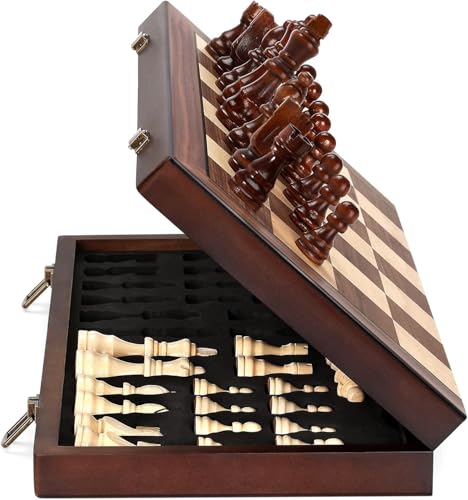
As an Amazon Associate, Reviews Took earns from qualifying purchases. These picks come from our guide: 8 Best Folding Wooden Chess Sets for Adults and Kids (2026).
-
Magnetic 15-inch Wooden Chess Set (Portable Folding)
 Rinten Magnetic 15" Wooden Chess Set
-
17-inch Large Folding Wooden Chess Set (Weighted Acrylic Pieces)
 Metal Chess Set for Adults
-
Magnetic Wooden Chess Set 17-inch
 17" Magnetic Wooden Chess Set for Adults Kids
Building a Storage Routine That Fits How You Actually Play
Good storage is not a single perfect box or a single perfect room. It is a routine that matches how often the set comes out, who handles it, and what your home is like across the year. A set played every evening faces different risks from a set played once a month, and a set kept in a small flat faces different pressures from one kept in a house with a spare room. Thinking through your own pattern first makes every other choice easier, because you stop copying advice meant for a collector with a cabinet and start building habits you will actually keep.
Start by noticing the last few times the set was used. Where did it sit between games? How long did packing away take, and did anyone skip it because it felt fiddly? If packing away is slow, pieces get left out on the board, gathered into a loose bag, or balanced on a shelf, and that is where most everyday damage happens. A simpler routine, even if it is slightly less elaborate, protects a set better than an ideal routine that nobody follows on a tired evening. Shorten the path between finished game and safe storage: keep the box near the table where you play, keep a soft cloth inside the lid, and make the order of pieces in the compartments obvious so a child or a guest can help without guessing.
Frequency also changes what to check. A set in daily use needs its felt, bases and board surface checked for grit and wear, because dust carried in on hands and trapped under a base can scratch a board over many games. A set stored for long stretches needs its box, lining and room checked for damp, insects and slow changes in shape. Neither routine is harder; they simply look for different things. Writing your routine on a small card kept inside the box helps everyone in the household follow the same steps, and it helps you remember what you decided after a long break from playing.
Preparing a Set for a Long Break
There are times when a set will not be played for months: a house move is planned, a room is being decorated, a player is away, or the set is being kept for a child to grow into. Preparing for a long break deserves more care than ordinary overnight storage, because small problems left unseen can develop quietly. Work through the set piece by piece on a clean, dry table in good light, and treat the session as an inspection as much as a packing exercise.
Clean each piece with a soft, dry cloth, paying attention to crevices around collars, crowns and carved details where dust collects. Check that no piece feels damp, sticky or rough, and set aside any piece that needs advice before it is packed away with the others. Look at the undersides, where felt can lift and expose a rough edge that would scratch the board or the lining. Note anything you find, even if it seems minor, because a written note inside the box tells you what to look at first when the set comes out again.
Pack with a little more separation than usual. Tall pieces benefit from individual cloth wraps, and pieces with thin or projecting details benefit from padding that stops them rolling into a neighbour. Do not compress the lining to fit one more item in, and do not add household items to the same box to save space. Close the box, label it clearly with the contents and the date, and store it where you have already decided conditions are steadiest. If you can, plan one brief check partway through the break, not to unpack everything, but to open the lid, look for any smell of damp, feel whether the lining is dry, and confirm the room has not changed because of building work, a new heater or a leak elsewhere in the home.
Short Storage Between Games: Getting the Small Habits Right
Most wooden sets spend most of their lives in short storage, the hours or days between games, and small habits in that window matter more than occasional deep care. The commonest mistake is leaving pieces gathered in the centre of the board under a loose cover, where they knock together whenever the table is bumped. The second commonest is sweeping pieces quickly into a box without compartments, so carved details rub for weeks. Both feel harmless in the moment and both leave marks that build up.
A better short-storage habit takes only a little longer. Return each piece to its own compartment or wrap, stand pieces upright rather than lying them on delicate details, and keep captured or spare pieces in the same box rather than in a drawer elsewhere. Keep the board with the pieces, in the same room, so the two parts share the same conditions and neither is forgotten in a colder or damper place. If the board folds, check that nothing is trapped in the fold before closing it, since a stray pawn or a gritty edge caught in a hinge can dent the playing surface.
Think about hands, too. After a game played with food or drinks nearby, hands carry moisture and grease even when they look clean. A quick wipe of each piece as it goes away, using the cloth kept in the box, prevents that film building into a dull or sticky finish over time. Teach younger players to lift rather than slide pieces when clearing the board, because sliding drags grit under bases across the squares. These are tiny actions, but repeated hundreds of times they are the difference between a set that ages gracefully and one that looks tired within a few years.
How Different Boards Need Different Storage
Articles about chess storage often talk about pieces and treat the board as an afterthought, yet boards warp, lift and fade in their own ways, and the right storage depends on how the board is made. A solid board is a single expanse of wood that moves as one piece; it needs flat support across its whole underside and suffers most when stored leaning, because its own weight encourages a bow over time. A veneered board has a thin decorative layer over a core, so its weak points are the edges and corners, where the layer can lift if it dries out, gets knocked or takes in moisture unevenly. A folding board adds a hinge, and the hinge line is where dust, grit and strain collect.
For a solid board, store it flat on a shelf that supports it fully, not balanced across books or boxes that leave the middle unsupported. For a veneered board, protect the edges first: keep it in a cover or box that stops corners being chipped in a cupboard, and avoid sliding it in and out of a tight space where the edges scrape. For a folding board, store it closed only when it is clean and dry, open it fully flat when you play rather than leaving it half raised, and check the hinge area for trapped grit before closing. In all three cases, keep the board out of plastic wrapping for long periods, keep it in the same steady room as the pieces, and lift it with two hands from underneath rather than carrying it by one edge.
Inlaid boards, where different woods form the squares, deserve a mention of their own. Each wood in the pattern moves at its own rate, so sharp swings in humidity can leave one square sitting very slightly proud of its neighbour. You may feel a faint ridge with a fingertip long before you can see it. That is a sign to steady the room conditions and seek advice if it grows, not a sign to sand the surface flat yourself, which can cut through a thin inlay and spoil the pattern permanently.
Piece Construction: Why Some Pieces Cope Better Than Others
Two sets that look similar on a shelf can behave very differently in storage because of how the pieces are made. Some pieces are turned from a single piece of wood, some are built from joined sections, some are hollowed and weighted, and some have carved details added after turning. Each method has strengths, and each has a place where trouble tends to start.
Single-piece turning keeps the grain running in one direction, which looks beautiful, but a crack, when it comes, often follows that grain from base to crown. Joined pieces can be more stable in the body, yet the joint itself is the point to watch if conditions swing or the glue ages. Weighted pieces feel reassuring in the hand, but the weight inside and the felt or leather covering the base form a small system of their own: if moisture reaches the covering, it can loosen, and a loose covering can trap grit against the board. Carved knights, which are often the most detailed and most loved piece in a set, have thin ears, manes and muzzles that chip far more easily than the smooth body of a pawn, so they deserve the softest compartment and the most careful wrap.
None of this should put you off any construction. It simply tells you where to look during inspections and how to arrange a box. Put the most delicate pieces where they will not bear weight, keep the heaviest pieces from resting against the thinnest details, and when you rotate pieces in their compartments to spread wear, make sure the new arrangement still respects those differences.
Teaching Everyone in the Household the Same Care Rules
A set is rarely handled by one person alone. Partners, children, guests and cleaners may all move it, dust around it or tidy it away, often with the best intentions and no idea that wood dislikes heat, damp and rough handling. Many chips and cracks are not accidents during play at all; they happen during tidying, when a set is carried in one hand, stacked under books, or moved to a sunny spot to clear a table.
The fix is communication, kept light and practical. Agree where the set lives and where it never goes, and make that place easy to use so nobody is tempted to improvise. Show anyone who plays how to lift a piece by its body, how the box compartments are arranged, and why the set should not be left on a radiator cover, a windowsill or the floor. For children, turn care into part of the game itself: counting pieces back into the box, naming them as they go away, and being the person trusted to close the lid are rituals that build both attention and respect for the set. For guests, a gentle word before the game is kinder than a warning after a piece has been knocked off the table.
If the set is valuable or fragile, it is reasonable to keep a second, sturdier set for casual or outdoor play and reserve the wooden set for calmer games. That is not preciousness; it is matching the tool to the occasion, and it lets everyone relax, which usually leads to better care of both sets.
Common Storage Mistakes, Worked Through One by One
It helps to name the mistakes that cause the most harm, because most of them feel sensible until you understand what the wood is experiencing. The first is storing a set in the room with the most spare space rather than the steadiest conditions. Spare rooms, lofts and garages are spare for a reason, and their conditions often swing the most. The second is sealing a set away immediately after it has been in a damp or cold place, trapping the very moisture you want it to lose gradually. Let it settle open in a steady room first. The third is using scented products, moth treatments or cleaning sprays inside the box without checking the maker guidance; residues can mark finishes and linger on felt.
The fourth mistake is stacking. A chess box at the bottom of a pile of board games slowly takes weight it was not designed for, and lids bow, hinges strain and pieces press into their lining. Give the box its own space, or at least a place on top of a stack rather than underneath one. The fifth is forgetting the set after a change in the home: a new bathroom fitted next door, a tumble dryer moved into the same cupboard area, a window that no longer closes properly. The room you chose may stop being steady without anything about the set itself changing, which is why a quick seasonal check of the storage place, not just the pieces, is worth doing.
The sixth mistake is over-cleaning. Repeated polishing, oiling or waxing beyond what the maker recommends can build up layers that dull detail, attract dust and react unpredictably with the original finish. Gentle dusting and patience do more good than frequent products. If you are unsure whether a product suits your finish, the safest choice is to use nothing until you have advice specific to that set.
What to Do After Accidents and Bad Conditions
Accidents happen even in careful homes. A drink is spilled near the board, a set is left in a cold car overnight, a pipe leaks in the room above the cupboard where the box lives. The first hours matter, but calm, gradual responses are safer than dramatic rescue attempts. Panic leads people to place wet wood beside a heater, force a swollen box open, or wipe a damaged finish with whatever cleaner is under the sink, and those reactions often cause the lasting damage.
If pieces get wet on the surface, blot them gently with a soft, dry cloth and let them air in a steady room, standing upright and separated, until they feel dry throughout. Do not apply heat, do not leave them in strong sun to dry faster, and do not pack them away while any doubt remains. If a set has been very cold, bring it indoors and leave the box closed while it returns slowly to room temperature, so moisture from warm air does not condense on cold wood. If you suspect water has reached inside the box or the lining, remove the pieces to a dry surface, let the box and lining dry open in moving air, and only reuse them when they are fully dry and free of any musty smell.
After the set has settled, inspect it as you would at a routine check, and photograph anything that has changed. Some effects, such as a slight tightening or loosening of a joint, settle as conditions steady. Others, such as lifting veneer, a spreading crack or a mould spot on felt, need prompt advice from the maker or a restorer. Keeping a short written record of what happened and when helps that conversation, because the right advice depends on how long the wood was wet, cold or hot.
A Room-by-Room Guide to Choosing the Storage Spot
Walking through a typical home with a chess set in mind makes the choice of spot concrete. The living room is often the best candidate: it is heated steadily when occupied, rarely damp, and close to where games happen, so the set is neither forgotten nor carried far. A shelf or cupboard there, away from the fireplace, radiator and the sunniest window, suits most sets well. The main bedroom can be equally steady, provided the set is not stored against an outside wall or beside an en-suite door where steam escapes after showers.
A spare bedroom needs a closer look. If it is heated only when guests come, its temperature and humidity may drift far more than a room in daily use, and a set stored there through a cold, empty winter may fare worse than one kept in a busier room. A hallway cupboard can work if it is dry and not opened constantly to cold outside air, but avoid any cupboard that also holds damp coats, shoes or cleaning chemicals. A home office is often steady and calm, though check for heat from equipment and for sun through a window that falls on the same desk all afternoon.
Places to rule out in most homes are consistent: the bathroom and any room with regular steam, the kitchen near a cooker or kettle where heat and grease rise, a conservatory that heats and cools with the weather, and any unheated outbuilding. If you have no obviously good room, choose the least bad option deliberately, improve it where you can by moving the box away from the specific heat or damp source in that room, and check the set more often to compensate.
Keeping Board and Pieces Together as a Matched Set
It sounds obvious, yet many sets become separated over the years: the board lives in one cupboard, the pieces in a box somewhere else, the spare queen in a drawer, and the instructions in a folder nobody can find. Separation is a storage risk in itself, because the parts experience different rooms and different conditions, and because a borrowed board or a substitute piece used in the meantime may not fit properly and can mark the originals when they are reunited.
Keep everything that belongs to the set in one defined place: board, pieces, spare pieces, the cloth you clean it with, and the maker notes or care card. If the original box does not hold the board, use a shelf or cupboard section that holds both, and resist using that space for unrelated items that force the set to be moved around. When you lend the set, lend it whole and ask for it back whole, and when you move house, pack it as one labelled unit rather than splitting it across boxes for space. Future you, and anyone who inherits the set, will be grateful that everything arrived together, complete and in matching condition.
Extra Questions Owners Often Ask
How often should I open a stored set just to check it?
For a set in regular use, your normal games are the check. For a set stored for a long break, a brief look every few months is a sensible rhythm, and an extra look after any leak, building work or long spell of extreme weather in the home. Keep the check gentle and short: open the box in the room where it lives, look and smell, feel the lining, and close it again without moving the set to a different climate for the inspection itself.
Is it better to store pieces standing up or lying down?
Follow the design of your box. Compartments made for standing pieces keep weight on the base, which is the strongest part, and protect carved tops. Trays made for lying pieces usually cradle the body and stop rolling. The harm comes from improvising against the design: lying tall pieces loose so they roll, or forcing standing pieces into a shallow box so the lid presses on their crowns. If you change boxes, choose one whose layout matches how the pieces will rest, rather than the one that merely looks smartest.
Should I keep the cardboard packaging the set arrived in?
Original packaging can be useful for a house move or for posting the set for repair, and makers design it to protect the pieces in transit. It is less suitable as permanent storage if it is flimsy, traps the pieces tightly, or has become damp or dusty in a loft. A common compromise is to store the set day to day in its proper box and keep the outer packaging, flattened or nested, somewhere dry in case it is needed. If space forces a choice, keep the storage that gives the steadiest, best-padded home for the pieces themselves.
Can I store two wooden sets together in one large box?
You can, but only if each piece still has its own padded space and the two sets cannot knock together. In practice, mixing sets invites confusion, mismatched pieces being packed into the wrong set, and heavier pieces resting against lighter ones. Separate boxes, clearly labelled, are simpler and safer, and they make counting each set complete much quicker after a game.
What is the kindest way to store a set a child has outgrown but may want later?
Prepare it as you would for a long break: clean, inspected, individually wrapped where it is delicate, complete with its board and notes, and labelled with whose it is and when it was packed. Store it in a steady room rather than a loft, and mention its existence from time to time, because sets forgotten in poor conditions for many years are the ones most often found cracked. A set kept well needs only a gentle dust and a check of its felt to return to play, even after a long pause.
FAQ
Should I use silica packs?
They can help in damp places, but wood should not be dried out too far. Use them lightly and check the maker’s advice.
Can a crack be repaired?
Small cracks can sometimes be filled or glued, but a restorer can advise on valuable sets.
Should I put the set in the fridge or a cool cellar for storage?
No. Cold, damp spaces create the swings and moisture that cause trouble. A steady, moderate indoor room is better.
Is it safe to use furniture polish on wooden pieces?
Not unless the maker recommends it. Some polishes leave residue or damage the finish, so follow the care notes for your set.
Why do my pieces feel rough after winter?
Dry indoor air can pull moisture from the surface and lift the grain. Moving the set away from heat and checking the maker's finishing advice may help.
Can I store the pieces in cotton bags?
Yes, breathable cotton or felt pouches are good, provided the pieces are dry and separated from hard objects.
Do cedar blocks or lavender help?
They are sometimes used to deter pests, but they can leave oils or smells. Ask the maker before placing them near finished pieces.
How do I move a set between a cold car and a warm house?
Keep it closed in its box for a while, so it warms gradually. Avoid unpacking right away and leaving it near a heater.
What should I do about a board that has started to bow?
Lay it flat in a stable room with nothing heavy on top, and check the maker's advice. Persistent warping may need a restorer.
The Short Version
Keep your set in a steady room, away from heat, sun and damp. Wrap the pieces, give them a little space in a lined box and keep the board flat.