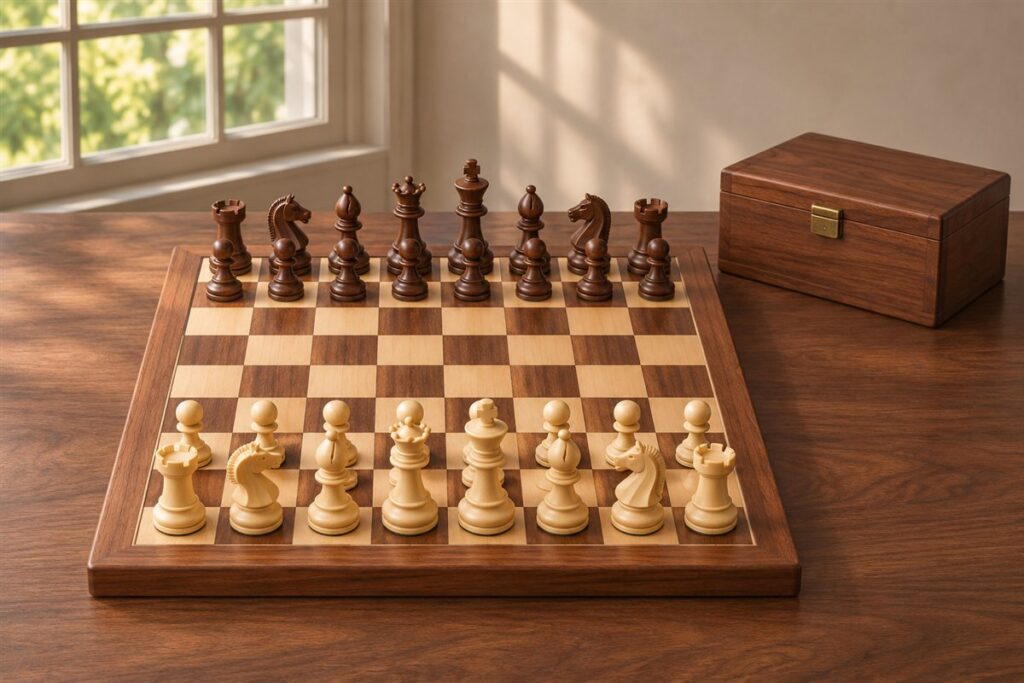
You can refinish a scratched wooden chess board by cleaning it, lightly sanding the damaged spots, filling deeper marks and applying a thin protective finish. Always try each product on a hidden area first, because boards differ in wood type, glue and existing coatings. We have not worked on every board type, so these steps are general guidance.
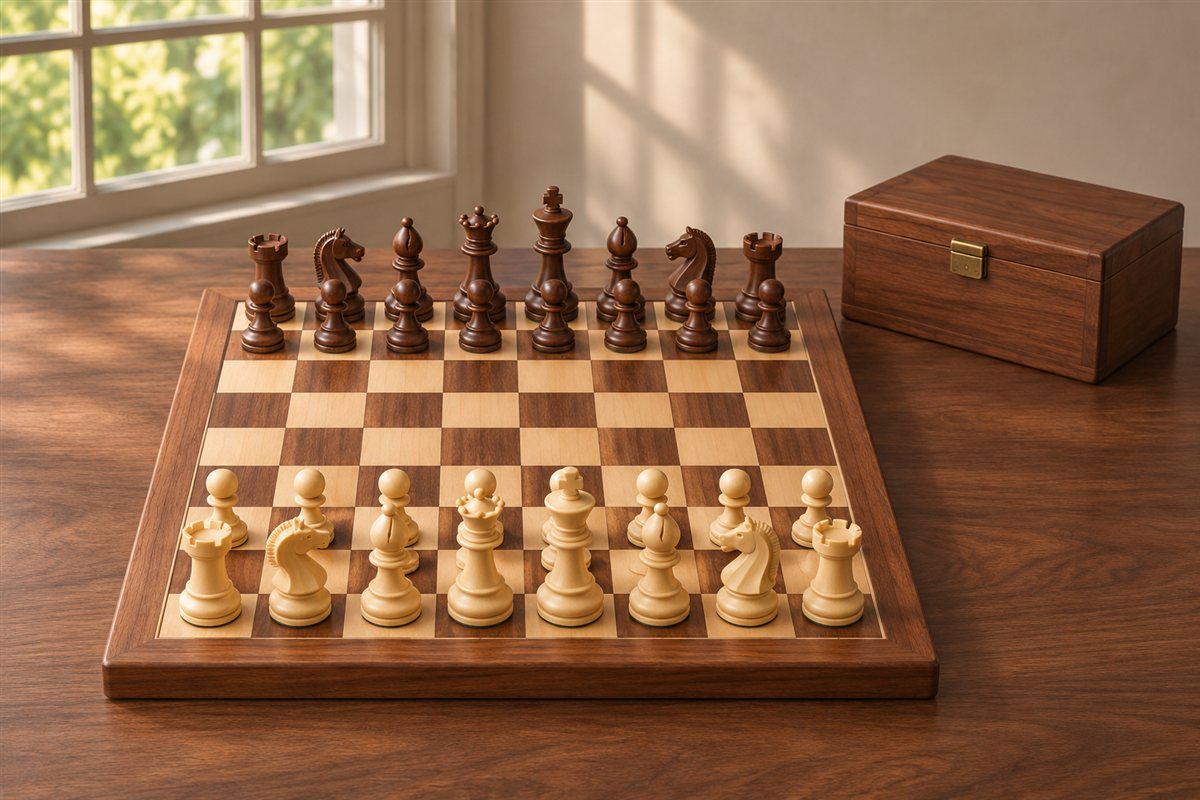
Check the Board First
Look closely at the surface. Light scratches in the finish are often easy to hide, while deep gouges, lifted veneer or inlaid squares need more care. If the squares are thin inlay or the board is old or valuable, consider asking a furniture restorer.
- Run a fingernail across the scratch. If it catches, the mark is deeper than the finish.
- Check whether the board has a glossy coat or a soft oil finish, since each needs a different approach.
- Find a small area on the back or edge for testing products.
What You Need
- A soft cloth and mild soap diluted in water
- Fine sandpaper in grits ranging from roughly 220 to 400
- A sanding block or a flat piece of cork
- Wood filler or wax filler sticks in a matching tone
- A finish such as wipe-on oil, wax or clear varnish
- Masking tape and clean lint-free rags
Steps
- Clean. Wipe the board with a barely damp cloth and dry it right away. Do not soak wood.
- Tape. Protect any border or trim you do not want to sand.
- Sand lightly. Move with the grain, using the finer grit and gentle pressure. Stop when the scratch fades. Over-sanding can wear through thin squares.
- Fill deep marks. Press in a filler stick or wood filler, level it, and let it set as the label states.
- Wipe off dust. Use a tack cloth or a dry rag.
- Apply finish. Put on a thin coat, wipe off any extra, and let it dry. Add a second thin coat if needed.
- Buff. After drying, rub with a soft cloth for an even sheen.
Work in a ventilated room and follow the directions on the product. Keep finish-soaked rags flat to dry, as the label advises.
Keeping the Board Looking Good
- Use felt on the bases of pieces so they slide without scraping.
- Keep the board away from direct sun and radiators, since heat dries and cracks wood.
- Wipe with a dry cloth after games.
- Store flat, not under heavy items.
Identifying the Finish and the Wood
The right repair depends on what is on the board now. Using the wrong product can leave cloudy patches or make a scratch more visible, so spend a few minutes identifying what you have before you reach for sandpaper.
- Look at the sheen. A deep gloss that looks like a hard film suggests varnish, lacquer or a similar coating. A soft, natural glow without a thick film suggests an oil or wax finish.
- Do a water-drop test on a hidden area. If a drop beads and sits on the surface, a film finish is probably present. If it soaks in or darkens the wood quickly, the finish may be oil, wax or worn away. Wipe it off right away.
- Check the construction. Some boards are solid wood, some use thin veneer or inlay over a core, and some are printed or laminated imitations. If the colored surface is a photograph of wood or a plastic layer, these steps may not suit it.
- Look at the squares. Light and dark squares are often different woods. Different species take stains and finishes differently, so what darkens one may barely change the other.
- Check the edges and the underside. They often show the base wood and any labels about the finish or the maker.
If the board came with a care leaflet or if the maker has a care page, follow it first. When you cannot tell what the finish is, start with the gentlest approach and test in a spot that will not show.
A board with sentimental or collector value deserves extra caution. A restorer can often identify an unknown finish and fix damage that would be hard to reverse at home.
Repairing Different Kinds of Damage
Not all marks are alike, and each type has its own gentle fix. Always begin with the least invasive technique and move on only if needed.
Light surface scratches. These are usually in the finish only. A matching wax filler stick, a touch of oil on an oil-finished board, or a very light buff may hide them. Try a cloth and gentle pressure before using abrasives.
White rings and cloudy marks. Moisture can leave pale marks in some finishes. Sometimes these fade with gentle rubbing using a soft cloth and a small amount of an appropriate polish or wax. Test first, since some remedies can harm certain coatings.
Dents. If the wood fibers are compressed but not cut, a damp cloth and gentle warmth can sometimes lift them. Heat can also affect finish and glue, so use caution and test on scrap or a hidden area. Do not use this on veneer that might lift.
Deep gouges and chips. Fill with a wood filler or a hard wax stick close to the surrounding color, press it in, level it with a flat edge and sand lightly after it sets. Fillers may not take stain like wood, so match color by choosing the filler tone, not by staining it.
Lifted veneer or edges. If a corner is loose, a small amount of wood glue under it, a clean cloth and gentle clamping can reattach it. Wipe off any squeezed-out glue right away.
Stains and sticky residue. Remove with mild soap on a barely damp cloth, and dry at once. Avoid harsh solvents that could dissolve the finish.
Choosing a Finish That Suits Play
A chess board is a surface that pieces slide across and hands rest on, so the finish should be durable and pleasant to the touch. Your choice depends on the look you want and how much upkeep you will accept.
- Wipe-on oil. Soaks into the wood and gives a natural, low-sheen look. It is easy to apply and repair, but it offers less surface protection and may need periodic reapplication. Follow the label on drying times.
- Wax. Gives a soft sheen and a smooth feel. It is easy to buff and touch up, though it can mark with water and heat. It is often used over oil.
- Clear varnish or lacquer. Forms a harder film and more protection against spills and wear. It is harder to repair locally, and bad application can leave brush marks or bubbles. Thin coats and patience matter.
- Water-based clear coats. Dry more quickly and have less odor than many solvent types. They can raise the grain slightly, so a light sanding between coats is common.
Consider the pieces too. Felt bases protect any finish, but unfelted pieces can scratch even a hard coating. A satin sheen shows fewer fingerprints and scratches than a high gloss, which suits a board in regular use.
Always read the product’s instructions on compatibility with existing finishes, drying times and safety. Mixing unrelated products can cause sticky or uneven results.
Common Mistakes and How to Avoid Them
Refinishing is forgiving when done slowly, but a few errors cause most disasters. Knowing them in advance keeps a small repair from becoming a bigger one.
- Sanding too much. Thin veneer and inlay can be sanded through quickly. Use fine grits, light pressure and check your progress often.
- Sanding across the grain. This leaves visible scratches that stand out under finish. Always move with the grain.
- Skipping the test patch. A product that looks fine in the can may blotch or discolor your wood. Try it on a hidden area and wait for it to dry.
- Applying thick coats. Heavy layers stay tacky, run and trap dust. Several thin coats look better and cure better.
- Ignoring the edges and the back. If you finish only one face, the board can take up and lose moisture unevenly. Check whether it needs a thin coat on the underside to keep it flat.
- Rushing the cure. A finish may feel dry and still be soft underneath. Allow the full time on the label before putting pieces back.
- Working in poor conditions. Dust, humidity and cold affect finishes. Choose a clean, ventilated and moderately warm space.
Dispose of used rags as the label advises, since some finishing products can generate heat as they dry. Wear gloves and a suitable mask when sanding or using strong products, and keep children and pets away from the work area.
Long-Term Care and Knowing When to Call a Professional
Once the board looks good, a few habits keep it that way. Wooden boards respond to their surroundings, so storage and cleaning matter as much as the repair.
- Control humidity and heat. Rapid changes cause warping and cracking. Keep the board away from radiators, windows with direct sun and damp rooms.
- Clean gently. Dust with a soft dry cloth. For fingerprints, use a barely damp cloth and dry immediately. Avoid household sprays unless the finish maker approves.
- Use coasters for drinks. Spills and condensation rings are among the most common problems.
- Store flat. Lean storage can encourage warping. If the board folds, check hinges and keep it closed in a stable place.
- Refresh the finish as needed. Oil and wax finishes benefit from a light renewal now and then. Watch for dull, dry-looking patches.
Some situations are better handled by an expert. Consider a restorer if the board is warped or split, if the squares are lifting across large areas, if the board is antique or handmade, if the damage is from water or mold, or if your first test patch went badly. A professional can assess the structure, match colors and advise on the safest approach.
Ask for an estimate before work begins, and explain what you want, whether that is a like-new look or just a stable, playable board. A well-kept board can last for many years of games, and small repairs now and then are part of its life.
FAQ
Can I fix a scratch without sanding?
Often yes. A matching wax filler stick or a little oil can hide light marks, and it carries less risk of removing too much material.
Should I stain the board?
Only if the wood has lost color in large areas. Test on a hidden spot, because stain can look uneven on boards made of two woods.
Can I use furniture polish on a chess board?
It depends on the product and the finish. Some polishes leave residue that makes pieces stick or builds up unevenly. Test a hidden spot and read the label, or use plain wax suited to wood.
How do I fix a board where the squares have different colors?
Different woods age differently, so slight variation is normal. Cleaning and a fresh coat of finish can even out the look. If you want to change the color, test any stain on a hidden area, since results vary by wood.
Is it safe to use water on a wooden chess board?
Use only a barely damp cloth and dry immediately. Standing water can lift veneer, swell the wood and damage glue.
What grit sandpaper should I use?
Fine grits are the safe choice for light work, and the post suggests a range of roughly 220 to 400. Start with the finest that removes the mark, and avoid coarse paper on veneer.
How long should I wait before playing on a refinished board?
Follow the drying and curing times on the product label. A surface that feels dry may still be soft, so waiting a little longer is safer than rushing.
Can I refinish a board with a printed or laminated surface?
Usually not in the same way. Sanding can remove the printed layer. Use only gentle cleaning and filler products suited to that surface, or consider replacing the board.
What should I do if the board is warped?
Mild warping from humidity may settle if the board is stored flat in a stable environment, but significant warping is hard to fix at home. Ask a restorer before attempting anything forceful.
The Short Version
Clean, sand gently along the grain, fill deep marks and add a thin finish. Test every product on a hidden area first, and ask a restorer for valuable or very thin inlaid boards.