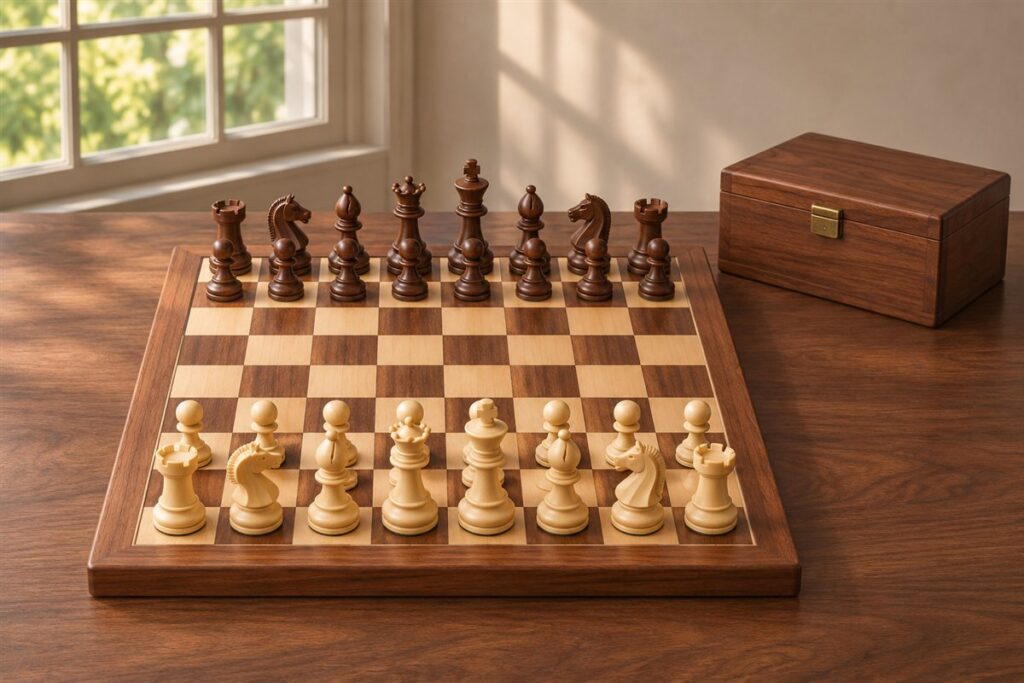
Boxwood, sheesham and ebony are the three woods most often named for wooden chess pieces. All three can last for decades with sensible care, and all three can crack if humidity or temperature changes sharply. This guide compares them on general traits; exact quality depends on the maker and the individual piece.
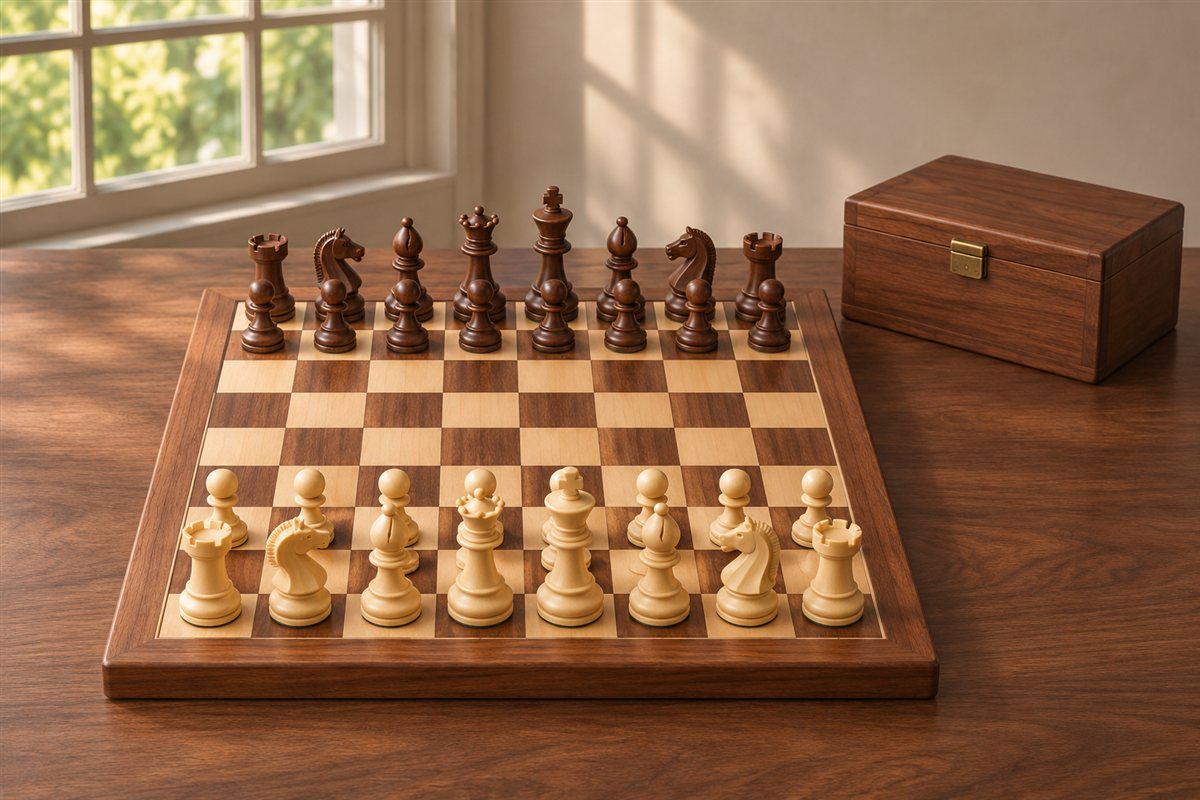
Boxwood
Boxwood is pale, fine-grained and dense, and it carves cleanly, which is why it has long been used for the light side of a set. It is hard enough to take sharp detail on knights and crowns.
- Look: creamy yellow, sometimes with a slight tone change over time.
- Strength: dense and tough, with a smooth feel in the hand.
- Risk: fine surface cracks can appear if the piece dries out quickly.
Sheesham
Sheesham, also called Indian rosewood, is a darker wood with visible grain, from golden brown to deep brown. It is a common choice for the dark side of affordable and mid-range wooden sets, often paired with boxwood.
- Look: warm brown with grain lines that vary from piece to piece.
- Strength: hard and durable for everyday play.
- Risk: grain variation means some pieces are more prone to small checks, especially near the base.
Ebony
Ebony is a very dense, deep black wood that takes a high polish. It has long been associated with premium sets, and because genuine ebony is limited in supply, many dark pieces are in fact stained boxwood or another wood described as ebonized.
- Look: very dark, sometimes with fine streaks.
- Strength: dense and heavy, giving a solid feel.
- Risk: it can split if it dries unevenly, as dense woods respond sharply to stress. Check the maker’s description.
Comparison Table
| Wood | Typical color | Feel | Cracking concern |
|---|---|---|---|
| Boxwood | Pale yellow | Smooth, fine | Dry air and fast changes |
| Sheesham | Brown, grained | Firm, warm | Grain variation near bases |
| Ebony | Deep black | Heavy, dense | Uneven drying |
How to Reduce Cracking
- Keep pieces away from radiators, heaters, sunny windowsills and car interiors.
- Avoid sudden shifts, such as taking a set from a cold room into a warm one.
- Store pieces in a box or bag with felt, not loosely in a drawer.
- Do not soak or wipe with a wet cloth. A dry or barely damp cloth is enough.
- Look at the bases and the narrow necks of pieces when you buy, since cracks tend to begin there.
FAQ
Which wood is the most durable?
All three are hard woods suitable for regular play. Construction, seasoning and care matter at least as much as the species.
Are weighted pieces better?
Weighted bases make pieces feel stable. Check how the weight is added, as a poorly fitted base may loosen over time.
The Short Version
Boxwood suits light pieces, sheesham is a common warm dark option and ebony is the dense, premium black choice. Each can crack under dry or rapidly changing conditions, so stable storage and gentle handling matter more than the species you choose.