Best vintage bookshelf speakers bring the look and the sound of classic hi-fi into a modern room, with wood veneer cabinets, cloth grilles, and a warm and easy sound that suits vinyl, jazz, and long listening sessions. The word vintage covers two kinds of speaker in this guide: true heritage models, such as the JBL L52 Classic and the Wharfedale Linton, which revive designs from the golden age of hi-fi, and vintage-style modern speakers, such as the Dayton Audio Classic B65 and the Electrohome Huntley, which borrow the retro look at a much lower cost.
The listings in this guide split into passive and powered designs, and it helps to know the difference before you buy. Passive picks, such as the JBL L52 Classic and the Wharfedale Linton, need a separate amplifier or receiver, and they reward a good amp with a refined sound. Powered picks, such as the Electrohome Huntley and the Crosley S200A in our search, have an amplifier built in, so they play straight from a turntable or a phone with no extra boxes.
This guide compares published specs and design traits. We have not used these speakers ourselves, so every claim below traces to a spec printed in the listing title or to a basic design trait of the driver size, cabinet style, and power handling. Use the comparison table to match a pick to your room, your amplifier, and your budget.
In this guide
Quick picks: best vintage bookshelf speakers
| # | Product | Where to buy |
|---|---|---|
| 1 | JBL L52 Classic | Check on Amazon |
| 2 | JBL L82 Classic MKII | Check on Amazon |
| 3 | Wharfedale Linton | Check on Amazon |
| 4 | Wharfedale Denton 85th Anniversary | Check on Amazon |
| 5 | Dayton Audio Classic B65 | Check on Amazon |
| 6 | Electrohome Huntley EB10 | Check on Amazon |
How the picks were chosen
We started with listings that name a vintage or classic bookshelf model in the title, then kept only the ones where the brand and every model code in the title match the product. A listing that sold only a grille or only a speaker stand was dropped, and so were generic modern bookshelf speakers with no vintage styling or heritage link, and single-unit home speakers that are not bookshelf pairs.
We favoured a spread of prices and uses: two JBL Classic models for the heritage flagship sound, two Wharfedale heritage models for the classic British sound, an affordable Dayton Audio Classic pair for a first vintage-style setup, and a powered Electrohome pair for a turntable with no amplifier. That spread covers serious collectors, vinyl listeners, and buyers who want the retro look without the heritage cost.
Driver size, power handling, and cabinet style came straight from the listing titles. Where a title states a wattage figure, it is shown, and where it does not, the table says so plainly instead of guessing a number. The finish matters here too, so the guide notes the veneer colour of each pick.
Best vintage bookshelf speakers: the picks in detail
JBL L52 Classic 5.25 Inch Bookshelf Loudspeakers
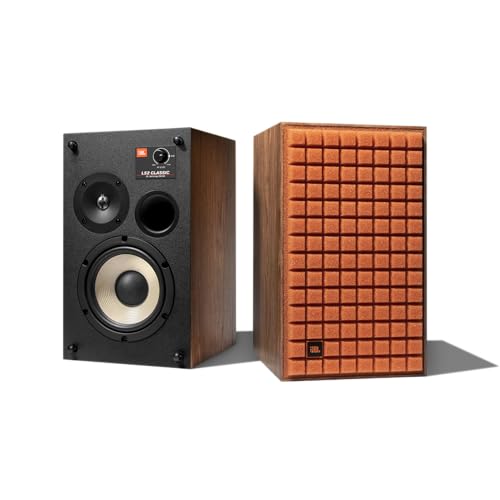
The JBL L52 Classic is a pair of 5.25 inch passive 2-way bookshelf loudspeakers in orange, with a foam grille and a retro cabinet that revives the classic JBL look of the 1970s. The 5.25 inch woofer and the 2-way design suit a small to mid-size room, a desk, or a shelf, where a larger heritage speaker would dominate the space. The orange grille is the signature look: it is bold, it is unmistakably vintage JBL, and it suits a room with a retro turntable setup.
A passive design means the L52 Classic needs an amplifier or a receiver, and it rewards a good one. The 5.25 inch size keeps the cabinet compact while still giving a full sound for nearfield listening and small room hi-fi. JBL is a long standing name in loudspeakers, and the L52 Classic is its compact entry into the Classic series.
Key specs: Pair of 5.25 inch passive 2-way bookshelf loudspeakers; orange finish; JBL L52 Classic.
Strengths:
- Compact 5.25 inch size fits a desk, shelf, or small room.
- Classic JBL styling with an orange grille suits a retro setup.
- Passive design rewards a good amplifier with a refined sound.
Trade-offs:
- Needs a separate amplifier; no built-in amp is listed.
- 5.25 inch woofer gives less deep bass than the larger Classic models.
- Orange finish is bold and may not suit every room.
Who it fits: Vinyl listeners who want a compact JBL Classic pair for a small room or a desk.
Best for: a compact retro setup with a turntable and a small amplifier. Not suited for: large rooms or deep bass without a subwoofer.
Check price on Amazon: JBL L52 Classic

JBL L82 Classic MKII Bookshelf Speaker Pair
The JBL L82 Classic MKII is a bookshelf speaker pair in orange, and the larger sibling of the L52 Classic in this guide. The Classic MKII line updates the vintage JBL design with modern drivers and crossover parts, while keeping the retro cabinet, the foam grille, and the look that made the original L series famous. It suits a mid-size room where the L52 Classic would run out of scale.
A larger cabinet gives the L82 Classic MKII more presence than the compact L52, and the pair format covers a stereo setup in one order. The passive design needs an amplifier, and a good stereo amplifier or receiver is the right match. The orange finish matches the L52 Classic, so the two models share a look across a room.
Key specs: Bookshelf speaker pair; orange finish; JBL L82 Classic MKII.
Strengths:
- Larger cabinet gives more presence than the compact L52 Classic.
- Classic MKII design mixes vintage styling with modern drivers.
- Pair format covers a stereo setup in one order.
Trade-offs:
- Needs a separate amplifier; no built-in amp is listed.
- Larger size needs a sturdy shelf or a proper stand.
- Orange finish is bold and may not suit every room.
Who it fits: Collectors and vinyl listeners who want a larger JBL Classic pair for a mid-size room.
Best for: a mid-size room with a vintage JBL look and a good amplifier. Not suited for: a desk setup or a very small room.
Check price on Amazon: JBL L82 Classic MKII

Wharfedale Linton Walnut Matched Pair
The Wharfedale Linton in walnut is a matched pair of heritage bookshelf speakers, and one of the most respected classic designs in this guide. The Linton name goes back to the golden age of British hi-fi, and the modern Linton keeps the wide cabinet, the walnut veneer, and the warm and easy sound that made the original famous. It is a standmount speaker: it sounds best on a stand, with space around the cabinet.
A matched pair means the two speakers are voiced together, which matters for stereo imaging. The walnut veneer is a classic finish that suits a living room far better than a black box, and the wide cabinet gives the midrange a relaxed and natural voice. The Linton needs an amplifier, and a warm sounding stereo amplifier is the classic match.
Key specs: Matched pair of heritage bookshelf speakers; walnut finish; Wharfedale Linton.
Strengths:
- Matched pair voicing gives a coherent stereo image.
- Walnut veneer and wide cabinet suit a classic living room.
- Warm and easy sound suits vinyl, jazz, and long sessions.
Trade-offs:
- Needs a separate amplifier; no built-in amp is listed.
- Sounds best on stands, which adds cost and space.
- Wide cabinet needs more shelf or stand space than a compact pair.
Who it fits: Hi-fi listeners who want a classic British heritage pair for a living room.
Best for: a living room vinyl setup with a warm amplifier and proper stands. Not suited for: a desk setup or a room with no space for stands.
Check price on Amazon: Wharfedale Linton

Wharfedale Denton 85th Anniversary Walnut
The Wharfedale Denton 85th Anniversary in walnut is a compact heritage bookshelf speaker that marks 85 years of the Denton name. The Denton is the smaller sibling of the Linton, with a compact cabinet that fits a bookshelf, a desk, or a small room, while keeping the walnut veneer and the classic Wharfedale voicing. It is the heritage pick for a room where the Linton is too large.
A compact heritage speaker suits nearfield listening and small room hi-fi, where a large cabinet would overpower the space. The walnut finish matches the Linton, so the two models share a look, and the passive design needs an amplifier. The Denton 85th Anniversary is a good first step into heritage hi-fi: a classic name, a compact size, and a sound that suits long listening sessions.
Key specs: Heritage bookshelf speaker; walnut finish; Wharfedale Denton 85th Anniversary.
Strengths:
- Compact cabinet fits a bookshelf, desk, or small room.
- Walnut veneer and classic voicing suit a heritage setup.
- Good first step into heritage hi-fi at a smaller scale than the Linton.
Trade-offs:
- Needs a separate amplifier; no built-in amp is listed.
- Compact size gives less deep bass than the larger Linton.
- Listing states no wattage, so plan amplifier power from your room size.
Who it fits: Listeners who want a compact Wharfedale heritage speaker for a small room or a desk.
Best for: a small room or desk with a classic walnut look. Not suited for: large rooms or deep bass without a subwoofer.
Check price on Amazon: Wharfedale Denton 85th Anniversary

Dayton Audio Classic B65 Bookshelf Speaker Pair
The Dayton Audio Classic B65 is a bookshelf speaker pair with a 75 watt max handling figure, a 6.5 inch woofer, a 1 inch silk dome tweeter, and a passive 2-way design in a wood finish. The word Classic is in the name for a reason: the B65 borrows the simple 2-way layout and the wood cabinet of classic hi-fi, at a cost far below the heritage brands. It is the affordable vintage-style pick in this guide.
A 6.5 inch woofer gives the B65 more low-end weight than the compact 5.25 inch JBL L52 Classic, and the 1 inch silk dome tweeter suits a smooth and easy treble. The passive design needs an amplifier, and a modest stereo amplifier is enough for a small room. Dayton Audio is a familiar name in DIY and budget audio, and the Classic B65 is its vintage-style bookshelf pair.
Key specs: Bookshelf speaker pair; 75 watts max; 6.5 inch woofer; 1 inch silk dome tweeter; passive 2-way; wood finish; Dayton Audio Classic B65.
Strengths:
- 6.5 inch woofer gives more low-end weight than a compact 5.25 inch pair.
- Wood finish and classic 2-way layout suit a retro look at a low cost.
- 75 watt max handling suits a modest stereo amplifier.
Trade-offs:
- Needs a separate amplifier; no built-in amp is listed.
- Budget build gives less refinement than the heritage brands.
- Wood finish is a veneer look, not a heritage hardwood cabinet.
Who it fits: Buyers who want a vintage-style bookshelf pair at an affordable cost.
Best for: a first vintage-style setup on a modest budget. Not suited for: collectors who want a true heritage brand name.
Check price on Amazon: Dayton Audio Classic B65

Electrohome Huntley Powered Bookshelf Speakers
The Electrohome Huntley is a pair of powered bookshelf speakers with a built-in amplifier, 3 inch drivers, Bluetooth 5, RCA, and Aux inputs, in the EB10 model. Electrohome is a heritage brand name from the early days of home audio, and the Huntley revives that name in a compact powered pair built for a turntable, a TV, or a PC. The built-in amplifier means no extra boxes: plug in a turntable or pair a phone and the music plays.
The 3 inch drivers suit nearfield listening at a desk or beside a turntable, where a large cabinet would be too much. Bluetooth 5 adds wireless streaming from a phone, and the RCA input is the classic turntable connection. The Huntley is the only powered pick in this guide, and it is the simplest path to a vintage look with modern convenience.
Key specs: Pair of powered bookshelf speakers; built-in amplifier; 3 inch drivers; Bluetooth 5, RCA, Aux; Electrohome Huntley EB10.
Strengths:
- Built-in amplifier needs no separate amp or receiver.
- Bluetooth 5 and RCA suit a phone and a turntable alike.
- Compact 3 inch size fits a desk or a turntable shelf.
Trade-offs:
- 3 inch drivers give limited deep bass and output.
- Small size suits nearfield listening more than a large room.
- Powered design means the amp cannot be upgraded separately.
Who it fits: Turntable owners who want a compact powered vintage-style pair with no extra boxes.
Best for: a desk or turntable shelf with no amplifier. Not suited for: large rooms or deep bass without a subwoofer.
Check price on Amazon: Electrohome Huntley EB10
Comparison table
| Model | Key feature | Power and size | Who it fits |
|---|---|---|---|
| JBL L52 Classic | 5.25 inch passive pair | Not listed, orange | Compact retro setup, small rooms |
| JBL L82 Classic MKII | Larger Classic pair | Not listed, orange | Mid-size rooms, JBL collectors |
| Wharfedale Linton | Heritage matched pair | Not listed, walnut | Living room vinyl, warm amps |
| Wharfedale Denton 85th | Compact heritage speaker | Not listed, walnut | Small rooms, first heritage step |
| Dayton Audio Classic B65 | 6.5 inch woofer, silk tweeter | 75 W max, wood | Affordable vintage-style setup |
| Electrohome Huntley EB10 | Powered pair, Bluetooth 5 | 3 inch drivers | Turntable shelf, no amp needed |
Buying guide
Start with passive or powered, because that choice sets the whole system. A passive pick, such as the JBL L52 Classic or the Wharfedale Linton, needs a separate amplifier or receiver, and it rewards a good amp with a refined sound. A powered pick, such as the Electrohome Huntley, has the amp built in and plays straight from a turntable or a phone. If you already own a good amplifier, a passive heritage pair is the better buy. If you own no amplifier, a powered pair saves you a box and a budget.
Match the cabinet size to the room. A compact 5.25 inch pair, such as the JBL L52 Classic, suits a desk or a small room, while a larger heritage pair, such as the Wharfedale Linton, needs a living room and proper stands to sound its best. A speaker that is too large for the room sounds boomy, and a speaker that is too small for the room sounds thin. The room sets the size, not the other way around.
Check the finish against the room. Walnut veneer, such as the Wharfedale Linton and Denton, suits a classic living room with wood furniture. Orange grilles, such as the JBL Classic models, suit a bold retro room with a turntable and a record shelf. The finish is part of the vintage appeal, so pick a colour you will enjoy living with, not just a sound you enjoy hearing.
Match the amplifier to a passive pick. A heritage speaker with a smooth and easy sound suits a warm sounding stereo amplifier, while a bright amplifier can make the treble feel sharp. The Dayton Audio Classic B65 needs only a modest amplifier, while the Wharfedale Linton rewards a better amp with a more refined sound. Check the amplifier power against your room size, and give the amp headroom instead of running it at its limit.
Read the listing title in full before you buy. Some heritage listings sell a matched pair, such as the Wharfedale Linton, while others sell a single speaker that needs a second order for stereo. The title also tells you the finish, the driver size, and the model code, so it is the most reliable source for matching a speaker to your setup. A model code mismatch is the most common buying error in vintage audio.
Use and care
Keep wood veneer out of direct sun and away from radiators. Sunlight fades a walnut finish over a season, and dry heat can crack a veneer. A soft dry cloth clears dust from a cabinet, and a damp cloth with a mild cleaner suits a stubborn mark. Do not spray cleaner straight onto a speaker, and do not polish a foam grille.
Leave the foam grilles on unless you need to remove them. The JBL Classic models use a foam grille that is part of the vintage look, and the foam can tear if it is pulled off roughly. If a grille needs cleaning, use a soft brush and a gentle touch. A torn grille is hard to replace, and it changes the look of the speaker.
Store spare speakers upright, grille forward, away from heavy items. A dented cabinet corner or a pushed-in tweeter changes the sound and the look. If a speaker starts to buzz or rattle, check the mounting screws first, then the cabinet seals, before you blame the driver itself.
Give a new passive speaker some easy playing time before you judge the sound. A fresh suspension can feel stiff out of the box, so play at moderate volume for the first hours, then listen again. Keep the volume moderate during that period, and do not push a new speaker to its limits on day one.
Common mistakes
Buying a grille or a stand instead of a speaker is the first error. Heritage listings include grilles and stands as separate items, and a grille-only listing looks close to a speaker listing at a glance. Check that the title names a speaker model and that the listing shows a full cabinet. The JBL L100 Classic grilles in our search are a good example: they are grilles, not speakers.
Buying a single speaker when you need a pair is the second error. Some heritage listings sell one speaker, and a stereo setup needs two. Count the units in your cart before you order, and check whether the title says pair or matched pair. A single speaker on its own gives mono sound, not stereo.
Ignoring the amplifier is the third error. A passive heritage pair with no amplifier is silent, and a weak amplifier will leave a large cabinet sounding thin. Budget for an amplifier with a passive pick, or choose a powered pick such as the Electrohome Huntley if you own no amp at all.
Expecting deep bass from a compact vintage pair is the fourth error. A 5.25 inch or 3 inch driver gives clear mids and highs in a small room, but deep bass needs cone area and cabinet volume. The Wharfedale Linton gives more bass than the compact picks, but no bookshelf pair in this guide replaces a subwoofer for the deepest bass. Pair a compact vintage speaker with a subwoofer if bass weight matters to you.
Final recommendation
For most buyers, the JBL L52 Classic is the balanced starting point: a compact heritage pair with the classic look, a size that fits a desk or a small room, and a sound that suits vinyl and long listening sessions. If you want a larger JBL Classic sound for a mid-size room, step up to the L82 Classic MKII, and if you want the classic British heritage sound, the Wharfedale Linton is the pick.
If your budget is modest, the Dayton Audio Classic B65 gives the vintage-style look and a 6.5 inch woofer at a much lower cost, and if you own no amplifier, the Electrohome Huntley plays straight from a turntable or a phone with no extra boxes. The Wharfedale Denton 85th Anniversary is the compact heritage step between the two: a classic name in a small cabinet.
Whichever pick you choose, decide passive or powered first, match the cabinet size to your room, and check the model code in the listing title before you order. A vintage bookshelf speaker rewards careful matching more than a big budget, and the six picks above cover the main heritage names and the affordable vintage-style options without forcing you into a generic modern speaker. The best vintage bookshelf speakers are the ones that fit your room, your amplifier, and your taste, not the ones with the biggest numbers on the listing.
Heritage models vs vintage-style models
A heritage model, such as the JBL L52 Classic or the Wharfedale Linton, revives a real design from the golden age of hi-fi, with a brand name, a model line, and a cabinet style that collectors recognise. The heritage pick costs more, but it carries a history and a resale value that a generic speaker does not. The Linton name goes back decades, and the L series JBL look is one of the most copied designs in audio.
A vintage-style model, such as the Dayton Audio Classic B65 or the Electrohome Huntley, borrows the retro look without the heritage cost. The B65 uses a classic 2-way layout and a wood cabinet, while the Huntley revives a heritage brand name in a modern powered pair. The sound can be very good for the cost, but the resale value and the collector appeal are lower than a true heritage model.
Your choice comes down to why you want vintage. A collector who values history and resale should buy a heritage model. A listener who wants the retro look and a warm sound at a modest cost should buy a vintage-style model. Neither choice is wrong; they serve different goals.
Why walnut and wood finishes matter
Wood veneer is part of the vintage appeal, and it changes how a speaker looks in a room. A walnut cabinet, such as the Wharfedale Linton and Denton, suits a classic living room with wood furniture and a record shelf. A black box disappears into a modern room, but a walnut cabinet becomes part of the furniture. The finish is not just decoration: it is the reason many buyers choose a vintage speaker over a modern one.
The finish also affects care. Walnut veneer needs protection from sun and heat, and a foam grille needs a gentle touch. A modern black cabinet is more forgiving, but it gives up the vintage look. If you choose a walnut pair, plan for a shaded spot and a soft cloth, and the finish will age gracefully.
Colour is the other half of the look. The orange grilles on the JBL Classic models are bold and unmistakably retro, and they suit a room with a turntable and a record collection. A buyer who wants a quieter look should pick walnut or wood instead. The sound is the same either way; the look is a matter of taste.
Matching an amplifier to a passive vintage pair
A passive vintage speaker needs an amplifier, and the amplifier shapes the sound as much as the speaker does. A warm sounding stereo amplifier suits the relaxed voicing of a Wharfedale heritage pair, while a neutral amplifier suits the more forward voicing of a JBL Classic pair. The amplifier power should match the room size: a small room needs only a modest amp, while a large living room needs more headroom.
The Dayton Audio Classic B65 lists a 75 watt max figure, which tells you the ceiling for amplifier power. The JBL and Wharfedale titles in this guide print no wattage, so plan from your room size instead of a printed figure. A good rule is to buy an amplifier with more clean power than you think you need, then set the gain properly and let the amp run comfortably.
Vintage speakers also suit a turntable with a phono stage, because the warm voicing and the relaxed treble flatter vinyl. If your amplifier has no phono input, a small phono preamp between the turntable and the amp solves the problem. The Electrohome Huntley in this guide skips the whole question, because the amp is built in and the RCA input takes a turntable directly.
Frequently asked questions
What is a vintage bookshelf speaker?
A vintage bookshelf speaker is a speaker with a classic design, a wood veneer cabinet, and a warm sound, either a true heritage model such as the JBL L52 Classic or the Wharfedale Linton, or a vintage-style modern speaker such as the Dayton Audio Classic B65.
Do vintage bookshelf speakers need an amplifier?
Passive vintage speakers need a separate amplifier or receiver. Powered vintage-style speakers, such as the Electrohome Huntley in this guide, have an amplifier built in and play straight from a turntable or a phone.
Are vintage speakers good for vinyl?
Yes, because the warm voicing and the relaxed treble of a classic design flatter vinyl records. The Wharfedale Linton and the JBL Classic models in this guide are popular vinyl picks, and the Electrohome Huntley has an RCA input built for a turntable.
What is the difference between the JBL L52 Classic and the L82 Classic MKII?
The L52 Classic is the compact 5.25 inch pair for a small room or a desk, while the L82 Classic MKII is the larger pair for a mid-size room. Both share the Classic styling and the orange grille, but the L82 gives more presence in a larger space.
Is the Wharfedale Linton a bookshelf speaker?
The Linton is a standmount speaker: it sounds best on a proper stand, with space around the cabinet. It fits the bookshelf category in size and use, but a stand gives a better sound than a crowded shelf.
Can I use vintage bookshelf speakers for a home theater?
Yes, as front left and right speakers in a small to mid-size room, though a subwoofer helps for deep bass and a centre speaker helps for dialogue. The Dayton Audio Classic B65 title notes home theater use, and the larger heritage pairs suit a stereo front stage.
Why do some vintage listings sell a single speaker?
Some heritage listings sell one speaker so a buyer can replace a damaged unit or build a system one piece at a time. A stereo setup needs two speakers, so check whether the title says pair or matched pair before you order.
How do I care for a walnut veneer cabinet?
Keep walnut veneer out of direct sun and away from radiators, and clean it with a soft dry cloth. Sunlight fades the finish over a season, and dry heat can crack a veneer. Do not spray cleaner straight onto a speaker.
What amplifier suits a vintage bookshelf speaker?
A warm sounding stereo amplifier suits a Wharfedale heritage pair, while a neutral amplifier suits the more forward voicing of a JBL Classic pair. A modest amplifier is enough for the Dayton Audio Classic B65 in a small room, while the Wharfedale Linton rewards a better amp. Check the amplifier power against your room size, and give the amp headroom instead of running it at its limit all day.
Can vintage bookshelf speakers sit on a shelf?
Yes, though a proper stand usually sounds better, because a stand gives the cabinet space and keeps it away from a wall. The compact picks in this guide, such as the JBL L52 Classic and the Wharfedale Denton 85th Anniversary, fit a sturdy shelf. The Wharfedale Linton sounds best on a stand. Keep the speaker away from the back wall by a few centimetres, and angle it slightly toward the listening seat for the best stereo image.
More from Reviewstook: Best Bookshelf Speakers, Best Audiophile Speakers of All Time, Best Speakers for Turntables.