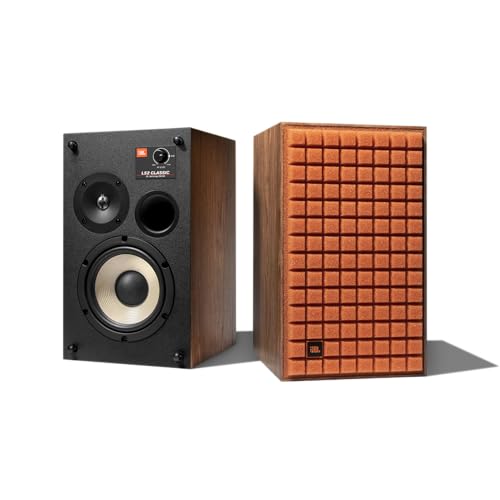
The best audiophile speakers of all time are not the newest speakers, and they are not the most expensive ones. They are the designs that listeners keep coming back to, year after year, because the sound is right and the engineering has nothing to prove. A speaker earns a place on a list like this when it stays in production for years, when it survives new generations of rivals, and when people who have heard everything still recommend it to friends.
This roundup gathers six such speakers. Each one is a genuine, currently listed model verified through the site listings, with the brand and the model code matched exactly to its listing title. The selection spans compact bookshelf speakers and full floorstanding horns, British studio-bred designs and American heritage designs, and it covers the range from an affordable bookshelf pair to a floorstanding classic that has been in production in one form or another for decades.
What these speakers share is a focus on the music rather than the marketing. They are passive speakers, which means they need an amplifier or a receiver, and they reward a good one. They are not smart speakers, and they do not chase features that will be obsolete next year. They play music, and they play it well, and that is the whole point of the list.
The guide below explains how the picks were chosen, what makes a speaker last, and how to match each pick to a room and an amplifier. Each entry lists the specifications stated in its listing, three strengths, three trade-offs, and the listener it fits best. Prices change and models come and go, but the designs here have already outlasted many of their rivals.
One more thing is worth saying before the list begins. A list of all-time speakers is a matter of judgment, and another listener would choose differently. The six picks here are not the only good speakers ever made, and they are not ranked from best to worst, because the right speaker depends on the room, the amplifier, and the music. They are six designs that have earned their place, and each one is still available to buy and hear today, which is the real test of a classic.

In this guide
Quick picks: best audiophile speakers of all time
| # | Product | Where to buy |
|---|---|---|
| 1 | KEF LS50 Meta | Check on Amazon |
| 2 | Klipsch Heresy IV | Check on Amazon |
| 3 | ELAC Debut 2.0 B6.2 | Check on Amazon |
| 4 | Q Acoustics 3020i | Check on Amazon |
| 5 | Polk Audio Reserve R200 | Check on Amazon |
| 6 | Bowers and Wilkins 606 S3 | Check on Amazon |
How the picks were chosen
The picks were chosen for longevity and for reputation among listeners, not for novelty. A speaker made this list when its design has endured, when its model line has a long history, and when its listing shows it is still sold as a current product. The KEF LS50 Meta, the Klipsch Heresy IV, the ELAC Debut 2.0 B6.2, the Q Acoustics 3020i, the Polk Reserve R200, and the Bowers and Wilkins 606 S3 all meet that test, and each one represents a different idea of what a great speaker should be.
Every product was verified against its listing title, so the brand and the model code in each entry match the listing exactly. The driver sizes, the cabinet details, and the features named in each title are the facts used in the entries; nothing was added from memory. Where a listing states a pair, the entry says so. Where a listing names a finish, the entry names it too, because the finish is part of the product being bought.
The selection also covers the practical range. The bookshelf picks suit a desk, a shelf, or a small room on stands, while the Klipsch Heresy IV is a floorstanding speaker for a larger room. The price spread runs from an affordable bookshelf pair to a premium floorstander, so the list works for a first serious system and for a long-planned upgrade alike. A speaker that only fits one room or one budget would not belong on a list of all-time picks.
Finally, the picks were chosen to be distinct from the price-banded speaker lists already on the site. Those lists answer the question of what to buy for a given budget. This list answers a different question: which speakers have earned a lasting place in the hobby, and why they are still worth hearing today.
The list was also kept to speakers that are sold through ordinary listings, in the usual way, so that a buyer can actually order the model named. A classic that is only available second hand, or only as a rare import, would be interesting to read about and useless to buy. Every speaker below is a current listing with a clear model code, which means the recommendation can be acted on rather than just admired.
What makes a speaker an all-time classic
Time is the first test. A speaker that is still recommended five or ten years after launch has survived the hardest test in audio, which is the arrival of newer, cheaper rivals. The designs in this roundup have done that. Some, like the Heresy, trace their lineage back decades. Others, like the LS50 Meta, are newer, but they build on a design language that has already proved itself.
The second test is the engineering. A classic speaker usually has one clear idea done well, rather than a list of features. The LS50 Meta is built around a concentric driver that puts the tweeter inside the woofer. The Heresy is built around a horn-loaded design that is efficient and dynamic. The ELAC B6.2 is built around a carefully tuned two-way cabinet. Each speaker has a reason for sounding the way it does, and that reason can be explained in a sentence.
The third test is the listening. A classic speaker sounds right on many kinds of music, not just on one demo track. It handles voices naturally, it keeps instruments separate, and it does not tire the listener over a long evening. That is a matter of balance rather than of any single number, and it is why the entries below describe the sound in words rather than leaning on specifications alone.
The last test is practicality. A classic speaker should be easy to live with: easy to place, easy to drive with a normal amplifier, and easy to keep. All six picks here are passive speakers that work with a standard amplifier or receiver, and all of them are sold as pairs or as single speakers in the usual way. None of them needs unusual equipment to sound good.
There is also a quieter test, which is whether a speaker still sounds right when the listener is not paying attention. A classic does. It plays in the background without irritating, and it rewards attention when the listener sits down properly. Speakers that only impress in a demonstration, and then grate over a long evening, do not last, and they do not appear on lists like this one.
What to listen for when choosing
Start with the midrange, because that is where voices live. A speaker that renders a voice naturally, with the right weight and the right clarity, will sound right on most music. A speaker that pushes voices forward or buries them under bass will tire the listener quickly, even if it impresses in the first minute.
Then listen to the bass. A bookshelf speaker cannot produce the deepest bass of a floorstander, and it should not try to fake it. The best bookshelf speakers in this roundup produce clean, tuneful bass down to a sensible limit, and they leave the lowest notes to a subwoofer when one is added. A floorstander like the Heresy IV produces more bass naturally, because its cabinet is larger.
Check the treble too. A good tweeter sounds open and detailed without sounding harsh or sharp. The ELAC entry below names a one-inch cloth dome tweeter, and the Q Acoustics entry names a 22-millimetre tweeter, and both are designs that favor smoothness over sparkle. If a speaker sounds bright in the shop, it will sound brighter at home over a long evening.
Room and placement matter as much as the speaker itself. Bookshelf speakers need stands or a solid shelf, with space behind them for the bass port to breathe. Floorstanders need space from the wall and a stable floor. The care section below explains how to place each type, and the buying guide explains how to match the speaker to the amplifier.
Finally, remember that these are passive speakers. The amplifier matters, and a weak or mismatched amplifier will hold back even a great speaker. The guide below covers the basics of matching, and the recommendation at the end names the pick that is easiest to drive for a first system.
It is also worth listening for consistency across the volume range. A good speaker sounds balanced at a quiet evening level and at a louder weekend level, without the bass disappearing when quiet or the treble turning harsh when loud. The horn-loaded Heresy IV is famous for keeping its character at low volume, because its efficiency means the amplifier is never strained, while the bookshelf picks need a little more care with the volume control to stay balanced.
Quick picks at a glance
| Speaker | Type | Key detail | Best for |
|---|---|---|---|
| KEF LS50 Meta | Bookshelf, passive | Concentric driver, high-resolution sound | Small room, precise imaging |
| Klipsch Heresy IV | Floorstanding, pair | Horn-loaded, American Walnut | Large room, dynamic sound |
| ELAC Debut 2.0 B6.2 | Bookshelf, pair | 6.5-inch aramid woofer, 35,000 Hz response | First serious system |
| Q Acoustics 3020i | Bookshelf, pair | 25% larger cabinet, 22mm tweeter | Small room, neat setup |
| Polk Audio Reserve R200 | Bookshelf, pair | Large bookshelf, clear vocals | Music and movies in one system |
| Bowers & Wilkins 606 S3 | Bookshelf, pair | 6.5-inch Continuum cone driver | Detailed, refined listening |
The best audiophile speakers of all time
KEF LS50 Meta
The KEF LS50 Meta in Carbon Black is the modern classic in this roundup. Its listing describes passive hi-fi bookshelf speakers for home theater, with high-resolution sound for music, television, and movies. The LS50 line has been a reference point for compact speakers since it arrived, and the Meta version carries that reputation forward with the concentric driver arrangement that puts the tweeter at the acoustic center of the woofer.
That arrangement is the reason the LS50 Meta images so well. Because the high and low frequencies come from the same point, the stereo image stays stable as the listener moves, and voices stay locked in place between the speakers. In a small or medium room on proper stands, the LS50 Meta sounds larger than it looks, with a clean midrange and a precise, unforced treble. It is a speaker for listeners who sit and listen, rather than for background music.
Key specs:
- KEF LS50 Meta passive hi-fi bookshelf speakers, Carbon Black
- Passive design, needs an amplifier or receiver
- High-resolution sound for music, TV, and movies
- Home theater and hi-fi use
Strengths:
- Precise imaging and a stable stereo picture from the concentric driver
- Clean, natural midrange that suits voices and acoustic music
- Compact size that fits a small room, a desk, or a shelf on stands
Trade-offs:
- Passive design needs a good amplifier to show its best
- Bookshelf size means deep bass needs a subwoofer for films
- Demands careful placement on solid stands to image properly
This speaker fits a listener with a small or medium room, a good amplifier, and a habit of sitting down to listen. It is the pick for vocal music, jazz, and acoustic recordings where imaging matters.
Best for: precise imaging and vocal clarity in a small room. Not suited for: a large room, a buyer without an amplifier, or anyone who wants deep bass without a subwoofer.
Check price on Amazon: KEF LS50 Meta

Klipsch Heresy IV
The Klipsch Heritage Series Heresy IV floorstanding speaker pair in American Walnut is the oldest bloodline in this roundup. The Heresy name goes back decades, and the fourth generation keeps the horn-loaded design that has always defined it: a horn tweeter and midrange that are efficient, dynamic, and immediate, in a cabinet finished in American Walnut.
Horn loading is the reason the Heresy IV sounds the way it does. The horns make the speaker efficient, so it plays loudly with modest amplifier power, and they give voices and instruments a direct, present quality that many listeners find addictive. It is a floorstanding speaker, so it needs a larger room and some space from the walls, but in the right room it sounds alive in a way that few modern speakers match. This is the speaker for rock, blues, and big-band music played with enthusiasm.
Key specs:
- Klipsch Heritage Series Heresy IV floorstanding speaker, pair
- American Walnut finish
- Horn-loaded design
- Heritage Series
Strengths:
- High efficiency, so it plays loudly with modest amplifier power
- Dynamic, immediate sound that suits rock and live recordings
- Heritage design with a long production history and a real walnut finish
Trade-offs:
- Floorstanding size needs a larger room and space from the walls
- Horn sound is direct and forward, which not every listener likes
- Heavier and harder to move than a bookshelf pair
This speaker fits a listener with a larger room, a modest amplifier, and a love of dynamic music. It is the pick for rock, blues, and jazz played at realistic levels.
Best for: dynamic, live-sounding music in a larger room. Not suited for: a small room, a desk setup, or a listener who prefers a soft, laid-back sound.
Check price on Amazon: Klipsch Heresy IV

ELAC Debut 2.0 B6.2
The ELAC Debut 2.0 B6.2 bookshelf speakers in black, sold as a pair, are the affordable classic in this roundup. The listing states a one-inch cloth dome tweeter and a 6.5-inch aramid fiber woofer in a two-way bass reflex cabinet, with a response up to 35,000 Hz. Those are the facts of a well-engineered budget speaker, and the B6.2 has been recommended as a first serious speaker since it arrived.
The aramid fiber woofer is the heart of the design. It is stiff and light, so it stays controlled at volume, and the larger 6.5-inch size gives the B6.2 more bass weight than most bookshelf speakers at its size. The cloth dome tweeter is smooth rather than bright, which makes long listening sessions easy. On stands in a small or medium room, the B6.2 sounds balanced and honest, and it is forgiving of modest amplifiers and modest source equipment.
Key specs:
- ELAC Debut 2.0 B6.2 bookshelf speakers, black, pair
- 1-inch cloth dome tweeter
- 6.5-inch aramid fiber woofer
- 2-way bass reflex design
- Response up to 35,000 Hz
Strengths:
- Strong value, with real bass weight from a 6.5-inch woofer
- Smooth cloth dome tweeter that stays easy to listen to
- Forgiving of modest amplifiers and sources
Trade-offs:
- Plain black cabinet that looks modest next to prettier rivals
- Needs stands to sound its best, which adds cost
- Deep bass still benefits from a subwoofer for films
This speaker fits a first serious hi-fi system, a small or medium room, and a listener who wants honest sound without a large outlay. It is the pick for starting the hobby properly.
Best for: a first serious system on a sensible budget. Not suited for: a buyer who wants a luxury finish or a speaker that works without stands.
Check price on Amazon: ELAC Debut 2.0 B6.2

Q Acoustics 3020i
The Q Acoustics 3020i bookshelf speakers in Carbon Black, sold as a pair, are the neat, tidy classic in this roundup. The listing describes hi-fi stereo speakers with a cabinet 25 percent larger for deeper bass, a 22-millimetre tweeter, P2P bracing, magnetic grilles, and a chrome bezel. The larger cabinet is the key detail: it gives a small speaker more bass than its size suggests.
P2P bracing stiffens the cabinet so it does not color the sound, and the magnetic grilles keep the front clean when the grilles are off. The 3020i sounds balanced and unshowy, with a clear midrange and a bass that is tuneful rather than boomy. It suits a small room, a shelf, or a desk, and it looks smart in a living room where the speakers are part of the furniture rather than hidden away.
Key specs:
- Q Acoustics 3020i bookshelf speakers, Carbon Black, pair
- Cabinet 25% larger for deeper bass
- 22mm tweeter
- P2P bracing
- Magnetic grilles, chrome bezel
Strengths:
- Surprising bass for a compact speaker, thanks to the larger cabinet
- Clean, tidy looks with magnetic grilles and a chrome bezel
- Balanced sound that suits many kinds of music
Trade-offs:
- Compact size still limits the deepest bass
- Needs stands or a solid shelf to perform at its best
- Less efficient than the horn-loaded pick, so it wants a decent amplifier
This speaker fits a small room, a neat living-room setup, or a desk where the speakers are visible and the sound needs to be balanced. It is the pick for listeners who value tidy design as well as sound.
Best for: a neat, balanced small-room setup. Not suited for: a large room or a buyer who wants floorstanding bass without a subwoofer.
Check price on Amazon: Q Acoustics 3020i

Polk Audio Reserve R200
The Polk Audio Reserve R200 large bookshelf speakers in black, sold as a pair, are the versatile pick in this roundup. The listing describes passive speakers for television or an AVR, with clear vocals and deep bass for music, movies, and games. That dual role is the point: the R200 is a hi-fi speaker that also works as the front pair of a home theater.
As a large bookshelf speaker, the R200 has more cabinet volume than a compact bookshelf, so it produces deeper bass and a bigger soundstage. The clear vocals named in the listing matter for both music and film dialogue, and the speaker handles both without sounding like a compromise. On stands in a medium room, it is a one-pair answer for a listener who wants music and movies from the same system.
Key specs:
- Polk Audio Reserve R200 large bookshelf speakers, black, pair
- Passive speakers for TV or AVR
- Clear vocals and deep bass
- For music, movies, and games
Strengths:
- Large cabinet gives deep bass and a big soundstage for a bookshelf speaker
- Clear vocals suit both music and film dialogue
- Works as a hi-fi pair and as the front of a home theater
Trade-offs:
- Large bookshelf size needs sturdy stands and a medium room
- Passive design needs an amplifier or receiver
- Bigger and heavier than the compact bookshelf picks
This speaker fits a listener who wants one pair of speakers for music and movies, in a medium room with an amplifier or receiver. It is the pick for a combined hi-fi and theater setup.
Best for: one pair of speakers for music and movies together. Not suited for: a small desk, a shelf with no stands, or a buyer without an amplifier.
Check price on Amazon: Polk Audio Reserve R200

Bowers & Wilkins 606 S3
The Bowers and Wilkins 606 S3 bookshelf speakers, sold as a pair, are the refined pick in this roundup. The listing for the model states a two-way bookshelf design with a 6.5-inch Continuum cone driver, which is the driver material that defines the current 600 series. The Continuum cone is designed to stay controlled through the midrange, so voices and instruments keep their texture at volume.
The 606 S3 is the largest bookshelf speaker in the 600 series, and it sounds like it: bigger, more authoritative, and more detailed than its smaller siblings, with a treble that is open without being sharp. It suits a medium room on solid stands, driven by a capable amplifier, and it rewards good recordings with a level of detail that makes familiar music sound new. This is the speaker for a listener who has already owned a good pair and wants a clear step up.
Key specs:
- Bowers & Wilkins 606 S3 bookshelf speakers, pair
- 6.5-inch Continuum cone driver
- Two-way bookshelf design
Strengths:
- Detailed, refined sound with a controlled midrange
- Larger bookshelf size gives authority and scale
- Build and finish suit a living room as well as a listening room
Trade-offs:
- Needs a capable amplifier to show its best
- Needs solid stands and room to breathe
- Costs more than the budget picks in this roundup
This speaker fits a listener with a medium room, a capable amplifier, and a collection of recordings worth hearing properly. It is the pick for a long-planned upgrade.
Best for: detailed, refined listening in a medium room. Not suited for: a first system on a tight budget or a small room with no stands.
Check price on Amazon: Bowers and Wilkins 606 S3
Buying guide: matching speakers, amplifiers, and rooms
Match the speaker to the room
A bookshelf speaker suits a small or medium room, and a floorstander suits a larger one. A small speaker in a large room sounds thin, because it cannot move enough air, while a large speaker in a small room sounds boomy, because the bass has nowhere to go. Measure the room, note where the speakers will sit, and choose the size that fits the space rather than the size that impresses in the shop.
Budget for stands and an amplifier
Passive speakers need stands and an amplifier, and both cost money. Stands should be solid, heavy, and the right height so the tweeter sits near ear level when seated. The amplifier should be capable enough for the speaker, and the dealer or the listing should state the recommended power. A modest speaker on good stands with a decent amplifier sounds better than a great speaker on a shelf with a weak one.
Give the speakers space
Speakers sound best with space behind them and to the sides. A bass reflex port at the back needs room to breathe, so a speaker pushed hard against a wall will sound boomy. Start with the speakers a short distance from the wall, toed in slightly toward the listener, and move them in small steps until the bass sounds even and the stereo image locks into place.
Listen before deciding
Specifications do not tell the whole story, and a speaker that measures well can still sound wrong to a particular listener. Hear the shortlist with familiar music, in a room as close as possible to the one at home, and listen for an hour rather than five minutes. The speaker that still sounds right at the end of the hour is the one to buy.
Think about the long term
A classic speaker is a long-term purchase, so think about the room it will live in for years, not just the room it starts in. A speaker that suits a small flat today should still suit a larger living room later, or it should be easy to move to a second room. The bookshelf picks here are easy to move and easy to repurpose, while the floorstanding Heresy IV is a commitment to a larger room. Buy the speaker for the listener you will be in five years as well as the one you are today.
Setting up and caring for classic speakers
Place them on solid stands
Bookshelf speakers belong on solid, heavy stands at the right height, with the tweeter near ear level when seated. Fill the stands with sand or shot if they are designed for it, and spike them to the floor or use the pads supplied. A speaker on a wobbly stand or a hollow shelf will never sound as good as the same speaker on a solid base.
Keep the drivers clean
Dust the cabinets with a dry cloth and leave the drivers alone unless they are visibly dusty, in which case a soft brush is enough. Never press a tweeter dome or a woofer cone, and keep the grilles on when children or pets are near. A damaged driver is expensive to replace, and a dented tweeter changes the sound.
Check the connections once a year
Speaker cables loosen over time, especially if the speakers are moved for cleaning. Once a year, check that the cables are tight at both ends, that the positive and negative terminals match on both speakers, and that no stray wire strands are shorting across the terminals. A loose connection sounds like a faulty speaker, and it is a free fix.
Let them settle in
New speakers change slightly over the first weeks of use as the driver suspensions loosen, and the sound usually settles into a slightly smoother balance. Do not judge a new pair in the first hour, and do not change the placement every day. Put them in a sensible position, play music normally for a few weeks, and then fine-tune the placement once the sound has settled.
Common mistakes when buying audiophile speakers
Buying on specifications alone
A frequency response number or a driver size does not describe how a speaker sounds in a room. Two speakers with similar numbers can sound very different. Listen to the shortlist, and trust the listening more than the numbers.
Skimping on the amplifier
A great speaker driven by a weak amplifier sounds thin and strained, and the buyer blames the speaker. Match the amplifier to the speaker, and remember that a clean, capable amplifier matters more than extra features.
Putting bookshelf speakers on a shelf
A bookshelf speaker on an actual bookshelf, pushed against books and ornaments, cannot breathe or image properly. Stands exist for a reason. If stands are impossible, pull the speaker to the front edge of the shelf and give it as much space as the shelf allows.
Ignoring the room
A bare room with hard floors and no soft furnishings makes every speaker sound bright and echoey. A rug, curtains, and a sofa do more for the sound than a cable upgrade. Treat the room first, then judge the speaker.
Our recommendation
For a first serious system, the ELAC Debut 2.0 B6.2 is the recommendation, because it sounds honest, costs sensibly, and forgives modest equipment. For a listener with a small room who values imaging above all, the KEF LS50 Meta is the pick, and for a listener who wants one pair for music and movies, the Polk Reserve R200 is the answer.
For a larger room and a love of dynamic music, the Klipsch Heresy IV is the recommendation, because nothing else in this roundup sounds as alive at realistic levels. The Q Acoustics 3020i is the pick for a neat, small-room setup, and the Bowers and Wilkins 606 S3 is the pick for a long-planned upgrade to a more detailed sound. Whichever speaker fits the room, budget for stands and a capable amplifier, because a classic speaker only shows its quality when the rest of the system is ready for it.
Related reading on Reviewstook: see our guides to powered bookshelf speakers, audiophile speaker cables, Bluetooth speakers for more on this topic.
Frequently asked questions
What makes a speaker an all-time classic?
Longevity, engineering with a clear idea, and a sound that stays right on many kinds of music. A classic speaker survives new rivals, keeps its reputation among listeners, and still sells as a current product years after launch.
Do passive speakers need an amplifier?
Yes. All six speakers in this roundup are passive, which means they need an amplifier or a receiver to drive them. Budget for the amplifier and for stands, because both affect the sound as much as the speaker itself.
Are bookshelf speakers enough for a living room?
In a small or medium room, yes, especially on solid stands. Bookshelf speakers produce clean bass down to a sensible limit, and a subwoofer can be added later for films. In a large room, a floorstanding speaker such as the Heresy IV is usually a better fit.
Why is the Klipsch Heresy IV so efficient?
It uses horn-loaded drivers, which couple the driver to the air more efficiently than a direct radiator. That efficiency means it plays loudly with modest amplifier power, and it gives voices and instruments a direct, present quality.
How far from the wall should speakers sit?
Start with a short distance from the wall and move them in small steps. A bass reflex port needs room to breathe, so a speaker pushed hard against a wall sounds boomy. The right distance is the one where the bass sounds even and the stereo image locks into place.
Can one pair of speakers serve music and movies?
Yes. A good hi-fi pair such as the Polk Reserve R200 works well for both, especially as the front pair of a home theater. A subwoofer can be added for film bass, and a center speaker can be added later for dialogue.
Is a vintage speaker better than a new classic?
Not necessarily. A vintage speaker can sound wonderful, but it may need new capacitors, new surrounds, or repairs that cost more than the speaker is worth. The speakers in this roundup are current models with support and spares, which is a safer buy than a vintage pair with unknown history.
Do speaker cables make a big difference?
A decent, well-made cable of the right gauge matters, because a thin or corroded cable can lose bass and detail. Beyond that, the differences between competent cables are small compared with the differences between speakers, rooms, and placement. Spend the money on stands and a good amplifier first, and buy cables that are thick enough, well terminated, and long enough for the room.