Disclosure: As an Amazon Associate, reviewstook.com earns from qualifying purchases. Links to Amazon on this page are affiliate links; they cost you nothing extra.
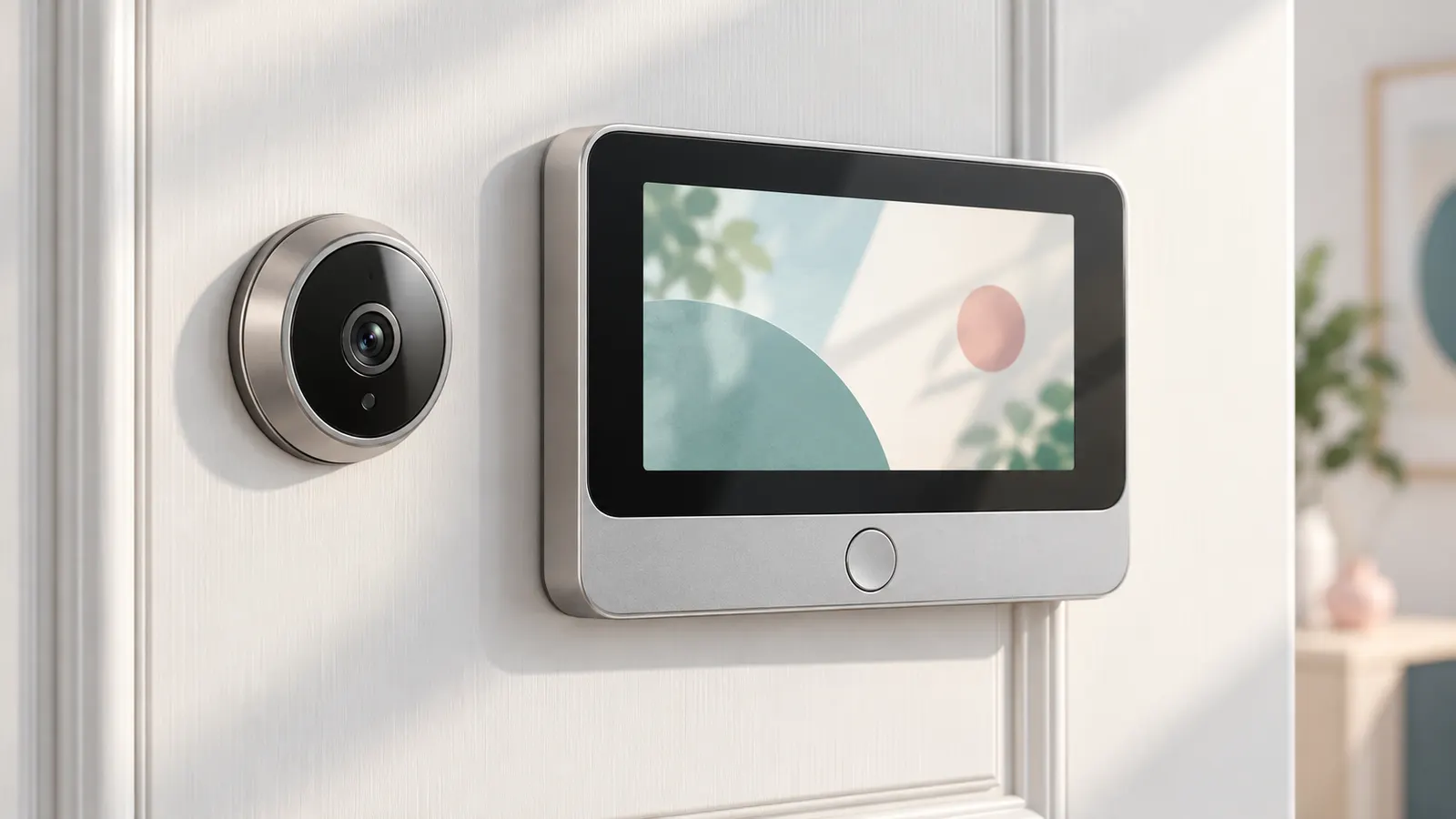
A digital peephole replaces the optical viewer with a camera and screen. It suits apartment doors where a doorbell camera is not allowed.
This guide is built from product listings, not our own testing, so check peephole size compatibility and door thickness on each product page.
By the Reviewstook Editorial Team. Last updated: October 31, 2026.
In this guide
Quick Picks
| Product | Type | Best for |
|---|---|---|
| 3.5-inch Digital Door Viewer (Peephole Camera) | Digital peephole viewer | 120-degree wide angle, LCD screen |
| 3.5-inch Digital Doorbell LCD Eye Peephole | Digital peephole doorbell | Color IR camera |
| 1080P Video Doorbell Door Viewer (4.3-inch Monitor) | Peephole doorbell camera | WiFi two-way audio |
| 2K Video Peephole Doorbell (4.3-inch, 8000mAh) | Peephole doorbell camera | 32GB card, 4.3-inch monitor |
| 2K Peephole Camera Doorbell (4.3-inch, 64GB Card) | Peephole doorbell camera | 2K with 64GB card |
Our Picks

Top pickBest for apartment doors that cannot take a doorbell
1. 3.5-inch Digital Door Viewer (Peephole Camera)
A peephole door viewer digital door eye camera with a 3.5-inch LCD HD screen and a 120-degree wide angle, per the listing. Check price on Amazon.
Good for: apartment doors that cannot take a doorbell. Strengths: replaces a peephole. Weaknesses: sits at the budget end of this category, so the feature set is basic. Skip it if you want app alerts.

Best for a peephole with a doorbell
2. 3.5-inch Digital Doorbell LCD Eye Peephole
A 3.5-inch digital doorbell LCD 120-degree eye electronic peephole with a color IR camera, per the listing. Check price on Amazon.
Good for: a peephole with a doorbell. Strengths: IR camera and LCD. Weaknesses: still a budget-tier pick, so the feature set is basic. Skip it if you want app alerts.

Best for a monitor and app combo
3. 1080P Video Doorbell Door Viewer (4.3-inch Monitor)
A 1080P HD wireless video doorbell door viewer camera with a 4.3-inch color monitor and WiFi two-way audio, per the listing. Check price on Amazon.
Good for: a monitor and app combo. Strengths: monitor plus Wi-Fi app. Weaknesses: mid-range tier, so it costs more than the basic viewers. Skip it if you want the cheapest.

Best for 2K peephole video
4. 2K Video Peephole Doorbell (4.3-inch, 8000mAh)
A 2K video peephole doorbell camera door viewer with a 4.3-inch color monitor, a 32GB memory card and an 8000mAh battery, per the listing. Check price on Amazon.
Good for: 2K peephole video. Strengths: large monitor and 2K. Weaknesses: mid-range tier, so it costs more than the basic viewers. Skip it if you want the cheapest.
Best for a storage-included peephole camera
5. 2K Peephole Camera Doorbell (4.3-inch, 64GB Card)
A 2K peephole camera doorbell with a 4.3-inch monitor and a 64GB card, per the listing. Check price on Amazon.
Good for: a storage-included peephole camera. Strengths: 64GB card included. Weaknesses: the premium end of this set, so it costs more than the other picks here. Skip it if you want the cheapest.
Best Picks by Category
These labels summarize listing data and are not hands-on test results.
- Lowest price: 3.5-inch Digital Door Viewer (Peephole Camera) — the budget pick in this set; check price on Amazon.
- Premium option: 2K Peephole Camera Doorbell (4.3-inch, 64GB Card) — the premium pick in this set; check price on Amazon.
Price, Rating and Review Comparison
The table lists the picks with their price tier. Prices change often, so check price on Amazon.
| Product | Price | Rating | Ratings | Price tier |
|---|---|---|---|---|
| 3.5-inch Digital Door Viewer (Peephole Camera) | Check price on Amazon | n/a | n/a | Budget |
| 3.5-inch Digital Doorbell LCD Eye Peephole | Check price on Amazon | n/a | n/a | Budget |
| 1080P Video Doorbell Door Viewer (4.3-inch Monitor) | Check price on Amazon | n/a | n/a | Mid-range |
| 2K Video Peephole Doorbell (4.3-inch, 8000mAh) | Check price on Amazon | n/a | n/a | Mid-range |
| 2K Peephole Camera Doorbell (4.3-inch, 64GB Card) | Check price on Amazon | n/a | n/a | Mid-range |
How Much Feedback Backs Each Rating
A high average from a handful of ratings is weaker evidence than a slightly lower average from thousands. Here is how the sample size looks for each pick.
- 2K Peephole Camera Doorbell (4.3-inch, 64GB Card): Amazon did not show a rating count.
How to Choose
Door fit
Check door thickness range.
Screen
4.3-inch shows more detail.
App
Some have Wi-Fi alerts.
How We Chose These Products
We start from products sold on Amazon with a full product name and clear specifications, and we skip results that show only a brand name or a vague title. We then read the listing and any manufacturer information for each one and note the features that matter for security cameras and doorbell products: power type, storage, subscriptions and Wi-Fi requirements. We do not run our own lab tests, and this guide contains no hands-on measurements. Use it to build a shortlist, then check current prices, dimensions and return terms on the Amazon page before you buy.
Buying Guide: What to Check Before You Choose
Power, storage and subscription
Battery doorbells install anywhere but need recharging; wired ones use doorbell wiring. Check whether video is stored locally or in the cloud and what features need a plan. See our doorbell camera buying guide.
Wi-Fi coverage
A weak signal causes lag and dropped video. Place an extender between the router and the camera, and check the band your camera uses, which is often 2.4 GHz.
Smart lock fit and security
Check the door prep, backset and battery. Choose reputable models and strong codes, and keep a backup key.
Quick Reference: Which Pick Suits Whom
- 3.5-inch Digital Door Viewer (Peephole Camera): suits apartment doors that cannot take a doorbell
- 3.5-inch Digital Doorbell LCD Eye Peephole: suits a peephole with a doorbell
- 1080P Video Doorbell Door Viewer (4.3-inch Monitor): suits a monitor and app combo
- 2K Video Peephole Doorbell (4.3-inch, 8000mAh): suits 2K peephole video
- 2K Peephole Camera Doorbell (4.3-inch, 64GB Card): suits a storage-included peephole camera
Common Mistakes to Avoid
- Ignoring the Wi-Fi signal at the install point.
- Assuming no subscription means all features are free.
- Forgetting local recording rules.
- Mounting too low or too high.
- Skipping the return window.
Setup and Care
- Test the Wi-Fi at the mounting spot.
- Set motion zones.
- Use strong unique passwords and two-step verification.
- Check the recording laws and building rules.
Understanding the Types of Peephole Cameras
The term peephole camera covers a few different devices that look similar on a product page but behave differently once they are on your door. Knowing which family a model belongs to tells you most of what you need about installation, power and how you will actually use it.
Digital door viewers with an inside screen
These replace the optical fisheye viewer. A small camera sits in the hole where the old viewer was, and a screen on the inside of the door shows the hallway when you press a button or when someone knocks. Many are fully standalone, with a rechargeable battery and no Wi-Fi at all. They suit people who want a clearer look at who is outside without adding another app or account to their life.
Peephole doorbell cameras with Wi-Fi
This is the type most of the listed picks fall into. The same screen-on-the-door design is paired with a doorbell button, motion detection and a phone app. You get alerts, live view while you are away, and usually the ability to review clips. The trade-off is a more involved setup: the camera needs a decent Wi-Fi signal at the front door, and you will want to understand where its recordings go.
Plug-in or wired variants
A smaller number of models run from a low-voltage supply or a cable routed through the door frame. They avoid battery charging but are harder to install on a rented or heavily used entry door. Most buyers looking at the five products in this guide will be choosing between battery models, so that is the case we focus on below.
Why the type matters
- A standalone viewer has no recurring cost and almost nothing to hack, but you cannot check the door from the office.
- A Wi-Fi model gives remote visibility, but depends on your router, your app and the maker’s cloud service.
- Wired models are the most hands-off long term, yet they usually require more work and permission.
Matching a Peephole Camera to Your Situation
The right choice often comes down to the kind of home you live in rather than the camera’s headline specs. Here are the most common situations and what tends to matter in each.
Apartment renters
Many leases forbid drilling into the door or changing its exterior, which is why this category is popular: the viewer swaps into an existing hole and can usually be reversed. Still, read your lease, because some buildings treat any permanent change to a fire-rated door as a violation. Keep the original viewer so you can restore it when you move out. Also think about neighbors: a camera that records the shared hallway can raise privacy questions in some buildings.
Homeowners with a standard entry door
If you own the place, you have more freedom, but door construction still sets limits. Solid wood, steel and fiberglass doors differ in thickness, and the viewer must reach through the full door. Measure before ordering. A homeowner who already has a video doorbell on the frame might not need a peephole model at all, so ask whether you are adding something genuinely new.
Older adults and anyone with mobility concerns
An optical viewer can be hard to use if you are short, seated or have poor eyesight. A larger inside screen, such as the 4.3-inch displays on some picks here, is far easier to read at arm’s length, and it does not require you to press your face to the door. Brightness, a large button and a simple screen layout often matter more than app features for this group.
Families with children
Parents often like being able to see the door without opening it, and a phone alert when a package arrives or a child comes home. A camera mounted at peephole height will see adults well but may only catch the top of a small child’s head, so check the vertical field of view if that matters to you.
People who travel
If you are often away, remote alerts and cloud or card recordings are the point. A battery that only lasts a few weeks is a poor fit here, so look at capacity and how the camera behaves when idle versus when it records a lot of motion events.
Specs and Features That Actually Matter
Spec sheets for these cameras are full of numbers, and some matter far more than others. Use this as a way to read past the marketing.
Door thickness range and hole size
Every model supports a range of door thicknesses, typically adjustable through a threaded barrel or spacers. Peephole holes are commonly in the neighborhood of 14 to 22 millimeters, but the product page states the exact range it accepts. If your door falls outside it, the unit will not seat properly.
Resolution and what you actually see
Higher resolution helps you identify a face or read a delivery label, but a tiny sensor behind a narrow lens still limits detail. Between 1080p and 2K, the difference is real but modest. Lens field of view matters just as much: a wide angle shows the whole landing, while a narrow one may miss someone standing off to the side.
Night vision
Infrared night vision is standard and produces a black-and-white image in the dark. Some models add a light or color night mode. Hallways with their own lighting are less demanding than exterior doors, so think about where yours opens.
Motion and doorbell detection
Most cameras use a passive infrared sensor to detect warm bodies, sometimes combined with image-based detection. Wider, more sensitive detection means more alerts from neighbors walking past. Look for adjustable sensitivity so you are not buried in notifications.
Battery capacity
A larger battery, like the 8000mAh unit mentioned for one pick, generally means longer gaps between charges, but real life depends on how often the camera wakes and records. Cold climates also shorten battery life.
Storage and audio
Two-way audio lets you speak to a visitor through the door. Storage options usually include a microSD card, a cloud plan or both. A model that records locally continues to work without a subscription, which we cover in the buying guide above.
Questions to Ask Before You Order
- Does my door thickness and hole diameter fall inside the stated range?
- Is my front door covered by a reliable Wi-Fi signal, and on the 2.4 GHz band the camera likely requires?
- Do I want footage stored on a card at home, or in a cloud service?
- Who can see the clips, and can I delete them myself?
- Will my lease, building rules or fire regulations allow the change?
- How will I charge the battery, and can I do it without taking the camera off the door?
- Does the app work on my phone and receive updates, and what happens if the company stops supporting it?
- What is the return window if the fit is wrong?
Writing down your answers before you compare models usually narrows five candidates to one or two. It also avoids the most common return reason, which is a unit that simply does not fit the door.
Budget vs Premium: Where the Money Goes
In this category the price gap shows up in a handful of places rather than everywhere. At the lower end, you typically get a standard-definition or 1080p image, a smaller screen and a basic app. As you move up, you tend to see higher resolution, larger screens, longer battery life, more reliable software and sometimes bundled storage.
What you rarely get at any price is a guarantee that the app will remain polished for years. Budget brands in particular can change names, drop support or revise their cloud terms. That is another reason standalone, locally stored operation is attractive: it keeps the camera useful even if the software side falters.
If you are on a tight budget, a simple digital viewer with no app removes the largest ongoing risks. If you can spend more, the better investment is usually resolution and battery capacity combined with a trustworthy storage option, not extra gimmicks.
Going Deeper: Choosing the Right Peephole camera and digital door viewer
The shortlist above gives you the headline differences. This section slows down and looks at the decisions underneath them, because with a peephole camera and digital door viewer the wrong choice is rarely a bad product; it is a good product matched to the wrong routine. Work through the four considerations below in order. By the end, one or two of the picks should stand out clearly, and the rest can be set aside without second-guessing.
Door thickness and peephole diameter
These devices fit through the existing peephole hole, so your door’s thickness and the hole’s diameter decide compatibility before any feature does. Measure both, or remove the old viewer and check, before ordering. Most picks here state a thickness range; a door outside it needs a different model, not force.
Screen size and who uses it
The indoor screen is the product, for many buyers: a larger, clear display at a comfortable height serves children and anyone who cannot use a small optical viewer or a phone app. Check the screen size and whether it wakes automatically on a knock or button press, which decides whether callers are actually seen in time.
Recording versus viewer-only models
Some viewers simply show who is there; camera models record visitors and missed callers, with storage on a card. Recording proves useful for parcels and unwanted callers, but adds battery and card management. Decide whether you need evidence or just a better view before paying for the full camera pattern.
Battery and charging access
The indoor unit houses the battery, charged over USB without removing anything from the door on most designs. Larger batteries in some picks stretch the interval to months. Consider who will do the charging: a viewer that goes flat and stays flat helps nobody, so simple charging is a real feature for elderly users.
How the Picks in This Guide Compare in Real Use
Specifications tell you what each pick is; they do not tell you what each pick is like to live with. The notes below revisit every recommendation in this guide in turn, focusing on who each one suits and who should look at a neighbouring pick instead. No links and no new products here, just the comparison thinking that usually happens after the boxes are opened.
3.5-inch Digital Door Viewer (Peephole Camera)
The 3.5-inch Digital Door Viewer (Peephole Camera) rewards a closer look at how it will be used day to day. Within this guide it sits among alternatives that solve the same basic problem in different ways, so judge it against your own routine rather than against a specification sheet. Photographers and households who match its strengths to their habits tend to keep it for years; those who buy it for an occasional edge case tend to leave it behind. If its particular balance of size, simplicity and capability fits the way you already work, it is a sound choice; if you would have to change your routine to accommodate it, another pick in this list will suit you better.
3.5-inch Digital Doorbell LCD Eye Peephole
Consider the 3.5-inch Digital Doorbell LCD Eye Peephole as the option for someone who values its specific approach over the alternatives above and below it. The honest way to choose is to picture your last few outings or your last month of callers and ask where this design would have helped and where it would have been in the way. Every pick in this guide has a genuine strength and a real compromise; this one’s compromise is the price of its strength. Choose it when the strength answers your most common situation, and skip it without regret when your routine points the other way.
1080P Video Doorbell Door Viewer (4.3-inch Monitor)
With the 1080P Video Doorbell Door Viewer (4.3-inch Monitor), the deciding questions are practical. Does it fit what you already own, does it suit the places you use it most, and will you still be reaching for it in a year? Longevity in a kit is the true measure of value, because cost spreads over every use. Compared with the neighbouring picks, it trades a little of one quality for more of another, and the right trade is personal. Let your most frequent scenario, not your rarest, make the decision.
2K Video Peephole Doorbell (4.3-inch, 8000mAh)
The 2K Video Peephole Doorbell (4.3-inch, 8000mAh) illustrates why this guide groups its picks by need rather than declaring one winner. In the right hands it is exactly the tool the situation calls for; in the wrong routine it is an answer looking for a question. Read its description above again with your own habits in mind, and weigh how often its strengths would be exercised. Frequent small benefits beat rare dramatic ones, in accessories as in most equipment choices.
2K Peephole Camera Doorbell (4.3-inch, 64GB Card)
The 2K Peephole Camera Doorbell (4.3-inch, 64GB Card) rewards a closer look at how it will be used day to day. Within this guide it sits among alternatives that solve the same basic problem in different ways, so judge it against your own routine rather than against a specification sheet. Photographers and households who match its strengths to their habits tend to keep it for years; those who buy it for an occasional edge case tend to leave it behind. If its particular balance of size, simplicity and capability fits the way you already work, it is a sound choice; if you would have to change your routine to accommodate it, another pick in this list will suit you better.
Setup, Workflow and Getting Consistent Results
Installation order that avoids rework
Charge or wire first, connect to the app second, mount last. Testing the camera in your hand at the doorway confirms the Wi-Fi signal and the view before any screws go in. Mark the mounting position, hold the camera there, and check the live view for faces and the doorstep. Only then fix the mount, because moving a mounted camera is the rework everyone does once and regrets.
Tuning alerts in the first week
Expect the first week’s settings to be wrong. Walk your own path at different times, note which alerts were useful, then set zones and sensitivity so the camera watches your property rather than the street. Person detection, where offered, should be on. The goal is a camera whose every alert deserves a glance; anything noisier trains you to ignore it.
Household setup, not just installer setup
Add every adult in the house to the app before you finish, set the chime volume for the rooms that matter, and agree who responds to alerts. A doorbell only one person can answer is half installed. Write the Wi-Fi and account details into your household records so a phone upgrade does not lock you out of your own front door.
Real-World Scenarios: Matching the Pick to the Situation
Abstract advice only goes so far, so here are the situations readers describe most often, and how the thinking in this guide applies to each. Find the scenario closest to your own life and weight its advice heavily; the others are there for the day your routine changes.
Apartments where external cameras are banned
A peephole camera changes nothing visible outside beyond the viewer itself, which keeps it within most building rules. It records callers and parcels at your own door without filming from a corridor-mounted device. For renters, the original viewer refits in minutes at move-out.
Elderly parents who struggle with optical viewers
A bright screen at eye level, waking on the doorbell or a knock, is far easier than a dim optical peephole. Family can set up recording so missed callers can be reviewed later. Choose the largest screen and simplest controls among the picks for this use.
Children home alone
A viewer lets a child see who is calling without opening the door or standing on a stool for the peephole. Recording models let parents review who came. Agree the house rule: look, do not open for anyone unexpected, and call a parent.
Homes wanting records without an app
Not everyone wants another phone app. A peephole camera with its own screen and card storage works entirely at the door, no account or Wi-Fi required on basic models. The trade-off is no remote viewing, which for some households is a feature, not a loss.
Troubleshooting and Avoiding the Usual Disappointments
Working through connection problems
Most doorbell faults are connection faults. Check power first, then signal strength at the door, then the app. Restart the router before resetting the camera; resets destroy your settings and rarely fix a weak signal. If dropouts cluster at certain times, neighbouring networks and household demand are the usual suspects, and moving the router or adding a mesh point is the durable fix.
False alerts and missed events
False alerts call for narrower zones and lower sensitivity; missed events call for the opposite, plus a check that the camera is not overheating in direct sun or throttled by a weak connection delaying its wake-up. Adjust one setting, live with it for two days, then judge. Daily tweaking never lets you see a pattern.
When to contact support or replace
If the camera loses connection within sight of the router, or the battery drains in days with few events, something is genuinely wrong and support should hear about it while the warranty is young. Keep your purchase records. A doorbell is a security device; a unit you cannot trust should be repaired or replaced, not tolerated.
More Questions Worth Asking Before You Decide
The main FAQ below answers the questions every buyer asks. These additional ones come from owners a few months in, when the newness has worn off and the real characteristics of a peephole camera and digital door viewer have made themselves known.
Will a peephole camera fit my door?
Measure the door thickness and the existing hole diameter, then compare with the model’s stated range. Most residential doors fall within the common ranges these picks cover. If your door has no peephole at all, fitting one means drilling, which renters should not do without written permission.
Does the outside part look suspicious or obvious?
From outside, most models resemble an ordinary door viewer, which is their advantage in buildings with camera rules. Some include a doorbell button on the outer unit. Either way, nothing about the installation suggests a camera to a casual caller.
How long does the battery last?
It depends on screen use and recording frequency: a busy household wakes the screen many times a day. Larger-battery picks stretch intervals considerably. Charging is over USB at the indoor unit, so topping up monthly as a routine, rather than waiting for empty, keeps the viewer always ready.
Can I see visitors at night?
Models with infrared night vision show callers in darkness on the screen, which matters for unlit corridors and winter evenings. Check the pick’s description for night capability if your doorway is dark, because basic viewer-only models may rely on hallway light.
What happens to recordings when the card fills?
The oldest clips are overwritten by the newest, as with most card-based cameras. A larger card keeps a longer history. If a clip matters, such as an incident with a caller, copy it off promptly or lock it if the model offers file protection.
Field Notes for Peephole camera and digital door viewer Owners
Think of a doorbell camera as one layer in a sensible home setup, alongside decent locks, lighting and neighbours who know you. It records and deters, and its footage helps after an incident, but it does not replace a strong door. A visible camera plus a light that comes on at night changes behaviour at your door more than any single feature inside the camera itself.
Privacy deserves a deliberate decision, not a default. Set the camera to view your own doorway and path, use masking or zones where the model offers them, and think about audio, which captures more of your neighbours’ lives than video does. Many owners disable continuous audio recording while keeping two-way talk for callers. That balance keeps the security benefit and the goodwill of the street.
Keep the system maintained like any other household appliance. Wipe the lens and any solar surface when you clean the porch, check the app for firmware updates monthly, and review your alert settings each season, because daylight, foliage and foot traffic all change. A camera that was perfectly tuned in spring can cry wolf all autumn if nobody revisits its zones.
Plan for the day you replace the camera, because that day always comes. Keep the mounting screws, the original fittings and any parts of the old doorbell you removed. Note which account and email the system uses. The households who struggle with smart devices are usually struggling with lost credentials and missing parts, not with the technology itself.
Share access thoughtfully. Give regular household members their own logins where the system supports it, rather than sharing one password, and remove access for people who no longer need it, such as former tenants or tradespeople given temporary entry. A quick review of who can see your front door, twice a year, is basic hygiene for a device that watches your home.
Deliveries are the daily reality that justifies most doorbell cameras, so set the system up around them. A view that includes the doorstep, an alert that arrives while the courier is still present, and two-way talk to redirect a parcel are the three pieces that matter. If parcels are regularly left in the rain or in view of the street, a polite sign asking couriers to use a side door or box, backed by the camera, solves more than any setting.
Think about what happens at night in your street specifically. Street lighting, passing traffic and neighbours’ security lights all shape the camera’s night behaviour. Spend one evening watching the live view and a few recorded events after dark before you judge the camera or change its settings. Many owners tune their system entirely by daylight and then wonder why the night alerts behave differently.
If you sell or move, reset the camera and remove it from your account as part of the move, and leave the mount and any wiring tidy for the next household. A camera left registered to a previous owner is a common and avoidable frustration for buyers of homes with smart devices already fitted. A short note about the transformer location or the mount type is a kindness that costs nothing.
Keep expectations proportionate. A doorbell camera shows you the door, deters casual opportunists and settles questions about deliveries and callers. It will not identify every face in poor light, see around corners or replace telling a neighbour you are away. Owners who expect the first list are satisfied for years; owners who expect the second list blame a perfectly good camera.
Finally, review your recorded events occasionally even when nothing is wrong. You will learn your door’s normal rhythm: the post, the neighbours, the cat that owns the street. That baseline is what makes a genuinely unusual event stand out when it matters, and it takes only a few minutes a month to maintain.
Doorbell cameras work best as part of a routine: glance at the morning’s events with coffee, clear false alerts, and confirm the battery or connection is healthy. Thirty seconds a day keeps the system trustworthy. The owners who abandon these devices are usually those who never built the habit, so alerts piled up unread until the one that mattered was missed among the noise.
If your household includes someone who is not confident with apps, set the system up around them, not around the technology. A loud chime, a simple viewer or a shared tablet by the door can matter more than any camera specification. Technology that only the installer can operate will quietly stop being used by everyone else in the home.
Record keeping sounds dull until it matters. Note the installation date, the account email, where the transformer or mount screws are, and who has app access. When you replace a phone, sell the house or call support, that single note answers every question they ask. Five minutes of documentation today prevents an afternoon of archaeology later.
Seasonal changes alter everything at a front door: low sun blinds cameras that were fine in summer, foliage blocks views, and holiday parcel traffic multiplies alerts. A twice-yearly five-minute review of angle, zones and sensitivity keeps the system matched to the street it actually watches, rather than the street as it was on installation day.
Neighbours are part of the system too. A camera that respects their privacy and a household willing to share footage when something happens on the street builds the kind of informal watchfulness that genuinely deters crime. The technology records; the community is what acts on it. Both halves deserve a little deliberate attention.
When the time comes to upgrade, the mount, wiring and habits you already have are assets. A household that knows its doorway’s light, traffic and weak points will choose the next camera in minutes and set it up in one attempt. Experience with the first system, not the specification of the second, is what makes the upgrade feel effortless.
Fitting Day: Measuring, Installing and Setting Up a Peephole Camera
These devices are among the simplest home-security installs, but the difference between a ten-minute success and a frustrating return is almost always measurement and setup order. Here is the sequence that works for the picks in this guide.
Measure before you unbox anything
Measure your door’s thickness at the edge with the door open, and check the diameter of the existing peephole by removing the old viewer: grip the inside barrel and unscrew it by hand or with a coin in the slot provided, keeping a hand on the outer lens so it does not drop. Compare both numbers with the new unit’s stated range while the old viewer is in your hand. If they fall outside the range, you have lost nothing but five minutes, and the old viewer screws straight back in.
Fit in the right order
Charge the indoor unit first. Then feed the camera’s ribbon cable or barrel through the hole from outside, connect it to the indoor screen exactly as the instructions describe, and only then tighten everything finger-tight plus a small final turn. Overtightening can distort a door’s surface or stress the cable; snug is enough, because the unit is held by the barrel, not by force. Power on and check the view before fitting any trim or covers, while adjustments are still easy.
Set it up for the people who will use it
Set the screen brightness for your hallway’s real light, choose the largest, clearest display options the menu offers, and fit the memory card and format it in the device if you bought a recording model. Then have every regular user, especially anyone the viewer was bought for, stand at the door and view a test visitor. If they cannot see and operate it comfortably in that rehearsed moment, adjust the height of expectations, the settings or the model now, not after a real caller has been missed.
Frequently Asked Questions
Do peephole cameras work with any door?
Check thickness limits.
Which is best?
See Quick Picks.
Doorbell camera?
See our video doorbells.
Do security cameras need a subscription?
Some features do. Check what is included on the product page.
Are cheap cameras safe?
Check privacy and update support, and set a strong password.
Is local storage better than cloud?
Local storage avoids fees but can be stolen with the device. Many people use both.
How thick can a door be for a peephole camera?
It depends on the model. Most peephole cameras accept a range, often somewhere around 35 to 100 millimeters, using adjustable barrels or spacers. Measure your door at the existing viewer hole and compare it with the range on the product listing before ordering, since a mismatch is the top reason for returns.
Can a peephole camera be installed without drilling?
Usually yes, if your door already has a standard viewer hole. You unscrew the optical viewer and install the camera in its place. Drilling is only needed when no hole exists or the hole is too small. Rental tenants should still confirm the lease allows swapping the viewer.
How long does the battery last on a peephole doorbell camera?
There is no single answer because it depends on battery capacity, how many motion events trigger recording, temperature and Wi-Fi strength. Busy hallways drain batteries faster than quiet doors. Expect to recharge every few weeks to a few months, and check whether the camera can be charged without removing it.
Do peephole cameras record all the time?
Most do not. Battery models stay in a low-power state and wake up when they detect motion or a button press, then record a short clip. Continuous recording would drain the battery in days, so it is generally limited to wired models. Check the product description to see how a given camera behaves.
Can someone see my peephole camera from outside?
From the hallway, the lens is small and sits where an optical viewer would, so it is not very conspicuous, though a close look reveals it. Some models also have a visible doorbell button or indicator light. If privacy matters, ask whether the status light can be turned off in the app.
Bottom Line
For the lowest price, the 3.5-inch viewer. For app and monitor, the 1080P 4.3-inch. For 2K, the 2K peephole doorbell.
Related Reading
More Doorbell and Home Security Guides
- Best Video Doorbell Cameras
- Best Doorbell Cameras Without Subscription
- Best Wireless Doorbell Cameras
- Best Wired Doorbell Cameras
- Best Doorbell Cameras Under $50
- Best Solar Doorbell Cameras
- Best Doorbell Cameras for Apartments
- Best Doorbell Mounts
- Best Wireless Doorbells and Chimes
- Best Doorbell Transformers
- Best WiFi Extenders for Doorbell Cameras
- Best Smart Door Locks
- Best Floodlight Security Cameras
- Doorbell Camera Buying Guide
- Best Wireless Outdoor Security Cameras
- All security camera guides

