reviewstook.com is reader-supported. When you buy through links on our site, we may earn an affiliate commission.
Where to Buy Your First Real Camera
The best cameras for beginer photographers — beginner photographers, as the spelling settles — share one virtue that spec sheets never list: they teach. A first camera should make the relationship between light, aperture, shutter and sensitivity feel discoverable rather than punitive. It should reward your first walk with photographs visibly better than your phone’s, forgive your hundredth mistake without sulking, and still be interesting in year two when the training wheels come off.
Beginners drown in advice, most of it aimed at people who already shoot. This guide ignores the prestige shelf entirely and asks a simpler question: which cameras, in the hands of a genuine novice with a free Saturday and no teacher, produce the steepest, happiest learning curve? The answers favour friendly menus, honest automatic modes that explain themselves, strong autofocus that removes one variable while you learn the others, and lenses that show you what depth of field actually means.
Four of these first cameras carry links from our verified pool; two classic starters appear in prose only, without links. One promise governs the whole list: nothing recommended here will embarrass its owner in a year, and nothing requires a second purchase before photography can begin this weekend. The camera is the start of the hobby, not its final examination.
Key Takeaways
- A first camera should teach exposure by feel, not punish you into automatic mode forever.
- Strong autofocus is a beginner feature: it removes one hard problem while you learn the rest.
- The kit lens is a teacher — master its limits before buying the lens the internet insists you need.
- Menus written in human language shorten the learning curve more than any sensor advantage.
- Size decides usage: the camera carried daily teaches faster than the flagship carried monthly.
- Every pick here must still feel interesting in year two, or it is a toy wearing a camera’s price.
In this guide
Quick Picks
| Pick | Badge | Why it made the list |
|---|---|---|
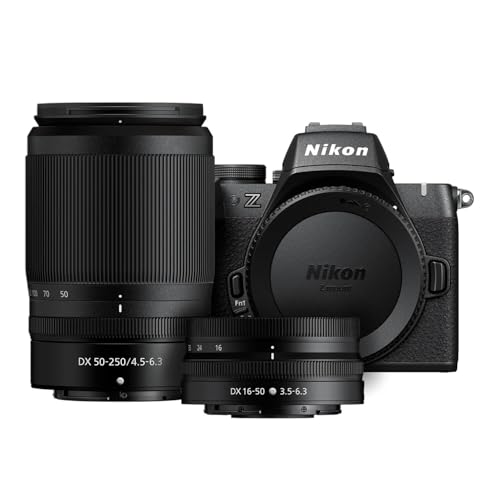
| Nikon Z50 II with Two Lenses | Best complete first kit | Two lenses, teaching presets and instant sharing — a photography education in one sensible box. |
| Nikon Z50 II | Best first mirrorless body | The same friendly body bought singly, for beginners who want to choose their first lens deliberately. |
| Sony ZV-1F | Best no-fuss first camera | Fixed lens, instant competence and lovely video — photography’s gentlest possible front door. |
| Canon EOS R6 Mark II | Best first camera for the committed | A body a beginner can start on and a professional could borrow — buy once, cry once, shoot for a decade. |
| Canon EOS R100 | Best budget first step | The kindest guided introduction to interchangeable lenses, covered prose-only for careful budgets. |
| Fujifilm X-T30 II | Best first camera with soul | Dial-led controls that teach exposure by touch, prose-only here and adored by learners who think with their hands. |
How Did We Choose the Best Cameras for Beginner Photographers?
We began with the sixty-second test: a novice, unboxing on a Saturday morning, should be photographing something they are proud of within the hour, using guidance the camera itself provides. Guided modes that explain, presets that flatter, and autofocus that simply finds the subject were scored as teaching features. Cameras whose brilliance only unlocks after a forum education were set aside, however beloved by experts.
The second filter was growth room. A first camera is a system decision in disguise, so we favoured mounts with affordable, excellent second lenses and bodies whose manual controls are complete rather than decorative. The beginner who falls in love — many do — should find the same camera waiting patiently at every new level of ambition, instead of hitting a ceiling by Christmas.
Third, we weighed the psychology of carrying. Beginners learn in proportion to photographs taken, and photographs happen in proportion to the camera being present. Compact bodies, honest battery life and painless phone sharing all raise presence. The finest teacher in this guide would be worthless in a cupboard, so portability was graded as a learning feature, not a lifestyle preference.
Which First Camera Fits the Beginner You Actually Are?
If you want photography to be easy first and deep later, the Nikon kits and the little Sony are your doors — choose between them by whether interchangeable lenses excite or intimidate you today. If you already know this hobby has you — you have read three books and annoyed your friends — the Canon R6 Mark II is the rare case where buying the serious body first is wisdom rather than vanity.
Hands-on learners should linger on the prose-only Fujifilm, whose dials teach exposure physically, while budget-careful learners belong with the R100’s guided gentleness. There is no wrong door in this list; there is only the door you will actually walk through every week.

Nikon Z50 II with Two Lenses — Best complete first kit
This kit answers the beginner’s first hundred questions before they are asked: a lens for scenes, a lens for distance, presets that flatter while you learn, and sharing that puts early wins on your phone in seconds. It is the default recommendation of this guide.
Unboxing a first camera should feel like the start of an adventure, not the opening of an exam paper. The Nikon Z50 II with Two Lenses understands this: everything required is in the box, the standard lens for everyday scenes and the longer one for distance, so a beginner’s first weekend can include portraits, landscapes and the heron at the far end of the lake. Presets produce flattering results while its owner still believes aperture is a type of pasta. Sharing photographs to a phone takes seconds, delivering the early wins that hook a new photographer. Completeness is the pedagogy here — no lesson is interrupted by a missing accessory. The box even removes the paralysis of the accessories aisle, because the first month needs nothing beyond a memory card and a pocket to carry the camera in.
The deeper gift of this kit is how it sequences learning. Week one runs on presets and produces photographs good enough to print, which buys motivation. Month two introduces the second lens and, with it, an intuitive education in focal length: the same garden photographed wide and then long teaches more than a chapter of theory. By the time curiosity reaches manual settings, the beginner owns a body of work and a body of confidence. Guided explanations inside the menus answer questions at the moment they arise, beside the subject, rather than in a manual left at home. Few starter kits respect the psychology of learning this carefully. The menus deserve their own praise for using photographs, not jargon, to illustrate what a setting changes, so the explanation and the experiment happen in the same second. Owners regularly report understanding exposure properly for the first time within a fortnight, not because they studied harder but because the camera finally explained it where the questions actually occur.
Photography’s early frustrations are usually logistical rather than artistic: dead batteries, full cards, files trapped inside the camera. This kit minimises all three by being simple to charge, generous in use and quick to share. A rainy-day still life by the kitchen window becomes a same-day print for the fridge because nothing in the workflow resisted. Friends at a small gig receive their photographs before the band has packed away. That frictionlessness matters because beginners quit hobbies at friction points, not at talent limits. Nikon has effectively removed the usual quitting places, leaving only the enjoyable difficulty of learning to see. Its battery life across a full day of family events removes another classic beginner complaint, since nothing teaches helplessness faster than a camera dying during the birthday candles.
Trust develops quickly when a camera keeps its promises in varied conditions. The kit handles a family lunch with mixed lighting, a pet portrait on the living-room floor and a neighbourhood walk at dusk, each time producing results its owner is proud to show. Focus finds faces and eyes without drama, so the beginner’s attention stays on composition and timing — the skills that actually distinguish photographs. Its colour presets flatter people, which encourages photographing people, which is where most beginners’ best early work hides. A first camera that makes its owner look competent accelerates everything that follows. The viewfinder deserves a mention as well, because composing through it shuts out distractions and gives a beginner the photographer’s tunnel vision that phone screens, bright with notifications, never provide.
There is also dignity in this recommendation. It is not a toy to be discarded at the first sign of talent; the body and lenses remain useful as a second system or a travel kit years later. Beginners sense when they have been sold a cul-de-sac, and they resent it. This kit is a road: lenses can be added, skills can deepen, and the original purchase keeps honouring its owner. Starting here means the first chapter of a photographic life is written with proper equipment, kindly presented. That combination — seriousness without intimidation — is exactly what a first camera should offer. Its resale value, should photography somehow not take, protects the experiment financially, although the more common story is a kit that stays in the family and teaches a second generation.
- Two-lens kit in the box
- Easy colour presets
- Wireless photo sharing
- Compact mirrorless body
Strengths
- Build quality suited to regular beginner photography
- Files with editing headroom for beginner photography
- Build quality suited to regular beginner photography
Trade-offs
- Menus reward setup before a pet portrait session on the living-room floor
- Video depth outruns most beginner photography needs
- Menus reward setup before a family lunch where you are suddenly the photographer
Best for: beginners wanting the complete, no-homework start
Not suited for: beginners set on a single fixed-lens camera

Nikon Z50 II — Best first mirrorless body
Bought as a body, the Z50 II suits the beginner who wants to deliberate over a first lens — often a fast prime — and build a kit with intent. The same friendliness applies; the education simply becomes more self-directed from day one.
Buying the Nikon Z50 II as a body only suits a particular, appealing kind of beginner: the one who enjoys choosing. Freed from the kit lenses, they can begin with a single fast prime and learn photography through one focal length, the way generations of photographers did. The body’s friendliness is unchanged — the same welcoming menus, the same forgiving presets — but the education becomes self-directed from the first day. Controls are arranged to teach as they are used, each dial’s effect visible immediately in the viewfinder. For the deliberate beginner, this is the same excellent school with the curriculum left blank for them to write. The body’s smaller size compared with the kit’s full outfit also suits minimalists who travel light and photograph slowly, one lens forcing a contemplative pace.
A single-lens start has a hidden curriculum of its own. With no zoom to hide behind, the beginner learns to move: closer for intimacy, further for context, lower for drama. The Z50 II rewards that physical learning with files that hold up when cropped modestly and colours that encourage experimentation. Its sharing tools keep the social loop of early photography spinning — photographs reach friends quickly, reactions return, motivation compounds. Owners who begin this way often develop a distinctive eye faster than kit-zoom owners, because constraint is a strict and effective teacher. The body never obstructs that development with complexity. Battery endurance across a day of wandering supports that contemplative pace, since the photographer can think about pictures rather than power percentages while exploring an unfamiliar town.
There is pleasure in building a kit deliberately, and this body supports the hobbyist temperament behind that pleasure. The first lens is chosen after research and longing; the second arrives when a specific photograph demands it. Between purchases, the camera’s guided modes explain themselves patiently, turning each outing into a small seminar. Beginners who think of themselves as future photographers rather than camera owners tend to thrive on this path. The Z50 II’s compact size keeps it present during the learning — carried on walks, taken to family events — because a teacher left at home teaches nothing. Its wireless habits deserve emphasis for this audience in particular, because deliberate photographers still enjoy an audience, and a photograph that reaches friends the same evening gathers the encouragement that sustains a self-directed education.
Results, meanwhile, need not wait for the deliberate kit to assemble. Even with one modest prime, the body produces portraits with a depth and clarity that announce the difference between a camera and a phone. Family members notice immediately, and their requests for photographs become the beginner’s first commissions. Focus reliability means those commissions succeed, building the photographer’s local reputation one birthday at a time. The learning curve stays gentle because the camera’s automatic intelligence covers gaps in knowledge without advertising them. Confidence grows in public, which is where a hobby either becomes an identity or quietly dissolves. The body’s weather resistance is modest but welcome, letting a beginner continue through the damp conditions where interesting light usually hides.
Choose the body-only route when the choosing itself is part of the fun, and when a specific first lens already has your heart. Avoid it if decisions paralyse you; the two-lens kit exists for good reason. Either way, the underlying camera is identical in character: friendly, capable and sized for real life. Beginners who start here rarely regret the platform, because Nikon’s system gives their growing ambitions somewhere to go. The first purchase in a hobby sets its emotional tone, and this one sets a tone of calm encouragement. Think of it as the same school with a self-written timetable: identical standards, identical kindness, and a head teacher who trusts you to choose your own first subject.
- APS-C format sensor
- Easy colour presets
- Wireless photo sharing
- Compact mirrorless body
Strengths
- Controls that stay learnable during a rainy-day still life by the kitchen window
- Files with editing headroom for beginner photography
- Controls that teach as you go that directly serves autofocus that removes early frustration
Trade-offs
- Honest weight checks precede a friend’s gig in a dim, friendly venue
- Menus reward setup before a rainy-day still life by the kitchen window
- Menus reward setup before a sunset that demands settings you half-remember
Best for: beginners choosing a first lens with intent
Not suited for: shoppers wanting everything decided for them

Sony ZV-1F — Best no-fuss first camera
The ZV-1F removes lenses, modes and menus from the beginner equation and leaves only seeing. For novices who suspect they love photographs more than photography, it delivers instant, lovely results and a video education as a bonus.
The Sony ZV-1F proposes a radical simplification: what if a first camera had no lenses to choose, no modes to master and no wrong answers? For the beginner who suspects they love photographs more than photography, that simplification is perfect. Its wide fixed lens frames groups, rooms and arm’s-length self-portraits; its controls were arranged for people who talk to cameras, which makes it unexpectedly brilliant for family video and travel diaries. Results arrive immediately and look polished, so the novice’s energy goes into noticing light and moments rather than operating machinery. Some photographers need exactly one button between them and the picture. Its flip screen helps beginners film themselves learning, a surprisingly powerful teaching tool, because watching your own hands fumble a technique is the fastest route to smoothing it.
Ownership of the ZV-1F teaches a different first curriculum: seeing, timing and confidence in front of the lens. Because the camera handles exposure and focus with minimal fuss, its owner studies composition by necessity — there is nothing else left to adjust. Photographs from a first Saturday walk show a beginner learning where to stand and what to exclude, which is the core skill of the art. Video adds a second education in storytelling, since the camera was built for narrated clips. Sharing is instant enough that early work circulates and earns reactions the same day, fuelling the habit. Simplicity, here, is not the absence of learning but its concentration. Its colour science flatters the friends and family who populate a beginner’s first hundred photographs, and flattered subjects request more photographs, which is the practice loop every novice needs.
The little Sony also protects beginners from the hobby’s most expensive beginner mistake: buying a system before knowing whether the hobby itself appeals. Its complete, finished nature means the experiment costs one purchase and answers the question honestly within a month. If the owner falls in love with seeing, they will know precisely which capability they crave next. If they do not, they still own a superb pocket camera for family life. Either outcome is a success, which cannot be said of a flagship bought on spec. As a first step, it is both the gentlest and the most financially intelligent on this list. The experiment also answers the video question for free, since a beginner who discovers they love moving images has bought well, and one who does not still owns an excellent stills pocket camera.
Do not mistake its simplicity for fragility of output. The sensor and lens combination produces stills with genuine depth and video with a polish that embarrasses larger, older cameras. At a friend’s gig in a dim venue, it gathers the available light and delivers atmosphere rather than noise. Faces are prioritised intelligently, backgrounds soften pleasantly, and colours flatter the people a beginner most wants to photograph. The camera’s vlogging heritage means its automatic decisions were tuned by people who film real life, not test charts. Beginners benefit from those decisions every time they press the button. Its product-showcase focus behaviour, designed for reviewers, delights beginners photographing objects for online sales, an accidental second career many first cameras quietly launch.
The ZV-1F’s final virtue is social. It can be handed to anyone — a partner, a parent, a child — and it will make them look like a competent photographer within one frame. Beginners surrounded by willing collaborators photograph more, and photographing more is the entire secret. Its size means it attends occasions a system camera would be left out of, from gigs to picnics to school corridors. A first camera’s job is to start a habit, and habits form around whatever is present and painless. This Sony is both, deliberately and completely. Charging from the same cables as everything else in the house removes the last logistical excuse, so the camera is simply always ready beside the keys.
- Fixed 20mm wide lens
- 4K video recording
- Compact vlogging design
- 1-inch sensor
Strengths
- Composed behaviour during a first saturday walk around the neighbourhood
- Composed behaviour during a pet portrait session on the living-room floor
- Controls that stay learnable during a rainy-day still life by the kitchen window
Trade-offs
- Lens costs rival body costs in beginner photography
- Accessories for autofocus that removes early frustration add up quietly
- Lens costs rival body costs in beginner photography
Best for: novices wanting instant results without lenses
Not suited for: learners eager for lens experimentation

Canon EOS R6 Mark II — Best first camera for the committed
Some beginners are really photographers who have not started. For them the R6 Mark II is the honest buy: autofocus and image quality that will never be the limiting factor, controls that scale from guided to professional, and a decade of headroom.
Some beginners know, privately, that they are not dabbling. For them, the Canon EOS R6 Mark II is the honest first camera: a body whose autofocus and image quality will never be the reason a photograph failed. Its stabilisation steadies new hands, its controls scale from guided assistance to full professional authority, and its files reward every editing skill the owner will ever learn. Buying it first is expensive and, for the committed, economical — there is no second body purchase waiting in year two. This is the guide’s recommendation for the beginner who has already decided to become a photographer. Its weather sealing adds beginner-proofing of another kind, because new photographers shoot in drizzle precisely when the light is best and older cameras would be sheltered.
The learning experience on this Canon is paradoxically gentle for such a serious tool. Guided assistance explains, automatic modes deliver, and the ceiling above the beginner’s head is so high that growth never requires new hardware — only new knowledge. A sunset that demands half-remembered settings becomes a successful photograph because the camera’s intelligence covers the gaps while its owner learns. Stabilisation forgives the unsteady hand of someone concentrating on composition. Early results look professional enough to sustain ambition through the difficult middle months of learning, when standards rise faster than skill. That motivational bridge is worth a great deal. Its silent electronic shutter is a further kindness during the learning phase, letting a beginner practise in churches, theatres and libraries without becoming a public nuisance.
Family life gives this body endless beginner-friendly assignments. At a lunch where the novice is suddenly the photographer, its autofocus finds faces among the chaos and its files survive the mixed lighting of real rooms. At a pet session on the floor, subject detection distinguishes the dog from the rug with comic reliability. The beginner learns the deepest early lesson — that great photographs are usually ordinary moments, well seen — because the camera removes technical failure from the list of explanations. What remains is the seeing, and the seeing improves weekly. Few teaching tools are this honest or this kind. The depth of its lens catalogue means every future genre the beginner falls for — birds, stars, street, sport — already has glass waiting at several prices.
The investment case deserves plain speaking. This body costs more than some beginners’ entire first-year budgets, and for the merely curious it is the wrong purchase — the guide’s kits exist for them. For the committed, though, its decade of headroom, professional lens ecosystem and strong resale make it the cheapest way to own a top-tier camera exactly once. Its controls teach exposure gradually as curiosity grows, moving the owner from assisted modes toward full command without a change of equipment. A first camera that is also plausibly a last camera has a logic all its own. There is also the matter of pride: a beginner carrying this body is taken seriously by other photographers, invited into conversations and photo walks that accelerate learning socially.
There is a psychological dividend to beginning on equipment that never excuses you. When a photograph disappoints, the committed beginner knows the camera did its part, so the analysis turns honestly toward light, position and timing. That honesty accelerates learning more than any tutorial. Meanwhile the successes — and there will be striking ones, early — carry the authority of a professional tool, suitable for printing large and showing proudly. The R6 Mark II treats its beginner owner as a photographer from day one. For the right person, that respect is the finest teaching feature in this guide. Its files’ editing headroom means the beginner’s improving software skills keep finding more in old photographs, so the archive appreciates instead of expiring as technique grows.
- 24.2 megapixel CMOS sensor
- In-body stabilisation
- Fast continuous shooting
- Full-frame sensor
Strengths
- Stabilisation that steadies handheld work that directly serves controls that teach exposure gradually
- Build quality suited to regular beginner photography
- Support, lenses and accessories around sharing that rewards effort instantly
Trade-offs
- Video depth outruns most beginner photography needs
- Overkill if your beginner photography stays casual
- Video depth outruns most beginner photography needs
Best for: committed beginners buying once for a decade
Not suited for: casual beginners on strict budgets
Canon EOS R100 — Best budget first step
The R100 is the careful-budget doorway — small, guided and genuinely capable, introducing interchangeable lenses without financial drama. It is covered prose-only and recommended to any beginner whose enthusiasm exceeds their savings.
The Canon EOS R100 is the careful-budget doorway into real photography, and it treats its owner with unusual respect. Its guided interface teaches while it shoots, explaining in plain language what a setting will change before the photograph is taken. That design turns every outing into a lesson the beginner actually asked for. Small, light and genuinely capable, it introduces interchangeable lenses without financial drama or menu intimidation. For a student, a young photographer, or anyone whose enthusiasm currently exceeds their savings, it is the recommendation that keeps the hobby possible. Beginning modestly and joyfully beats not beginning at all. Its price also leaves room in a beginner’s budget for the two accessories that genuinely matter at the start: a comfortable strap and a second memory card.
What the R100 understands is that beginner frustration is usually about confusion, not difficulty. Its guides remove the confusion at the exact moment it would occur: beside the subject, with the camera in hand. A first Saturday walk becomes a tutorial in depth of field conducted on park benches and patient dogs. Autofocus that removes early frustration keeps the keeper rate high enough to sustain morale, and sharing tools move successes to friends quickly. Owners describe the experience as being accompanied rather than examined. That emotional tone — accompanied — is why this little Canon converts so many casual buyers into genuine photographers. The guided explanations use example images rather than engineering vocabulary, so a complete novice can follow them at a bus stop without feeling examined by the machine. Over a school term of weekends, that patient tutoring accumulates into real understanding, the kind that transfers to any camera the student will ever hold afterwards.
The R100’s size is a pedagogical feature too. Light enough for a school bag or a coat pocket’s larger ambitions, it gets carried, and carried cameras teach daily. Its kit lens covers the honest basics while the guided modes gradually reveal what a different lens might offer. When the beginner eventually craves a fast prime, they will know exactly which photographs justify it — the graduation test this guide keeps returning to. Until then, nothing about the R100 punishes its owner for learning slowly. Patience, in a first camera, is a form of respect for the person holding it. Its colour output flatters family subjects immediately, which matters because a beginner’s first audience is always relatives, and relatives’ enthusiasm is the fuel of the whole enterprise.
Value analysis favours the R100 in a specific way: it spends its budget on the sensor, the mount and the teaching interface, rather than on features a beginner cannot yet use. The RF mount connects its owner to Canon’s modern lens future, so the first small investment is not orphaned when ambition grows. Photographs from family lunches and first holidays show the unmistakable depth of a real camera, convincing sceptical relatives that the purchase was serious. For households buying a first camera for a teenager, that combination of sense and visible quality is persuasive. It is the prudent enthusiast’s starting line. Canon’s support network and the sheer number of fellow owners online mean every beginner question has been asked and answered somewhere, shortening the lonely phase of the hobby.
Choose the R100 when the budget is real, the curiosity is genuine and the alternative is another year of phone photography. Its limitations are honest ones of price, not of spirit, and its guidance system actively works to make its owner outgrow it — the noblest ambition a starter camera can hold. Many photographers will keep it as a light travel body long after graduating to larger systems. Beginning here is not a compromise to apologise for. It is a well-judged first step onto a long and rewarding road, taken with a friendly companion. Its honest simplicity also makes it an easy camera to lend, and lending spreads the hobby through a family the way this guide quietly hopes it will.
- Smallest RF-mount body
- Guided interface modes
- Lightweight starter design
- Entry APS-C mirrorless
Strengths
- Support, lenses and accessories around sharing that rewards effort instantly
- Controls that stay learnable during a rainy-day still life by the kitchen window
- Support, lenses and accessories around guided modes that explain themselves
Trade-offs
- Overkill if your beginner photography stays casual
- Overkill if your beginner photography stays casual
- Honest weight checks precede a first saturday walk around the neighbourhood
Best for: budget-careful first steps into real cameras
Not suited for: video-first beginners wanting advanced tools
Fujifilm X-T30 II — Best first camera with soul
Fujifilm’s dials turn exposure into something your fingers learn: turn the aperture ring, watch the world change. Learners who think physically often progress fastest on this prose-only classic, and its film colours reward them at every step.
The Fujifilm X-T30 II teaches photography through the fingertips. Its physical dials make exposure tangible: turn the aperture ring and watch the background melt; turn the shutter dial and feel time itself being portioned out. For tactile learners — and many beginners are, without knowing it — that physicality converts abstract theory into muscle memory faster than any menu system. Its film simulations reward every experiment with colour that has character, so even practice photographs look like art rather than homework. It appears here without a link, yet no other starter in the list has quite its soul, and beginners who bond with it progress with unusual speed. Its compact rangefinder styling slips into a jacket pocket’s ambitions more easily than most system cameras, so the teaching continues on ordinary errands rather than only on dedicated photo walks.
There is a ritual quality to shooting with this Fujifilm that beginners either love immediately or grow to love within a month. Setting the dials before raising the camera slows the photographer down in the productive way: the photograph is considered before it is taken. Film simulations remove the editing burden that discourages so many novices, delivering finished-looking images from a rainy-day still life or a friend’s gig alike. Its autofocus quietly removes the early frustration of missed focus, keeping attention on the dials and the scene. Owners speak of the camera the way musicians speak of a first good instrument — with gratitude for how it taught their hands. The camera’s colour modes also rescue beginners from the editing software learning curve entirely during year one, which removes the second hobby — post-processing — that so often smothers the first.
The X-T30 II also curates its owner’s taste. Because its colour modes carry distinct personalities, a beginner quickly learns which rendering suits which subject — a discovery about their own eye disguised as a camera setting. That self-knowledge is the beginning of style, and style is what separates photographers from camera operators. The compact body travels easily to the places where a personal style gets practised: markets, coastlines, family kitchens. Its limitations in video and ultimate speed are real but irrelevant to its purpose here. As a teacher of seeing and a maker of beautiful first photographs, it is unmatched at its level. Its dials carry satisfying detents that make settings feel chosen rather than scrolled past, reinforcing the deliberateness that defines its whole approach to the craft.
Families buying for a creative teenager should study this pick closely. It looks and feels like an object from photography’s romantic past while performing with modern competence, and teenagers respond to that authenticity. The dials invite experimentation in a way touchscreens do not, and the film colours make early work shareable without editing skills. It will not be the simplest camera for a purely casual beginner — the guide’s kits hold that title — but for the beginner with an artist’s temperament, simplicity is not the priority. Delight is, and this Fujifilm manufactures delight reliably. Its second-hand market is lively, offering a sensible route in for the budget-conscious and a graceful route out if the temperament match proves wrong.
In the long view, the X-T30 II’s greatest service is retention. Beginners abandon hobbies that feel like administration; they persist with hobbies that feel like craft. Every dial click, every film simulation discovery, every unexpectedly beautiful frame reinforces the identity of photographer. That identity, once formed, survives busy years and eventually buys the serious system. Fujifilm built this camera as an homage, and it functions as an initiation. For the beginner who learns by touching, wondering and making, there is no warmer welcome into photography anywhere in this guide. Its film simulations give even a first roll of practice frames a finished look, and finished-looking work is what beginners show people — and showing people builds identities.
- Retro dial-led controls
- Film simulation colour modes
- Compact rangefinder styling
- APS-C mirrorless body
Strengths
- Controls that stay learnable during a friend’s gig in a dim, friendly venue
- Composed behaviour during a family lunch where you are suddenly the photographer
- Composed behaviour during a rainy-day still life by the kitchen window
Trade-offs
- Overkill if your beginner photography stays casual
- Honest weight checks precede a rainy-day still life by the kitchen window
- Overkill if your beginner photography stays casual
Best for: tactile learners who love dials and colour
Not suited for: beginners wanting the simplest menus possible
How Do the Best Cameras for Beginner Photographers Compare?
First cameras differ mainly in how they teach — the table shows each pick’s teaching style and who it suits.
| Pick | Badge | Standout quality |
|---|---|---|
| Nikon Z50 II with Two Lenses | Best complete first kit | Teaches by completeness and encouragement |
| Nikon Z50 II | Best first mirrorless body | Teaches by guided self-direction |
| Sony ZV-1F | Best no-fuss first camera | Teaches by removing everything but seeing |
| Canon EOS R6 Mark II | Best first camera for the committed | Teaches by never becoming the limit |
| Canon EOS R100 | Best budget first step | Teaches by gentleness and guided modes |
| Fujifilm X-T30 II | Best first camera with soul | Teaches by touch, dials and colour |
What Should a Beginner Check Before Buying a First Camera?
Check how the camera explains itself. Pick it up — or study its guided modes closely — and ask whether aperture, shutter speed and sensitivity are presented as a friendly system or a foreign language. The first month decides whether a camera becomes a companion or a cupboard resident, and interface kindness is the strongest predictor we know.
Check the second-lens story before the first purchase settles. Every beginner who persists wants a fast prime within a year; confirm your system offers one at a price that feels like a treat rather than a tax. Likewise confirm the boring essentials: a comfortable grip for your hand size, a screen you can read in sunlight, and battery life that survives a day of enthusiastic overshooting.
Finally, check your own intentions honestly. If video diaries excite you as much as stills, weight the creator-friendly picks. If you dream of landscapes, weight viewfinders and lenses. A first camera chosen for your actual curiosity will be used; one chosen for an imagined identity will be admired, briefly, from across the room.
How Does a Beginner Learn Photography in the First Month?
Run one-variable weeks. Week one: shoot everything in the camera’s smartest automatic mode and study only composition — where you stood, what you excluded. Week two: aperture priority, watching backgrounds melt or sharpen. Week three: shutter priority with anything that moves. Week four: full manual on a still subject by a window. This staircase turns three dials from a mystery into a language.
Keep a tiny failure journal: the photograph that disappointed you, and one sentence about why. Beginners who name their mistakes — too slow, too far, light behind — stop repeating them within weeks. And shoot daily, even briefly, because photography is a seeing habit before it is a technical skill, and habits are built by Saturdays and Tuesdays alike.
Before You Commit: Notes on Beginner Photography
Before committing to the Canon EOS R6 Mark II as a first camera, a beginner should interrogate their own commitment honestly. This body rewards the photographer who shoots weekly and studies results; it cannot manufacture that discipline. What it guarantees is that discipline will never be wasted on equipment limits. Its stabilisation and autofocus forgive beginner technique while its controls invite beginner curiosity, a rare combination at the professional level. If the commitment is real, buying once and buying properly is the rational path, and this Canon is the guide’s clearest expression of it. The beginner should also price the alternative honestly: a cheaper body replaced in eighteen months, plus the lenses stranded by the change, usually exceeds this single purchase.
The Canon’s behaviour across a beginner’s typical calendar is reassuringly uniform. Family lunches, sunset walks, a pet’s portrait session, a friend’s small gig — the body handles each with the same composed competence, so the novice’s variable results can be attributed honestly to their own developing eye. That clean feedback loop is how photographers actually improve. Sharing successes is quick, printing them is rewarding, and the files keep answering new editing skills for years. A first camera that doubles as a long-term measuring instrument for one’s own growth has a value beyond its specification sheet. Its professional build tolerates the knocks of a learning year — car boots, beach bags, borrowed tripods — without the fragility anxiety that makes owners of delicate equipment shoot less.
Menus and complexity are the usual objections to starting on a professional body, and Canon’s guided assistance answers them better than most. The camera can be operated as a friendly automatic while its owner learns, then gradually surrender control dial by dial. Nothing needs to be relearned when the training wheels come off, because the body beneath them was the real thing all along. For a beginner with the budget and the intent, that continuity is worth paying for. The alternative — two bodies in two years — usually costs more and teaches less. That continuity extends to accessories and lenses, which carry forward unchanged as skills deepen, so nothing spent during the assisted phase is wasted in the independent phase.
Finally, weigh the emotional side of beginning at the top. A committed beginner who buys this Canon is making a declaration — to themselves most of all — that photography is not a passing curiosity. Declarations of that kind tend to fulfil themselves: the camera gets used, the skills compound, and the purchase that looked extravagant in month one looks prescient in year three. If that description fits, the guide’s advice is simple. Buy the body, learn it slowly, and let a decade of photographs justify the decision. If, on the other hand, the honest answer is curiosity rather than commitment, the guide’s kits will serve better and cheaper — the Canon will still be there when curiosity graduates.
Which Mistakes Do Beginner Photographers Make Most?
Buying lenses before learning the kit lens
The kit lens’s limits are a curriculum: they teach focal length, brightness and working distance by experience. Upgrade when you can name the exact photograph your current lens prevented — not before, and not because a forum said the word prime.
Living in full manual from day one
Manual mode is a destination, not an initiation rite. Beginners who start there spend their first month fighting exposure instead of learning to see. Use the assisted modes as the teaching tools they are, and graduate variable by variable.
Judging progress by other people’s highlights
Your first thousand frames are tuition, not portfolio. Comparing them to a professional’s selected decade teaches only discouragement. Compare instead against your own last month — the only honest leaderboard a beginner needs.
Never printing or sharing early work
Photographs that stay on a card teach nothing and delight nobody. Share weekly, print monthly, and let real reactions steer your learning. The beginner who shows work improves at a speed the private shooter never matches.
Final Recommendation
Most beginners should start with the Nikon two-lens kit and stop deliberating; it is complete, kind and genuinely capable. The single-body Nikon, the prose-only Canon and Fujifilm, and the little Sony each serve a recognisable kind of learner, and the Canon R6 Mark II serves the beginner who is not really a beginner at heart.
Whichever box you open, open it this week and take it outside. Photography is learned by photographs — hundreds of ordinary, improving, joyful photographs — and every camera in this guide is ready to teach the moment you are.
Related guides
- Best Cameras for New Filmmakers: First Bodies That Teach Cinema, Not Just Video
- Best Cameras for New Young Photographers: First Cameras That Grow With a Young Eye
- Best Cameras for Novice Photographers: First Serious Cameras for People Learning the Craft
- Best Cameras for Intermediate Photographers: The Step Up That Actually Teaches You
- Best Cameras for Biginners: First Cameras That Forgive, Teach and Last
Frequently Asked Questions
How much should a beginner spend on a first camera?
Enough to clear the frustration threshold — friendly autofocus, decent low-light ability, a real system to grow into — and no more. The kits here mark that threshold well. Money beyond it buys headroom you may want in year three, not happiness in month one.
Is a phone camera enough to learn photography?
A phone teaches composition honestly and exposure barely at all. If your curiosity is about seeing, a phone suffices for now; if it is about the craft — depth, motion, light controlled by hand — a dedicated camera is the teacher you are looking for.
Should beginners buy new or used?
Used bodies from reputable sellers are a honourable tradition and stretch budgets toward lenses. New kits bring warranties and simplicity. Either path works; the mistake is buying an orphan system with no affordable lenses ahead of you.
What is the first lens to add after the kit?
Usually a fast standard prime: it teaches depth of field dramatically, flatters portraits, and rescues dim rooms. Buy it when you can name the photographs your kit lens prevented — that sentence is the graduation certificate of beginnerhood.
How long until a beginner outgrows these cameras?
Years, if ever, for most shooters. The step-up pick may never be outgrown at all. Cameras are outgrown by specific needs — a genre, a job, a print size — not by calendars, and specific needs announce themselves clearly when they arrive.
Related Guides
Your first camera opens these neighbouring topics when you are ready: best cameras for beginners best cameras for family photography best cameras for travel


