reviewstook.com is reader-supported. When you buy through links on our site, we may earn an affiliate commission.
Where to buy
This guide is written for the young photographer — the teenager with the first serious interest, the student choosing a camera for a course and a life, the parent or grandparent funding the purchase wisely — and it leans deliberately toward still photography, where its sibling guide for new filmmakers leans toward video. Each one can be bought on Amazon. The governing question throughout is not which camera is best today, but which camera a young photographer will still be learning from in three years, because that is the purchase that matters.
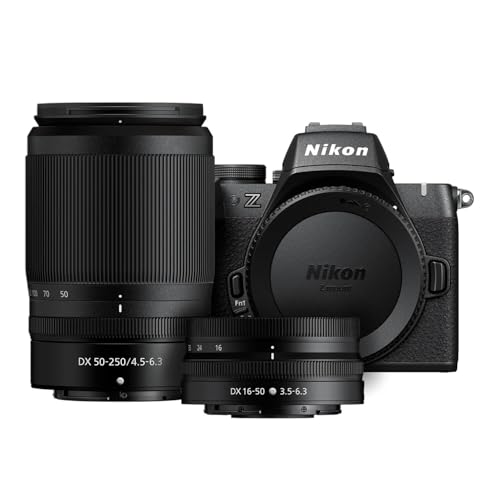
- Nikon Z50 II with Two Lenses: check price on Amazon
- Nikon Z50 II: see the current price on Amazon
- Sony ZV-1F: view this camera on Amazon
- OM SYSTEM Tough TG-7: check availability on Amazon
- Canon EOS R6 Mark II: see it on Amazon
- Insta360 GO 3S: look at it on Amazon
The best cameras for new young photographers share a quality that specification tables cannot express: they respect a beginner’s eye while refusing to patronise it. A young photographer — thirteen or thirty, the principle is identical — needs a camera whose automatic modes deliver success in the first week, whose manual controls are present, legible and waiting for the month curiosity arrives, and whose images are good enough that the photographer’s failures are visibly their own. That last quality sounds harsh and is actually the greatest kindness: a camera that flatters everything teaches nothing, while a camera that rewards a well-seen moment with a genuinely beautiful file teaches at the speed of joy.
This guide leans photographic. Its sibling, for new filmmakers, ranks bodies by codecs, cooling and monitoring; here the currencies are viewfinders, shutter feel, lens choice for stills, colour that makes a young photographer fall for the medium, and the ergonomics of hands that may be smaller, budgets that are certainly smaller, and patience that is being built rather than assumed. Video appears — every camera here films capably — but as a supporting art, the way it appears in most young photographers’ actual lives.
The buying reality of youth runs through every ranking. These cameras will be funded by savings, by family, by the first job; they will be carried to school, on buses, to festivals and family occasions; they may be dropped, lent and rained on. Durability, price honesty and the second-hand ecosystem around a system therefore count double. So does a less tangible asset: whether the camera makes its owner want to join the world of photographers — the club, the course, the online community, the Saturday photowalk — because young photographers are made by other photographers as much as by equipment.
Read the six as a set of doors. The Nikon kit is the front door of serious photography, wide and welcoming. The compacts are the side doors for a teenager whose life is movement — travel, sport, friends — and whose camera must fit the life before it can improve the photographs. The full-frame bodies at the list’s end are the doors marked ‘later, and worth it’, included so a family buying once, generously, can see where the road leads. Every door opens onto the same country. Choose by the traveller, not by the door’s price tag.
One more constituency deserves addressing directly: the teacher. Photography courses inherit whatever cameras their students arrive with, and a class built on the systems in this guide — one mount shared, controls in common, files that behave alike in the school software — is a class that spends its hours on photography rather than on twenty incompatible menus. If a school or club is standardising, the Nikon kit is the natural class camera, and this guide’s blessing on that policy is unqualified.
Key Takeaways
- Buy for the third year, not the third week: controls that wait patiently for growing skill.
- The Nikon Z50 II two-lens kit is the complete first system for a young photographer.
- Colour matters to the young eye: cameras whose pictures delight immediately build photographers.
- The ZV-1F and GO 3S serve the young photographer whose life is movement and friends.
- A viewfinder teaches composition like nothing else — prefer one for serious learners.
- Second-hand lenses make a young budget mighty; choose systems with deep used markets.
In this guide
Quick Picks
| Camera | Badge | Why it is here |
|---|---|---|
| Nikon Z50 II with Two Lenses | Best first system for young photographers | Wide and telephoto kit lenses, a real viewfinder and friendly colour — the complete photographic education in one box. |
| Nikon Z50 II | Best body for young lens collectors | The same foundation body alone — for young photographers with access to lenses or one lens passion. |
| Sony ZV-1F | Best pocket camera for young creators | A simple, stylish compact for a youngster whose subjects are friends, travel and everyday life. |
| OM SYSTEM Tough TG-7 | Best camera for adventurous young photographers | Indestructible, waterproof and macro-capable — the camera for the young photographer who climbs, swims and explores. |
| Canon EOS R6 Mark II | Best aspirational camera for the committed young photographer | A professional-grade body for the young photographer whose work already demands it — or whose family buys once for a decade. |
| Insta360 GO 3S | Best fun camera for young point-of-view creators | A thumb-sized wearable camera for sport, travel and the young creator’s point-of-view films and snapshots. |
How did we judge cameras for a young photographer’s first years?
We judged these cameras across a young photographer’s realistic first years: the school project and the family holiday, the friend’s portrait session and the first deliberate photowalk, the sports day from the touchline and the concert from the crowd. We scored the first-week experience — can a complete beginner make photographs they are proud of, unassisted, today? — and the third-year experience with equal weight: are the manual controls, the raw files and the lens options still opening doors, or has the camera become a ceiling the growing photographer presses against?
Hand feel and honesty of feedback mattered particularly. Young hands learn a camera by touch, and dials that click with intent, a shutter that sounds like a decision and a viewfinder that shows the photograph rather than a simulation of one all accelerate the education. We also weighted the social physics: whether the camera is a pleasure to carry among friends rather than a piece of laboratory equipment, whether its pictures reach a phone in seconds for the sharing that is this generation’s darkroom, and whether the system around it — clubs, courses, used lenses, rental — welcomes a young member with a small budget.

Nikon Z50 II with Two Lenses — Best first system for young photographers
If one purchase in this guide deserves the word ‘foundation’, it is this kit. The Z50 II body gives a young photographer the complete grammar of the craft — an eye-level viewfinder that teaches framing by exclusion, dials that put aperture and shutter under the fingers where they belong, raw files waiting for the first editing curiosity — while the two kit lenses span the focal lengths where ninety percent of photography lives. The wide zoom teaches space and context; the telephoto teaches selection and patience. Between them, a young eye learns what focal length means by making the mistakes each end specialises in, which is the only way it has ever been learned.
Nikons’s colour is the kit’s welcome mat. The Z50 II’s picture controls produce photographs that look finished — bright, warm, true — the moment they leave the camera, which matters enormously to a young photographer whose confidence is the real curriculum. A beginner whose first photowalk comes home looking like the walk felt will go on a second photowalk. The raw files wait beneath the friendliness, unmentioned, for the season when the photographer starts asking what else the file contains — and a camera that can answer that question a year later is a camera bought once.
The subject-detection autofocus performs a similar kindness for the subjects young photographers actually chase: friends, pets, birds at the feeder, the school match. It finds the eye and holds it while the beginner concentrates on the moment, removing the most discouraging failure mode of early photography — the almost-great shot ruined by focus on the wrong thing — without removing the photographer’s agency anywhere it matters.
Families funding this purchase should understand what they are buying: not a camera but a probable hobby, with a probable Saturday club, a probable shelf of photobooks and a probable lifetime of seeing the world at photographic attention. The kit’s price is the honest entry fee to that world, and its completeness — nothing essential missing, nothing essential to re-buy next term — makes it the best value in this guide measured across the years it will serve.
- Format: APS-C mirrorless, two-lens kit
- Viewfinder: electronic, eye-level
- Lenses: wide zoom plus telephoto zoom
- Colour: presets that delight straight from camera
- Focus: subject detection for people and animals
Strengths
- Two lenses teach focal length by doing
- Viewfinder builds real composition habits
- Friendly colour rewards the beginner immediately
Trade-offs
- A system to carry, not a pocket to forget
- Lens changing outdoors needs teaching
- The hobby it starts may become expensive — happily
Best for: young photographers ready for a real system and a real education. Not suited for: those who want a camera that lives in a jacket pocket

Nikon Z50 II — Best body for young lens collectors
The body-only Z50 II exists in this guide for two young photographers. The first is the inheritor: the teenager whose parent or grandparent shot Nikon, whose cupboard holds lenses that an adapter can wake on this modern body. For them the body alone is not a saving but a resurrection — old glass, new eye — and the photographs carry a family continuity that no kit lens can manufacture. The second is the specialist in embryo: the young bird photographer, the young portraitist, who knows their subject already and would rather fund one serious lens than two generalists.
For everyone else this listing is a warning wearing a price tag. A body without a lens is a promise, and promises sit in drawers. If the lens is not funded in the same season, the two-lens kit above is the purchase — complete, photographing from the first afternoon, teaching from the first walk. This guide lists the body separately precisely so the distinction is made at the point of decision, with the arithmetic visible, rather than discovered at home.
Assuming the lens is real, the education is identical to the kit’s: the viewfinder, the dials, the colour, the detection autofocus, the raw files waiting for curiosity. The specialist’s version adds one lesson the kit teaches more slowly — commitment to a focal length — which has formed more photographers than any other constraint. A year on one prime lens is the oldest masterclass in the medium, and a young photographer who serves it voluntarily is already serious.
Families should also price the middle path before choosing: the body with one good standard zoom, bought as a pair, often lands between the kit and the dream lens in cost while suiting a young photographer whose interests are still forming. The sin this listing guards against is not ambition. It is the unfunded gap between the box and the first photograph.
- Format: APS-C mirrorless, body only
- Mount: Nikon Z with adaptation options
- Viewfinder: electronic, eye-level
- Colour: shareable presets
- Role: foundation for a chosen-lens kit
Strengths
- Pairs with a family’s existing Nikon lenses
- Lets one beloved lens be funded properly
- Identical education to the two-lens kit
Trade-offs
- No lens, no photographs — the lens must be funded
- Easy to under-budget the total
- A single focal length can frustrate a restless beginner
Best for: young photographers inheriting lenses or devoted to one subject. Not suited for: first-time buyers with no lens access — the kit serves them better

Sony ZV-1F — Best pocket camera for young creators
The ZV-1F in white is the camera as everyday companion: small enough for the pocket of the jacket its owner actually wears, quick enough for the moment that is already ending, and simple enough that its owner thinks about the picture rather than the device. For the young photographer whose subjects are the life being lived — friends at the viewpoint, the festival crowd, the city break, the dog, the light in the kitchen in the morning — presence and ease outrank every other virtue, and this camera is built from presence and ease.
Its wide lens suits the young photographer’s native genres. The group at the landmark, the room full of cousins, the skate park and the market street are wide subjects, and the 1-inch sensor renders them with a clarity and low-light grace that phone cameras approach in daylight and surrender at dusk, which is when young life does much of its best living. The pictures flow to a phone in seconds, because a photograph that cannot be shared by this generation might as well be a rumour.
Be clear-eyed about the ceiling, as its own section in the nature guide was: no viewfinder, no zoom reach, no lens future. The young photographer who falls seriously for the craft will outgrow it — and will do so having made thousands of photographs, learned their own eye, and earned the knowledge of what their real camera must do. That is not a failed purchase. That is an apprenticeship served at pocket-camera prices, with the ZV-1F retiring to the role of the always-carried second camera it remains perfect for.
For the parent or grandparent choosing a gift, this is the low-risk door: it will be used from the first day, by any young person, for the life they actually have. If the hobby ignites, the Nikon kit is next year’s conversation, and nothing about this purchase will be regretted in the meantime.
- Format: compact camera, fixed wide lens
- Sensor: 1-inch class sensor
- Design: simple touchscreen operation
- Video: 4K for clips and vlogs
- Carry: pocketable, unobtrusive
Strengths
- Lives in a pocket, so it attends everything
- Wide lens flatters groups and places
- Pictures reach a phone in seconds
Trade-offs
- No viewfinder for composing in bright light
- Fixed lens cannot reach distant subjects
- A serious hobby will outgrow it — by design
Best for: young photographers whose photography is woven into daily life and travel. Not suited for: young photographers aiming at wildlife, sport or formal study

OM SYSTEM Tough TG-7 — Best camera for adventurous young photographers
Some young photographers do not need a camera’s protection from the world; they need the world’s protection from the camera’s fragility. The TG-7 is for the climber, the swimmer, the kayaker, the festival-goer in the mud year, the young naturalist whose best subjects live in rockpools. It is waterproof, drop-proof and freeze-proof, and those specifications translate into a single liberating sentence: this camera can be taken everywhere the young photographer goes, without a negotiation. Cameras that attend everything take the photographs that matter to a life, as this guide has argued in every section — and no camera attends more than the one that cannot be broken by attendance.
Its macro modes open the second world. The young photographer who discovers, through the TG-7’s close focus, that a garden contains architecture — the frost on the leaf, the beetle’s armour, the snowflake’s brief geometry — has acquired a subject that never requires travel, permission or budget. Many serious photographers trace their vocation to exactly this discovery, and the TG-7 delivers it in a body that also survives the discovery’s natural habitat of wet knees and dropped equipment.
The logging features suit the young expedition diarist: position, altitude and temperature recorded with the frames turn a Duke-of-Edinburgh trek or a family expedition into a documented record, and the habit of the expedition diary has carried more than one young photographer toward the sciences, journalism and the outdoor professions. A camera can be a compass pointing at a life; this one points outward, toward weather and wild places.
Its limits are the small sensor’s familiar ones — dusk softness, no lens future — and for the studio-minded learner it is the wrong door entirely. But for the young photographer whose element is the outdoors, it is not the compromise in this list. It is the only camera here that will still be working, uncomplaining, at the end of their best stories.
- Format: rugged compact camera
- Build: waterproof, drop-proof, freeze-proof
- Close focus: macro modes for the miniature world
- Logging: GPS and sensors for expedition diaries
- Carry: pocketable and worry-free
Strengths
- Survives the life a young photographer actually leads
- Underwater and macro open new worlds
- Lendable, droppable, uninsurable-proof
Trade-offs
- Small sensor limits quality at dusk
- No interchangeable lenses, ever
- Its toughness invites risks to the photographer — resist
Best for: young photographers whose photography happens outdoors, in water and weather. Not suited for: studio-minded learners who need lenses and lights

Canon EOS R6 Mark II — Best aspirational camera for the committed young photographer
The R6 Mark II appears in a young photographers’ guide under a flag of honesty: it is too much camera for a beginner, and exactly the right camera for the young photographer who has stopped being one. The signs are recognisable — the portfolio that embarrasses the kit lens, the course that assumes a serious body, the first paid portrait sessions, the prints selling at the local exhibition. For that photographer, this body removes the ceiling for the better part of a decade: full-frame files, professional autofocus, sealing for the weather their work now seeks out, and handling that rewards the daily practice they have built.
Canon’s colour is a working asset for the young professional-in-formation. Portraits — the first income of many young photographers — live and die by skin tones, and Canon’s rendering remains the industry shorthand for flattering them without labour. The young photographer building a book of faces for the wedding and portrait market will find this body’s files the easiest to sell, because they arrive from the camera already speaking the clients’ language.
Families considering the buy-once argument should weigh it soberly. Buy-once works when the hobby is proven; the graveyard of expensive intentions is filled with flagship bodies bought for a first term’s enthusiasm. The honest sequence is the Nikon’s education first, this Canon when the work demands it — at which point its price reads not as extravagance but as the professional tool it is, bought by a photographer who can specify exactly which of its virtues their work requires.
For anyone who has arrived there, though, no apology is needed and none is offered in this ranking: this is a superb camera, kind in the hand, beautiful in the file, and ready for the career. Earn it, then enjoy it without a flicker of guilt.
- Format: full-frame mirrorless
- Focus: deep-learning subject detection
- Colour: Canon skin tones and landscape warmth
- Body: weather-sealed, superb ergonomics
- Role: the decade camera
Strengths
- Nothing to outgrow for years
- Colour and handling that reward daily use
- Professional doors open: events, portraits, prints
Trade-offs
- Price demands certainty about the hobby
- Full-frame lenses continue the investment
- Size and value change how it is carried
Best for: committed young photographers with portfolios, courses or clients forming. Not suited for: uncertain beginners — the Nikon kit answers uncertainty better

Insta360 GO 3S — Best fun camera for young point-of-view creators
The GO 3S is the list’s agent of joy: a camera the size of a thumb that mounts on a cap, a chest, a bike or a board and records the young photographer’s life from inside it. Its stills are souvenirs and its films are the point — the point-of-view descent, the travel day worn rather than observed, the sport as the participant experiences it. For the young creator whose medium is the moving record of an active life, no other device here is remotely as present, and presence, once again, is the specification that decides what gets captured.
It earns its place in a photographers’ guide on gateway grounds. Young people who begin by wearing a camera begin by seeing — noticing the light on the descent, the composition of the street from the board, the moment the day turned — and seeing is the whole foundation of the photographic education the other picks formalise. More than one serious photographer started as the kid with the action camera, and the GO 3S is the most wearable, least fragile-feeling invitation to that path yet made.
Hold its station clearly: it will not teach aperture, it will not print a portfolio, and its battery thinks in clips. It is the companion camera for a life in motion, bought alongside — or before — a main camera, and judged by a different standard: how much of the life gets kept. By that standard, in the hands of the young and the fast, it is a champion, and this guide refuses to be too solemn to say so.
Parents should note its social genius: it is the camera least likely to be left in a drawer, because it asks for no bag, no occasion and no permission from the day’s plans. A gift that gets used daily for a year has outperformed a masterpiece used twice, whatever the specification tables say — and the footage, watched in a decade, will be priceless in the only sense that finally matters.
- Format: tiny modular wearable camera
- Video: 4K point-of-view recording
- Mounts: magnetic, wearable anywhere
- Pod: charging case with screen
- Role: companion camera for action and life
Strengths
- Photography and film from inside the action
- So small it goes where phones cannot
- Instant fun — the gateway gadget that gets used
Trade-offs
- A companion, never a main camera
- Battery life suits clips, not days
- Stills are souvenirs rather than photographs
Best for: young skaters, riders, travellers and creators filming their own lives. Not suited for: young photographers studying the craft formally
How should a young photographer learn the manual controls without tears?
One control at a time, in the order the camera itself suggests. Begin with aperture, because its effect — the background melting or sharpening — is the most visible and the most fun: a week of portraits and flowers at the widest and narrowest settings teaches depth of field more thoroughly than any chapter. Continue with shutter speed at moving water and traffic, where blur and freeze announce themselves unmistakably. Arrive at ISO last, as the servant of the other two, and the exposure triangle stops being a diagram and becomes three habits with a order of command.
Keep the automatic modes unashamed. The professional secret beginners are never told is that working photographers use automatic exposure modes constantly, choosing which variable the camera may govern and reserving their own attention for the photograph. The young photographer should learn the same governance: aperture-priority for considered work, full manual for the studio and the night, auto for the family occasion where the moment outranks the method. Mastery is choosing the mode, not enduring it.
Set one assignment per month and print its best frame. The assignment disciplines the learning — this month, windows; next month, strangers at a market, asked kindly; the month after, your own street at dawn — and the print on the wall converts the exercise into an achievement. Young photographers improve at the speed of their printing, because the wall is where the lessons stop being theoretical.
How can a young photographer build a portfolio and find a community?
Start where you stand: the school, the club, the local camera society whose average age will drop by decades at your arrival and whose members will lend you lenses, darkroom time and thirty years of shortcuts with an enthusiasm that surprises every young photographer who fears the door. Online communities serve for critique and company at midnight, but the local club teaches the unteachable — how a print feels, how a senior photographer looks at a scene before raising the camera, how competitions are judged and occasionally won.
Build the portfolio as a series, not a pile. Five photographs of one subject, pursued properly — the market traders, the night buses, your grandmother’s hands across a year — outweigh fifty unrelated successes, because a series proves intention, and intention is what courses, editors and clients are actually selecting for. The cameras here all support series work; the discipline is choosing a subject small enough to finish and large enough to matter, then returning until it yields.
Enter things. The school exhibition, the club competition, the local paper’s picture of the week, the national young-photographer awards whose entry is free and whose shortlist has launched working lives. Rejection is the medium’s weather and teaches its own lessons; acceptance, when it comes, tends to arrive for the series rather than the single frame. A young photographer with a series, a club and a wall of monthly prints is no longer a beginner with a camera. They are a photographer who happens to be young, which is the entire destination of this guide.
What should a young photographer photograph when inspiration runs dry?
Photograph the familiar as if it were foreign, because it is — to everyone who does not live your exact life. Your street at the hour you never see it, the family kitchen during the ordinary miracle of a weekday evening, the bus route, the part-time job, the friend group’s rituals: these are subjects no visiting professional can access, and access is the rarest photographic asset there is. The young photographer’s supposed disadvantage — a small world, closely bounded — is an archive of intimacies that older photographers would trade their lenses for. Work it like a documentary assignment and it will teach everything: light, patience, ethics, editing, and the discovery that significance is made by attention, not by travel.
When even the familiar palls, change the constraint rather than the subject: one lens for a month, one colour, one hour of the day, photographs only of reflections, only of hands, only of things about to disappear. Constraints are the gymnasium of seeing, and the young photographer who trains in them develops the visual resourcefulness that outlasts every camera in this guide. Dry seasons are not the enemy of a photographic life. They are its winter — and winter, as the landscape photographers in this batch could testify, is when the honest light arrives.
How do you photograph friends and family well — and ethically?
The young photographer’s first subjects are their people, and the craft begins with consent that is real rather than assumed: ask, accept refusal without a flicker, and remember that a camera pointed at a friend is a small exercise of power that friendship does not automatically license. Photograph people doing what they love rather than posing for what you need, keep the unflattering frames unshared, and let subjects see the pictures and veto the ones that misrepresent them. These habits, formed young, are the difference between the photographer friends call for and the one they hide from — a professional asset disguised as manners.
Technically, people reward the simplest craft in this guide: window light, an uncluttered background, focus on the nearer eye, and conversation instead of direction. Talk while you shoot; the portrait that results is of a person mid-thought rather than mid-pose, and it will be the frame the family keeps. The cameras here conspire kindly — eye detection holding the focus, friendly colour flattering the skin — so the young portraitist can spend their whole attention on the human being, which is where portraits were always made.
How should a young photographer care for a camera so it lasts the education?
Treat the camera like an instrument rather than a phone: a strap always, a bag that closes, a cloth for the lens and a horror of sand, which is the one enemy no amateur cleaning defeats. Learn the sensor-cleaning ritual from the club or the manual before it is needed, keep firmware updated as the manufacturers improve the camera you already own, and insure the kit the moment its replacement would hurt — young photographers are the demographic most likely to be parted from a camera and least able to replace it, and a policy costs less than a term of regret.
Keep the archive like the camera depends on it, because the education does: two copies of everything that matters, one of them not in the same building, and a folder structure a tired future self can navigate. The young photographer building these habits owns, within three years, something no purchase provides — a body of work, intact, findable and growing — which is the real difference between having taken photographs and being a photographer.
How do you photograph sport and action as a young beginner?
Sport is the young photographer’s home fixture — quite literally, since the subjects are schoolmates and the venue is familiar — and it teaches the two skills every other genre borrows: anticipation and shutter discipline. Anticipation comes first because no autofocus rescues a photographer who fires after the moment; watch the game rather than the screen, learn where its moments gather — the goalmouth, the finish line, the bowler’s release — and be composed and waiting when they arrive. The detection autofocus in the Nikon and Canon here will hold the subject you chose; choosing it early is your half of the partnership.
Shutter discipline is the technical half: fast enough to freeze, and the honesty to raise ISO until it is. Beginners underexpose action into blur because they fear noise, then fear action because it blurs — a circle broken by one brave afternoon at high sensitivity, reviewed at home, where the noise turns out to be a texture and the frozen moment a triumph. Shoot the burst through the moment rather than at it, edit with a cold heart afterward, and bring the touchline one genuine action frame per match. Within a season the school has a photographer, and it is you.
What does a young photographer need to know about editing?
That it is half the craft and none of the shame. Editing begins with selection — the contact sheet reviewed with a stranger’s coldness, the one frame in fifty that says it — and selection is a skill that improves every photograph you will ever take, because it teaches the eye what it is looking for while shooting. Continue with the honest adjustments: straighten, crop for intention, balance the exposure and the colour, and stop. The beginner’s editing failure is not too little but too much — the oversaturated, over-sharpened cry for attention that dates faster than the photograph beneath it.
Keep the originals untouched and the edits reversible, file the finished versions beside them, and revisit the archive yearly with new eyes. Re-editing an old frame with a year’s more craft is one of photography’s purest pleasures and its clearest progress report: the file was always good; the photographer caught up. The cameras here record raw files precisely so that this future self can be served — another reason the kit outranks the toy, and another lesson that arrives exactly when its student is ready for it.
How should a young photographer handle the comparison trap of social media?
By remembering what the feed is: the distilled best of ten thousand photographers’ best days, compared against your ordinary Tuesday at full size and full doubt. The comparison is rigged and every working photographer knows it, usually because they post the same distillations themselves. Use the platforms as a library — study how the photographers you admire use light, ask how a picture was made, save the frames that haunt you and interrogate why — and ration the scrolling that serves only as a referendum on your own worth. Your archive, your series and your wall are the honest scoreboard; they compare you with the only photographer you are actually competing against, which is last season’s version of you.
Post your work, though, and post it steadily: the discipline of a public trickle — one good frame a week, captioned plainly — builds an audience of the right small size and a record of growth that future courses and clients can read at a glance. Share the series as it grows, credit the people in your frames, and be generous in others’ comments, because the community you feed is the one that will feed you. The young photographers who thrive online treat it as a club with a printing press attached, not a talent contest with a heart button.
Why should a young photographer keep a sketchbook habit alongside the camera?
Because seeing is a drawing skill before it is a camera skill. A small notebook — or the notes application, honestly kept — where the young photographer sketches compositions, copies the light of a room in words, and plans the photograph before the walk, trains the attention that cameras merely record. Photographers who pre-see their pictures make fewer and better frames; the sketchbook is where pre-seeing is practised, cheaply, daily, without a battery. Many art schools still require it alongside the most advanced digital kit, which should tell a young photographer everything about where the craft actually lives.
Review the notebook when the prints come back and mark which pre-seen pictures survived contact with reality. The gap between the imagined frame and the made one is the precise map of what to learn next — patience, if the imagined picture needed waiting; courage, if it needed asking; technique, if it needed the light you had not yet learned to build. A young photographer with a notebook, a camera from this guide and a year of Tuesdays is in possession of a complete education, self-administered.
Comparison Table
| Camera | Type | Role in this guide | Key virtue |
|---|---|---|---|
| Nikon Z50 II with Two Lenses | APS-C mirrorless, two-lens kit | Best first system for young photographers | Wide and telephoto kit lenses, a real viewfinder and friendly colour — the complete photographic education in one box. |
| Nikon Z50 II | APS-C mirrorless, body only | Best body for young lens collectors | The same foundation body alone — for young photographers with access to lenses or one lens passion. |
| Sony ZV-1F | compact camera, fixed wide lens | Best pocket camera for young creators | A simple, stylish compact for a youngster whose subjects are friends, travel and everyday life. |
| OM SYSTEM Tough TG-7 | rugged compact camera | Best camera for adventurous young photographers | Indestructible, waterproof and macro-capable — the camera for the young photographer who climbs, swims and explores. |
| Canon EOS R6 Mark II | full-frame mirrorless | Best aspirational camera for the committed young photographer | A professional-grade body for the young photographer whose work already demands it — or whose family buys once for a decade. |
| Insta360 GO 3S | tiny modular wearable camera | Best fun camera for young point-of-view creators | A thumb-sized wearable camera for sport, travel and the young creator’s point-of-view films and snapshots. |
What mistakes do young photographers and their families make?
The first is buying the flagship for the first interest — the camera whose price makes every outing an anxiety and whose complexity makes every photograph a negotiation. The second is the opposite: the toy camera bought to test whether the interest is real, which guarantees it will not survive contact with a device that cannot reward it. The middle path — the complete kit, the honest compact — is where educations happen, and this guide’s upper and lower halves exist to mark its boundaries.
The third mistake is measuring progress in equipment: the second lens bought before the first is understood, the upgrade purchased to solve a problem that was actually light, patience or viewpoint. And the fourth is photographing only occasions — birthdays, holidays, matches — while the daily world that would actually train the eye goes unrecorded. Young photographers are made on Tuesdays. The camera that attends Tuesdays, and the family that prints the results, are the whole recipe.
Final Recommendation
For the young photographer ready to learn the craft, the Nikon two-lens kit is this guide’s wholehearted first answer — complete, friendly and built to be outgrown slowly. The ZV-1F serves the life-in-motion, the TG-7 the adventurer, the GO 3S the point-of-view creator, the body-only Nikon the inheritor and the specialist, and the Canon stands at the road’s end as the committed photographer’s decade camera. Every one of them will make a young photographer better, provided it is carried, used and printed from.
If you are the young photographer reading this over a parent’s shoulder: the camera matters less than the next hundred walks, the next twelve prints, the first series you finish. Choose the door that fits your life today, walk through it this week, and start becoming the photographer your future self is already grateful for.
Parents and grandparents, a closing word in your direction: the best gift hidden inside any of these boxes is not the camera but the interest taken in what it produces. Ask to see the prints. Come to the exhibition. Be photographed, patiently, by the young photographer you equipped. Cameras are bought in shops, but photographers are made at kitchen tables, one shown picture at a time.
Go well, shoot often, print monthly, and keep the negatives of your beginning — in ten years they will be the most valuable files you own.
Frequently Asked Questions
What age is right for a first real camera?
The age at which the young person asks for one and treats borrowed things with care — often early teens, sometimes much younger for the TG-7, whose toughness forgives enthusiasm. The kit cameras suit a learner ready for a system; the compacts suit everyone else. Interest, not age, is the criterion, and it announces itself.
Should a young photographer learn on film instead?
Film teaches deliberation beautifully and expensively, and as a second camera for a committed learner it is a wonderful masterclass. As a first camera it delays feedback — the engine of early learning — by days and pounds. Learn digital first, where mistakes are free and immediate; add film when the craft can appreciate its discipline.
Is a mirrorless kit too heavy for a teenager?
The Z50 II kit was chosen for its compactness: body and two lenses travel in a small bag at a weight most teenagers carry in schoolbooks without noticing. The compacts exist for those who will not carry a bag at all. Honesty about carrying beats optimism — choose for the life, not the intention.
How many lenses does a young photographer need?
One to start, two to be complete for years. The kit’s wide and telephoto zooms cover the education; a fast prime may follow when portraits or low light become a passion. Every lens after the second should be bought to answer a specific frustration the photographer can name — that rule alone will save a young budget thousands.
Can a young photographer earn money with these cameras?
Yes — portraits of families and performers, school and club events, prints and local business work are all within the Nikon kit’s and certainly the Canon’s reach, subject to the usual permissions and, for the youngest, a parent’s involvement in the business side. Skill and reliability earn the money; the cameras here will not be the limiting factor.
What is the best first photography project for a beginner?
The same street or walk photographed monthly for a year, or a five-picture series on one small subject you can finish. Finish is the operative word: a completed small project teaches editing, sequencing and pride, and it becomes the first portfolio piece. Start this month, with whichever camera you chose.
What should a teenager check before posting photographs online?
Public posts can carry location data from the camera or phone that created them, so strip geotags before sharing pictures taken at home, school or a friend’s house. Ask identifiable friends for a clear yes before posting portraits, and accept a no without negotiation; a private group chat still counts as publishing once screenshots travel. Avoid images showing school badges, house numbers, car plates or bedroom windows opening onto recognisable streets. Many platforms compress files heavily, so keep your untouched originals at home rather than treating an account as an archive. A pseudonym account for photography, separate from personal accounts, suits some young photographers well.
How can school and college applications use a small portfolio?
Admissions tutors and art teachers look for curiosity developed across a series, not twenty unrelated greatest hits. Ten to fifteen prints or files, sequenced from strongest opener to a confident final image, usually say more than a sprawling folder. Include one short statement per project explaining what you tried, what failed and what changed in the next shoot. Sketchbooks, contact sheets and test prints count as evidence of thinking, so photograph them neatly rather than discarding drafts. Ask a teacher to review the edit a month before any deadline, leaving time to reshoot the weakest idea properly instead of padding the set.
Where can a young photographer find honest critique beyond social media likes?
Local camera clubs often run junior sections, print evenings and mentored competitions where judges explain their reasoning aloud. Libraries and youth arts centres host portfolio reviews with working photographers who will discuss sequencing, printing and subject access as readily as exposure settings. Bring three questions with your pictures: one technical, one about editing choices, one about where the project could go next. Write down criticism you disagree with as carefully as praise, then revisit it after a fortnight. Algorithms reward familiarity and speed; a room full of experienced strangers rewards intent, and learning to hear that difference builds judgement quickly.
Parents and guardians can help most by funding printing rather than more equipment: a monthly set of small prints, reviewed together at the kitchen table, teaches editing faster than any online tutorial. Agree a simple rule for shoots away from home too, such as sharing a location and finishing time with a trusted adult before photographing strangers, events or empty buildings. Support that protects both the photography and the photographer earns trust on both sides, and it keeps ambitious projects possible as subjects and places grow more adventurous. Small rituals like that also make photography feel like a shared family project rather than another solitary screen competing for attention.
Related Guides
Related reading: the best cameras for new filmmakers, the best cameras for nature pictures and family walks, how a young photographer can build a first portfolio.


