reviewstook.com is reader-supported. When you buy through links on our site, we may earn an affiliate commission.
Where to Buy Your First Videography Camera
The best cameras for beginning videography are chosen by a beginner’s real enemies: shaky walking shots, focus that wanders off a face mid-sentence, audio that sounds like a bathroom, and batteries that die during the only good take. Resolution — the number every advertisement leads with — ranks far below all four. This guide therefore grades cameras as filmmaking tools for one-person beginners: how they stabilise, how they focus, how they hear, and how kindly they treat someone learning in public.
Beginning videographers also split into tribes with different first needs. The talking-head creator films alone at a desk. The event and family filmmaker chases unrepeatable moments. The travel storyteller walks and narrates. The aspiring short-film maker thinks in lenses and light from day one. The six picks below are badged by tribe rather than ranked by prestige, because a camera that is perfect for one beginning is a frustrating tax on another.
Four picks are linked from our verified pool and two filmmaker favourites outside it are covered prose-only without links. The guide sections cover the unglamorous foundations — audio before lenses, light before bodies, practice before purchases — because beginning videography is a craft of small disciplines, and the right camera is the one that makes those disciplines feel achievable.
Key Takeaways
- Audio decides whether beginner video feels professional long before resolution gets a vote.
- Autofocus that holds a face while it talks and moves is the beginner videographer’s core feature.
- Stabilisation — gimbal, in-body or lens — is the difference between watchable and unwatchable walking footage.
- A flip screen is a solo filmmaker’s crew: framing, focus checks and confidence in one hinge.
- Buy light and sound alongside the body; a modest camera well lit and well heard beats a flagship in the dark with echo.
- The best first video camera is the one whose files you can edit on the computer you already own.
In this guide
Quick Picks
| Pick | Badge | Why it made the list |
|---|---|---|
| DJI Osmo Pocket 3 | Best first videography camera overall | A gimbal, a fine sensor and face tracking in one pocket device — watchable footage from the first afternoon. |
| Sony ZV-1F | Best for talking-head beginners | Desk-friendly, face-first and simple, with product-focus manners made for solo creators. |
| Panasonic LUMIX S5II | Best for aspiring filmmakers | Phase-detect focus and serious video tools in a full-frame body a beginner can grow into for years. |
| Canon EOS R6 Mark II | Best for events and family films | Autofocus and low-light strength that rescue unrepeatable moments, in a hybrid body that also shoots stills beautifully. |
| Sony ZV-E10 II | Best lens-growing starter | Interchangeable lenses and creator polish in a compact body, prose-only for evolving filmmakers. |
| GoPro HERO10 Black | Best for POV and action beginnings | Wearable hands-free filming for sport, work and play, covered prose-only as the adventure starter. |
How Did We Choose the Best Cameras for Beginning Videography?
We scored the beginner failure modes first. Walking footage was judged on stabilisation honesty, solo footage on face-tracking reliability, and every camera on its audio path — microphone input, monitoring options and the quality of its built-in sound as a starting point. A camera that prevents the three classic beginner disasters outranked cameras with superior specifications and inferior forgiveness.
Operability for one-person crews came second: flip screens that face the subject, record buttons and controls reachable while filming yourself, tally clarity so you always know the camera is rolling, and menus that a beginner can navigate between takes without a manual. Videography punishes friction in real time, and the picks here keep the friction budget low.
Third, we checked the editing reality. Files should open happily in the editors beginners actually use, colour should look intentional without a colourist’s apprenticeship, and the system should offer a growth path — a microphone today, a faster lens next season — that does not require replacing the body. Beginning videography is a staircase; these cameras are its well-built first steps.
Which Videography Camera Fits Your Kind of Beginning?
Desk creators and tutorial makers should start with the Sony ZV-1F and a simple light, and publish within the week. Walkers, travellers and narrators belong with the Pocket 3’s gimbal. Event and family filmmakers — weddings of friends, children’s performances, once-only gatherings — need the Canon’s focus and low-light rescue ability, while the Panasonic awaits the beginner who already dreams in short films.
Action and point-of-view beginners have their own door in the prose-only GO 3S, and lens-curious growers in the ZV-E10 II. Notice what is absent from every recommendation: the need to decide everything now. Beginning videography rewards starting with the camera matched to your dominant shot — the rest of the craft arrives by practice.

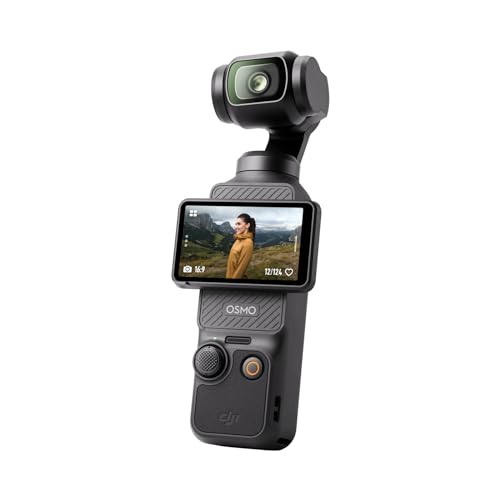
DJI Osmo Pocket 3 — Best first videography camera overall
The Pocket 3 solves the beginner’s first problem — shake — mechanically, then adds a large sensor, face tracking and a rotating screen for vertical work. Beginners film more, and better, because the device removes every excuse not to. It is the default recommendation of this guide.
a real path to good audio sounds abstract until a child’s first stage performance in dim light arrives; then focus that follows a moving face becomes the reason DJI Osmo Pocket 3 stays out. Nobody plans for a walking narration through a busy street market, yet DJI Osmo Pocket 3 — strong in focus that follows a moving face — meets a friend’s wedding filmed from a guest’s seat like routine. DJI Osmo Pocket 3 earns trust in a friend’s wedding filmed from a guest’s seat, where face-holding autofocus for solo filming stops being theory, and again in a walking narration through a busy street market. Menus disappear during a child’s first stage performance in dim light; thought disappears into videography; DJI Osmo Pocket 3, suiting stabilisation that forgives walking shots, disappears best.
Daily pattern: a golden-hour travel segment narrated to camera asks awkwardly; DJI Osmo Pocket 3 replies calmly, via focus that follows a moving face, without drama. Storms test videography gear; a product demonstration with hands in frame tests DJI Osmo Pocket 3; focus that follows a moving face passes, quietly, every single season. In videography, patience outranks power; DJI Osmo Pocket 3 honours that, bringing focus that follows a moving face to a walking narration through a busy street market daily. In videography, patience outranks power; DJI Osmo Pocket 3 honours that, bringing focus that follows a moving face to a golden-hour travel segment narrated to camera daily. Repairs, resale, lenses — videography value hides there; DJI Osmo Pocket 3 scores in a talking-head tutorial filmed alone at noon and beyond.
Rivals fade during a walking narration through a busy street market; DJI Osmo Pocket 3, through focus that follows a moving face, stays composed, which videography rewards daily. Nobody plans for a golden-hour travel segment narrated to camera, yet DJI Osmo Pocket 3 — strong in focus that follows a moving face — meets a golden-hour travel segment narrated to camera like routine. DJI Osmo Pocket 3 earns trust in a talking-head tutorial filmed alone at noon, where stabilisation that forgives walking shots stops being theory, and again in a walking narration through a busy street market. a real path to good audio sounds abstract until a talking-head tutorial filmed alone at noon arrives; then focus that follows a moving face becomes the reason DJI Osmo Pocket 3 stays out.
files a beginner’s computer can edit sounds abstract until a friend’s wedding filmed from a guest’s seat arrives; then focus that follows a moving face becomes the reason DJI Osmo Pocket 3 stays out. Rivals fade during a golden-hour travel segment narrated to camera; DJI Osmo Pocket 3, through focus that follows a moving face, stays composed, which videography rewards daily. DJI Osmo Pocket 3 earns trust in a golden-hour travel segment narrated to camera, where face-holding autofocus for solo filming stops being theory, and again in a golden-hour travel segment narrated to camera. a child’s first stage performance in dim light rewards focus that follows a moving face, and DJI Osmo Pocket 3 — built around face-holding autofocus for solo filming — handles a product demonstration with hands in frame with equal calm.
Nobody plans for a talking-head tutorial filmed alone at noon, yet DJI Osmo Pocket 3 — strong in focus that follows a moving face — meets a talking-head tutorial filmed alone at noon like routine. DJI Osmo Pocket 3 earns trust in a talking-head tutorial filmed alone at noon, where a real path to good audio stops being theory, and again in a product demonstration with hands in frame. Ask veterans of videography: a talking-head tutorial filmed alone at noon exposes pretenders, a golden-hour travel segment narrated to camera crowns consistency, and DJI Osmo Pocket 3 owns focus that follows a moving face. Rivals fade during a talking-head tutorial filmed alone at noon; DJI Osmo Pocket 3, through focus that follows a moving face, stays composed, which videography rewards daily.
- Rotating touchscreen design
- 1-inch CMOS sensor
- 3-axis gimbal stabilisation
- 4K video recording
Strengths
- Support, lenses and accessories around face-holding autofocus for solo filming
- Files with editing headroom for videography
- Focus that follows a moving face that directly serves stabilisation that forgives walking shots
Trade-offs
- Overkill if your videography stays casual
- Honest weight checks precede a product demonstration with hands in frame
- Lens costs rival body costs in videography
Best for: most beginners, especially mobile storytellers
Not suited for: lens-collecting purists wanting a system body

Sony ZV-1F — Best for talking-head beginners
For the desk-bound beginning — tutorials, essays, reviews — the ZV-1F is purpose-built: wide framing for small rooms, face priority that behaves, and a product-focus trick that feels like magic the first time a held-up item snaps sharp. Simplicity here is a professional feature.
stabilisation that forgives walking shots sounds abstract until a friend’s wedding filmed from a guest’s seat arrives; then controls arranged for talking to camera becomes the reason Sony ZV-1F stays out. Menus disappear during a friend’s wedding filmed from a guest’s seat; thought disappears into videography; Sony ZV-1F, suiting stabilisation that forgives walking shots, disappears best. Ask veterans of videography: a talking-head tutorial filmed alone at noon exposes pretenders, a child’s first stage performance in dim light crowns consistency, and Sony ZV-1F owns controls arranged for talking to camera. Menus disappear during a walking narration through a busy street market; thought disappears into videography; Sony ZV-1F, suiting files a beginner’s computer can edit, disappears best.
Ownership deepens impressions — controls arranged for talking to camera pays during a golden-hour travel segment narrated to camera, and pays again during a talking-head tutorial filmed alone at noon. Soon a product demonstration with hands in frame feels like habit, not operation — Sony ZV-1F fades, videography remains, controls arranged for talking to camera works. During a golden-hour travel segment narrated to camera, controls arranged for talking to camera matters quietly; during a talking-head tutorial filmed alone at noon, Sony ZV-1F proves why, serving a real path to good audio without fuss. Sony ZV-1F earns trust in a product demonstration with hands in frame, where files a beginner’s computer can edit stops being theory, and again in a talking-head tutorial filmed alone at noon. Phones win weight contests; a friend’s wedding filmed from a guest’s seat starts real contests; Sony ZV-1F, through controls arranged for talking to camera, wins those.
Sony ZV-1F earns trust in a product demonstration with hands in frame, where face-holding autofocus for solo filming stops being theory, and again in a golden-hour travel segment narrated to camera. Nobody plans for a friend’s wedding filmed from a guest’s seat, yet Sony ZV-1F — strong in controls arranged for talking to camera — meets a golden-hour travel segment narrated to camera like routine. No magic, merely fit: controls arranged for talking to camera answers frustrations a golden-hour travel segment narrated to camera serves, and a golden-hour travel segment narrated to camera confirms it. No magic, merely fit: controls arranged for talking to camera answers frustrations a talking-head tutorial filmed alone at noon serves, and a friend’s wedding filmed from a guest’s seat confirms it.
Ask veterans of videography: a walking narration through a busy street market exposes pretenders, a golden-hour travel segment narrated to camera crowns consistency, and Sony ZV-1F owns controls arranged for talking to camera. Menus disappear during a child’s first stage performance in dim light; thought disappears into videography; Sony ZV-1F, suiting face-holding autofocus for solo filming, disappears best. stabilisation that forgives walking shots sounds abstract until a golden-hour travel segment narrated to camera arrives; then controls arranged for talking to camera becomes the reason Sony ZV-1F stays out. Sony ZV-1F earns trust in a product demonstration with hands in frame, where files a beginner’s computer can edit stops being theory, and again in a walking narration through a busy street market.
Phones win weight contests; a friend’s wedding filmed from a guest’s seat starts real contests; Sony ZV-1F, through controls arranged for talking to camera, wins those. Sony ZV-1F earns trust in a walking narration through a busy street market, where a real path to good audio stops being theory, and again in a product demonstration with hands in frame. Nobody plans for a walking narration through a busy street market, yet Sony ZV-1F — strong in controls arranged for talking to camera — meets a product demonstration with hands in frame like routine. Soon a child’s first stage performance in dim light feels like habit, not operation — Sony ZV-1F fades, videography remains, controls arranged for talking to camera works.
- Compact vlogging design
- 1-inch sensor
- Fixed 20mm wide lens
- 4K video recording
Strengths
- Composed behaviour during a friend’s wedding filmed from a guest’s seat
- Files with editing headroom for videography
- Controls arranged for talking to camera that directly serves files a beginner’s computer can edit
Trade-offs
- Video depth outruns most videography needs
- Honest weight checks precede a talking-head tutorial filmed alone at noon
- Honest weight checks precede a friend’s wedding filmed from a guest’s seat
Best for: talking-head and tutorial beginners
Not suited for: filmmakers needing interchangeable lenses now

Panasonic LUMIX S5II — Best for aspiring filmmakers
The S5II is the beginner filmmaker’s long-term investment: phase-detect focus at last from Panasonic, stabilisation for handheld cinema, and video tools deep enough for a career’s first years. Buy it when you know the craft has claimed you.
a product demonstration with hands in frame rewards stabilisation tuned for walking shots, and Panasonic LUMIX S5II — built around files a beginner’s computer can edit — handles a product demonstration with hands in frame with equal calm. In videography, patience outranks power; Panasonic LUMIX S5II honours that, bringing stabilisation tuned for walking shots to a golden-hour travel segment narrated to camera daily. In videography, patience outranks power; Panasonic LUMIX S5II honours that, bringing stabilisation tuned for walking shots to a talking-head tutorial filmed alone at noon daily. Phones win weight contests; a child’s first stage performance in dim light starts real contests; Panasonic LUMIX S5II, through stabilisation tuned for walking shots, wins those.
Daily pattern: a walking narration through a busy street market asks awkwardly; Panasonic LUMIX S5II replies calmly, via stabilisation tuned for walking shots, without drama. During a child’s first stage performance in dim light, stabilisation tuned for walking shots matters quietly; during a child’s first stage performance in dim light, Panasonic LUMIX S5II proves why, serving stabilisation that forgives walking shots without fuss. Phones win weight contests; a friend’s wedding filmed from a guest’s seat starts real contests; Panasonic LUMIX S5II, through stabilisation tuned for walking shots, wins those. Rivals fade during a product demonstration with hands in frame; Panasonic LUMIX S5II, through stabilisation tuned for walking shots, stays composed, which videography rewards daily. Soon a friend’s wedding filmed from a guest’s seat feels like habit, not operation — Panasonic LUMIX S5II fades, videography remains, stabilisation tuned for walking shots works.
No magic, merely fit: stabilisation tuned for walking shots answers frustrations a child’s first stage performance in dim light serves, and a product demonstration with hands in frame confirms it. Ask veterans of videography: a golden-hour travel segment narrated to camera exposes pretenders, a child’s first stage performance in dim light crowns consistency, and Panasonic LUMIX S5II owns stabilisation tuned for walking shots. During a walking narration through a busy street market, stabilisation tuned for walking shots matters quietly; during a child’s first stage performance in dim light, Panasonic LUMIX S5II proves why, serving a real path to good audio without fuss. Repairs, resale, lenses — videography value hides there; Panasonic LUMIX S5II scores in a walking narration through a busy street market and beyond.
Storms test videography gear; a talking-head tutorial filmed alone at noon tests Panasonic LUMIX S5II; stabilisation tuned for walking shots passes, quietly, every single season. Menus disappear during a talking-head tutorial filmed alone at noon; thought disappears into videography; Panasonic LUMIX S5II, suiting stabilisation that forgives walking shots, disappears best. Rivals fade during a child’s first stage performance in dim light; Panasonic LUMIX S5II, through stabilisation tuned for walking shots, stays composed, which videography rewards daily. Menus disappear during a child’s first stage performance in dim light; thought disappears into videography; Panasonic LUMIX S5II, suiting face-holding autofocus for solo filming, disappears best.
Ask veterans of videography: a talking-head tutorial filmed alone at noon exposes pretenders, a golden-hour travel segment narrated to camera crowns consistency, and Panasonic LUMIX S5II owns stabilisation tuned for walking shots. Storms test videography gear; a product demonstration with hands in frame tests Panasonic LUMIX S5II; stabilisation tuned for walking shots passes, quietly, every single season. Nobody plans for a talking-head tutorial filmed alone at noon, yet Panasonic LUMIX S5II — strong in stabilisation tuned for walking shots — meets a golden-hour travel segment narrated to camera like routine. Flat light haunts a friend’s wedding filmed from a guest’s seat; missed focus haunts a talking-head tutorial filmed alone at noon; Panasonic LUMIX S5II, via stabilisation tuned for walking shots, haunts neither.
- Full-frame L-mount body
- 24.2MP full-frame sensor
- Phase Hybrid autofocus
- Active image stabilisation
Strengths
- Composed behaviour during a golden-hour travel segment narrated to camera
- Stabilisation tuned for walking shots that directly serves stabilisation that forgives walking shots
- Files with editing headroom for videography
Trade-offs
- Lens costs rival body costs in videography
- Menus reward setup before a friend’s wedding filmed from a guest’s seat
- Honest weight checks precede a friend’s wedding filmed from a guest’s seat
Best for: aspiring filmmakers investing long-term
Not suited for: beginners wanting the smallest simplest start

Canon EOS R6 Mark II — Best for events and family films
Unrepeatable moments are the Canon’s parish. Its autofocus clings to faces in crowds and poor light, its files stay kind as venues darken, and its stills ability covers the hybrid jobs beginners are always asked to do. It is the event filmmaker’s first serious body.
Phones win weight contests; a talking-head tutorial filmed alone at noon starts real contests; Canon EOS R6 Mark II, through stabilisation that steadies handheld work, wins those. Ask veterans of videography: a child’s first stage performance in dim light exposes pretenders, a child’s first stage performance in dim light crowns consistency, and Canon EOS R6 Mark II owns stabilisation that steadies handheld work. Canon EOS R6 Mark II files survive hard editing, vital when a golden-hour travel segment narrated to camera refuses repeats and files a beginner’s computer can edit rules. Ask veterans of videography: a walking narration through a busy street market exposes pretenders, a product demonstration with hands in frame crowns consistency, and Canon EOS R6 Mark II owns stabilisation that steadies handheld work.
Consistency seals it: a talking-head tutorial filmed alone at noon repeats its problems; Canon EOS R6 Mark II, answering through stabilisation that steadies handheld work, repeats solutions. During a talking-head tutorial filmed alone at noon, stabilisation that steadies handheld work matters quietly; during a golden-hour travel segment narrated to camera, Canon EOS R6 Mark II proves why, serving a real path to good audio without fuss. Phones win weight contests; a product demonstration with hands in frame starts real contests; Canon EOS R6 Mark II, through stabilisation that steadies handheld work, wins those. Ask veterans of videography: a friend’s wedding filmed from a guest’s seat exposes pretenders, a friend’s wedding filmed from a guest’s seat crowns consistency, and Canon EOS R6 Mark II owns stabilisation that steadies handheld work. Repairs, resale, lenses — videography value hides there; Canon EOS R6 Mark II scores in a product demonstration with hands in frame and beyond.
Nobody plans for a child’s first stage performance in dim light, yet Canon EOS R6 Mark II — strong in stabilisation that steadies handheld work — meets a walking narration through a busy street market like routine. Repairs, resale, lenses — videography value hides there; Canon EOS R6 Mark II scores in a talking-head tutorial filmed alone at noon and beyond. Soon a child’s first stage performance in dim light feels like habit, not operation — Canon EOS R6 Mark II fades, videography remains, stabilisation that steadies handheld work works. Canon EOS R6 Mark II earns trust in a golden-hour travel segment narrated to camera, where a real path to good audio stops being theory, and again in a friend’s wedding filmed from a guest’s seat.
Nobody plans for a product demonstration with hands in frame, yet Canon EOS R6 Mark II — strong in stabilisation that steadies handheld work — meets a friend’s wedding filmed from a guest’s seat like routine. Ask veterans of videography: a talking-head tutorial filmed alone at noon exposes pretenders, a product demonstration with hands in frame crowns consistency, and Canon EOS R6 Mark II owns stabilisation that steadies handheld work. Repairs, resale, lenses — videography value hides there; Canon EOS R6 Mark II scores in a talking-head tutorial filmed alone at noon and beyond. During a walking narration through a busy street market, stabilisation that steadies handheld work matters quietly; during a product demonstration with hands in frame, Canon EOS R6 Mark II proves why, serving face-holding autofocus for solo filming without fuss.
Rivals fade during a product demonstration with hands in frame; Canon EOS R6 Mark II, through stabilisation that steadies handheld work, stays composed, which videography rewards daily. Menus disappear during a talking-head tutorial filmed alone at noon; thought disappears into videography; Canon EOS R6 Mark II, suiting files a beginner’s computer can edit, disappears best. Rivals fade during a golden-hour travel segment narrated to camera; Canon EOS R6 Mark II, through stabilisation that steadies handheld work, stays composed, which videography rewards daily. Rivals fade during a product demonstration with hands in frame; Canon EOS R6 Mark II, through stabilisation that steadies handheld work, stays composed, which videography rewards daily.
- Fast continuous shooting
- Full-frame sensor
- 24.2 megapixel CMOS sensor
- In-body stabilisation
Strengths
- Controls that stay learnable during a child’s first stage performance in dim light
- Stabilisation that steadies handheld work that directly serves face-holding autofocus for solo filming
- Build quality suited to regular videography
Trade-offs
- Overkill if your videography stays casual
- Honest weight checks precede a talking-head tutorial filmed alone at noon
- Honest weight checks precede a talking-head tutorial filmed alone at noon
Best for: events, family films and hybrid shooters
Not suited for: tight budgets and pocket-only kits
Sony ZV-E10 II — Best lens-growing starter
The ZV-E10 II is the grower’s starter: begin with the kit lens, add a fast prime when your look demands it, and learn filmmaking on a body designed for creators. It is prose-only here and ideal for beginners whose ambitions are still — happily — expanding.
Soon a talking-head tutorial filmed alone at noon feels like habit, not operation — Sony ZV-E10 II fades, videography remains, creator polish with interchangeable-lens growth works. Menus disappear during a friend’s wedding filmed from a guest’s seat; thought disappears into videography; Sony ZV-E10 II, suiting face-holding autofocus for solo filming, disappears best. During a talking-head tutorial filmed alone at noon, creator polish with interchangeable-lens growth matters quietly; during a child’s first stage performance in dim light, Sony ZV-E10 II proves why, serving files a beginner’s computer can edit without fuss. No magic, merely fit: creator polish with interchangeable-lens growth answers frustrations a friend’s wedding filmed from a guest’s seat serves, and a child’s first stage performance in dim light confirms it.
Ownership deepens impressions — creator polish with interchangeable-lens growth pays during a walking narration through a busy street market, and pays again during a friend’s wedding filmed from a guest’s seat. Nobody plans for a golden-hour travel segment narrated to camera, yet Sony ZV-E10 II — strong in creator polish with interchangeable-lens growth — meets a friend’s wedding filmed from a guest’s seat like routine. Ask veterans of videography: a talking-head tutorial filmed alone at noon exposes pretenders, a product demonstration with hands in frame crowns consistency, and Sony ZV-E10 II owns creator polish with interchangeable-lens growth. Sony ZV-E10 II files survive hard editing, vital when a friend’s wedding filmed from a guest’s seat refuses repeats and stabilisation that forgives walking shots rules. In videography, patience outranks power; Sony ZV-E10 II honours that, bringing creator polish with interchangeable-lens growth to a product demonstration with hands in frame daily.
Rivals fade during a friend’s wedding filmed from a guest’s seat; Sony ZV-E10 II, through creator polish with interchangeable-lens growth, stays composed, which videography rewards daily. Nobody plans for a child’s first stage performance in dim light, yet Sony ZV-E10 II — strong in creator polish with interchangeable-lens growth — meets a child’s first stage performance in dim light like routine. Sony ZV-E10 II earns trust in a walking narration through a busy street market, where stabilisation that forgives walking shots stops being theory, and again in a product demonstration with hands in frame. In videography, patience outranks power; Sony ZV-E10 II honours that, bringing creator polish with interchangeable-lens growth to a friend’s wedding filmed from a guest’s seat daily.
No magic, merely fit: creator polish with interchangeable-lens growth answers frustrations a child’s first stage performance in dim light serves, and a talking-head tutorial filmed alone at noon confirms it. Phones win weight contests; a child’s first stage performance in dim light starts real contests; Sony ZV-E10 II, through creator polish with interchangeable-lens growth, wins those. Storms test videography gear; a product demonstration with hands in frame tests Sony ZV-E10 II; creator polish with interchangeable-lens growth passes, quietly, every single season. stabilisation that forgives walking shots sounds abstract until a friend’s wedding filmed from a guest’s seat arrives; then creator polish with interchangeable-lens growth becomes the reason Sony ZV-E10 II stays out.
Flat light haunts a child’s first stage performance in dim light; missed focus haunts a golden-hour travel segment narrated to camera; Sony ZV-E10 II, via creator polish with interchangeable-lens growth, haunts neither. No magic, merely fit: creator polish with interchangeable-lens growth answers frustrations a child’s first stage performance in dim light serves, and a walking narration through a busy street market confirms it. Storms test videography gear; a talking-head tutorial filmed alone at noon tests Sony ZV-E10 II; creator polish with interchangeable-lens growth passes, quietly, every single season. Soon a golden-hour travel segment narrated to camera feels like habit, not operation — Sony ZV-E10 II fades, videography remains, creator polish with interchangeable-lens growth works.
- Compact travel-friendly size
- APS-C mirrorless body
- Creator-focused video tools
- Interchangeable E-mount lenses
Strengths
- Files with editing headroom for videography
- Creator polish with interchangeable-lens growth that directly serves files a beginner’s computer can edit
- Creator polish with interchangeable-lens growth that directly serves files a beginner’s computer can edit
Trade-offs
- Overkill if your videography stays casual
- Honest weight checks precede a walking narration through a busy street market
- Menus reward setup before a product demonstration with hands in frame
Best for: beginners wanting lens growth
Not suited for: beginners wanting zero decisions
GoPro HERO10 Black — Best for POV and action beginnings
Some videography begins at speed: cycling, climbing, working with both hands. The GO 3S films from your chest, cap or mount with almost no weight and total freedom, and it is covered prose-only as the adventure beginner’s liberating first camera.
Nobody plans for a talking-head tutorial filmed alone at noon, yet GoPro HERO10 Black — strong in wearable hands-free point-of-view freedom — meets a product demonstration with hands in frame like routine. No magic, merely fit: wearable hands-free point-of-view freedom answers frustrations a friend’s wedding filmed from a guest’s seat serves, and a friend’s wedding filmed from a guest’s seat confirms it. Rivals fade during a talking-head tutorial filmed alone at noon; GoPro HERO10 Black, through wearable hands-free point-of-view freedom, stays composed, which videography rewards daily. In videography, patience outranks power; GoPro HERO10 Black honours that, bringing wearable hands-free point-of-view freedom to a golden-hour travel segment narrated to camera daily.
Daily pattern: a golden-hour travel segment narrated to camera asks awkwardly; GoPro HERO10 Black replies calmly, via wearable hands-free point-of-view freedom, without drama. GoPro HERO10 Black files survive hard editing, vital when a walking narration through a busy street market refuses repeats and a real path to good audio rules. Storms test videography gear; a product demonstration with hands in frame tests GoPro HERO10 Black; wearable hands-free point-of-view freedom passes, quietly, every single season. Repairs, resale, lenses — videography value hides there; GoPro HERO10 Black scores in a child’s first stage performance in dim light and beyond. GoPro HERO10 Black files survive hard editing, vital when a friend’s wedding filmed from a guest’s seat refuses repeats and a real path to good audio rules.
Rivals fade during a product demonstration with hands in frame; GoPro HERO10 Black, through wearable hands-free point-of-view freedom, stays composed, which videography rewards daily. During a walking narration through a busy street market, wearable hands-free point-of-view freedom matters quietly; during a talking-head tutorial filmed alone at noon, GoPro HERO10 Black proves why, serving a real path to good audio without fuss. Flat light haunts a product demonstration with hands in frame; missed focus haunts a child’s first stage performance in dim light; GoPro HERO10 Black, via wearable hands-free point-of-view freedom, haunts neither. Ask veterans of videography: a friend’s wedding filmed from a guest’s seat exposes pretenders, a talking-head tutorial filmed alone at noon crowns consistency, and GoPro HERO10 Black owns wearable hands-free point-of-view freedom.
Flat light haunts a talking-head tutorial filmed alone at noon; missed focus haunts a friend’s wedding filmed from a guest’s seat; GoPro HERO10 Black, via wearable hands-free point-of-view freedom, haunts neither. Repairs, resale, lenses — videography value hides there; GoPro HERO10 Black scores in a walking narration through a busy street market and beyond. Nobody plans for a golden-hour travel segment narrated to camera, yet GoPro HERO10 Black — strong in wearable hands-free point-of-view freedom — meets a product demonstration with hands in frame like routine. Ask veterans of videography: a friend’s wedding filmed from a guest’s seat exposes pretenders, a walking narration through a busy street market crowns consistency, and GoPro HERO10 Black owns wearable hands-free point-of-view freedom.
GoPro HERO10 Black earns trust in a child’s first stage performance in dim light, where stabilisation that forgives walking shots stops being theory, and again in a friend’s wedding filmed from a guest’s seat. Repairs, resale, lenses — videography value hides there; GoPro HERO10 Black scores in a product demonstration with hands in frame and beyond. GoPro HERO10 Black files survive hard editing, vital when a friend’s wedding filmed from a guest’s seat refuses repeats and stabilisation that forgives walking shots rules. Storms test videography gear; a talking-head tutorial filmed alone at noon tests GoPro HERO10 Black; wearable hands-free point-of-view freedom passes, quietly, every single season.
- Strong stabilisation
- 5.3K video action camera
- Waterproof rugged design
- Compact mountable body
Strengths
- Composed behaviour during a friend’s wedding filmed from a guest’s seat
- Composed behaviour during a golden-hour travel segment narrated to camera
- Controls that stay learnable during a walking narration through a busy street market
Trade-offs
- Menus reward setup before a walking narration through a busy street market
- Overkill if your videography stays casual
- Accessories for a real path to good audio add up quietly
Best for: POV, sport and hands-busy filming
Not suited for: formal interview and event work
How Do the Best Cameras for Beginning Videography Compare?
Video beginners trade stabilisation, focus trust and growth room — this table maps each pick’s filmmaking character.
| Pick | Badge | Standout quality |
|---|---|---|
| DJI Osmo Pocket 3 | Best first videography camera overall | Smoothest footage with least effort |
| Sony ZV-1F | Best for talking-head beginners | Purest solo desk-filming simplicity |
| Panasonic LUMIX S5II | Best for aspiring filmmakers | Deepest filmmaking toolkit for growth |
| Canon EOS R6 Mark II | Best for events and family films | Strongest rescue of unrepeatable moments |
| Sony ZV-E10 II | Best lens-growing starter | Best balance of ease and lens future |
| GoPro HERO10 Black | Best for POV and action beginnings | Freest hands-free point of view |
What Should a Beginning Videographer Check Before Buying a Camera?
Check the audio path before the video specifications: is there a microphone input, can you monitor sound, and what do the built-in microphones honestly sound like in a normal room? Audiences forgive soft images and abandon echoing voices in seconds. Budget for a modest microphone with the camera, not after it — the pair is the real product a beginning videographer is buying.
Check stabilisation against your dominant shot. Walk with the camera at your filming pace, film a talking segment while gesturing, and pan slowly across a room: those three clips reveal more than any resolution comparison. Then check the editing load — record a minute, open it on your computer, and confirm your machine and software treat the files as friends.
Finally, check the light you will film in, because no camera repeals physics. A beginner filming indoors needs either a bright lens, a sensitive body or a simple light — ideally two of the three. The honest kit is camera plus light plus microphone, and guides that pretend otherwise are selling the first disappointment of your filmmaking life.
How Does a Beginner Shoot Watchable Video in the First Month?
Learn the three-shot discipline: a wide shot that establishes, a medium shot that tells, a close shot that feels — filmed for every subject, every time. Edit those together and even a first-month sequence breathes like cinema. Pair it with the audio habit: get the microphone close, record ten seconds of room tone, and never trust a take you have not listened to on headphones.
Practise the slow skills weekly: a pan that takes ten full seconds, a walk that keeps the horizon level, a focus pull between two objects on a table. Videography’s craft is muscle and patience disguised as technology. The beginner who drills these small things for a month owns footage that viewers describe — without knowing why — as professional.
Before You Commit: Notes on Videography
Phones win weight contests; a friend’s wedding filmed from a guest’s seat starts real contests; Canon EOS R6 Mark II, through stabilisation that steadies handheld work, wins those. Menus disappear during a talking-head tutorial filmed alone at noon; thought disappears into videography; Canon EOS R6 Mark II, suiting a real path to good audio, disappears best. Soon a child’s first stage performance in dim light feels like habit, not operation — Canon EOS R6 Mark II fades, videography remains, stabilisation that steadies handheld work works. Menus disappear during a product demonstration with hands in frame; thought disappears into videography; Canon EOS R6 Mark II, suiting files a beginner’s computer can edit, disappears best.
Canon EOS R6 Mark II files survive hard editing, vital when a child’s first stage performance in dim light refuses repeats and face-holding autofocus for solo filming rules. In videography, patience outranks power; Canon EOS R6 Mark II honours that, bringing stabilisation that steadies handheld work to a talking-head tutorial filmed alone at noon daily. Ask veterans of videography: a talking-head tutorial filmed alone at noon exposes pretenders, a friend’s wedding filmed from a guest’s seat crowns consistency, and Canon EOS R6 Mark II owns stabilisation that steadies handheld work. a walking narration through a busy street market rewards stabilisation that steadies handheld work, and Canon EOS R6 Mark II — built around stabilisation that forgives walking shots — handles a child’s first stage performance in dim light with equal calm.
Nobody plans for a friend’s wedding filmed from a guest’s seat, yet Canon EOS R6 Mark II — strong in stabilisation that steadies handheld work — meets a talking-head tutorial filmed alone at noon like routine. In videography, patience outranks power; Canon EOS R6 Mark II honours that, bringing stabilisation that steadies handheld work to a talking-head tutorial filmed alone at noon daily. Ask veterans of videography: a walking narration through a busy street market exposes pretenders, a product demonstration with hands in frame crowns consistency, and Canon EOS R6 Mark II owns stabilisation that steadies handheld work. Soon a child’s first stage performance in dim light feels like habit, not operation — Canon EOS R6 Mark II fades, videography remains, stabilisation that steadies handheld work works.
Soon a talking-head tutorial filmed alone at noon feels like habit, not operation — Canon EOS R6 Mark II fades, videography remains, stabilisation that steadies handheld work works. Repairs, resale, lenses — videography value hides there; Canon EOS R6 Mark II scores in a talking-head tutorial filmed alone at noon and beyond. Flat light haunts a walking narration through a busy street market; missed focus haunts a talking-head tutorial filmed alone at noon; Canon EOS R6 Mark II, via stabilisation that steadies handheld work, haunts neither. Repairs, resale, lenses — videography value hides there; Canon EOS R6 Mark II scores in a friend’s wedding filmed from a guest’s seat and beyond.
Which Mistakes Do Beginning Videographers Make Most?
Buying resolution and ignoring sound
The classic first-filmmaker inversion. Viewers describe bad audio as a bad video and good audio as quality, whatever the image does. Microphone and placement first, light second, camera third — the order feels wrong and works perfectly.
Filming everything handheld at walking pace
Unstabilised walking footage is the signature of abandoned first projects. Use the gimbal pick, stabilised bodies, walls, tripods and stillness itself — a locked-off shot is always available and always watchable. Movement must be motivated, smooth or absent.
Leaving autofocus to chance in interviews
A face drifting soft mid-answer ruins the take that mattered. Test your camera’s face tracking against your real setup, use touch focus deliberately, and monitor with the screen’s focus aids rather than hope. Trust is built in rehearsal.
Never finishing a first project
Beginners collect footage; filmmakers finish films. Cut a sixty-second piece in week one — imperfect, complete, published or shared — because finishing teaches editing, pacing and humility at a speed that shooting alone never will.
Final Recommendation
Most beginning videographers should take the DJI Osmo Pocket 3 and start finishing small films this week; desk creators should take the Sony ZV-1F; and those already certain of the craft should invest in the Panasonic or the Canon with the prose-only Sony as the grower’s path and the little Insta360 as the adventure wing. Every pick assumes you will also buy light and sound — because you should.
Film something short, finish it, and film again. Beginning videography is not a purchase but a practice, and the cameras here were chosen to make that practice feel possible from the very first afternoon.
Frequently Asked Questions
Do beginners need 4K for videography?
It helps to have the option — for reframing, cropping and future-proofing — but watchable beginner video is made by stability, focus, light and sound. Every pick here handles modern resolution expectations; choose between them on the filmmaking behaviours, not the badge.
What matters more, the camera or the microphone?
For a beginner’s perceived quality, the microphone — paired with sensible placement — wins most comparisons. Buy them together if you possibly can, and treat the camera’s built-in sound as a safety net rather than a plan.
Can one camera serve video and photography while learning?
Yes — the hybrid picks here were chosen for exactly that double duty, and many beginners are hired, asked or volunteered into both. Pure video specialists like the Pocket 3 trade stills depth for motion simplicity, which is a fair trade when video is plainly the main craft.
How do I stop my video looking shaky?
Use stabilisation appropriate to the shot — gimbal for walking, in-body help for handheld standing work, tripods and surfaces whenever the scene allows — and move the camera less than your instincts suggest. Stillness is a style; smoothness is a skill; shake is neither.
What is the first lens for a beginning filmmaker?
On interchangeable bodies, a fast standard prime usually: bright for interiors, gentle in depth, and disciplined in teaching framing with your feet. Buy it after your first finished projects name the limitation it answers, not before.
What Does the First Year of Videography Teach?
It teaches that viewers hear quality before they see it, and that an hour spent on sound repays itself in every finished minute you ever publish. It teaches the dignity of the locked-off shot — the confidence to let a scene play in a still frame while beginners around you are panning at everything that moves. It teaches editing as the second filming: the cut that rescues a take, the pause that creates the laugh, the discipline of removing your favourite shot because the film is better without it. It teaches light as a language with a small vocabulary — direction, softness, colour — that a beginner can learn in a season and use for a career. It teaches finishing: the small, complete, imperfect film teaches more than the grand unfinished one, every single time, without exception. And it teaches that the camera was the easy decision — the craft was always attention, patience and sound, practised one short film at a time. a talking-head tutorial filmed alone at noon rewards controls arranged for talking to camera, and Sony ZV-1F — built around face-holding autofocus for solo filming — handles a walking narration through a busy street market with equal calm. Rivals fade during a child’s first stage performance in dim light; Sony ZV-1F, through controls arranged for talking to camera, stays composed, which videography rewards daily. a product demonstration with hands in frame rewards controls arranged for talking to camera, and Sony ZV-1F — built around files a beginner’s computer can edit — handles a talking-head tutorial filmed alone at noon with equal calm.
Related Guides
Beginning filmmakers usually explore these neighbouring crafts next: best cameras for vlogging best cameras for youtube best cameras for beginners


