reviewstook.com is reader-supported. When you buy through links on our site, we may earn an affiliate commission.
Where to buy
Amazon carries every linked pick among these best cameras for intermediate photographers, and intermediate kits should be priced as systems: body, the lens you will actually learn on, a second battery and a bag that fits the kit you own rather than the kit you fantasise about. The intermediate years are where money is most often spent twice, so the totals matter more than the stickers.
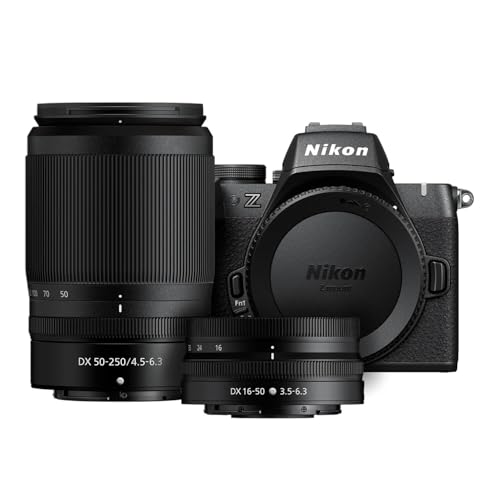
- Nikon Z50 II with Two Lenses: check price on Amazon
- Sony ZV-1F: check price on Amazon
- DJI Osmo Pocket 3: check price on Amazon
- Panasonic LUMIX S5II: check price on Amazon
- Canon EOS R6 Mark II: check price on Amazon
- GoPro HERO13 Black: check price on Amazon
The best cameras for intermediate photographers answer a harder question than beginner or professional gear does. You already know what an aperture is; you have felt a phone or an entry camera refuse a photograph you could see; and you are buying the camera that must survive your ambitions changing, from landscapes this year to portraits next year to video the year after, without being replaced each time your taste moves. An intermediate camera is not a smaller professional camera. It is a teaching instrument and a travelling companion for the most volatile years of a photographer’s development.
That volatility is the buying problem. Beginners need simplicity and professionals need specialisation, but intermediates need a system: a lens mount with room to grow, controls that reward learning manual craft, files that survive serious editing, and a body tough enough for the travel and weather that improving photographers seek out. Buy too small and you will replace it within two years; buy a flagship and you will spend the learning budget on capability your technique cannot yet use, while resenting the weight that keeps it at home.
The six picks here map the sensible territory: a complete two-lens starter system, a compact for the photographer whose growth is about seeing rather than gear, a gimbal camera for the video turn, and three mirrorless bodies at ascending levels of seriousness, each the right answer for a different intermediate temperament. The verdicts are written to match the photographer, not the specification sheet.
Key Takeaways
- Intermediate means system, not body: choose the lens mount and the upgrade path first, because you will live in it for a decade.
- The right camera teaches: dual control dials, honest manual modes and files that reward editing matter more than headline features.
- Buy one tier below your maximum budget and spend the difference on the lens and the trips; photographs come from being somewhere with glass.
- Weight is a curriculum issue: the camera that comes along gets used, and use is the only tuition that works.
- Keep a role for the simple camera: a compact or gimbal pick preserves the joy while the system camera carries the ambition.
In this guide
Quick Picks
| Pick | Badge | Why it earns its place |
|---|---|---|
| Nikon Z50 II with Two Lenses | Best complete starting system | A modern body with subject detection and two zooms covering wide to telephoto, so learning starts on day one across every genre. |
| Sony ZV-1F | Best compact for learning to see | A fixed wide lens removes gear decisions so the intermediate year can be spent on light, timing and composition. |
| DJI Osmo Pocket 3 | Best for the video turn | When an intermediate’s practice turns toward moving images, this gimbal camera teaches video grammar without a rig. |
| Panasonic LUMIX S5II | Best friendly full-frame step | Full-frame quality, phase hybrid autofocus and strong stabilisation in the most approachable serious body here. |
| Canon EOS R6 Mark II | Best enthusiast benchmark | The complete enthusiast article: fast, trusted autofocus, clean full-frame files and a system that goes anywhere your ambitions do. |
| GoPro HERO13 Black | Best action expansion | The intermediate kit’s second life: waterproof action, serious slow motion and mounts for the sports you actually do. |
How did we choose cameras for the in-between years?
We weighted growth room first: lens ecosystems with a ladder from kit zooms to serious primes and specialist glass, bodies whose controls stop punishing you as your technique improves, and file quality, in resolution and editing latitude, that will not embarrass the photographer you are becoming. A camera that is perfect for who you are today and useless for who you will be in three years is the most expensive kind there is.
Second came teaching quality. Intermediates improve through feedback, so we favoured cameras with clear viewfinders or screens, customisable controls that let a personal workflow form, focus aids for manual lenses, and exposure tools, zebras, histograms, highlight warnings, that make the craft visible while it is being learned. Third came carry: size, sealing and battery honesty for the travel and weather that mark the intermediate years, when photography stops being an errand and becomes a reason to go places.
Price was treated as total cost of the first system, body plus the one good lens that changes everything, because that is the purchase actually being made. The list runs from a complete kit in one box to a body that assumes a serious lens budget, and says plainly which is which.
Which are the best cameras for intermediate photographers to grow into?
Six growth paths: the complete kit, the seeing-compact, the video turn, the friendly full-frame, the enthusiast’s benchmark and the action side of a widening practice.

Nikon Z50 II with Two Lenses — Best complete starting system
This kit is the intermediate purchase with the fewest regrets built in. The body brings genuinely modern autofocus and subject detection, the two zooms cover the focal range where a photographer discovers what they actually like shooting, and the whole system is light enough to be carried daily, which is the frequency at which intermediate skills are actually built. Its crop sensor is a feature for the learning years: reach comes cheap, depth of field is forgiving while technique forms, and the files are good enough to print, exhibit in a local show and survive a serious edit.
- Form: crop mirrorless body with two kit zooms
- Coverage: wide angle to moderate telephoto
- Autofocus: modern subject detection
- Files: raw capture for real editing practice
- Path: native Z-mount lens ladder to climb
Run this kit as a curriculum. Give each lens a month of near-exclusive use and the focal lengths will teach you composition in a way no course can: the wide zoom teaches foreground and context, the telephoto teaches isolation and patience, and by the time the fast prime decision arrives, it will be based on ten thousand frames of evidence about your own eye rather than on reviews. Keep the kit lenses when the prime comes; they remain the travel-light answer, and the body will serve for years as the second camera of whatever system you build.
Strengths
- Complete coverage from the first day
- Modern autofocus in a learning-priced body
- Light enough for daily carry and travel
Trade-offs
- Kit lenses are slow in dim interiors
- Crop sensor ceiling in extreme low light
- The serious lens purchases still lie ahead
Best for: Committed beginners stepping up and intermediates restarting with a coherent system.
Not suited for: Photographers who already know their specialism and should buy directly into it.

Sony ZV-1F — Best compact for learning to see
The ZV-1F is the counterintuitive intermediate pick: a fixed-lens compact bought precisely because it cannot grow. For the photographer drowning in options, whose camera bag has become a committee meeting, a single wide lens and a one-inch sensor refocus the craft on the things that actually improve photographs: where you stand, when you press, what the light is doing. Its face-first features serve the video diary side of modern practice, its files are honest, and it fits the coat pocket that the system camera so often fails to fit, which means it attends the weekday life where seeing is practised.
- Form: fixed-lens compact, 1-inch sensor
- Lens: wide, for environmental portraits and scenes
- Screen: articulating, video-friendly
- Modes: face priority and defocus control
- Carry: coat-pocket size and weight
Use it as the daily-carry discipline alongside any system, or as the only camera for a deliberate year of seeing. The wide fixed lens teaches the oldest lesson in photography, that composition is done with the feet, and its limitations become a style faster than most photographers expect: environmental portraits, layered street scenes, the story told with context included. Intermediates who spend a season with a fixed wide lens return to their interchangeable systems with permanently better instincts about where to stand, which is worth more than any lens they were considering instead.
Strengths
- Removes gear indecision entirely
- Always carried, therefore always practising
- Video-diary features serve modern practice
Trade-offs
- No lens growth by design
- One-inch sensor ceiling in deep darkness
- Not a specialist’s tool for sport or wildlife
Best for: Intermediates whose growth is blocked by options rather than by equipment.
Not suited for: Anyone whose next step is a defined specialism needing specific glass.

DJI Osmo Pocket 3 — Best for the video turn
Many intermediates discover, somewhere in year two, that the stories they want to tell move. The Pocket 3 is the gentlest serious door into that room: a one-inch sensor behind a mechanical gimbal, producing stabilised, well-exposed video that lets the learner concentrate on video’s actual grammar, the shot sequence, the cut point, the sound, rather than on fighting shake and exposure. Face tracking and the rotating screen make solo work professional-looking, and its stills are respectable enough for the mixed practice most modern photographers actually have.
- Form: gimbal camera, 1-inch sensor
- Stabilisation: mechanical 3-axis
- Screen: rotating for solo framing
- Tracking: face tracking for presenters
- Video: 4K with slow-motion options
Treat the Pocket 3 as a film school in a pocket. Shoot sequences deliberately, wide, medium, close, detail, for every subject you would once have taken one photograph of, and the editing instincts form within a month. Its size changes the ethics of practice too: it can be carried into the daily life where stories actually happen, the workshop, the rehearsal, the family kitchen, without announcing a production. Intermediates whose ambitions include clients will find its footage cuts respectably beside larger cameras, which makes it the permanent second angle of many working kits.
Strengths
- Teaches video without rig friction
- Gimbal footage looks produced immediately
- Small enough for daily-life stories
Trade-offs
- Battery discipline needed on long days
- Audio needs a microphone for serious work
- Stills are the second talent, not the first
Best for: Intermediates turning toward video, vlogging and mixed-media storytelling.
Not suited for: Pure stills specialists, who should spend the money on a lens.

Panasonic LUMIX S5II — Best friendly full-frame step
The S5II is where full-frame stops being intimidating. Its phase hybrid autofocus made this line a genuine all-rounder, its in-body stabilisation forgives the handheld imperfections of a still-learning technique, and its image quality, stills and video alike, is the real full-frame article: clean in poor light, gentle in its rendering, deep in editing latitude. The L-mount gives it lenses from several makers at several prices, so the system’s growth can be paced to a human budget, and its video credentials mean the intermediate who turns toward film-making will not need a second body to be taken seriously.
- Form: full-frame mirrorless body
- Autofocus: phase hybrid with subject detection
- Stabilisation: in-body, strong
- Mount: L-mount lenses from multiple makers
- Video: professional-leaning feature set
Grow into this body by its controls. Customise one dial at a time as your workflow discovers what it reaches for, shoot the same walk weekly for a season and watch the files improve as the hands learn, and spend the lens budget in the order your archive demands rather than the order the internet suggests. The S5II’s stabilisation quietly extends the intermediate’s day, handheld in the blue hour, in museums and old towns where tripods are unwelcome, and that extension, more usable hours in more places, is the practical meaning of a serious camera at this level.
Strengths
- Full-frame files without flagship intimidation
- Stabilisation extends handheld hours
- Lens ladder priced by several makers
Trade-offs
- Autofocus customisation trails the leaders slightly
- System is a real weight commitment over crop
- Video riches are wasted on the stills-only
Best for: Intermediates ready for full-frame who shoot stills and video both.
Not suited for: Weight-watchers and pure specialists with a defined narrow need.

Canon EOS R6 Mark II — Best enthusiast benchmark
The R6 Mark II is the intermediate camera for the photographer who has stopped dabbling. Its autofocus is trusted by professionals for action and events, its full-frame files stay clean where intermediates actually shoot, in dim halls and evening streets, its burst and pre-shooting modes open genres, sport, wildlife, children, that slower cameras close, and Canon’s RF system offers a growth ladder from sensible zooms to the finest primes made. It is the body on this list least likely to be the reason a photograph failed, and for an advancing photographer that reliability is a teaching tool: when the camera never excuses you, technique improves on schedule.
- Form: full-frame mirrorless body
- Autofocus: people and animal subject detection
- Burst: high-speed with pre-shooting
- Sensor: 24.2MP full-frame, clean in low light
- Cards: dual slots for serious work
The R6 Mark II habit is specialisation by evidence. Shoot everything for the first season, sport, landscape, portrait, street, and let the archive vote on where your talent actually lives; then aim the lens budget like a rifle instead of a shotgun. Its controls reward the intermediate discipline of customisation with intent: assign the buttons your genres need, save custom modes for your two main subjects, and the camera becomes an extension of decisions already made rather than a menu consulted while moments leave. This is the body to buy when the plan is to stop buying bodies for a long while.
Strengths
- Autofocus and speed that open every genre
- Clean files in the light intermediates inhabit
- A system ceiling you will not reach for years
Trade-offs
- Resolution modest for extreme cropping
- Demands a real lens budget to shine
- Capability can outpace a casual practice
Best for: Serious enthusiasts who want one body for a long, ambitious apprenticeship.
Not suited for: Anyone still unsure photography is their thing; the tiers below exist for them.

GoPro HERO13 Black — Best action expansion
An intermediate practice often has two halves, the considered photography and the life it is lived inside, the riding, paddling, skiing and swimming that no mirrorless body should attend unprotected. The HERO13 covers that half properly: waterproof as sold, stabilised to a polish that makes footage usable rather than apologetic, slow motion strong enough to analyse a golf swing or a surf take-off, and a mounting ecosystem that puts it on handlebars, helmets, boards and boats. Its stills are a bonus; its role is to make the active half of a photographer’s life filmable at a standard the rest of the kit would respect.
- Form: flagship action camera, waterproof
- Video: 5.3K with high-frame-rate modes
- Stabilisation: advanced electronic smoothing
- Mounting: the deepest accessory ecosystem here
- Power: removable battery system
Use the HERO13 as the practice’s witness. Mount it where the sport happens and let it gather the footage your hands are too busy for, then study that footage as an athlete as much as a filmmaker: action cameras at this level are coaching tools, revealing the line, the posture and the timing that memory edits kindly. For the photographer’s development it adds the discipline of the fixed frame, composing by placement since the camera cannot be operated mid-action, which is the same lesson the fixed-lens compact teaches, delivered at thirty miles an hour.
Strengths
- Films the life no other pick should attend
- Slow motion doubles as a coaching tool
- Mounts for every sport’s geometry
Trade-offs
- A specialist, not a main camera
- Small screen limits careful composition
- Accessories multiply the true cost
Best for: Intermediates whose photography shares a life with action sports and water.
Not suited for: Being the only camera of a stills-focused practice.
How do the six intermediate cameras compare side by side?
| Pick | Form | Strongest suit | Watch out |
|---|---|---|---|
| Nikon Z50 II with Two Lenses | Crop mirrorless kit | Learning across all genres | Plan one fast prime next |
| Sony ZV-1F | Compact camera | Seeing, daily carry, video diary | It will not grow with you, deliberately |
| DJI Osmo Pocket 3 | Gimbal camera | Video learning and solo stories | Add a microphone for dialogue |
| Panasonic LUMIX S5II | Full-frame mirrorless | All-round serious growth | Budget lenses in stages |
| Canon EOS R6 Mark II | Full-frame mirrorless | Long-term enthusiast core | Let the archive choose lenses |
| GoPro HERO13 Black | Action camera | Action, water and coaching footage | It complements, never replaces |
The comparison is really about where your growth is stuck. Stuck on coverage and confidence, the Nikon kit unsticks you. Stuck on seeing, the little Sony does. Stuck between stills and video, the Pocket 3 and the S5II are the two honest bridges, one by simplicity and one by depth. Ready to commit, the Canon is the long apprenticeship in a single body, and the GoPro admits that a photographer’s life contains chapters no system camera should risk. Most intermediates, read honestly, need one system pick and one joy pick from this table, in either order.
Total system cost deserves the last word, because intermediates are the photographers most often ambushed by it. The dearest body here with a kit zoom is a lesser instrument than the friendliest body here with one excellent lens, in almost every genre, on almost every day. Price the pair, always, and let the lens’s share of the budget embarrass the body’s if it wants to.
What should an intermediate learn in the next twelve months, in what order?
Exposure fluency first, until the triangle is reflex: shoot manual with auto sensitivity for a month in ordinary light and the relationships between shutter, aperture and sensitivity stop being theory and become handwriting. Then focus discipline: where to place it, when to trust the machine’s subject detection and when to overrule it, practised on moving family life before it is needed at a wedding or a match. These two fluencies are the intermediate diploma; everything else is elective.
Composition and light are the second year’s real subjects, and they are learned by constraint: one lens for a season, one walk shot weekly, one hour of the day defended for practice. The cameras here support that learning differently, the fixed compact by removing alternatives, the systems by rewarding a chosen discipline, but all of them agree on the method, because it is the only one that has ever worked. Buy the camera that makes your chosen constraint pleasant to keep.
How do you choose a lens mount you will not regret?
Judge a mount by its middle, not its flagships. The lenses an intermediate will actually buy in the next five years are the fast standard zoom, the portrait prime, the travel telephoto, and a mount is healthy when all three exist at prices a human can reach in a year of saving, from the maker or from the third parties the mount admits. All four systems on this page pass that test in different accents, which is why the choice can safely be made on the body’s feel, the viewfinder’s pleasure and the controls your hands enjoy, the factors you will live with daily.
Second-hand depth is the mount’s pension fund. A system with a decade of used lenses circulating lets an intermediate build a serious kit at half the new price, and rewards patience with glass that outlasts bodies. Ask local photographers what actually circulates in your area, because a mount’s used market is regional, and the best system in the abstract can be the loneliest one in your town. Rent before the big commitment where renting exists; a weekend with a body teaches more than a month of reviews, including this one.
When is it time to stop upgrading and just photograph?
When the camera stops appearing in your excuses. Keep a simple log for a month: every missed photograph, and its honest cause. If the causes are light, access, timing and courage, the equipment chapter is closed and the photography chapter has begun, whatever the forums are launching this quarter. If the causes are genuinely the body’s, a genre it cannot focus for, a darkness it cannot see in, then one deliberate, evidence-based upgrade is not indulgence but tooling, and this list’s tiers exist to make it the last one for years.
The intermediate trap is that upgrading feels like progress while producing none, and it is engineered to feel that way. The counter-habit is a purchases journal matched against a contact sheet: any month in which money was spent must show the frames the spending made possible. Photographers who keep that ledger discover, usually within a year, that their best purchases were a lens, a train ticket and a course, in some order, and that the body they already owned was waiting patiently to be believed in.
How do you build a portfolio that proves you are improving?
Choose twelve photographs a year and defend them. The portfolio discipline, a small set reviewed ruthlessly each season, converts a hard drive of attempts into an argument about your eye, and it exposes the truth equipment cannot hide: whether the new work is actually better than the old, and in which specific way. Print the twelve at a size that argues back, live with them for a month, and let the weakest one’s failure write next season’s practice plan, whether that is light, patience or the portrait distance you keep avoiding.
The portfolio also disciplines purchasing better than any review. Lay the twelve beside the camera bag and ask which of them a new body would have improved, and by how much; the honest answer, usually two, slightly, ends most upgrade fevers on the spot. What the twelve usually indict is access and time, the trip not taken, the hour not kept, and those indictments point the budget where it belongs. Intermediates who keep a portfolio stop shopping like consumers and start commissioning like editors, which is the psychological graduation the level is named for.
What does it mean to learn one genre properly before collecting them all?
Depth teaches what breadth cannot: the genre’s specific light, its decisive distances, its community’s standards, and your own recurring failure inside it. A season given to portraiture alone will teach posing, expression timing and window light to a standard that a decade of dabbling never reaches, and the skills smuggle themselves back into every other genre you touch afterwards, because light and timing are the whole craft wearing different clothes. The system cameras here support depth by staying out of the way for a season at a time; the photographer’s job is to resist the exit signs.
Choose the genre by the archive’s evidence and the calendar’s reality: the one your frames already favour and your life actually contains weekly. A parent photographing children has a portrait practice delivered daily; a hill-walker owns landscape; a musician’s household is an events studio. Depth chosen against the grain of a life becomes homework and dies; depth chosen with it becomes the practice that survives jobs, winters and the arrival of the next camera, which will find a photographer, not a shopper, waiting for it.
How do you shoot your first paid or published work as an intermediate?
Start where trust already exists: the club’s event, the friend’s small business, the school’s production, where the deliverable is modest, the relationship forgives a learning curve, and the photographs are genuinely needed. Treat it with professional liturgy anyway, a written agreement of what will be delivered and when, backups made the same night, files delivered early and in the sizes requested, because the habits are the product being practised and the camera, any system body here, is already sufficient. The portfolio that results, real work for real clients, outweighs a year of personal projects in any application that follows.
Price the lesson honestly, which at this level often means charging expenses and a modest fee rather than working free or pricing like a veteran. Free work teaches clients to value it at its price; veteran pricing invites veteran judgement before the craft can carry it. The middle path builds the reference list that the intermediate years are actually for, and the archive from those first commissions, reviewed a year later with kinder eyes, will show a rate of improvement that no gear purchase has ever matched.
How do you keep the joy in it when technique starts to bite?
Protect one unmeasured practice: the walk with the compact, the family day where the camera is a guest rather than an examiner, the roll of frames taken for no portfolio and no audience. Skill acquisition has a well-known valley where the eye improves faster than the hands and everything produced looks like evidence; photographers abandon the craft in that valley at industrial rates, usually blaming their equipment. The joy practice is the bridge across it, a reminder administered weekly that the point of all this technique is the seeing itself, which was free and remains free.
Community is the other bridge. A camera club, a class, a walking partner at the same level, converts private frustration into shared curriculum, and the intermediate who shoots beside others learns the trade’s open secret: everyone’s contact sheets look like theirs, and the keepers are a percentage, not a personality. Bring the system camera for the work and the little camera for the walk home, and let the level’s real graduation happen unnoticed, the morning the technique stops being the subject of the photographs and becomes their servant.
What should your camera bag look like at the end of the intermediate years?
Smaller than at the start, and more opinionated. The mature intermediate bag holds one body, two or three lenses each with a job the archive can testify to, and the small kit of batteries, cards and cloths that makes the system invisible in use. Everything else has been sold, lent or retired, because the intermediate years’ real syllabus is subtraction: learning which photographs are yours, and letting the equipment confess the same knowledge. Weigh the bag and count the frames per item across a season, and the items that fail that audit are next year’s lens fund wearing a disguise.
Keep one deliberate indulgence in it: the compact, the old manual lens, the camera that serves no portfolio and exists for the joy of the walk. A practice that is all curriculum eventually files for relief, and the indulgence is the pressure valve that keeps the serious kit serious. The photographers who emerge from the intermediate years still in love with the act are the ones who protected a corner of it from improvement, and their work, paradoxically, improves fastest of all.
How do you photograph people well before you call yourself a portrait photographer?
Learn the window before the studio. A subject placed at an angle to a large window, with the camera on the light’s side and the room falling away behind, produces portraits that professionals recognise as intentional, from any body on this page, because the light is doing the expensive work. Practise on the willing, family, friends, the dog with opinions, at the same window across a season, and the variables isolate themselves: distance softens, angle models, the background’s distance decides whether the portrait has a world or a wall.
Then learn the two social techniques that outrank every setting: direction that gives the sitter something to do with their hands and their story, and the discipline of shooting through the awkward first five minutes into the person who arrives after them. Portraiture’s intermediate diploma is a contact sheet where the last frames are unmistakably better than the first, not because the light changed but because the photographer finally started listening with the camera in their hands, which is the whole skill the genre has been hiding inside its equipment lists.
How do you make travel photography more than a list of landmarks?
Shoot the day’s grammar, not its monuments: the market at opening, the commute, the café at the hour the town takes its coffee, the back street where the washing and the scooters write the place’s true signature. The landmark earns one considered frame, at its best hour, from the angle your scouting found; the grammar earns the album. The cameras here divide that labour by temperament, the system for the considered frame, the compact and the gimbal for the grammar, which is why so many travel photographers in this tier carry one of each and call it a single kit.
Return is the travel photographer’s unfair advantage, even within one trip: the street shot on Tuesday teaches the frame that Friday’s light completes. Keep the trip’s notebook by location rather than by day, note the sun’s line and the hour the crowds thin, and let the last morning be spent entirely on second chances. Intermediates who travel this way come home with fewer, stronger frames and a skill that transfers to the home town, which was, all along, a travel destination that had not yet been looked at properly.
How do you learn to edit ruthlessly without hating your own work?
Separate the photographer from the editor by time: shoot this week, edit next week, and the frames arrive as a stranger’s, judgeable without mercy or vanity. Keep the edit to a fixed sitting with a fixed yield, the dozen that survive, the three that print, and let the rest rest in the archive unjudged rather than deleted, because the archive’s opinion of a frame changes as the photographer does, and the intermediate’s most encouraging discovery, a year on, is the keeper hiding in last spring’s rejects.
The ruthlessness has a direction: edit toward the portfolio’s argument, not toward variety for its own sake. Ten frames that say one thing about your eye teach more, and impress more, than thirty that say you were present at thirty occasions. The cameras here all produce more raw material than any portfolio can use; the surplus is not waste but tuition, and the editor’s chair is where the tuition gets banked.
What role should your phone keep once a real camera arrives?
Let the phone become the notebook and the scout: the location logged, the light tested, the composition rehearsed at arm’s length before the real camera is unpacked. Used that way it stops competing with the system and starts serving it, and the intermediate’s pockets carry a division of labour rather than a rivalry. The phone also remains the right camera for the photograph whose value is its immediacy, the family moment whose sharing cannot wait for a card reader, and recognising that without guilt is part of growing up photographically.
The boundary to defend is the deliberate session: when the walk is for photography, the phone stays in the pocket and the chosen camera does the seeing, because attention is the scarcest resource in the craft and the phone is engineered, by brilliant people, to spend it elsewhere. Intermediates who draw that line find their camera hours doubling in value within a month, and their phone photographs, paradoxically, improving too, since a scout that knows it is scouting looks harder.
How do you photograph in bad light until it becomes your favourite light?
Bad light is a curriculum with three terms: the dim interior, where the fast prime and the high sensitivity earn their keep; the flat grey day, where colour saturates and contrast must be composed rather than found; and the hard noon, where shadow becomes a graphic element and the photographer’s job is architecture. Each term has its masters and its exercises, and each is a season in which the fair-weather photographer produces nothing while the student of bad light produces a portfolio. The bodies here, with their clean high-sensitivity files and stabilisation, are unusually good bad-light instruments, which is not a coincidence but a selection criterion of this guide.
Work the same subject through all three terms and the education compresses: the house, the street, the family face, each transformed by the light’s mood until the photographer stops describing weather as good or bad and starts describing it as suited or unsuited to an intention. That vocabulary change is the true intermediate graduation, worth more than any certificate, and it is available in every climate on earth, free of charge, to anyone willing to take a camera out in the rain.
How do you know which genre is yours?
You do not choose it; you catch yourself doing it. The genre that survives a winter, a busy job and a broken tripod, the one your feet walk toward on a free afternoon without consulting your ambitions, is yours, and the archive has usually known for a year before the photographer admits it. Count the frames by subject across a season and let the census overrule the self-image; the landscape photographer with four hundred portraits has been given information, not a crisis.
Then feed it deliberately for one full cycle of the year: its seasons, its community, its masters, its local opportunities, with the system camera configured for it and the lens fund aimed at it. A year of that allegiance produces the first work that strangers recognise as a voice, and if the allegiance later moves, it moves as a graduation rather than a drift, carrying every skill with it. The intermediate years end, in the end, not with a purchase but with that recognition, and every camera in this guide is content to be the instrument it happened on.
How do you use photography to know a place you have just moved to?
A new town is a syllabus disguised as a logistics problem. Photograph its grammar systematically, the market, the station, the river path, the hill above it, at the hours the residents own them, and within a season the place has been converted from an address into a knowledge, with the camera as the excuse for every walk and every conversation. The compact earns its keep in the first month, when everything is strange and portable; the system camera takes over as the strangeness resolves into subjects, and the resulting archive is the autobiography of an arrival, a genre nobody else can photograph for you.
Give the project one rule that makes it cohere: a frame a day, or a street a week, kept without exception through the first season’s weather and workload. Rules like that are how intermediates smuggle a professional’s volume into an amateur’s calendar, and volume, reviewed honestly, is where the eye is built. By the time the town feels like home, the portfolio will show the exact month it happened, which is a thing worth owning about one’s own life.
What should you do with the photographs nobody will ever see?
Keep them, labelled, and let them be the practice’s diary rather than its failure pile. The unseen frames are where experiments lived, where the light was tested and the idea was tried at full commitment, and a photographer who deletes them is burning the laboratory notebooks to tidy the bench. Storage is cheap and regret is not, and the archive’s future opinions, about the street that was demolished, the relative who has gone, the style you abandoned and will return to, cannot be predicted at the moment of the shutter.
Review the unseen once a year with the portfolio’s ruthlessness inverted: look not for the best frames but for the recurring ones, the subject you photograph without deciding to, the distance you always choose, the light you always wait for. Those recurrences are the voice, arriving uninvited, and naming them is the intermediate’s final piece of self-knowledge, the one that turns the next decade’s work from a search into a deepening.
What mistakes do intermediate photographers make when upgrading?
- Buying the flagship body and the cheapest lens, then blaming the system for files a kit zoom in dim light could never deliver.
- Switching mounts every two years and paying the churn tax forever, never staying long enough for a system to compound.
- Collecting lenses for genres they do not shoot, while the one genre they love waits for its proper glass.
- Judging a camera by its first weekend instead of its first season, before the hands have learned it.
- Keeping the good camera at home for fear of damage, and practising on the phone the upgrade was meant to replace.
- Measuring progress in equipment owned rather than in portfolios finished.
Every one of these is a displacement activity, a way of shopping for a photographer instead of becoming one. The intermediate years are the most enjoyable in the whole craft precisely because skill is compounding visibly; spend them behind a viewfinder, with any body on this page, and the question of the next camera will answer itself from evidence when it genuinely needs asking.
Final Recommendation
Most intermediates should buy the Nikon two-lens kit if the system shelf is empty, the S5II if full-frame and video both call, or the R6 Mark II if the commitment is total and the lens budget real. Add the ZV-1F or the Pocket 3 as the joy pick that keeps the practice daily, and the HERO13 when the life being photographed is wet and fast. The best camera for intermediate photographers is the one whose limits you will meet last and whose company you will keep longest, because the intermediate years are not a waiting room for a professional camera; they are where the photographer is actually made.
Frequently Asked Questions
Is crop sensor enough for an intermediate, or must it be full frame?
Crop is enough for most intermediates for years: modern crop systems focus, track and print beautifully, cost less per lens, and forgive technique while it forms. Full frame earns its premium in sustained low light, shallow-depth portraiture and professional delivery. The honest test is your archive: if its failures are darkness and depth, step up; if they are timing and seeing, stay and practise.
How long should an intermediate camera last?
Five to eight years of front-line service is a fair expectation for the bodies here, with the lens system lasting longer still. Plan the purchase on that horizon and the arithmetic changes: the body is rented by the year at a modest rate, and the lenses, the bag and the trips are the real investments competing for the same money.
Should I buy used as an intermediate?
Yes, intelligently: previous-generation bodies and lenses from reputable dealers are the intermediate’s traditional arbitrage, trading launch-day novelty for an extra lens in the bag. Inspect shutter counts and glass carefully, buy where returns exist, and keep the savings in the system rather than spending them twice on shipping gambles.
Do I need two card slots and weather sealing yet?
Sealing, yes, if your photography goes outdoors in real weather, which intermediate photography should. Dual slots matter when someone else is counting on the files, a friend’s wedding, a club’s final, and are a luxury before that day. Buy for the responsibilities you actually have this year, and let next year’s list grow from evidence.
What is the one lens to add first to any of these systems?
The fast prime nearest the focal length your archive already favours, because it will be used daily, teaches depth of field as a creative tool rather than a side effect, and transforms the dim interiors where kit zooms surrender. If the archive shows no favourite yet, the classic moderate-wide-to-short-telephoto standard prime is the traditional teacher and rarely the wrong answer.
Can one of these cameras earn money?
The mirrorless bodies here absolutely can, in events, portraits, property and content work, provided the business half, reliability, backups, insurance, delivery, is taken as seriously as the photography. The camera is the smallest part of a professional service, which is why this guide keeps returning to habits; clients buy the habits and merely notice the camera.
Should an intermediate learn on manual focus lenses?
A season with one manual lens, on any of the systems here with their focus peaking and magnification, teaches focus as a decision rather than a hope, and the education transfers permanently to autofocus work, where you will finally understand what the machine is choosing and when to overrule it. Buy the lens cheaply and used, treat it as tuition, and keep it for the slow, deliberate genres where manual focus remains a pleasure rather than a lesson.
How many lenses is enough for an intermediate?
Three is the classic answer, a wide-to-standard zoom for the world’s ordinary framing, a fast prime for the light and the portraits, and one specialist chosen by the archive, telephoto or macro or ultra-wide, with a fourth justified only by a genre that pays or possesses you. More than that and the bag starts choosing photographs instead of the photographer, which is the precise moment a collection stops being a kit.
What is the best photography book habit for an intermediate?
Own fewer books and reread them against your own contact sheets. A master’s monograph studied beside your attempts at the same subjects teaches more than a shelf of technique manuals, because the gap between their frame and yours, itemised page by page, is a personal curriculum no course can sell. Borrow the technique books from the library, buy the monographs, and let the camera fund stay pointed at lenses, tickets and time, which are the three teachers whose lessons cannot be read second-hand.
Is one camera enough, or do I need a backup?
One camera is enough until someone else depends on the photographs, at which point a backup becomes a professional obligation rather than a luxury. For personal work, the phone in your pocket is the honest backup, and the money a second body would cost is better spent making the first one’s photographs possible: the trip, the course, the lens.
Related Guides
Keep reading with best cameras for instagram selfies and best cameras for indoor sports photography and best cameras for landscap.


