Where to buy
Check the latest price, availability and delivery on Amazon. Orders are placed on Amazon. We may earn a commission from qualifying purchases.
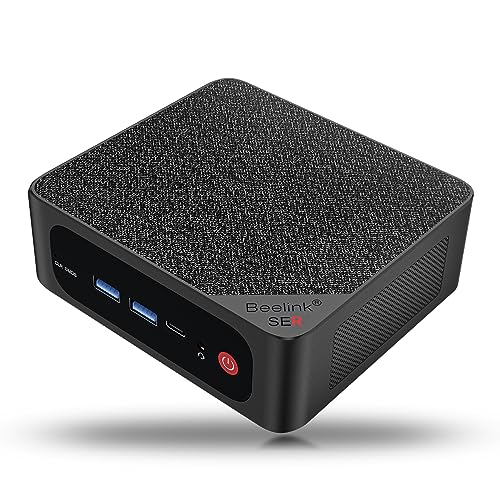
- Best overall small form factor gaming PC: Beelink SER5 MAX Mini PC, Ryzen 7 5800H, 16GB, 500GB — Check on Amazon
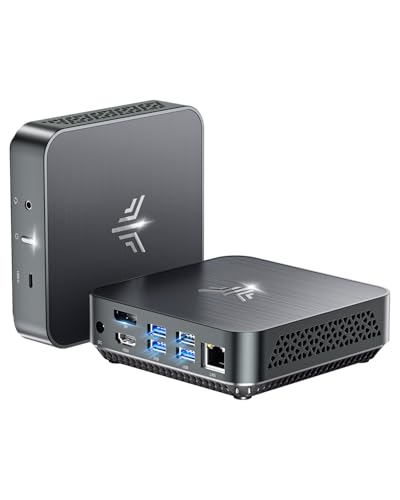
- GMKtec M5 Plus Mini PC, Ryzen 7 5825U, 32GB, 1TB — Check on Amazon
- KAMRUI E3B Mini PC, Ryzen 5 7430U, 32GB, 512GB — Check on Amazon
- ACEMAGICIAN AM06 Pro Mini PC, Ryzen 7 5800U, 16GB, 512GB — Check on Amazon
See 2 more Amazon options
- Dell OptiPlex 7060 SFF Desktop, Core i5-8500, 16GB, 512GB (Renewed) — Check on Amazon
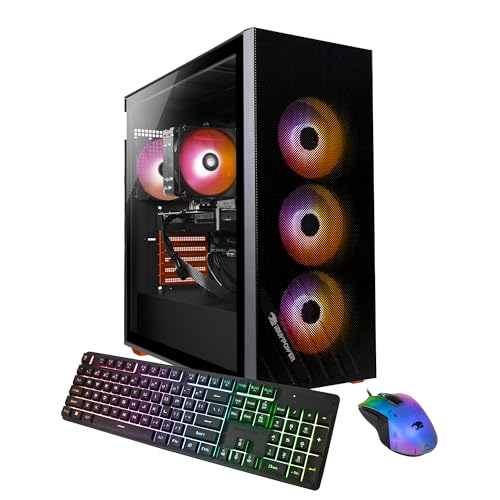
- Dell RGB Gaming Tower, Core i7 6th Gen, GTX 1050 Ti, 16GB, 512GB (Renewed) — Check on Amazon
Read the full guide ↓
Disclosure: As an Amazon Associate, reviewstook.com earns from qualifying purchases. Links to Amazon on this page are affiliate links; they cost you nothing extra. Listing details such as price and availability change often, so check the current Amazon listing before you buy.
“Small form factor” is the most abused phrase in budget PC listings, so this guide starts by defining it in the only unit that cannot be argued with: litres. A true small form factor gaming PC in the classic sense — a Mini-ITX case in the 10-to-20-litre range holding a desktop graphics card — does not exist new under $400, and it is not close. The case, the SFX power supply and any current discrete graphics card consume the budget between them before a processor, motherboard, memory or storage enters the conversation; in the current market a single new RTX 4060 card on its own can exceed this entire budget. Anyone who tells you otherwise at $400 is selling you a tower with the word “compact” in the title.
What $400 honestly buys in a small box is three other things, and this guide covers all of them without blurring the lines. First, the mini PCs: complete, new Windows machines between about 0.6 and 0.9 litres — smaller than a paperback book — running AMD integrated graphics that genuinely play esports titles, indie games and older AAA releases at 1080p. Second, one renewed corporate small form factor desktop of about 7.8 litres, the classic ITX alternative: a real PCIe slot and a strong six-core processor, but integrated graphics as shipped, so it is a project as much as a purchase. Third, one disclosed exception that is not small at all — a renewed full-size tower with the only discrete graphics card available at this money — included so you can see exactly what the discrete-GPU route costs in size, age and condition. Every volume below is arithmetic from the manufacturer’s published dimensions, and every machine is judged first on the thing you searched for: how much PC, in how few litres, for how much money.
In this guide
Quick Picks
Short on time, or comparing several options at once? Each row below names a buyer type and the product that suits it, with the honest volume of the box and a link to the listing.
| Buyer type | Pick | Volume | Why it stands out | Link |
|---|---|---|---|---|
| Best overall | Beelink SER5 MAX Mini PC, Ryzen 7 5800H | About 0.60 L | The smallest box here also carries the strongest gaming hardware | Check on Amazon |
| Most complete sub-litre PC | GMKtec M5 Plus Mini PC, Ryzen 7 5825U | About 0.78 L | 32GB of memory and 1TB of storage fitted — nothing to add on day one | Check on Amazon |
| Best value | KAMRUI E3B Mini PC, Ryzen 5 7430U | About 0.68 L | 32GB dual-channel memory in a value position within this budget tier | Check on Amazon |
| Best for storage growth | ACEMAGICIAN AM06 Pro Mini PC, Ryzen 7 5800U | About 0.86 L | A 2.5-inch drive bay the other minis do not have | Check on Amazon |
| The real SFF box | Dell OptiPlex 7060 SFF, Core i5-8500 (Renewed) | About 7.8 L | A genuine PCIe x16 slot — the only pick whose graphics can ever change | Check on Amazon |
| Only discrete GPU (not small — disclosed) | Dell RGB Gaming Tower, GTX 1050 Ti (Renewed) | Full-size tower | A real graphics card, at the price of size, age and renewed condition — buy only at $400 or under | Check on Amazon |
How These Picks Were Chosen
The budget was applied to complete machines. Every pick is a real Amazon listing for a PC that arrives with a processor, memory, storage and Windows fitted — no barebones kits, however tempting their headline prices, because a kit plus memory, storage and an operating system is a different and larger bill. Prices change often, so check the current price on Amazon for each pick rather than holding any earlier figure as current, and two picks carry explicit walk-away rules because their prices have crossed the $400 line before.
We did not use these products ourselves. We read the maker listings and manufacturer specification sheets, and compared the things this search actually turns on: the published dimensions of every box (converted to litres by simple multiplication, and stated as approximations because makers measure feet and vents differently), the graphics hardware fitted, the power class of the processor, and what can be upgraded later. That last test splits the guide in two. The mini PCs can change their memory and storage but never their graphics; the renewed Dell SFF is the reverse, modest graphics today and the only graphics upgrade path in the guide. Listings that hid their dimensions, or used “small form factor” to describe an ordinary tower, were excluded — at this budget the phrase has to be earned in litres.
Two honesty filters sat on top of that. The first is the completeness filter: a pick earns its place only if the whole machine — not a configuration option buried in the listing — fits the budget when you check the current price on Amazon. The second is the naming filter: integrated graphics are called integrated graphics, the one laptop-class exception is not present at this tier, and the single full-size tower in the guide is labelled as failing the size test in its heading, its table rows and its review, so nobody buys it by mistake thinking it is small.
What “Small Form Factor” Honestly Means Under $400
The size ladder in PC building runs like this. At the bottom sit the mini PCs, roughly 0.5 to 3 litres: complete computers built around laptop processors and integrated graphics, small enough to mount behind a monitor. Above them are the corporate small form factor desktops, roughly 7 to 10 litres — the OptiPlex class — built for office desks, with low-profile expansion slots and power supplies sized for office work. Above those are the enthusiast Mini-ITX cases, roughly 10 to 20 litres, which is where “small form factor gaming PC” properly lives: standard desktop graphics cards, real power supplies, and prices to match. A mid-tower is 35 litres and up. When a $400 listing says “small form factor gaming PC,” it is borrowing the reputation of the third rung while selling you the first or the second — which can still be the right purchase, as long as you know which rung you are standing on.
Here is what each rung under $400 can and cannot do. The sub-litre minis in this guide play the games integrated graphics can play: esports and competitive titles, indie games, and older AAA releases at 1080p with settings turned down, plus emulation of older console generations. Current AAA games are a low-settings-and-upscaling exercise, and some simply will not be fun. The renewed SFF box flips the profile: its six-core processor is among the strongest processors in this guide, but its Intel integrated graphics are weaker than the AMD graphics in the minis, so as delivered it is the worst gaming machine here — its case rests on the slot inside it, not the chip it ships with. And the tower exception shows the trade in its purest form: give up smallness entirely and the same money buys a real, if old, discrete graphics card.
One accounting note applies to every volume in this guide. The litre figures are the box alone, measured from the maker’s published dimensions. Every mini PC here also carries an external power brick — a laptop-style adapter that lives on the floor, the desk or a cable tray — and the renewed desktops use internal supplies but full-size power cords. The brick does not change which machine is smallest, but if your plan is a truly clean desk, budget a home for the brick as well as the box, or mount the mini behind the monitor where both disappear. Small is a system, not a spec sheet line.
The 6 Best Small Form Factor Gaming PCs Under $400
Beelink SER5 MAX Mini PC — Ryzen 7 5800H, 16GB RAM, 500GB SSD
Who it suits: The buyer who wants the most gaming performance that fits in the smallest verified box — a PC for a monitor arm, a TV cabinet or a desk that is also a dining table.
Start with the arithmetic, because at this size the arithmetic is the product: 4.96 by 4.44 by 1.65 inches multiplies out to about 0.60 litres, the smallest volume in this guide, and inside it sits the strongest gaming silicon under $400. The Ryzen 7 5800H is an eight-core processor with a published 54W TDP — three times the power envelope of the U-series chips in most rivals — and that power budget is the hidden gaming specification of the whole mini PC class, because integrated graphics performance is mostly a question of how many watts the chip is allowed to spend. Its Radeon graphics run eight compute units at up to 2000MHz, fed by dual-channel DDR4 memory that can be upgraded to 64GB, with storage swappable to 2TB. Connectivity is the full mini PC set: HDMI, DisplayPort and USB-C display outputs for up to three screens, WiFi 6, Bluetooth 5.2 and Windows 11 Pro.
What that buys in games is the top of this guide’s class: esports and competitive titles at 1080p with sensible settings, indie games without compromise, and older AAA releases at low-to-medium settings — with modern AAA titles firmly in low-plus-upscaling territory, as they are for every integrated-graphics machine here. Check the current price on Amazon — it is positioned toward the more accessible end of this budget tier, which makes it not just the smallest pick but one of the better-value options here. Two cautions belong in the review. Beelink also sells a different, more expensive machine under the SER5 MAX name built on a 7735HS with soldered memory, so confirm the live listing says 5800H and DDR4 before ordering. And 500GB of storage is the specification you will outgrow first — games are large, and the saving grace is that the SSD is a standard, swappable part.
- About 0.60 litres — the smallest verified box in the guide, VESA-mountable out of sight.
- 54W H-series processor: the highest power class here, and it shows in game performance.
- Socketed memory (to 64GB) and swappable storage — the two upgrades a mini PC allows are both open.
Honest limitation: The graphics are integrated and permanent — when the 5800H’s Radeon cores stop being enough, the whole machine is replaced, not upgraded. The 500GB fitted SSD is also the tightest storage in the guide.
Choose it if you want the best gaming performance per litre under $400 and your games fit the integrated-graphics class. Skip it if you need a discrete graphics card now or later — that is the Dell SFF below, or a bigger budget.

GMKtec M5 Plus Mini PC — Ryzen 7 5825U, 32GB RAM, 1TB SSD
Who it suits: The buyer who wants the sub-litre machine that needs nothing added — no memory upgrade, no storage anxiety, no second order — and who values a second career for the box as a home server.
The M5 Plus measures 128.8 by 127 by 47.8 millimetres by the manufacturer’s figures, about 0.78 litres, and it uses that volume to fit the most complete specification in this guide: a Ryzen 7 5825U with Radeon graphics of the same eight-compute-unit class as the Beelink, 32GB of DDR4 memory fitted as two 16GB sticks (expandable to 64GB), and a 1TB NVMe SSD in a chassis with a second M.2 slot for up to 4TB total. Around the edges it is the best-connected mini here: dual 2.5-gigabit Ethernet ports, WiFi 6E, Bluetooth 5.2, and triple 4K display outputs across HDMI, DisplayPort and USB-C. The dual network ports are why this machine has a second life written into it — when it stops being your gaming box it becomes a genuinely capable home server, router-adjacent appliance or media machine without buying anything.
The honest trade is the processor’s power class. The 5825U is a U-series chip, tuned for efficiency rather than the Beelink’s sustained 54W, so in longer gaming sessions the SER5 MAX’s extra watts give it the edge even though the on-paper graphics hardware is a close match. What the M5 Plus returns for that concession is the fitted specification: double the memory and double the storage of the Beelink as delivered — check the current price on Amazon before you buy. For the buyer whose games are the esports and indie classes — where both machines are comfortably capable — the machine that arrives finished is the better buy, and the graphics difference only decides it if you live at the demanding end of what integrated graphics can do.
- 32GB memory and 1TB storage fitted — the only mini here that asks for nothing on day one.
- Dual 2.5GbE ports and a second M.2 slot: a real second career as a home server.
- About 0.78 litres with triple 4K outputs and WiFi 6E.
Honest limitation: The U-series processor’s lower power envelope means the Beelink out-games it in sustained loads, and the graphics are integrated and fixed for the life of the machine.
Choose it if you want the complete, finished sub-litre PC and your gaming is esports, indie and older titles. Skip it if squeezing the last frame from integrated graphics matters more than the fitted specification — take the SER5 MAX.

KAMRUI E3B Mini PC — Ryzen 5 7430U, 32GB RAM, 512GB SSD
Who it suits: The value hunter: the buyer who wants modern memory capacity and a tidy, mountable box in a value position within this budget tier, and accepts a step down in graphics to get it.
The E3B’s chassis measures 128 by 128 by 41.2 millimetres — about 0.68 litres, the second-smallest box here and the flattest, a profile that disappears behind a monitor on its included VESA plate. Inside is a Ryzen 5 7430U, a six-core processor with Radeon Vega 7 graphics, and the specification that defines the pick: 32GB of memory fitted as two 16GB sticks in dual channel. That matters more than it looks. Integrated graphics borrow their memory from the system RAM, and dual-channel memory at full capacity is the difference between integrated graphics running properly and running starved — several rivals in this class ship 16GB, and the E3B’s 32GB in this tier is the value story. Storage is a 512GB M.2 SSD across a chassis with two M.2 slots, memory and storage both expandable (to 64GB and 2TB respectively), with WiFi 6, Bluetooth 5.2, HDMI 2.0, DisplayPort 1.4 and USB-C display outputs, and Windows 11 Pro.
The concession is named in the chip: Vega 7 graphics are a step below the eight-unit graphics in the Beelink and GMKtec, so this is the pick for esports at modest settings, indie games, emulation and older titles rather than anything ambitious — still real gaming, honestly labelled. Check the current price on Amazon — it sits in a value position within this budget tier. Two cautions: a 16GB version of the E3B exists under a separate listing, so confirm the cart says 32GB before paying; and reviewers of this chassis have noted the fan becomes audible under sustained heavy load, the tax a 41-millimetre-tall box pays for its flatness — fine on a desk, worth knowing in a bedroom.
- 32GB dual-channel memory fitted in a value-tier package — integrated graphics get the bandwidth they need.
- About 0.68 litres and 41mm tall, with a VESA plate in the box for behind-monitor mounting.
- Two M.2 slots and memory to 64GB: both mini-PC upgrade paths are open.
Honest limitation: Vega 7 is the weakest AMD graphics in the guide’s mini PCs, and the slim fan is audible under sustained load.
Choose it if your games are esports, indie and emulation and you want strong capacity for this tier. Skip it if you want the strongest integrated graphics — the SER5 MAX is the stronger-graphics alternative in this same budget tier.
ACEMAGICIAN AM06 Pro Mini PC — Ryzen 7 5800U, 16GB RAM, 512GB SSD
Who it suits: The buyer whose game library keeps growing — the mini PC shopper who has already filled one drive and wants the box with room for cheap bulk storage inside it.
At 5.19 by 5.19 by 1.96 inches — about 0.86 litres — the AM06 Pro is the largest of the true minis in this guide, and the extra volume buys the feature none of the others offer: a 2.5-inch drive bay alongside the fitted 512GB NVMe SSD, taking total storage to 2TB with an inexpensive SATA drive. For a games library, that bay is the difference between deleting and keeping. The rest of the machine is the established class specification: a Ryzen 7 5800U (eight cores, to 4.4GHz) with Radeon Vega 8 graphics at 2000MHz, dual-channel 16GB DDR4 memory, triple 4K outputs over HDMI, DisplayPort and USB-C, WiFi 6 and dual Ethernet ports, running Windows 11 — and it is VESA-mountable behind a monitor like its rivals.
Check the current price on Amazon before you buy — pricing and any membership-based pricing can vary, so confirm what applies to you on the live listing. Against the guide’s other minis the positioning is plain: the same Vega 8 graphics class as the Beelink and GMKtec, from a U-series chip, with half the GMKtec’s fitted memory but a storage trick neither rival has. Two pieces of standard hygiene for this class of value brand apply, and this guide gives them generically rather than as any claim about this listing: run a security scan on first boot, and treat a clean Windows install as a reasonable first hour with any budget mini PC. Buyers who want their 32GB fitted from the factory should take the M5 Plus; buyers who want to add a big, cheap drive later will not find another door like this one under a litre.
- A 2.5-inch expansion bay — cheap bulk storage inside the box, unique among the minis here.
- Vega 8 graphics and an eight-core processor: the full class specification, no graphics concession.
- About 0.86 litres, VESA-mountable, with dual Ethernet and triple 4K outputs.
Honest limitation: 16GB of fitted memory is half what the GMKtec and KAMRUI ship at a similar position in this tier, and the graphics remain integrated and non-upgradeable.
Choose it if library size is your pressure and you like the idea of dropping in an inexpensive 2.5-inch drive later. Skip it if you want maximum fitted memory now — that is the M5 Plus.

Dell OptiPlex 7060 SFF Desktop — Core i5-8500, 16GB RAM, 512GB SSD (Renewed)
Who it suits: The tinkerer: the buyer who hears “small form factor” and means an actual SFF desktop — a box with slots in it — and is happy to trade newness and out-of-box graphics for the only upgrade path in this guide.
This is the genuine article of the category, and its dimensions prove it: 11.42 by 3.65 by 11.5 inches by Dell’s own specification sheet, about 7.8 litres — thirteen times the Beelink’s volume, and still small enough to stand beside a monitor or lie flat under one. Inside that space is the strongest processor value in the guide, a six-core Core i5-8500, with 16GB of DDR4 memory, a 512GB SSD, Windows 11 Pro, and a keyboard and mouse in the box, sold as an Amazon Renewed machine. Check the current price on Amazon — refurbisher pricing moves with stock, and this renewed model is positioned toward the more accessible end of this budget tier. The i5-8500 also matters for a quiet reason: 8th-generation Intel is the floor of Microsoft’s Windows 11 supported-processor list, so this renewed machine runs Windows 11 legitimately, which cheaper 6th- and 7th-generation renewed stock cannot claim.
Now the honesty this pick demands. As delivered, its Intel UHD Graphics 630 are the weakest graphics in the guide — weaker than every mini above — so out of the box it plays esports titles at reduced settings and older games, and that is all. Its case is the slot: Dell’s specification gives the 7060 SFF one PCIe x16 slot (plus an open-ended x4), which is a door no mini PC has. But the door is narrow — the chassis takes low-profile cards only, and the internal power supply is 200W, so the card it can feed is a bus-powered low-profile model, bought separately, as an additional purchase on top of the box. Consider the whole project together before starting it — check the current price on Amazon for the box. You are also guaranteed two DisplayPort outputs; a third video port was a factory option on this platform, so check the exact unit if three monitors matter. And renewed means renewed: the Amazon Renewed guarantee (a 90-day minimum program term) stands in for the multi-year warranties of the new picks. Bought with open eyes — a strong, small, slotted box positioned accessibly within this tier, with the current price to confirm on Amazon — it is the most interesting purchase in this guide. Bought expecting a gaming PC out of the box, it is the most disappointing.
- A real PCIe x16 slot in a 7.8-litre box — the only graphics upgrade path in the guide.
- Six-core i5-8500 on Microsoft’s Windows 11 supported list, in a value position within this tier.
- Standard serviceable parts, ten external USB ports, keyboard and mouse included.
Honest limitation: As shipped it is the weakest gaming machine in this guide — the graphics card that makes it one is a second purchase, limited to low-profile, bus-powered models by the 200W supply. Renewed condition and a 90-day-class guarantee apply.
Choose it if you want a project with a future: strong bones now, a low-profile card when budget allows. Skip it if you want to game properly on delivery day — every mini above it does that better.
Dell RGB Gaming Tower — Core i7 6th Gen, GTX 1050 Ti, 16GB RAM, 512GB SSD (Renewed)
Who it suits: Only the buyer who has read this far, understood that every machine above uses integrated graphics, and decided a real graphics card matters more than size, age and condition. This pick fails the category in its title — it is a full-size tower — and it is included, labelled, so the trade is visible rather than hidden.
What the tower offers is the one thing nothing else under $400 can: a discrete GeForce GTX 1050 Ti with 4GB of its own memory, paired with a 6th-generation Core i7, 16GB of RAM and a 512GB SSD, with built-in WiFi, an RGB accessory set and Windows 11 Pro per the listing, sold as Renewed in Refurbished–Excellent condition. A discrete card, even an old one, changes the gaming conversation: the 1050 Ti plays the esports and older-AAA classes with a steadiness integrated graphics cannot match, because its memory and power budget are its own. That is the entire case, and for some buyers it is enough.
Everything else about the pick is a caveat, and the price is the biggest. This listing has been priced above this guide’s budget before — check the current price on Amazon before considering it. The rule is therefore hard and printed everywhere this machine appears: it qualifies only when the live price is at or under $400, and on days it sits above that line, the correct action is to pass. The platform is also old — a 6th-generation processor predates Microsoft’s Windows 11 supported list, whatever the listing ships with — the tower is the size of a tower, and renewed stock varies by refurbisher and by week. If the live price is under the line and a card matters more to you than a warranty, a small footprint and a future, this is your machine. Otherwise it is a photograph of a trade you declined, which is also useful.
- The only discrete graphics card in the guide — 4GB of dedicated memory changes what plays well.
- 16GB RAM, 512GB SSD and WiFi fitted; nothing else to buy to start gaming.
- When the live listing is under $400 — check the current price on Amazon — the value case is real.
Honest limitation: It is not small, not new and not young: a full-size renewed tower on a 6th-generation platform, previously priced above budget. Buy it only at $400 or under, and only with your eyes open.
Choose it if the live price is at or under $400 and a discrete card outranks size and newness for you. Skip it if it is priced above $400 today — which it may be — or if the words “small form factor” in your search meant what they say.

Comparison Table
| Product | Volume | Graphics | Best use | Link |
|---|---|---|---|---|
| Beelink SER5 MAX, Ryzen 7 5800H | About 0.60 L | Integrated Radeon, 8 CU | Best gaming performance per litre | Check on Amazon |
| GMKtec M5 Plus, Ryzen 7 5825U | About 0.78 L | Integrated Radeon, 8 CU class | Complete mini and future home server | Check on Amazon |
| KAMRUI E3B, Ryzen 5 7430U | About 0.68 L | Integrated Radeon Vega 7 | Value: 32GB fitted in this budget tier | Check on Amazon |
| ACEMAGICIAN AM06 Pro, Ryzen 7 5800U | About 0.86 L | Integrated Radeon Vega 8 | Big libraries: 2.5-inch bay for bulk storage | Check on Amazon |
| Dell OptiPlex 7060 SFF (Renewed) | About 7.8 L | Intel UHD 630 — PCIe x16 slot empty | The SFF project: slot first, card later | Check on Amazon |
| Dell RGB Tower, GTX 1050 Ti (Renewed) | Full-size tower | Discrete GTX 1050 Ti 4GB | Only discrete GPU — buy only at $400 or under | Check on Amazon |
How to Choose a Small Form Factor Gaming PC Under $400
- Decide which rung of the ladder you are actually buying. Sub-litre mini, 7-to-10-litre SFF desktop, or 10-litre-plus ITX build are three different products sharing one search term. Under $400, new and complete means rung one; rung two means renewed; rung three means saving more money.
- Do the litre arithmetic yourself. Multiply the published dimensions and compare. A listing that will not publish dimensions is telling you something, and “compact” in a title is not a measurement.
- Match the graphics to your actual games. Esports, indie and older AAA at 1080p: any mini here. Current AAA at high settings: nothing in this guide, at any size — that requirement starts several tiers up.
- In a mini PC, judge the power class, not just the chip name. An H-series processor at 54W and a U-series chip with the same graphics units are not the same gaming machine. Watts are the specification the headline hides.
- Check the memory configuration, not just the capacity. Integrated graphics eat system memory and bandwidth. Dual-channel, socketed memory you can expand beats a bigger number soldered down — and a 16GB listing that looks like the 32GB one is this tier’s classic trap, so confirm the configuration in the cart.
- If you buy the SFF project, consider the whole project together. Box plus low-profile graphics card plus your time, against a mini that games on day one. The Dell’s 200W supply limits the card to bus-powered low-profile models — confirm the card you want is one of them before the box arrives.
- Apply the walk-away rules. Two picks in this guide have been priced above $400 before. Their rules are printed in their reviews; check the current price on Amazon, because the live listing price is the only one that counts.
- Plan the brick and the cables. Every mini here runs from an external adapter. A VESA mount behind the monitor hides box, brick and cables together; a bare desk shows all three. Small is a setup, not just a box.
- Treat renewed as its own category. Renewed buys age and a short guarantee in exchange for hardware classes — slots, towers, discrete cards — that new money cannot reach at $400. That trade is sometimes right. It is never free.
The Two Futures: Sealed Mini or Slotted Box
Every pick in this guide is really a bet on one of two futures. The mini PCs bet on sufficiency: the machine is finished the day it arrives, its graphics are whatever the chip carries, and its upgrades are memory and storage — the parts that run out, not the parts that fall behind. When the games you play outgrow it, the whole sub-litre box moves to a second job — a media PC, a server, a relative’s desk machine — and a new box takes its place. Positioned within this budget tier, that is a rational cycle, and it is why the minis dominate this guide.
The Dell SFF bets on the slot. Its processor, memory and storage are serviceable in the ordinary desktop way, and its one PCIe x16 slot means its graphics — its weakest part today — is the one component that can be replaced. The honest picture is that the card is a second purchase: check the current price on Amazon for the box, and a suitable low-profile card is an additional purchase on top, so the finished project should be compared as a whole against a mini that gamed from day one, while being thirteen times its size and carrying a renewed guarantee instead of a new one. What the project buys for that money is a ceiling no mini has: each card swap resets the machine’s gaming life. Neither bet is wrong. They are answers to different questions — “what plays my games now, in no space?” against “what can still be upgraded in four years?” — and this guide’s job is to make sure you know which question you are answering.
Common Buying Mistakes
- Believing a listing that calls a mid-tower “small form factor.” If the dimensions are not published, or multiply out past 20 litres, the phrase is decoration.
- Expecting a new ITX build with a discrete card at $400. The case, SFX power supply and card alone break the budget before the rest of the PC exists.
- Judging integrated graphics by the processor’s name alone and ignoring its power class — the U-series and H-series versions of similar chips game very differently.
- Buying the 16GB configuration of a mini PC whose 32GB version was the one reviewed. The two sit in near-identical listings; check the cart.
- Assuming a mini PC’s graphics can be upgraded later. Memory and storage, yes; graphics, never. The mini’s ceiling is fitted at the factory.
- Buying the renewed SFF box and forgetting the graphics card is a second purchase — then discovering the 200W supply only feeds low-profile, bus-powered cards.
- Paying over $400 for the renewed tower because it was “in the under-$400 guide.” It has been priced above budget before. The rule is the rule: at or under $400, or not at all — check the current price on Amazon.
- Mounting a mini behind a monitor and forgetting ventilation and the power brick — small boxes still breathe, and the brick still needs a home.
Final Recommendation
- Most buyers: Beelink SER5 MAX — the smallest box and the strongest gaming hardware in the guide.
- Buyers who want it finished: GMKtec M5 Plus — 32GB and 1TB fitted, with a home-server second life.
- Value hunters: KAMRUI E3B — 32GB dual-channel in a value position within this tier.
- Big game libraries: ACEMAGICIAN AM06 Pro — the 2.5-inch bay is storage headroom the others lack.
- Tinkerers: Dell OptiPlex 7060 SFF (Renewed) — buy the slot, budget the card.
- Discrete-card absolutists: Dell RGB Tower (Renewed) — only when the live price is $400 or under.
Our top two are the Beelink SER5 MAX, for doing the most gaming in the fewest litres, and the GMKtec M5 Plus, for arriving complete and having somewhere to go when its gaming years end. Between them they cover the two honest shapes of this search: smallest-and-fastest, and finished-and-flexible. If your real requirement is a graphics card — today or eventually — the renewed Dells are the only doors at this money, and both reviews above lay out their compromises in full. Shoppers who can stretch should also see Best Small Form Factor Gaming PC Under $500, where stronger integrated graphics enter the picture, and those whose space problem is the whole point should start with Best Small Form Factor Gaming PC For Small Spaces Under $400. Measure your space, do the litre arithmetic, confirm the configuration in the cart, and check the live price before you order — at $400, small is a claim you verify, not a word you trust.
Frequently Asked Questions
What actually counts as a small form factor gaming PC?
By the building convention this guide uses: Mini-ITX systems in roughly 10-to-20-litre cases with desktop graphics cards are the classic SFF gaming PC; corporate SFF desktops run about 7 to 10 litres with low-profile slots; and mini PCs under about 3 litres are their own smaller category. Under $400 the honest options are the second and third kinds — the first kind cannot be built or bought new at this budget, which is why this guide measures everything in litres and labels its one full-size tower as an exception.
Can a sub-litre mini PC really play games?
Yes — the games integrated graphics can honestly play. The AMD minis in this guide handle esports and competitive titles, indie games and older AAA releases at 1080p with settings adjusted, plus older console emulation. Current AAA games at high settings are beyond them, and no mini PC’s graphics can be upgraded later; when the chip stops being enough, the box changes jobs rather than parts.
Is the renewed Dell OptiPlex a gaming PC?
Not as delivered — its Intel integrated graphics are the weakest in this guide. It is a gaming project: a strong six-core processor and a real PCIe x16 slot in a 7.8-litre box, waiting on a low-profile graphics card that its 200W power supply can feed. Consider the box and the card together as a whole project — check the current price on Amazon for the box — before deciding it beats a mini PC that games on day one.
Why is there a full-size tower in a small form factor guide?
Because it is the only way $400 buys a discrete graphics card, and readers deserve to see that trade laid out and labelled rather than discover it in a listing that calls a tower “compact.” It appears with its size failure stated in its heading, its tables and its review — and with a hard rule: it has been priced above budget before, so it belongs in this guide only on days the live price is at or under $400 — check the current price on Amazon.
How much space do I actually save with a mini PC?
By volume, the minis here run from about 0.60 to 0.86 litres against roughly 7.8 litres for the SFF desktop and 35-plus for a mid-tower — the smallest pick is about one-thirteenth the Dell’s size and a small fraction of any tower’s. Mounted behind a monitor on a VESA plate, a mini’s desk footprint is effectively zero. Remember the external power brick in your planning; it needs a shelf, a tray or the floor.
What should I check before ordering any of these?
Four things: the exact configuration in the cart (several of these models sell 16GB and 32GB versions under lookalike listings); the live price against any walk-away rule in the review; the published dimensions against your space, multiplied out yourself; and, for the renewed picks, the seller and condition grade on the live listing, since renewed stock and pricing move with the refurbisher’s inventory.
- Best Small Form Factor Gaming PC Under $400
- Best Small Form Factor Gaming PC Under $500
- Best Small Form Factor Gaming PC Under $700
- Best Small Form Factor Gaming PC For Beginners Under $400
- Best Small Form Factor Gaming PC For Streaming Under $400
- Best Small Form Factor Gaming PC For 1440p Gaming Under $400
- Best Compact Gaming PC Under $400
- Best Mini Gaming PC Under $400
- Best Mini PC Under $400
- Best 1080p Gaming PC Under $400