Where to buy
Check the latest price, availability and delivery on Amazon. Orders are placed on Amazon. We may earn a commission from qualifying purchases.
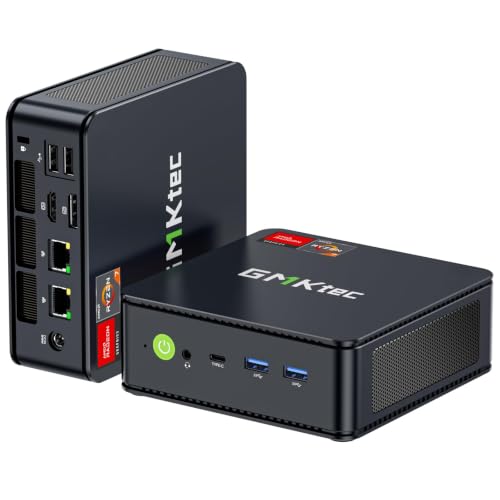
- Best overall compact pick: GMKtec M5 Plus Gaming Mini PC, Ryzen 7 5825U, 32GB RAM, 1TB SSD — Check on Amazon
- Beelink SER5 MAX Mini PC, Ryzen 7 5800H, 16GB RAM, 500GB SSD — Check on Amazon
- BOSGAME P4 Light Gaming Mini PC, Ryzen 7 5700U, 32GB RAM, 1TB SSD — Check on Amazon
- ACEMAGICIAN AM06 Pro Mini Gaming PC, Ryzen 7 5800U, 16GB RAM, 512GB SSD — Check on Amazon
See 2 more Amazon options
- KAMRUI E3B Mini Gaming PC, Ryzen 5 7430U, 32GB RAM, 512GB SSD — Check on Amazon
- Dell RGB Gaming Tower, Core i7, GTX 1050 Ti, 16GB RAM, 512GB SSD (Renewed) — the one discrete-GPU option, and not compact — Check on Amazon
Read the full guide ↓
Disclosure: As an Amazon Associate, reviewstook.com earns from qualifying purchases. Links to Amazon on this page are affiliate links; they cost you nothing extra. Listing details such as price and availability change often, so check the current Amazon listing before you buy.
“Compact gaming PC” under $400 needs an honest definition before it needs a product list, because the machine the phrase suggests — a small tower with a real graphics card inside — does not exist new at this price. Graphics cards alone start close to this entire budget, and the small-form-factor cases and power supplies that house them are the expensive kind. What $400 genuinely buys in a small box is a mini PC: a complete computer smaller than a paperback novel, built around a laptop processor whose integrated Radeon graphics do the gaming work. Every true compact pick in this guide is under one litre in volume — most are closer to two-thirds of a litre — and each one is a finished machine with RAM, storage and Windows installed, not a barebones kit waiting for parts.
What that class of machine plays, it plays honestly: esports titles and older AAA games at 1080p on low-to-medium settings, indie games without complaint, and emulation well into the PlayStation 2 and GameCube era. What it does not play is this year’s AAA releases at high settings, and no listing copy at this price should convince you otherwise — when a budget mini PC promises “smooth 4K gaming,” it is describing the desktop resolution, not the gameplay. There is exactly one exception in this guide, and it proves the rule: a renewed full-size Dell tower with a real GTX 1050 Ti graphics card. It is the only way under $400 to get a discrete GPU, and the price of that GPU is giving up compactness entirely — plus accepting a refurbished machine on a platform with no upgrade future. We included it so the trade-off is visible rather than hidden.
Size is the reason to shop this category at all, so size is how this guide is organized. Every review leads with the machine’s physical dimensions and volume, where it physically fits — a monitor’s VESA mount, a TV stand shelf, the corner of a dorm desk — and the two things small boxes do differently from towers: heat and noise. A mini PC concentrates a gaming load into a case the size of a sandwich, cooled by one small fan, powered by an external brick that also needs a home. Bought with those realities in mind, a sub-litre PC is a genuinely elegant answer for small rooms, shared spaces and living-room TVs. Bought as a shrunken tower substitute, it disappoints. Below are the quick picks, detailed reviews of all six products, a comparison table with dimensions, a compact-specific buying checklist, the mistakes that waste money in this category, and the questions small-space gamers ask most.
In this guide
Quick Picks
Short on time, or comparing several options at once? Each row below names a buyer type and the product that suits it, with a link to the listing.
| Buyer type | Pick | Why it stands out | Link |
|---|---|---|---|
| Best overall compact | GMKtec M5 Plus, Ryzen 7 5825U, 32GB/1TB | The most RAM and storage in a 0.78-litre box at this price | Check on Amazon |
| Best sustained performance | Beelink SER5 MAX, Ryzen 7 5800H, 16GB/500GB | H-series chip with a 54W mode in the smallest case here, about 0.6 litres | Check on Amazon |
| Best storage value | BOSGAME P4, Ryzen 7 5700U, 32GB/1TB | 32GB and a full terabyte — check price on Amazon | Check on Amazon |
| Best for the TV stand | ACEMAGICIAN AM06 Pro, Ryzen 7 5800U, 16GB/512GB | VESA-mounts behind a TV or monitor, with a bay for a second drive | Check on Amazon |
| Best budget route to 32GB | KAMRUI E3B, Ryzen 5 7430U, 32GB/512GB | Dual-channel 32GB in a 0.68-litre case — a budget-tier route to 32GB, check price on Amazon | Check on Amazon |
| Only discrete-GPU option (not compact) | Dell Gaming Tower, GTX 1050 Ti (Renewed) | A real graphics card — in a full-size refurbished tower | Check on Amazon |
How These Picks Were Chosen
The first filter was the category itself: a pick had to be a complete, ready-to-run PC — processor, memory, storage and Windows already installed — sold on Amazon at or regularly within $400 in the United States. Barebones kits were excluded however strong their chips, because a kit without RAM, storage or an operating system is not a $400 computer; it is the start of a more expensive one. The second filter was physical: to count as compact, a machine had to be a mini PC of roughly one litre or less, the size class that VESA-mounts behind a monitor or disappears onto a TV shelf. Five of the six picks pass that test. The sixth, the renewed Dell, fails it openly and is labelled as failing it everywhere it appears — it is here because it is the only discrete-graphics route under the budget, and readers deserve to see exactly what that route costs in space and condition.
We did not use these products ourselves. We read the maker listings and specification pages and compared processors, graphics, memory configuration, storage, dimensions and port layouts, favoring listings that publish their numbers in full. Three technical judgments ran through the shortlist. The first is memory configuration: integrated graphics borrow system RAM and run far faster on two sticks than one, so every mini PC pick here ships dual-channel — a single-stick 16GB machine was treated as a defect, not a detail. The second is graphics class: all five mini PCs use AMD’s Vega-generation integrated graphics, eight compute units in most and seven in the KAMRUI, which is the honest ceiling of this budget; machines built on weaker Intel integrated graphics or older quad-core chips were excluded. The third is price discipline: mini PC prices move weekly with coupons and Prime pricing, so this guide prints no static product prices and directs readers to check the live price on Amazon instead, and the one pick whose live price can drift across the $400 budget line in both directions, the renewed Dell, says so in its name, its review and its table row.
Two compact-specific filters sat on top of all of that. The first is the placement filter: a pick earns its place only if it fits where compact buyers actually put computers — behind a monitor on a VESA bracket, inside a TV stand’s shelf height, on a desk corner already crowded with a keyboard and a lamp — and only if its cooling can live there, because a mini PC sealed in an unventilated cabinet will throttle and whine. The second is the noise filter: in a bedroom, dorm or living room, a small fan at full speed is the loudest object in the space, so we weighted chips that do their gaming at modest wattage and cases with room to breathe. A tower hides its noise in volume; a 0.7-litre box cannot, and this guide does not pretend otherwise.
The 6 Best Compact Gaming PCs Under $400
GMKtec M5 Plus Gaming Mini PC — Ryzen 7 5825U, 32GB RAM, 1TB SSD
Who it suits: The compact buyer who wants the fewest compromises — the most memory and storage in this guide, in a box that still disappears behind a monitor.
Start with the size, because that is the point: the M5 Plus measures about 128.8 × 127 × 47.8 mm — roughly five inches square and under two inches tall, about 0.78 litres — and weighs around half a kilogram. That is a footprint smaller than the stand of most monitors, which means it can sit under the screen, beside it, or on the VESA mount behind it, and the desk looks exactly as it did before you owned a gaming PC. Inside is a Ryzen 7 5825U, an eight-core Zen 3 chip boosting to 4.5GHz, with Radeon Vega 8 integrated graphics — and, the specification that decides this tier, 32GB of dual-channel DDR4 and a 1TB NVMe SSD fitted at the factory. Memory is where integrated graphics live or die: the Vega 8 draws its frame buffer and bandwidth from system RAM, and 32GB in dual channel gives it both room and speed that the 16GB machines below cannot match. For game libraries, 1TB is the difference between installing what you own and curating it.
The gaming claim to make for this machine is a specific one: esports titles at 1080p run well, older AAA games run at low-to-medium settings, and modern AAA releases are a low-settings-plus-upscaling conversation. That is the ceiling of every mini PC in this guide, and the M5 Plus reaches it with the least friction — the dual 2.5GbE LAN ports, triple 4K display output and WiFi 6E are work-and-media credentials on top. On heat and noise: the 5825U is a 15W-class chip, the gentlest sustained load in this guide, so the single fan works less hard than the H-series Beelink’s below; in a quiet room you will hear it under load, as you will hear every pick here, but it settles fastest when the game closes. Check the price on Amazon before you buy — pricing for this class moves with coupons and membership offers, and at a competitive live price it is the strongest complete compact package in this guide. One caution belongs to the whole value-brand class and is stated in the KAMRUI and ACEMAGICIAN reviews too: support runs through the seller, so keep the order records.
- 32GB dual-channel RAM and 1TB SSD — the fullest specification in this guide, and the one integrated graphics benefit from most.
- About 0.78 litres: VESA-mountable behind a monitor or invisible on a TV shelf.
- 15W-class chip runs the coolest and quietest sustained gaming load of the six.
Honest limitation: The Vega 8 graphics are the ceiling of this budget, not a stepping stone — there is no upgrade path to discrete graphics, and the U-series chip gives up sustained clock speed to the H-series Beelink below.
Choose it if you want one purchase that needs nothing added — memory, storage and size all sorted. Skip it if your games are current AAA releases you refuse to run at low settings; no compact pick here fixes that, and the money belongs toward a tower budget instead.

Beelink SER5 MAX Mini PC — Ryzen 7 5800H, 16GB RAM, 500GB SSD
Who it suits: The performance-first compact buyer — the person who wants the strongest sustained chip in the smallest case in this guide, and accepts half the storage of the GMKtec to get it.
The SER5 MAX is the smallest machine here: the Amazon listing puts it at 4.96 × 4.44 × 1.65 inches and 2.44 lb, which works out to roughly 0.6 litres — a thick paperback. Into that volume Beelink fits a Ryzen 7 5800H, and the H matters. Where the U-series chips in most of this guide are 15W laptop parts tuned for thin notebooks, the 5800H is a 45W-class part, and this listing runs it at a 54W TDP setting: under a long gaming session, that is the difference between a chip that holds its clocks and one that quietly slows down after twenty minutes. The graphics are the same Radeon Vega 8 class as the GMKtec’s, fed here by 16GB of dual-channel DDR4 — enough, and correctly configured, though the M5 Plus’s 32GB is the more comfortable long-term answer for an iGPU that shares memory with the system. Storage is the visible compromise: 500GB fills quickly with modern game installs, and the honest budget includes a future SSD swap — the machine supports up to 2TB and RAM to 64GB, per the listing details, which makes it the most upgradeable mini PC in this guide after purchase.
Thermals are the review this machine has to pass, because 54W in 0.6 litres is the densest heat load here. The case answers with vents on multiple faces and a fan that will be audible in a quiet room during play — not defective, just physics: a small fan moving gaming heat spins fast and sounds like it. Placement is the mitigation, and it is free: on an open desk or VESA-mounted behind a monitor with air around it, the SER5 MAX sustains its performance; sealed inside a TV cabinet, it will throttle like everything else in this guide, only sooner. For a living-room build, that means an open shelf, not the closed compartment. Check the price on Amazon — in this budget tier it is the performance-per-litre winner of this guide by a wide margin. Triple display output over HDMI, DisplayPort and USB-C, WiFi 6 and Windows 11 Pro complete a specification that reads like a work machine — because, outside gaming hours, that is exactly what it is.
- Smallest case in the guide at roughly 0.6 litres, with the strongest sustained chip: a 54W-mode 5800H.
- Upgradeable after purchase — RAM to 64GB and storage to 2TB per the listing.
- Strong performance per dollar in this budget tier — check price on Amazon for the current figure.
Honest limitation: 500GB of storage is tight for a modern game library, and the 54W mode in a 0.6-litre case makes this the most placement-sensitive pick — it needs open air, and its fan is the most audible under sustained load.
Choose it if frames per litre is your metric and your desk or TV shelf has open air. Skip it if the PC must live inside a closed cabinet, or you know 500GB will be full by Christmas and do not want to open the case.

BOSGAME P4 Light Gaming Mini PC — Ryzen 7 5700U, 32GB RAM, 1TB SSD
Who it suits: The value hunter: buyers who price-shop this category properly and want the 32GB/1TB configuration without paying the GMKtec’s shelf price.
The P4’s proposition is value. The configuration tied to this listing — a Ryzen 7 5700U with Radeon Vega 8 graphics, 32GB of dual-channel DDR4 and a 1TB NVMe SSD — is a budget-to-mid-tier route to the same memory-and-storage recipe as the M5 Plus, for less — check price on Amazon. It sits in a chassis of the same class: the P4 family measures about 5.1 inches square and 1.8 inches tall, roughly 0.77 litres, with the machine itself at about 2.2 lb. On a desk it reads as a slightly taller coaster stack; on a TV stand it slides into shelf heights that exclude even small towers. The 5700U is a close relative of the M5 Plus’s 5825U — same Zen 3 eight-core layout, same Vega 8 graphics, a fraction less boost headroom — so the gaming story is the same honest one: esports and older AAA at 1080p low-to-medium, modern AAA at low settings with upscaling, and excellent emulation.
Two cautions are specific to this pick and both are stated plainly. The first is the listing family: BOSGAME has sold this P4 line in both 5700U and 5825U variants under near-identical titles, so the review unit in your head must be the configuration on the live listing in front of you — check the processor line and the RAM and storage figures on the page before ordering, not the title alone. The second is the brand itself: BOSGAME is a value label, and its support channel is the seller storefront rather than a global service network; the machine’s dual 2.5GbE ports, triple 4K output over HDMI, DisplayPort and USB-C, WiFi 6E and room to grow — RAM to 64GB per the listing details — are real, but buy it as a specification, not as a service promise. On noise, the U-series chip keeps the same gentle profile as the M5 Plus: audible under load in a silent room, unobtrusive across a living room, and quick to settle. If the live configuration matches, check the price on Amazon — this is among the most hardware per dollar in the guide.
- 32GB dual-channel and 1TB fitted — the value configuration of the guide; check price on Amazon.
- Sub-litre P4 chassis, about 5.1 inches square, suits desks and TV shelves equally.
- Dual 2.5GbE LAN and triple display output give it second careers in media and home-server duty.
Honest limitation: The listing family mixes 5700U and 5825U variants under similar titles — the configuration must be confirmed on the live page — and value-brand support is a storefront, not a service network.
Choose it if the live listing shows the 32GB/1TB configuration — check price on Amazon. Skip it if the configuration on the page is a lesser variant at the same money, or if in-warranty support quality matters more to you than specification per dollar.

ACEMAGICIAN AM06 Pro Mini Gaming PC — Ryzen 7 5800U, 16GB RAM, 512GB SSD
Who it suits: Living-room and tidy-desk buyers — the machine most designed in this guide to be mounted out of sight and forgotten about between game sessions.
The AM06 Pro is the largest mini PC here and still tiny: 5.19 × 5.19 × 1.96 inches per the model’s published specifications, about 0.86 litres — a square the size of a drinks coaster, two inches thick. What the extra fraction of a litre buys is the guide’s best placement story. The case VESA-mounts behind a monitor or a TV, which in a living room is the difference between a computer that lives in the room and a computer that is furniture in it; add the wireless keyboard and controller you were buying anyway, and the PC simply disappears. The specification is the familiar honest recipe — Ryzen 7 5800U, eight Zen 3 cores to 4.4GHz, Radeon Vega 8 graphics, 16GB dual-channel DDR4, 512GB NVMe — with one storage trick none of the others match at this size: a 2.5-inch expansion bay, so a cheap SATA drive can double the library space later without opening the memory configuration debate. Dual LAN, triple 4K output and WiFi 6 round out a box that doubles as a media front-end without breaking stride.
The gaming expectations are the guide’s standing ones — 1080p esports and older AAA at low-to-medium — and the 5800U’s 15W-class profile makes this, with the M5 Plus, one of the two quietest sustained loads here; behind a TV, its fan is effectively out of the room. The price story needs its sentence: membership status can change what this machine costs, so check the price on Amazon for the figure that applies to you before comparing it against the BOSGAME. One brand note, given in the same spirit as the sibling guides in this series: ACEMAGICIAN is a value brand whose wider family of labels has drawn scrutiny in past years over bundled software, and the standard advice for any budget mini PC applies — run a security scan on first boot, and a clean Windows install is a reasonable first hour with any of them. Judged as hardware for a TV stand, though, the AM06 Pro is the placement pick of this guide: the one that vanishes.
- VESA-mounts behind a TV or monitor — the true zero-footprint option for living rooms.
- 2.5-inch expansion bay adds cheap storage later; no other pick here offers one.
- 15W-class chip and the largest case here make for the calmest fan behavior under load.
Honest limitation: 16GB of RAM is the guide’s floor rather than its comfort zone for shared-memory graphics, and the price can split by Prime membership — check price on Amazon for the figure that applies to you.
Choose it if the PC is going behind a screen in a shared room and silence matters. Skip it if you want 32GB fitted from day one — that is the GMKtec or the BOSGAME — or if the non-Prime price is the one you would pay.

KAMRUI E3B Mini Gaming PC — Ryzen 5 7430U, 32GB RAM, 512GB SSD
Who it suits: The budget disciplinarian: the cheapest verified route in this guide to a dual-channel 32GB machine, for buyers whose games are esports, indie and emulation rather than new AAA.
The E3B’s case is the second smallest here — the E3B chassis measures 128 × 128 × 41.2 mm, about 0.68 litres and roughly 560 grams — and KAMRUI includes a VESA plate, so the whole computer can ride on the back of a monitor and take no desk at all. The processor is a Ryzen 5 7430U: six Zen 3 cores to 4.3GHz with Radeon Vega 7 graphics, one compute unit down from the Vega 8 machines above it. That is the honest trade at the heart of this pick, and it cuts in a specific direction: CPU-heavy and esports gaming barely notices, because the 7430U is a modern, efficient chip and the fitted memory is the configuration integrated graphics crave — 32GB across two sticks, dual-channel, exactly what a shared-memory GPU needs to breathe. Where the missing compute unit shows is in demanding 3D scenes, where the Vega 8 picks hold settings the E3B has to lower. Storage is 512GB, the guide’s standard compromise, and its budget-tier positioning is the argument: check the price on Amazon for the 32GB configuration.
Placement and noise follow the U-series pattern: a low-wattage chip in a vented plastic case, quiet at desktop distances, audible in a silent room under load, and happiest with open air around it — the VESA-behind-monitor position suits it perfectly, since monitor backs are ventilated space by design. The brand caveat is the same one given for the AM06 Pro, and it is not decorative: KAMRUI sits in the same value-brand family, so the first-boot routine — security scan, updates, and a clean install if anything looks off — is part of the purchase price in effort. There is also a configuration trap on this listing family: a 16GB sibling exists under a separate listing, so confirm the page in front of you says 32GB before ordering, because at 16GB this machine’s whole argument changes. Bought correctly — the 32GB configuration, after you check the price on Amazon — the E3B is the guide’s proof that the compact premium is optional: the smallest budgets in this category still buy a properly configured machine.
- The budget-tier route to a 32GB dual-channel configuration here — check price on Amazon.
- 0.68-litre chassis with a VESA plate included — mounts behind the monitor out of the box.
- Six efficient Zen 3 cores keep esports and emulation smooth at low wattage and low noise.
Honest limitation: Vega 7 graphics are a step below the Vega 8 picks in demanding 3D games, and the value-brand first-boot routine — scan, update, verify the 32GB configuration — is part of the deal.
Choose it if your library is esports, indie and emulation and you want 32GB on a tight budget — check price on Amazon. Skip it if you play recent 3D releases and need every graphics compute unit this budget offers — step up to the M5 Plus.
Dell RGB Gaming Tower Computer — Core i7, GTX 1050 Ti 4GB, 16GB RAM, 512GB SSD (Renewed)
Who it suits: The buyer who read the intro’s honesty note and chose the graphics card anyway — who has the floor space for a tower and wants the one thing no mini PC under $400 can offer: a discrete GPU.
Everything about this pick is a disclosed exception. It is not compact: it is a full-size RGB gaming tower, the opposite of the sub-litre boxes above, and it will live on or under a desk like towers do. It is not new: it is an Amazon Renewed machine, professionally inspected and resold, built on a 6th-generation Intel Core i7 platform that was current a decade ago. And its price will not sit still: renewed pricing moves around the budget line, which means it qualifies for this guide only on the days its live price is at or under $400, and on the days it sits above, the correct action is to pass — check the price on Amazon before you buy. What justifies its presence is the component in its name: a GeForce GTX 1050 Ti with 4GB of its own memory. A discrete card, even an old one, changes the gaming conversation — graphics memory stops competing with system RAM, driver support is the full desktop kind, and 1080p gaming at medium settings in the games of its era is a straightforward expectation rather than a negotiated one. The 16GB of RAM and 512GB SSD around it are adequate, and Windows 11 Pro is installed.
The costs are equally concrete. A 6th-generation platform is a dead end: no meaningful processor upgrade path, older connectivity, and a graphics card that was entry-level when it was new and is now several generations behind — it plays the back catalog, not the future. Renewed condition means the inspection standard is “works and looks like new” under Amazon’s Renewed program, not a factory warranty from Dell, and individual units vary in ways a new mini PC’s do not. And the size is the size: measure the space, because this machine answers a different question from the other five. It is in this guide because compact shoppers deserve to see the actual price of the alternative — the moment a real graphics card enters, the box stops being compact, the machine stops being new, and the platform stops having a future. If those three trades are acceptable and the live price is under the line, this is a legitimate back-catalog gaming PC. If any of them is not, the mini PCs above are the honest $400 answer.
- The only discrete graphics card in this guide — a GTX 1050 Ti with its own 4GB, which no integrated GPU here matches for its era’s games.
- Renewed pricing can dip under the budget line — check price on Amazon.
- A standard tower interior: the only pick with room to change components at all.
Honest limitation: It fails this guide’s own category — full-size, refurbished, on a decade-old platform with no upgrade path — and its live price can sit above the $400 budget line; it is a buy only on days the live price is at or under $400 — check price on Amazon.
Choose it if a real graphics card outranks size, newness and future upgrades, and the live price is under the line. Skip it if any of those three matter — or on any day the listing sits above $400 — check the live price first.

Comparison Table
| Product | Size / volume | Graphics | Best use | Link |
|---|---|---|---|---|
| GMKtec M5 Plus, 5825U, 32GB/1TB | ~128.8 × 127 × 47.8 mm, ~0.78 L | Radeon Vega 8 (integrated) | Most complete compact package | Check on Amazon |
| Beelink SER5 MAX, 5800H, 16GB/500GB | 4.96 × 4.44 × 1.65 in, ~0.6 L | Radeon Vega 8 (integrated) | Sustained performance per litre | Check on Amazon |
| BOSGAME P4, 5700U, 32GB/1TB | ~5.1 × 5.1 × 1.8 in, ~0.77 L | Radeon Vega 8 (integrated) | Storage and memory per dollar | Check on Amazon |
| ACEMAGICIAN AM06 Pro, 5800U, 16GB/512GB | 5.19 × 5.19 × 1.96 in, ~0.86 L | Radeon Vega 8 (integrated) | Behind the TV or monitor | Check on Amazon |
| KAMRUI E3B, 7430U, 32GB/512GB | 128 × 128 × 41.2 mm, ~0.68 L | Radeon Vega 7 (integrated) | 32GB on the smallest budget | Check on Amazon |
| Dell Gaming Tower, GTX 1050 Ti (Renewed) | Full-size tower — not compact | GTX 1050 Ti 4GB (discrete) | A real GPU, if size does not matter | Check on Amazon |
How to Choose a Compact Gaming PC Under $400
- Measure the space before the specifications. Compact is a physical claim before it is a performance one. Note the shelf height in your TV stand, the depth of your desk and whether your monitor has a VESA mount — then shop the dimensions column of the comparison table, not the processor names. Every mini PC here is under a litre; the differences that matter are the two inches of shelf height you do or do not have.
- Understand what a litre buys. A sub-litre case has room for a laptop chip, one or two memory sticks, one or two SSDs and one small fan — and no room, ever, for a graphics card. Buying compact means accepting integrated graphics permanently. If that sentence bothers you, the renewed tower in this guide or a larger budget is your answer, not a different mini PC.
- Put dual-channel memory at the top of the checklist. Integrated graphics share system RAM, and two sticks roughly double the memory bandwidth the GPU can use. A 32GB dual-channel machine will out-game a 16GB single-stick machine with a nominally faster chip. Check the listing’s memory line for “2×” configurations before anything else.
- Match the chip’s wattage to the room. U-series chips (the 5825U, 5800U, 5700U, 7430U here) game at modest wattage and stay relatively quiet; the H-series 5800H in the Beelink sustains higher performance and makes more fan noise doing it. Bedroom and living-room buyers should weight the U-series; desk buyers with headphones can take the H.
- Plan the power brick’s home too. Every mini PC here runs from an external adapter roughly the size of a deck of cards. It needs a surface and ventilation as well — a brick buried in cable spaghetti behind a TV stand runs hot. The PC is 0.7 litres; the installation is the PC plus the brick plus airflow.
- Give the box air, wherever it lives. Behind a monitor is ventilated; inside a closed TV cabinet is an oven. If your only space is enclosed, leave the door open during play or choose a different room for the PC — thermal throttling in a sealed cabinet will cost more performance than any specification difference in this guide.
- Count storage in game installs, not gigabytes. 500GB holds a handful of modern titles plus Windows; 1TB holds a library. If you play two or three games in rotation, 500GB is fine and the AM06 Pro’s 2.5-inch bay is a cheap future fix. If you keep everything installed, start at 1TB — the M5 Plus or the P4.
- Check the exact configuration on the live page. Mini PC listing families swap processors and memory sizes under near-identical titles — this guide flags the P4’s variants and the E3B’s 16GB sibling explicitly. The title is marketing; the specification table on the page is the product.
- Do the first-boot routine on any value brand. Security scan, Windows updates, driver updates, and a look through installed programs. It takes an hour, it applies to every budget mini PC regardless of badge, and it converts an unknown software state into a known one.
- Set the gaming expectation in writing before you order. 1080p, esports and older AAA at low-to-medium, indie at will, emulation gladly. If your list of games is this year’s releases at high settings, no $400 compact exists for you — knowing that before checkout is the cheapest upgrade in this guide.
Small Boxes, Real Heat: Noise, Thermals and Where the PC Lives
A tower case is mostly air, and that air is a cooling budget: big slow fans, space between components, heat that rises away from the parts making it. A 0.7-litre mini PC inverts all of that. The processor, memory and SSD sit within centimetres of each other, one small fan does all the work, and the whole gaming load — 15 to 54 watts depending on the chip — leaves through vents you could cover with a coaster. None of this makes mini PCs badly designed; it makes placement a performance decision. The same machine that holds its boost clocks on an open desk will shed them inside a closed cabinet, and the fan that is a whisper at three metres across a living room is a presence at arm’s length in a silent bedroom at midnight.
The practical rules are few and cheap. Leave a hand’s width of open air on the vented sides; never stack anything on top of the case; treat a closed TV-stand compartment as a gaming session with the door open; and if the PC VESA-mounts behind a monitor or TV, confirm the screen’s own heat is not rising straight through the PC’s intake — most are fine, a few plasma-era and high-brightness sets run hot enough to matter. Dust is the slow variable: a small fan in a small case clogs faster than a tower’s, and a thirty-second vacuum of the intake vents every few months is the whole maintenance schedule. Follow those rules and a mini PC’s noise settles into what owners actually report — audible under load in a quiet room, irrelevant over game audio or across a living room, and gone entirely at idle, where these machines sip power and make effectively no sound at all.
The placement menu is the reward for those constraints. Behind the monitor, the PC ceases to exist visually — the dorm-desk and shared-room answer. On an open TV shelf with a controller, it is a console that also runs a full Windows desktop — the living-room answer, and the reason three of these five mini PCs output to three displays at once. In a bag, at under two and a half pounds for the heaviest machine here plus its brick, it is a gaming PC that travels between home, dorm and family visits in a way no tower ever will. Compact is not a smaller version of the tower experience; it is a different set of places a gaming PC can be. Buy it for the places, with the graphics ceiling accepted, and it is the most satisfying $400 in the category.
Common Buying Mistakes
- Believing “4K gaming” in a mini PC title. At this price it means 4K desktop and video output; gameplay is a 1080p conversation, and the listings that blur that line are telling you something about the seller.
- Buying a barebones kit by accident — or on purpose without pricing the RAM, SSD and Windows license it still needs. A barebones kit is not a complete PC.
- Choosing a single-stick 16GB configuration to save a little, and halving the memory bandwidth your integrated graphics depend on.
- Sealing the PC inside an unventilated TV cabinet, then blaming the chip for the throttling and fan noise that follow.
- Comparing mini PCs by processor name alone. A 5825U and a 5800H are both “Ryzen 7,” but their sustained wattage — and therefore their sustained gaming performance and noise — are different classes.
- Ordering from a listing family without confirming the live configuration; the P4’s processor variants and the E3B’s 16GB sibling are this guide’s standing examples.
- Judging the renewed tower by new-PC standards: it is inspected refurbished stock on an old platform, and its price crosses the $400 line in both directions — buy the live price and condition, not the headline.
- Forgetting the brick. The adapter needs a ventilated home too, and a “wireless-looking” setup still has a power supply, an HDMI cable and a controller dongle to route.
- Expecting an upgrade path that physics excludes. A mini PC’s graphics are its chip’s graphics forever; the upgradeable parts are RAM and storage only.
Final Recommendation
- Most compact buyers: GMKtec M5 Plus.
- Performance per litre: Beelink SER5 MAX.
- Best value route: BOSGAME P4.
- Living rooms and behind-screen mounting: ACEMAGICIAN AM06 Pro.
- Smallest budgets, esports libraries: KAMRUI E3B.
- A discrete GPU or nothing: Dell Gaming Tower (Renewed) — with every caveat in its review attached.
Our top two for compact buyers at this budget are the GMKtec M5 Plus, for the complete 32GB/1TB specification in a 0.78-litre box, and the Beelink SER5 MAX, for the strongest sustained chip in the smallest case here. Between them they cover the two shapes this search usually takes: the machine that needs nothing added, and the machine that gives up storage for speed. If the budget is firm, the BOSGAME P4 matches the GMKtec’s recipe for less — check price on Amazon; if the PC is bound for a TV stand, the AM06 Pro is the one designed to disappear; and if the library is esports and emulation, the KAMRUI E3B does the job as the budget pick in this tier. Shoppers who can stretch should also see Best Compact Gaming PC Under $500, and those whose space problem is the whole point should start with Best Compact Gaming PC For Small Spaces Under $400. Measure your shelf, decide where the brick will live, confirm the configuration on the live listing, and check the live price before you order — at $400, that homework is the whole difference between a PC that vanishes into your room and one that merely takes up less of it while disappointing you.
Frequently Asked Questions
Can a compact PC under $400 really play games?
Yes — a specific class of them. Esports titles, indie games and older AAA releases play well at 1080p on low-to-medium settings, and emulation through the PlayStation 2 and GameCube era is a strength of these Ryzen chips. Current AAA releases at high settings are beyond every machine in this guide, mini or otherwise, at $400; anyone who tells you different is selling something.
Why is there no small tower with a graphics card in this guide?
Because new, there isn’t one under $400. A discrete graphics card, a small-form-factor case and a suitable power supply consume the budget before a processor, memory or storage is bought. The only discrete-GPU route at this price is refurbished — the renewed Dell tower included here as an explicitly non-compact exception.
How small are these PCs, really?
Between roughly 0.6 and 0.86 litres — five inches square and under two inches thick, in the range of a thick paperback or a stack of coasters. For scale, a compact mini-tower is twenty to thirty times that volume, and the renewed Dell in this guide is a full-size tower. Every mini PC here can VESA-mount behind a typical monitor.
Are mini PCs loud when gaming?
Noticeable in a silent room, unobtrusive in a lived-in one. One small fan does all the cooling, so under load it spins fast and can be heard at desk distance; across a living room or over game audio it fades, and at idle these machines are effectively silent. U-series chips (most of this guide) run quieter than the H-series Beelink, and open placement is quieter than any cabinet.
Can I upgrade a mini PC later?
RAM and storage, on most of them — the Beelink supports up to 64GB and 2TB per its listing, and the AM06 Pro adds a 2.5-inch bay. Graphics, never: the GPU is part of the processor, permanently. Buy the graphics class you need on day one, because it is the one specification that cannot change.
Is the renewed Dell a better buy than a new mini PC?
For its era’s games, its GTX 1050 Ti is genuinely stronger graphics hardware. For everything else — size, newness, warranty, platform future, power draw, noise — the new mini PCs win, and the Dell’s live price can sit above the $400 budget line — check the price on Amazon. It is the right buy for a narrow buyer: back-catalog games, floor space available, live price under the line.
What else do I need to budget for?
A monitor or TV, a keyboard and mouse or a controller, and possibly an HDMI or DisplayPort cable if your screen’s box didn’t include one. The PCs themselves are complete — Windows is installed — but no pick in this guide includes a display or peripherals in the price.


