Where to buy
Check the latest price, availability and delivery on Amazon. Orders are placed on Amazon. We may earn a commission from qualifying purchases.
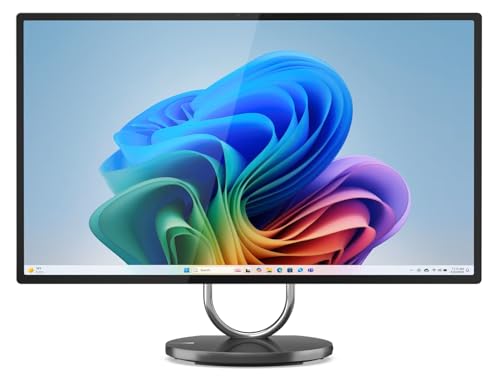
- Best overall under $3,000: Lenovo Yoga AIO 32i, Core Ultra 7 258V, RTX 4050, 32GB, 1TB — Check on Amazon
- HP OmniStudio X 32-c1010, Core Ultra 7 256V, 16GB, 2TB SSD — Check on Amazon
- Apple iMac 24-inch with M4 (10-core), 24GB, 512GB — Check on Amazon
- Dell Inspiron 7730 All-in-One 27-inch Touch, Core 7 150U, 32GB, 1TB — Check on Amazon
See 2 more Amazon options
- Lenovo Yoga AIO 27, Core Ultra 7 255H, 16GB, 1TB — Check on Amazon
- Apple iMac 24-inch with M4 (8-core), 16GB, 256GB — Check on Amazon
Read the full guide ↓
Disclosure: As an Amazon Associate, reviewstook.com earns from qualifying purchases. Links to Amazon on this page are affiliate links; they cost you nothing extra. Listing details such as price and availability change often, so check the current Amazon listing before you buy.
Three thousand dollars is a flagship budget, and the first thing a flagship all-in-one buyer deserves is the truth about the ceiling: on Amazon, the all-in-one category does not actually reach $3,000. We went looking for the halo machines — the biggest screens, the strongest chips, the one configuration that would justify spending the whole budget — and the most expensive all-in-one we could pin to a verified Amazon listing was the Lenovo Yoga AIO 32i with a discrete RTX 4050 graphics card — check its price on Amazon. HP’s 31.5-inch OmniStudio X family, the other big-screen flagship line, sits in the same premium tier on Amazon for its 32GB configurations. Above that tier, the shelf is empty. Lenovo’s own store lists its newer OLED-screen Yoga AIO i Aura Edition at a price over this budget, and not one we could verify on Amazon. There is no verified all-in-one in that top band on Amazon to put in this guide, and any guide that fills that band with a product is inventing it.
That emptiness is not a failure of the category; it is the category’s shape. An all-in-one is a laptop’s worth of hardware built into a monitor, and laptop hardware tops out lower than desktop hardware. Nobody builds an all-in-one with a flagship desktop graphics card, because there is nowhere to put the heat. What the top of the market sells instead is the screen: 31.5-inch 4K panels with wide color gamuts, a 4.5K Retina display, a rotating 27-inch panel at 120Hz. The money in a premium all-in-one goes into the display, the industrial design and the silence — not into raw computing power, which peaks at efficient mobile processors and, in exactly one machine in this guide, a laptop RTX 4050. A buyer who understands that buys the best all-in-one in this guide and keeps a good part of the budget unspent. A buyer who does not will bring $3,000 worth of expectation to a machine priced well below that ceiling.
So this guide is framed the way the market actually is: these are the best all-in-ones money can buy on Amazon right now, ranked for a buyer whose budget ceiling is $3,000 but whose real spend will land well below that ceiling. The Lenovo Yoga AIO 32i leads because it is the only machine here with discrete graphics, a 31.5-inch 4K screen and 32GB of memory in one package. The HP OmniStudio X counters with the brightest 4K panel in the class and, in the configuration listed here, a 2TB SSD. Apple’s two iMacs bracket the field: the 10-core M4 model with 24GB of memory is the best display-per-dollar machine in the guide, and the 8-core base model — check its price on Amazon — is the standing reminder that most people shopping at this budget should spend only part of it. Between them sit a touchscreen Dell with 32GB of memory and a rotating Lenovo with the best stand in the business. Below are the quick picks, detailed reviews of all six, a comparison table, a buying checklist, the mistakes that waste money at the top of this category, and the questions premium all-in-one buyers ask most.
In this guide
Quick Picks
Short on time, or comparing several options at once? Each row below names a buyer type and the product that suits it, with a link to the listing.
| Buyer type | Pick | Why it stands out | Link |
|---|---|---|---|
| Best overall under $3,000 | Lenovo Yoga AIO 32i (RTX 4050) | Only discrete GPU in the guide, 31.5-inch 4K, 32GB | Check on Amazon |
| Best big-screen storage pick | HP OmniStudio X 32-c1010 | 31.5-inch 4K at 550 nits with a 2TB SSD | Check on Amazon |
| Best for Mac buyers and color work | Apple iMac 24-inch, M4 10-core, 24GB/512GB | 4.5K Retina display, strongest iMac configuration on Amazon | Check on Amazon |
| Best touchscreen family PC | Dell Inspiron 7730 All-in-One 27-inch | 27-inch FHD touch, 32GB memory, light discrete graphics | Check on Amazon |
| Best stand and ergonomics | Lenovo Yoga AIO 27 | Rotating QHD 120Hz screen that also works as a monitor | Check on Amazon |
| Best value — spend half the budget | Apple iMac 24-inch, M4 8-core, 16GB/256GB | The sensible flagship alternative — check price on Amazon | Check on Amazon |
How These Picks Were Chosen
The budget was applied as a ceiling, not a target. Every product below is a real Amazon listing in the United States. All-in-one prices on Amazon move with coupons, seller changes and seasonal sales, so this guide does not print fixed figures that would go stale; check the current price on each listing instead, and each review tells you what else to verify before you buy. Anything that could not be pinned to a verified Amazon listing was excluded, however good it might be — that is why Lenovo’s OLED Aura Edition, a genuinely interesting flagship, is discussed in this guide’s ceiling analysis but is not a pick: its verified price lives on Lenovo’s own store, over budget, and we do not link what we cannot verify.
We did not use these machines ourselves. We read the maker listings, specification pages and the published review record, and compared the things that decide an all-in-one purchase: the display first (size, resolution, brightness, color coverage, refresh rate), then the processor generation, memory amount and whether that memory can ever be changed, storage, graphics, camera and ports. At this end of the market we weighted the display above everything, because in an all-in-one the display is the purchase — it is the one component you will look at every day for the machine’s whole life, and it is welded to the computer. A mediocre panel does not become acceptable because the processor is fast; it becomes a fast computer you regret looking at.
Two filters sat on top of that. The first is the permanence filter: almost every machine in this guide has soldered memory, so the configuration on the listing is the configuration forever — we favored listings that start at 32GB, or flagged clearly where 16GB is the ceiling you are accepting. The second is the honesty filter about graphics. Integrated graphics in current Intel and Apple chips are genuinely good for office work, photo editing and light creative tasks, and this guide says so. They are not gaming hardware, and the one discrete card here — a laptop RTX 4050 with 6GB of memory — is a light-gaming and GPU-acceleration card, not a flagship one. Where a maker’s marketing implies more than that, the review corrects it.
The 6 Best All-in-One PCs Under $3,000
Lenovo Yoga AIO 32i — Core Ultra 7 258V, RTX 4050, 32GB, 1TB
Who it suits: Creators and power users who want the most complete Windows all-in-one that exists — a big color-accurate 4K screen, real graphics acceleration, and enough memory that the machine never becomes the bottleneck.
This is the flagship of the category as Amazon actually sells it, and its specification explains why. The 31.5-inch 4K UHD IPS panel covers 97% of the DCI-P3 color gamut, is rated at 495 nits with HDR 600, and sits on a tilting metal hinge behind a three-sided borderless design. Behind it: an Intel Core Ultra 7 258V processor, 32GB of LPDDR5X memory, a 1TB PCIe Gen4 SSD, and the component that separates this machine from every other pick in the guide — an NVIDIA GeForce RTX 4050 laptop GPU with 6GB of GDDR6. That card is why the Yoga AIO 32i keeps appearing in video-editing guides: it accelerates exports, effects and AI features in creative software in a way no integrated GPU in this guide matches, and it makes light gaming at reduced settings a real option rather than a hope. Add a 5MP IR camera, Harman Kardon speakers with Dolby Atmos, Wi-Fi 7, Thunderbolt 4 and a base that wirelessly charges a phone, and this is the most feature-complete desk computer in the roundup. Check its price on Amazon — it sits at the top of this guide’s premium tier, and still well under the budget ceiling.
The honest notes matter as much as the spec sheet. The RTX 4050 is a laptop card with 6GB of video memory: it is a genuine step up from integrated graphics, and it is not a gaming flagship — modern demanding games at the panel’s native 4K are beyond it, and serious gaming belongs at 1080p or 1440p with settings negotiated. The 32GB of memory is soldered onto the package and can never be upgraded, so this configuration is the machine’s lifetime configuration. The stand’s ports mostly live at the back, day-to-day plugging happens by feel, and independent reviewers have noted the design asks for a deep desk. The Amazon listing for this configuration is a bundle sold with a 64GB USB drive included, which is a reseller flourish rather than a Lenovo feature — check who the seller is and what the warranty path looks like before you buy, because on a premium machine like this the warranty is part of the product.
- The only discrete GPU in this guide — RTX 4050 6GB for creative acceleration and light gaming.
- 31.5-inch 4K IPS, 97% DCI-P3, HDR 600: the joint-best Windows screen here.
- 32GB of memory and 1TB Gen4 SSD — the configuration needs nothing at purchase.
Honest limitation: The RTX 4050 is a laptop card, not a desktop one — it will not drive its own 4K panel in demanding games — and the soldered 32GB is a lifetime ceiling.
Choose it if you edit photos or video, want the biggest accurate screen in the class, and would use a real GPU. Skip it if gaming is the priority — a tower at this price is in a different league — or if you need memory expandability.

HP OmniStudio X 32-c1010 — Core Ultra 7 256V, 16GB, 2TB SSD
Who it suits: Home-office and media buyers who want the largest, brightest 4K screen in the class and a lot of local storage — photo libraries, video archives, a decade of documents — without a separate tower or external drives.
The OmniStudio X’s argument is its panel. The 31.5-inch 4K UHD IPS display is rated at 550 nits with HDR 600 and 95% DCI-P3 coverage — brighter than the Lenovo above and brighter than the iMac’s 500 nits — behind anti-glare coating, on a height-adjustable stand. For a machine that will spend its life showing spreadsheets, photo libraries and streamed film, that panel is the product, and on panel specifications alone this is arguably the best screen in the guide. The configuration attached to this Amazon listing pairs a Core Ultra 7 256V processor and Intel Arc 140V integrated graphics with 16GB of LPDDR5x memory and a 2TB SSD — the largest storage in this guide, which is the honest reason this specific configuration earns its place: buyers whose libraries are measured in terabytes do not have to start life with an external drive hanging off the back. The machine is a Copilot+ PC with a 5MP IR camera, Wi-Fi 7 and an HDMI input that lets the screen double as a monitor for a laptop or console — a genuinely useful trick that extends the panel’s life beyond the computer inside it. HP’s 32GB configurations of this same machine sit in the same premium tier on Amazon; check the price on Amazon for this exact 2TB listing, and read the memory note below before you judge it kindly.
That memory note is the review’s center. Sixteen gigabytes is the floor for a premium machine in this class, not the standard — the Lenovo above and HP’s own other configurations carry 32GB — and because the LPDDR5x memory is soldered, this machine will be a 16GB machine forever. For office work, browsing and media it is enough today; for a buyer keeping a flagship for six or seven years, it is the specification most likely to age first. The Arc 140V graphics are competent integrated graphics — fine for photo work and light creative tasks, not a substitute for the Lenovo’s discrete card. And this listing has shown as unavailable in past crawls, which is common for HP’s rotating configurations: if it is in stock at a sensible price when you check, the panel and the 2TB drive make the case; if the price has drifted toward the 32GB configurations, buy one of those instead and add storage externally.
- Brightest panel in the guide: 31.5-inch 4K, 550 nits, HDR 600, 95% DCI-P3.
- 2TB SSD — the most storage of any pick, no external drive required.
- HDMI input lets the screen serve a second machine; height-adjustable stand.
Honest limitation: 16GB of soldered memory in a flagship-priced machine, and integrated graphics only — the configuration trades memory headroom for storage.
Choose it if screen brightness and local storage are your top two requirements and your workload is office, media and photo work. Skip it if you keep machines a long time and multitask heavily — the 32GB configurations of this same HP, or the Lenovo, age better.

Apple iMac 24-inch with M4 (10-core) — 24GB, 512GB
Who it suits: Mac buyers, and anyone whose work is color-sensitive — photo editing, design, video for the web — who wants the sharpest display in the guide and the strongest iMac configuration Amazon sells.
The iMac’s display is smaller than the Windows flagships’ and better than both. The 24-inch 4.5K Retina panel resolves 4480 × 2520, covers the P3 wide color gamut, and holds 500 nits — text and images on it have a density the 31.5-inch 4K panels cannot match, because the same class of pixel count is packed into far less space. This is the upgraded configuration: the M4 chip with a 10-core CPU and 10-core GPU, 24GB of unified memory and a 512GB SSD, with the 12MP Center Stage camera that is, by a wide margin, the best webcam fitted to any machine in this guide. Check its price on Amazon — on a display-and-silicon basis, it is the value anomaly of this entire guide: a machine that competes with the flagship Lenovo on screen quality and everyday speed for noticeably less, in a thinner and quieter enclosure. For Final Cut, Lightroom, Logic and the whole Apple ecosystem, this is the pick, and it is not close.
The constraints are Apple’s usual ones, stated plainly. Memory and storage are fixed at purchase — 24GB and 512GB are what this machine will always have, and 512GB fills quickly for video work, so budget for fast external storage if your libraries are large. There is no touchscreen, no height adjustment beyond tilt, and the 24-inch screen is simply smaller than the Windows flagships’: buyers who want a wall of spreadsheet will feel it. Gaming on macOS remains a limited catalogue, and the M4’s integrated GPU, while strong for an integrated part, is not a discrete card. And the color of the listing matters more than it should — this ASIN is the Pink finish, because Amazon sells each color as its own listing; the silver and blue versions of the identical configuration exist under different listings, so search by the model number if the color is wrong for your room.
- 4.5K Retina display — the sharpest, most color-accurate panel in the guide.
- 10-core M4 with 24GB of unified memory: the strongest iMac Amazon sells.
- 12MP Center Stage camera and studio-quality mics — the best video-call hardware here.
Honest limitation: 512GB of fixed storage and a 24-inch screen — buyers pay in size and capacity for the panel’s quality, and neither can be changed later.
Choose it if you are in the Apple ecosystem or your work is color-critical and desk space is modest. Skip it if you need Windows software, a 27-inch-plus screen, or terabytes of internal storage.

Dell Inspiron 7730 All-in-One 27-inch Touch — Core 7 150U, 32GB, 1TB
Who it suits: Families and shared-desk households who want a big touchscreen everyone can use — homework, recipes, video calls, streaming — with memory and storage generous enough that nobody has to manage them.
The Dell’s proposition is different from the flagships’: not the finest panel, but the most approachable machine. The 27-inch Full HD touchscreen sits behind narrow borders with ComfortView Plus low-blue-light treatment, and touch changes how a shared computer gets used — children do homework on it, cooks scroll recipes with wet hands forgiven, grandparents tap through video calls instead of hunting a cursor. Inside this configuration: a 10-core Intel Core 7 150U processor, 32GB of memory, a 1TB SSD, and an NVIDIA GeForce MX570A graphics chip with 2GB of dedicated memory — a small discrete GPU that is genuinely useful for light photo work and casual games, while being honestly described as an entry-level part, not a gaming card. Windows 11 Pro, Wi-Fi 6E and Bluetooth 5.3 round out a specification that asks nothing of its buyer on day one. Check the price on Amazon for this exact upgraded configuration; the buying note below matters more than the number.
That note: this listing’s own text states the original seal is opened so the seller can install the advertised upgrades — this is a reseller-upgraded machine, not a factory Dell configuration. That is a common and legitimate Amazon practice, and it is also why two things deserve checking before purchase: who the seller is, and how the warranty works, because a seal-opened upgrade can complicate a manufacturer warranty claim. The panel is the second honest note. Full HD on 27 inches is visibly softer than the 4K and 4.5K displays above it in this guide — fine for video, family use and office documents, noticeably less fine for a photographer. And the Core 7 150U is an efficiency-class processor: snappy for everyday work, a clear step below the H-series chips in the Lenovo Yoga AIO 27 below for sustained heavy tasks. Buy this Dell for its screen size, touch and easy specification — not for fine detail or maximum speed.
- 27-inch touchscreen — the only touch panel among the Windows picks here.
- 32GB of memory and 1TB SSD as listed — nothing to upgrade at purchase.
- MX570A discrete graphics: a small but real step above integrated-only rivals.
Honest limitation: A Full HD panel at 27 inches is the softest display in the guide, and this is a reseller-upgraded listing — verify the seller and warranty terms before buying.
Choose it if the machine is shared, touch will actually be used, and you want a big screen with generous memory at a mid-tier price. Skip it if you edit photos critically or want a factory-sealed machine with a clean manufacturer warranty.
Lenovo Yoga AIO 27 — Core Ultra 7 255H, 16GB, 1TB
Who it suits: Desk workers who sit at their computer all day and feel it — the ergonomics buyer — plus anyone who wants one screen that serves both a desktop and a laptop.
Every all-in-one buyer eventually discovers that the stand is the feature. The Yoga AIO 27’s stand tilts, swivels, raises by 70mm and pivots the screen into portrait — the only display in this guide that can turn vertical for documents, code and long web pages, and the only one that adjusts enough to fit the screen to the human instead of the reverse. The panel itself is a 27-inch QHD IPS at 2560 × 1440 with a 120Hz refresh rate — smoother in daily scrolling than every 60Hz panel in this guide — at 400 nits with 99% sRGB coverage. The processor is a Core Ultra 7 255H, an H-series chip with more sustained-performance headroom than the efficiency processors in the Dell and the big Lenovos, paired with Intel Arc integrated graphics, 16GB of LPDDR5X memory and a 1TB SSD. An HDMI input lets the screen double as a monitor for a work laptop, JBL speakers and a 5MP camera complete the desk, and the base carries the line’s signature wireless phone charging. Check its price on Amazon — it sits in the mid-range tier, fair money for the best desk ergonomics in the class.
The compromises are memory and gamut. The 16GB of memory is soldered — Lenovo’s own guidance and the review record agree it cannot be expanded — so heavy multitaskers should weigh the 32GB machines above, and photographers should note that 99% sRGB is a step below the DCI-P3 panels of the flagships for color-critical work. The Arc integrated graphics handle everyday creative work and light gaming at reduced settings; there is no discrete card in the US configuration, whatever overseas variants may offer. And one buying check is specific to this model: more than one Amazon listing circulates for the Yoga AIO 27 family with different memory and storage combinations, so confirm the exact configuration on the listing you buy — 255H, 16GB, 1TB — rather than assuming the family name guarantees it.
- The best stand in the class: tilt, swivel, height and full portrait rotation.
- QHD panel at 120Hz — the smoothest everyday display in the guide.
- H-series Core Ultra 7 255H and an HDMI input that doubles the screen as a monitor.
Honest limitation: 16GB of soldered memory and an sRGB-only panel — the two specifications a long-term or color-critical buyer will outgrow first.
Choose it if you work long hours at the desk, read and write documents all day, or want one screen for a desktop and a laptop. Skip it if you need 32GB of memory, wide-gamut color, or discrete graphics.

Apple iMac 24-inch with M4 (8-core) — 16GB, 256GB
Who it suits: The buyer this whole guide is quietly addressed to: someone with a $3,000 ceiling whose actual needs — browsing, documents, photo management, streaming, video calls, light creative work — would be met completely by the best-value all-in-one Apple has ever made.
Everything said about the iMac’s display above applies here, because it is the same display: 24-inch 4.5K Retina, P3 color, 500 nits, with the same 12MP Center Stage camera, the same six-speaker system and the same silent, thin enclosure. The differences are inside: an M4 chip with an 8-core CPU and 8-core GPU, 16GB of unified memory and a 256GB SSD. For the workloads most all-in-ones actually perform, that specification is not a compromise at all — the M4 is fast enough that everyday computing feels identical to the upgraded model, and 16GB of unified memory carries heavy browsing, office suites and photo libraries without complaint. The price is the argument: check it on Amazon, where this base configuration sits well below the flagships. A buyer who chooses it over the flagships keeps a large share of the budget — enough for the printer, the desk, the chair and the external drive, with change. In a guide about a $3,000 budget, this is the pick that respects the budget most.
Honesty requires the other side. The 256GB SSD is genuinely small: a large photo library, a few games or a year of phone backups will fill it, and since it can never be upgraded, an external SSD becomes a permanent desk accessory rather than an option. The 8-core chip’s two fewer GPU cores show in sustained creative exports compared with the 10-core model, and this base configuration carries two Thunderbolt ports rather than four, with no Gigabit Ethernet on the standard power adapter. None of that matters for the family-and-office workload this machine is for; all of it matters if the machine is secretly a creative workstation. Buy it as what it is — the best mainstream all-in-one on Amazon — and it will not disappoint. Buy it as a discounted flagship and the storage will correct you within a year.
- The same 4.5K Retina display and camera as the flagship iMac — check price on Amazon.
- M4 performance that covers everyday computing without any felt compromise.
- Leaves most of a $3,000 budget unspent — the rational pick for most buyers.
Honest limitation: 256GB of fixed storage is the smallest in the guide, and the base model trims ports and GPU cores against its 10-core sibling.
Choose it if your workload is everyday computing and you would rather keep the change than buy headroom you will not use. Skip it if your libraries are large or your creative work is sustained — step up to the 24GB/512GB iMac instead.

Comparison Table
| Product | Display | Processor / Graphics | Memory / Storage | Link |
|---|---|---|---|---|
| Lenovo Yoga AIO 32i | 31.5-inch 4K IPS, 97% DCI-P3 | Core Ultra 7 258V / RTX 4050 6GB | 32GB / 1TB | Check on Amazon |
| HP OmniStudio X 32-c1010 | 31.5-inch 4K IPS, 550 nits | Core Ultra 7 256V / Intel Arc 140V | 16GB / 2TB | Check on Amazon |
| Apple iMac 24-inch, M4 10-core | 24-inch 4.5K Retina, P3 | Apple M4 10-core / 10-core GPU | 24GB / 512GB | Check on Amazon |
| Dell Inspiron 7730 AIO 27 | 27-inch FHD touchscreen | Core 7 150U / GeForce MX570A 2GB | 32GB / 1TB | Check on Amazon |
| Lenovo Yoga AIO 27 | 27-inch QHD IPS, 120Hz, rotating | Core Ultra 7 255H / Intel Arc | 16GB / 1TB | Check on Amazon |
| Apple iMac 24-inch, M4 8-core | 24-inch 4.5K Retina, P3 | Apple M4 8-core / 8-core GPU | 16GB / 256GB | Check on Amazon |
How to Choose an All-in-One PC Under $3,000
- Start from the ceiling, not the budget. The verified top of this category on Amazon sits well below the ceiling. A $3,000 budget does not buy a better all-in-one than that; it buys the best all-in-one plus everything else your desk needs. Set your real target at the machine, not the number.
- Buy the display first. In an all-in-one the screen is permanent. Rank panels by resolution density and color coverage for your work: 4.5K Retina for sharpness, 31.5-inch 4K with DCI-P3 for size and color, QHD 120Hz for smooth everyday motion, FHD touch only when touch itself is the point.
- Treat memory as a lifetime decision. Nearly every premium all-in-one solders its memory. 32GB is the flagship standard and the right choice for a six-year machine; 16GB is acceptable only when the price honestly reflects it or the workload is light.
- Size storage for the library you have. 256GB is a starting point that heavy photo and video libraries will outgrow; 1TB is the comfortable flagship standard; 2TB is worth paying for only when your files genuinely live on the machine.
- Be precise about graphics. Integrated Intel Arc and Apple GPUs are strong for office and creative work. A discrete card in an all-in-one means a laptop RTX 4050 at best — real acceleration for editing and light gaming, not a desktop gaming substitute at any price in this category.
- Check the processor class, not just the brand. H-series chips (255H) sustain heavy work better than efficiency-class V- and U-series parts, which trade peak speed for silence and thin enclosures. Match the class to the workload, not the badge.
- Interrogate the listing, not just the model. At the top of this market many Amazon listings are reseller bundles or reseller-upgraded configurations. Confirm the exact CPU, memory, storage and operating system on the listing, identify the seller, and understand the warranty path before paying flagship money.
- Value the camera, speakers and stand. These are built in and unchangeable, and you will use them daily. A 12MP camera, good speakers and a stand that adjusts are worth more over five years than a small processor difference.
- Plan the second life of the screen. An HDMI input lets an all-in-one serve as a monitor after its computer ages. On a purchase this size, that feature can add years of usefulness to the most expensive component.
- Keep the difference invested in the desk. The rational flagship purchase in this category leaves a large share of a $3,000 budget unspent. A better chair, a second external drive for backups and a quality keyboard outlast any marginal specification step.
What $3,000 Actually Buys in an All-in-One
Every category has a shape, and the all-in-one’s shape is a plateau. At the lower end of the category, money buys obvious things: bigger and sharper screens, current processors, memory doubling from 8GB to 16GB, storage quadrupling. In the mid-range and premium tiers, it buys refinement: 4K and 4.5K panels with wide color, 32GB of memory, 1TB and 2TB drives, discrete laptop graphics in exactly one model line, stands and cameras and speakers that feel designed rather than included. And at the very top, approaching the $3,000 ceiling, on Amazon it buys nothing — because there is nothing there to buy. The verified listings stop. The machines that exist above the plateau live on manufacturer stores: Lenovo lists its OLED Yoga AIO i Aura Edition on its own store, a beautiful machine with a 4K OLED 165Hz panel and integrated graphics, sold as a single configuration — and even it is a display purchase, not a power purchase, and it sits over this budget besides.
Understanding the plateau changes how the money should move. The gap between the base iMac and the Lenovo flagship is real — screen size, memory, storage, a discrete GPU — and a buyer who needs those things should pay it without hesitation. But the gap between the flagship and the budget ceiling is an illusion created by the search itself: “under $3,000” describes a shelf that Amazon does not stock. The correct response to a plateau is to buy at its top edge, where the best verified machines sit, and to refuse the two failure modes on either side — paying flagship prices for mid-tier listings dressed up by resellers, or assuming a higher number must exist somewhere and hunting it into the arms of an unverified listing. The six machines in this guide are the top edge. Everything above them, in November 2026, is marketing.
The All-in-One Trade: What You Give Up at Any Price
A flagship budget deserves one more piece of honesty, about the form factor itself. An all-in-one welds the computer to the display, and that weld has a price that no configuration removes. When the processor ages, the screen — the most expensive part — is retired with it, unless the machine offers an HDMI input that lets the panel serve another computer. When something fails out of warranty, the whole machine goes for service, screen and all. Memory is soldered, graphics are fixed, and the thermal ceiling of a thin enclosure means these machines use laptop processors even at flagship prices: the Core Ultra 7 258V in the two big-screen picks is an efficient mobile chip, chosen for silence and slimness, and a desktop tower at a comparable price, with a desktop-class processor, will outrun every machine in this guide in sustained work.
None of that makes the all-in-one a bad purchase; it makes it a specific one. What the buyer receives in exchange is the cleanest desk in computing: one power cable, a screen that is also the computer, silence, and an object that looks designed rather than assembled. For a home office that is also a living room, a studio desk a client sees, a family kitchen counter, that exchange is often worth more than the performance it costs. The mistake is only to make the trade unknowingly — to spend flagship money expecting a workstation and receive furniture. Buy an all-in-one as the finest desk appliance in its class, with the best screen your budget reaches, and the trade is a good one at every price in this guide.
Common Buying Mistakes
- Assuming a $3,000 all-in-one exists and hunting for it. The verified Amazon range in this category tops out well below the $3,000 ceiling; listings priced above the plateau deserve more suspicion, not more desire.
- Paying flagship prices for a reseller-upgraded listing without checking the seller, the exact configuration and the warranty path — the model name is the same, the product behind it may not be.
- Buying 16GB of soldered memory in a machine you plan to keep for six years. The saving is real today and the ceiling is permanent.
- Choosing 256GB of storage because the rest of the budget went to the screen. Libraries only grow; fixed storage cannot.
- Believing an all-in-one with a discrete GPU is a gaming PC. A laptop RTX 4050 accelerates creative work and plays lighter games; it does not turn a 4K panel into a gaming display.
- Comparing all-in-one prices against towers without pricing the monitor. Half of an all-in-one’s price is a display you would otherwise buy separately — and the other half buys the clean desk.
- Ignoring the stand. A fixed tilt-only stand at the wrong height costs posture every day for the machine’s whole life; adjustability is a health feature, not a luxury.
- Skipping the HDMI-input question. A screen that can serve a second machine after the built-in computer ages is worth years of extra use.
- Buying the color before the configuration on Apple listings. Each iMac color is its own Amazon listing; confirm memory and storage on the exact listing, not the family page you read about.
Final Recommendation
- Most buyers at this budget: Lenovo Yoga AIO 32i — the category’s flagship, with the only discrete GPU and a 32GB/1TB configuration that needs nothing.
- Biggest, brightest screen with maximum storage: HP OmniStudio X 32-c1010 — if its 16GB ceiling fits your workload.
- Mac buyers and color-critical work: Apple iMac 24-inch, M4 10-core, 24GB/512GB.
- Shared family desks and touch: Dell Inspiron 7730 All-in-One 27-inch.
- All-day desk workers: Lenovo Yoga AIO 27 — the stand is the feature.
- Everyone else: Apple iMac 24-inch, M4 8-core — and keep the change.
Our top two at this budget are the Lenovo Yoga AIO 32i, because it is the most complete all-in-one Amazon sells — big accurate screen, real graphics, full memory and storage — and the upgraded 10-core iMac, because its display quality and overall value make it the best-value pick in the guide despite its smaller screen. Between them they cover the two honest shapes of a flagship all-in-one purchase: the biggest Windows canvas with a GPU, and the sharpest screen in the class with an ecosystem attached. Buyers whose needs sit lower should not climb to meet the budget — the base iMac — check its price on Amazon — is a complete answer for everyday computing, and the Yoga AIO 27’s ergonomics beat raw specification for people who sit all day. If your budget is smaller, see Best All In One PC Under $2500 and Best All In One PC Under $1500; if the machine must share a small desk, see Best All In One PC For Small Spaces Under $3000. Whichever you choose, verify the exact configuration and seller on the live listing, and check the current price before you order — at the top of this category, the listing deserves as much scrutiny as the machine.
Frequently Asked Questions
Is there really no all-in-one PC between $2,500 and $3,000 on Amazon?
None that we could verify. The most expensive all-in-one pinned to a real Amazon listing in our research was the Lenovo Yoga AIO 32i, with HP’s 32GB OmniStudio X configurations in the same premium tier. Above that tier, flagship all-in-ones exist mainly on manufacturer stores — Lenovo lists its OLED Aura Edition on its own store — which is over this budget and outside Amazon. Treat any Amazon listing claiming a flagship near the top of this budget with extra care, and verify its model number against the manufacturer’s own page.
What does the extra money buy at the top of this category?
The screen, mostly: 31.5-inch 4K panels with wide DCI-P3 color, or Apple’s 4.5K Retina. Then memory (32GB instead of 16GB), storage (1TB–2TB instead of 256–512GB), a discrete laptop GPU in the Lenovo’s case, and the fittings — cameras, speakers, stands, wireless charging. It does not buy desktop-class processors or upgradeability at any point in this guide.
Can an all-in-one replace a gaming PC?
Not for serious gaming. The strongest graphics in this guide are a laptop RTX 4050 with 6GB of memory, which handles lighter and older games and reduced settings; the integrated GPUs in the other picks are for everyday and creative work. A tower at the same price carries a desktop graphics card in a different performance class entirely. Buy an all-in-one for the desk and the display, and treat gaming as a bonus, not the purpose.
Is 16GB of memory enough in a premium all-in-one?
For office work, browsing, media and light photo editing, yes — today. The catch is permanence: the memory in every machine in this guide is soldered, so 16GB is also the answer in five years, when software will ask for more. Buyers keeping a machine long-term, editing video, or running many heavy applications at once should treat 32GB as the flagship standard and choose accordingly.
Mac or Windows at this budget?
Let software and screen size decide. The iMacs offer the sharpest display, the best camera and the quietest operation, and the 10-core model is priced below the Windows flagships; the Windows machines answer with 27- to 31.5-inch screens, touch in the Dell’s case, rotation in the Lenovo 27’s case, and the only discrete GPU in the Lenovo 32i. Neither side is a mistake; buying against your software is.
What happens when an all-in-one’s computer gets old?
The screen ages with it, which is the form factor’s central trade. Two picks here soften it: the HP OmniStudio X and the Lenovo Yoga AIO 27 both accept an HDMI input, so their panels can serve a future laptop or mini PC after the built-in computer slows. The iMacs cannot do this. If you keep hardware a long time, that single feature is worth weighing heavily.
Should I buy a reseller-upgraded or bundled listing?
Sometimes — they often carry the generous memory and storage configurations at fair prices — but buy them knowingly. Confirm the exact components on the listing, note whether the seal was opened for the upgrade, identify the seller, and read how warranty service works for that listing before paying. On a flagship-priced machine, the warranty path is part of what you are purchasing.


