Disclosure: As an Amazon Associate, reviewstook.com earns from qualifying purchases. Links on this page are affiliate links; they cost you nothing extra. Prices and availability change often, so check the current Amazon listing before you buy.
The melomania p100 se is Cambridge Audio’s argument that a mainstream Bluetooth headphone can still be built like a hi-fi product and maintained like an appliance. The headline features are easy to list — Bluetooth with active noise cancelling, a claimed 100 hours of playback, a gaming mode, a carry case — but the detail that rearranges the whole ownership proposition is the user-replaceable battery, a feature the category abandoned years ago and whose return changes these headphones from a consumable with a countdown into an object you can keep. This review examines the P100 SE as it is sold today in its two listed finishes, Black and Blue, and asks the questions that matter across years rather than unboxings: how the sound philosophy of a hi-fi maker translates to a travel headphone, what the noise cancelling is for, and whether the replaceable battery is a genuine ownership revolution or a well-marketed footnote.
Cambridge Audio comes to headphones from fifty years of amplifiers and loudspeakers, and that lineage shows in the priorities: sound tuning first, features in service of the listening, and build decisions made by people who expect their products to be repaired rather than replaced. The SE designation marks this as a special-edition evolution of the P100 line, and the two listings in this guide are the same headphone in two colours — a fact worth stating plainly, because marketplace shoppers routinely wonder whether the Blue is a different model with different internals. It is not. Choose it the way you choose a jacket.
Key takeaways on the Melomania P100 SE
- The user-replaceable battery is the ownership headline: when the cell eventually tires, the headphones need a battery, not a replacement.
- A listed 100-hour playback figure puts charging into the monthly routine category, even allowing for real-world figures below the claim.
- Active noise cancelling plus a hi-fi-first tuning suits listeners who travel with music rather than merely past it.
- A dedicated gaming mode addresses the latency that makes ordinary Bluetooth headphones frustrating for video and play.
- Black and Blue listings are colour variants of one model; buy the finish that suits your life and stop researching at that point.
In this guide
Quick picks: one headphone, two finishes
| Listing | Finish | Playback as listed | Battery | Extras |
|---|---|---|---|---|
| Melomania P100 SE, Black | Black | 100 hours | User replaceable | ANC, gaming mode, carry case |
| Melomania P100 SE, Blue | Blue | 100 hours | User replaceable | ANC, gaming mode, carry case |

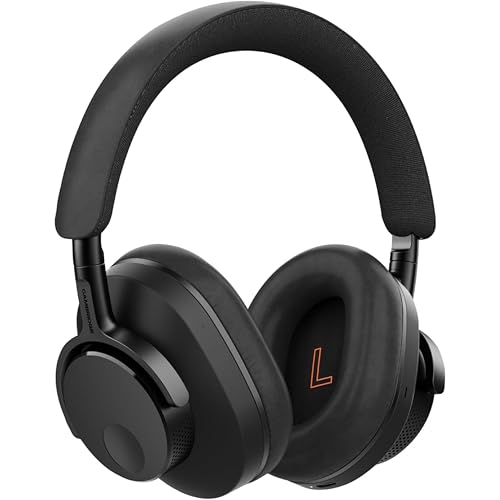
Melomania P100 SE in Black — the classic finish
Badge: Best for travellers and commuters who live in their headphones
- Type: over-ear Bluetooth headphones with active noise cancelling
- Playback: 100 hours as listed
- Battery: user replaceable
- Modes: gaming mode for low-latency use
- Included: carry case
- Finish: Black
Start with the sound, because Cambridge Audio does. The Melomania tuning philosophy favours balance and detail over the bass-shelf theatrics that dominate the travel-headphone shelf: voices sit where voices live, acoustic instruments keep their textures, and the low end supports rather than narrates. Listeners arriving from bass-forward rivals may find the first hour almost restrained, and then notice — somewhere in the second album — that they are hearing arrangements rather than impressions, and that listening fatigue, the slow headache of an overcooked tuning, never arrives. For long flights and long working days, that restraint is not a compromise. It is the entire luxury.
The noise cancelling serves that listening rather than competing with it. Its natural habitat is the drone band — aircraft cabins, train carriages, office air conditioning, the bus on a wet road — where steady noise is lowered enough for music at humane volumes to take the foreground. That last clause matters for hearing health as much as for pleasure: effective ANC is what lets a traveller listen at moderate levels instead of escalating a volume war against an engine. Voices and irregular sounds pass more freely, as they do on every system in this class, so set expectations for a quieter world rather than a silent one, and the P100 SE will meet them with the composure its maker is known for.
Then there is the battery story, which deserves its own emphasis. A hundred hours of listed playback is, in lived terms, a headphone that asks for a cable a handful of times a season — and the replaceable design means that when the years finally do their work on the cell, the remedy is a battery swap rather than a funeral. Every other headphone in this class carries an invisible expiry date written into its sealed battery; the P100 SE is the rare one that lets its owner decline that arrangement. For buyers who keep equipment for a long time — and resent, on principle, devices designed to be discarded — that single feature can rationally outweigh small differences in tuning or cancelling depth elsewhere.
Strengths
- Hi-fi-first tuning that rewards long, attentive listening without fatigue.
- Exceptional listed battery endurance, with a replaceable cell that extends the headphone’s whole lifespan.
- Noise cancelling aimed at travel drones, plus a gaming mode that widens the headphone’s usefulness at home.
Trade-offs
- Listeners who want maximum bass emphasis or the deepest silence money can buy should audition the class’s specialists.
- The feature set favours listening over the smart-assistant and multipoint theatrics some rivals headline.
- Colour and finish choices are limited to the listed variants; fashion-led buyers have thinner pickings here.
Best for: music-first travellers, commuters and home listeners planning long ownership. Not suited for: buyers whose priority is the strongest possible cancelling for open-plan offices, above sound quality itself.
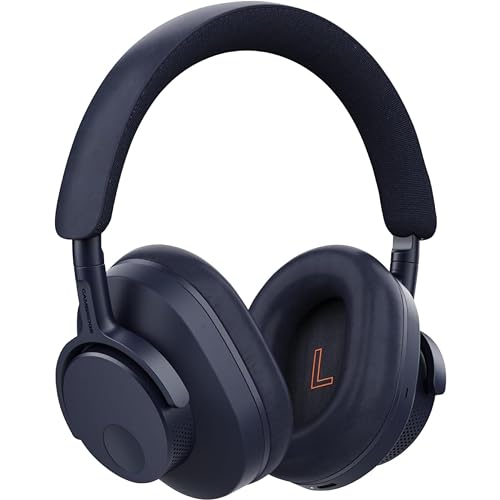
Melomania P100 SE in Blue — the same headphone, a different mood
Badge: Best for listeners who want their long-term headphone to look like it
- Type: over-ear Bluetooth headphones with active noise cancelling
- Playback: 100 hours as listed
- Battery: user replaceable
- Modes: gaming mode for low-latency use
- Included: carry case
- Finish: Blue
Everything said about the Black model applies here without amendment — same drivers’ tuning philosophy, same cancelling, same remarkable battery arrangement — so this section can spend its words on the only real variable: what a colour does to a decade of ownership. Blue reads as a deliberate object rather than an appliance; it is easier to spot in a bag’s dark interior, kinder to the visibility of dust and fingerprints than gloss black, and distinctive enough that a household with two pairs of headphones will never confuse them. It also commits you: a coloured headphone is a small daily statement, and buyers should choose it because they enjoy the statement, not because a listing happened to surface first.
Practical notes follow the colour honestly. Resale audiences for coloured audio gear are slightly narrower, though a replaceable-battery headphone’s value story is strong enough to carry its finish. And if the Blue is the variant in stock when you buy, take it without a shadow of technical doubt — the listings describe one model in two moods, and the mood is the only thing being chosen.
Strengths
- The full P100 SE proposition — tuning, endurance, replaceable battery — in the more distinctive finish.
- Practical visibility in bags and shared households, with a forgiving relationship to dust and marks.
- Identical internals mean the colour decision carries zero performance risk.
Trade-offs
- A bolder finish will not suit every workplace’s idea of invisible professionalism.
- Colour-matched accessories and cases are a narrower market than black’s.
- None of the class trade-offs change: this remains a listening-first headphone, not a silence-maximal one.
Best for: listeners who keep equipment for years and like their tools to have a face. Not suited for: buyers who need their headphones to disappear in formal settings.
Buying guide: travel headphones judged over years
Sound signature is the decision; everything else is negotiation
Headphone shoppers are encouraged to compare feature grids, but the grid is not what you will live inside — the tuning is. Decide what your listening actually is. If it is albums, podcasts with music, films where the score matters, a balanced hi-fi tuning like this one’s compounds pleasure daily. If it is primarily calls, silence for concentration, or bass-led electronic music at celebratory levels, other tunings serve those masters more directly, and no battery feature, however virtuous, will rescue a signature your ears argue with. Where possible, judge any headphone with your own three most-played recordings, because familiarity is the only honest reference a listener owns.
Noise cancelling: match the system to your noise
ANC is not one thing. It excels against steady, low-frequency noise — engines, fans, road roar — and merely helps against voices, keyboards and the irregular sounds of an office. Travellers and commuters are therefore this technology’s natural constituency, while open-plan workers should weight fit, passive isolation and their own tolerance as heavily as the ANC specification. The P100 SE’s cancelling, paired with its endurance, is aimed squarely at the journey: long, droning, and much improved by music at sane volumes. Buy it for that world and it will feel purpose-built; buy it expecting a cone of silence at a desk and you will have misread its brief.
The replaceable battery, priced properly
To value the feature, run the counterfactual. A sealed headphone’s battery typically fades across two to four years of heavy use, after which the owner faces a repair bill, a workaround life of permanent cables, or a replacement purchase. A replaceable cell converts that cliff into a maintenance event with a modest, predictable cost — and it changes the second-hand market too, because a used P100 SE with a fresh battery is a fully renewed headphone in a way a used sealed rival can never be. Environmentally, it is the difference between discarding a working acoustic instrument for a tired battery and discarding nothing at all. Buyers who replace headphones annually for fashion will never collect this value; buyers who keep things should count it among the strongest arguments in this entire guide, alongside the tuning that makes keeping them a pleasure rather than a penance.
Fit, glasses and the long-session test
Over-ear comfort is a geometry problem involving ear size, head shape, clamping force and eyewear, and no review can solve it for your particular head. What can be said is what to test in the return window: wear them for a full album, then for a full film, with your glasses on if you wear them, and note where pressure announces itself — jaw, crown, the tops of the ears. A headphone destined for hundred-hour battery cycles will be worn for thousands of hours across its life; an ache at hour two is a verdict, not a break-in period, whatever optimism suggests. The included carry case, incidentally, is part of the comfort story over years: headphones that travel protected keep their cushions, hinges and finishes, and a case in the box is a maker telling you it expects the product to be kept.
How to set up and care for the P100 SE
Step 1: Pair deliberately and learn the controls before the journey
Pair with your phone and your computer in a quiet room, learn the physical controls by touch — volume, track, ANC modes, the gaming mode’s toggle — and practise until your fingers know them without your eyes. Controls learned at home are convenience; controls learned at 35,000 feet, by stabbing, are how tracks get skipped and calls get answered accidentally.
Step 2: Tune the equaliser last, not first
Live with the stock tuning for a week of your real listening before touching any app equaliser. Makers voice headphones as a complete decision, and many owners who “fix” the sound on day one are correcting for recordings, rooms or habits rather than for the headphone. If, after the week, a preference persists — a touch more warmth for podcasts, a calmer top end for bright recordings — adjust in small steps and keep a note of the stock position to return to.
Step 3: Build the charging ritual around the hundred hours
Endurance this long creates a new failure mode: forgetting the cable exists until the battery is empty before a flight. Anchor charging to a calendar rhythm — the first Sunday of the month, the night before any trip — and keep the cable in the carry case so the headphone and its lifeline travel together. When the years eventually soften the cell’s capacity, order the replacement battery in advance of need rather than in response to a dead headphone at an airport.
Step 4: Store them like the instrument they are
Case them for travel, keep them from the bottom of bags, wipe the cushions after heavy use, and let them dry before casing after a rainy commute. Headphones die by hinges, cushions and neglect more often than by electronics, and a replaceable battery only extends the life of a headphone whose body was looked after well enough to deserve the extension.
Mistakes headphone buyers make in this class
Buying by feature grid and discovering the tuning is the classic, covered above and worth repeating because it empties more wallets than any defect. The second is judging ANC in a quiet shop, where there is nothing to cancel, or against a television’s voices, which no system in the class is built to erase. Third is ignoring the battery’s endgame — treating a sealed headphone’s lifespan as someone else’s problem, when that someone is the same person, three years later, holding a fading device. Fourth is comfort optimism: assuming an ache will break in, when cushions soften only slightly and geometry never changes its mind. And fifth is colour dithering between the two listings here, spending research hours on a decision the manufacturer deliberately made consequence-free.
Frequently asked questions
Are the Black and Blue P100 SE actually the same headphone?
Yes — the two listings describe one model in two finishes, with the same playback figure, replaceable battery, noise cancelling, gaming mode and carry case. Choose by preference and availability, and spend your research energy on fit and tuning, where real differences live.
Does the 100-hour figure survive real-world use?
Listed battery figures are measured under the maker’s chosen conditions, and real life — higher volumes, ANC engaged, cold weather, gaming mode — will take its share. The useful translation is not the exact number but the category: even discounted generously, the endurance turns charging into an occasional ritual rather than a weekly chore, which is the lived benefit being sold.
How hard is the battery to replace when the time comes?
The design’s point is that replacement is a user task rather than a workshop repair; follow the maker’s instructions for your unit when the day arrives, and source the correct replacement cell through official channels. The deeper point is economic: the option exists at all, which is what separates this headphone’s fifth year from its sealed rivals’ fifth year.
What is the gaming mode actually for?
Ordinary Bluetooth audio carries enough latency to desynchronise video and games noticeably. A dedicated low-latency gaming mode narrows that gap so dialogue matches lips and effects match actions, making the same headphone viable for films and play at home as well as for music on the move. It is a mode to engage for screens and disengage for pure listening, where the standard connection’s quality takes priority.
Is the noise cancelling strong enough for open-plan offices?
It will lower the office’s steady hum and take the edge off the room, and music at moderate volume will do much of the remaining work — but voices and irregular sounds are every ANC system’s honest limit. Office buyers should judge it as a strong travel-grade system applied to an office, not as an office-specific silence machine.
How does the P100 SE suit podcast and audiobook listeners?
Very well, for two reasons: the balanced tuning keeps voices natural and intelligible at low volumes, and the endurance means a month of commutes can pass between charges. Listeners whose libraries are spoken-word first will find the hi-fi voicing flattering rather than wasted on them — clarity is clarity, whatever is being said or sung.
The final recommendation
The Melomania P100 SE is the headphone for the listener who intends to keep it: hi-fi tuning that rewards attention, travel-grade cancelling, endurance that changes charging from a chore into a calendar note, and a replaceable battery that refuses the category’s built-in expiry date. Choose Black for the classic, invisible professional finish or Blue for the same instrument with a face — and then stop choosing, because the model underneath is identical and excellent at the job it was designed for. In a market of sealed, disposable flagships, Cambridge Audio has built the one that expects to be repaired, recharged monthly and listened to for years. That expectation, honoured by an owner who shares it, is the best sound this class currently makes. For the rest of a considered listening setup, see the Momentum True Wireless 5 earbuds profile for the pocketable alternative and the Beyerdynamic MMX 330 Pro gaming headset for the desk-bound one.
Listening notes: how the tuning behaves across a real library
A balanced headphone reveals itself across genres rather than within one. With acoustic and folk recordings, the P100 SE’s voicing keeps fingers on strings and breath in voices — the small sounds that make a recording feel witnessed rather than reproduced. With orchestral work, the restraint pays in layering: sections stay separated in loud passages where bass-forward tunings merge them into weather. Electronic music, the genre sceptics assume a hi-fi tuning will starve, emerges with its sub-bass present and proportioned — felt as pressure and rhythm rather than as the room’s main event — and listeners who want the club’s physicality should know themselves honestly and shop accordingly, because this headphone will not pretend a nightclub is a concert hall. Spoken word, already praised in the questions above, completes the picture: this is a tuning for people whose libraries are wide, and whose headphone must be a citizen of every genre rather than the monarch of one.
Travel behaviour: the headphone as luggage
Travel headphones earn their keep in the unglamorous details of journeys. The case protects them in a bag’s crush; the endurance means the cable can live in the case’s pocket rather than in your hand luggage’s front line; the cancelling turns the cabin’s drone from a fatigue source into a background the music can paint over. Two habits complete the travel system. Download before you fly, because streaming at altitude is a promise aeroplanes break for sport. And wear them around the neck or cased between uses rather than loose on the seat, because the commonest travel injury to headphones is not electronic at all — it is the sat-upon, tray-table, seat-pocket trilogy that has ended better headphones than any battery ever has. The P100 SE’s replaceable cell will outlast many things; do not let a seat pocket be the thing it cannot outlast.
The second-hand and hand-me-down argument
Replaceable batteries rewrite the used market for this model in a way worth spelling out, because it affects what the headphone is worth at every age. A three-year-old sealed rival is a device with an unknown fraction of its life spent; a three-year-old P100 SE, fitted with a fresh cell and inspected cushions, is functionally renewed in the one dimension that ages fastest. Families should note the hand-me-down consequence: a headphone bought for a parent’s travels can descend to a teenager’s studies with a battery swap and a clean, arriving as a gift rather than as a cast-off with a countdown. Equipment designed to be maintained behaves differently across a household’s whole life, and that behaviour — mundane, economic, quietly anti-disposable — may be this Cambridge Audio’s most distinctive sound of all, even though it makes no sound at all.
Calls, meetings and the working day
A travel headphone in the hybrid era moonlights as meeting equipment, and its manners there are worth a paragraph. Voice pickup on modern Bluetooth headphones serves ordinary calls and meetings adequately in quiet rooms, which describes most home offices; in shared or noisy spaces, any headphone’s microphone fights physics, and the honest professional keeps a dedicated option for the calls that matter. What the P100 SE brings to the working day is on the listening side: cancelling that lowers the home’s daytime roar, a tuning that keeps colleagues’ voices natural across a long call schedule, and an endurance that never makes the battery a participant in the meeting. For the worker whose day is calls punctuated by music, that combination is the product; for the worker whose day is a broadcast, buy a broadcast microphone and let these be the headphones they deserve to be.
Comparing philosophies: where the P100 SE stands in its class
The travel headphone class is ruled by two famous names whose cancelling depth and ecosystems set the market’s expectations, and the P100 SE does not beat them at their own ceremonies — nor does it try to. Its argument is a triangle the rulers do not complete: hi-fi voicing from a genuine audio house, endurance measured in weeks of listening, and a battery the owner can replace. Buyers should therefore compare by philosophy rather than by grid. If your headphone is primarily a silence appliance that also plays music, the rulers await you. If it is primarily a music instrument that also quiets journeys — and if you intend to still be using it when its battery would otherwise have retired it — the Cambridge is the class’s clearest answer. There is no contradiction in admiring both positions; there is only the buyer’s obligation to know which one is theirs before the money moves, because a headphone worn daily for years is a decision about daily life, not about specifications.
Sustainability, stated plainly and without halo-polishing
One replaceable battery does not save a planet, and this review will not pretend otherwise. What it does is remove the single most common reason a working electronic product becomes waste, and it signals — to an industry that watches attach rates and return reasons closely — that repairability can be a selling point rather than a cost centre. Buyers who care about that signal should buy the feature when it is offered, maintain the product so the feature gets its chance to matter, and replace the cell rather than the device when the year comes. That is the entire honest claim: not a revolution, but a working demonstration that the disposable decade in personal audio was a choice, and that other choices remain available to makers and buyers alike.
Sources and partners: what to feed a hi-fi-leaning headphone
A headphone voiced for detail rewards decent sources and forgives poor ones less than a bass-heavy tuning does. Lossless and high-quality streaming tiers, well-ripped local files and the dedicated players covered in our MP3 player and portable audio guide all give the P100 SE material it can resolve; low-bitrate streams and muddy podcast production will be reported honestly, which some listeners experience as the headphone’s strictness and others as its integrity. Neither reaction is wrong, but buyers should know which listener they are. The same honesty applies to its in-ear cousins: listeners who prefer the pocketable form can compare the approach with the Moondrop Aria 2 in-ear profile and the budget wireless world of the Moondrop Space Travel review, where the tuning philosophies rhyme even as the forms divide.
The first fortnight: a listening diary
Day one is for fit and controls — the long album test, the glasses test, the discovery of where the buttons live under your fingers. Days two to five are for the library: revisit the recordings you know best and listen for what the balance changes, because a new tuning re-edits familiar music and the re-edit is the product. The second week is for journeys — the commute, the train, the first flight if fortune cooperates — where cancelling and endurance stop being specifications and become the difference between arriving tired and arriving accompanied. By day fourteen the headphone has either become the default object your hand reaches for, which is the only five-star review that has ever mattered, or it has given you a specific, nameable reason — fit, tuning, a feature your life genuinely needs — to exchange it while exchanging is easy. Judge it in that order and the P100 SE, like every honest product in this cluster’s guides, will have been given the only fair trial there is: your own life, at full length, with the return window held open as the jury’s door.
Gifting, families and the one-headphone household
Headphones are among the most gifted electronics, and the P100 SE has two properties that make it an unusually safe gift: its tuning offends almost no library, being balanced rather than extreme, and its replaceable battery means the gift’s lifespan is not silently ticking in a way the giver would regret. Add the case — a gift that arrives with its own protection reads as complete — and either finish serves, with Blue the braver choice for recipients whose style you know and Black the universal donor. For households sharing one good headphone, the endurance settles the rota argument: a hundred-hour cell does not need negotiating around chargers, and the headphone can live on its hook by the door, ready for whoever’s journey is next, with the battery replacement years away from being anyone’s problem. Shared equipment lives or dies on exactly that kind of thoughtlessness, and it is designed into this model at a level its feature list only hints at.
What could still go wrong, and how owners answer it
No headphone is immortal, so plan for its realistic ailments. Cushions compress and eventually want replacing — a wear item on every over-ear ever made, and the difference between a maintained headphone and a tired one at year four. Hinges and headbands suffer drops and bag crush, which the case exists to prevent. Bluetooth standards will keep moving, and while the headphone will keep pairing with future devices in the ordinary way, buyers should expect its wireless to be a snapshot of its era even as its acoustics remain current — one more argument for the wired listening options and the replaceable battery, the parts of the product that do not date. Owners who accept those terms get the thing the P100 SE is actually selling: not eternal novelty, but a long, stable, musical service life, renewable at the one point where its rivals are designed to end.
The verdict, expanded for the listener still deciding
If the choice has narrowed to this headphone against the class’s famous rulers, the deciding questions are three, and none of them is on a feature grid. First: when you picture your headphone use, is the foreground music or silence? Second: do you replace headphones because they fail, or because they bore you — and if they fail, would you rather the failure be a battery you can swap than a device you must bury? Third: will you still be listening, in five years, to the kind of library this tuning flatters? Three answers pointing Cambridge’s way make the P100 SE not merely a good purchase but an unusually well-matched one, and matched purchases are the ones still being praised at the age when feature grids have been forgotten by everyone, including the people who wrote them. Choose the finish your hand reaches for in the shop of your imagination — Black’s discretion or Blue’s small celebration — and let the identical, excellent headphone underneath do the rest, for a hundred hours at a time, for years longer than its rivals planned to live.
A note on listening at healthy volumes, enabled by good cancelling
One benefit of effective noise cancelling deserves to be stated as plainly as this guide can state it, because it is the rare feature that returns health rather than merely pleasure. In noisy environments, listeners without cancelling raise volume to mask the world, and the dose accumulates across commutes and years. A system that lowers the world instead lets the music stay at the level the listener would choose in a quiet room — which is where the P100 SE’s combination of competent ANC and fatigue-free tuning becomes more than the sum of its specifications. This is not medical advice and ears with concerns deserve professionals, but the principle is simple enough to act on tonight: if your current headphones only sound clear when they are loud, the problem may be your environment rather than your ears, and a cancelling headphone with an honest tuning is the tool designed for exactly that problem.
There is a final, quieter satisfaction this headphone offers that no listing can photograph: the feeling, somewhere in the second year, of reaching for an object that has become part of your life’s furniture — its sound as familiar as a favourite chair’s shape, its battery a solved problem, its case scuffed with journeys you remember. Disposable products never reach that age, and fashionable ones rarely want to. The P100 SE was built, by a company that has watched audio fashions arrive and leave for half a century, to be exactly that kind of furniture for the ears. Buy it in whichever colour your hand prefers, keep it with the light care this guide described, and let it grow old at the speed of music rather than at the speed of batteries.
Postscript: the SE idea, and what special editions should mean
Special editions in audio usually mean a colour, a logo and a countdown timer. The more honourable tradition — the one this model belongs to — uses the edition to correct the original’s compromises: endurance pushed to a headline figure, a gaming mode added for the hours the first version never anticipated, and above all the battery made replaceable, answering the single most common long-term complaint about the entire category. Readers deciding between this SE and an earlier or standard version second-hand should weigh exactly those corrections, because they are the difference between a headphone bought for a season and one bought for a service life. And readers who already own the earlier model and love its sound should feel no manufactured urgency: the correct upgrade, as this site’s guides keep insisting across every category in this cluster, is the one your current tool’s limits — not a launch calendar — have genuinely earned.
Keep the case, charge it monthly, swap the battery when the years ask, and let the music — all hundred hours of it at a time — make the argument this article has been making in words. Some products are reviewed; this one, properly owned, simply accumulates birthdays.
A buyer’s checklist for the P100 SE, in closing
- Confirm the listing names the Melomania P100 SE and your chosen finish — Black or Blue — remembering the internals are identical either way.
- Plan the fortnight test: one long album, one film, one real journey, glasses on if you wear them, before the return window closes.
- Put the charging cable in the case on day one and choose the monthly charging moment while the battery is still a novelty.
- Bookmark the maker’s support pages for the day, years from now, when the replacement battery is ordered — future you will be grateful the address was kept.
- Resist equalising in the first week; let the voicing make its case with your own library before amending it.
Complete that short list and the headphone’s long story can begin properly — not with an unboxing, but with the first of a great many journeys on which it will be, in the best sense a traveller can mean it, unremarkable company and remarkable sound.
The last word is for the listener who has read this far because they keep things — the amplifier from a decade ago, the bicycle with the replaced chain, the headphones they would rather repair than replace. The industry rarely builds for you anymore, and when it does, the product tends to look like this: quietly specified, musically serious, and designed to be opened by its owner when the battery’s years are done. The P100 SE is that product in the travel headphone class. Buy it, keep it, and let its fifth birthday be the review that finally matters.
Envoi: listening as a long relationship
Most technology writing is about beginnings — launches, unboxings, first impressions — because beginnings are when the audience is shopping. But headphones live in middles: the thousandth commute, the album that got you through a hard winter, the film watched in a hospital waiting room at a volume kind to everyone asleep nearby. The P100 SE was designed by a hi-fi company for those middles, with a tuning that does not shout, a battery that does not nag, and a construction that does not expire. This review has tried to honour that design by judging it the way it will actually be judged — across years, journeys and libraries — and its conclusion is correspondingly simple. If you are the kind of listener who forms long relationships with the objects that play your music, this is the rare modern headphone that was unmistakably built to have one with you.
Begin the relationship with the right finish, the right fit test and the right first album — something you have loved long enough to hear it change. The headphone will do the rest, quietly, at length, and for far longer than the category taught you to expect.
Really the final consideration: buying once, in a category built on buying twice
Personal audio’s business model quietly assumes replacement: batteries sealed, cushions proprietary, fashion cycles timed to the warranty’s end. A buyer does not have to hate that model to opt out of it where opting out is offered, and the P100 SE is the opt-out with a hi-fi accent. The arithmetic is not even subtle across a decade — one headphone, one or two batteries, a set of cushions, against two or three whole headphones bought by the sealed route — and the non-arithmetic is better still: a single, familiar instrument whose sound you know the way you know a room in your own house. That familiarity is what musicians mean by a good instrument, and it cannot be bought new every two years at any price. It can only be kept. This headphone, almost alone in its class, was built to let you keep it — which is why this long review, for all its talk of tuning and cancelling and modes, ends where it began: with a battery you can replace, and everything that small, decent decision makes possible.
Choose the colour, run the fortnight, charge it on the first Sunday, and then simply listen — this year, and the year the battery is young again, and the years after that, when the headphone’s endurance has stopped being a specification and become a biography you share.
A short coda on value, for the reader doing sums
Value in headphones is usually computed at the till, which is the one moment it cannot be known. Compute it instead at the third anniversary: divide everything the headphone has cost — purchase, a battery if its year has come, cushions if your use is heavy — by the days it has been your default way of hearing the world, and compare that figure, honestly, with the sealed rival that needed replacing inside the same window. The P100 SE was engineered to win that particular calculation while also winning the daily one — the album that sounds right, the flight that passes quietly, the call that stays intelligible. A product that wins both the arithmetic and the afternoon is a rare entry in any category. In this one, at this moment, it is also — Black or Blue, identically — the headphone this review has been describing all along.
Do the sums, then trust your ears to audit them. Both ledgers, kept honestly across a fortnight of your own listening, will point the same way — and a decision two ledgers agree on is the kind a listener can live inside, comfortably and at length, for years.
The very last page: what to listen to first
Every new headphone deserves a considered first hour, so here is this one’s suggested programme — not as a test disc, but as a way of hearing its character in the order the character reveals itself. Begin with a voice you know intimately, recorded simply, because the midrange is where this tuning’s honesty lives. Follow with something orchestral or densely arranged, and listen for the layers staying layers when the music gets loud. Then an electronic track whose low end you have used to judge other headphones, and note the proportion — present, rhythmic, in its seat. Finish with a film scene you love, gaming mode engaged, and check that dialogue sits in the room rather than behind it. Four pieces, one hour, and you will know this headphone the way its makers hope to be known: not by its brochure, but by your own library, heard properly at last. Keep the list with the headphone’s documents. In five years, with a fresh battery fitted, play it again — the reunion is the review no one else can write for you.
Play that programme tonight, in whichever finish you chose, and let the first hour begin the long acquaintance this headphone was built for. The rest of its story — the journeys, the winters, the replaced battery and the same beloved sound on the other side of it — is yours to listen to, one hundred quiet, musical hours at a time.
That is the whole of it: a hi-fi heart, a traveller’s stamina, an owner’s right to repair, and two colours to choose the wrapping in. The music, as ever, will handle the rest.
Listen long, listen well, and may the battery you replace someday be the only farewell this headphone ever asks of you.
One more honest paragraph, on what this review could not test for you
Fit lives on your head, tuning lives in your library, and silence lives in your particular journeys — three of this headphone’s decisive properties are therefore only partly reviewable, and this article has tried to be useful about them in the only legitimate way: by telling you exactly how to test them, in what order, inside the window where the answer still has consequences. A review that pretended to settle your fit from a desk in another country would be lying to you in the dialect of confidence. This one prefers to hand you the programme — the long album, the film, the journey, the four-piece first hour — and to trust the evidence of your own ears, which is, after all, the entire philosophy of the company that built the headphone. Cambridge Audio has been trusting listeners’ ears for fifty years. It seems only fair that its reviewers do the same.
Run the programme, then — and may the verdict, whichever finish delivers it, be the start of the longest listening relationship your travel bag has ever carried.
The ears, in the end, are the only reviewers whose verdict cannot be appealed. Give them the evidence, in full and at leisure, and they will not let you down.
Happy listening — this year, and in the years the replaceable battery was invented to give you.
A note on winter, summer and the seasons of a headphone’s year
Ownership has seasons, and a long-life headphone meets all of them. Winter tests it with hats and hoods — check that your usual headwear does not break the ear seal or press the headband into a headache across a cold commute, because a seal broken by a beanie quietly halves the cancelling you paid for. Summer tests it with heat: over-ear listening in a hot carriage is a commitment, and the honest traveller alternates with earbuds on the worst days rather than declaring the headphone a failure for obeying thermodynamics. Spring and autumn, the great headphone seasons, are when the P100 SE’s virtues compound unopposed — long walks with albums, trains with films, gardens with podcasts. A product designed for years rather than for a launch window has to survive the calendar as well as the catalogue, and the replaceable battery is best understood as the maker’s signature on that longer contract: we expect to meet you in every season, it says, including the ones after the warranty’s memory fades. Few objects in a travel bag make that promise in a form the owner can actually collect. This one collects it with a battery door.
Seasons will keep arriving whether a headphone is ready for them or not; the whole point of choosing one built for years is that its owner stops having to think about that. Hats in winter, heat in summer, albums in every month between — the P100 SE meets the calendar the way it meets the library, without drama and without expiry, and that steadiness, more than any single feature in its listing, is what its owners will still be describing when the model itself is a fond piece of audio history.
That steadiness is the review’s last word, and the headphone’s first promise.