Disclosure: As an Amazon Associate, reviewstook.com earns from qualifying purchases. Links on this page are affiliate links; they cost you nothing extra. Prices and availability change often, so check the current Amazon listing before you buy.
The hw q930d is the Samsung soundbar that this page cannot sell you, and it is more useful to say that in the first paragraph than anywhere else. Searches of current listings for a Samsung HW-Q930D return its successor, the HW-Q930F, and its bigger relatives in the HW-Q990 line, but no verified listing for the Q930D itself in the market this site covers. So this article does the honest version of the job: it explains what the Q930D name denotes in Samsung’s range, why it has become hard to buy new, how it differs from the successor that replaced it, and what a shopper who arrived here looking for one should actually do next.
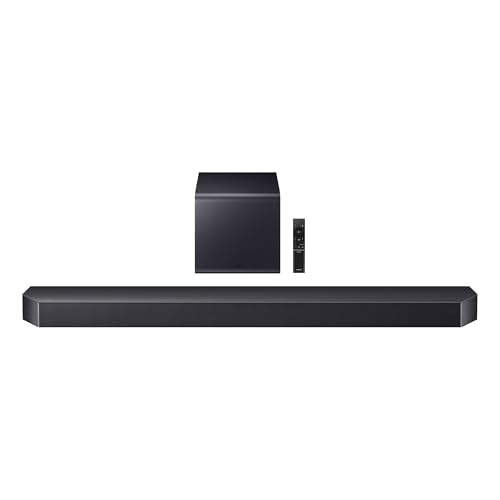
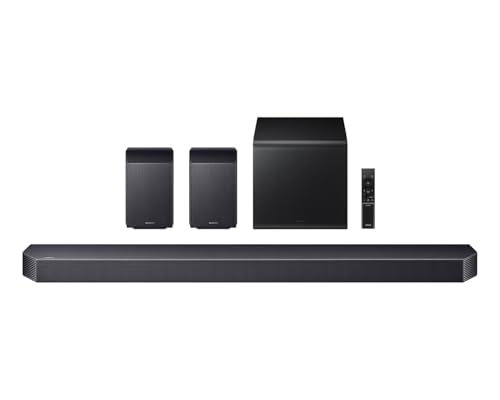
Some context can be stated with confidence, because Samsung’s Q-Series grammar is consistent and public. The Q930 designation has denoted the range’s true-surround tier: a soundbar, a wireless subwoofer, and wireless rear speakers in the box, a step above the bar-and-subwoofer Q900 systems and a step below the flagship Q990 systems. The D suffix follows Samsung’s model-year lettering, placing the Q930D as the generation before the F-suffixed successor that current listings do carry. Where this article goes beyond that grammar into specific channels, features, or behaviour, it labels the statement as the line’s established pattern rather than a verified specification of a purchasable unit, because there is no verified unit to specify.
If you own a Q930D already, this page still has work to do for you: the setup, placement, and troubleshooting guidance in its later sections is written for the Q930 architecture, bar, subwoofer, and rears, and applies to the system in your room regardless of what retailers currently stock. Owners and shoppers are both served, but they are served differently, and the article keeps the two audiences’ sections clearly apart.
Key takeaways
- No verified current listing for the Samsung HW-Q930D was found; its successor, the HW-Q930F, is what listings carry
- The Q930 name denotes Samsung’s true-surround tier: bar, wireless subwoofer, and wireless rear speakers
- Do not let any retailer substitute a different model under the Q930D’s name; the letters and numbers are the product
- Shoppers should compare the Q930F and the Q990 line as the purchasable routes to the same idea
- Owners of a Q930D lose nothing: the architecture’s setup and care guidance is unchanged by its retail status
In this guide
Where the Q930D sits in the Q-Series grammar
| Tier | Architecture | Position |
|---|---|---|
| Q800 line | Bar plus wireless subwoofer | Step-down two-box systems |
| Q900 line | Bar plus wireless subwoofer | Flagship-adjacent two-box systems |
| Q930 line | Bar, subwoofer, and wireless rear speakers | True-surround tier, the Q930D’s home |
| Q990 line | Bar, subwoofer, and larger rear speakers | Flagship true-surround systems |
The table is the whole naming system in four rows, and it explains both the Q930D’s appeal and its market fate. The Q930 tier is the connoisseur’s compromise inside the range: real rear speakers, which no amount of bar processing fully imitates, without the flagship tier’s price and larger rear units. Tiers in the middle of a range are always the most vulnerable to being squeezed, by discounts above and below them, and a model that is hard to find new a generation later is usually a tier the market has routed around rather than a product that failed.
Why you cannot find one to buy, and why that is not a conspiracy
Soundbars are seasonal products in a way their buyers rarely appreciate. Samsung refreshes the Q-Series on an annual rhythm, the letter at the end of the model name advances, retail channels clear the outgoing generation at a discount, and within a season or two the older model exists only in remaining regional stock, refurbished channels, and the second-hand market. The Q930D’s absence from current listings is that rhythm operating normally: the F generation succeeded it, the channel moved on, and a shopper arriving a generation late finds the name alive in reviews and comparison pages while the product itself has left the shelves.
Regional variation muddies the picture further, because Samsung does not sell every tier in every market in every year, and a model that was a mainstream listing in one country may have been a limited or retailer-specific line in another. A searcher in the wrong market can therefore find abundant evidence that the Q930D exists, reviews, support pages, firmware notes, alongside a complete absence of anywhere to buy it new. Both observations are true, and holding them together is the key to not being misled by either.
The practical consequence is a rule this page will repeat: the Q930D is now a used-market and remaining-stock product, to be bought with used-market disciplines, or it is a signpost pointing at its successor. It is not a product to order from any listing that cannot show you the exact model name on the manufacturer’s own page, because in the fog around a discontinued tier, mislabelled successors and grey imports flourish, and the difference between a D and an F is a year of refinements and a warranty’s validity in your country.
What the Q930 architecture gives you that a bar alone cannot
The rear speakers are the argument, and they are worth describing precisely for shoppers weighing the successor. A bar-only system creates its surround field from the front of the room, reflecting and processing its way to an impression of envelopment. A Q930-class system places two small wireless speakers behind the listening position, receiving their signals without speaker wire, needing only power sockets, and those speakers put sound physically where films mix it to be. Rain surrounds rather than approaches. A door slams behind you rather than somewhere in the front hemisphere’s fog. The difference is not subtle, and it is the entire reason the tier exists.
The wireless part deserves its clarification, because the word misleads a portion of buyers every year. Wireless rear speakers are wireless in signal only; each still needs mains power, so the placement question is not where in the room they would sound best in the abstract, but where they sound best within reach of a socket or a discreet extension. Rooms are designed around that constraint more often than reviews admit, and the setup section below treats socket geography as a first-class placement variable, because on this architecture it is one.
Height effects complete the architecture’s picture. The Q930 line’s established pattern includes up-firing capability in the bar and, in the line’s positioning, a full object-based surround presentation of the kind Dolby Atmos and DTS:X mixes are authored for, with the rears anchoring the horizontal plane that the bar’s processing then extends upward. Treat the specifics for any individual unit, the D included, as things to verify against that unit’s own documentation, especially on the used market where a model’s box and manual may have parted company. The architecture’s promise, however, is structural and safe to rely on: four corners of sound, authored rather than implied.
Q930D versus Q930F: the successor question, answered carefully
A shopper who cannot buy the D will immediately ask whether the F is the same product with a new letter, and the honest answer is that it is the same idea at the same tier, one generation refined. Samsung’s annual generations typically revise processing, tuning, connectivity details, and feature software rather than reinventing the architecture, so the Q930F represents the Q930 proposition as its maker currently believes it should be executed. Its listing is verified and current in a way the D’s is not, which in practical shopping terms is not a detail: it is the difference between a product and a memory of one.
What this page will not do is manufacture a specification-by-specification comparison between a verified listing and an unverified one, because that is how phantom specifications enter the world and get quoted forever. If the D-versus-F question matters to you at the level of individual features, the authoritative sources are Samsung’s own archived product page for the D, where your market published one, and its current page for the F, read side by side. What can be said without documents is the generational logic: buy the F new with its warranty and support runway, or buy the D used at a price that honestly reflects its generation and its channel, and do not pay new money for the older letter under any listing’s presentation.
There is one more route worth naming for completeness: stepping around the tier entirely. The Q990 flagship systems, which current listings also carry, are the Q930 idea with larger rear speakers and the range’s fullest specification, and their promotional pricing periodically narrows the gap enough to make the step up rational. A shopper whose heart is set on true surround should therefore run two comparisons, not one: the successor at the same tier, and the flagship on promotion, and let the week’s actual prices arbitrate between them.
For owners: your Q930D has not been discontinued in your living room
Retail disappearance frightens owners unnecessarily, so let this section be plain. A soundbar system does not depend on its maker’s current catalogue for anything except firmware updates and eventual spare parts, and its daily work, decoding what your television sends, filling your room, is entirely unaffected by what retailers stock this season. Samsung’s support infrastructure for a recent generation, manuals, firmware, service, persists well beyond a model’s shelf life, and the Q930 architecture’s components, bar, subwoofer, and rears, have no consumables and no scheduled obsolescence built into them.
The owner’s real risks are mundane and manageable. Keep the system’s firmware current while updates are offered, because eARC manners and format handling genuinely improve across a model’s supported life. Keep the rear speakers’ power supplies and the subwoofer’s driver in the ordinary care any speaker deserves, dusted, ventilated, and unbothered by drinks. And keep the model’s documentation, or a photograph of its rear-panel labels, somewhere findable, because the day a support agent or a future buyer asks for an exact variant is the day that photograph pays for its storage.
If a component does fail years from now, the architecture gives you options a bar-only system lacks. Rear speakers and subwoofers in these systems pair to their bar, so a failed bar is the serious event and a failed satellite is a parts search; price any repair against the successor systems in the comparison sections, because at some point the honest economics tip from repair to replacement, and the Q930F or its own successor will be waiting as the natural heir. Until that day, your system is not legacy equipment. It is the current equipment of your house, and it should be set up and enjoyed as such.
The used-market disciplines, if you go hunting for a D
Some readers will want the Q930D specifically, for a room it suits, a price they have seen, or a review they trust, and the used market is a legitimate place to satisfy that want if it is approached as the used market. The non-negotiables are completeness and demonstration. A Q930 system is four powered components and their accessories; a listing missing its rear speakers is not a Q930 system at a bargain, it is a bar and subwoofer wearing a Q930’s name, and it should be priced as the Q900-class system it has effectively become. Insist on seeing all four components, the remote, and evidence that the rears pair and play.
Test what can be tested. Wireless pairing between bar, subwoofer, and rears is the system’s circulatory system and the thing a demonstration must prove, because a satellite that will not pair is a paperweight with a driver in it. Check the subwoofer for the physical knocks bass cabinets collect, check each rear for a working power supply, and confirm the firmware is not stranded mid-update. A seller who demonstrates patiently is selling a system; a seller who will not is selling a story, and the price difference between the two should be enormous or the purchase should not happen.
Price the whole endeavour against the successor before committing. The used D’s rational price is anchored by the new F’s street price, discounted for generation, warranty absence, and component risk. When a used listing drifts near the successor’s discounted price, as listings for desirable discontinued models often do, the disciplined answer is to buy the new product and let the collector’s premium be someone else’s hobby. Sentiment is a fine reason to keep a Q930D. It is a poor reason to overpay for one.
Reading Samsung’s model names without a decoder ring
The confusion that brought many readers to this page is manufactured by a naming system that is logical once decoded and opaque until then, so here is the decoding, because it will serve you for every future Samsung bar. The letters HW simply denote the product family in Samsung’s catalogue. The Q marks the Q-Series, its principal soundbar range. The number that follows is the tier, ascending with capability and price: the hundreds digit climbs from the step-down lines through the Q800s and Q900s, and within the flagship-adjacent region the trailing digits separate the bar-only systems from the true-surround ones, which is how a Q930 comes to outrank a Q900 despite sharing its first two digits’ neighbourhood.
The final letter is the year, advancing through the alphabet as generations turn over, which is the entire D-versus-F story of this article told in one character. Once you hold that key, the range reads itself in any shop: find the architecture in the number, find the age in the letter, and be suspicious of any listing where the letter in the headline and the letter in the specifications disagree, because that disagreement, innocent or otherwise, is where substituted models live. A shopper armed with the grammar cannot be sold a different year as this year, which is more protection than most consumer electronics naming offers.
Regional suffixes trail behind the year letter on some markets’ labels, denoting tuner, colour, or channel variants, and they explain why a model string found online can be longer than the one in this article’s title. Those suffixes do not change the tier or the year, but they do matter for firmware and support, which is why the owner’s advice earlier in this page was to photograph the full label. The name on the box is an address; the suffix is its postcode, and both halves are worth keeping.
True surround versus virtual surround: the honest physics
Because the Q930 tier’s whole existence rests on this distinction, it deserves a section that owes nothing to any brand. A film’s surround mix assigns specific sounds to specific locations in a hemisphere around the listener. A system with physical speakers at those locations reproduces the assignment literally, and the ear, which localises sound by timing and level differences between itself and real sources, is simply told the truth. A bar-only system must persuade the ear instead, using reflections and psychoacoustic processing to synthesise the cues of sources that are not there, and the persuasion works best for listeners seated centrally in cooperative rooms.
Neither approach is fraudulent, and the virtual one has improved to a degree that would have seemed implausible a decade ago, which is why the Q900 tier reviewed alongside this article is a legitimate product rather than a consolation. But the approaches differ in robustness. Physical rears sound correct from every seat, in rooms of awkward shape, with ceilings that refuse to reflect politely. Virtual surround has a sweet spot and a set of architectural preconditions. The Q930D’s buyers, in its season, were paying for robustness: the guarantee that the surround promise did not depend on their room’s cooperation.
That framing also tells a current shopper how to choose between the purchasable descendants of the two ideas. If your room is rectangular, your sofa is against or near a wall, and your seating is centred, the virtual approach’s preconditions are met and the bar-only tier’s simplicity is free. If your room is open-plan, your ceiling is vaulted, or your household watches from scattered seats, the physical approach earns its extra boxes every evening. The Q930D’s tier was built for the second list of rooms, and its successor inherits that brief unchanged.
What happens to prices and stock when a tier is squeezed
The Q930D’s retail story illustrates a pattern worth recognising because it recurs across consumer electronics. A middle tier, more capable than the popular line below it and less prestigious than the flagship above, lives or dies by the gap between its neighbours’ prices. When the flagship above is promoted aggressively, the middle tier’s reason to exist narrows to a sliver; when the line below is discounted, the same squeeze arrives from underneath. Retailers respond by stocking the middle tier thinly, which makes it scarce, which makes its remaining listings look oddly expensive or oddly absent, which is precisely the landscape a Q930D shopper now surveys.
For the buyer, the pattern has a hopeful corollary: squeezed tiers produce the used market’s best value, because their original buyers purchased capability that the market never learned to price emotionally. A complete, demonstrated Q930D at a price set by its squeezed history rather than by its performance is the kind of purchase experienced audio buyers quietly specialise in. The disciplines in this article’s used-market section are what separate that purchase from a gamble; the opportunity itself is created by the tier’s commercial misfortune, and there is no contradiction in benefiting from it carefully.
Firmware, support pages, and keeping a previous generation current
A previous-generation product’s second life is administered through its support page, and owners should treat that page as part of the product they bought. It holds the manual your box may have lost, the firmware that keeps eARC behaviour and format handling current with televisions that are themselves updating, and the pairing and reset procedures written for your exact variant rather than for the range in general. Bookmark it, download the manual while it is certainly available, and note the firmware version your system runs, because support conversations begin with that number and go better when it is in your hand.
Television updates are the moving part in these systems’ lives. A set that updates its eARC implementation can change its manners with a bar it has lived with happily for a year, and the symptoms, dropouts, volume quirks, a bar that stops waking with the screen, are usually resolved by the unglamorous sequence of cable reseating, television audio settings re-checking, and firmware updates on both devices. Owners of a Q930D should expect to perform that sequence occasionally across the system’s life and not read it as decline. Two computers negotiating a handshake will occasionally need the negotiation restarted; that is maintenance, not failure.
When support eventually winds down, as it does for every model, the system does not notice. A soundbar’s core work is decoding standards that change slowly, and a Q930-class system will go on filling its room for years after its page stops updating, which is the deepest reason the used-market route in this article is rational. You are not buying a subscription. You are buying four powered loudspeakers and the electronics that coordinate them, and those age at the pace of furniture, not of phones.
If you are choosing today: a decision walk-through
Gather the decision into the order a good retailer would walk it. First, the room: can it place two rear speakers with power behind the listening position? If not, leave this tier entirely and take the bar-only route, where the HW-Q900H reviewed on this site is the current flagship-adjacent answer. If yes, true surround is genuinely available to you and the remaining questions are about generation and money rather than architecture.
Second, the appetite for risk and ritual. A new HW-Q930F arrives complete, warranted, and current, and asks nothing of you but its price. A used Q930D asks for demonstration, diligence, and tolerance of a shorter support runway, and repays them in a lower price for the same architecture. Neither answer shames the other; they suit different households at different moments, and the honest broker in the transaction is your own calendar. A system needed for a film season that starts this month argues for the new box; a system assembled patiently for a room being finished argues for the hunt.
Third, the flagship check: price the Q990 line on the day you decide, because its promotions periodically collapse the tier ladder, and a flagship at a middle price is the one bargain in this market that needs no diligence beyond the purchase itself. Run those three steps in that order and the Q930D question, which arrived as a confusion about a missing product, resolves into what it always was underneath: a clear choice among good systems, made with your eyes open about which one is actually for sale.
The Q930D in the wild: what owners actually praise and regret
Owner sentiment around a tier like this follows a pattern so consistent it can be reported without inventing a single testimonial. The praise concentrates on the moment the rears first place a sound behind the sofa, which owners describe as the moment their television became a cinema, and on the system’s domestic invisibility between films, four boxes that ask for nothing. The regrets concentrate on placement compromises made on the first evening and never revisited, rears squeezed onto a side wall because a socket lived there, a subwoofer left in its delivery position, and on the discovery, months in, that the calibration they skipped was the product they actually bought.
There is a lesson in that pattern for both audiences of this page. For owners, it says the system’s remaining performance is mostly locked in placement decisions that are still free to change, and an evening spent re-running this article’s setup sequence on a two-year-old installation is often worth more than any accessory. For shoppers, it says the successor’s ownership will be authored by the same choices, so the diligence that matters is not the D-versus-F diligence at all. It is the tape measure, the socket map, and the calibration, exactly as it was in the Q930D’s own season.
A note on sustainability and the virtue of the previous generation
There is an unfashionable argument for the used Q930D that deserves its paragraph. A complete, working true-surround system already manufactured, already shipped, and already in the country is, in material terms, the most sustainable soundbar available at any price, and the annual upgrade rhythm’s quiet cost is a river of perfectly capable electronics retired early. Buying the previous generation carefully, or keeping your own previous generation longer, is not a compromise dressed as a virtue. It is the same engineering judgement this page applies everywhere: match the tool to the room and the need, and let the calendar’s opinion go hang.
That argument has its limits, and they are the same ones this article has maintained throughout. It does not justify incomplete sets, undemonstrated components, or new-generation prices for old-generation goods. It does not outrank a warranty for a buyer whose household cannot absorb a failure. It simply insists that a product’s value is set by what it does in a room, and by that measure a Q930D in a suitable room, bought with open eyes, is not a leftover. It is a bargain with a history, which is what the best used audio has always been.
Setting up a Q930-class system: bar, subwoofer, and rears
These steps are written for owners of the Q930D and for buyers of its successor, whose architecture is the same. An hour spent here is the difference between true surround and expensive stereo.
Place the bar and connect by eARC first
Centre the bar under the screen at seated ear height where the furniture allows, pulled to the stand’s front edge so its up-firing and side paths are unobstructed, and connect it to the television’s HDMI eARC socket with the television as the hub for your sources. Establish the bar alone first, dialogue clear and centred, before any other component joins, because a system diagnosed one box at a time never becomes a mystery with four suspects.
Position and pair the wireless subwoofer
Start the subwoofer along the front wall, pair it according to the system’s instructions until its status light confirms the link, and then refine its position with the crawl technique: play a bass-heavy scene, listen from your seat as the subwoofer is tried in its candidate spots, and keep the position where the bass is fullest without booming. Rerun any room calibration after the final position is chosen, and set the subwoofer’s level for support rather than spectacle, especially in rooms with neighbours below or beside.
Place the rear speakers by socket and by ear
Put the rears behind or just beside the listening position, at roughly ear height when seated, angled toward the listeners, and within honest reach of power sockets without extension leads crossing walkways. Symmetry matters more than perfection: equal distances and matched heights give the surround field its coherence, and a pair placed symmetrically in imperfect spots will outperform a pair placed asymmetrically in theoretically ideal ones. Pair each rear and confirm its channel with the system’s test tones before any film is trusted to judge them.
Calibrate, then balance the channels by hand
Run the system’s room calibration with the room in its evening state. Then, with a familiar film scene, adjust in this order: centre and dialogue until speech is effortless, rears until effects placed behind you are present without drawing attention to the speakers themselves, and subwoofer until bass is felt as the scene’s floor rather than heard as a separate event. The rears are correct when you notice them only in the moments the mix intends, a door, a storm, a crowd, and forget them the rest of the time.
Build the household’s habits around the system
Set the television to output to the bar by default, teach the one-remote routine to everyone in the house, and save a night setting with reduced bass and compressed dynamics for late viewing. A true-surround system fails socially if only one person can operate it, and the Q930 architecture’s whole domestic case rests on cinema sound with appliance manners. End the setup by watching one complete film at your normal volume and making exactly one list of adjustments for the following day, rather than tuning forever during the film itself.
Mistakes shoppers and owners make around this tier
Accepting a substituted model under the Q930D’s name
A listing that shows a successor’s photograph, a slightly different model string, or a too-good price is asking you to fund the confusion. The model name is the product: verify it character by character on the manufacturer’s page and on the unit’s own label if buying in person. A Q930F sold honestly is a fine purchase; anything sold as a Q930D that is not one is a problem regardless of its quality.
Buying the bar alone and calling it the system
On the used market especially, Q930 components circulate separately, and a lone bar is not the true-surround system the name promises. Price any incomplete set as what it physically is, and factor the missing satellites’ scarcity into the decision, because orphaned components are far easier to buy than to complete.
Placing the rears in front because the sockets are there
Rear speakers beside the television are expensive front speakers and a wasted architecture. If the room genuinely offers no powered position behind the listeners, the honest conclusion is that this tier does not suit the room, and a bar-only system, set up well, will serve it better than a surround system arranged as a lie.
Skipping the test tones in favour of a film
A film will not tell you that the left and right rears are swapped, because most scenes will not either, until the one scene that does makes the whole system feel haunted. The test tones exist to verify channel identity in thirty seconds. Run them at setup and after any rearrangement, and let films be for pleasure rather than for diagnostics.
Assuming discontinued means unsupported or worthless
Owners who panic at a model’s retail disappearance sometimes replace a healthy system years early, and sellers who believe the same story price good systems as e-waste. A recent-generation Q930D, complete and working, is a capable true-surround system with support infrastructure behind it. Judge it by demonstration and condition, the way you would any serious used audio equipment, and let the catalogue’s indifference be the buyer’s opportunity rather than either party’s fear.
Final recommendation
For shoppers, the summary is a fork with two good tines. Take the successor, the HW-Q930F, if you want this tier’s true-surround proposition new, warranted, and supported, and glance at the Q990 line’s promotions before paying, because the flagship occasionally reaches down. Take a used Q930D only as a complete, demonstrated set at a price that respects its generation, and walk away from any listing that blurs the model’s identity. What you should not do is wait for the Q930D to return to the shelves; annual ranges do not move backwards, and the room you want to fill is ready this season.
For owners, the summary is simpler: set it up properly with the steps above, keep its firmware current, and enjoy being the household whose films actually surround. Your system’s absence from this year’s catalogue is a fact about retail, not about your living room, and on the evidence of the architecture it embodies, your living room is ahead of most.
And a last word for the searcher who arrived frustrated, having chased a product that every page discussed and no shop would sell: that frustration is the naming system’s fault and the calendar’s, not yours, and you now hold the decoder that prevents its recurrence. Read the number for the architecture, read the letter for the year, and no soundbar range will ever send you on this particular chase again.
Owners reading this page in some future season, when the F has itself become the hard-to-find letter and a newer one rules the listings, may recognise their own situation in advance and smile. The cycle that made the Q930D scarce will make its successor scarce in turn, and the correct response will be the same then as now: judge the system in the room, keep it calibrated and current, and let the catalogue worry about itself.
Frequently asked questions
Is the Samsung HW-Q930D discontinued?
It has been succeeded in Samsung’s annual Q-Series cycle by the HW-Q930F, and current listings in the market this site covers carry the successor rather than the Q930D, which is the practical meaning of discontinued for a shopper: remaining stock, regional variation, refurbished units, and the used market are where a Q930D can still be found. Samsung’s support for recent generations, manuals, firmware, and service, continues independently of shelf status. If you are buying, buy it as a previous-generation product with used-market diligence; if you own one, its status changes nothing about its daily work.
What is the difference between the HW-Q930D and the HW-Q930F?
They are successive generations of the same tier: Samsung’s true-surround Q930 proposition, a bar, a wireless subwoofer, and wireless rear speakers. Generational changes in this range typically involve processing, tuning, connectivity details, and software features rather than a new architecture. This page deliberately does not publish a fabricated side-by-side specification table, because no verified Q930D listing was available to source one from; the authoritative comparison is Samsung’s archived Q930D product page for your market read against its current Q930F page. The shopping translation is simple: same idea, one year apart, and the newer one is the one you can buy new with a warranty.
Can I buy just the Q930D soundbar and add rears later?
Be careful. In these systems the bar, subwoofer, and rears are a matched, pairing set, and components from different generations or tiers are not guaranteed to pair with each other. A lone bar sold under the Q930 name delivers the bar-only experience, not the system’s defining true surround, and completing the set later depends on finding the exact matching satellites, which the used market supplies unreliably. If true surround is the goal, buy a complete set, new in the successor or used and demonstrated in the Q930D, and treat any incomplete offering as a different, lesser product priced accordingly.
Is the Q930D better than the HW-Q900H?
They answer different briefs, which is why both tiers exist. The Q900 line, including the current HW-Q900H reviewed on this site, is a bar and wireless subwoofer: simpler, easier to place, and reliant on processing for its surround impression. The Q930 architecture adds physical rear speakers, which place surround sound behind the listener in a way processing cannot fully imitate, at the cost of two more boxes needing power and position. In a room that can place rears, the Q930 idea is the more complete cinema; in a room that cannot, the Q900 idea is not a compromise but the correct design. Your floor plan, not a ranking table, decides between them.
Why do some sites still list the Q930D with prices and buy buttons?
Comparison and affiliate pages persist after products leave the channel, because the internet’s memory is longer than a model year, and some of those pages are simply out of date, while others route the click to whatever successor or near-match the retailer prefers. Treat any such page, including older versions of pages like this one, as a starting point for verification rather than as evidence of availability. The checks that protect you are the ones in this article: the exact model string on the manufacturer’s own current page, a listing whose photographs and specifications match that string, and a seller who can demonstrate a complete, pairing set if the unit is used.
My Q930D’s rear speakers will not pair. What should I try?
Work the unglamorous list in order. Confirm both rears are powered and their status lights are in the state the manual expects. Power-cycle the whole system at the wall, bar included, and let it establish its links in the order the instructions specify, which is often bar first, then satellites. Reduce wireless congestion near the bar if a router sits beside it, since these links share crowded spectrum. Re-run the pairing procedure described in Samsung’s support material for your exact model rather than a neighbouring one. If one rear still refuses after a factory reset performed by the book, the fault is likely in that unit, and a service conversation, armed with the model’s exact variant from its label, is the next step rather than a replacement system.
Are the Q930D’s rear speakers truly wireless?
They are wireless in the sense that matters for installation and honest in the sense that matters for expectations: they receive their audio signal without speaker cable, so no wires cross the room, but each speaker still requires mains power from a socket. Plan their positions around your room’s socket geography, as this article’s setup section advises, and be wary of any listing or seller who uses the word wireless to imply the speakers run on air. Within that one clarification, the freedom is real: two small speakers, a power lead each, and no cable run under a rug is a genuinely different installation from a traditional surround system’s afternoon of wire.
Should I update my Q930D’s firmware if everything works?
Generally yes, with the timing chosen sensibly rather than on release day. Soundbar firmware in a model’s supported years concentrates on interoperability, eARC behaviour with new televisions, format handling, and pairing reliability, which are precisely the systems a working setup depends on as the devices around it change. Update on a quiet afternoon, not an hour before a gathering, follow the maker’s instructions exactly, and do not interrupt the process. The exception that proves the rule is a system frozen in a known-good configuration with an unchanging television, where an owner may reasonably leave well alone; even there, keep the firmware file and the instructions, because the day the television changes, the update path becomes valuable again.
How long will a Q930D remain usable?
For as long as its electronics hold out and televisions keep speaking the standards it understands, which in practice means many years. Its inputs and decoding are built on the HDMI and surround standards that the industry changes slowly and supports long, and its components have no consumable parts. The realistic end of a system like this is a component failure in old age or a household’s needs outgrowing it, not a date in a catalogue. Owners should expect the support pages and firmware to quieten first, the spare parts to thin second, and the sound in their room to persist, unbothered, through all of it.
What should I check first if I find a Q930D in a local listing today?
Completeness before everything: bar, subwoofer, both rear speakers, their power supplies, and the remote, photographed together by the seller. Then identity: the exact model string, character by character, matching the manufacturer’s documentation for the Q930D rather than its successor. Then function, by demonstration if the seller permits it: every component pairing, every channel sounding from its correct corner under the test tones, and the subwoofer producing clean bass without rattles at a healthy volume. A listing that passes those three gates is a serious opportunity at the right price. A listing that fails the first gate is not a Q930D system at all, whatever its headline says, and should be priced and judged as the partial set it is.
Does the Q930D support Dolby Atmos?
The Q930 tier’s established proposition in Samsung’s range is object-based surround of the Dolby Atmos class, delivered by a system whose bar, subwoofer, and physical rears give height and surround processing real speakers to work with, and that is the basis on which the tier has been sold and reviewed in its markets. For any individual unit, and especially a used one, confirm the format support on that unit’s own documentation or Samsung’s archived page for its exact variant, because regional variants and model-year details are exactly the sort of fact this article refuses to guess at. If Atmos from your streaming services and discs is a deciding requirement, that two-minute verification is part of the purchase, not an optional refinement of it.
Can I wall-mount the Q930D’s bar and rear speakers?
Soundbars of this class are routinely designed with wall-mounting in mind for the bar, and rear speakers of this size are commonly placed on stands or shelves and, where their design provides for it, on mounts. For the Q930D specifically, treat the manual for your exact variant as the authority, because mounting points and included hardware are among the details that vary by market and are exactly what this article will not guess at. Whatever the mounting route, preserve the placement principles in the setup section: bar at seated ear height with its upward paths unobstructed, rears symmetrical behind the listeners, and no mount, however elegant, excusing a speaker from the geometry that makes surround work.
Why does this review not just recommend the Q930F and stop?
Because the question readers arrive with is about the Q930D, and a page that silently substitutes the successor would be committing the exact offence this article warns retailers about. The successor is recommended here, clearly and more than once, as the purchasable route to the same idea. But the reader who owns a Q930D, or who has found one used, or who simply wants to know what the name means before deciding, is owed the full account: what the product is, why it vanished, how to buy it safely if it can be bought at all, and how to live with it well. Answering the question asked, including its inconvenient parts, is the whole job.
Is it worth repairing a Q930D component instead of replacing the system?
Usually, if the failed component is a satellite or the subwoofer and the bar is healthy, because the system’s value lives in the matched set and a single component’s repair or replacement preserves it. Get the diagnosis and the price before deciding, and compare them against two anchors: the used value of your complete working system, and the street price of the successor. If the repair approaches the successor’s discounted price, the economics have quietly changed sides and the new system, with its warranty and runway, becomes the rational purchase. Sentiment may still vote for the repair, and sentiment is a legitimate voter in a household’s decisions, provided it knows the price of its vote.
What is the single most important thing to know about the HW-Q930D?
That it is a previous-generation true-surround system whose retail absence is a calendar fact, not a quality verdict, and that every decision around it, buying the successor new, hunting the original used, or simply enjoying the one you own, becomes straightforward once that fact is held clearly. Shoppers should spend their diligence on completeness, identity, and demonstration. Owners should spend theirs on placement, calibration, and firmware. Everyone should refuse, politely and completely, any transaction in which a different model is presented under this one’s name, because that refusal is the difference between the used market’s genuine bargains and its oldest trick.