Disclosure: As an Amazon Associate, reviewstook.com earns from qualifying purchases. Links on this page are affiliate links; they cost you nothing extra. Prices and availability change often, so check the current Amazon listing before you buy.
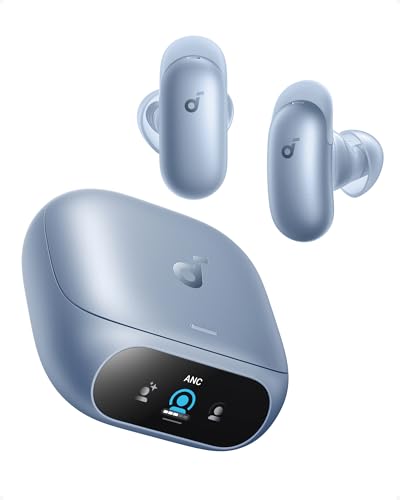
The soundcore liberty 5 pro arrives with one of the boldest call-quality claims ever attached to an earbud listing, and this guide takes that claim seriously without taking it literally. The verified listing describes the Liberty 5 Pro by Anker as noise cancelling wireless earbuds whose Anker Thus AI chip delivers a Guinness World Records-certified call quality for crystal-clear calls in noisy environments. That is a claim about a certification and a chip, aimed at the listener whose earbuds are really a business tool: the consultant calling from an airport, the site manager calling from a street, the parent calling from a supermarket, the hybrid worker whose kitchen is also an office. This article examines what a call-first earbud must do to earn that audience, how the Pro sits beside its sibling the Liberty 5, whose listing emphasises Dolby Audio, stronger voice reduction, real-time adaptive ANC, fast charging, a six-microphone AI clear call system and long battery life, and how to decide which Liberty belongs in your pocket.
It also sets a discipline for reading superlatives. A certified call-quality claim tells you the manufacturer submitted this product’s calling performance to an external record process and was recognised; it does not tell you how your voice will fare on your street, in your wind, through your phone’s connection. The buyer’s half of the evaluation remains stubbornly personal, and the trial method in this guide is built to extract it: planned calls, hostile corners, honest listeners at the other end. Buy the claim as a reason to shortlist the Pro, never as a substitute for testing it where your life actually happens.
Key Takeaways on the Soundcore Liberty 5 Pro
- The Pro’s identity is call quality, anchored on the Anker Thus AI chip and a records-certified claim in its verified listing.
- Noise cancelling is part of the package, but the Pro is bought for how you sound to others, not only for how the world sounds to you.
- The base Liberty 5 remains formidable, with Dolby Audio, adaptive cancelling, voice reduction and a six-microphone call array of its own.
- Choose the Pro if hostile-environment calls are your recurring pain; choose the base model if your calls happen in kinder places and its broader entertainment brief suits you.
- Test any call-first earbud with planned calls from your worst regular locations before trusting it with an important one.
In this guide
What Makes an Earbud a Call-First Earbud?
Most earbuds are designed music-first and call-second, with microphones placed and processed as an afterthought to the listening experience. A call-first design reverses the priority at the level of silicon and software: a dedicated chip whose job is to understand, in real time, which part of the incoming sound is your voice and which part is the street trying to impersonate it, and to defend your voice accordingly. The listener at the other end experiences the result as clarity, presence and the absence of the roar that usually accompanies an outdoor call. You experience it as not repeating yourself, not shouting, and not apologising for where you are. Those experiences are worth money to people whose work travels with them, and they are the currency in which the Liberty 5 Pro asks to be judged.
| Pick | Identity | Named highlights | Check |
|---|---|---|---|
| Soundcore Liberty 5 Pro | Call-quality flagship | Anker Thus AI chip, records-certified call quality claim, noise cancelling | Check price on Amazon |
| Soundcore Liberty 5 | All-round sibling | Dolby Audio, adaptive ANC, voice reduction, six-mic calls, fast charging | Check price on Amazon |

Soundcore Liberty 5 Pro: The Call Quality Argument in Full
Badge: For voices that work outdoors
Mini spec box
- Form: noise cancelling wireless earbuds
- Call system named in listing: Anker Thus AI chip
- Claim stated in listing: Guinness World Records-certified call quality
- Intended benefit: crystal-clear calls in noisy environments
Consider the environments the listing is really describing. Noisy is not a quiet office with a colleague typing. Noisy is a platform announcement competing with your sentence, a delivery scooter passing at the exact moment you state a number, wind worrying the microphones while you explain something that matters, a supermarket’s refrigeration hum under a call about a family decision. In those places, ordinary earbuds make the other person work, and working listeners miss things, ask for repetitions and quietly downgrade their opinion of the call’s professionalism. A chip dedicated to call clarity is an attempt to move that burden from the listener’s patience to the product’s processing, which is exactly where a business tool should put it.
Noise cancelling completes the two-way bargain. The Pro silences your surroundings for you while its call system clarifies you for them, so a conversation becomes a private room carried through a public place. That pairing matters for concentration as much as for courtesy: a call where you can hear nuance, hesitation and the small print of tone is a call where better decisions get made. Frequent callers will also appreciate the discipline a call-first bud imposes on their own habits, because sounding clear encourages speaking at a natural level, which is kinder to the voice across a day of conversations than the raised, strained delivery noisy calls usually extract.
Strengths
- A call-quality identity backed by a named chip and a certified claim, rather than a vague promise.
- Noise cancelling for the wearer completes the two-way conversation package.
- Built for the mobile professional whose office is wherever the call finds them.
Trade-offs
- Buyers who rarely call in hostile places are paying for a specialism they will seldom trigger.
- A certified claim still requires personal testing in your own worst locations before it can be trusted.
- Music-first listeners should compare the sibling’s entertainment brief before defaulting to the Pro badge.
Best for: consultants, field workers, frequent travellers and anyone whose reputation travels down a microphone in noisy places. Not suited for: quiet-room callers and music-first listeners whose earbuds almost never leave a desk or a sofa.

Soundcore Liberty 5: The Sibling That Refuses to Be a Consolation
Badge: The all-round Liberty
Mini spec box
- Form: noise-cancelling earbuds
- Audio feature named in listing: Dolby Audio
- Cancelling: real-time adaptive ANC with stronger voice reduction
- Calls: six-microphone AI clear call system
- Charging: fast charging
- Battery positioning: long battery life
Do not mistake the base Liberty 5 for a stripped understudy. Its own listing promises Dolby Audio, stronger voice reduction inside a real-time adaptive cancelling system, fast charging, a six-microphone AI clear call arrangement and long battery life. That is a complete modern earbud brief, and for the listener whose calls happen in cafés and shared offices rather than on building sites and runways, its call system may already exceed the hostility of their environment. Its entertainment side is arguably the broader of the two siblings, which matters for the majority of hours earbuds spend playing music, podcasts and video rather than carrying conversations.
The sibling decision therefore turns on the severity of your calling environments and the honesty of your usage diary. Count your last twenty calls and mark where each happened and how it sounded. If the painful ones cluster in genuinely hostile places and carried real consequences, the Pro’s specialism is aimed at your life. If the painful ones were merely ordinary offices and the rest of your listening is entertainment, the base model’s balance is the mature purchase, and the money difference can serve the rest of your kit without a whisper of compromise.
Strengths
- Adaptive cancelling with voice reduction suits changing indoor environments elegantly.
- Dolby Audio and long battery positioning serve entertainment-heavy routines.
- Six-microphone call system covers the call needs of most office and café workers.
Trade-offs
- The Pro exists precisely for call conditions beyond this model’s stated specialism.
- Fast charging helps the forgetful, but routine chargers will rarely notice it.
- Buyers must still solve fit personally; no Liberty feature list can do that for them.
Best for: hybrid workers and entertainment-first listeners who want strong calls without a call-only specialism. Not suited for: professionals whose worst calls happen in genuinely hostile noise and carry consequences.
Sony’s fit-first earbud alternative
when earbuds or headphones stop working
How Should You Test Call Quality Before Trusting It?
Recruit two patient people whose ears you trust and brief them properly: they are not being polite, they are being instruments. Call the first from your noisiest regular place at its noisiest regular hour, read a set passage, state some numbers and names, then walk while talking, because movement and head turns expose weaknesses a stationary test hides. Call the second from a windy corner if your life includes one, and from a supermarket or café if it includes those instead. Ask each listener the same three questions: could you follow without effort, what competed with my voice, and would you have guessed where I was. Record their answers in sentences. Then repeat the exercise with your current earbuds or your phone alone, so the Pro’s trial produces a comparison rather than an impression. A call-first product deserves a call-first trial, and a buyer who runs one will know, rather than hope, whether the specialism earns its place in their pocket.
Protect the trial’s fairness. Use the same phone, similar network conditions and the same listener where possible. Note the weather, because wind is a variable, not a verdict. If the Pro transforms your worst corner into a workable office, the case is closed in its favour. If your worst corner turns out to be a mild café where the base model also shines, the diary has saved you from buying a specialism your life never summons.
How Does Noise Cancelling Fit a Call-First Life?
Cancelling is usually marketed as a listening luxury, but for the calling professional it is a comprehension tool. Hearing the other party clearly, their qualifications, their hesitations, the figure they said quietly, is half of call quality, and it is the half the wearer controls through cancelling and fit. The Liberty line’s adaptive approach in the base model, adjusting effort as environments change, suits a day that moves from street to office to train, while the Pro pairs its cancelling with the outbound clarity its chip exists to defend. Judge the two together as a conversation system rather than as separate features, because a conversation is exactly what they jointly produce.
Remember the awareness obligation that travels with all cancelling earbuds. Crossings, platforms, building sites and cycle routes demand the outside world, so build the ambient or transparency habit into your calling routine in those places, or take the call from a safer standing spot. The most professional call is the one whose maker arrives home safely to make the next one.
How to Choose Between the Pro and the Base Liberty 5?
Let severity decide. List your calling environments in order of hostility and frequency, and look at where the overlap sits. High hostility times high frequency is Pro territory, unambiguously. Low hostility times any frequency belongs to the base model and its broader entertainment brief. The diagonal cases, rare but severe calls, occasional but consequential calls, deserve a moment’s thought about consequences: a monthly call that decides a contract may justify a specialism that a daily casual call would not. Price the regret, not the feature. Regret sounds like a client asking you to repeat a figure for the third time over a scooter’s exhaust; if that sentence makes you wince in recognition, you already know which sibling is yours.
Also weigh the rest of your listening honestly. If ninety percent of your earbud hours are music and video, the base model’s entertainment positioning is not a consolation but a description of your life, and its call system remains thoroughly modern. Specialisms should be bought by the people whose diaries demand them, and admired respectfully by everyone else.
What Mistakes Do Buyers of Call-First Earbuds Make?
Believing any certification, however genuine, can replace a personal trial in personal environments is the first. Buying the Pro for a quiet study is the second, a specialism idling like a sports car in traffic. Neglecting fit is the third, because a bud that shifts moves its microphones and undermines the very processing the buyer paid for; spend the first day on tips and seating before judging any call. Forgetting the listener’s side is the fourth: your phone, your network and your habits are half the chain, and a flagship bud on a failing connection in a wind tunnel will still produce a difficult call, just a more expensive one. Finally, failing to practise is the fifth. Learn the controls, the mode switches and the case’s behaviour before the important call, not during its first sentence.
headsets versus headphones for work calls
How to Care for Earbuds That Work for a Living?
Professional tools get professional housekeeping. Wipe the buds after calls and workouts, keep the microphone openings free of debris with a soft dry brush, and store them in their case rather than in the pocket that also holds keys and coins. Keep the case charged on a rhythm tied to your working week, update firmware through official channels in a calm moment, and carry the charging cable in the bag the buds travel in, not in a drawer at home. Before a travel day or a decisive call, run a thirty-second test call to a voicemail or a colleague, because professionals check their instruments before the performance. None of this is glamorous, and all of it is the difference between a tool that is ready and a tool that is merely owned.
What Is the Final Recommendation on the Liberty 5 Pro?
The Liberty 5 Pro is the Liberty to buy when your voice works for a living in places that fight it. Its certified call claim and dedicated AI chip describe a product aimed with unusual precision, and buyers whose call diaries match that aim should shortlist it first and test it rigorously in their own worst corners. Everyone else should look at the base Liberty 5 with genuine respect rather than as a fallback, because its adaptive cancelling, voice reduction, Dolby Audio positioning and six-microphone calls describe the better-balanced earbud for kinder environments and entertainment-heavy days. Between the siblings there is no loser, only a question your own call history has already answered.
Frequently Asked Questions
What does the records-certified call claim actually mean?
The listing states that the Anker Thus AI chip delivers Guinness World Records-certified call quality for clear calls in noisy environments. Treat that as evidence the manufacturer pursued and received external recognition for call performance, and as a reason to shortlist the product, while still testing it personally in your own environments before relying on it professionally.
How is the Pro different from the regular Liberty 5?
The Pro’s identity centres on its dedicated call chip and certified call claim. The regular model’s listing centres on Dolby Audio, real-time adaptive cancelling with stronger voice reduction, fast charging, long battery life and a six-microphone AI call system. The Pro specialises in hostile-environment calls; the base model balances entertainment and everyday calls.
Will the Pro make every call sound perfect?
No earbud can promise that, because your phone, network, weather and surroundings all share the result. A call-first design improves the part of the chain the earbud controls, your voice’s separation from background noise. Test it in your worst regular places and let that evidence, not any superlative, set your expectations.
Is fit important for call quality?
Yes, because a bud that creeps or shifts moves its microphones and leaks the seal its cancelling depends on. Spend time on tip sizes, consider different sizes per ear, and retest calls after settling the fit. Many disappointing call results are fit results wearing a disguise.
Should podcast and music listeners choose the Pro?
Only if their calling life also justifies it. Listening-heavy buyers may find the base model’s Dolby Audio positioning, adaptive cancelling and long battery brief the better match for their hours. Buy the specialism your diary demands, not the badge your eye prefers.
How should I prepare the Pro for an important call day?
Charge the case, confirm the fit, run a short test call from a similar environment, and know your mode controls by touch. Keep a wired or phone-only fallback in mind for truly extreme conditions. Professionals rehearse their tools; a thirty-second check is a rehearsal, not paranoia.
real-time translation through headphones
how headphone sound is measured and targeted
a speaker from the same family for home
an unverified earbud name checked honestly
What Does a Working Week Sound Like Through a Call-First Lens?
Monday opens with a stand-up call taken from a kitchen while a kettle argues in the background, a mild test any modern bud should pass, and the Liberty line’s voice handling was built with such rooms in mind. Tuesday sends you to a client site, where the call that matters happens in a corridor with hard walls and passing footsteps, and the difference between a voice that arrives intact and a voice that arrives shredded becomes a professional fact rather than a consumer preference. Wednesday is travel: a platform, a train doorway, a taxi with the window cracked, three acoustically distinct ambushes in one afternoon. Thursday returns to the café office, where the enemy is not volume but the specific frequency of other people’s conversations, the exact target the base model’s voice reduction names. Friday closes with a family call from a supermarket car park, wind included, where clarity is a kindness rather than a credential. A week like that is the Pro’s natural habitat and the base model’s sternest exam, and your own week, mapped honestly against it, will tell you which sibling’s brief was written about you.
Notice how rarely music appears in that mapping, and how decisive that absence is. For the professional whose earbuds are instruments of work, entertainment performance is the supporting act and should be weighted accordingly. For the listener whose week inverts the pattern, concerts of podcasts and playlists punctuated by two tame calls, the weighting inverts with it. The Liberty family conveniently contains both weightings, which is why this guide keeps refusing to crown one sibling for everyone.
How Do You Handle the Etiquette of Always Being Reachable?
A bud that makes calls possible everywhere creates a social question alongside the technical one: which calls should be taken everywhere. Colleagues and clients learn quickly what your equipment allows, and expectations expand to fill the capability. The wise professional uses a call-first earbud to choose their moments rather than to surrender them, taking the decisive call from the hostile corner when it truly cannot wait, and letting the routine call wait for a kinder room where everyone sounds better and thinks better. Keep ambient awareness as your default in public places, keep one ear available when supervising children or navigating traffic, and remember that the clearest call is not always the kindest one if it is taken through a family dinner. Equipment expands possibility; judgement remains the owner’s job, and a guide that sells possibility without mentioning judgement has told only the profitable half of the story.
How Should Teams and Employers Think About Call-First Earbuds?
Small teams increasingly issue or subsidise the earbuds their people actually work through, and the Liberty decision scales into a policy question. For field teams, drivers, site staff and travelling consultants, a call-first model is defensible equipment in the same way a good laptop bag is: it protects the quality of the work product, which in their case is partly made of voice. For desk-based teams in quiet offices, standardising on the base model’s balance is equally defensible and kinder to the budget. Either way, the team decision improves when it is made from call diaries rather than from job titles, because the quietest office can contain the one person whose client calls all happen from a factory floor. Ask the people, map the environments, and buy the specialism where the map shows hostility, not where the hierarchy suggests importance.
Support habits matter at team scale too: spare tips in the office drawer, a shared understanding of pairing and firmware, and a named person who knows the reset routine. A team’s earbuds fail socially before they fail technically, abandoned in bags because nobody owned the housekeeping. Assign the housekeeping and even a value fleet behaves like professional kit.
A Closing Scenario for the Undecided
Picture the call you most dread repeating: the one where the numbers blurred, where you apologised three times, where the other party’s patience audibly thinned. If that call lives in your memory with a specific noisy place attached, and if calls like it recur in your working pattern, the Pro was designed by people who have heard your dread and engineered against it, and it deserves your first trial. If your dread call turns out, on inspection, to have been a network failure in a quiet room, no earbud on earth was the missing piece, and the base model’s broader brief will serve your actual life better. Dread, examined carefully, is data. Let it vote, then test what it voted for, and the Liberty decision resolves itself with a clarity no advertisement can supply.
How Does a Call-First Earbud Change the Way You Work?
Adopting a tool like the Liberty 5 Pro quietly redraws a professional’s map of where work can happen. Calls that once required retreating to a quiet room can be taken on the move between meetings, from the pavement outside a client’s building, from the concourse that used to be dead time, and that reclaimed geography compounds across a month into hours of recovered momentum. The change has a shadow side that honest guidance should name: a professional who can call from anywhere can be expected, by others and by themselves, to call from everywhere, and the boundaries that protected family dinners and school runs must be re-drawn deliberately rather than discovered in retrospect. The wise adopter therefore pairs the purchase with a small set of personal rules, agreed in advance: which hours are callable, which places remain off-duty, and which calls still deserve a quiet room out of respect for their importance and their other participants. Equipment expands the possible; rules keep the possible humane. A call-first earbud bought with its rules already written is a liberation. The same earbud bought without them can become a very clear, very portable obligation.
What Should Frequent Flyers Ask of the Liberty Line?
Air travel concentrates every earbud virtue and vice into a single long day. The airport is a hostile calling environment of announcements, crowds and hard surfaces, which is the Pro’s stated home ground. The flight itself is a listening environment of steady engine wash where cancelling, comfort over hours and a case that survives seat pockets decide satisfaction, and where the base model’s entertainment brief and battery positioning argue strongly. The arrival is a logistics environment of taxis, stations and unfamiliar streets where awareness modes and a fit that survives walking matter more than either specification war. A flyer should therefore refuse to choose between the siblings on a single phase of the journey. Map the whole day, weight the phases by where failure would hurt most, a missed nuance in a client call at the airport, a dead bud at hour seven, an ache that ruins the film and the sleep alike, and let that weighting pick the earbud. Then prepare it like crew: charged case, settled fit, controls rehearsed, a cable in the bag for the seat that still wants one, and a test call made before the departure board starts making decisions for you.
How Do the Liberty Siblings Handle Shared and Household Use?
Earbuds are personal in a way speakers are not, shaped to one person’s ears and paired to one person’s devices, yet households persist in sharing them, and the Liberty decision should acknowledge the practice rather than pretend it away. A shared pair lives a harder life: tips swapped or, worse, not swapped, pairing records multiplying, the case migrating between bags and owners with competing charging habits. If your household genuinely shares, choose the sibling whose virtues survive sharing, which usually means the one whose everyday balance pleases both listeners, and establish hygiene and charging rules on day one, including separate tips for each regular user. If the earbuds are truly personal, as most call-first purchases are, protect that status kindly but firmly, because a professional instrument fitted to your ears and tuned to your voice is not household infrastructure, and lending it the night before a decisive call is a risk no politeness obliges you to take. Either way, naming the arrangement in advance prevents the small resentments that accumulate around small expensive objects in busy homes.
What Does the Pro’s Claim Teach Us About Reading All Audio Claims?
Every category has its superlative dialect, and earbuds speak it fluently: records certified, laboratories invoked, percentages deployed without denominators. The Liberty 5 Pro’s listing is a useful classroom because its claim is unusually specific in form, a named chip and a named certifying idea, which makes it more checkable than a vague promise of studio quality or ultimate clarity. The reader’s method generalises from it. Ask what exactly is being claimed, in what environment, measured or recognised by whom, and what would have to be true in your own life for the claim to matter. A claim that survives those four questions deserves a trial. A claim that dissolves under them was decoration, and decoration is a poor reason to choose the tool your voice works through. Apply the method across this whole cluster of products and a pattern emerges that is worth more than any single recommendation: the listings that state verifiable, specific things tend to belong to products with a clear idea of themselves, while the listings that shout in generalities are usually hiding an absence of one. Buy the specific, test the specific, and let the shouting sell to somebody else.
A Final Exercise Before You Order Either Liberty
Sit down with your phone’s call history and a notebook, a genuinely old-fashioned pairing for a futuristic purchase, and reconstruct your last month of conversations. Mark each call’s place, its importance and its acoustic success in a few honest words. Count how many were merely endured. Listen, in memory, to the worst three and notice what exactly failed: your voice lost to traffic, their voice lost to a café, a bud that shifted at the crucial sentence, a battery that surrendered at the crucial hour. That notebook page is now the most accurate product review you own, because it reviews your life rather than a manufacturer’s hopes. Hold the two Liberty listings against it. If the failures cluster where the Pro’s chip and certification aim, your decision is made and merely needs a trial to confirm it. If they cluster around endurance, entertainment and ordinary rooms, the base model has been describing your month all along. Close the notebook, order accordingly, and when the earbuds arrive, run the hostile-corner trial this guide prescribed, so that the next month’s page can be written in a different, quieter hand.
How Do the Liberty Earbuds Serve Listening, Not Just Talking?
It would be a poor review that left the Pro’s buyers imagining their music had been forgotten, or the base model’s buyers imagining their calls had. Both siblings are complete earbuds, and their specialisms are emphases laid over a shared foundation of cancelling, wireless convenience and app-era expectations. The listening day of a Pro owner still contains albums on trains, podcasts on walks and films in bed, and the earbud must serve those hours with the same competence it serves the boardroom call, because a tool carried all day is judged all day. Likewise the base model’s owner still takes calls that matter, from school, from family, from the one client who always rings from a building site, and its six-microphone system exists for those moments rather than as a ceremonial feature. The siblings are therefore best understood as two centres of gravity inside one design family. Choose your centre of gravity by your diary’s true weight distribution, and the rest of the product, competently engineered in both cases, will follow the choice without punishing it. Buyers who grasp that stop agonising over the comparison’s smaller print, because they understand the decision was only ever about emphasis, and emphasis is the one specification your own life can state with total authority.
What Should You Expect in the First Month With Either Model?
Week one belongs to fit and firmware: tips chosen per ear, controls drilled, the case’s charging rhythm anchored to your mornings. Expect one false start, a tip size that felt right on Monday and reveals itself by Friday, because ears teach slowly and the lesson is tuition, not failure. Week two belongs to environments: the commute, the office, the worst calling corner, each visited deliberately and noted in the diary this guide keeps prescribing. Week three belongs to other people: the colleagues and family whose reports on your voice are the true specification sheet of a call-first product, gathered while goodwill is high and the questions are specific. Week four belongs to judgement, while exchange remains simple: keep with confidence, swap siblings with the diary as your evidence, or reconsider the category entirely if your ears have voted against the form itself. A month run that deliberately converts an earbud from a purchase into a known instrument, and the professional who runs it will still be benefiting from the notes when the next generation arrives to tempt them with a newer superlative and an identical need for evidence.
Why Voice Quality Became the Frontier of Earbud Design
For a decade, earbud progress was measured in the wearer’s direction: better sound arriving, better silence imposed, smaller cases, longer endurance. The microphone’s direction lagged, because music paid for the research and calls were an obligation rather than a headline. Hybrid work reversed the economics. Suddenly the wearer’s voice was a professional asset transmitted dozens of times a week, employers and clients formed impressions from it, and the difference between a voice that arrived intact and one that arrived weather-beaten became a difference in how a person was perceived at work. Chip-level investment in call clarity, of which the Liberty 5 Pro’s dedicated processor is an example, is the industry’s answer to that reversal, and the appearance of certification language around call quality is the market learning to sell the new frontier with the old frontier’s tools. Readers should welcome the shift while keeping their method: a frontier is still a place where claims outrun maps, and the traveller’s own trial, in their own worst weather, remains the only survey that counts. The Pro asks, more explicitly than most products, to be judged exactly there. Accept the invitation, run the trial, and you will know something about this earbud that no laboratory, record book or review, including this one, could have told you.
How Should You Compare the Liberty Line Against the Wider Market?
Readers rarely shop inside one family, so place the siblings honestly in their landscape. The market’s call-focused competition includes flagship earbuds from phone makers whose ecosystems add conveniences a standalone brand cannot copy, and specialist models whose microphone arrays are their entire identity. Against that field, the Liberty line’s argument is concentration: Soundcore builds audio as its whole business, the base model balances entertainment and communication without ecosystem rent, and the Pro stakes its reputation on a single, checkable, certified call claim rather than on a constellation of small conveniences. A buyer loyal to a phone ecosystem may rationally pay that rent for the conveniences; a buyer whose life crosses platforms, a work laptop from one world, a phone from another, a tablet from a third, will feel the Liberty’s independence as a feature in itself. Either way, run every candidate, Liberty or rival, through the same hostile-corner trial with the same listeners and the same questions, because call quality is the category where marketing dialects differ most and personal evidence matters most. The earbud that survives your street, your wind and your supermarket with your voice intact has won the only comparison that will ever be conducted in your name.
A Note on Hearing, Volume and Long Careers
A professional who lives through earbuds owes their future self one unglamorous discipline: volume honesty. Cancelling exists partly to make modest volumes sufficient in loud places, and using it that way, rather than as a licence to add spectacle on top of spectacle, protects the hearing that the whole career depends on. Take breaks across a calling day, let ambient modes carry the low-stakes listening, and treat any ringing, fullness or need to raise volumes week over week as information to act on rather than as weather to endure. The Liberty siblings, like every product in this cluster, are tools for a long working life, and the longest-lived tool in the kit is the pair of ears they serve. Guard those first, configure everything else second, and the technology will keep its proper place: impressive, useful, and firmly in service to the listener rather than the other way round.
How to Brief Your Household and Colleagues on Your New Calling Habits
A new call-first earbud changes how reachable you sound, and a short conversation prevents that change from becoming a misunderstanding. Tell your household which hours you intend to protect even though the technology no longer requires the protection, because a boundary announced kindly is easier to keep than one defended in the moment. Tell your regular callers, lightly and once, that you have changed equipment and welcome honest reports about how you sound, because that invitation converts your whole contact list into the testing panel this guide recruited earlier, and because people who are asked for candour early rarely deliver complaints late. Set the expectations of your own availability with your team before the earbud sets them for you, particularly around travel days and school runs, the two territories where a clear connection most easily becomes an assumed obligation. None of this requires a meeting or a memo; it requires the same skill the product itself is selling, which is clear communication, practised first in person, at home, where the stakes are affection rather than business. Do that, and the Liberty, whichever sibling you chose, will amplify a voice that already knows what it wants to say and when it wants to say it, which was the point of the purchase all along.
How the Liberty Decision Looks a Year Later
Return, in imagination, to the buyer a year after either purchase, and notice what the year has actually recorded. The Pro owner remembers three calls: the contract saved from a windswept street, the interview conducted from an airport without a single request to repeat, the family emergency coordinated from a supermarket car park as calmly as from a study. The base model owner remembers a year of journeys pleasantly soundtracked, calls that were never a problem worth remembering, and a small sum not spent that became a concert, a book and a dinner. Neither memory contains regret, because both purchases were made from diaries rather than from advertisements. The buyers who do appear in the year’s regretful memories are the ones who bought against their own evidence: the quiet-room worker still wondering what the certified chip was for, the field consultant still apologising for their voice in the wind. A year is the true review period of any earbud, and this guide has tried to write the review that the year itself would write, in advance, while its verdict can still change the purchase. Read your own diary one final time, trust its evidence over every superlative in every listing, and buy the Liberty that your last twelve months have already chosen.
One Final Distinction: Buying for the Job and Buying for the Badge
Every product in this cluster offers the same fork in its own dialect, and the Liberty siblings state it cleanly enough to end on. Buying for the job means the purchase is invisible within a month, absorbed into a routine that simply works better: calls that land, journeys that pass pleasantly, a case that is always where the hand expects it. Buying for the badge means the purchase stays visible, narrated to oneself and others, defended in conversations nobody started, and quietly resented when its specialism goes unused for a third consecutive week. The Pro is a magnificent job purchase for the caller whose diary demands it and a pure badge purchase for the listener whose diary does not, and the base model inverts exactly along the same line. No reviewer can see your diary. That is why this guide has spent its length teaching you to read it, in call histories, in hostile corners, in the memories of the conversations that went wrong. Read it once more, honestly, and then buy for the job. The badge, if it still matters afterwards, will take care of itself, because equipment that visibly works has a way of acquiring all the prestige that equipment that merely gleams never quite manages to keep.
Whichever Liberty leaves this page with you, let it arrive into a prepared life: tips sorted, listeners recruited, hostile corners mapped, boundaries written and a first week planned like the professional instrument it is. Earbuds configured that way rarely disappoint, because disappointment usually belongs not to the product but to the unprepared meeting between a product and a life. Prepare the meeting, and the meeting, like the calls it will carry, tends to come through clearly.
A Short Note on Switching Costs and Loyalty
One honest factor remains that spec sheets never print: the cost of changing your mind later. Earbuds accumulate accessories, habits and paired devices the way houses accumulate furniture, and a listener deep in one ecosystem, with spare tips in two bags and controls in their fingers, pays a real toll to move. That toll argues for deciding well now rather than cheaply now, because the Liberty you choose this season is likely to be the platform your next two years of calls are built on. It also argues for a certain loyalty once the choice is made and the trial is passed: resist the next generation’s superlative unless your diary produces a new complaint, since a specialism that still matches your life does not expire when a newer chip is announced. Buy once, buy from evidence, and then let loyalty, the earned kind, do the rest. Your voice, your callers and your wallet will all recognise the wisdom, usually in that order.
And so the comparison ends where every honest comparison in this cluster has ended: with your own evidence, gathered in your own places, outweighing every claim in every listing, including the certified one that brought you here. The Liberty 5 Pro has made its argument in silicon and in superlatives. The Liberty 5 has made its in balance and breadth. Your diary gets the deciding vote, your worst corner gets the confirming test, and your voice, which started this whole inquiry by deserving better carriage through a noisy world, gets the final word. Make sure it is a clear one.
Prepared that way, the first important call stops being an audition and becomes simply work, done well, in whatever weather the day provides. That ordinariness, a professional voice arriving intact from an unprofessional place, repeated until nobody remarks on it anymore, is the true product Soundcore is selling with the Pro, and the true standard against which its certified claim should be held. Demand it, test for it, and settle for nothing less interesting.
Clear, in the end, is a modest word for an ambitious promise, and it is the right word to end on. Not transformed, not cinematic, not revolutionary: clear, the way a good window is clear, noticed only when it fails. May your calls be exactly that, unnoticed for their quality because their quality never interrupts, from the first platform conversation to the last car-park farewell, in all the noisy, ordinary, important weather of a working life.
May every important sentence you speak this year arrive the way you meant it, whole, calm and unmistakably yours, whether it crosses a quiet study or a roaring concourse to get there. That is all the Pro promises, all the base model supports, and all this long comparison has ever been trying to arrange on your behalf.
Clear calls, kind hours, a case that is charged and a voice that needs no apology for its surroundings: that is the whole ambition, and it is enough. Choose the sibling that serves it in your streets, and go and say something worth hearing.
Say it clearly, then, whatever it is, from wherever the day has put you. The equipment has done its part of the sentence. The rest of it, as always, is yours.
That clarity, repeated across a thousand ordinary conversations, is how a small piece of technology earns a large place in a life: not by being marvelled at, but by being trusted, daily, in the weather that matters.
Trust, repeated daily and never quite remarked upon, is the highest rating any tool can earn, and the only one this guide has ever been counting.