Disclosure: As an Amazon Associate, reviewstook.com earns from qualifying purchases. Links on this page are affiliate links; they cost you nothing extra. Prices and availability change often, so check the current Amazon listing before you buy.
Anyone typing sony wh 1000xm6 vs sony wh 1000xm5 is usually standing at a familiar crossroads: the newer flagship promises better processing, more microphones and studio-minded tuning, while the previous flagship remains a superb noise cancelling headphone that many owners still love and many shoppers can justify more easily. This comparison refuses the lazy answer that newer automatically wins. It asks what the XM6 actually changes, where the XM5 still matches or nearly matches it, which differences you can hear or feel in daily life, and which only exist in a specification table. It also deals honestly with listings: the verified new XM5 listing available for this guide is the Smoky Pink finish, while the black XM5 option in the verified inventory is explicitly a Renewed listing, and it is labelled that way throughout.
The short verdict, before the detail: choose the WH-1000XM6 if you want Sony’s most advanced cancelling system in this line, the twelve-microphone array, the HD Noise Cancelling Processor QN3, the Adaptive NC Optimizer and up to thirty hours of battery in the newest design, and if the purchase is a long-term main headphone. Choose the WH-1000XM5 if its calmer value proposition, proven comfort and still-serious cancelling match your needs, and you are comfortable with the colour or renewed-condition realities of the listings you are actually looking at. Keep an XM5 you already own if it still fits, still holds charge and still silences your commute; generational upgrades reward travellers and heavy callers most, and reward satisfied owners least.
Key Takeaways: Sony WH-1000XM6 vs Sony WH-1000XM5
- The XM6 moves the cancelling story forward with the QN3 processor, twelve microphones and an Adaptive NC Optimizer.
- Both generations promise up to thirty hours of battery in their verified listings, so endurance alone does not separate them.
- The XM5 remains a complete flagship experience, with Auto NC Optimizer, crystal clear call positioning, touch control, multipoint and a carrying case in its listing.
- Listing literacy matters: the new XM5 verified here is Smoky Pink; the black XM5 verified here is Renewed, not new.
- Upgraders should ask whether calls, cancelling in changing environments and newest tuning solve a problem they actually have.
In this guide
What Is the Quick Verdict, Generation Against Generation?
| Criterion | WH-1000XM6 | WH-1000XM5 | Edge |
|---|---|---|---|
| Cancelling hardware story | HD NC Processor QN3, twelve microphones, Adaptive NC Optimizer | Auto NC Optimizer in the new listing description | XM6 |
| Battery headline | Up to 30 hours | Up to 30 hours | Even |
| Sound positioning | Mastered by engineers, studio-quality positioning | Premium flagship tuning of its generation | XM6 on intent |
| Calls | Twelve-microphone system supports voice pickup ambitions | Crystal clear calls named in the listing | Depends on your rooms |
| Buying route | Current flagship, black verified listing | Smoky Pink new, or black Renewed | Read the listing carefully |
Tables compress; life does not. A microphone count is not a call-quality guarantee, a processor name is not a silence guarantee, and a battery headline is not a promise about your volume, your codec or your winter commute. Use the table to organise the sections that follow, then let the sections, written around real situations such as a delayed train, a windy pavement and a kitchen-table video call, carry the actual decision.

Sony WH-1000XM6: What Does the New Flagship Actually Claim?
Badge: The forward step
Mini spec box
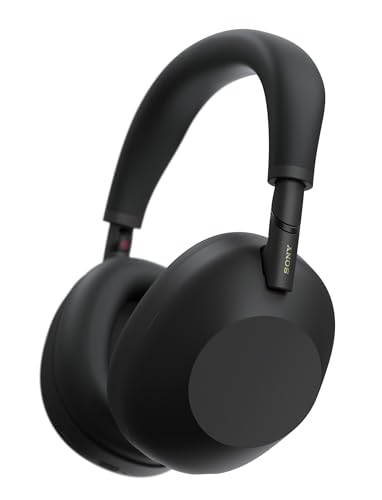
- Verified listing colour: black
- Processor named in listing: HD NC Processor QN3
- Microphones named in listing: twelve
- Cancelling feature: Adaptive NC Optimizer
- Sound positioning: mastered by engineers, studio-quality
- Battery headline: up to 30 hours
The XM6 pitch is about adaptation and processing headroom. Twelve microphones give the cancelling and call systems more information about the world around you and about your own voice, while the QN3 processor exists to act on that information faster and more precisely. The Adaptive NC Optimizer name tells the practical story: cancelling that adjusts to how you wear the headphones and to the pressure and noise of your surroundings, rather than assuming a perfect seal and a static room. Travellers move between cabins, platforms, streets and offices in a single hour, so adaptation is not a luxury feature for them; it is the feature that matches their day.
The studio-quality, mastered-by-engineers positioning signals tuning intent. Sony is telling musical listeners that the new flagship was voiced with recording professionals in the conversation, aiming for a presentation that respects how music was made. Treat that as a statement of direction rather than a measurement, and translate it into your own library: if you listen closely, at home, to well-recorded albums, tuning intent matters to you. If your listening is podcasts at platform volume, cancelling and comfort will dominate your satisfaction and the tuning story will be background.
Strengths
- Most advanced cancelling architecture in this comparison, on the evidence of its own listing.
- Twelve microphones support both environmental sensing and call pickup ambitions.
- Newest tuning intent for listeners who treat headphones as their main music system.
Trade-offs
- Flagship position means the value question is sharpest here, especially for satisfied XM5 owners.
- Adaptive benefits show most in changing environments, least in a quiet, static room.
- Buyers must still confirm fit and clamping comfort, which no processor can decide for them.
Best for: frequent travellers, noisy-office workers and upgraders whose XM3 or XM4 era headphone is retiring. Not suited for: happy XM5 owners with no specific complaint, or buyers whose listening happens in already-quiet rooms.

Sony WH-1000XM5 in Smoky Pink: The New Listing, Read Properly
Badge: Proven flagship, distinctive finish
Mini spec box
- Verified listing colour: Smoky Pink, new
- Cancelling feature: Auto NC Optimizer
- Battery headline: up to 30 hours
- Included in listing description: carrying case
- Controls and connection: touch control, multipoint connection
- Call positioning: crystal clear calls
The XM5 needs no rehabilitation. Its listing describes premium noise cancelling wireless headphones with an Auto NC Optimizer, up to thirty hours of battery, a carrying case, crystal clear calls, touch control and multipoint connection. That is a complete flagship checklist, and the generation’s reputation among commuters was built on exactly that completeness combined with a light, comfortable wear. If the Smoky Pink finish suits your taste, this is the straightforward new-purchase XM5 route in the verified inventory, and colour is the only unusual thing about it.
Colour deserves a serious sentence rather than a dismissive one. Headphones are worn in public, in meetings and in photographs; a finish you enjoy wearing is a feature, and a finish you merely tolerate becomes a small daily tax. Smoky Pink is soft rather than loud, and for many buyers it will be the reason to choose this listing happily. For buyers who need a conventional black headphone as new, honesty requires saying that the verified black route in this inventory is the Renewed listing covered next, not this one.
Strengths
- Complete previous-flagship experience with case, multipoint and touch control included in the picture.
- Same thirty-hour battery headline as the newer model in these listings.
- A finish with genuine character for buyers tired of default black everything.
Trade-offs
- Cancelling architecture is a generation behind the XM6’s processor and microphone story.
- The colour will not suit every wardrobe, workplace or preference.
- Touch controls divide opinion among listeners who prefer physical buttons in winter gloves.
Best for: buyers who want the XM5 experience new, like the finish, and do not need the newest cancelling system. Not suited for: buyers set on black and new in the same box; read the Renewed section before deciding.

Sony WH-1000XM5/B Renewed: The Black Route, Labelled Honestly
Badge: Black XM5, renewed condition
Mini spec box
- Listing title states: Wireless Industry Leading Noise Canceling Bluetooth Headphones (Renewed)
- Colour implied by model suffix in listing: black variant line
- Condition: Renewed — not a new product
- Generation: WH-1000XM5 family
This listing exists in the comparison for one reason: some shoppers specifically want a black XM5 and will meet this Renewed option while searching. Renewed means the product has been inspected and restored for resale under the retailer’s renewed programme terms rather than arriving as a factory-new unit, and the exact inclusions, cosmetic expectations and guarantee details are those stated on the listing itself at the time you look. Read them there, in full, before ordering, and weigh the saving logic against the shorter certainty that can accompany a renewed purchase. For a careful buyer comfortable with those terms, it can be a sensible route into a flagship generation. For a gift, or for anyone who wants an untouched product with the longest straightforward support story, the new listings above are the cleaner answer.
Strengths
- Access to the XM5 in the black colour family when new black stock is not the verified option here.
- Same underlying headphone generation whose comfort and cancelling many owners praise.
- Reusing a restored product keeps a working flagship in service longer.
Trade-offs
- Condition is renewed, so expectations about cosmetics and accessories must follow the listing text, not new-product assumptions.
- Battery history is not the same as a new unit’s, whatever the programme’s checks promise.
- Support and return terms differ from new; confirm them before, not after, purchase.
Best for: informed buyers who prioritise the black XM5 and accept renewed terms knowingly. Not suited for: gift buyers or anyone who wants a factory-new black XM5; choose a new listing instead.
what to do when headphones misbehave
Which Cancelling System Wins in Trains, Planes and Offices?
On paper the XM6, and the reasoning is structural rather than mystical. More microphones sample the environment more completely, a newer dedicated processor works that information harder, and an optimizer described as adaptive is designed to respond when wearing conditions and ambient pressure change, as they do when a train enters a tunnel or an aircraft cabin settles at altitude. The XM5’s Auto NC Optimizer was itself a strong answer in its generation, automatically adjusting to wearing and surroundings, which is why XM5 owners are not suffering in silence; they are listening in considerable quiet already. The realistic gap is therefore refinement at the margins: difficult, changing, low-frequency-heavy environments, and the consistency of the result across different heads and hair and glasses.
Offices present a different test, dominated by voices, keyboard clatter and intermittent sounds that no cancelling system fully erases. Here both generations reduce the wash of noise and neither delivers a silent room, so the buying difference shrinks and comfort, call quality and price logic grow. Aircraft favour the newer system most, because the noise is loud, steady and long-lasting, and because small improvements compound across a ten-hour exposure into noticeably less fatigue. Judge by your loudest regular hour, not by a showroom hush.
Which Headphone Sounds Better for Your Library?
The XM6’s mastered-by-engineers, studio-quality language promises a voicing decision made with recording creators in mind, which usually translates into respect for detail and for the balance the mix intended. The XM5’s tuning won a large audience with a friendly, full presentation that flatters everyday listening. Without inventing measurements neither listing provides, the honest guidance is about taste and library. Acoustic, jazz, classical and carefully produced singer-songwriter records reward the headphone whose stated intent is studio respect. Bass-led electronic and hip-hop listening will find both generations capable, with personal preference for weight and punch deciding more than generation badges. Spoken word equalises them almost entirely; a podcast does not need a flagship tuning debate.
Remember also that fit writes part of the sound. A seal broken by spectacle arms or thick hair thins the low end of either model, and the optimizer systems exist partly to compensate for exactly those realities. Wear your glasses during any trial, style your hair as usual, and do not accept a showroom result obtained under conditions your life will not reproduce.
Which Is More Comfortable Across a Long Day?
Both generations pursue comfort through light weight and distributed pressure, and both are worn happily for long stretches by large numbers of people, which is precisely why individual fit remains the decider. Head size, ear size, sensitivity at the crown, tolerance for clamping force and heat build-up around the ears vary enough that a friend’s all-day verdict is a clue, never a conclusion. The XM5’s established shape has the advantage of a long public track record; the XM6’s advantage is that Sony had another generation of feedback to refine from. If you can try either with your own head, your own glasses and at least twenty unhurried minutes, that trial outranks every paragraph in this comparison, including this one.
Heat deserves its own mention because it ends more long sessions than weight does. Any closed, cancelling over-ear traps warmth, and in summer or in heated trains both models will ask for occasional breaks. Plan listening in chapters on long journeys, lift the cups during announcements, and treat a short break as part of the product experience rather than a failure of it.
How Do Calls Compare for Hybrid Workers?
The XM6’s twelve microphones are shared infrastructure between cancelling and voice pickup, and a larger array gives processing more to work with when separating your voice from a street or a kitchen. The XM5 was already positioned for crystal clear calls in its listing and served hybrid workers well through the years when home calls became a daily discipline. The practical gap will show in hostile conditions: wind, traffic, a café espresso machine, a child announcing something important from the next room. In a quiet study, either headphone will make you sound like yourself.
Your own habits move the result as much as hardware. Face the microphone’s world sensibly, avoid walking directly into wind on important calls, mute in meetings when not speaking, and keep the headphone’s firmware current through Sony’s channels. A flagship used carelessly loses to a midrange headphone used thoughtfully, a truth buying guides should repeat more often.
choosing headphones for audio editing work
How to Decide If You Already Own the XM5?
Start with a complaints list, written from the last month of real use. If it contains battery fading before your longest day ends, cushions worn flat, a hinge creaking, calls failing in wind, or cancelling no longer matching a new, louder commute, an upgrade addresses documented pain. If the list is empty and the urge is purely the existence of a newer box, keep your money and your perfectly good headphone; the XM6 will still be there when a real complaint arrives. If the list contains only comfort niggles, try fresh cushions or a fit adjustment before replacing a flagship, because wear parts are cheaper than generations.
Households can also cascade: an XM5 passed to a partner, a student or a spare-room desk remains in service while the XM6 becomes the travel main. That pattern softens the value question honestly, because the older flagship is not discarded value but reassigned value. Decide the cascade before ordering, though, not as a story invented afterwards to justify the basket.
How to Choose If You Own Neither?
First-time flagship buyers should weigh total life, not launch order. If this headphone will be your main companion for years of commuting and travel, the XM6’s newer processing, sensing and tuning intent make it the natural default, provided its current listing terms sit comfortably with your budget logic. If the XM5’s proposition stretches you less and leaves room for the rest of your kit, a previous flagship bought knowingly, in a finish you like or on renewed terms you have read carefully, is a mature decision rather than a compromise to apologise for. What neither buyer should do is purchase on a countdown, a colour they dislike, or a condition label they have not understood.
What Mistakes Do Shoppers Make in This Exact Comparison?
Assuming every XM5 listing is the same product in the same condition is the headline mistake, and this guide’s listing sections exist to prevent it. New Smoky Pink and Renewed black are different propositions and should be compared as such. The second mistake is comparing a new flagship’s launch position against a previous flagship’s street position as if that gap were a permanent law; listings move, so check the current page for whichever model you choose, on the day you choose it. The third mistake is upgrading for a quiet-room benefit that adaptation cannot deliver, because adaptive systems earn their keep in changing noise. The fourth is ignoring the case, the cushions and the small ownership parts that decide whether a headphone ages gracefully in a bag that also contains keys, bottles and laptops.
headsets compared with headphones
How Should You Set Up the Winner in Its First Week?
Charge fully before the first journey, update firmware through Sony’s official route while you are at home and unhurried, and pair every device you actually use: phone, laptop, tablet, watch, the lot, testing multipoint handovers with a low-stakes call. Walk your real commute route once with deliberate attention, switching modes at the places you will switch them daily, so the gestures become automatic before a rushed morning tests them. Set volume habits kindly from the start; cancelling exists partly so you do not need punishing levels in loud places, and using it that way protects both your hearing and your enjoyment across years of ownership.
Register the product if Sony invites it, keep the case as the headphone’s permanent home, and store the cable and accessories together rather than scattering them across drawers. Photograph the listing details and condition notes if you bought renewed, while everything is fresh, so any later conversation with support starts from records rather than memory. None of this is thrilling, and all of it separates owners who love a flagship for five years from owners who are shopping again in eighteen months.
How to Care for Either Generation So It Lasts?
Wipe cushions and headband after long or warm sessions with a soft, slightly damp cloth and let them dry before the case closes. Keep the headphones out of steamy bathrooms and off car dashboards, charge in ordinary room temperatures, and avoid crushing the case under heavy bag contents on travel days. Inspect cushions seasonally; they are wear parts, and replacing a tired set restores seal, comfort and cancelling more cheaply than replacing the headphone. Treat hinges and sliders with the respect moving parts deserve, opening and folding by the intended motions rather than by one cup twisted at an angle.
What Is the Final Word on Sony WH-1000XM6 vs Sony WH-1000XM5?
The XM6 is the better headphone system where this comparison can measure progress: processing, sensing, adaptation and tuning intent all move forward, and heavy travellers and noisy-environment callers will feel that progress most. The XM5 is the better purchase for a defined set of buyers: those who value its proven completeness, accept the Smoky Pink new listing on its own cheerful terms, or choose the black Renewed route with eyes open. The loser of this comparison does not exist; there are only two flagships at different points of their lives, and a buyer honest about condition, colour, environment and budget will land on the right one.
Frequently Asked Questions
Is the XM6 battery life better than the XM5?
In the verified listings used here, both state up to thirty hours, so battery headlines do not separate them. Real endurance depends on volume, cancelling use, codec and temperature, and an older or renewed unit’s history also matters. Buy on the cancelling and call differences rather than an endurance gap these listings do not claim.
Why is the new XM5 listing in this guide pink?
Because the non-renewed XM5 listing verified for this comparison is the Smoky Pink finish. That is a fact about the listings checked, not a claim that no other finish exists anywhere. If colour matters to you, confirm the finish named on the exact listing you open before ordering.
What does Renewed mean for the black XM5 listing?
It means the unit is sold as a renewed product under the retailer’s programme rather than as factory-new, with the condition, inclusion and guarantee details stated on that listing. Read those details in full, and choose it only if the terms suit you; for gifts and maximum certainty, a new listing is the simpler route.
Should XM4 owners skip the XM5 and choose the XM6?
For most XM4 owners with a genuine reason to replace, yes, the newer generation concentrates the progress in cancelling adaptation, microphones and tuning intent. If an XM5 listing’s terms are dramatically more comfortable for your budget and its finish or renewed condition is acceptable to you, that remains a defensible detour rather than a mistake.
Which model is better for phone calls in wind?
The XM6’s twelve-microphone array and newer processing give it the stronger claim in hostile conditions, though wind defeats every headphone eventually. Position, sheltering and muting discipline still matter. In quiet indoor calls, expect both generations to represent your voice clearly.
Can both headphones connect to two devices at once?
Multipoint connection is named in the XM5 listing, and the XM6 sits in the same flagship line where dual-device life is a core expectation; confirm the current listing text for the exact model you buy. Set the pairing up at home and test a handover before relying on it in a meeting.
pairing Bluetooth headphones step by step
whether driver size decides sound
how a measurement curve is read
How Does Each Generation Handle a Full Travel Day?
Begin at the airport door. The taxi or train leg rewards whichever headphone you can put on quickly, pair without drama and trust to soften a platform’s roar; both generations qualify, which is why frequent flyers owned the XM5 happily for years. In the terminal, voices and announcements dominate, and here the discipline of lifting a cup or using transparency-style awareness matters more than raw cancelling depth for either model. At the gate, a call home from a echoing concourse begins to separate them, with the XM6’s larger microphone array and newer processing holding the stronger theoretical hand. In the air, the contest returns to steady-state excellence: hours of engine wash, where adaptation to cabin pressure and a consistent seal decide fatigue, and where the XM6’s optimizer story is written for exactly this chapter. On arrival, tired and navigating a foreign station, the headphone you forget you are wearing wins, and that is a comfort verdict only your head can deliver between the two.
Notice what the travel day reveals: the generations are separated by episodes, not by a uniform gap. If your life contains many of the separating episodes, calls in chaos and long adaptive-cancelling hours, the newer model’s case strengthens with every trip. If your travel is a monthly train and a quiet office at each end, the episodes blur together and the XM5’s completeness covers them without drama. Counting your own separating episodes across a typical month is a more honest upgrade test than reading any verdict, including the verdicts in this guide.
What About Working From Home, Where the Noise Is Domestic?
Domestic noise is personal: a partner’s calls in the next room, a washing machine’s spin cycle, delivery knocks, a neighbour’s renovation entering its third week. Cancelling handles the machine hum gracefully on both generations, while voices remain the stubborn category everywhere in this product class. For the home worker, then, the decision tilts toward call manners and comfort across a seated day. The XM5’s established lightness and the XM6’s newer voice infrastructure both serve, and the tie-breaker may be embarrassingly practical: which headphone can you wear through a two-hour workshop without a hot, clamped feeling that makes you tear it off the moment the meeting ends. If your current headphone fails that test, either Sony is an upgrade; if it passes, your upgrade case must be built elsewhere.
Household sharing adds another wrinkle. A headphone that lives on a hall hook and serves two people needs painless re-pairing and a shape that tolerates different heads. Multipoint behaviour and quick device switching matter here more than tuning intent, and both generations were designed for that multi-device household reality. Buy the one whose listing terms suit the household budget, set both users up properly on day one, and the generational debate quietly evaporates into daily usefulness.
How Should You Test Either Headphone During a Return Window?
Test in a deliberate order. Day one is fit and pairing: an hour of wear, every device connected, controls drilled. Day two is your loudest commute or journey, with notes taken immediately afterwards about what noise remained and how your ears felt. Day three is calls: one indoors, one outdoors, with the other party briefed to report honestly. Day four is your longest listening session, the true comfort trial. Day five is the bag test: a normal day of carrying, folding, unfolding and living alongside your other objects. A headphone that passes all five days in your own life has earned its place in a way no review can confer, and a headphone that fails a day you repeat weekly should go back while returning is simple, whatever its badge or generation.
Keep the packaging complete and the accessories together during the trial, charge and store the unit properly, and treat the trial as measurement rather than as a free loan. That fairness protects your judgement too, because a carefully kept option you decide against leaves you free to choose its rival without a mess behind you.
What Does Ownership Cost Beyond the Basket?
Flagships ask for small ongoing attentions rather than large ongoing spending: replacement cushions when the originals flatten, a cable kept safe for wired listening and flights, a case treated as part of the product rather than packaging. Budget those attentions mentally whichever generation you choose, and the renewed route especially should be entered with a cushion inspection on arrival, since ear pads carry the previous chapter of a renewed unit’s life most visibly. A fresh set of pads, where needed and available for the model, can make a renewed headphone feel genuinely yours, and that small step belongs in the honest arithmetic of the renewed decision.
Resale and hand-me-down value also differ by generation in a way worth naming without inventing figures. A current flagship remains the current answer for longer, which suits buyers who replace rarely and want the longest relevance from one purchase. A previous flagship bought well can be handed on sooner with less regret. Neither logic is superior; they belong to different ownership styles, and naming your own style, keeper or rotator, clarifies the comparison faster than another specification ever will.
How Do the Two Models Suit Different Listening Personalities?
The album listener, who sits with a record start to finish, should lean toward the tuning intent and sensing refinement of the XM6 and toward long, comfortable home sessions where its processing still helps with the refrigerator hum and the street outside. The commuter-pragmatist, who listens in fragments between platforms and pavements, will extract nearly everything they need from either, and should let listing terms and colour honesty decide. The call professional, whose reputation travels down a microphone, belongs with the newer array and processing, tested in their own worst acoustic corner. The student or first-flagship buyer, stretching a careful budget across years of study, may find the XM5’s completeness the wiser allocation, freeing resources for the laptop, the bag and the books that share the same budget. Personality is not a soft factor in audio buying; it is the factor that decides which specifications ever get used.
What Would Make You Regret Each Choice?
Regret with the XM6 sounds like this: a quiet life, a desk in a calm room, a previous headphone that was actually fine, and a flagship whose adaptive talents sit idle while its owner wonders what the fuss was about. Regret with a new XM5 sounds like this: a buyer who secretly wanted the newest cancelling for a brutal new commute and now negotiates with themselves on every platform. Regret with the renewed XM5 sounds like this: terms skimmed, expectations set by new-product photographs, and disappointment aimed at a listing that had described itself honestly all along. Each regret is avoidable in advance by the same exercise: name your environments, name your condition expectations, and buy the headphone those answers describe. This comparison has given you the vocabulary; the answers have to be yours.
How Does Wired Listening Fit Into a Wireless Flagship Decision?
Both generations live in a product family where a cable remains a sensible companion: for flights whose entertainment systems predate Bluetooth pairing, for a desk where latency and reliability matter during editing or calls through a computer, and for the day a battery dies at the wrong moment despite everyone’s good intentions. Keep the supplied or appropriate cable with the case rather than in a distant drawer, and practise connecting it once before a journey so the option is calm rather than improvised. Wired listening also provides a diagnostic gift: if a wireless oddity appears, a cable test separates a headphone problem from a Bluetooth problem in minutes, which is the kind of ownership knowledge that saves a support call.
That diagnostic mindset generalises. When either model behaves strangely, change one variable at a time: device, connection type, mode, environment. Generational flagships are complex systems of radios, processors and microphones, and most mysteries dissolve under methodical isolation. Owners who learn that habit in week one enjoy a calmer five years than owners who factory-reset in a panic at every hiccup.
What About Listeners Who Wear Headphones With Hats, Hoods and Hair?
Real heads arrive with complications. Thick hair changes seal and sensor behaviour, spectacle arms break the cushion line, hats and hoods press on headbands, and earrings meet cushions with opinions of their own. Optimizer systems in both generations exist partly because Sony knows the seal is rarely the laboratory seal, and the XM6’s adaptive emphasis speaks directly to that reality. Your trial should therefore be conducted fully dressed for your own life: usual hairstyle, usual glasses, the winter hat if winter is your commuting season. A headphone bought for a bare-headed stranger in a quiet room may disappoint the actual person who has to wear it through February.
Sleepers and side-listeners deserve a caution that applies equally to both models: large cancelling over-ears are built for chairs, desks and upright journeys, not for pillows, and no generation badge changes that geometry. If your listening life includes falling asleep to audiobooks, a different form factor belongs on that part of the shortlist, and forcing a flagship into the role serves neither the headphone nor your neck.
How Should Families and Shared Budgets Read This Comparison?
A household buying one flagship for a named person should buy for that person’s environments and let everyone else borrow politely. A household buying a shared travel headphone should weight comfort across different heads, painless re-pairing and the case’s survival in communal bags, criteria where both generations behave like the mature products they are. A household choosing between one XM6 or an XM5 plus something else the family needs, a second pair of earbuds, a speaker for the kitchen, a repaired laptop, should do that arithmetic openly, because the best audio purchase is the one that improves the household’s whole listening life rather than winning a single comparison page. Generational pride spends quickly; a well-allocated budget keeps paying out every ordinary day.
What Is the Sensible Buying Sequence, Step by Step?
First, write your environments down: the three noisiest places where you will actually listen weekly. Second, write your call reality down: how many important calls, in which of those places. Third, decide your condition and colour position before opening any listing, because deciding under the influence of a photograph and a countdown produces the exact regrets catalogued earlier. Fourth, open the current listing for the model those answers select, read its finish, condition and inclusions as if they were the whole contract, because they are, and only then check the current terms and proceed. Fifth, plan the five-day trial described above before the box arrives, so the return window is used as a laboratory rather than as a countdown you ignore until it closes.
Followed in that order, the sony wh 1000xm6 vs sony wh 1000xm5 question stops being a contest between badges and becomes what it should have been from the start: a matching exercise between two excellent, different-aged flagships and one particular life. The XM6 will win that exercise for travellers, callers and keepers who want the longest relevance. The XM5 will win it for value-minded buyers who like pink, or for black-seekers who choose renewed knowingly and read carefully. Both victories are legitimate, and a comparison that ends with two legitimate victories has told the truth better than one that manufactures a single champion for readers it has never met.
How Do These Flagships Age Across Years of Daily Use?
Ageing in a headphone is mostly a story of soft parts and habits. Cushions compress and their covering eventually tires, headbands collect the oils of real life, hinges and sliders accumulate thousands of small motions, and batteries slowly surrender a portion of their youth no matter how kindly they are treated. The practical defences are identical for both generations and entirely within the owner’s control: case storage instead of hook-and-bag chaos, regular gentle cleaning, breaks from heat, and prompt attention to a cushion that has begun to flake or flatten rather than waiting until seal and cancelling have visibly declined. An owner who treats a flagship this way will usually meet its successor as a choice rather than as an emergency, which is the healthiest position from which to read a comparison like this one.
Software ageing matters too. Companion apps evolve, phones change their Bluetooth behaviour with updates, and a headphone that was paired once and forgotten can begin to feel temperamental for reasons that live in the phone rather than in the cups. Keep firmware and app current through official channels, re-pair cleanly when a phone is replaced, and resist blaming hardware for what a stale connection record caused. Both Sony generations reward that housekeeping with uneventful service, which is the highest praise daily equipment can earn.
What Should a Gift Buyer Do Differently?
Buy new, buy the finish you are confident the recipient will enjoy wearing, and keep the receipt story simple. That advice rules the renewed route out for most gifts without criticising the route itself, and it favours the XM6 for a recipient whose tastes you know are current-flagship, or the Smoky Pink XM5 for a recipient whose delight in that finish you can picture precisely. When you cannot picture the finish delight, choose the safer new black flagship rather than gambling on personality. Attach no speech about specifications to the gift; let the five-day trial idea travel with it quietly, and make returning or exchanging genuinely easy rather than emotionally expensive. A headphone worn daily should be chosen, in the end, by the head that wears it, and the generous gift buyer makes that final choice possible instead of pre-empting it.
With the gift case settled, the comparison returns to its core readership: people buying for their own heads, their own commutes and their own calls. For them the last counsel is confidence. Both of these headphones are serious, mature flagships; the risk in this decision was never buying a bad product, only buying a mismatched listing. Match the listing to your life and the matter is closed.
One More Angle: What Happens on the Days Everything Goes Wrong?
Equipment earns loyalty on bad days. The delayed flight, the cancelled train, the neighbour’s drilling during a deadline, the call that decides something important taken from a corridor because the meeting room is occupied. On those days the differences catalogued here stop being abstractions. Adaptive cancelling that keeps its composure as environments change, a microphone system that holds your voice together in a concourse, a case that protected the headphone through a bag thrown into an overhead rack, a battery that was charged by habit rather than by luck: these are the bad-day virtues, and they skew toward the newer flagship for travellers while remaining genuinely present in the older one for everyone else. If your life is short on bad days, be grateful and buy accordingly. If your work manufactures bad days weekly, buy the headphone whose design brief reads like a description of them, and do not apologise for choosing the flagship that was built for your weather.
That, finally, is the fairest summary available. The XM6 is built for worse weather, newer storms and longer relevance. The XM5 remains a fine-weather-and-most-weather champion whose value story and, in pink, personality story are entirely real. Choose your weather honestly and the comparison has done its work.
Closing Note for Readers Comparing at Midnight
Comparisons are often read late, basket open, patience thin. If that is you, take the shortcut this guide trusts most. If you travel far, call in chaos, keep equipment for years and want the newest cancelling Sony makes in this line, order the XM6 and sleep. If you want the previous flagship’s proven completeness, love a softer finish, and prefer its gentler claim on your budget, order the new Smoky Pink XM5 and sleep equally well. If black is non-negotiable and renewed terms, read slowly and accepted knowingly, fit your situation, that route is yours to take with this guide’s blessing and its cautions together. What no reader should do is stay awake trying to extract a universal winner from two products whose virtues are situational. The situation is yours. The winner follows from it, tonight as reliably as in the morning.
And a Note on Patience as a Buying Strategy
There is one more legitimate answer to this comparison, which is to buy neither this week. Listings change, finishes come and go, renewed stock rotates, and a buyer whose current headphone still works loses nothing by watching the exact listings settle into the combination of colour, condition and terms they actually want. Patience is especially wise for the black-and-new XM5 seeker, whose ideal listing is simply not the verified picture today, and for the XM6 admirer whose travel season starts in two months rather than two days. Set a note of what would trigger your purchase, check the current pages calmly when the trigger arrives, and let the headphone you already own carry you competently in the meantime. A comparison read well should sometimes end in a well-timed wait, and this one is content to end there for the readers it fits.
Whichever ending you choose, purchase, hand-me-down, renewed route or patient wait, choose it for reasons you could explain aloud in two sentences without mentioning a launch date. If the explanation names your commute, your calls, your colour, your budget or your current headphone’s honest condition, it is a good explanation. If it names only novelty, it is not, and the wisest flagship decision available tonight is to close the basket, keep the headphone that still serves you, and return when a reason with your own life inside it has formed. Both of these Sonys will reward the buyer who arrives with that kind of reason, and that is the most useful verdict a generational comparison can honestly deliver.
How Do the Two Generations Handle a Year of Real Life, Side by Side?
Imagine both headphones bought on the same January morning by two colleagues with identical commutes. Through winter, both soften the same trains, both survive the same hats and hoods, and the differences between them hide inside episodes: a call taken on a sleet-whipped platform where the newer microphone array earns its keep, a delayed flight where adaptive cancelling’s composure in a changing cabin leaves its owner measurably less wrung out on arrival. Through spring, both accompany the same conferences and the same café afternoons, and here the older flagship’s completeness keeps the score level, because offices and voices reward comfort and manners more than processing. Summer separates them gently around heat and travel volume, autumn around the accumulated polish of firmware and habit, and by December both owners are, in any honest accounting, well served. The newer owner paid for advantages that arrived in episodes and compounded in travel weeks. The older-model owner saved the difference and spent it, perhaps, on the trips themselves. A comparison that cannot honour both December verdicts has confused a product ranking with a life ranking, and only one of those was ever this page’s business.
That is also why this guide resists declaring a winner in its title, its tables or its closing lines. The XM6 is the more advanced instrument. The XM5 is, for defined buyers in defined listings, the more sensible purchase. Instruments and purchases are different categories, and keeping them separate is the whole discipline of buying well.
And if, after all of it, you remain torn between the generations at the moment of decision, let the tie be broken by the simplest question in this entire comparison: which headphone will you still be glad to own on an ordinary Tuesday three years from now, on your actual commute, with your actual calls, in the colour and condition you actually chose. Answer that, in one honest sentence, and order the headphone the sentence describes. The rest, as both of these excellent machines would surely agree if headphones could, is commentary.