Disclosure: As an Amazon Associate, reviewstook.com earns from qualifying purchases. Links on this page are affiliate links; they cost you nothing extra. Prices and availability change often, so check the current Amazon listing before you buy.
Readers searching for a nothing ear a deal are usually asking two questions at once: are Nothing’s cheerful, transparent earbuds actually good, and is this the moment to buy them? This guide answers the first question thoroughly and the second one honestly. The Ear (a) is Nothing’s value-leaning earbud — hybrid noise cancelling, high-resolution audio support, a proper equaliser in the app, dual-device connection, and a distinctive design language — and its appeal has always been the ratio of those virtues to its tier. Because prices move constantly and our house rule is to never print figures that will quietly rot on the page, you will find no numbers here except the ones in the specifications: instead, this article teaches you how to judge the deal itself — what the Ear (a) is worth to your ears, what its bigger sibling the Nothing Ear adds, when a purchase is well timed, and how to check the current listing like a professional. Start with the product; the deal will follow.
That order matters more than it sounds. A mediocre earbud at a tempting figure is still a mediocre earbud, worn daily, for years. A genuinely good one bought calmly, at whatever the current listing says, is the purchase owners describe with satisfaction long after they have forgotten the transaction. So this guide spends most of its length where satisfaction is decided — fit, sound, noise cancelling, calls, battery habits, and the app — and treats the deal as what it is: the final, changeable detail on a decision that should already be made.
Key takeaways
- The verified listing confirms the Ear (a) package: 45dB hybrid noise cancelling, Hi-Res Audio support, an advanced equaliser, dual connection, six microphones, and 42.5 hours of total playtime positioning with the case.
- The Nothing Ear sibling steps up with a larger 11mm driver with deep bass boost in its listing, LDAC and LHDC 5.0 support, smart ANC, and ChatGPT integration among its listed features.
- Value in earbuds is decided by fit and daily reliability before sound signatures; a deal cannot fix a bud your ears reject.
- Judge any deal by the current listing at the moment of purchase — check price on Amazon — and by the checklist in this guide: seller, completeness, colour, and the model’s exact name.
- Buyers who mainly want the Nothing design and sound at the friendliest tier are the Ear (a)’s natural audience; buyers who want the fullest feature set belong with the Ear.
In this guide
Quick verdict and the picks
- The value pick: Nothing Ear (a) — the full Nothing experience, tuned for the friendliest tier. Check price on Amazon
- The step up: Nothing Ear — the flagship sibling with the larger driver and the broadest codec support. Check price on Amazon
How these were chosen: each of the two listings passed this site’s Creators API verification, matching its exact title against the official product image before it earned a place here. Nothing else is linked, deliberately — this is a two-product decision, and padding it with unrelated earbuds would serve the page rather than the reader.
Nothing Ear A Deal, decoded: what “a” stands for in Nothing’s line
Nothing builds its identity on two pillars: design you can recognise across a room — transparent shells, exposed details, a playful seriousness — and a refusal to let its friendlier-priced products feel like apologies. The “a” line is where the second pillar is tested. In the Ear (a), the strategy is visible in what survived the tiering: the noise cancelling headline, the high-resolution audio support, the proper equaliser rather than a row of presets, the dual connection that working listeners use daily, and the microphone count that call quality depends on. What a value tier usually trims is not the specification sheet’s headlines but its depths — the flagship’s larger driver and broader codec menu, its smartest ANC behaviours — and the Ear (a) follows that pattern honestly. It is the same idea at a friendlier altitude, not a different idea wearing the same clothes.
That makes the buying question unusually clean. You are not choosing between a good product and a compromised one; you are choosing how much of one product’s idea you want to own. Readers who stream from phones, take calls in real streets, and want noise cancelling that respects a commute will find the Ear (a) complete. Readers who collect codecs the way others collect vinyl, or who want the flagship’s bass architecture and smartest features, are the Ear’s audience — and they should buy it without framing the decision as thrift versus extravagance. It is altitude, all the way down.

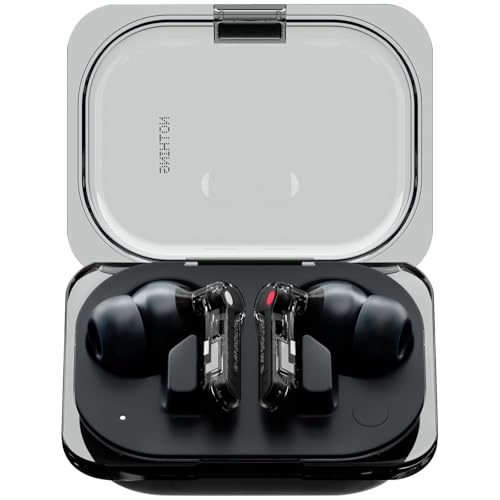
Nothing Ear (a)
Badge: The value pick — the full idea, friendlier altitude
- Noise cancelling in the listing: 45dB hybrid ANC
- Audio in the listing: Hi-Res Audio support
- App feature in the listing: advanced equaliser
- Connectivity in the listing: dual connection
- Microphones in the listing: six, for calls
- Playtime positioning in the listing: 42.5 hours total with the case
- Colour in the verified listing: black
Daily life with the Ear (a) is defined by how little it asks. The buds pair, stay paired, and swap between a laptop and a phone through the dual connection without the re-pairing ceremony lesser buds demand twice a day. The noise cancelling earns its headline on the commute — the low, constant machinery of trains and buses is exactly what hybrid ANC was built to hush — and the equaliser lets the sound be tuned to the owner rather than endured as the factory’s opinion. Calls, so often the value tier’s quiet failure, are treated seriously here: six microphones is a flagship’s census, and it shows in how voices survive a street. The case’s total playtime positioning means the charging habit is weekly rather than nightly, which sounds minor and compounds into the feeling that the buds are simply always ready.
Strengths
- Headline ANC, Hi-Res support, and a real equaliser at the value tier.
- Dual connection and a six-microphone call setup serve working listeners properly.
- Nothing’s design identity arrives intact — nothing about them feels like the cheaper ticket.
Trade-offs
- The flagship’s larger driver and broadest codec support live in the Ear instead.
- Fit is personal, as with all buds; the design’s shape will not suit every ear equally.
- Value is judged against a moving listing — the current figure must be checked, not remembered.
Best for: commuters, students, and working listeners who want the Nothing experience whole at its friendliest tier. / Not suited for: codec collectors and bass-first listeners, who should step up to the Ear.
Nothing Ear
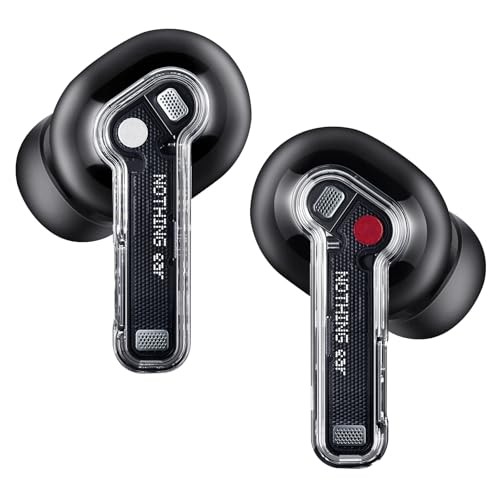
Badge: The flagship sibling — the idea at full altitude
- Driver in the listing: 11mm, with deep bass boost positioning
- Noise cancelling in the listing: 45dB hybrid smart ANC
- Codecs in the listing: Hi-Res Audio with LDAC and LHDC 5.0
- Microphones in the listing: six, for calls
- Playtime positioning in the listing: 40.5 hours with the fast-charging case
- Extra in the listing: ChatGPT support
The Ear is the same design language with the taps opened. The larger driver and its bass architecture give low frequencies a physicality the (a) approaches politely; the codec menu — LDAC and LHDC 5.0 beside the standard options — serves listeners whose phones and libraries can feed them; the smart ANC adds adaptive judgement to the raw cancelling figure. Even its case trades a little total endurance for fast charging, a flagship’s priorities in miniature: less waiting, more flagship. None of this makes the (a) a mistake. It makes the Ear the answer to a specific question — what does the idea cost with nothing held back — and readers who ask that question in those words already know their answer.
Strengths
- The fullest sound architecture in the line, with the broadest codec support.
- Smart ANC and fast charging give it a flagship’s daily manners.
- Same call seriousness and design identity as its sibling.
Trade-offs
- Its tier buys refinements many listeners will never audition, let alone need.
- Slightly lower total playtime positioning than the (a), traded for fast charging.
- Codec advantages only materialise with phones and sources that support them.
Best for: listeners who want Nothing’s idea complete — bass, codecs, and smart features included. / Not suited for: value-first buyers, for whom the (a) delivers the experience that matters.
The siblings compared
| Model | Positioning | Defining extras | Pick it when… |
|---|---|---|---|
| Ear (a) | Value tier, full idea | 45dB hybrid ANC, Hi-Res, advanced EQ, dual connect, 42.5H total positioning | You want the experience whole at the friendliest altitude |
| Ear | Flagship tier | 11mm driver, LDAC and LHDC 5.0, smart ANC, fast charging | You want the sound architecture and codec menu complete |
The table’s honest summary is that these buds share a philosophy and differ in depth. Choose by the listening you actually do — the services you stream, the phone you own, the bass you crave — and let the current listings arbitrate the rest at the moment you buy.
Buying guide: how to judge the deal without a printed price
Since this page refuses to print figures, it owes you a method instead — and the method is better than the figures, because it works on any day, in any sale season. Step one: decide the product first, using the sections above, until you can say which sibling you want and why. A deal on the wrong bud is not a deal. Step two: check the current listing at the moment of decision — check price on Amazon — and read the whole listing, not just the number: the exact model name, the colour, what is in the box, and who is selling and fulfilling it. Step three: compare the figure against the sibling’s current figure, because the honest value question in this line is internal — the gap between the (a) and the Ear on the day you buy is the real price of the flagship’s extras, and some days that gap is wide enough to decide for you. Step four: consider timing with a cool head. Earbud pricing breathes with seasons and launches; a reader who can wait for the category’s natural sale moments often does better, while a reader whose current buds just died should buy the right product today and decline to mourn the calendar. Step five: protect the purchase — keep the invoice, register nothing you do not need to, and spend the first week inside the return window testing fit in your real life, because fit is the one specification no listing can state for your ears.
Two warnings belong in any deal guide worthy of the name. The first is the counterfeit and grey-market shadow that follows any recognisable design: buy through the verified listing, be suspicious of prices that seem to belong to a different product, and remember that a warranty is part of what a legitimate figure buys. The second is accessory drift — the cases, tips, and chargers that gather around a tempting headline until the total no longer resembles the deal that attracted you. The buds arrive with what they need. Let the first month prove what else, if anything, your ears actually want.
How to set up the Ear (a) for your ears, your phone, and your day
Step 1: Fit before features
Try every supplied tip size in both ears — they may differ — and judge by the seal’s effect on bass and outside hush rather than by first-minute comfort alone. A correct seal is the foundation the ANC and the sound both stand on; an hour spent here outperforms any equaliser preset.
Step 2: Pair both devices you actually use
Connect the phone and the laptop, then practise the swap until it is boring. Dual connection only pays when its choreography is habit, and the week to build the habit is the first one.
Step 3: Tune the equaliser to one honest preset
Start flat for a day, then adjust in small steps toward the sound you reach for — a little warmth, a little clarity — and save one preset rather than a museum of them. Your ears adapt; a single honest tuning serves every genre better than five dramatic ones.
Step 4: Set ANC behaviour by environment
Decide your defaults for the commute, the office, and the street — full cancelling where machinery drones, transparency where traffic and colleagues must reach you — and put the gesture or control where your fingers will find it without looking.
Step 5: Learn the case’s rhythm
Note how your real days spend the buds’ charge, and settle a charging ritual for the case — a Sunday cable, a desk dock — that keeps the whole system ready without thought. Readiness, compounded daily, is the luxury this tier actually sells.
Common mistakes in earbud deal-hunting
The first is buying the figure instead of the fit — a bargain worn uncomfortably is the most expensive kind. The second is comparing across days: remembering a number from last month and judging today’s listing against a ghost, which is precisely why this page prints none. The third is mistaking the sibling — ordering the (a) while expecting the Ear’s codec menu, or the reverse — when the model names differ by a parenthesis and a world. The fourth is skipping the first-week fit test while the return window stands open, then living for years with a seal that was never right. The fifth is chasing the calendar past the point of reason: a needed product, well bought today, beats a theoretically cheaper one bought after a month of broken-bud commuting.
Final recommendation
For most readers, the Ear (a) is the recommendation — the Nothing idea complete where it counts, at the tier that made it famous, provided the current listing’s figure respects the value story when you check it. Step up to the Ear when your listening is codec-rich, bass-led, or simply flagship by temperament. Either way, buy the product first and the deal second: check the listing, confirm the model and the seller, test the fit inside the window, and then forget the transaction entirely — which is what well-bought earbuds, like all good tools, are for.
Frequently asked questions
Why does this guide not state the price or the saving?
Because both change constantly, and a printed figure would mislead within weeks. Our rule is to keep pages honest over time: judge the product here, then check price on Amazon at the moment you buy, when the figure is real.
Is the Ear (a) good enough, or will I regret not buying the Ear?
For streaming, commuting, calls, and everyday listening, the (a) is complete — its ANC, equaliser, and call setup are flagship-mannered. Regret enters only if your listening specifically wants the Ear’s larger driver, broader codecs, or smart ANC behaviours. Name your listening honestly and the answer follows.
How strong is the noise cancelling for commuting?
The listing’s 45dB hybrid figure places it in the serious class, and its natural prey is the low, constant noise of trains, buses, and aircraft cabins. Fit decides how much of that promise your ears receive, which is why the setup section begins with tips rather than features.
Can I connect the Ear (a) to two devices at once?
Yes — dual connection is among its listed features, and it is the one working listeners praise most: laptop for the call, phone for the walk, no re-pairing in between. Set both up in the first week and build the swapping habit early.
What should I check on the listing before buying?
The exact model name — Ear (a) versus Ear — the colour, the seller and fulfilment, what the box contains, and the current figure itself. Most deal disappointment is a reading failure rather than a pricing one, and it is entirely preventable in two careful minutes.
When is the best time to buy?
When you need them, at a listing you have read carefully. Seasonal moments can soften figures in this category, but a month of commuting on broken buds costs more — in pleasure and in sanity — than most calendar games repay. Buy the right product at a verified listing and let the timing be a bonus, not a strategy.
Related guides
the Momentum True Wireless 5 flagship rival
the Moondrop Space Travel 2, a budget alternative
the best wireless earbuds across every tier
the best noise cancelling earbuds
replacement tips and the fit they decide
the router that will stream to them
Fit, in depth: the specification your ears write themselves
Every earbud review eventually confesses that fit is destiny, and this one confesses early and in detail. The ear canal’s shape decides the seal; the seal decides the bass, the noise cancelling’s real-world depth, and whether the bud is still comfortable — and still in — at hour three. Nothing’s bud shape is a considered, mainstream geometry that suits a wide range of ears, but “a wide range” is not “yours,” and the only test is wear. Judge fit across a full day rather than a first minute: the walk, the stairs, the meal where jaw movement works buds loose, the call where you talk and nod. A bud that survives that day without adjustment has passed the only examination that matters, and no deal figure, however tempting, should talk you into keeping one that fails it. Conversely, a bud that passes has earned its price whatever the calendar said — a truth owners understand in their bones and deal pages rarely mention.
Sound character: what the Nothing tuning is reaching for
Nothing’s sound has a personality its owners describe consistently: lively rather than laboratory-flat, with energy in the presence region that makes voices and guitars step forward, and a low end that aims for enthusiasm within discipline. The equaliser’s presence matters more here than in most buds, because it converts that personality from a verdict into a starting point — the bass-shy can warm it, the treble-sensitive can calm it, and the podcast listener can push voices further forward still. High-resolution support is the quiet credential in the background: with a phone and a service that feed it, the buds can accept the better signal, and while the difference over a good standard connection is a refinement rather than a revelation, refinements are what daily listening is made of. Judge the sound across your own library’s awkward corners — the live recording, the dense mix, the quiet acoustic track — rather than a demo playlist chosen to flatter, and you will know the tuning the way its designers hoped: as a companion, adjustable to taste.
Calls and the working day
Six microphones is a number with a job: separating your voice from your environment so the person at the other end hears a colleague rather than a weather report. In practice, the (a)’s call manners are among its strongest value arguments, because calls are where cheap buds traditionally confess their tier — the windy street, the station platform, the kitchen with the kettle on. Wind remains every bud’s honest enemy and no array repeals physics, but the difference between a three-microphone shrug and a six-microphone effort is the difference between repeating yourself and being heard. For the hybrid worker whose day alternates between a laptop’s calls and a phone’s, the dual connection completes the picture: the buds follow the work rather than the device, and the working day stops containing the small, repeated friction of re-pairing that lesser setups treat as normal.
Battery habits and the meaning of a total figure
The playtime figures in these listings are totals — buds plus the case’s reserves — and reading them correctly is a small literacy worth having. The buds themselves carry a working day of listening between charges in ordinary use; the case refills them several times before it needs its own cable, which is how the total is built. The habit this enables is the one owners value: the case lives in a bag or on a desk, the buds return to it between uses, and the whole system asks for a cable roughly weekly rather than nightly. ANC strength, volume, and call time all spend the budget faster than quiet music does, so treat the headline as the ceiling of a good week rather than a promise about your worst one. Fast charging on the flagship sibling reframes the same story — less total, quicker recovery — and neither philosophy is wrong; they are answers to different anxieties, the traveller’s and the forgetful charger-owner’s, both of which are honourable.
The design question: transparent, recognisable, and not for everyone
Nothing’s transparent aesthetic is the rare design language in earbuds that a stranger can name, and it divides opinion with unusual honesty. Admirers see engineering worn proudly — the bud as a small machine that shows its workings — and enjoy owning an object with a point of view. The unmoved see a style that will date, or simply prefer their technology invisible. Both reactions are legitimate, and because you will look at these buds daily for years, yours deserves a vote in the purchase — a vote no deal should outshout. It is worth adding that the design is not decoration pasted on: the case and buds are shaped for pockets and one-handed use, and the distinctiveness has a practical dividend in a world of identical white buds, which is that yours are unmistakably yours in any shared charging pile.
Students, commuters, and the value tier’s true constituency
The (a)’s natural owners share a pattern rather than a demographic: their listening is daily, mobile, and woven through obligations. The student’s day — lectures, library, bus, part-time shift — is a sequence of environments the buds must handle without ceremony, and the dual connection, the ANC, and the weekly charging rhythm map onto it precisely. The commuter’s calculus is similar with the volume raised: the cancelling is not a luxury but the difference between arriving composed and arriving frayed, and a bud that makes the train quieter is buying something no timetable sells. For both, the value tier is not a compromise they endure but the correct altitude for a tool that lives in pockets and gets replaced on a student’s or a commuter’s schedule when loss or damage eventually calls. Buying the flagship for a life of buses is not wrong, exactly; it is simply a different risk profile, and this guide’s job is to make sure the choice is made knowingly, with the ears — not the marketing — as the constituency.
Losing one bud, and other ownership realities
A value guide should plan for the accident statistics of small objects. Earbuds get left in pockets, dropped between train seats, and adopted by sofas, and the mature response is procedural rather than mournful: use the find-my features your phone and the buds’ ecosystem offer before assuming the worst, keep the case’s habit of home — one pocket, one desk corner — because most losses are really misplacements with good hiding skills, and check the maker’s support for single-bud replacement before assuming a whole new set is the only path. Owners who build the home-habit early lose buds rarely; owners who treat the case as a loose change dish lose them on schedule. None of this is glamorous, and all of it is worth more across three years of ownership than any single specification in this review — a sentence that applies to nearly every section of this guide, which is rather the point of writing it at this length.
Gifting the Ear (a): the rare tech gift that fits its recipient
Earbuds are gifted constantly and chosen carelessly, usually by colour and headline. The Ear (a) is an unusually defensible gift in its class precisely because its virtues are the universal ones — fit that suits most ears, cancelling that helps any commute, calls that respect any job, a design with enough personality to feel chosen rather than defaulted. The giver’s remaining duties are small: choose the colour with the recipient’s wardrobe in mind, include the receipt in the way your family’s customs allow, and resist pre-configuring anything — the first pairing is part of the gift’s pleasure. If the recipient’s listening turns out to be flagship by temperament, the exchange path to the Ear is a happier errand than most returns, because the product knowledge transfers completely: same app logic, same design language, deeper water. A gift that can grow with its owner’s taste is a gift that rarely becomes a drawer resident, and in the economy of presents, that is the metric that matters.
Exercises, runs, and the buds’ life outdoors
Many owners’ second use for a bud like this is movement — the run, the gym, the cycle commute — and the honest requirements there are fit security and environmental awareness rather than any specification. A bud that seals well for the desk usually holds for the run, provided the tip choice was made with the full-day test this guide recommends; a bud that migrates during meals will migrate at kilometre three. Transparency mode is the outdoor feature that matters most, because traffic, bicycles, and other humans are information a runner needs, and the discipline of using it — cancelling for the train, transparency for the road — is a safety habit as much as a listening one. Sweat and weather deserve a calm sentence: treat the buds as the water-resistant tools of their class rather than as swim equipment, dry them before they return to the case, and they will serve the training schedule as faithfully as the commute. The value tier’s replaceability, mentioned earlier, completes the picture — an active life is a risky one for small objects, and there is wisdom in wearing the tier whose loss would sting least on the runs where loss is likeliest.
Why we do not chase the calendar: a note on how this category’s pricing actually behaves
Deal culture trains buyers to treat every purchase as a timing puzzle, so it is worth describing the terrain plainly, without figures. Earbud listings in this class soften around the industry’s big retail moments, around successor launches, and around the quiet weeks when a colour needs encouragement — and they firm up just as predictably when a model is new, praised, or scarce. A buyer armed with that rhythm and a decided product can afford patience; a buyer whose need is immediate should understand that the difference patience buys in this category is usually a modest one, worth having and rarely worth suffering for. The deeper discipline is the one this guide opened with: the product decision is the large decision, the timing is the small one, and confusing their sizes is how shoppers end up with the wrong bud at a wonderful figure, telling themselves it was a bargain while their ears file a dissent they will hear every day for years.
The app: where the buds’ second feature set lives
Modern earbuds are half hardware, half application, and Nothing’s app is where the (a)’s advanced equaliser, its control customisation, and its firmware life reside. The ownership habits that matter are few and learnable in an evening: update the firmware when it offers, because buds in this class genuinely improve their manners across their first year; customise the touch or press controls to the two or three gestures your day actually uses, and disable the ones your fingers trigger by accident; and revisit the equaliser after a month, when your ears have a settled opinion rather than a first impression. Owners who do those three things describe their buds as personalised instruments. Owners who never open the app own the same hardware and a fraction of the product — a gap this guide exists to close, since the app costs nothing and the closing takes ten minutes.
Flights, focus, and the long-haul virtues
Air travel is the noise cancelling bud’s finest hour and the (a)’s specification reads like it was written at altitude: hours of engine drone are the exact prey of hybrid cancelling, the case’s total endurance covers the longest routes with the layovers included, and the buds’ smallness spares the traveller the headphone case that eats a carry-on’s corner. Two habits complete the airborne picture: download before departure, since the plane’s connection is nobody’s friend, and keep the buds’ transparency one gesture away for the announcements and the trolley’s questions. Back on the ground, the same kit serves the open-plan office’s afternoon focus and the library’s silence with equal manners. A product that handles the year’s longest day and its ordinary Tuesdays with the same competence has made the value argument in the only currency that compounds — days, well served, in numbers nobody needs to print.
Care, cleaning, and the two-year ear
Earbuds age at their contact points, and a small liturgy of care keeps a pair like this sounding at year two as it did in week two. The tips gather the world; wash or replace them on the rhythm the maker suggests, and hear the bass return like an apology. The case’s charging contacts and the buds’ own should meet clean — a dry cloth, occasionally, is the whole ceremony — and the case itself should live dry, since it sleeps in bags beside water bottles and weather. Batteries in this class reward the same gentleness as any lithium cell: no heroics, no leaving them baked in a hot car, a charge when the case asks rather than a panic when it begs. None of this is the stuff of deal pages, and all of it decides whether the deal you struck remains one. A well-kept value bud at year two is a better purchase than a neglected flagship at month six, which is the final, quiet argument for buying the tier you will actually look after.
The verdict restated, for the reader who arrived with one question
You came asking whether the Ear (a) is a deal, so here is the answer in the form this page is allowed to give it, which turns out to be the form that stays true. The product is genuinely good — cancelling, calls, equaliser, connection manners, and design all at a level its tier rarely assembles — so the deal question reduces to a comparison you can perform in one visit: the current figure for the (a), the current figure for its flagship sibling, and the honest value of the gap between them for your listening. If the (a)’s figure sits where its value story says it should — and on most days, in most seasons, it does — then yes: this is the rare deal that is also simply the right product, bought calmly, with the fit test still to come in your own first week. That is as precise as honesty permits, and considerably more useful than a number that would have expired before your buds arrived.
Second pair, spare pair, and the household fleet
One last ownership pattern deserves a place in a value guide, because it explains so many repeat purchases in this class. A first pair of good buds reorganises a listener’s expectations, and the second pair — for the gym bag, the partner, the teenager whose own commute has begun — is bought with none of the first pair’s research anxiety. The (a)’s tier makes it the natural fleet bud: consistent app, consistent sound, a loss that would annoy rather than devastate. Households standardising on one bud gain the small mercies of shared chargers, shared tips knowledge, and troubleshooting that transfers between owners. If your household is approaching that fleet moment, the advice of this whole article compresses into it comfortably: decide the product once, verify the listing each time, and let the fleet grow at the pace of actual need rather than at the pace of offers.
Buy the first pair well, then — product first, listing verified, fit proven in a week of real days — and the fleet, the gifts, and the replacements will all inherit the same good decision. That inheritance, multiplied across a household and a few years, is worth more than any single day’s saving this page could have printed. It is also, not coincidentally, the best definition of a deal we know.
A glossary for the deal aisle
Four terms do most of the work in listings like these. Hybrid ANC combines microphones outside and inside the ear to cancel noise across a wider range than either position manages alone — the architecture behind the figure in this bud’s listing. A codec is the language in which music travels from phone to bud; the standard ones are universal, and the high-resolution ones named in the flagship’s listing are spoken only by phones and services that support them, which is why they reward an audit of your own kit. Dual connection is the buds’ ability to hold two devices at once and follow the one that is playing. And total playtime, as this guide noted, is a household figure — buds plus case — best translated into your own days before it is compared against anything. A reader holding those four definitions can walk the entire earbud aisle, deal banners and all, with the calm of someone who knows which numbers describe their life and which merely describe a laboratory.
What owners talk about at month six
Long-term owner conversation in this class converges, and its themes are a better specification than any banner. Nobody at month six discusses the transaction. They discuss the seal that still holds on the run, the call that survived the building site next door, the case that has lived in a coat pocket through a season of weather, the equaliser setting they have not touched since spring because it simply sounds like their music now. They discuss, occasionally, the friend who bought the flagship and the friend who bought the market’s cheapest — and the consensus that forms, unforced, is that the middle purchase aged best: enough product to respect daily, little enough extravagance to use without ceremony. That is the (a)’s whole thesis, stated by the only reviewers whose scores never expire. Join them by the route this guide has marked: product first, listing verified, fit proven, calendar unconsulted. The deal will have taken care of itself, the way real deals — the kind measured in years of good days — always do.
Month six is waiting, and it does not care what the figure was. It cares that the buds fit, that the calls land, that the case is where your hand expects it at the station door. Buy for month six and every month before it will look after itself.
One more reader: the upgrader from wired buds
A quiet constituency arrives at this page from an older world: listeners whose wired buds finally failed, facing wireless for the first time with justified suspicion. Their questions are the good ones — will the connection hold, will the sound survive the translation, will the charging become a second job — and the (a) answers them about as kindly as the category can. The connection, in modern Bluetooth practice, is the least of it: stable, quick to pair, and forgettable in the way infrastructure should be. The sound, judged honestly, trades the wired bud’s absolute simplicity for a freedom most converts refuse to surrender within a month — no cable to snag on the door handle, no phone tethered to a pocket by a thread. The charging is the one genuine new obligation, and the case’s weekly rhythm is the gentlest version of it the category offers. If that is your crossing, make it at this tier, with this completeness, and let the flagship conversation wait until wireless has earned your trust. It will not take long.
And to the wired loyalist who closes this page unconvinced: keep your cable with our respect, and know that the door this guide describes will still be open — at this tier, with this completeness — on the day the last wired pair in the drawer gives up. Some crossings are better made unhurried.
The shortest honest summary we can print
Good buds, honest tier, complete where it counts, with a flagship sibling for the listeners who want the rest. Check the current listing, verify the model and the seller, prove the fit in your first week, and then stop thinking about the purchase entirely — the surest sign, in this category, that the deal was real. Everything else in these thousands of words has been commentary on that paragraph, offered in the belief that a reader who understands a product buys it better than a reader who merely catches it on offer. May your commute be quieter, your calls clearer, and your case always where your hand expects it. That is the whole promise — the product’s, and this page’s.
One practical postscript: bookmark the listing rather than this page’s memory of it, because the listing is the living document and this guide is the map. Maps age gracefully; prices do not — which is, for the last time in this article, precisely why the map is the part we chose to write.
Why “a deal” is finally a question about you
Every deal page on the internet pretends the bargain lives in the product, and every honest one eventually admits it lives in the match. The same figure is a steal for the commuter whose ears fit and whose calls matter, and a waste for the bass collector who needed the flagship all along. That is why this guide has spent its length on fit, on calls, on codecs and commutes, rather than on the arithmetic it refuses to print: the match is the deal, and the match can only be audited by the person whose ears, days, and devices are being matched. Audit yours with the tools here — the product sections for the ears, the checklist for the listing, the first week for the truth — and the question you arrived with answers itself, on any day of the year, at whatever figure the listing is honestly asking.
Answer it well, and the buds disappear into your days the way the best purchases do — present in every commute, absent from every worry. That disappearance, not a figure on a page, is the deal worth hunting.
Hunting, briefly, for the reader in a hurry
If the whole guide must shrink to a pocket card, it is this. Decide between the siblings by your listening, not by the banner. Read the listing like an inspector — model, colour, seller, box. Prove the fit across one full day inside the return window. Keep the case in one home and the firmware young. And measure the bargain at month six, in quiet commutes and clear calls, rather than at the checkout, where every bargain looks identical. Five habits, no figures, and a pair of buds that will still be earning their place when the sale banners that sold them are advertising something else entirely.
Carry the card, skip the banner, and let your ears cast the deciding vote. They are, after all, the only constituency in this entire transaction that cannot be fooled — and the only one that has to live with the result.
Their verdict, delivered over months of ordinary mornings, is the only review score this page has ever trusted.
Trust it, and go quieter.
The train, at least, will oblige.
It always does, eventually.
Comparing against the wider market without leaving the page
Some readers will ask how the (a) stands against the famous names its price neighbours, and a value guide should answer in the terms that survive a shop visit. Against the default buds bundled in phone ecosystems, the Nothing pair’s advantages are independence and tuning: they serve any phone with the same app and the same equaliser, rather than reserving their best manners for one brand’s handsets. Against the no-name end of the market, the difference is the unglamorous infrastructure — microphones that make calls respectable, firmware that improves, a case whose hinge will still feel like a hinge next year. Against the true flagships, the (a) concedes the last refinements of driver, codec, and adaptive intelligence, and keeps everything a commute can actually audit. That is a defensible position in any company, and it clarifies the purchase: you are not buying the market’s ceiling or its floor, but its most thoughtfully judged middle — the altitude at which, for most ears and most days, the returns on further spending quietly diminish. Readers who recognise their own listening in that sentence have found their bud; readers who feel a small protest rising are probably flagship listeners, and the Ear, one section up, has been waiting for them all along.
Trust the protest or trust the recognition — either way, trust your own response over this page’s preference, because the page will not be wearing the buds. You will, daily, and that is the entire argument for choosing by the listening rather than by the label.
Choose accordingly, and the next sound you hear through them — a platform announcement, politely cancelled — will be the sound of a decision aging well.
They tend to do that, good decisions.