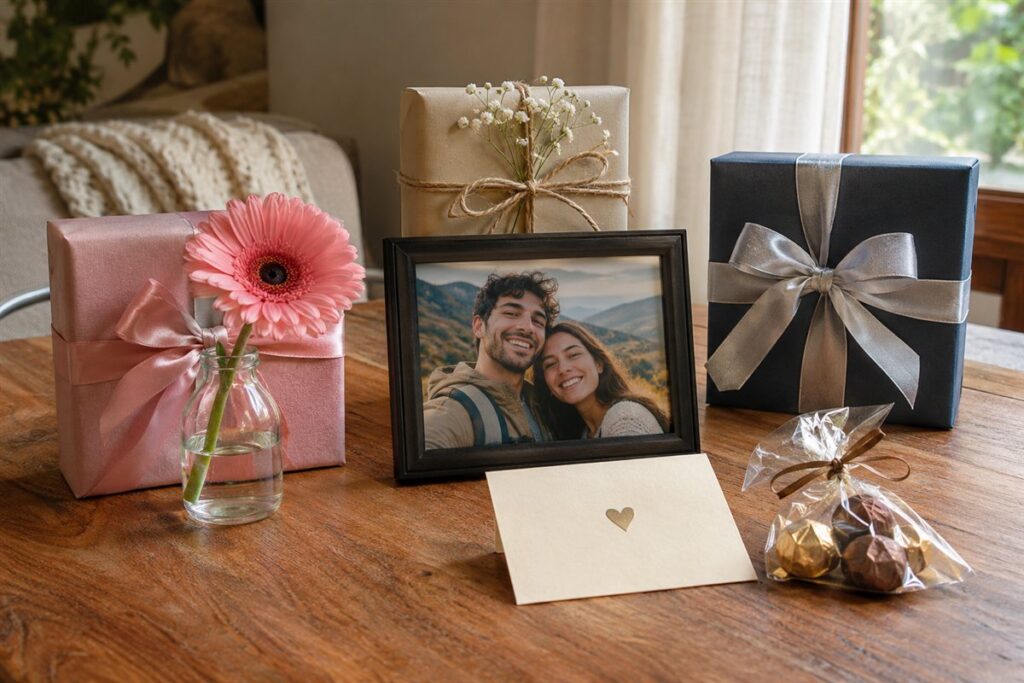
A gift becomes meaningful when it matches the stage and depth of the relationship. A new love, a long-term soulmate and a close friend each need a different level of intimacy. Use the three sections below to find the right tone.
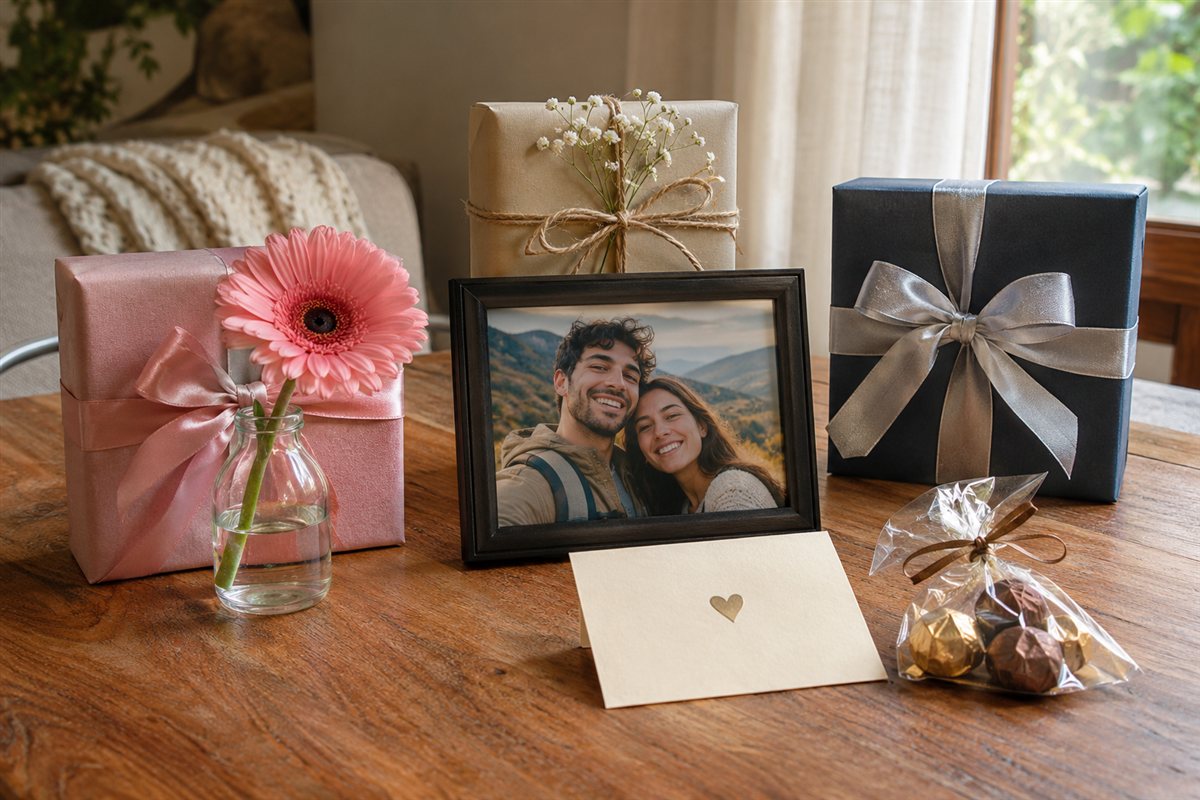
For a New Love: Curious and Light
Early on, meaning comes from showing you listened. Refer to something they told you on a first date, and keep the gesture small enough to feel easy.
- A book by an author they mentioned, with a short note inside.
- A snack or drink from the place where you met.
- A walk to a spot they love, followed by a photo of the two of you.
In this guide
For a Soulmate: Deep and Personal
With a long-term partner, meaning lies in shared history. You can go further because you know what matters.
- Choose a milestone, such as your first home, a trip or a hard time you overcame together.
- Gather photos, tickets or short messages connected to it.
- Arrange them in an album or frame, with handwritten captions.
- Present it at a quiet moment and read one caption aloud.
Another strong option is a letter that looks forward as well as back, describing something you hope to do together.
For Friends: Warm and Appreciative
Valentine’s Day is also a chance to thank friends. Skip romantic symbols and focus on gratitude.
- A card that names one thing they did for you this year.
- A shared outing such as a coffee, a hike or a film.
- A small framed photo from a favorite moment together.
Comparison at a Glance
| Relationship | Tone | Gift direction |
|---|---|---|
| New love | Light and curious | Small, personal, easy to return |
| Soulmate | Deep and nostalgic | Albums, letters, shared experiences |
| Friend | Warm and grateful | Cards, outings, small keepsakes |
Writing the Card for Each Relationship
The words you write can matter as much as the gift. For a new love, keep the card friendly and specific: mention a moment that made you smile and say you are glad to know them. For a soulmate, speak about what you have built, using plain sentences about shared routines and goals. For a friend, thank them for a particular act of kindness. In every case, use your own voice, avoid copying long poems and sign the card by hand. A short, sincere message gives the gift its meaning, whatever the relationship.
Reading the Stage of Your Relationship Honestly
Before choosing anything, take a moment to describe your relationship in plain words. How long have you known each other? How often do you talk about feelings or plans? Have you said anything about exclusivity? A gift that outpaces the relationship can feel heavy, while one that falls behind it can feel cold. The goal is a match, not a maximum.
Watch for clues in how the other person behaves. Someone who plans ahead, remembers small details and talks about next month is signaling a different stage from someone who keeps plans loose. If you are unsure, aim for the lighter end of the range and let their response guide you. It is easier to deepen a gesture later than to retreat from one that was too large.
- Early dating: something small, personal and easy to accept.
- Established couple: something that acknowledges shared plans and history.
- Long-term partner: something that recognizes how you have grown together.
- Close friend: something that says thank you without romantic overtones.
It also helps to consider cultural and personal comfort. Some people love public celebrations of the day and others find it awkward. If you do not know, ask a mutual friend or raise the topic in conversation. Showing that you consider their comfort is a meaningful gesture in itself.
Experiences Over Objects
Many people remember shared moments longer than they remember items. An experience gift gives you something to do together and builds a memory. It does not need to be expensive. A sunrise walk, a visit to a market, a cooking session or a trip to a museum can each become a story you tell later.
To choose one, think about what they enjoy. Do they like being outdoors, tasting new food, learning something or watching performances? Match the activity to their interests, not to what you would do. Plan the details in advance, including transport, timing and bookings, so the day feels easy. If the activity is physical, check that it suits their fitness and comfort.
- List three activities they have mentioned wanting to try.
- Choose one that fits the time and money you have.
- Check opening hours and any need to book.
- Prepare a small note or memento to mark the day.
- Take a few photos, then print or share the best one afterward.
For a new love, keep the activity short and relaxed so that neither person feels trapped. For a soulmate, you can choose something with more meaning, such as returning to a place that matters to you. For a friend, a shared activity is a lovely way to say thanks, and splitting costs can be fine if you agree beforehand.
Handmade and Personalized Ideas
A handmade gift shows time and attention, and it does not need advanced skill. The key is personalization. Include a detail only the two of you would know, such as a shared joke, a phrase, a place or a date. That detail turns an ordinary object into a personal one.
Simple ideas include a small photo book with short captions, a recipe card collection of dishes you cooked together, a map with marked places that matter to you or a handwritten certificate for a future shared plan. For friends, a mix of their favorite snacks in a box with a note, or a short list of things you admire about them, can be moving. Check any allergies or dietary needs before including food.
- Choose quality paper, pens or frames when you can, since materials affect the final impression.
- Keep text short and sincere, avoiding exaggeration.
- Allow time for printing, drying and assembly.
- Do not include private messages in anything that might be seen by others.
Be careful about photos. Ask yourself whether the person would be comfortable seeing a particular image on display. Respect privacy, especially in new relationships. If you use printed photos, check the print quality and resolution before ordering, and allow extra time for delivery.
Gift Etiquette and What to Avoid
A few pitfalls can undermine a thoughtful gift. Avoid overly expensive presents in a new relationship, since they can create pressure or discomfort. Avoid gifts that carry a strong message you have not discussed, such as jewelry with symbolic meaning or items that suggest moving in together. Avoid gifts that reflect your interests more than theirs, unless they have expressed enthusiasm for the same thing.
Be mindful of timing and setting. Give a gift in private if you think it might embarrass them, and in company if they enjoy sharing. Do not hand over a gift while distracted. Say a few words about why you chose it, and then let them respond naturally. If the reaction is mild, do not take it personally; some people need time to absorb a gesture.
- Do not compare the gift to what others receive.
- Do not include a price tag or mention the cost.
- Do not expect a gift of equal size in return.
- Do not use the gift to test their feelings.
With friends, be especially clear. A romantic-looking gift can send mixed signals, so choose neutral items such as a book, a plant or a shared meal. If a friend is going through a hard time, a quiet gesture of support may matter more than anything wrapped.
After the Day: Keeping the Gesture Going
The most meaningful gifts do not end when the wrapping comes off. A follow-up shows that the gesture was sincere and not just tied to the date. For a new love, you might suggest a second outing related to the first, or send a message later in the week about something you enjoyed. For a soulmate, you might add a line to a shared journal or plan a date a few months ahead. For a friend, check in a week or two later, and follow through on any plan you mentioned.
Think about how to preserve what you made. If you gave an album or letter, suggest keeping a box where you both add small mementos over the year. If you shared an experience, collect the tickets or photos and add them to a collection. These small habits turn a single day into an ongoing story.
If the gift did not land as you hoped, be gracious. Ask gently what they would have liked, and use the answer as information for next time. Honest conversations about preferences strengthen relationships, whether romantic or platonic.
Finally, give yourself credit for effort. Making time, listening and choosing with care matter more than perfection. A sincere, well-matched gesture, even a small one, will usually be remembered long after the details of the day fade.
Matching Gifts to How Each Person Receives Care
People feel appreciated in different ways, and a gift lands best when it speaks the language the recipient already understands. Some feel valued through words, so a heartfelt letter carries more weight than any object. Others respond to time, and an unhurried afternoon together means more than something wrapped in paper. Some love practical help, others enjoy touch and closeness, and many simply light up at a thoughtful physical present.
You can often guess which style applies by watching how a person shows care to others. Do they send long messages, plan outings, fix things around the house, or bring small treats? Whatever they offer freely is usually what they hope to receive. Matching your gesture to that pattern makes even a small gift feel precisely right.
Quick guide by style
- Words: a letter, a recorded message, or a framed quote with a personal note.
- Time: a planned outing or a shared project, such as cooking a new dish together.
- Help: taking over a dreaded task, or organizing something they have been putting off.
- Objects: a small item tied to a conversation you had.
- Closeness: a cozy evening with candles, a blanket, and no distractions.
Treat this as a loose guide and not a strict test. People mix styles, and your own observation is the best tool you have.
Scaling the Gesture to the Relationship
Giving too little can hurt, but giving too much can create pressure or confusion. The table below describes how the size and tone of a gesture usually fits each situation.
| Relationship | Gesture size | Tone to aim for | Example direction |
|---|---|---|---|
| New love | Small to modest | Playful and attentive | A treat tied to something they mentioned |
| Growing partnership | Moderate | Warm and encouraging | A shared experience with a short note |
| Long-term soulmate | Personal and meaningful | Deep and sincere | A keepsake that marks shared history |
| Close friend | Small | Cheerful and appreciative | A favorite snack with a funny card |
If you are unsure which row applies, pick the smaller gesture and add a sincere message. A kind note can always make a modest gift feel generous, while an oversized gift can never fully repair a lack of warmth.
Gifts That Grow From Shared Interests
Common interests give you a ready-made source of ideas that feel natural for any relationship. Think about what you both enjoy and look for a small way to honor it.
- Food lovers: a hand-picked tasting box of treats from a local maker, or a cooking session at home.
- Readers: a book you loved with a note on the inside cover explaining why it reminded you of them.
- Music fans: a playlist built around memories, written out as a tracklist on a card.
- Outdoor enthusiasts: a trail map of a place you plan to walk, with a picnic to follow.
- Creative souls: quality drawing or craft supplies and an invitation to make something together.
- Homebodies: a candle, a throw, and a promise of a quiet movie night.
The best of these gifts open a conversation. When someone unwraps a book and reads your note, they learn how you see them, and that recognition is the real present. Avoid buying something just because it is on trend; connect it to a moment you remember.
Planning Ahead Without Overthinking
A little planning prevents panic. Give yourself a simple timeline and the work becomes pleasant instead of stressful.
- Three to four weeks before: note ideas and listen for hints in conversation.
- Two weeks before: choose a direction and place any orders that need delivery time.
- One week before: write the card or message and arrange any reservations.
- Two or three days before: wrap the gift, check that everything has arrived, and prepare a backup plan.
- The day itself: keep the schedule relaxed and focus on being present.
Always confirm delivery timing and return terms with the seller or the product listing, especially for personalized items, which are often final once made. If something arrives late, have a small fallback ready, such as a handwritten coupon for a future outing.
Marking the Day With a Group of Friends
Friendship deserves its own celebration, and a group gathering can be wonderful. Host a casual evening with homemade snacks, a shared game, and a small token for each guest. Keep the mood warm and low pressure; the point is to say thank you for being there, not to compete over presents.
If you are exchanging gifts, agree on a small limit in advance so nobody feels awkward. A draw where each person gives to one other works well and keeps the effort manageable. Alternatively, ask everyone to bring a favorite treat or a short written appreciation to read aloud. These moments often become the most cherished part of the day.
For friends who live far away, a video call with a shared dessert or a parcel timed to arrive on the day keeps the connection alive. Whatever the format, specific kindness beats generic gestures every time.
When Expectations Do Not Match
Sometimes one person treats the day as important while the other barely notices it. A calm conversation beforehand avoids hurt feelings. Ask lightly what each of you would enjoy, or agree that you will keep things simple this year.
If you receive a gift that feels larger or smaller than expected, respond with gratitude first. You can talk about the difference later, privately and kindly. If you realize you have given too much too soon, do not apologize repeatedly; simply let the relationship settle at its own pace.
Remember that the aim is connection. A thoughtful message, a shared laugh, or an hour of full attention can outweigh any object. Keep the focus on the person in front of you and the gesture will find its own proportions.
Long-Distance Ideas That Feel Close
Being apart on the day does not have to dim it. The aim is to create a shared moment even when you cannot share a room. Plan a call at a set time and arrange for both of you to have the same small treat, so that you are eating or drinking together in different cities. Send a parcel that is meant to be opened during the call, so you can watch the reaction in real time.
Written and recorded gifts shine across distance. A series of numbered notes, one to open each day of the week leading up to the date, builds anticipation and keeps you in their thoughts. A voice message you record yourself, telling a short story about a favorite memory, can be replayed whenever they miss you.
Simple long-distance combinations
- A parcel containing a letter, a small treat, and a photo of a place you both love.
- A shared playlist, with each person adding a song and explaining the choice.
- A movie evening watched in sync with a running chat.
- A planned future trip, presented as a hand-drawn ticket.
Gentle Ways to Handle Nerves and Uncertainty
Many people feel anxious about this holiday, especially when a relationship is new or a friendship is changing. Worry often shows up as overspending, overplanning, or avoiding the day altogether. A better approach is to think small and sincere.
Write down what you truly want the other person to feel: appreciated, noticed, or delighted. Then choose the simplest action that creates that feeling. A short message can do the job as well as an elaborate plan. If you are afraid of sending the wrong signal, include a clear and kind line, such as telling a friend how glad you are to have them in your life.
Give yourself permission to be imperfect. A slightly crooked ribbon or a note with a crossed-out word reads as human and warm. The people who care about you will remember your attention, not the flawlessness of the wrapping.
Quick Checklist
- Have I thought about how this person likes to receive care?
- Does the size of the gesture suit the stage of our relationship?
- Is there a personal note, however short?
- Have I checked delivery dates and return terms?
- Do I have a gentle backup plan if something goes wrong?
With these questions answered, you can enjoy the day with confidence and sincerity.
Calibrating the Gesture: A Simple Intensity Scale
Most gift anxiety comes from misjudging intensity — giving at the wrong level for the relationship’s actual stage. A simple internal scale helps. At the lightest level sit gestures of attention: a remembered detail, a small favourite thing, an hour of your time. In the middle sit gestures of effort: something made, gathered or arranged over days, clearly personal but not heavy. At the top sit gestures of commitment: shared experiences planned ahead, keepsakes of joint history, words that name the future. None is better than another; each belongs to a stage, and trouble starts when the level and the stage disagree.
Read the stage from evidence, not hope. How long, how exclusively and how openly have you been together? What have they given you — not in objects, but in time, introductions and confidences? A gift pitched one level above the evidence can still delight if it is light in tone; pitched two levels above, it tends to create pressure, because the receiver feels a debt they did not agree to. When in doubt, give at the level of the evidence and let warmth of execution, not size, carry the extra feeling.
- Sort your idea into attention, effort or commitment before buying anything.
- Read the stage from time, openness and what they have shared with you.
- One level up, delivered lightly, can charm; two levels up usually burdens.
- When unsure, match the level and raise the care instead.
The scale also protects long relationships from coasting. Soulmates sometimes receive less thought than new loves because the giver assumes the history speaks for itself. It does not; history is the raw material, not the gift. The album, letter or experience that works a shared milestone is an effort-level gesture made from commitment-level material — and it is exactly the combination that long partners most often say they want.
For New Love: The Art of the Light Touch
Early gifts teach the other person how you pay attention. The strongest early gestures reference small, recent evidence: the author they mentioned once, the snack from the neighbourhood they grew up in, the song playing when you met. Such gifts say “I listened” without saying anything heavier, and listening is the quality every new partner is quietly testing. Keep the object itself modest and returnable in spirit — easy to enjoy, easy to keep, carrying no obligation to display, wear or reciprocate at scale.
Experiences suit new love when they extend what is already working. A walk to a place they love, a market visit, a second trip to the cafe of a first date — these continue the story rather than escalating it. Avoid experiences that imply a future far ahead, like trips booked months out, unless the relationship has already begun making such plans in words. The gift should feel like a next page, not a leap to a later chapter.
- Reference something they mentioned once; remembered detail is the early gift.
- Keep objects modest, enjoyable and free of display obligations.
- Choose experiences that continue the present story rather than fast-forward it.
- Write cards warmly and briefly; let the relationship write the long letters later.
Watch their reaction as information, not verdict. Delight tells you the calibration was right; visible discomfort usually means the level, not the sentiment, missed. Adjust without drama next time. New relationships are built from exactly this loop — gesture, response, adjustment — and a giver who learns quickly is giving the most promising gift of all: evidence of attentiveness.
For Soulmates: Working the Shared Archive
Long relationships hold an archive nobody else can access: the trip that went wrong hilariously, the meal from the first flat, the phrase one of you coined in a hard year. Gifts built from the archive are unmatchable by any shop, because their value is locked to your history. The craft lies in selection — choosing the memory with the most warmth per square inch — and in presentation simple enough to let the memory speak. One framed photograph with a handwritten caption often outperforms a lavish object with no past.
Letters for soulmates can look in both directions. Backward: name what the years have actually built, in specifics — the routines, rescues and jokes — rather than in general praise. Forward: describe one thing you still want to do, learn or see together, concretely enough to start planning. Partners in long relationships consistently report that the forward part moves them most, because it answers the quiet question every long love asks: are we still going somewhere? A page that answers it is a serious gift.
- Mine the shared archive: trips, hard years, private jokes, first places.
- Select for warmth and present simply; one strong keepsake beats a pile.
- Write letters that look forward as concretely as they look back.
- Revive an early ritual — a walk, a dish, a place — as a living gift.
Also consider the gift of relief: taking a burden off a partner’s plate for a season, arranging the thing they keep postponing, or giving time in a form they can actually spend. In established relationships, time and relief are currencies as real as romance, and a partner who feels genuinely lightened by your gift will remember the feeling long after decorative objects are forgotten.
For Friends: Gratitude Without Awkwardness
Friendship gifts on Valentine’s Day succeed when they are specific in thanks and light in symbolism. Name the act you are grateful for — the lift to the airport, the soup during illness, the introduction that changed your year — because unnamed gratitude feels like a greeting card, while named gratitude feels like being seen. Keep the token small and the words central: a card with a real sentence in it, plus coffee, a book they will actually read, or a photograph from a day you both still mention.
Group dynamics deserve a thought. If you thank one friend in a shared circle, consider whether others will feel pointedly excluded; sometimes the answer is a small gesture to the group and a private word to the individual. Timing helps too: a friend gift given a day early or late reads as its own occasion and avoids any appearance of competing with romantic gifts, which keeps the gesture in its proper, affectionate register.
- Name the specific kindness you are thanking them for.
- Keep tokens small and words central.
- Mind the wider circle; pair private thanks with inclusive gestures where needed.
- Give on a slightly different day to keep the occasion distinct.
Friendship is also the category where humour is safest. An in-joke made physical — the terrible souvenir recreated, the snack from a shared trip — celebrates the friendship’s own archive, which is the same principle that powers soulmate gifts, tuned to a lighter key. The thread connecting all three relationships is identical: meaning comes from evidence of attention, scaled to the bond.
When the Relationship Is Changing
Some Valentine’s Days arrive mid-transition: a friendship becoming something more, a long relationship redefining itself, a new partner not yet introduced to family. Gifts in transitions should be honest and deniable in equal measure — warm enough to mark the day, light enough not to force a definition neither of you has chosen. A card that says you are glad of them, exactly as things stand, plus a simple shared plan, threads that needle well.
Avoid using a gift to ask a question you have not asked in words. An extravagant gesture deployed to force a conversation about commitment puts the receiver in an impossible position and usually gets an answer to the spectacle rather than to the question. If something needs saying, say it, plainly and kindly, on an ordinary day. Then let the gift be a gift — which is to say, a pleasure without an agenda attached.
- In transitions, aim for warm and unpressuring; mark the day, do not define the relationship.
- Never make a gift carry a question that belongs in conversation.
- Acknowledge the stage you are actually in, kindly and without apology.
- Let consistency over following weeks say what a single gesture cannot.
The relationships that handle these days best share one trait: the gift matches the truth. Whether the truth is new, deep, friendly or in flux, a gesture calibrated to it feels right to receive — and that feeling of rightness, more than cost or scale, is what people mean when they call a gift meaningful.
Presentation: The Last Ten Percent That Doubles the Effect
Two identical gifts land differently depending on the ten minutes around them. Presentation is that margin: a clean wrap or box, the card placed where it will be opened first, a moment chosen when the receiver is settled rather than rushed, and words from you that are few and specific. People remember sequences — the pause, the handing over, the first sentence — as part of the gift itself. A meaningful present given in a doorway while coats are being hung loses half its force to logistics, however good the object is.
Timing inside the day matters too. Give when you have the receiver’s full attention: not across a crowded table, not as an afterthought at midnight unless midnight is your ritual. If the day is busy, claim a small protected window — a walk, a quiet drink, the drive somewhere — and give inside it. The window tells its own story: that you arranged the day so this moment could happen properly, which is itself a form of the attention the gift is meant to prove.
- Wrap or box cleanly; put the card where it opens first.
- Choose a settled moment with full attention, not a doorway handover.
- Protect a small window in a busy day for the giving itself.
- Say one specific sentence, then let the gift speak.
Keeping a Store of Meaning All Year
Every section of this guide draws on the same invisible asset: a store of noticed things. Build it deliberately. Keep one note, in one place, where memories, mentions and moments go as they happen — the song that made them stop talking, the place they said they missed, the small hardship you could quietly relieve. Ten seconds per entry, a few entries a month, and by February the note reads like a gift catalogue written by the person themselves, in their own priorities.
Review the store before any occasion, not just this one; birthdays, hard weeks and ordinary Tuesdays all draw from it. The habit changes more than gifts. Partners who feel consistently noticed describe the relationship itself differently, because being known is the substance most celebrations are trying to symbolise. The gifts in this guide — light for new love, archival for soulmates, grateful for friends — are simply the store, spent at the right level, on the right day.
- Keep one note for memories, mentions and wishes, updated in the moment.
- Record hardships you could relieve as faithfully as wishes you could grant.
- Review the store before every occasion, not only this one.
- Treat being noticed as the gift beneath all the others.
Words That Carry Weight: Writing for Each Relationship
The card is where calibration becomes visible, so draft it with the same care as the gift. For new love, write about the present: a moment enjoyed, a quality noticed, a hope kept modest. For a soulmate, write about the arc: what has been built, what it cost, what comes next. For a friend, write the thanks you would say aloud if embarrassment did not edit you. In each case, one true specific sentence outweighs a page of borrowed sentiment, and your own handwriting turns even three sentences into a keepsake.
Read the draft once with the receiver’s eyes. Ask whether anything in it creates pressure — a declaration the relationship has not reached, a promise you may not keep, a comparison with anyone else. Remove pressure ruthlessly; a card should feel like warmth arriving, not like a bill. Then ask whether it could have been written to anyone. If it could, it is not finished: add the detail that only this person, in this relationship, at this stage, could receive, and stop there.
FAQ
How do I avoid sending the wrong message to a friend?
Use clear language in the card, such as appreciation and gratitude, and avoid romantic imagery.
What if I am unsure how serious a new relationship is?
Keep the gift modest and let your partner’s response guide what comes next.
How much should I spend on a new partner?
Keep it modest and personal. A small gift with a thoughtful detail avoids pressure and suits an early stage.
Is it okay to give a friend a Valentine's gift?
Yes, as a way to show appreciation. Use clear language in the card and avoid romantic symbols so the message is not misread.
What if my partner dislikes the holiday?
Respect it and offer a low-key gesture on another day, such as a note or a shared meal. Ask what they would enjoy.
Should I give a gift if we have not defined the relationship?
A small, friendly gesture is usually safe. Let their reaction guide how far you go.
How do I make a gift feel personal without spending much?
Add a specific memory, a handwritten note or a detail from something they told you. Personal details matter more than price.
Is it better to give a gift in private?
It depends on the person. If they are shy or reserved, give it privately, and if they enjoy sharing, a small gathering can work.
What if I forget the date?
Be honest and plan a belated celebration. A sincere apology and a specific plan are better than a rushed purchase.
How do I avoid overwhelming someone I have just started dating?
Stay at the attention level: a small thing they mentioned liking, a short warm card, perhaps an uncomplicated outing. Keep cost low, symbolism light and future-talk out of the card. The goal is to show you listen, not to declare. If you feel the urge to go bigger, ask whether the urge is about them or about your own nerves; nerves are better settled by one well-chosen small gesture, received with a smile, than by a spectacle that needs managing.
What if my long-term partner says they want nothing?
Believe the words, but hear the whole sentence: most people who say this mean no fuss and no spending, not no acknowledgement. A letter, a favourite meal cooked at home, an early night and an unhurried morning honour the request while still marking the day. What would wound is literal nothing — the day passing unmentioned. When in doubt, ask one clarifying question in advance next year: nothing at all, or nothing bought? The answers differ.
Can a gift to a friend be misread as romantic?
It can, if it borrows romantic symbols — red roses, jewellery, love poetry — or arrives with an intensity the friendship has not established. Keep the vocabulary of friendship: thanks, humour, shared interests, and tokens like books, food or experiences. A card that names gratitude plainly leaves little room for misreading. And if your feelings genuinely are changing, that deserves a conversation, not a coded gift, for both your sakes.
What is a good gift when money is genuinely tight?
Time and evidence. A letter built from specifics, a meal from inexpensive ingredients cooked with care, a walk through your shared geography with stories retold, a small archive gift — printed photographs, a playlist with reasons, a jar of notes — costs little and cannot be bought by anyone else at any price. Tight budgets expose the truth that meaning was never in the spending; they only remove the option of hiding behind it.
How do I choose between an object, an experience and words?
Ask what the person does with gifts. Some keep and display objects; some collect experiences and forget things; some reread letters for years. Their past reactions are the data — recall the gift of yours they mention most, and give in that category again with new content. If you lack data because the relationship is new, words plus a small experience is the safest pairing: memorable, light, and revealing of attention rather than budget.
Should gifts to a partner and to friends be given on the same day?
They can be, but separating them slightly often works better. Friend gifts given a day apart keep their own character and spare friends any sense of being an afterthought to the main event — or, worse, a warm-up act. Partner gifts benefit from a protected time of day. The calendar is a tool here: a little spacing lets each relationship receive its gesture at full strength rather than sharing a crowded evening.
What if I misjudge and the gift lands badly?
Respond to the feeling, not the object. Acknowledge that it missed, without defensiveness or a long account of your intentions, and ask what would have felt right — then remember the answer as calibration data. Most relationships are strengthened, not damaged, by a giver who can hear a miss gracefully. The only true failure is repeating the same miss yearly because pride prevented the conversation. One honest exchange now improves every future occasion.
How far in advance should meaningful gifts be prepared?
The archive gifts — albums, letters, collections — reward a few weeks of gathering, mostly because selection takes time rather than because construction does. But the essential ingredient, attention, is collected all year in ordinary moments. Keep a note of memories, mentions and jokes as they occur, and preparation shrinks to an evening of choosing and assembling. Meaning is rarely manufactured at the last minute; it is retrieved from a well-kept store.
What is the most meaningful gift for a couple’s first Valentine’s Day?
Something that proves the early months were witnessed: a small keepsake of a specific shared moment, with a card naming it. A printed photograph from a day you both loved, the book that connects to a conversation, a return to the place you met — each says the time has been noticed and kept. Keep scale modest and tone warm; the first celebration sets the pattern, and a pattern of attention is a better foundation than a pattern of escalation.
How do I give meaningfully to someone whose love language is acts of service?
Give relief, concretely. Complete the task they dread, arrange the thing they keep postponing, protect a stretch of their time as fiercely as you would a reservation. Wrap the act in a small ceremony — a card announcing what has been taken off their plate and for how long — so the gift is visible as a gift rather than absorbed as housekeeping. For service-minded people, a burden lifted is felt as love in its native tongue.
What if my partner prefers private celebrations and I prefer grand ones?
Split the difference by audience: keep the gesture itself private and complete, and let any grandeur live in scale of thought rather than scale of spectators. A beautifully planned evening for two satisfies most grand-gesture hearts once they notice the planning. If you need witnesses to feel celebrated, say so as your own preference on another occasion. The day belongs to the receiver’s comfort; the giver’s style gets its turn on the giver’s day.
Can a tradition become a meaningful gift by itself?
Yes — repetition, kept faithfully, accumulates meaning that single gestures cannot. The same walk each year, the letter always written, the dish always cooked: these become landmarks in a shared life, and their power grows with each keeping. If you want to start one, choose something small enough to survive busy years, and begin this year without announcing it as a tradition. Traditions declared are obligations; traditions kept are gifts.
How long should the card be?
As long as the specifics require and not a line longer. New love usually suits a short card — a paragraph of genuine warmth. Soulmates can carry a full letter, because there is an archive to draw on and a future to name. Friends sit between: enough room to name the kindness properly. Length follows material, never anxiety; a padded card feels like one, while a short card dense with true detail is reread for years.
The Short Version
Match meaning to the relationship: curiosity for a new love, shared history for a soulmate and gratitude for friends. A handwritten note and a personal detail make any of them stronger.
