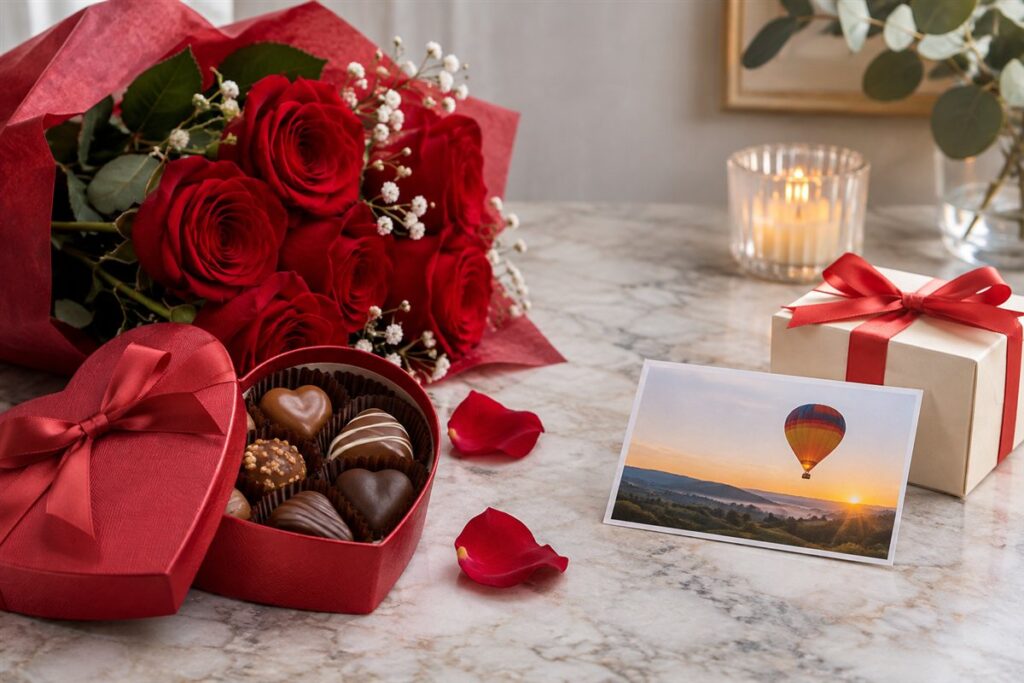
Neither style wins outright. Classic gifts such as flowers, sweets and handwritten notes carry familiar warmth, while modern gifts such as photo books, shared experiences and framed pictures feel more personal. The right choice depends on the person receiving it, not on what is fashionable this season.
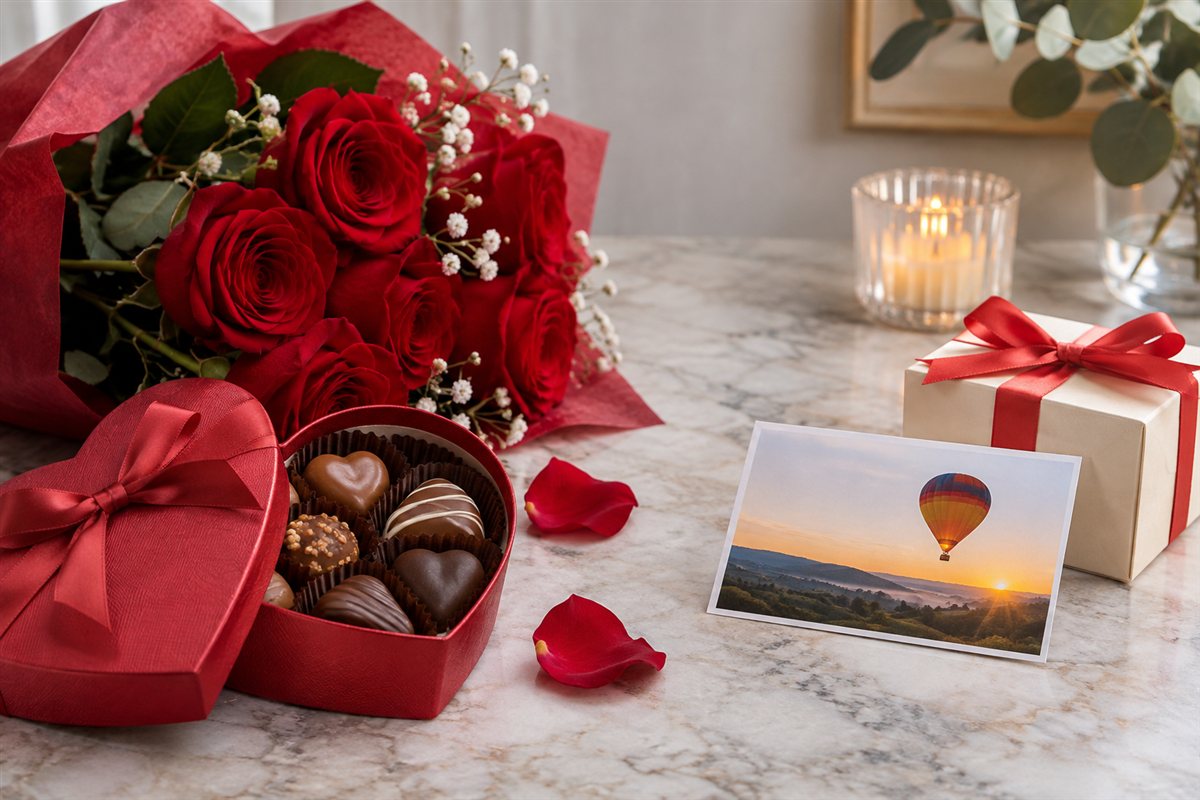
What Counts as Classic and What Counts as Modern
Classic gifts are the ones people have given for generations: flowers, chocolates, a card, a candlelit dinner. They are instantly recognized as romantic, so the message lands with very little effort. Modern gifts lean on personal detail, such as a printed album of your time together, a framed photo from a favorite trip, a playlist built around shared memories, or a class you attend together.
The line between them is blurry. A handwritten letter is a classic gesture, yet a letter tucked behind a favorite photo in a simple frame feels thoroughly modern.
In this guide
Side-by-Side Comparison
| Question | Classic | Modern |
|---|---|---|
| How it feels | Familiar and traditional | Personal and current |
| Planning needed | Low to medium | Medium, often needs lead time |
| Main risk | Can feel predictable | May miss if it ignores their taste |
| Best for | People who love ritual | People who love detail and surprise |
| How long it lasts | Often brief, as with flowers | Often kept for years, as with prints |
How to Decide for Your Partner
- Recall the last gift they praised out loud. Was it traditional or unusual?
- Think about how they treat keepsakes. Someone who keeps ticket stubs probably enjoys a printed memory.
- Consider how they feel about being the center of attention. A quiet gesture suits some people better than a grand one.
- Check your time. Printed photo gifts usually need days for production and delivery, while flowers and notes can be sorted quickly.
The Blend That Often Works
You do not have to choose one camp. Many people enjoy a classic gesture with a modern twist, and that approach lowers the risk of either feeling stale or feeling too experimental.
- Flowers delivered with a photo print of your first trip together.
- A traditional dinner, followed by a small album of pictures from the past year.
- A handwritten card paired with an experience you can book together, such as a workshop or a day out.
- A framed picture of a place that matters to both of you, with the date written on the back.
Whichever way you lean, add one detail that only you would know. That detail is what turns any gift from generic into yours.
Reading Your Partner’s Habits Before You Choose
The best gift usually comes from noticing what your partner already does and values. Instead of guessing, spend a week observing. What do they keep on their desk or nightstand? Which messages do they save? Do they linger in shops over cards, candles, or books? Do they talk about places they want to visit, or foods they want to try? These small signs point toward gifts that will feel right.
Some people respond most to words, so a handwritten letter or a thoughtful card means more than an object. Others value time together, so an evening out or a shared activity is the real gift. Some like practical help, such as taking over a chore they dislike. Others love receiving a physical item they can hold. These categories are only a rough guide, and most people mix them, but they can help you decide whether a classic gift or a modern one fits.
- Listen for casual comments about things they wish they had or wish they could do.
- Ask a close friend or family member for a hint without revealing the plan.
- Look back at past birthdays and holidays for gifts that got a strong reaction.
- Avoid copying what a friend received, since tastes differ.
If your partner dislikes fuss, choose something simple and sincere. If they enjoy surprises and detail, put more planning into it. The goal is to show you pay attention.
Timing, Lead Times, and Last-Minute Options
Gift type affects how early you must start. Personalized items such as printed photo books, framed prints, and engraved goods need time for design, production, and delivery. Providers publish their own timelines, and these can lengthen near holidays, so check cutoff dates on the provider’s page and add a few days of margin for delays. Experiences such as classes, tours, and restaurant bookings can also fill up near a holiday, so reserve early.
Classic gifts are generally easier to arrange late, but even they have limits. Popular flower arrangements and restaurant tables can sell out, and delivery slots can be limited. If you want to give flowers on the day, order ahead and confirm the delivery window with the florist. If you want a particular dinner, call the restaurant early and ask about set menus or special arrangements.
- Make a simple schedule working backward from the date you want to give the gift.
- Save digital versions of your photos in high resolution well before you order prints.
- Have a backup plan, such as a handwritten note, in case a delivery is late.
- If time is short, choose a gift you can collect in person or create at home.
A late gift with real thought still carries meaning. Explaining that you wanted to do something special and put care into it can matter more than perfect timing.
Making Simple Gifts Feel Personal
A gift does not have to be elaborate to be personal. The difference often lies in a detail that shows you know the person. A bouquet becomes special if it includes the flower they mentioned on your first date. A box of sweets becomes personal if you choose the flavors they always pick. A card becomes memorable if you write a specific memory instead of a general message.
Writing is a powerful tool. A few sentences about what you appreciate this year, with real examples, can outshine an expensive object. Avoid vague statements and aim for concrete ones: the time they helped you through a hard week, the way they laugh at your jokes, or a small habit you love. Read it aloud once to be sure it sounds like you.
- Add a date and a place to a photo or note so the memory is clear.
- Wrap or present the gift in a way that fits their taste, whether simple or playful.
- Pair a small gift with a plan, such as a walk to a place you both like.
- Keep the message honest and avoid overpromising.
Personal touches cost little and can be done at the last minute. They are the best way to bridge the gap between classic and modern styles.
Gifts for Long-Distance and New Relationships
Circumstances change what works. In a long-distance relationship, a gift that arrives by mail and a shared moment online can bridge the gap. A package with a handwritten note, a small keepsake, and a few of their favorite treats, followed by a video call where you open something together, feels connected. Check shipping times and any customs rules if you are sending across borders, and allow extra days.
In a new relationship, the main risk is overdoing it. A large or expensive gift can feel heavy when you are still getting to know each other. A small, thoughtful gesture often fits better: a favorite snack, a book you talked about, or a handwritten card. Pay attention to their comfort and avoid putting pressure on them to respond in kind.
- For long-distance couples, plan a shared activity such as watching the same film or cooking the same recipe.
- For new relationships, choose something light that reflects a recent conversation.
- For long-term couples, consider something that marks a shared milestone.
- For couples with different cultural traditions, talk about expectations in advance.
Whatever the situation, the gift should say that you see the person and the relationship as it really is, not as a script dictates.
Common Mistakes and How to Avoid Them
A few errors come up often. The first is choosing a gift that reflects your own taste instead of theirs. A gadget you want, or a style you like, may not suit them. The second is leaving everything to the last moment and ending up with something generic. The third is treating price as a stand-in for care. Value comes from fit and thought, not from the amount spent.
Another mistake is ignoring practical details such as sizes, allergies, or dietary needs. Flowers can trigger allergies for some people, and sweets may not suit someone avoiding certain foods. Strong scents can bother others. If you are unsure, pick something with fewer risks or ask a friend. For clothing or jewelry, check the return policy in case the size is wrong.
- Keep gift receipts and check the return terms before buying.
- Do not use a gift to make a point or to fix an argument.
- Avoid public surprises if your partner dislikes being the center of attention.
- Respect budget limits you both share, and avoid debt for a holiday.
If the gift falls flat, stay gracious. A quiet conversation and a shared meal can rescue the day, and what you learn will help you choose better next time.
A Simple Scoring Method for Hard Decisions
If you are stuck between a traditional gift and a more current idea, try a quick scoring exercise. Write down two or three options. Then give each a score from one to five on four questions: How well does it fit her or his personality? How much thought does it show? How easy is it to get in time? How likely is it to be used or kept? Add the scores. It will not make the decision for you, but it often reveals which option you are secretly leaning toward.
Be honest with the first question in particular. Many people choose a gift that suits the image of a perfect partner rather than the real one. If your partner never wears jewelry, a necklace may look lovely in the box and sit in a drawer for years.
Gift Styles Compared by Situation
| Situation | Classic lean | Modern lean |
|---|---|---|
| First Valentine’s Day together | A small, sincere gesture such as a card and a treat | A shared activity that lets you learn each other’s tastes |
| Long marriage | A repeat of a ritual you both enjoy | A framed memory or something that marks a milestone |
| Busy partner with little time | A thoughtful note left where it will be found | A prepared evening that removes planning from their plate |
| Partner who loves hobbies | A well chosen item for the hobby | A class or experience linked to it |
The table is a prompt, not a rulebook. What matters is that the gift matches how your partner likes to feel appreciated.
Five Love Languages as a Gift Compass
Many people find the idea of different love languages a handy way to think about gifts, even if you treat it as a loose guide rather than science. Someone who values words of affirmation may prefer a handwritten letter over any object. Someone who values quality time may treasure an unhurried dinner more than a wrapped parcel. A person who feels loved through acts of service may be happiest when you take over a chore for a week.
You do not need to label your partner. Simply recall what they praise or complain about. Do they light up when you plan something, or when you remember a small detail? Their reactions to past gifts are the best clue you have.
Presentation Matters More Than People Admit
A modest gift wrapped with care often lands better than an expensive one handed over in a shopping bag. Spend a few minutes on presentation. Choose paper or a box that feels deliberate, add a short note, and hand the gift over at a calm moment rather than rushing out the door.
- Write a sentence about why you chose it.
- Include a small memory, such as where you were when you first talked about it.
- Avoid overloading the moment with several items. One clear gesture is stronger than a pile.
Sharing the Day Without Pressure
Valentine’s Day carries expectations from films, advertising and social media, and it is easy to feel you are being measured against them. Talk beforehand about what you both want from the day. Some couples prefer a quiet night at home. Others like to go out. Agreeing in advance reduces anxiety and avoids the sad situation where one person arrives with grand plans and the other with nothing.
If your partner dislikes the occasion, respect that. A small gesture on an ordinary day can feel more genuine than a performance on a date chosen by the calendar.
Budget Planning Without Stress
Set a comfortable limit before you browse so that you are not tempted to overspend. Remember that thought counts more than cost. A homemade meal, a playlist of songs that mean something to you both, or a printed photo in a simple frame can carry more feeling than a larger purchase. If you do buy something, confirm the return policy in case it does not fit or suit.
A Last-Week Checklist
- Decide which style fits your partner, classic, modern or a blend.
- Confirm delivery or collection times well before the day.
- Prepare a card or note, even a short one.
- Plan how and when you will give the gift.
- Keep a small backup, such as a favorite snack, in case an order arrives late.
With a little planning and honest attention to the person you are buying for, either style can work beautifully, and a blend of both often works best of all.
Ideas That Blend Both Styles
You do not have to choose one side. Some of the most memorable gifts mix a familiar gesture with a personal twist. Consider these combinations.
- A bouquet delivered with a small printed photo of a favorite shared moment tucked into the card.
- A favorite sweet treat plus a coupon for an evening of your partner’s choice.
- A classic dinner at home, with a playlist built from songs from your early days together.
- A handwritten letter placed inside a framed picture, to be read later.
- A small plant or garden item, with a note about growing together.
The common thread is attention. Each of these shows you thought about the person, not just about the date.
What to Do If Your Partner Says No Gifts
When someone says they do not want anything, they usually mean they do not want pressure, clutter or spending. They rarely mean they want to be ignored. Honor the request by choosing something low-key: a card, a favorite meal, a walk somewhere meaningful. Avoid pairing a no-gifts agreement with a surprise extravagance, which can leave your partner feeling awkward. If you are unsure, ask what a good evening would look like and build the day around that.
Planning for Different Time Frames
When you have only an evening
Focus on time and effort. Cook a simple meal, set the table properly, silence your phones and spend an hour talking. This costs little and often means the most.
When you have a week
You can order something personalized, such as a printed photo book or an engraved item, but check production and delivery times with the seller, since personalized orders take longer. Order early and keep the confirmation details.
When you have a month
Plan an experience: a weekend away, tickets to a show, a class you can take together. Booking ahead often gives better choice and calmer logistics.
Mistakes People Regret
The most common regret is rushing. Last-minute choices tend to be generic, and generic gifts rarely spark delight. Another is copying what friends did or what social media suggests without asking whether it fits your relationship. A third is turning the day into a test, where you hope your partner will guess your own wishes without being told. Say what you want kindly and directly, and invite the same honesty in return.
Gifts That Say Something Specific
A gift becomes memorable when it points back to a shared story. Think about the small turning points of your relationship: the first trip, the joke only you two understand, the meal you still talk about. A gift that references one of those moments, whether a classic bouquet in a favorite color or a modern printed photo of the place, tells your partner that you were paying attention. It also takes pressure off the object itself, because the meaning does the heavy lifting.
Try writing down five shared memories before you shop. You may find that the best idea is already sitting on that list, waiting for a simple way to be turned into something you can hand over.
FAQ
Are classic gifts boring?
Not if they are delivered with attention. A familiar gift paired with a specific, thoughtful note often means more than an unusual gift that has no link to the person.
What if my partner likes both styles?
Combine them. Choose one traditional element for the moment of giving and one modern element they can keep, such as a photo-based keepsake.
Is it okay to give a gift that is both practical and romantic?
Yes. A useful item presented with a personal note can feel thoughtful, especially if it solves something your partner has mentioned.
Should we agree not to exchange gifts?
Some couples prefer to skip gifts and plan an evening instead. Talk about it in advance so neither feels caught off guard.
How much should I spend?
There is no set amount. Choose a level that fits your finances and your relationship, and focus on thought over cost.
What if my partner already has everything?
Consider an experience, a handmade item, or a donation to a cause they care about. A shared memory is often more welcome than another object.
Are flowers a bad idea if my partner dislikes them?
If they do not enjoy flowers, choose something else. A plant, a meal, or a small keepsake can carry the same warmth without the drawbacks.
How can I make a handwritten note feel special?
Use real details, write in your own words, and use good paper. Even a short note with a specific memory can mean a lot.
Can I give a gift after the day itself?
Yes. A slightly late gift with a sincere explanation is better than a rushed one. Plan a date to celebrate when you both have time.
Classic and Modern, Decade by Decade in One Relationship
A relationship that lasts will pass through seasons, and the gift style that delights in one season can miss in another, which is worth remembering before you declare yourself a classic household or a modern one. In the first year, novelty carries almost anything: the modern surprise lands because everything about the relationship is still discovery, and the classic gesture lands because it feels like the beginning of a tradition. In the busy middle years, when time is the scarcest thing either of you owns, gifts that give time, an evening arranged, a chore quietly taken away, a plan made so the other person only has to arrive, tend to outshine objects of either style. In long-settled years, the classic gestures regain a special power, because a tradition repeated across decades becomes a story the couple tells about itself, while a well-aimed modern surprise proves that curiosity about each other is still alive. Reading this guide’s comparison with your season in mind turns a general framework into a personal one.
Anniversaries of the relationship itself matter here too. A couple that has celebrated many Valentine’s Days together has a private archive of past gifts, and the most moving present often quotes that archive: the same flowers as the first year, the restaurant returned to after a decade, the modern photo book that gathers the classic years into one object. Quoting your own history is the deepest blend of classic and modern available, because the classic element is not a generic tradition but yours, and the modern element is the new form you give it. Partners who feel known at that level rarely remember what anything cost.
When Money Is Tight and When It Is Not
Financial honesty is part of gift craft, and both styles behave differently under a budget. Classic gifts scale gracefully downward: flowers become a single stem chosen well, the grand dinner becomes a cooked favourite at home, the handwritten note costs nothing but attention and often outlasts everything else on this page. Modern gifts scale in a different direction, because experiences and technology tempt spending, yet the best modern gestures, a playlist, a planned walk to a meaningful place, a photograph printed and framed by hand, are also nearly free. What a tight budget actually forbids is not either style but thoughtlessness: the expensive panic purchase and the cheap careless one fail in the same way. When money is plentiful, the discipline reverses. Abundance tempts spectacle, and the partner’s real need may be for something small and specific that proves they were listened to in an ordinary week. In both directions, the budget question is never how much, but whether the amount spent is serving the message or substituting for it.
Gifts Inside Families and Shared Households
Valentine’s gifts are often exchanged in homes where other people live: children, parents, housemates. A little stagecraft keeps the gesture graceful for everyone. Classic gifts travel well in company, since flowers and sweets can be shared and enjoyed by the household, turning a couple’s moment into a small household festival. Modern surprises that need privacy or elaborate secrecy can strain a shared home, so scale them to the space you actually have: the note hidden in a lunch bag works in any household, while the elaborate room transformation may not. Where children are old enough to notice, involving them lightly, carrying the flowers in, drawing the card, teaches them that affection is an ordinary, happy household activity, which may be the most durable gift the day produces.
More Questions From Readers
My partner says Valentine’s Day is just commercial. What should I do?
Believe them about the day and stay attentive to the person. Many people who dismiss the holiday still light up at an uncommercial gesture: a favourite meal cooked without announcement, a walk to a place that matters to you both, a note that could not have been bought. Skip the branded merchandise entirely and let the gesture be handmade and specific. If they truly prefer nothing at all, honouring that preference gracefully is itself the gift, because it proves you listened rather than performed.
Is it better to ask my partner what they want or to surprise them?
Both, in sequence. Ask in the broad sense, weeks ahead and in ordinary conversation, what kinds of things make them feel appreciated, then surprise them with the specific choice inside that territory. Pure guessing risks missing entirely; a direct request for a shopping list removes the pleasure of being known. The middle path, informed surprise, is what most of this guide’s advice quietly assumes: your knowledge of the person is the gift, and the object is its evidence.
We have very different budgets. How do we keep the exchange fair?
Agree the shape of the exchange rather than matching amounts. Some couples set a shared limit, others agree that gifts will be experiences they do together, funded as their ordinary shared life is funded. What corrodes the day is an unspoken competition or an imbalance one partner feels and neither names. A two-minute conversation in January about how you will handle the day is worth more than any purchase in February, and it is itself a small act of the consideration the day celebrates.
Can a practical gift ever be romantic?
Yes, when the practicality is personal. The book they mentioned wanting, the tool that fits the project they care about, the warm thing bought because you noticed they are always cold: these say you pay attention to their actual life, which is the substance of romance. A practical gift fails only when it is generic, the appliance bought for the household and dressed up as a present. The test is whether the gift could only have been chosen for this person. If it could, practicality is no obstacle at all.
What if I get it wrong?
Then you learn something worth more than the gift. Receive their honesty kindly if they offer it, keep the receipt culture light rather than defensive, and file the knowledge away for next year. Couples who have celebrated together for decades all have a famous wrong gift in their shared mythology, usually retold with laughter. A miss delivered with love and humour becomes part of the story; the only true failure is not paying attention at all.
Classic and Modern Around the World
Valentine’s Day travels, and watching how different places celebrate it sharpens the classic-modern question. In some countries the classic core, flowers, sweets and a meal, dominates almost completely, and the creativity goes into quality and ritual rather than novelty. In others, the day has been enthusiastically rebuilt around experiences, personalised objects and social sharing, and a plain bouquet can look almost quaint. Neither culture has the answer; each reveals what the day is really for in that place, which is a public language for private feeling. If your partner comes from a different tradition than yours, the most romantic research you can do is into theirs. Giving the classic gift of their culture, in its proper form, is a modern act of attention, and giving a modern twist that respects the tradition shows you understand both the ritual and the person. Cross-cultural couples often end up with the richest celebrations of all, because they inherit two vocabularies and can say things neither could say alone.
The same lens applies within one country across generations. Grandparents may read a handwritten letter as the summit of romance and a gadget as a distraction from it, while younger couples may experience a shared playlist as deeply personal and a formal bouquet as a gesture performed for an audience. If your celebration involves family, a gift that reads warmly across generations, the classic object given with a modern personal touch, often carries the day gracefully. The styles in this guide were never really opponents; they are two dialects, and fluency in both is the actual skill.
Writing the Card: The Smallest Classic With the Largest Effect
Almost every path in this guide eventually passes through a few written sentences, so they deserve craft. A good Valentine’s card does three things briefly: it names something specific the person did or is, it says what that means to you, and it looks forward to something the two of you will share. Specificity is the whole secret. Anyone can write that someone is wonderful; only you can write about the morning they drove across town with soup when you were ill, or the way they laugh at their own jokes before reaching the end. Write it by hand if your handwriting is legible, because the physical trace of your hand is itself a classic signal of effort, and keep it short enough that every sentence earns its place. Draft it on your phone first if you need to, then copy it out. The card will be kept long after flowers and packaging are gone, which makes it, gram for gram, the most durable gift in this entire guide.
If You Are Celebrating From Different Time Zones
Long-distance couples in different time zones face a small comic problem: the day itself arrives twice. Use it. A message that lands at his midnight and your morning stretches the celebration across both days, and a gift timed to arrive on his Valentine’s morning may need ordering by your calendar’s earlier date. Agree in advance when you will speak, because the loneliest version of the day is two people each waiting for the other to call first. The classic-modern framework survives the distance intact; it simply asks you to be more deliberate about timing, which, as this guide has argued throughout, is half of what a gift is anyway.
Classic and Modern for the Other People in Your Life
Although this guide addresses partners, its framework quietly governs every affectionate gift you give, and testing it on family and friends builds the judgement you bring to Valentine’s Day. A parent often reads classic gestures, the call, the visit, the remembered favourite food, as the substance of love, while a modern gesture lands when it shows you know their present life rather than their childhood one. A friend in a hard season rarely needs either style’s showpiece; they need the gift that reduces a burden, time, help, a meal that appears. Children read gifts almost purely as attention made visible, which is why the classic small ritual repeated yearly, the same special breakfast, the same walk, becomes a landmark in their memory out of all proportion to its cost. In every case the question from this guide does the work: does this person, in this season, need to feel remembered by tradition or recognised in their particularity? Answer that and the object nearly chooses itself.
There is a corollary worth stating plainly, because it rescues many givers from despair: the people who love you are grading the attention, not the object, and attention can be demonstrated at any budget in either style. The giver’s real enemies are hurry and imitation, the gift bought because the calendar shouted and the advertisement suggested. A week of quiet noticing defeats both, and it is available to everyone, which is why the best gift-givers in any family are rarely the richest members. They are the ones who were paying attention in October.
Planning Next Year’s Day While This One Is Fresh
The most useful Valentine’s habit costs two minutes: in the days after the celebration, while the evidence is warm, write down what landed and what merely happened. Which gesture did your partner mention again? Which one was photographed, kept, displayed? What did you learn about their current season, their tastes, their feelings about the day itself? Put the note where February-you will find it, in the calendar, in a notes app, on paper in a drawer you open in winter. Next year’s planning then starts from data instead of from the annual blank panic, and the classic-modern decision becomes easier each year because it rests on an accumulating record of one specific person’s responses. Couples who seem effortlessly good at this are usually just couples where one person keeps the note. Become that person, and the day quietly transforms from a test you cram for into a ritual you refine.
A Gentle Word About Disappointment
Sometimes, despite honest effort, the day disappoints: the gift misses, the plan collapses, the mood is not there. It is worth remembering that a single February day is a symbol, not a verdict, and relationships are not graded on symbols by anyone whose grading matters. What repairs a disappointing day is not a larger compensating gesture but the ordinary, repeated evidence of attention across the following weeks, which is the thing the day was only ever meant to represent. Give kindly, receive graciously, laugh where laughter is available, and let the year, rather than the day, carry the meaning. That perspective is itself a classic gift, the oldest one there is, and it never goes out of style.
Classic and Modern at Work, at a Distance and in Public
Modern working life scatters Valentine’s Day across offices, trips and screens, and each setting bends the two styles differently. A classic gift delivered to a workplace, flowers arriving at a desk, performs publicly, which delights some partners and quietly horrifies others, and the difference is not romance but personality and office culture. Know which person yours is before choosing the public classic. A modern gesture travels better through a workday: the message timed to land before the difficult meeting, the lunch that appears ordered and paid for, the evening plan that asks nothing of them but arrival. For the partner travelling on the day itself, both styles must become portable or patient: the note packed secretly in the luggage is the classic that travels, the video call arranged across time zones with a real plan inside it is the modern one, and the gift that simply waits, well chosen, for the return has a dignity that no amount of logistics can improve. The framework holds in every setting because it was never about the objects; it is about matching the gesture’s shape to the life it must fit inside.
Public celebration has one more consideration, which is the audience’s effect on the receiver’s honesty. A partner who would love a grand gesture may perform loving it, in front of colleagues or friends, while privately wishing the day had been quieter. The giver who knows their partner’s public self as well as their private one can route the celebration correctly: the spectacle for the one who blooms in company, the small sealed envelope for the one who saves their real reactions for home. This is the same lesson the whole guide teaches about surprises for boyfriends, about gifts across cultures and about seasons of a relationship, wearing one more set of clothes: the person, read accurately, is the entire strategy.
Keeping a Private Archive of the Days
Couples who celebrate for decades accumulate an archive whether they plan to or not: cards kept in a drawer, photographs on a shelf, the dried stem of one famous bouquet. Treat that archive with a little intention and it becomes one of the relationship’s treasures, because it lets you revisit not just the gifts but the people you both were when they were given. Keep the cards especially; they are the written record of attention across the years, and reading a decade of them in sequence is an experience no new gift can buy. Add one photograph a year, taken on the day, however ordinary, because faces and rooms change slowly and then suddenly, and the archive’s power is cumulative. The classic-modern question will keep arriving each February, but the archive reframes it kindly: you are no longer choosing a gift in a vacuum, you are adding a page to a book the two of you are writing together, and pages in a beloved book are very hard to get wrong.
When You Are the One Who Forgets
Everyone forgets something eventually: the card, the reservation, in the worst years the day itself. The recovery matters more than the failure. Acknowledge it plainly and without a defensive comedy routine, then move the celebration rather than cancelling it, with the same care the original plan deserved, on the nearest day that works. A forgotten Valentine’s recovered with grace and a good plan becomes, in the archive, one of the funny and human pages. A forgotten Valentine’s met with panic spending becomes a lesson neither of you wanted. The styles in this guide both forgive lateness, because attention demonstrated a day late is still attention, while attention performed frantically on the day and absent all year fools nobody. Keep the year kind and the day can survive being human.
The Styles, Finally, as One Idea
Step back from the whole comparison and a single idea holds both styles in one hand. A gift is a message that has taken physical form, and the classic and modern vocabularies are simply two sets of stationery. Classic says it in the handwriting of everyone who ever loved well before you, which lends your message the weight of all those repetitions. Modern says it in a form invented for one person, which lends your message the force of being unmistakably addressed. Great givers move between the two without anxiety, sometimes in the same gift, because they are not loyal to a style; they are loyal to the message and to the person it is for. If you leave this guide with that loyalty clear, the annual question of what to buy becomes what it should always have been: a brief, pleasant problem of translation, from something you already know you feel into a form your partner will enjoy receiving. The feeling is the gift. The rest, flowers or photograph, candlelight or playlist, is the envelope, and envelopes matter only because of what they carry.
One Small Tradition Worth Starting This Year
If the archive idea in this guide appeals to you, begin it with the smallest possible ceremony: one photograph of the two of you, taken on the day each year, in roughly the same spirit if not the same place, and one card kept rather than recycled. The first year it will feel like nothing, a snapshot and a piece of card in a drawer. The fifth year it will feel like the beginning of something. The twentieth year it will be among the most valuable objects in your home, because it will show two people changing together while one kind thing stayed the same, which is, when you think about it, the entire subject of Valentine’s Day stated in objects. Classic in its repetition, modern in whatever form each year’s photograph takes, it is the blend this guide has been recommending all along, finally reduced to a habit small enough to keep forever.
The Question to Carry Into the Shop
When you stand in front of the shelves, or scroll the pages, with this guide’s whole argument behind you, reduce it to the one question that has decided every good gift in these pages: what would make this particular person feel known? Not impressed, not obligated, not entertained in the abstract, but known, in the specific way that only someone who has shared their ordinary days could manage. Classic or modern, costly or nearly free, the gift that answers that question will land, and the one that evades it will not, whatever its other virtues. Carry the question and the styles will sort themselves, this year and every year the two of you are lucky enough to be asking it.
The Short Version
Choose classic when your partner values ritual and familiarity, and choose modern when they enjoy detail and surprise. When you are unsure, blend the two and always add one personal touch. Matching the gift to the person matters far more than the label on it.
