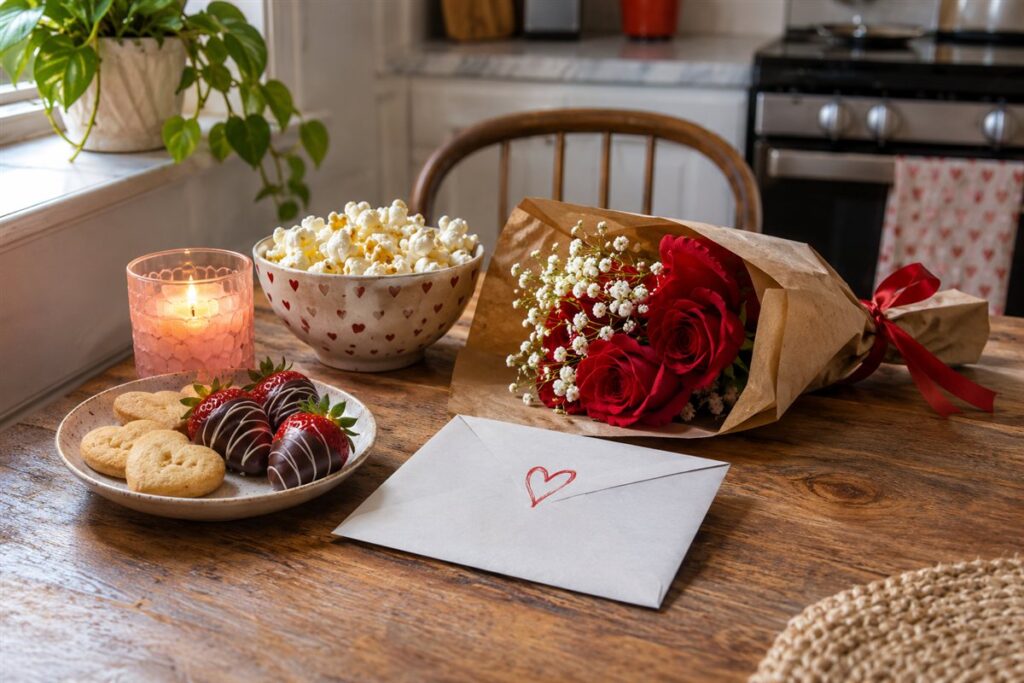
If Valentine’s Day is close and you have nothing ready, pick a gift based on how much time you have, not on what you wish you had planned. A few hours is enough for a heartfelt note and a shared meal, while a couple of days opens up printed photos and booked experiences. Here is how to triage.
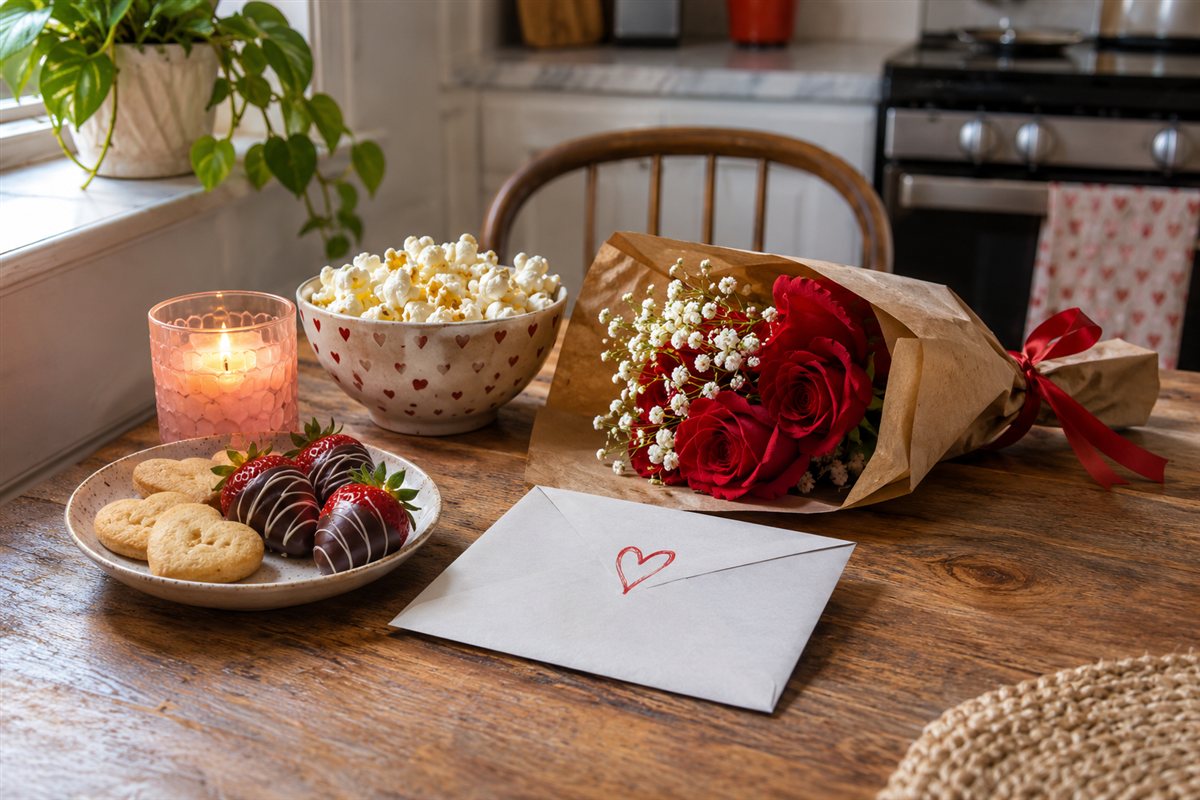
If You Have a Few Hours
Focus on gifts you can make or buy locally and deliver in person.
- Write a letter by hand. Mention three specific memories.
- Cook a simple favorite meal and set the table with candles or a few photos.
- Buy a small bunch of flowers or a favorite snack on the way home.
- Print pictures at a nearby shop that offers same-day service, if one is available, and tuck them into a card.
In this guide
If You Have a Day or Two
With a little more time you can add a bit of structure.
- Choose a theme, such as a first date, a trip or a shared hobby.
- Gather three photos linked to that theme.
- Look for printing options with fast turnaround, and check delivery times carefully before relying on them.
- Prepare a simple frame or folder to hold the photos.
- Plan a short outing, such as a walk, a museum visit or a coffee at a favorite spot.
If You Have Several Days
Now you can order a small photo album or framed print, book a class or arrange tickets. Make sure that you account for production time and for the possibility of delays in delivery, and keep a backup plan such as a handwritten letter in case the parcel is late.
Quick Comparison
| Time left | Best gift type | Why it works |
|---|---|---|
| A few hours | Letter and homemade meal | No shipping, high personal value |
| One to two days | Printed photos and an outing | Quick to gather, easy to personalize |
| Several days | Album, framed print or booked experience | Allows for production and booking |
Avoiding the Last-Minute Look
- Add something specific, such as a date, a quote or a shared joke.
- Wrap or present the gift neatly, even if it is simple.
- Be honest if you ran out of time. A warm confession can be charming.
- Plan a follow-up, such as a promise to book a trip, to show the gesture continues.
Reading Your Partner Before You Choose
The fastest way to a good gift is to remember what your partner has already told you. Think back over the last month and list anything they mentioned wanting, enjoying or missing. It could be a dish from a restaurant they liked, a place they want to visit, a hobby they have been putting off or a small annoyance you could solve. Gifts based on listening feel personal even if you assembled them in an afternoon.
Next, consider their style of receiving affection. Some people value words, so a letter lands better than an object. Some value time, so an uninterrupted evening matters most. Others value practical help, such as taking on a chore they dislike for the week, and some love physical keepsakes they can display. You do not need to be a perfect match for these categories, but picking the one that fits gives you a direction.
- If they save notes and cards, write something longer than usual.
- If they love going out, plan an evening, even a simple one.
- If they collect small things, find one that fits their collection.
- If they dislike fuss, keep it quiet and sincere.
Also think about what they might not want. A big public gesture can embarrass a private person, and a surprise outing can be stressful on a tiring week. Choose something they will enjoy, not just something that looks impressive.
Low-Cost Gestures That Take Little Planning
A small budget is not a barrier to a thoughtful gift. Many of the best last-minute ideas cost little, because they rely on your time and attention. The key is to add detail so that it does not feel like an afterthought.
- A playlist: gather songs linked to your history, from the first song you danced to, to what played on a road trip. Give it a title and a short note about why each track is there.
- A jar of reasons: write short notes on slips of paper, each naming something you appreciate, and put them in a jar for them to read one at a time.
- A coupon set: offer specific favors such as breakfast in bed, a back rub or a night when they choose the film. Keep them realistic so you can honor them.
- A recreated moment: bring back the food, drink or place from your first date.
- A morning surprise: leave a note on the mirror or in a coat pocket for them to find.
None of these require shipping, and all of them can be made with items you probably have at home. Presentation helps. A folded card, a ribbon or a clean envelope makes the gesture feel intentional. Writing by hand, even if your handwriting is untidy, adds warmth that printed text cannot.
Planning a Simple Home Evening
If restaurants are full or you would rather stay in, a home evening can feel more intimate. The plan does not need to be elaborate, but it should be deliberate. Decide on the menu, the setting and the activity, then handle the details before your partner arrives so you can be present.
Pick a menu you can cook without stress. A dish you have made before is a safer choice than a new recipe attempted under pressure. Shop for ingredients early, and prepare as much as you can in advance. Set the table with what you have, such as candles, a cloth or a small vase. Dim the lights and put on the playlist.
- Switch off notifications for a few hours.
- Choose a shared activity, such as a board game, a film, cooking together or stargazing from the balcony.
- Prepare a small dessert or a favorite snack.
- Clear away clutter so the space feels calm.
If either of you has dietary needs, check them ahead of time. Keep alcohol optional and have a pleasant non-alcoholic drink available. The goal is to give your partner your attention, and that matters more than any dish or decoration.
Long-Distance and Delayed Celebrations
Sometimes you cannot be together on the day. For long-distance couples or partners with conflicting schedules, the gift can be about connection across the gap. A video call dinner, where you both cook the same meal and eat together on screen, brings a sense of shared experience. A handwritten letter sent by post builds anticipation, though you should account for delivery times and expect the possibility of delays.
If the day passes without time together, do not treat it as a failure. Choose a different date and mark it as your own. A delayed celebration can be calmer and more relaxed, and restaurants and venues are often easier to book after the holiday. Tell your partner plainly that you are planning something, so they are not left wondering.
Digital gifts can work too. A shared photo album, a message with a voice recording or a small online experience such as a virtual class can fill the gap. Make them personal by adding a note that refers to your shared jokes and plans. Avoid sending an impersonal link with no context, because it can feel rushed. A short, warm message explaining why you chose it makes the difference.
Mistakes That Make a Late Gift Feel Rushed
Last-minute gifts go wrong in a few predictable ways, and they are easy to avoid. The first is buying something generic from the first shop you pass. A gift that could be for anyone does not say much about your partner. If you must buy something ready-made, add a note or a small personal touch that links it to your relationship.
The second is overpromising. Telling your partner you have a big surprise when you only have a card builds expectations you cannot meet. Be modest in what you say, and let the gift exceed it. The third is leaving the gift unprepared, such as handing over an item in the shop bag or with the price tag attached. A minute of wrapping or tidying changes the impression.
- Do not rely on delivery dates unless the seller guarantees them in writing.
- Avoid gifts that need setup or assembly you cannot finish in time.
- Do not pick something that depends on guessing a size, since a wrong guess can feel awkward.
- Do not compare your gift to what others post online.
Finally, spend a moment on delivery. Choose a quiet time, put your phone away, and say a few words about why you chose it. That attention is what your partner will remember.
Begin With What Your Partner Would Notice
The best last-minute gifts work because they show attention, not because they show planning. Before browsing for ideas, spend five quiet minutes thinking about your partner. What have they mentioned wanting in the last month? What small things make their day easier? Which memories do they love to revisit? A gift that echoes a recent remark feels thoughtful, even if you bought it an hour ago. A generic gift, chosen in a rush, can feel like an afterthought.
Write three short lists: things your partner enjoys, things they have mentioned needing and shared memories. Look for overlap between the lists. A favorite snack from a place you visited together, a book by an author they admire, or a printed photo of a trip they loved are examples. The goal is not to impress with size or cost, but to show that you were listening.
Idea Table by Time Available
| Time available | Idea types | Why it works |
|---|---|---|
| One hour | Handwritten note, favorite snack, flowers from a local shop | Personal and quick |
| Half a day | Home-cooked meal, playlist, framed photo | Shows effort |
| One day | Small outing, shared activity, wrapped book | Creates a memory |
| Two days | Printed photo book pages, simple craft, experience booking | Allows personalization |
| Long distance | Video call dinner, mailed note, delivered treat | Bridges the gap |
Writing a Note That Lands
A note can turn a modest gift into something memorable. Write by hand if you can. Keep it short and specific. Mention a moment you cherish, a quality you admire or a small thing your partner does that makes your life better. Avoid generic phrases. Specific details are what make people feel seen. Place the note where your partner will find it: on the table, in a coat pocket or tucked into a book.
- Mention a specific memory.
- Name something you admire.
- Keep it brief and sincere.
- Write by hand when possible.
Simple Evenings You Can Plan in an Afternoon
Time together often means more than objects. If you have an afternoon, plan an evening that feels special without needing reservations. Cook a favorite meal together, or prepare a dish from a place you have both wanted to visit. Set the table with candles, play music your partner loves and put away phones. Prepare a short list of conversation prompts, such as favorite memories or hopes for the year. A calm, attentive evening can be the best gift of all.
- Choose a meal you can prepare comfortably.
- Shop for ingredients early in the day.
- Set the table with simple decorations.
- Create a playlist of songs with shared meaning.
- Silence notifications for the evening.
Gifts That Are Practical and Personal
Practical gifts can be romantic when they are chosen with care. A good pair of warm socks for someone who is always cold, a quality mug for a tea lover, or a bag for a daily commuter shows thought. Add a personal touch: wrap the gift neatly, include a note and mention why you chose it. Avoid items that feel like chores, such as cleaning supplies, unless you know your partner would delight in them.
- Choose items linked to daily habits.
- Wrap with care.
- Include a handwritten note.
- Avoid anything that hints at criticism.
Shared Experiences on a Small Scale
Experiences can be modest. A walk to a favorite viewpoint with a thermos of something warm, a visit to a small museum, a dessert at a local cafe or a movie night at home with chosen snacks are all easy to arrange. Choose something that fits your partner’s temperament. A quiet person may prefer a calm evening, while an adventurous one may enjoy a small outing. Keep the plan flexible, and focus on being present.
Worked Example: A Gift in Four Hours
Imagine a person named Callum who realizes at noon that tonight is Valentine’s evening and he has nothing planned. He sits down for five minutes and thinks about his partner, Iris. She loves reading, enjoys a particular pastry from a bakery near their old apartment and has talked about wanting to learn the piano. He cannot buy a piano, but he can do something thoughtful.
He visits the bakery and buys the pastries, picks a book by an author Iris admires at a local shop and writes a note on a plain card about the first time they visited the bakery together. He prepares a simple dinner of a dish they both enjoy, sets the table with candles and finds a playlist of piano music. After dinner, he gives her the book and the card. Iris is moved, not by cost, but by the attention. The evening is warm, calm and unforgettable.
His example shows that a few hours and a bit of thought can create something meaningful.
More on Mistakes That Make a Late Gift Feel Rushed
- Buying something generic without any personal link.
- Leaving the cost tag or store packaging on.
- Skipping a note or any personal message.
- Choosing a gift that is really for yourself.
- Focusing on size or expense instead of thought.
- Checking your phone during the evening.
When You Are Apart or Marking the Day Late
Not every couple can be together on the day. If you are apart, plan a video call dinner where each of you cooks the same dish. Send a handwritten note by mail, or arrange a small delivery. Create a shared playlist, or watch the same film at the same time and chat afterward. If you must celebrate late, tell your partner your plan, and treat the later date with the same care. Distance does not reduce the meaning of effort.
- Choose an activity you can share remotely.
- Send a note or small package in advance if possible.
- Set a time and protect it.
- Give your full attention during the call.
Budget-Friendly Ways to Show You Care
Thoughtfulness does not depend on money. Make a coupon booklet of favors, such as breakfast in bed or a day of chores done. Print a few photos and arrange them in a simple frame. Write a list of reasons you love your partner. Bake something together. Arrange a picnic in the living room. Each of these is easy and inexpensive, and each carries real feeling.
Quick Checklist for Tonight
- Spend five minutes thinking about your partner.
- Choose one gift idea and one experience idea.
- Buy or prepare what you need.
- Write a short, specific note.
- Wrap or present it with care.
- Put phones away and be present.
Follow these steps, and even a last-minute plan can feel generous, warm and real.
Presentation Matters More Than You Think
How you give a gift shapes how it feels. Take five minutes to present it well. Wrap it neatly, or place it in a small box with a ribbon. Choose a quiet moment, put your phone away and say a few sincere words. If you are giving an experience, present it with a card describing the plan. If you have made something, explain what inspired it. Presentation turns an ordinary object into a memory, and it costs almost nothing.
- Wrap or box the gift.
- Choose a calm moment.
- Say something sincere.
- Take a photo together to remember the evening.
Small Rituals That Last Beyond the Day
The most memorable gestures often become traditions. A yearly note, a repeated meal or a walk to the same place can grow into a ritual that your partner looks forward to. Even if tonight’s plan is rushed, you can begin a small tradition that you improve each year. Write down what you did, and add it to a shared notebook or a folder of photos. Over time, the collection becomes a record of your life together, far more valuable than any single gift.
Building a Gift From What You Already Have at Home
The most convincing last-minute gifts rarely involve a shop at all. Walk through your home with fresh eyes and inventory what is already there: photographs on your phone that have never been printed or even shown, a bottle or ingredient saved for a special occasion, materials for a meal you cook well, paper and pens for a letter, a game you both enjoy but have not played in months. A gift assembled from these is not a compromise; it is a selection, and selection is what makes any gift feel considered rather than grabbed.
Photographs deserve special attention because they are the one resource that grows more personal the less money is involved. Choose a small set with a thread running through it — a trip, a year, a running joke — and present them with captions in your own handwriting. Even displayed on a tablet in a simple slideshow during dinner, a sequence chosen with care outperforms a generic object bought in a panic. The effort shows in the choosing, and the choosing is entirely within your control at any hour.
- Inventory first: photos, ingredients, saved treats and craft materials you already own.
- Choose a small set with a theme rather than a large pile with none.
- Handwrite captions, dates and places; handwriting is proof of time spent.
- Present at a chosen moment, not handed over in passing.
Skills are inventory too. If you cook one dish well, draw a little, play an instrument or fix things, a gift built on that skill carries a signature no shop can copy. A partner remembers the meal cooked for them and the song played badly but bravely long after a purchased object blends into the house. Last-minute pressure can push you toward buying; pause and ask what you can make or do, because the answer is often the better gift.
The Card Is Not an Accessory
Under time pressure, people treat the card as packaging. Reverse that: at short notice the card may be the gift, with everything else as accompaniment. A letter that names specific moments — the morning they made you laugh during a hard week, the small kindness you never thanked them for, the plan you genuinely want to make together — lands with a weight that objects rarely match. Specificity is what separates a moving letter from a greeting-card sentiment, and specificity costs nothing but a few honest minutes of thought.
Structure helps when the blank page resists. Open with one concrete memory told in two or three sentences. Follow with what that memory shows about them — not about you — in plain words. Add one forward-looking line: something you want to do, build or see together, stated simply enough to be believed. Close with a sentence you would actually say aloud. That shape produces a letter of real substance in about fifteen minutes, and it can be written the night before or the morning of, wherever you are.
- Lead with a specific memory, not a general declaration.
- Say what the memory reveals about them.
- Include one believable plan for the future.
- Write in sentences you would say out loud; read it once before sealing.
Presentation of the letter matters at the margins: clean paper, your real handwriting, an envelope or a folded sheet tied with anything tidy. Do not apologise inside the letter for its lateness or simplicity. Apology reframes the gift as a failure rescued, when the truth — that you sat down and thought carefully about this person — is the most romantic fact available to you.
Experiences You Can Arrange in an Hour
An experience gift fails at short notice only when it needs other people’s schedules. Choose experiences you control end to end: a walk at a place with meaning, a picnic assembled from a good bakery, a home film night with the film chosen deliberately and phones put away, a bath-and-book evening prepared for someone who is tired, a drive to a viewpoint at the right hour. Each can be arranged within an hour because none of them depends on a booking system, a delivery slot or a stranger’s availability.
Give the experience a small ceremony so it reads as a gift rather than a suggestion. A handwritten invitation with the time and one intriguing detail, handed over with the card, converts “we could go for a walk” into an occasion. Keep the plan slightly secret if your partner enjoys that; keep it fully transparent if they prefer to anticipate. Either way, commit to the time in your own calendar in front of them — visible commitment is part of the present.
- Choose experiences that depend only on you, not on bookings or deliveries.
- Issue a handwritten invitation with a time and one enticing detail.
- Put the date in your calendar in front of them; commitment is part of the gift.
- Prepare one small surprise inside the plan — a favourite snack, a detour, a song.
If the experience must slip to a later date because of work or weather, the invitation still carries the day, provided the new date is named immediately. A vague promise to do something soon evaporates; a specific plan for Saturday week, already in both calendars, is a gift received now and enjoyed twice — once in anticipation and once in the doing.
When You Must Buy: Shopping With a Deadline
Sometimes buying is right — a book they mentioned, ingredients for the meal, flowers because they love flowers. Deadline shopping succeeds when it is narrow: one destination, one decision, made from a list written before you leave. Wandering a shopping centre hoping for inspiration burns the scarcest resource you have, which is time, and produces the generic gifts that make last-minute presents notorious. Decide the category from what you know about them, choose the best version available in that category nearby, and stop.
Same-day services deserve a cool head. Check real cut-off times rather than hopeful banners, prefer collection over delivery where you can, and always keep the no-purchase backup — the letter, the meal, the plan — ready in case the parcel or the print order fails. A gift strategy with a fallback is calm; one without it turns a delayed courier into a ruined evening, which is a disproportionate power to hand to a courier.
- Write the list before leaving; one destination, one decision, then stop.
- Verify cut-off times yourself and prefer collecting in person.
- Keep the letter-and-meal backup ready regardless of the order status.
- Buy the best version of a known-liked thing rather than a gamble on novelty.
Wrap whatever you buy as if it had been planned for weeks, because the wrapping is where last-minute gifts usually confess. A clean box or bag, tissue or plain paper, a ribbon or string, and the card on top: five unhurried minutes that change the object’s whole story. Rushed wrapping signals a rushed heart, fairly or not, and at this point the signal is the gift.
Saving Next Year From This Year
When the day has passed and gone well, spend ten minutes making sure you never improvise from zero again. Keep a running note, all year, of things your partner mentions wanting, admiring or missing; most people announce their perfect gifts casually, months ahead, and the only skill involved is writing them down. Add the practical lessons of this year too: which shop prints fastest, which bakery opens earliest, the walk that worked beautifully.
Set one reminder a month before the day and a second a week before. The month reminder is for ordering anything that needs making; the week reminder is for booking, printing and wrapping. Couples who seem effortlessly thoughtful are usually just people with a note and two reminders. There is no mystery to join — only a small system to adopt, ideally tonight, while the relief of having managed is still fresh enough to motivate it.
- Keep a year-round note of mentioned wishes, however casual.
- Record this year’s practical discoveries: printers, bakers, routes, timings.
- Set reminders one month and one week before the day.
- Store wrapping basics at home so presentation never depends on a shop run.
None of this diminishes spontaneity. The note captures their spontaneity — the passing wish, the admired thing — and the reminders protect yours, giving you the calm in which a genuinely personal idea can actually occur. Last-minute gifts succeed when they draw on stored knowledge of a person. Systems simply make sure the knowledge is there when the clock is not.
Romance in the Details: Small Upgrades That Change Everything
When time is short, atmosphere does the heavy lifting that planning usually does. Lower the lights and use candles or lamps instead of the main light. Clear one surface properly rather than tidying the whole room badly. Put music on before your partner arrives, chosen from songs with shared history rather than a generic playlist. Lay out what you have made or bought on real plates and glasses. None of this takes more than twenty minutes, and together it converts an ordinary evening at home into an occasion that feels deliberately staged for one person.
Scent and temperature are the invisible half of atmosphere. Air the room briefly, then warm it; cook something whose smell is welcome, or light the candle whose scent they like. Have a blanket where you will sit. These details register below conscious thought, which is precisely why they work: your partner feels cared for before they can say why. Under deadline pressure, people reach for purchases; the romantics reach for the room, and the room is free and immediate.
- Dim the main light; use candles or lamps for a deliberate glow.
- Clear and set one surface beautifully instead of rushing the whole space.
- Play songs with shared history, started before they walk in.
- Attend to scent, warmth and comfort — the details felt rather than seen.
Gifts for Partners Who Are Hard to Buy For
Some partners defeat shopping entirely: they buy what they want, dislike clutter, or claim to want nothing. For them, last-minute is barely a handicap, because the right gifts were never objects. Give time structured beautifully — a morning with no obligations protected by you, a task they hate quietly completed, a plan for the thing they keep mentioning and postponing. Give attention in durable form: the letter, the photo set, the playlist with reasons. People who resist things rarely resist being known.
If an object is required, choose consumables and experiences over possessions: the favourite food prepared well, tickets for something specific with a date attached, a class you will attend together. Consumables honour the no-clutter rule while still arriving wrapped. And ask, at a calm moment weeks later, what they actually enjoy receiving — then write the answer in the note that saves every future year. The hardest partner to buy for is usually just a partner nobody has asked precisely enough.
- For the object-resistant, give protected time, completed tasks and planned experiences.
- Choose consumables over possessions when an item is needed.
- Attach a date to any promised experience, in both calendars.
- Ask later, precisely, what they enjoy receiving — and record the answer.
Last-Minute Gifts for Long-Distance and Busy Schedules
When the day is crowded or you are apart, shrink the gift to its essence and deliver that essence perfectly. A letter sent to arrive in the morning, a meal ordered for a precise hour, a call protected from interruption, a plan with a date — each survives logistics that defeat elaborate gestures. The couples who handle these years best treat them as a different genre rather than a failed version of the ideal: the celebration is compressed, not cancelled, and its compression can even sharpen it, because everything non-essential has been cut away by circumstance.
If work consumes the day itself, move the celebration without apology to the nearest evening you can protect, and say so in the card that arrives on the day. A named, kept alternative date reads as intention; a vague hope of celebrating soon reads as drift. Partners forgive calendars readily. What they remember is whether the rearrangement was handled with the same care as the original plan would have been.
FAQ
Is a last-minute gift less meaningful?
Not if it is personal. Thought and specific detail matter more than how early you ordered.
What is the safest option for couples?
A handwritten letter paired with a shared meal is hard to beat and needs no delivery at all.
What if I have no time to shop at all?
Use what you have. A handwritten letter, a favorite meal and a playlist need no shopping, and they carry real personal weight.
Should I admit that I was late with the gift?
A brief, light acknowledgment is usually fine, especially if you follow it with a plan for something more later. Honesty tends to land better than pretending.
Are digital gifts acceptable for couples?
Yes, if they are personal. A shared photo album or a recorded message works well, while a generic voucher with no note can feel impersonal.
How do I handle a partner who says they do not want anything?
Take them at their word on objects, but offer your time or a small gesture such as a note or a meal. Many people who say no gifts still appreciate a thoughtful moment.
What is a good idea if restaurants are fully booked?
Cook at home or plan a picnic, a walk or a movie night. Try smaller local spots or a lunch instead of dinner, since they may have more availability.
Can I split the gift with my partner and treat it as a shared present?
Yes, if you both agree. A shared experience such as a trip or a class can be a gift to each other, but talk about it beforehand.
How do I make a simple gift look more thoughtful?
Add a specific memory, wrap it neatly and hand it over without distractions. The detail and the attention matter more than the item.
Is it rude to give a gift I made in one evening?
No — provided it is made with real attention. A letter written carefully, a meal cooked properly, a set of photos chosen with captions: these take an evening and carry more of you than most purchased objects. What reads as rude is not speed but carelessness — the obviously unconsidered item, the generic card signed in haste. Judge your homemade gift by the attention it shows, not the hours it consumed, and present it without apology.
What if my partner loves grand gestures?
Then make the gesture grand in scale of thought rather than scale of spending. A whole evening built around them — their favourite meal, a route through places that matter to you both, a letter read aloud, a plan for a trip announced with dates — is a grand gesture assembled from attention. Grandness is about how completely the day is shaped around one person, and that can be done at short notice by someone who knows them well.
How do I handle a gift arriving late without ruining the day?
Lead with what is ready: the card, the meal or the plan, given fully and warmly. Mention the arriving item lightly, once, as something still to come — an extension of the celebration rather than an apology for it. Then drop the subject and enjoy the day. Most partners remember the tone of the evening, not the logistics, and a late extra that arrives to genuine pleasure often ends up remembered as a bonus rather than a failure.
What is the best truly last-hour option?
A handwritten letter plus one small, deliberate act: cooking their favourite simple meal, running a bath with a book they have been meaning to read, or taking them out immediately for a walk and a hot drink at a place you share. The letter supplies the meaning, the act supplies the occasion, and neither needs a shop, a booking or a delivery. It is the combination that has rescued more Valentine’s Days than any courier.
Should I confess that I forgot until the last minute?
Honesty about timing is usually charming; honesty framed as neglect is not. If the subject arises, a light confession with the gift already in hand — proof that the recovery was wholehearted — tends to land as a funny story you will both retell. What matters is that the confession never substitutes for the effort. Say it with a letter written, a table set and a plan made, and it becomes part of the romance rather than an excuse.
How can a small budget still feel generous?
By spending the budget in one place instead of spreading it thin. One excellent version of a loved thing — the good chocolate, the single beautiful flower stem, the favourite takeaway dish — feels generous; a cluster of cheap novelties feels like panic. Then add the free elements at full strength: the letter, the tidy presentation, the undivided evening. Generosity is experienced as focus, and focus is available at almost any budget.
What do I give when we agreed on no gifts?
Respect the agreement in objects and honour the day in actions. A card is usually within the spirit of such agreements, as are a cooked meal and an evening planned with care, because the agreement is normally about spending, not about ignoring the date. If you are unsure where your partner draws the line, ask lightly in advance next time. This year, choose the letter and the meal; they say everything the day asks for.
How early should I start next year to avoid all this?
Earlier than feels necessary, by a little: a note kept all year, a reminder a month ahead, and decisions made a week ahead. That modest system converts the whole problem into an enjoyable errand. The deeper point is that the raw material of a good gift — knowing what this person loves, misses and laughs about — is collected in ordinary conversation across the year. Start listening on purpose tomorrow, and next February will take care of itself.
What if we are spending the day apart?
Distance changes the medium, not the possibilities. Send the letter as photographs of your handwriting, or record yourself reading it; hearing a voice carries what text cannot. Arrange one small delivery you control the timing of — a meal or flowers ordered for a specific hour — and spend real time together on a call with no other screens competing. Then name the celebration you will hold when you are together, with a date, so the day points forward instead of apologising.
How do I make a supermarket gift look thoughtful?
Choose narrowly and present generously. One item your partner genuinely loves, bought at the best quality available there, beats a basket of random novelties. Remove price stickers, rewrap in clean paper or a box you have at home, and let the card carry the meaning with specifics. Supermarkets stock flowers, good chocolate, nice notebooks and ingredients for an excellent meal; the thoughtlessness people fear is in the choosing, not the venue.
Is a promise a real gift?
A dated promise is; a vague one is not. “Dinner where we met, booked for the twenty-third, here is the invitation” is a gift received with pleasure today and again on the day. “We should do something soon” is a sentiment, and partners can tell the difference instantly. If you give a promise, write it down, date it, and keep it visibly — the keeping, witnessed over following weeks, becomes part of what the gift meant.
What if my partner had planned something big for me?
Receive it fully and without competing apologies. Delight in their effort, say plainly what it means to you, and let your own gift be given cleanly rather than wrapped in excuses about scale. Couples rarely keep score the way the anxious giver imagines; they remember whether the day felt mutual. If the imbalance genuinely bothers you, answer it across the following weeks with the trip, the project or the celebration you now have time to plan properly.
What is a good gift for a partner working a long shift that day?
Care that fits around the shift: a letter in their bag to find at break time, a favourite meal ready when they get home, the house calm and warm, and no demand for celebration energy they do not have. Postpone the occasion part to their next rest day, and name that date in the letter. People in demanding jobs consistently say the gift they value is a partner who understands the shape of their day rather than competing with it.
The Short Version
Match the gift to the time you have: letters and meals for hours, photos and outings for a day or two, albums and bookings for several days. Add one specific detail and present it with care.
