Disclosure: As an Amazon Associate, reviewstook.com earns from qualifying purchases. Links on this page are affiliate links; they cost you nothing extra. Prices and availability change often, so check the current Amazon listing before you buy.
Anyone hunting for a jlab jbuds mini deal is really asking a sharper question: how good can earbuds be when they are this small and this firmly in the budget tier? The JBuds Mini are famous for two things — a case so tiny it is marketed as smaller than a credit card’s footprint and light enough to live on a keyring, and a value proposition that has made them the default recommendation when someone says “I just need earbuds that work”. This guide treats the deal question properly: not by chasing a number that will change by next week, but by examining what you actually get, what you give up versus mid-range and flagship buds, when the Mini is the smartest money in earbuds, and when spending more is genuinely wiser. Check price on Amazon when you are ready to compare the current offer against that framework — the framework will still be true when the number changes.
Key takeaways
- The JBuds Mini’s real product is size: a keyring-class case that makes “earbuds with me” the default rather than a decision.
- Sound and calls are honestly budget-tier — clear, serviceable, and tuned for everyday listening rather than critical sessions.
- Bluetooth multipoint at this tier is the quiet headline: laptop-and-phone juggling is not reserved for flagships.
- The newer JBuds Mini ANC adds noise cancelling and Apple Find My support for buyers who want the same tiny idea with travel and tracking upgrades.
- A “deal” on these is worth taking when the listing is the genuine JLab product — the budget shelf is full of soundalikes that are not deals at any figure.

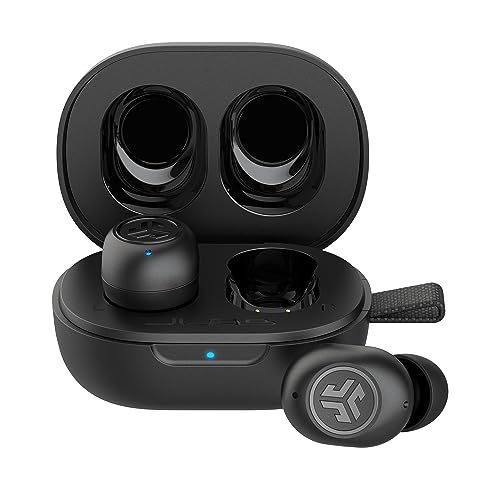
JLab JBuds Mini — the tiny case that changed the budget brief
Badge: Best budget earbuds for everyday carry
- Form: ultra-compact buds and keyring-sized case
- Connectivity: Bluetooth with multipoint
- Colour shown: Charcoal Black (other colours exist in the range)
- Role: everyday, everywhere backup-and-primary earbuds
Pick up the JBuds Mini case and the concept lands instantly: this is the earbud equivalent of the coin-pocket lighter or the spare key — an object designed to be present. The case clips to a keyring, drops into a jeans coin pocket, or vanishes into a gym bag’s smallest zip, and that presence changes behaviour more than any specification in this article. Earbuds you have are earbuds you use; the Mini are engineered so that having them stops requiring a plan. For commuters who have suffered one too many journeys with a dead phone speaker as the entertainment, for gym members whose main buds live in another bag, for parents buying a first pair that will inevitably be lost once — presence is the feature, and the Mini are its champions.
Sound, judged honestly within the tier, is better than the size and price class suggest and clearly bounded by both. The tuning favours clarity and presence: voices in podcasts are forward and intelligible, pop and acoustic material sound lively at moderate volumes, and there is enough low-end suggestion to give music its rhythm without pretending to sub-bass authority. Dense, layered recordings reveal the budget — separation is modest, and turning up invites a hardening that flagship drivers avoid — but the Mini are not bought for dense recordings at high volume. They are bought for the everyday ninety percent: calls, podcasts, playlists, videos, workouts. Across that territory they are not a compromise you endure; they are simply good enough that the category above has to justify itself, which is the highest compliment budget audio can earn.
Multipoint is the feature that punches through the tier ceiling. The ability to stay connected to a laptop and a phone — meeting ends, phone rings, earbuds follow — was flagship behaviour not long ago, and its presence here rewires the value argument for hybrid workers on a budget. Call quality follows the same pattern: perfectly serviceable in quiet and moderate noise, with wind and traffic exposing the limits of the microphone budget. Battery life is sized to the case’s tiny physics — expect a working day’s pattern of use-and-top-up rather than flagship endurance, and treat the case as a powerbank-in-miniature that refills the buds between sessions. The discipline is the same as the product’s philosophy: little and often.
Strengths
- Presence: the case is so small that carrying earbuds becomes automatic.
- Multipoint connectivity at a budget tier — a working-day feature, not a toy.
- Everyday sound that clears the “good enough” bar with room to spare for calls, podcasts and playlists.
Trade-offs
- No active noise cancelling on this model — the Mini ANC exists for that need.
- Sound separation and high-volume composure are budget-class, honestly labelled.
- The tiny case is easy to carry and correspondingly easy to misplace; a keyring habit is the cure.
Best for: commuters, students, gym bags, first earbuds, backup earbuds, and anyone whose main complaint is never having earbuds when they want them. / Not suited for: frequent flyers needing real cancelling, critical listeners, or anyone who wants one pair to be their everything at flagship level.

JLab JBuds Mini ANC — the same tiny idea, with cancelling and Find My
Badge: Best upgrade within the Mini family
- Noise control: active noise cancelling
- Tracking: Apple Find My support
- Form: Mini-family compact case
- Role: travel-friendlier tiny earbuds
The Mini ANC answers the two most common “if only” wishes of original Mini owners: if only they cancelled noise for trains and flights, and if only the tiny case were findable when it inevitably hid. Active noise cancelling in a body this small will not dethrone flagship over-ears, but for the drone of a commute it moves the experience from coping to comfortable, and it does so while keeping the keyring form that made the family famous. Apple Find My support converts the case from losable to locatable — a feature whose value is precisely proportional to the case’s size, and arguably the most rational upgrade in the whole budget category.
Choose the ANC model if your listening happens in transit and your pockets have a history; choose the original Mini if your days are quieter and you prefer the simplest, most established version of the idea. Either way, you are buying the same philosophy — presence first — with the ANC deciding how much armour the presence wears.
Strengths
- Cancelling sized for commutes, in the smallest form that offers it.
- Find My support solves the tiny case’s one structural risk.
- Keeps the keyring presence that defines the family.
Trade-offs
- Cancelling depth is commuter-class, not flagship-class.
- More features draw more battery; the little-and-often rhythm still applies.
- Find My serves one ecosystem; other users gain the cancelling only.
Best for: train and bus commuters, light travellers, the chronically misplacing. / Not suited for: buyers who want maximum cancelling for long-haul flights — that job belongs to bigger hardware.
In this guide
JLab JBuds Mini Deal: what makes a deal a deal on budget earbuds
Deal literacy matters more at this tier than any other, because the budget shelf is where listings mislead for sport. A genuine JBuds Mini offer is a deal when it undercuts the model’s usual position in JLab’s own range while remaining the authentic product from a reputable seller — the combination that guarantees the app support, the warranty and the multipoint behaviour this guide describes. The traps wear familiar costumes: soundalike names with heroic specifications and no manufacturer behind them; refurbished or open-box units described in language that hopes you will not notice; and bundles padded with accessories nobody needs to make a mediocre figure look generous. The defences are boring and total: buy the exact model name, from a seller you can return to, and judge the offer against the framework in this article — what the product does — rather than against an inflated “was” figure invented for the occasion.
How the Mini fits a real day: the carrying test
Morning: the commute
Case on the keyring means the buds are at the station because your keys are. Podcasts and news arrive with multipoint already settled from yesterday; if the train is loud, volume stays sane because the fit seals decently, and the original Mini’s lack of cancelling is felt as an honest limit rather than a betrayal — this is the exact moment the ANC model earns its existence for daily rail users.
Midday: the working hours
At a desk, multipoint is the Mini’s party trick: laptop for calls and focus playlists, phone for the lunchtime walk, no re-pairing theatre in between. In an office kitchen or a café, call quality is unremarkable in the best sense — nobody comments, which is the review metric that matters for microphones.
Evening: the gym and the sofa
The case’s size makes it a gym-bag resident rather than a decision, and the buds’ light fit suits movement better than heavier flagship bodies for many ears. At home they become the sofa pair — video, late-night listening at considerate levels — while bigger audio sleeps in another room. A product that serves all three chapters without being thought about has passed the carrying test, and presence, once again, is the whole story.
Buying guide: budget earbuds, chosen like an adult
Rule one: buy the job, not the tier’s shame
Budget earbuds are often bought apologetically, as a placeholder until “real” earbuds arrive. The Mini refute that framing: for presence-based listening — commutes, gyms, desks, dog walks — they are not a placeholder but a solution, and many owners of flagship buds keep a Mini set as the pair that actually leaves the house. Decide which job you are hiring for before deciding what the job is worth.
Rule two: fit and seal outrank features
A budget bud that seals your ear will sound better and isolate more than a feature-rich bud that wobbles. Try the included tip sizes, judge over an hour rather than a song, and remember that small buds in small cases suit small bags — not necessarily small ears; fit remains individual at every price.
Rule three: ecosystems of one
JLab’s app support gives the Mini EQ and control touches that anonymous budget rivals omit, and app support is also a proxy for a manufacturer that will still exist at warranty time. In the budget tier, the brand is not a luxury tax; it is the support infrastructure, and the Mini’s maker is a real one.
How to set up your JBuds Mini for their best life
Step 1: Tips first, then pair everything
Fit the tips, then pair to your phone and your laptop in one sitting so multipoint starts life configured rather than discovered by accident mid-meeting. Update through the app if prompted; budget products receive meaningful refinements too.
Step 2: Give the case a home with an address
Keyring, coin pocket, or one named zip in one named bag — pick one and keep the faith. The Mini’s only structural risk is being small in a large life; a fixed address retires the risk, and the ANC model’s Find My is the insurance policy for the address system failing.
Step 3: EQ for your actual diet
If your diet is spoken word, a gentle presence-forward setting serves you; if it is bass-led playlists, accept the drivers’ scale and tune for clarity rather than chasing depth the hardware cannot counterfeit. Five minutes here is the budget tier’s best-value upgrade.
Common mistakes when buying the deal
The first is buying the soundalike — the listing that borrows the Mini’s silhouette and vocabulary without being the product; the defence is the exact model name and a returnable seller. The second is expecting flagship cancelling from the ANC model’s commuter-class system and reviewing it against aeroplanes it never claimed to silence. The third is losing the case in week one by treating it as a loose object instead of giving it the keyring address its designers intended. The fourth is the reverse error: dismissing the Mini as a toy and overspending on flagships for a gym bag’s life, where sweat, loss and presence argue the opposite. Budget buying done well is not buying cheap; it is buying precisely, and precision is this article’s entire method.
Mini vs the tiers above: an honest ladder
Against mid-range buds, the Mini concede cancelling depth (or, in ANC form, cancelling refinement), call polish in harsh noise, case battery reserves and driver separation — and win on presence, simplicity and the freedom of carrying something whose loss would annoy rather than wound. Against flagships, add hi-res codecs, spatial theatre and smart cases to the concession list, and the win column stays exactly the same, which tells you the Mini’s virtues are not a smaller version of the flagships’ virtues but a different set entirely. Ladders imply the top is the goal; the Mini are better understood as a different mountain — the mountain of being there — and on that mountain they are close to basecamp-and-summit in one tiny case.
Frequently asked questions
Are the JBuds Mini actually good, or just cheap?
Both, in the right order: they are good at the everyday jobs — calls, podcasts, playlists, presence — and they are inexpensive. Their limits (separation in dense music, cancelling on the standard model, high-volume composure) are the honest boundaries of the tier, not defects discovered after purchase.
What is the difference between the JBuds Mini and the Mini ANC?
The ANC model adds active noise cancelling for transit and Apple Find My support for locating the case, in the same tiny family form. The original Mini is the simpler, established version. Commuters and losers-of-things should lean ANC; quieter lives can save the difference.
Do the JBuds Mini have multipoint?
Yes — Bluetooth multipoint is one of their headline behaviours, letting them stay connected to a phone and a laptop together. It is the feature that most surprises buyers at this tier, and the one hybrid workers will use most.
How do I know a JBuds Mini deal is genuine?
Check the exact model name, the JLab branding, and a seller with a real returns path. Be suspicious of soundalike names, miraculous specifications and bundles padded with filler. A genuine deal is the authentic product at a favourable position in its range — nothing more exotic than that.
Are the Mini good for the gym?
They are well suited: tiny case in the bag, light buds, and a fit that — with the right tips — stays put through ordinary training. Runners in traffic should keep awareness discipline with any earbud, and heavy sweaters should follow the usual rinse-and-dry care for the buds.
Mini or a mid-range pair as my only earbuds?
If your only-pair life includes flights, loud commutes or critical listening, mid-range buys real capabilities you will use. If your life is presence listening — desks, walks, gyms, sofas — the Mini as an only pair is a rational, money-saving answer, especially in ANC form.
What should I do on the first day to make the JBuds Mini harder to lose?
Build the habit while the novelty is still doing the work for you. Decide on one home for the case, ideally the keyring or hook the case was practically designed around, and return it there every single time rather than treating pockets, bags and car consoles as interchangeable storage. Pair the buds with every device you actually use that week, so a borrowed laptop or a spare phone never tempts you to leave them behind in a drawer. Take sixty seconds to learn which bud does what, set your preferred listening mode as the default, and put the charging cable somewhere fixed instead of loose in a bag. Small earbuds are rarely lost in dramatic moments; they evaporate during ordinary ones, and a boring, consistent routine is the only accessory that reliably prevents it.
Are the JBuds Mini a sensible choice for small ears, helmets and side-sleepers?
For small ears they are one of the more sensible starting points in their class, because the buds themselves are genuinely tiny rather than merely marketed that way, and a bud that sits shallow and light is easier to wear for a full podcast than a heavier design that seals by force. Under a helmet or a close-fitting hat, that low profile is the difference between forgetting them and counting the minutes. Side-sleepers should be more cautious: almost any bud pressed between an ear and a pillow becomes noticeable eventually, so use one bud on the upward ear, keep the volume modest, and treat it as a wind-down listen rather than an all-night arrangement. In all three cases, walk and turn your head during the first wear; a fit that survives movement is the only fit worth trusting.
The bottom line
The JBuds Mini are the rare budget product whose reputation is understated by its price class: a genuinely tiny, genuinely capable everyday earbud whose multipoint and presence embarrass costlier rivals’ priorities. A deal on the genuine article is worth taking whenever your listening life matches its brief — and the brief is most people’s actual week. Check the current listing with the framework above in hand, give the case a keyring address, and enjoy the peculiar freedom of earbuds you never have to remember to bring.
The backup-earbud doctrine: why one pair is a fragile plan
Households and workers who depend on earbuds daily eventually learn the backup doctrine the expensive way — a lost bud on the morning of a flight, a case left in another city, a battery that chose a Monday to retire. A flagship-only strategy makes every accident a flagship-priced accident. The Mini change the arithmetic of resilience: a second, fully capable pair that lives in the other bag, the car, or the desk drawer converts earbud accidents from crises into shrugs. This is not upselling a second purchase; it is the recognition that presence, the Mini’s whole philosophy, scales across locations. Many owners report the backup pair quietly becoming the primary pair for everything except flights and focused listening — the doctrine’s punchline being that the cheap seats turned out to be where life happens. If you own flagships and love them, the Mini are still the most rational companion purchase in this entire review series.
For parents and first-earbud buyers
The Mini have become a default first pair for teenagers and younger listeners, and the reasons are more considered than “they are inexpensive”. The size suits smaller hands and school-bag chaos; the loss of a pair is a lesson rather than a financial event; volume can be managed at the phone with the usual parental settings, and the buds’ clarity at moderate levels does not tempt the volume upward the way muddy buds do. For older relatives, the calculus is similar with different details: simple pairing, an app they never have to open, and a case that lives on the keyring they have carried for decades. In both directions of the family, the product’s virtue is the absence of ceremony. One caution for gifting: buy the genuine model from a returnable seller, because the soundalike market targets gift buyers hardest, and a disappointing counterfeit teaches exactly the wrong lesson about the category.
Sound diary: a week of ordinary listening
Monday’s playlist is a bass-led workout mix, and the Mini deliver its rhythm with enthusiasm at gym volume, the low end present as pulse rather than pressure. Tuesday is podcast-heavy — three episodes across a commute and a dog walk — and voice clarity, the Mini’s home turf, makes the day feel like their designed purpose. Wednesday brings video calls and a film in the evening; dialogue is effortless, the film’s score is a postcard of itself, and the viewer notices the picture more than the sound, which for casual viewing is success. Thursday tests an acoustic live album, where the small drivers’ intimacy flatters the room’s closeness in the recording. Friday is the loud train, where the standard Mini’s limits are noted in the diary with an asterisk that points at the ANC sibling. The weekend is audiobooks in a garden, where nothing about the tier matters and everything about presence does. Verdict of the diary: five days of satisfaction, one asterisk — a ratio most budget products would frame.
Care, loss and the tiny-case survival manual
Small objects demand systems, and the Mini reward owners who build three tiny ones. System one is the address, already prescribed: keyring or named pocket, no exceptions, because “temporarily on the table” is how cases begin their travels. System two is the weekly charge rhythm — the case tops up on the same night as the phone’s big charge, so the whole ecosystem starts Monday full. System three is the periodic clean: tips removed and washed, contacts in the case inspected for lint, because a bud that stops charging in a tiny case is usually a bud whose contact is wearing a sweater. Loss, when it happens despite systems, has degrees: a lost bud with the case retained is a support conversation; a lost case with buds in ears is where the ANC model’s Find My earns its keep or where the original’s owner learns the address lesson permanently. None of this is burdensome — it is the same discipline as keys and wallets, applied to an object that aspired to join that category from the start.
The environmental ledger of a small, long-lived product
A tiny product is not automatically a light one, but the Mini’s ledger has honest entries. Small batteries and minimal materials per unit; a design that has stayed stable across its life rather than churning annually; and a use pattern — carried daily, kept for years as primary then backup — that spreads manufacturing cost across an unusual number of listening hours. The strongest environmental behaviour available to the buyer is retention: keep the Mini in service as they graduate from primary to backup to gym pair, pass them on when a household member needs a first set, and recycle them properly only at true end of life. Budget products are often treated as disposable by design culture; the Mini are better treated as the opposite — a small durable — and their build supports the intention.
Comparing the Mini to the phone in your pocket
The Mini’s most honest competitor is not another earbud; it is the pair that came free with a phone, or the phone’s speakers themselves. Against bundled buds, the Mini win on fit consistency, on wireless freedom from a cable that snags on every door handle in the world, and on the case-based battery rhythm that keeps them ready. Against phone speakers, the win is privacy and environment: a train carriage, a quiet office and a shared bedroom all vote for earbuds, and the Mini are the earbuds most likely to be present for the vote. This framing explains the product’s sales better than any rivalry with flagships does — most Mini are not replacing expensive earbuds; they are replacing absence, improvisation and the speakerphone-in-public era. A deal on them should be judged against the cost of that absence: missed calls taken badly, journeys endured in silence, workouts endured to gym music. Against those, the Mini at their ordinary range position already look like the bargain the deal-hunters are circling.
Work calls on a budget: what “serviceable” really means
Since remote work made earbuds into office equipment, the Mini’s call performance deserves precise language. In a quiet room, colleagues will hear you clearly and naturally; your voice will not have the studio polish of a dedicated headset, and nobody will ask for it. In a kitchen with a kettle or a street with light traffic, the microphones hold your voice in front of the noise with occasional competition. In genuine wind or a busy road, expect callers to ask for repetitions — the honest boundary of the tier, shared by every budget bud and the reason call-critical professionals should budget upward or keep a wired headset for the important meetings. For the hybrid majority whose calls happen in controllable spaces, “serviceable” turns out to mean “never the reason a meeting went badly”, and that is the standard the Mini meet. Pair them with the laptop for multipoint, keep the case charged, and the budget stops appearing in your working life at all.
The deal calendar: when patience helps and when it does not
Without quoting a single figure — because figures expire and this page should not — the rhythm of budget-audio offers is predictable enough to plan around. Major sale seasons across the retail year reliably bring the genuine Mini into promotion, as do the launch windows of successor models, when the established version becomes the value play of its own family. Between those windows, the model’s ordinary range position is already its argument, and waiting months to save a small increment on a product whose whole purpose is daily presence is usually a poor trade: the commutes endured without earbuds in the meantime are a real cost, paid in the currency the Mini exist to refund. The exception is the deliberate stock-up — a household equipping several members, or a buyer who has decided on the ANC model and can wait for its promotional season. Patience is a strategy for planned purchases; presence is the strategy for daily ones, and confusing the two is how deal-hunting defeats itself.
What to check in the first 48 hours
New Mini deserve the same verification ritual as any earbud, compressed to budget scale. Charge fully, then run the fit test of your own ears across an hour’s listening — comfort now predicts ownership happiness better than any other variable. Place a test call to a patient friend from your noisiest regular environment and ask the only question that matters: “How do I sound, honestly?” Exercise the multipoint handover between your phone and laptop until it is boring. Confirm the app sees the buds and apply any update offered. And put the case on its keyring or in its named pocket before the second day — habits formed in the first 48 hours are the ones the product will live by. A pair that passes these five checks is the genuine article doing its genuine job; a pair that fails the call or the fit is a return made cheap by having been made early.
Stories from the tiny-case economy
Ask around and the Mini anecdotes accumulate a pattern. The nurse whose buds live in a scrubs pocket and survive a laundry near-miss that the keyring habit prevented. The delivery rider whose calls and navigation prompts run through one bud while the other ear keeps the road. The grandfather who rejected three “complicated” gadgets and accepted the Mini because they behaved like his radio — there when wanted, silent when not. The student whose entire audio life fits in a pencil case and whose Mini have outlasted two phones. None of these stories mention soundstage. All of them mention presence, reliability and a price that never made anyone feel foolish. Product reviews are supposed to evaluate objects; the Mini keep insisting on being evaluated as habits, and the habit evaluation is a rout. When a deal puts the genuine article within reach of a household that has been improvising its audio, these stories are what the money is actually buying.
The ANC question, revisited for transit cities
City dwellers face a specific version of the Mini decision, because their background is not quiet: buses, metros, arterial roads and the general urban wash accompany every listening hour. For them the standard Mini’s honest limit arrives daily, and the ANC model’s commuter-class cancelling is not a luxury but the difference between listening at sane volumes and leaning on volume to outshout the city — a hearing-health distinction as much as a comfort one. If your postcode is loud, treat the ANC as the default Mini and the original as the quiet-suburb edition. Conversely, rural and small-town listeners, whose commutes are cars and whose walks are birdsong, will rarely cash the cancelling cheque and should let the simpler model keep the change. Geography is a specification; this is the rare product line honest enough to let you buy your own.
Accessories and ecosystems: spending the savings wisely
The money a Mini buyer does not spend on flagships is best spent, if at all, on the small infrastructure of presence: a spare charging cable for the second location, a keyring clip that suits the case’s loop, replacement tips in the size your ears settled on (tips are wear items, and fresh tips restore both comfort and seal for very little). What not to buy: decorative cases for a case, miracle cleaning kits, or extended warranties whose cost approaches the product’s own — at this tier, self-insuring through the backup doctrine is the rational policy. Within JLab’s wider range, the natural companions are a larger pair for home listening rather than more small pairs; the Mini already own the small-pair job in any household they enter. Spend the savings there, or do not spend them — the deal’s virtue is allowed to remain a virtue.
Final scoring, in words rather than numbers
Presence: the best in earbuds, full stop. Everyday sound: good, honestly bounded, voice-forward where it matters. Calls: serviceable to good, environment permitting. Features: multipoint lifts the whole tier; ANC available one model up. Value: the genuine article at its range position is already the deal; promotions merely underline it. The JBuds Mini do not win comparisons against flagships, because they are not in those comparisons — they are in the comparison against having nothing in your pocket, and they win that one every day of the week.
How long will they last? The durability forecast
Budget products invite a disposable assumption that the Mini’s construction does not endorse. The buds and case are simple, sealed against everyday moisture and dust in the manner of their class, and free of the fragile theatre (screens, hinges with ambitions) that ages flagship cases. The wear items are predictable: tips soften and want replacing; the battery’s chapters shorten gradually across years of daily rhythm; the case’s finish records its travels. Owners who run the charge-and-clean systems described earlier routinely get multi-year service, at which point the pair’s graduation to backup duty extends its useful life further. The honest failure mode to plan for is loss, not breakage — physics again — and the countermeasures are the address habit and, in the ANC model, Find My. A product whose likeliest death is being misplaced has a strange kind of durability brag, but it is the brag the evidence supports.
The one-bud lifestyle
A quiet Mini subculture uses one bud at a time — for cycling-adjacent awareness (where lawful and sensible), for parents keeping an ear on the house, for warehouse and care workers whose jobs forbid full immersion, and for anyone whose podcasts accompany tasks that still require a presence in the room. The Mini suit the lifestyle unusually well: the buds are light enough for all-day single wear, the case’s size makes the spare bud’s home pocketable rather than desk-bound, and alternating buds across a long day spreads both battery and ear fatigue. Set your device to a mono-friendly output if it offers one, so single-bud listening does not silently discard half a stereo mix, and keep volumes moderate — one ear working alone should not be asked to work louder. It is a small section for a big behaviour, and it illustrates the family’s recurring theme: the Mini adapt to lives as they are, rather than demanding lives adapt to them.
Reading reviews of budget earbuds without being misled
A final service this guide can offer is inoculation against the budget shelf’s review culture, which the Mini’s own reputation has survived and which distorts every neighbouring product. Distrust any review — of any cheap bud — that leads with driver size as if it were destiny, that quotes battery figures without a volume attached, or that uses the word “flagship” within a paragraph of a product costing a fraction of one. Trust reviews that talk about fit over hours, call quality in named environments, and what the product is like to carry, because those are the axes on which budget earbuds actually differ. The Mini score well under that honest rubric, which is why their word of mouth is so durable: owners describe habits and journeys, not specifications, and habits are the one metric marketing cannot counterfeit. If this guide has persuaded you of anything, let it be that rubric — apply it to the Mini, to their ANC sibling, and to every rival, and the deal pages of the internet become a much quieter, clearer place.
Travel with the Mini: the smallest line on the packing list
Travellers divide into those who accept earbud risk and those who organise against it, and the Mini serve both. The risk-accepter carries one pair and wants it tiny; the organiser carries a primary pair for the flight and the Mini as the city’s pair — the ones that can be lost to a foreign pavement without ruining the trip’s budget or its mood. In hostels and shared spaces, the Mini’s price class is itself a security feature, and their size makes them the pair that fits the money belt’s last centimetre. For light sleepers in strange rooms, a single bud with a familiar podcast is a portable piece of home; for early risers in shared dorms, they are courtesy made hardware. None of this requires the ANC model unless the journey’s long legs demand it — many travellers run the standard Mini in the city and reserve bigger cancelling for the flight itself, a two-tier strategy this guide endorses as the thinking traveller’s default.
The verdict for the undecided cart
If the Mini are sitting in a cart while you read this, the remaining questions are few and answerable. Is the seller reputable and the model name exact? Then the product risk is as low as this category offers. Is your listening life the presence kind — commutes, desks, gyms, walks, sofas? Then the fit between product and life is as good as this category offers. Do you need flagship cancelling, hi-res codecs or smart-case theatre for your actual week? If not, the cart is right and the hesitation is just the tier’s reputation talking — a reputation the Mini themselves have spent years quietly refuting, one keyring at a time. Check the current listing, confirm it is the genuine article, and let the smallest earbuds in the room do their disproportionately large job.
A short history of why small won
The earbud market spent years in an arms race of features stacked into ever more elaborate cases, and the Mini’s success is partly a referendum on that race. Most listening, it turned out, was not an audiophile session but a commute, a chore, a workout — contexts where the winning specification is availability. JLab read that correctly earlier than most and engineered downward with intent: remove the theatre, keep the connection honest, shrink the case until it joins the keys. The ANC sibling’s arrival does not contradict the philosophy; it extends presence into noisier territory while keeping the form. Understanding this history helps a buyer resist both snobbery and its opposite — the Mini are not a guilty pleasure or a secret flagship, but a mature product category’s answer to a real question, asked by millions of pockets. Deals come and go on them; the question, and the answer, stay.
Household math: equipping everyone without regret
There is a particular household calculation the Mini make possible: earbuds for everyone, at once, without a family summit about money. A pair for the commuting partner, a pair for the teenager, a pair that lives in the car for whoever draws the long drive — the total commitment stays in the territory of a single mid-range purchase, and the household gains a standard: one model, one app, one set of habits, spare tips that fit everyone. Standardisation has operational value that individual optimisation never counts — any member can borrow any case, help any other member pair, and the lost-pair protocol is a reorder rather than an investigation. Households that run this play rarely go back to the one-precious-pair model, because they have tasted the alternative: audio as a utility, present everywhere, owned by no one’s anxiety. If this guide’s deal framework has a final form, it is that — the deal is not a percentage; it is the moment a whole household stops rationing earbuds.
The quiet virtues: what no listing will tell you
Listings cannot photograph the absence of worry, but it is the Mini’s most reported owner experience: the absence of the flagship flinch when the case slides off a table, the absence of negotiation when a child asks to borrow them, the absence of the packing-list debate entirely. They are also, not trivially, easy to lend, easy to replace and easy to forgive — social properties that expensive objects cannot have and that turn out to govern how much music a household actually hears. A review can measure drivers and microphones all day; the Mini keep pointing at a softer metric, the total hours of listening a life contains, and claiming — with considerable evidence — that removing friction adds more hours than adding fidelity ever did. That is the deepest sense in which the deal is real, and it does not depend on any week’s promotion.
When the deal should be declined
Honesty requires the negative space: decline the deal, however genuine, if your ears have already voted for a different fit family and the Mini’s shape is a known mismatch; if your work is call-critical in uncontrolled noise and a budget microphone will become a professional liability; if your listening is primarily long-haul travel, where cancelling depth is not a preference but the product; or if you are buying to impress a recipient whose values run to flagship theatre — gifts should match the recipient’s religion, not the giver’s. Declining for those reasons is not a failure of deal-hunting but its maturity: the framework in this article exists so that the right buyers buy confidently and the wrong buyers walk away early, and both outcomes count as the guide doing its job.
A closing word on enough
Audio culture rarely celebrates “enough”, because enough does not photograph well and cannot be unboxed with ceremony. The JBuds Mini are the enough product par excellence: enough sound for the day, enough features for the work, enough battery for the rhythm, small enough to be there for all of it. The deal framing that brought you here is, in the end, the market agreeing with that assessment in public. Buy the genuine article, give it an address on your keyring, and let enough — carried everywhere, used daily, worried about never — make its quiet case for the next several years of your listening life.
Post-purchase: the first week with the Mini
Day one is fit and pairing; day two is the first commute, where presence stops being a theory. By day three the multipoint handover has either become invisible — success — or is asking for the one-time settings attention described earlier. Day four usually brings the first accident-that-wasn’t: the case dropped, the bud in a pocket through a wash cycle avoided by the keyring habit, the rain shower that tested the sealing and found it unbothered. By the weekend, the buds have typically been lent once, lost once (briefly, instructively) and charged on the household rhythm without a thought. Owners who reach day seven with the address habit intact almost never return the product, because the product has stopped being a purchase and become infrastructure. That is the deal’s final form, and it is available at the model’s ordinary position in the range — the promotion, when it comes, is merely the market applauding a conclusion owners reached on their own.
One more comparison: Mini versus wired earbuds
Some holdouts still run wired earbuds for their zero charging and zero latency, and the Mini’s pitch to them is worth stating plainly. The wire’s virtues are real and dwindling: phones increasingly lack the socket, cables snag and tangle with a creativity that defies physics, and the wire tethers the listener to the device in shared spaces. The Mini answer with presence and multipoint — two devices, no tether, a case that makes the battery a rhythm rather than an anxiety. Latency, the wired holdout’s last argument, matters for competitive gaming and almost nothing else in a commuter’s day; for video, modern Bluetooth implementations keep dialogue acceptably married to faces. The conversion is rarely about specifications. It is about the first week of walking away from the desk mid-podcast with the phone left behind, after which the wire reads as a historical document.
The summary a friend would give you
They are tiny, they work, they connect to everything you own at once, they sound better than they have any right to, and the worst thing about them is that you will eventually lose the little case unless you put it on your keys like you were told. If your life is loud trains, spend the step up to the ANC pair. Otherwise, buy them, stop researching earbuds, and go outside — the Mini would want it that way, being built for exactly that.