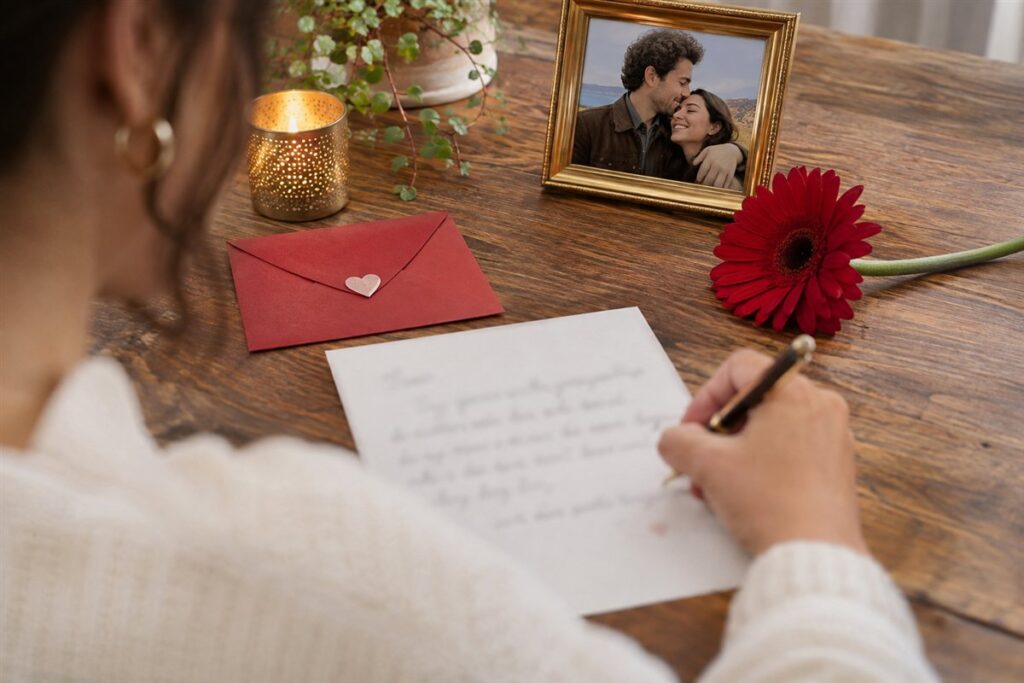
The best way to wish your girlfriend a happy Valentine’s Day is to say something specific that only you could say, in a way that fits your usual style. A short, honest message beats a long, borrowed one. Below are steps for writing the words and ideas for delivering them.
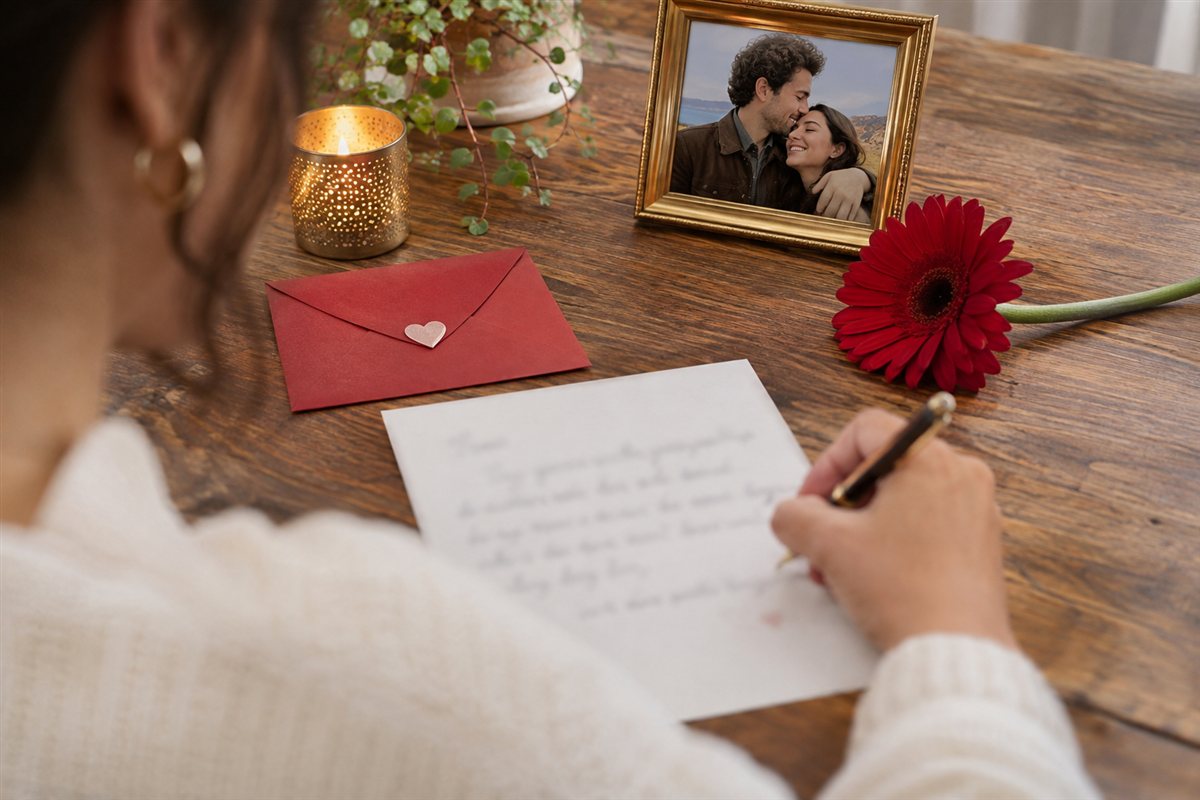
Write the Message in Five Steps
- Begin with her name, not a generic greeting.
- Mention one memory from the past few months, such as a trip, a joke or an ordinary evening that stuck with you.
- Say one quality you admire, and give an example of it.
- Add a wish for the day or for the future, kept simple.
- Close with a line in your natural voice. If you never use pet names, do not force one.
Examples of Tone
You can adapt the structure above to different personalities. Here are three tones to consider.
- Warm and sincere: Focus on gratitude and what she brings to your days.
- Playful: Reference an inside joke and keep the language light.
- Quiet and short: Two or three sentences, handwritten, with no decoration.
Ways to Deliver the Wish
| Method | Best when | Tip |
|---|---|---|
| Handwritten card | You will see her in person | Write it out once, slowly, to avoid crossing words out |
| Text message | You are apart that morning | Send it early so it is the first thing she reads |
| Voice note | She likes hearing your voice | Record in a quiet place |
| Photo with a caption | You share many pictures | Choose a natural shot, not a posed one |
Pairing Words With a Small Gesture
Words alone can be enough, but a small item makes them feel complete. A printed photo of the two of you with a line written on the back works well. So does a single flower with a card, or a favorite snack with a label. Choose something that you could carry and give with a smile in under a minute.
Mistakes to Avoid
- Copying a long poem you did not write and do not relate to.
- Making jokes at her expense on a day meant to celebrate her.
- Leaving it until late at night.
- Comparing her to other couples or social media posts.
If you are long distance, plan a call at a set time and keep your message ready beforehand. Reading it aloud, even if you feel shy, often means more than any perfect phrasing.
Gathering Material Before You Write
Most people struggle with the words because they start with a blank screen. A better way is to collect raw material for a few days beforehand, then shape it. Keep a note on your phone and add anything that comes to mind: something she said that made you laugh, a small kindness you noticed, a place you both liked, a habit of hers you find endearing.
Once you have a handful of entries, look for the ones that are specific rather than general. “You are so kind” could be written to anyone, while “you stopped to help that stranger with her bags and never mentioned it” could only be about her. Specific details prove you pay attention, which is what most people want to feel on this day.
- Pick the two or three details that make you smile when you read them.
- Check that each one is something she would be happy to see written down, not something that might embarrass her.
- Leave out anything unresolved, such as a recent disagreement, unless you are addressing it with care.
Write a rough draft in one sitting without editing, then leave it for a few hours and read it again. Cutting a rambling line is easier once the first rush has passed.
Matching the Wording to Your Stage of Relationship
What feels right depends on how long you have been together and how openly you usually talk about feelings. A message that suits a six-year relationship can feel heavy in the first few weeks, and a light note might feel thin after years together.
- Early days: keep it warm and light. Mention something you enjoyed doing together and say you are glad to know her. Avoid big promises or declarations that might put pressure on her.
- A year or two in: you have shared history to draw on. Refer to a particular moment and say what it showed you about her.
- Long term or engaged: gratitude works well. Mention the everyday things she does, and what the steady life together means to you.
- After a hard stretch: be honest and gentle. Acknowledge the difficulty briefly, say what you appreciate about how she handled it, and look ahead.
Use words she would believe coming from you. If you normally tease each other, a little teasing keeps the message natural. If you are usually reserved, a short, direct line will carry more weight than flowery language you do not usually use.
Timing the Day
When you say it can matter nearly as much as what you say. A good plan fits her schedule and personality, so think about what her day will look like before you decide.
- If she has an early start, send a short message before she leaves, then give the longer version in the evening.
- If she has a stressful day at work or study, avoid anything that demands a big reaction in the middle of it. A quiet note she can read when she has a moment is kinder.
- If you plan a dinner or outing, keep the words for a calm point such as before the meal or after, not while the waiter is hovering.
- If you are in different time zones, work out what time it will be for her and aim for her morning.
Have a backup if plans change. A message already written and saved can be sent even if a delivery is late or a booking falls through. The words are the part you control, and they still count when the rest of the day does not go to plan.
Adapting for Different Situations
Not every Valentine’s Day looks the same. A few common situations call for a slightly different approach, and thinking about them in advance avoids awkward moments.
- Long distance: include something you are looking forward to doing together, with an honest note about missing her. A planned call, a shared playlist or a letter that arrives on time shows effort.
- Newly dating: a small, low-pressure gesture fits best. A friendly note with something you noticed about her is enough.
- When she dislikes the day: some people find it commercial or uncomfortable. Respect that, and write something that is simply an appreciation, with no mention of the holiday if that suits her.
- Different languages or cultures: if she has a first language other than yours, one line in her language, checked carefully for meaning, can be touching. Ask a trusted friend to confirm it says what you mean.
- Busy or tired periods: offer something practical alongside the words, such as taking over a chore for the evening.
The aim in every case is the same: show that you notice her as an individual, not that you followed a template.
Keeping the Feeling Going Afterwards
A single day cannot carry a relationship, and a message works best when it fits how you treat each other the rest of the year. If your words on February 14 are warmer than anything you say in March, she may notice the gap. The healthiest way to use the day is as a reminder, not a performance.
Consider turning one thing you wrote into an ongoing habit. If you praised her patience, notice it again next week and say so. If you mentioned a place you both enjoyed, suggest going back. Small repeated acts of attention often mean more than one grand gesture.
- Keep a copy of what you wrote, or a photo of the card, so you can look back on it together later.
- Ask her afterwards what she liked best. It helps you understand what she values.
- If she gave you something, respond with thanks that mention a specific detail rather than a generic compliment.
Finally, do not measure the day by her reaction in the first minute. Some people cry, some laugh, and some go quiet. A calm response can still mean the message landed, so give her room to take it in.
FAQ
Is it fine to keep it short?
Yes. Two honest sentences often land better than a long message that feels generic.
Should I post it publicly?
Only if she enjoys that. If she is private, send it directly and keep it between the two of you.
What if I am bad with words?
Keep it simple and true. A few plain sentences naming one thing you appreciate are better than a polished message you did not write. You can also pair a short note with a shared activity.
Is it okay to use a quote or a line from a song?
Yes, as long as it is clearly connected to the two of you. Add a sentence of your own explaining why it reminds you of her, so the message still sounds like you.
Should I mention the future in my message?
A light, hopeful reference is fine, such as a trip you want to take. Avoid promises or big commitments written in the moment unless you have already talked about them together.
What if we have recently argued?
Be honest and brief. Acknowledge that things have been hard, say what you value in her, and avoid using the message to settle the argument. A calm conversation can follow later.
Is a text message too casual?
Not if that is how you usually talk. A thoughtful text sent at a good time can mean more than a card written in a rush. Choose the format that matches how she likes to be reached.
Can I write it in her language if I am not fluent?
You can, with care. Keep it to one short line, check the meaning with someone who speaks the language well, and say the rest in your own language so it stays sincere.
What if I forgot and it is already the day?
Send a short, honest message right away rather than waiting. Write one real detail about her and suggest a plan to celebrate properly later in the week.
The Short Version
Use her name, one real memory and one quality you admire, then close in your own voice. Deliver it in the way she likes best, and add a small gesture if you can. Sincerity matters more than polish.
Related Guides
- Romantic Valentine's Day Gift Ideas for Your Girlfriend, Her Way
- Unexpected Valentine's Day Gift Ideas for Your Girlfriend
- Unique Valentine's Day Gifts for Your Girlfriend: Clue Method
- Valentine Gift for Girlfriend: Online Shopping Tips and Timing
- Last-Minute Valentine Day Gifts for Your Sweetheart Guide