Disclosure: As an Amazon Associate, reviewstook.com earns from qualifying purchases. Links on this page are affiliate links; they cost you nothing extra. Prices and availability change often, so check the current Amazon listing before you buy.
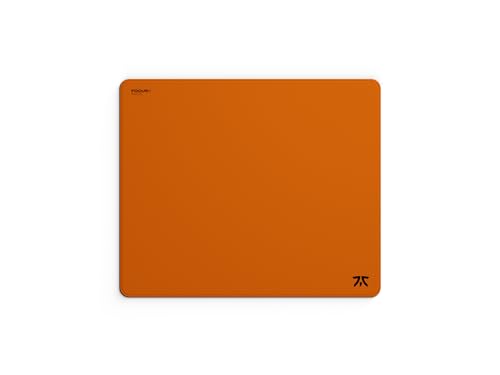
A mousepad looks like the simplest part of a gaming desk, right up until your crosshair overshoots a corner peek for the third round in a row. The Fnatic Focus3 Max sits at the deliberate end of that market: it is a thick, large, control-leaning cloth pad from Fnatic’s Focus 3 line, sold in a Sunrise Orange finish, with a water-resistant coating, a PORON foam base that refuses to slide, and micro-knit stitched edges. This review treats the fnatic focus3 max as what it actually is — a surface decision, not an accessory afterthought — and compares it against two long-running alternatives that solve the same problem differently: the extra-thick SteelSeries QcK Heavy and the thinner, faster Logitech G640.
Why does a pad deserve this much scrutiny? Because the pad is the one component every aiming motion passes through. Your mouse sensor reads the cloth, your wrist and forearm drag across it, and the friction curve of that cloth decides how a flick starts, how it travels, and — most importantly — how it stops. A control surface like the Focus 3 Max trades a little initial glide for a lot of stopping confidence. Whether that trade suits you depends on your sensitivity, your main games, your desk, and even your climate, and each of those variables gets its own section below.
There is also a sensor argument for a consistent control cloth that rarely gets stated. Optical sensors sample the surface thousands of times per second and build motion from the differences between frames. A surface with uniform texture gives the sensor uniform information at every speed, which matters most at the extremes of your movement range: the near-stationary hold, where a coarse or patchy weave can produce tiny phantom movements, and the full-speed swipe, where a surface that changes character can produce a flick that travels a different distance than your hand intended. Fnatic builds pads for professional players whose livelihood depends on neither of those failures happening on stage, and the Focus line’s smooth, even cloth is the consumer expression of that requirement.
One honesty note before the picks: a pad cannot fix a sensitivity that is wrong for you, and no cloth weave compensates for a mouse that does not fit your hand. What the right pad does is remove a variable. Once the surface under your mouse behaves the same way on day one and day ninety, the remaining inconsistency in your aim is yours to train away — which is exactly the position a serious player wants to be in.
Key takeaways
- The Focus 3 Max is a control cloth pad: its smooth cloth surface is tuned for stopping power and micro-adjustment, not for effortless glide.
- Its listed size — 18.9 by 15.85 inches, 0.24 inches thick — gives low-sensitivity players real sweep room and gives every player a cushioned, planted feel.
- The PORON foam base and water-resistant coating solve the two most common cloth-pad complaints: the pad creeping across the desk, and a spilled drink ending its career.
- The SteelSeries QcK Heavy is the pick if you want maximum thickness and a familiar, heavily damped feel from a pad line that has existed for years.
- The Logitech G640 is the pick if the Focus 3 Max sounds too slow: it keeps a consistent cloth texture but with moderate friction and a thinner profile.
- Measure your desk before ordering any of these. All three are large pads, and a large pad that hangs over the desk edge is worse than a smaller one that sits flat.
In this guide
Quick picks for Fnatic Focus3 Max
| Unit | Best for | Listing |
|---|---|---|
| Fnatic Focus 3 Max | Best for travellers | Check price on Amazon |
| SteelSeries QcK Heavy | Best for muted spaces | Check price on Amazon |
| Logitech G640 | Best value route | Check price on Amazon |
The three pads above are separated by feel, not by quality tier. The Focus 3 Max is the most specialised: thickest in spirit, most control-oriented, and the only one here with a foam base engineered specifically to grip rather than a plain rubber underside. The QcK Heavy is the traditionalist’s pad — a very thick slab of cloth and rubber that has been muting desk noise and softening wrist contact for a long time. The G640 is the balanced option, the pad Logitech designed to behave predictably under its own sensors, with a surface that sits between speed and control.
If you already know you play tactical shooters at low sensitivity and you are tired of your current pad skating around during big arm sweeps, the Focus 3 Max is the headline pick and the rest of this article explains why in mechanical detail. If your desk is shared, shallow, or glass, read the base-grip and size sections before deciding, because those constraints eliminate pads faster than any glide preference does.
How the selection was chosen
Three filters built this shortlist. First, every pad had to be a cloth gaming surface from a maker with a verifiable Amazon listing through the site’s own product data, so the names, sizes and features quoted here come from the listings themselves rather than from memory or forum folklore. Second, each pad had to represent a genuinely different point on the friction-and-thickness map; three near-identical control pads would teach a reader nothing. Third, each pad had to be a product a buyer can actually keep for years — which ruled out novelty surfaces with coatings known to wear into patchiness, and pads whose edges are left raw to fray.
The Focus 3 Max earned the headline slot because its listing describes a coherent design brief: smooth cloth control surface, water-resistant coating, non-slip PORON foam base, micro-knit stitched edges, and a generous footprint. Nothing in that list is decoration. Each element answers a documented failure mode of ordinary cloth pads, and the detailed review below takes them one at a time.
The QcK Heavy stays relevant because thickness is a real preference, not a spec-sheet contest: some players want the mouse to sink slightly and the desk to disappear under the wrist, and SteelSeries builds this pad extra thick for exactly that feel. The G640 earns its place as the control group — a widely used, sensor-optimised cloth pad with moderate friction, which makes it the honest yardstick for anyone wondering whether the Focus 3 Max’s extra control is a benefit or a brake.
Detailed reviews
Fnatic Focus 3 Max
Best for travellers
| Model | Fnatic Focus 3 Max |
|---|---|
| Class | Gaming Mousepads |
| Surface | Smooth cloth control surface with water-resistant coating |
| Base | Non-slip PORON foam base |
| Edges | Micro-knit stitched edges |
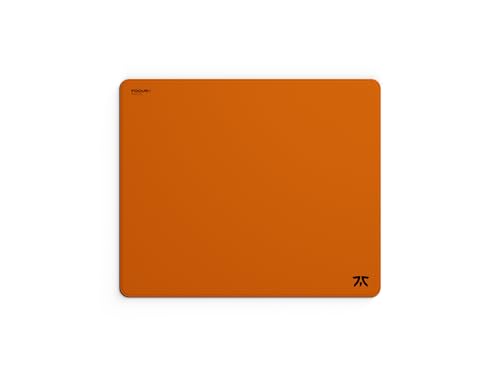
| Listed size | 18.9″ x 15.85″ x 0.24″ |
| Colour | Sunrise Orange |
| Listing | Check price on Amazon |
Start with the surface, because that is what you are really buying. Fnatic describes the Focus 3 Max top as a smooth cloth control surface, and the word control carries a precise meaning in pad vocabulary: the weave is tuned so the mouse decelerates predictably when you stop pushing it. In a tactical shooter, most missed shots at mid-range are not failures to reach the target — they are failures to stop on it. A control cloth adds a small, constant braking force to every movement, which widens the window in which your hand can settle the crosshair on a head-sized target. The cost is real too: large swipes take more effort, and tracking a strafing opponent demands more continuous arm pressure than on a speed pad.
The base is the second half of the design, and it is the half most pads get wrong. PORON is a microcellular foam used in cushioning applications precisely because it compresses under load and grips rather than skates. Under a mousepad it does two jobs at once. It anchors the pad to the desk — during a full-arm 180-degree turn, the force trying to drag the pad sideways is considerable, and a foam base that bites into the desk surface keeps the pad registered to the millimetre. It also provides the cushion: at 0.24 inches thick, the Max gives your wrist bone and the heel of your hand a forgiving landing that thin pads simply do not offer.
The water-resistant coating addresses the most mundane killer of cloth pads, which is liquid. A coffee splash on an untreated cloth pad soaks in, dries unevenly, and leaves a patch that glides differently from the rest of the surface — the pad is effectively ruined even after cleaning, because consistency was the whole point. A coating that keeps liquid beaded on the surface long enough to blot away preserves that consistency. It is not a licence to use the pad as a coaster, but it converts an accident from a replacement purchase into a paper towel.
Micro-knit stitched edges finish the construction. Stitching exists to stop the cloth layer peeling away from the base, which is how unstitched pads die, but the micro-knit part matters for comfort: the stitching sits low and fine, so when your forearm rests across the pad’s edge during a long session, you are not pressing your skin into a raised cord of thread. Players who anchor their wrist at the pad’s front edge feel this detail for hours at a time, and it is the difference between an edge you forget and an edge that leaves a line on your arm.
Size deserves its own paragraph. At 18.9 inches wide, the Max has a deskpad-class footprint in width while staying pad-like in depth, which suits players who sweep the mouse across a wide arc but do not want cloth under their keyboard. If you play at a low effective sensitivity — the kind where a full turn needs most of a forearm’s travel — this width is the difference between lifting the mouse mid-fight and never thinking about the pad’s boundary at all. The Sunrise Orange colour is the visible commitment: it will not disappear into a blacked-out setup, so buy it because you like the look, not in spite of it.
How does the Max behave paired with different mice? Weight changes the equation. A heavy mouse carries momentum that a control surface must absorb, so heavier mice feel more planted and deliberate on this cloth; a very light mouse, which starts and stops almost with the fingers alone, reveals more of the surface’s static friction and can feel slightly scratchy at creep speed until the player’s touch lightens. Neither pairing is wrong, but if your mouse is at the ultralight extreme and your grip is fingertip, expect an adjustment period while your fingers learn how little force a start actually needs.
Strengths
- Control-tuned cloth that helps the mouse stop where your hand stops, rewarding deliberate flicks and micro-corrections.
- PORON foam base that grips wood, laminate and glass desks hard enough to survive full-arm sweeps without creeping.
- Water-resistant coating that turns drink spills from a pad-ending event into a quick blot and a non-issue.
- Low micro-knit stitched edges that protect against peeling without digging into a resting forearm.
Trade-offs
- The control surface demands more effort for long tracking movements; high-sensitivity players may find it simply slow.
- At 0.24 inches thick it raises the mouse hand noticeably, which can clash with a very low desk or a chair that does not adjust upward.
- The Sunrise Orange finish is a strong visual statement and will not suit a setup built around muted tones.
Best for: low-to-mid sensitivity players in tactical shooters who want stopping power, cushion and a pad that stays exactly where it was placed. / Not suited for: players who prioritise effortless glide for constant tracking, or desks too shallow to give the footprint a flat home.

SteelSeries QcK Heavy
Best for muted spaces
| Name | SteelSeries QcK Heavy |
|---|---|
| Range | Gaming Mousepads |
| Build | Extra thick non-slip rubber pad, large size |
| Design aim | Peak tracking and stability, optimised for gaming sensors |
| Listing | Check price on Amazon |
The QcK line is one of the oldest names in gaming cloth pads, and the Heavy variant exists for players who hold a simple belief: thicker is better. SteelSeries builds it as an extra thick rubber-based pad in a large footprint, and the experience follows from that construction. The mouse sits on a surface with genuine give, the wrist rests on something closer to a cushion than a mat, and the whole assembly damps the small sounds a desk makes — mouse lifts, keyboard thumps, a mug set down harder than intended. In a shared room or a flat with thin walls, that muting is not a trivial benefit.
Where the Focus 3 Max uses foam technology to grip, the QcK Heavy relies on mass and rubber. A thick rubber base stays put through ordinary play perfectly well, and its tracking surface is the classic QcK cloth that generations of players have calibrated their aim on — SteelSeries describes it as optimised for gaming sensors and tuned for peak tracking and stability, which in practice means a familiar, medium-control glide with no surprises in any direction. There is no coating story here and no stitched-edge story; the edges are the traditional cut finish, which some players actually prefer because there is no stitch line under the forearm at all.
Choose the Heavy if your priority list starts with comfort and quiet and only then reaches glide character. It is also the natural pick for a player whose desk surface is slightly imperfect — a seam, a scratch, a gentle warp — because a thick pad irons over small irregularities that a thin pad telegraphs straight into the mouse feet.
One more Heavy trait deserves a sentence: because its cloth is the long-running QcK recipe, replacement is painless. A player who wears one out in three years can buy the same feel again without a recalibration period, which is a form of value that novel surfaces cannot promise.
Strengths
- Extra thick construction that cushions the wrist and forgives uneven desk surfaces better than thin pads can.
- Classic QcK cloth feel that many experienced players already have muscle memory for.
- Heavy rubber base that stays planted through ordinary and moderately aggressive play.
- Noticeable sound damping for the desk, welcome in shared or quiet rooms.
Trade-offs
- No stitched edges, so the cloth layer’s long-term enemy — edge separation — is less defended than on the Fnatic.
- No water-resistant coating is claimed, so spills soak in the old-fashioned way and demand prompt, careful cleaning.
- The sheer thickness can feel ponderous to players who like the mouse low and the desk close.
Best for: comfort-first players, shared-room setups, and anyone whose aim was built on classic QcK cloth and sees no reason to relearn a surface. / Not suited for: buyers who want modern edge stitching and spill protection, or who found thick pads tiring on long tracking-heavy sessions.

Logitech G640
Best value route
| Product | Logitech G640 |
|---|---|
| Line | Gaming Mousepads |
| Surface | Cloth with consistent surface texture and moderate surface friction |
| Base | Soft rubber base, non-slip |
| Design aim | Optimised for gaming sensors |
| Listing | Check price on Amazon |
The G640 is Logitech’s answer to a specific engineering question: what surface makes a gaming sensor behave most predictably? Its listing emphasises a consistent surface texture and moderate surface friction, and those two adjectives define the pad. Moderate means it neither brakes as firmly as the Focus 3 Max nor glides as freely as a speed pad; consistent means the friction does not change character from the centre of the pad to its corners, which is what a sensor — and a player’s muscle memory — actually needs.
The soft rubber base keeps the pad lighter and lower-profile than either rival here. That thinness has practical consequences beyond feel: the G640 rolls up easily for travel to a LAN or a friend’s house, it sits flatter sooner after unrolling, and the step from desk to pad edge is smaller for a wrist that slides on and off the front. Logitech also positions the G640 as the matched surface for its own G mice, so an all-Logitech setup gets a pairing the maker itself tuned.
Treat the G640 as the calibration option. If you do not yet know whether you are a control-pad player or a speed-pad player, its middle-ground friction will not fight you while you find out, and its consistency means the lessons you learn on it transfer when you later specialise.
Strengths
- Consistent texture across the whole surface, so flicks that end near a corner behave like flicks that end centrally.
- Moderate friction that suits mixed game libraries rather than one aiming style.
- Thin, light build that travels well and presents a low front edge to a sliding wrist.
- Surface tuned with gaming sensors in mind, from the same company that sells a large share of gaming mice.
Trade-offs
- Less stopping assistance than the Focus 3 Max, so low-sensitivity players must supply their own braking.
- Less cushion than either thicker rival, which wrist-sensitive players will notice over long sessions.
- Rubber base grip is adequate rather than exceptional under violent full-arm sweeps.
Best for: players who want one dependable cloth pad for a mixed library, travellers, and Logitech mouse owners who value a maker-matched surface. / Not suited for: players who specifically want maximum control friction or maximum cushion — the other two picks each beat it on one of those axes.
Buying guide: what truly determines Fnatic Focus3 Max
Surface glide and stopping force
Every cloth pad lives on a spectrum between two failure modes. At the fast end, the mouse starts moving with almost no effort and keeps moving when you relax your hand, which feels wonderful for tracking and terrible for precision stops. At the control end, starting a movement takes a deliberate push and stopping is nearly automatic, which feels wonderful for flick-and-hold aiming and tiring for constant motion. The Focus 3 Max sits deliberately toward the control end; the G640 sits near the middle; the QcK Heavy’s classic cloth sits a step toward control from the G640 but without the Fnatic’s coating or foam.
Match the surface to the aiming your games actually demand. Tactical shooters are a sequence of discrete problems: pre-aim a corner, flick to a second angle, stop dead, hold a pixel. That pattern rewards stopping force, because the stop is the shot. Battle royales and hero shooters add long tracking sequences against strafing targets, where too much static friction — the effort needed to start moving — makes small corrections feel sticky. Many players solve this by pairing a control pad with a slightly higher sensitivity, keeping the braking benefit while reducing the distance each swipe must cover.
A practical test before buying: on your current pad, flick to a point and notice whether your errors are mostly overshoots or undershoots. A pattern of overshoot says your current setup lacks stopping help, and a control pad is a genuine fix. A pattern of undershoot and tired forearms says the opposite, and stepping toward the G640’s moderation is the smarter move.
Also distinguish static friction from dynamic friction when you read pad discussions, because players constantly conflate them. Static friction is the force needed to start a movement from rest; dynamic friction is the resistance while already moving. A pad can be high in one and moderate in the other, and the combination decides its personality: high static with moderate dynamic feels secure when holding angles yet flows once a swipe is committed, while low static with high dynamic feels twitchy at rest and muddy in motion. The Focus 3 Max’s appeal for tactical players is precisely a secure start paired with controlled, even travel — the profile that makes a held angle feel locked and a correction feel measured.
Thickness and edge stitching comfort
Thickness changes three things at once. It changes cushion, which your wrist bones judge over hours. It changes the height of your hand relative to the desk, which interacts with chair height and desk height — a thick pad on a high desk can push your shoulder into a shrug you will feel by midnight. And it changes how the pad handles desk imperfections, since a thick base bridges small seams and scratches that a thin pad faithfully transmits to the mouse feet.
Edges are where thickness meets skin. A stitched edge protects the pad’s construction, because the cloth layer peeling from the base at the front edge is the most common way cloth pads die, but badly executed stitching raises a cord that saws at a forearm resting on it. The Focus 3 Max’s micro-knit stitching is the modern answer: fine, low, and tight to the edge, so the protection arrives without the cord. The QcK Heavy takes the opposite route — no stitching at all — which removes the cord entirely but leaves the layer boundary exposed. Neither answer is wrong; they are different bets about which failure you would rather manage.
Base grip on glass and wood desks
A pad that moves during play is worse than a mediocre pad that does not, because a moving pad silently changes your effective sensitivity: the same hand movement produces different cursor travel depending on how much of it the pad absorbed by sliding. Grip is therefore an accuracy feature, not a convenience feature. Foam bases like the Focus 3 Max’s PORON grip by conforming — the foam compresses into microscopic desk texture and resists shear. Rubber bases grip by tack and weight, which works well on wood and laminate and less well on dusty glass.
Glass desks deserve a specific warning. Glass is smooth, often slightly cold, and it shows dust that acts as a lubricant under any base. If your desk is glass, wipe both the desk and the pad’s underside before a session, and favour a foam-base pad. On wood, the enemy is polish and wax build-up; a base that gripped in January may creep by June simply because the desk got shinier. Whatever pad you choose, build the habit of pressing it flat with an open palm before ranked play — two seconds that remove a variable most players blame on their mouse.
Size choice for low-sensitivity players
Work out your real estate from your sensitivity, not from your desk’s appearance. Take the distance your mouse travels for a full 360-degree turn in your main game. Your pad should offer that distance plus a margin at each end, because turns rarely start from a perfectly centred mouse. At very low sensitivities that distance can exceed the width of standard pads, which is exactly the buyer the Focus 3 Max’s 18.9-inch width addresses.
Depth matters differently. A deep pad slides under the keyboard and becomes a desk mat, which some players love for the unified feel and wrist support; others find cloth under the keyboard wastes the surface they paid for and traps crumbs at the boundary. The Max’s 15.85-inch depth keeps it a mousepad rather than a mat for most desk layouts — measure from your desk’s front edge to where your monitor stand begins, and leave an inch of bare desk so the pad never rides up against the stand and buckles.
Fnatic Focus3 Max in real habits
Scenario: a tactical shooter player on very low sensitivity
Picture a Valorant or Counter-Strike player whose full turn takes most of a forearm sweep and who holds angles for a living. Their round is a chain of pre-aimed positions, occasional violent flicks to a second target, and long stillnesses in between. On a fast pad, the flicks overshoot by small margins that lose duels; on the Focus 3 Max, the control cloth eats the last few millimetres of travel and the crosshair parks where the hand intended. The PORON base earns its keep in the same moments: the violent flick is precisely when a lesser pad gets dragged sideways, and a pad that has shifted two centimetres quietly rewrites the player’s mental map of where centre is.
The stillness matters too. Holding an angle is a static-friction problem — the hand rests, muscles loaded, waiting to move a tiny distance instantly. A control surface’s slightly higher breakaway force sounds like a drawback here, yet most angle-holders prefer it, because the same force that resists starting also resists drifting: the crosshair does not wander while the hand waits.
There is a third moment this player should notice: the reset. After a big flick, low-sensitivity players lift and recentre the mouse constantly, and each landing is a small impact the pad must absorb without bouncing the sensor’s view of the surface. A thick foam-based pad swallows those landings quietly and consistently, so the first movement after a reset starts from a known state. Over a long match those resets number in the hundreds, and a pad that makes each one uneventful is contributing more to scoreboard consistency than any single headline feature.
Scenario: a desk setup where the pad is also the keyboard’s neighbour
Not every desk belongs to a dedicated gaming room. On a work desk, the pad shares territory with a keyboard, a notebook, a phone and the occasional plate. The Focus 3 Max’s footprint is wide enough to serve as the mouse’s whole world without colonising the keyboard’s, and its thickness gives the wrist a defined home position that helps the hand find the mouse blind after typing. The water-resistant coating stops being an abstract feature the first time a working lunch happens near it.
The orange finish cuts both ways in this setting. On a desk that appears in video calls, it reads as intentional — gaming gear worn openly — rather than as clutter. If your work persona requires the desk to look anonymous, the same pad in your peripheral vision all day is a reason to choose one of the black alternatives instead, and there is no shame in admitting aesthetics into a purchase you will stare at for years.
Scenario: a humid room where thin pads start to feel inconsistent
Cloth is hygroscopic: it absorbs moisture from the air, and a pad’s glide changes as humidity rises. Players in humid climates know the sensation — the pad feels slower and slightly gummy on a wet evening, normal again on a dry morning. Thin pads suffer most visibly because there is little material to buffer the change, and uncoated cloth drinks the room. A coated surface like the Focus 3 Max’s resists that absorption at the top layer where friction is decided, which narrows the day-to-day variation even if it cannot repeal physics.
The foam base helps here as well, indirectly: a pad that stays registered does not get peeled up and re-laid repeatedly, and every peel-and-relay cycle on a humid desk traps moisture underneath. If your room is humid year-round, add a small habit — lift the pad and wipe the desk weekly — and any of these three pads will hold its character far longer.
Setup and first-week how-to
Step 1 for Fnatic Focus3 Max: unroll it flat and give it a full day to relax
Thick pads ship rolled, and foam has a memory of the roll. Lay the Focus 3 Max base-down on the desk, place a row of heavy books along the edge that wants to curl, and leave it overnight before judging anything about it. A curled edge under your wrist on day one tells you nothing about the pad and everything about its packaging; players who skip this step sometimes return a pad for a flaw that would have vanished by morning.
Step 2 for Fnatic Focus3 Max: set your sensitivity against the new surface, not the old one
A control pad changes the effective feel of your existing sensitivity even though the numbers in the settings menu are untouched. Spend twenty minutes in a practice range doing nothing but flicks to fixed targets, and adjust in small steps until your stops land centred rather than short. Changing sensitivity and pad on the same day is correct here — the pad is the reason for the change — but change nothing else that week, so you can attribute every difference to the surface.
Step 3 for Fnatic Focus3 Max: mark the pad’s position so drift is visible
Put two small pieces of tape on the desk at the pad’s rear corners, or note the pad’s position against a fixed desk feature. For the first week, glance at the marks before sessions. If the pad has crept, you have learned something real about your desk surface and your sweep force, and you can address it — cleaning the base, or choosing a different spot — instead of subconsciously compensating for a moving target.
Step 4 for Fnatic Focus3 Max: test it on your worst typical day
Do not form your verdict during a fresh, rested, Saturday-morning session. The honest test is a weekday evening: tired eyes, a warm room, hands that have typed all day. Surfaces reveal themselves under fatigue — the control cloth’s braking help is worth most exactly when your fine motor control is at its worst, and a thickness that felt plush when rested may feel tall when your posture has slumped. Judge the pad by the session where you needed the most help.
Step 5 for Fnatic Focus3 Max: re-check comfort after a full hour, not after five minutes
Wrist and forearm feedback has a delay. Five minutes on a thick pad feels luxurious almost regardless of fit; the data arrives at minute fifty, when you learn whether the raised hand position suits your chair height and whether the stitched edge sits where your forearm actually rests. Schedule the long session before the return window closes, and move the pad a centimetre forward or back if the edge lands wrong — position is a setting, and it is free.
Common mistakes with Fnatic Focus3 Max
Buying the desktop size without measuring the desk
The most common Focus 3 Max disappointment is geometric, not material: the pad arrives, the desk is an inch too shallow, and the front edge either hangs into the player’s lap or buckles against the monitor stand. A hanging edge flexes with every wrist movement and destroys the consistency the buyer paid for. Measure width and depth, account for the keyboard’s footprint, and remember that a slightly smaller pad sitting perfectly flat outperforms a larger one negotiating with furniture.
Expecting speed-pad glide from a control surface
Some buyers read control as a synonym for premium and are then annoyed that the mouse does not float. The Focus 3 Max is supposed to resist you a little; that resistance is the product. If your games are tracking-dominant and your current frustration is a forearm that tires mid-fight, this pad’s friction will read as a flaw no matter how well it is made — the G640 exists in this comparison precisely for you.
Washing it with heat and warping the base
Cloth pads need cleaning, but heat is the enemy of both foam and adhesive layers. Hot water, a radiator dry, or a tumble dryer can warp a base so it never sits flat again and can break down the bond between cloth and foam. Wash cool, wash gently, blot rather than wring, and dry flat at room temperature with the cloth side up. The water-resistant coating means most spills never require a wash at all — they need a cloth and thirty seconds while the spill is still beaded on the surface.
Head-to-head: separating the lineup
Put the three pads side by side and the decision reduces to two questions: how much braking do you want, and how much cushion? The Fnatic Focus 3 Max answers most on both counts — the firmest control character of the three, the joint-thickest build, the grippiest base, and the only spill-resistant top. It is the specialist’s choice, and specialists accept its terms: more effort per swipe, a taller hand position, and a colour that announces itself.
The SteelSeries QcK Heavy matches the Fnatic’s cushion-first philosophy with a more traditional execution. Its cloth is the familiar classic weave rather than a tuned control surface, its grip comes from rubber mass rather than foam conformity, and it trades the Fnatic’s stitching and coating for a clean cut edge and a longer track record. Players whose desks are imperfect or whose rooms are shared will feel its advantages daily; players in spill range of their coffee will feel its omissions eventually.
The Logitech G640 is the deliberate outlier: thinner, lighter, and more moderate in friction than either rival. It wins on portability, on the low step at its front edge, and on being the surface least likely to fight an undecided player. It loses on stopping assistance and on wrist cushioning, and it makes no claim otherwise. In a lineup of specialists it is the honest generalist, and for a first serious pad it may be the wisest money of the three.
One more separation worth stating plainly: sensor behaviour is a solved problem on all three. Modern optical sensors track cloth reliably, and each maker here designs with gaming sensors in mind. Do not let tracking anxiety choose your pad; let friction, thickness, grip and size choose it, because those are the variables your hand will actually vote on.
Living with the choice: upkeep and longevity
A cloth pad’s glide degrades through accumulation, not catastrophe. Skin oil, dust and microscopic cloth wear build a slow patch in the centre where the mouse lives, and the first symptom is a subtle change: flicks that used to stop cleanly begin to vary. The countermeasure is boring and effective — brush the surface weekly with a dry cloth or soft brush to lift dust before it mats in, and wash the pad properly a few times a year with cool water and a drop of mild detergent, rinsed thoroughly and dried flat.
Mouse feet are part of the system. Worn, scratchy feet gouge cloth and make any pad feel inconsistent; if your glide turns rough, inspect the feet before blaming the surface, and replace them when their edges go sharp. Rotate the pad 180 degrees every month or two if your play area is asymmetric — most players live in the centre-right of the pad, and rotation spreads the wear across cloth that would otherwise stay factory-fresh while the sweet spot dies.
Expect a well-kept cloth pad to serve for years, with a gradual softening of its original friction character rather than a sudden death. The Focus 3 Max’s stitched edges and coated surface are longevity features in the truest sense: they defend the two places cloth pads fail first, the peeling edge and the stained, uneven centre.
Storage and travel habits decide more of a pad’s lifespan than players expect. Rolling a pad cloth-side out for a trip is gentler on the surface than rolling it inward, which stretches the cloth and compresses the base; whichever direction you choose, unroll it as soon as you arrive rather than leaving it tubed in a bag for a week. Never store a thick pad under heavy books or a monitor stand for long periods, because foam that spends a month crushed in one stripe may keep the dent — and a dent under the mouse’s travel path is a consistency fault you can feel on every swipe.
Final recommendation
If your aim style is built on flicks that must stop dead, if your sensitivity is low enough that pad width is a genuine constraint, and if your current pad’s habit of wandering mid-fight has ever cost you a round you replay in your head — the Fnatic Focus 3 Max is the pad this article exists to point you at. Its control cloth, foam grip, spill resistance and low stitched edges form one coherent argument, and no rival here answers all four points at once.
Choose the QcK Heavy instead when comfort and quiet lead your list and your loyalties are to the classic cloth feel; choose the G640 when you want moderation, portability, or a first serious pad that will not impose a style on you. None of the three is a mistake in the abstract. The only true mistake is buying a friction character your games do not ask for — so decide from your overshoot pattern and your sensitivity, and let the surface do the rest.
Frequently asked questions
What counts most when choosing for fnatic focus3 max?
The friction character of the surface, because it touches every movement you make. Thickness, size and grip all matter, but they matter at the margins of a session; glide and stopping force are the session. Decide whether your errors are overshoots or undershoots, and you have decided most of this purchase.
How much should a beginner budget for fnatic focus3 max?
Budget for the pad as a multi-year component rather than a consumable, and check the current listing rather than anchoring on any remembered figure, because prices move. A beginner is better served by one well-chosen cloth pad kept for years than by cycling through cheap surfaces whose inconsistency teaches the hand nothing stable. If the budget is genuinely tight, the G640’s moderation makes it the safer single purchase while you learn your preferences.
Which error do buyers of fnatic focus3 max regret most?
Skipping the desk measurement. The pad’s footprint is generous by design, and the regret stories share a shape: the pad arrives, the desk is too shallow, and the buyer spends months playing on a surface that overhangs or buckles. Thirty seconds with a tape measure before ordering prevents the entire category of disappointment.
How long does it take to get used to a new fnatic focus3 max setup?
Most players need several days of regular play before a new surface stops feeling foreign, and around two weeks before their flicks fully recalibrate to its stopping force. The first sessions will feel slow — that is the control friction announcing itself, not a defect. Keep your sensitivity unchanged for the first few days, then adjust in small steps if your stops consistently land short.
When is the premium alternative in fnatic focus3 max actually worth it?
A premium pad earns its price when the buyer has a specific, named frustration it answers: a pad that creeps, edges that peel, a spill that ruined the last surface, a wrist that aches on thin cloth. If your current pad produces none of those complaints, the honest advice is to keep it and spend elsewhere; premium pads fix problems, they do not manufacture skill.
What should I verify first if my fnatic focus3 max purchase disappoints?
Verify the basics in order: that the pad has fully flattened after unrolling, that the base and desk are both clean enough to grip, and that your mouse feet are not worn into scrapers. Then verify your sensitivity against the new friction before concluding the surface is wrong for you. Most early disappointment traces to one of those four checks rather than to the cloth itself.
Related guides
A pad is one third of the surface equation; the mouse above it and the keyboard beside it complete the setup. For the mouse side of this Fnatic and Lamzu family, see Fnatic Lamzu Maya 8k and Fnatic Lamzu Thorn, and for the keyboard, Fnatic Streak80 Lp. Readers arriving from a photography desk can compare how different hobbies treat head-to-head buying decisions in Dji Osmo 360 vs Gopro Max 2, Ilford Delta 3200 vs Kodak T Max P3200 and Ilford Pan F 50 vs Kodak T Max 100.
One more angle: surface glide and stopping force, revisited
Return to the friction question with a longer lens: your pad preference will migrate as your aim matures. New players often love speed because movement feels free; experienced players drift toward control because their errors have become stopping errors. If you are mid-journey, buy for the errors you make now, not the player you were — and expect to revisit this purchase in a few years with different data and no regrets.
One more angle: thickness and edge stitching comfort, revisited
Thickness also interacts with your mouse grip more than most buyers expect. A taller pad raises the hand, which slightly changes the angle at which fingers meet the mouse buttons and can make a fingertip grip feel more perched. If you are between the Focus 3 Max and the G640 and you grip fingertip, that perch is worth a thought; palm and claw grippers, whose contact is broader, rarely notice it.
One more angle: base grip on glass and wood desks, revisited
Grip has a seasonal rhythm worth knowing: bases grip worst in the first minutes of a session on a cold desk, and best once the pad has warmed and settled under your arm’s weight. If your pad feels mobile, give it ten minutes of play before concluding the base is at fault — and if it still moves after that, the desk’s finish, not the pad, is usually the honest culprit.
One more angle: size choice for low-sensitivity players, revisited
Finally, remember that pad size and mouse position are a pair. A wide pad invites you to centre the keyboard, which pushes the mouse area right and changes your shoulder angle. After fitting a pad this wide, check that your mouse arm still hangs naturally from the shoulder rather than reaching across your body — the best surface in the world will not save a posture that fights you for six hours a day.