Disclosure: As an Amazon Associate, reviewstook.com earns from qualifying purchases. Links to Amazon on this page are affiliate links; they cost you nothing extra.
Every mouse below was selected for this under-$20 guide on Amazon.com. Prices change often, so check price on Amazon with the button on each entry.
This guide is built from product listings and manufacturer information, not our own testing. Confirm specifications on each product page. New to gaming mice? Read our buying guide.
By the Reviewstook Editorial Team. Last updated: October 31, 2026.

In this guide
Quick Picks
| Mouse | Type | Best for |
|---|---|---|
| BENGOO Gaming Mouse | Wired budget gaming mouse | The cheapest RGB option |
| MELOGAGA Wireless Gaming Mouse | Budget tri-mode mouse | Wireless on a budget |
| Redragon M602 | Wired RGB gaming mouse | A long-running budget classic |
| Razer DeathAdder Essential | Wired ergonomic gaming mouse | A trusted shape at a low price |
| INPHIC A9 V2 Explorer | Silent wireless mouse | A quiet wireless mouse for play and work |
| TMKB Falcon M1SE | Wired honeycomb mouse | A light wired mouse for little money |
6 Best Gaming Mice Under $20

Top pickBest for gamers on a very tight budget
1. BENGOO Gaming Mouse
A wired RGB gaming mouse with four DPI levels from 1,200 to 3,600, six buttons and plug-and-play use, per the listing.
Good for: Gamers on a very tight budget. Strengths: Very low cost with DPI switching and no driver needed. Weaknesses: A basic DPI range and few buttons. Skip it if you play competitive FPS.


Best for budget users who want wireless for play and work
2. MELOGAGA Wireless Gaming Mouse
A tri-mode mouse (2.4 GHz, Bluetooth 5.4 and USB-C wired) with eight DPI levels from 800 to 6,400, a 1,000 Hz polling rate, about 71 g weight and up to 120 hours of battery, per the listing.
Good for: Budget users who want wireless for play and work. Strengths: Three connection modes, light weight and wired charging. Weaknesses: A lesser-known brand; rated for 5 million clicks. Skip it if you want a premium sensor.


Best for very low budgets
3. Redragon M602
A wired RGB gaming mouse with up to 7,200 DPI, key remapping and macros; the listing says the design launched in 2015.
Good for: Very low budgets. Strengths: Low price and software customization. Weaknesses: Dated design. Skip it if you want a modern sensor.


Best for budget gamers who want a well-known shape
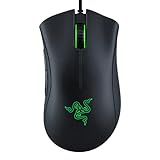
4. Razer DeathAdder Essential
A wired ergonomic mouse with a 6,400 DPI optical sensor, mechanical switches rated for 10 million clicks, a rubberized scroll wheel and five programmable buttons, per the listing.
Good for: Budget gamers who want a well-known shape. Strengths: Comfortable shape, durable switches and Synapse software. Weaknesses: Wired with a basic sensor. Skip it if you want wireless or ultralight.

Best for people who want a quiet mouse that also games
5. INPHIC A9 V2 Explorer
A silent-click wireless mouse with six DPI levels up to 12,800, dual Bluetooth, 2.4 GHz and USB-C, at about 102 g, per the listing.
Good for: People who want a quiet mouse that also games. Strengths: Silent clicks and three connection modes. Weaknesses: Heavier than lightweight gaming mice; lesser-known brand. Skip it if you want the fastest esports mouse.


Best for budget gamers who want a light wired mouse
6. TMKB Falcon M1SE
A wired honeycomb mouse of about 75 g with a 200 to 12,800 DPI sensor, 125 to 1,000 Hz polling, six programmable buttons and a paracord cable, per the listing.
Good for: Budget gamers who want a light wired mouse. Strengths: Very light for its price, programmable buttons and a flexible cable. Weaknesses: Wired and a lesser-known brand. Skip it if you want wireless.

Best Picks by Category
These labels summarize listing data and are not hands-on test results.
- Top rated: Redragon M602 — a long-running budget classic; check price on Amazon.
- Most reviewed: Razer DeathAdder Essential — a trusted shape with extensive buyer feedback; check price on Amazon.
- Best value: BENGOO Gaming Mouse — the lowest-tier budget pick in this guide; check price on Amazon.
- Lowest price: BENGOO Gaming Mouse — the entry-level budget option in this guide; check price on Amazon.
- Premium option: Razer DeathAdder Essential — the higher-tier option in this budget guide; check price on Amazon.
Price, Rating and Review Comparison
The table groups the picks by price tier. Prices change often, so confirm the current price on Amazon — check price on Amazon.
| Product | Price | Rating | Ratings | Price tier |
|---|---|---|---|---|
| BENGOO Gaming Mouse | Check price on Amazon | — | — | Budget |
| MELOGAGA Wireless Gaming Mouse | Check price on Amazon | — | — | Mid-range |
| TMKB Falcon M1SE | Check price on Amazon | — | — | Mid-range |
| Redragon M602 | Check price on Amazon | — | — | Mid-range |
| INPHIC A9 V2 Explorer | Check price on Amazon | — | — | Mid-range |
| Razer DeathAdder Essential | Check price on Amazon | — | — | Mid-range |
How Much Feedback Backs Each Rating
A high average from a handful of ratings is weaker evidence than a slightly lower average from thousands. Here is how the sample size looks for each pick.
- BENGOO Gaming Mouse: a large sample of buyer feedback behind its listing.
- MELOGAGA Wireless Gaming Mouse: a moderate sample of buyer feedback behind its listing.
- Redragon M602: a large sample of buyer feedback behind its listing.
- Razer DeathAdder Essential: a large sample of buyer feedback behind its listing.
- INPHIC A9 V2 Explorer: a large sample of buyer feedback behind its listing.
- TMKB Falcon M1SE: a large sample of buyer feedback behind its listing.
How to Choose
Check what you give up
At this price you give up premium sensors, build quality and software. Shape and comfort still matter.
Wired or wireless
Wired mice are lightest and cheapest. Wireless adds convenience.
Do not chase DPI
A huge DPI figure is a maximum, not a quality score.
How We Chose These Mice
We start from products that are sold on Amazon with a full product name and clear specifications, and we skip results that show only a brand name or a vague title. We then read the listing and the manufacturer information for each one and note the features that matter for this kind of mouse: weight, shape, sensor, connection and buttons. We do not run our own lab tests, and this guide does not contain hands-on measurements. Use it to build a shortlist, then check current prices, dimensions and return terms on the Amazon page.
Buying Guide: What to Check Before You Choose
Shape and grip come first
Most comfort problems come from a mismatch between mouse shape and grip. A palm grip rests the whole hand on the mouse and suits longer shapes. A claw grip arches the fingers and likes a higher rear hump. A fingertip grip uses only the fingers and favors small, light mice. Measure your hand from the wrist crease to the middle fingertip and read our grip guide before you order.
What you give up at a low price
Cheaper mice usually give up shell and cable quality, software polish and sensor consistency before they give up basic accuracy. Check the cable, the feel of the side buttons and the scroll wheel, whether the listing names the sensor, and the return policy. A named sensor from a known brand is a better sign than a huge DPI number.
Sensors, DPI and polling rate
A modern gaming sensor is accurate enough for almost anyone. Look for a named sensor from a reputable brand, a polling rate of at least 1000 Hz and no mention of acceleration problems. See polling rate explained before paying extra for very high numbers.
Quick Reference: Which Pick Suits Whom
- BENGOO Gaming Mouse: suits gamers on a very tight budget
- MELOGAGA Wireless Gaming Mouse: suits budget users who want wireless for play and work
- Redragon M602: suits very low budgets
- Razer DeathAdder Essential: suits budget gamers who want a well-known shape
- INPHIC A9 V2 Explorer: suits people who want a quiet mouse that also games
- TMKB Falcon M1SE: suits budget gamers who want a light wired mouse
Common Mistakes to Avoid
- Choosing on DPI numbers instead of shape and weight.
- Buying a very light mouse without checking it fits your grip.
- Paying for buttons you will not bind.
- Ignoring cable or battery details.
- Skipping the return window.
Setup and Care
- Plug the receiver into a nearby port for a short signal path.
- Turn off Windows pointer acceleration, then set DPI and in-game sensitivity; see our settings guide.
- Keep the feet and pad clean.
- Save profiles to the mouse if the software allows it.
How Budget Mice Cut Corners, and Where They Do Not
A gaming mouse at this price is built to hit a number on a shelf, so some parts are better than others. The sensor is usually the least worrying element, because capable optical sensors are now cheap to make. The shell plastic, the cable, the switches, the scroll wheel and the software are where costs get trimmed. Knowing that tells you where to look in a listing and where to read buyer feedback with a skeptical eye.
Listings often boast a maximum DPI figure, a rainbow lighting mode and a long list of buttons. These are the cheapest features to advertise. What you actually feel every day is how the click responds, whether the wheel steps cleanly, how the cable drags and whether the mouse glides on your pad. These features rarely appear in a bullet list, and the closest thing to evidence is the pattern in written feedback from many buyers.
Wireless, Wired and Tri-Mode at a Few Dollars
Wireless mice under $20 used to be rare. Now several exist, including the MELOGAGA and the INPHIC in this guide, and both describe three connection options. Tri-mode means a 2.4 GHz USB receiver for gaming and general use, Bluetooth for laptops, tablets and phones, and in some cases a USB-C cable for wired use and charging. That flexibility is genuinely useful if you move between a desktop and a laptop.
The compromises are weight, latency and battery behavior. A wireless mouse carries a battery, so it tends to weigh more than a wired mouse built on the same shell. The MELOGAGA is described at about 71 g and the INPHIC at about 102 g, while the wired TMKB Falcon M1SE is listed near 75 g. Bluetooth adds delay compared with a dedicated receiver, so use the 2.4 GHz link for games. Battery life claims are best-case, and the real figure depends on lighting, polling rate and how often the mouse sleeps. A mouse that lets you switch lighting off will usually last longer between charges.
- Pick wired if your priority is the lightest weight and zero charging chores.
- Pick tri-mode if you share one mouse between a desktop and a laptop.
- Check whether the receiver stores in the mouse, since small receivers are easy to lose.
- Look for a mouse you can use while it charges, which saves you from a dead battery mid-session.
Switches, Side Buttons and the Scroll Wheel
The click is where a gaming mouse earns or loses your trust. Mechanical switches, like those rated for 10 million clicks on the Razer DeathAdder Essential listing, are common in better budget mice. Click ratings are manufacturer claims, not independent measurements, but a rating does suggest the intended class of part. Cheap switches can develop double-click faults after a year or two, a very common complaint on low-cost mice, so check recent feedback for that specific issue.
Side buttons deserve a look. Mice with six or more programmable buttons are useful for games with many abilities or for desktop shortcuts, but buttons that wobble or press accidentally are annoying. If you grip the mouse with your thumb on the side, a button placed too far forward can be pressed by mistake.
The scroll wheel matters in games where you cycle weapons. A wheel with clear notches helps you count steps, while a mushy wheel makes it easy to overshoot. A rubberized wheel improves grip and wears slower than bare plastic. If you rarely scroll in games, this matters less; if you play shooters that use the wheel for weapon switching, it matters a lot.
Weight, Honeycomb Shells and Cable Quality
Lighter mice reduce fatigue and make fast flicks easier, which is why honeycomb designs have become popular. The TMKB Falcon M1SE in this guide is the example here, listed at roughly 75 g with a paracord cable. A honeycomb shell exposes the internals to dust and skin oils, and thin shells can flex under a hard grip, so check whether the pattern feels sturdy in photos and feedback. Light mice also suit claw and fingertip grips better than large palm grips.
Cable quality is easy to overlook. A stiff rubber cable drags on the desk and tugs at the mouse during sweeps, and a flexible paracord cable behaves much better. Some players use a bungee or cable holder to lift the cable off the desk. If you use a wired mouse with a cheap cable, a simple bungee can transform the feel for a few dollars.
Feet are a hidden factor. Plastic or PTFE-like feet glide differently, and thin feet wear down over time. Replacement feet are inexpensive for popular shapes, so look up whether replacements exist for the mouse you buy. A smooth, clean pad matters too, because a mouse that glides poorly on an old pad can feel worse than it is.
Software, Onboard Memory and Platform Support
Plug-and-play mice need no driver, which suits shared computers and quick setups, but they offer limited tuning. Mice with companion software, such as the Redragon M602 and the Razer DeathAdder Essential, allow button remapping, macros, lighting and DPI stages. Software on cheap mice varies from helpful to poor, and some is Windows only. Check the platform notes on the product page if you use macOS or Linux.
Onboard memory stores your settings in the mouse itself, so they follow you to another computer. Not all budget mice have it. If you game on multiple machines or at a friend’s house, find out whether your DPI stages and button mappings are saved on the device. Without onboard memory, you may need to reinstall the software or reconfigure each time.
Be careful with software downloaded from unfamiliar sites. Use the manufacturer’s page linked from the product listing, and avoid driver bundles from third-party websites. A mouse that works without software is a safer bet if the vendor does not clearly document its download.
Matching a Budget Mouse to How You Play
Pick by playing style, not by feature count.
- Fast shooters: light weight and a stable shape matter most, which points toward a wired honeycomb design like the TMKB Falcon M1SE or a wired shape you trust.
- Strategy and MOBA games: extra buttons and a comfortable palm shape matter more than ultra-light weight, so the Redragon M602 or a similar shape could suit.
- Mixed work and play: a quiet wireless mouse, such as the INPHIC A9 V2 Explorer described with silent clicks, works in shared rooms and offices.
- Laptop travelers: a tri-mode set like the MELOGAGA covers desktop gaming and Bluetooth travel use.
- Children or smaller hands: check the length and width in the listing, since many gaming shapes are large.
If you are torn, shape is the tiebreaker. A familiar shape, like the DeathAdder style described in the listing, reduces the risk of a mismatch because many players already know whether it suits their hand.
Questions to Ask Before You Order
- How long and wide is the mouse, and does that match my hand and grip?
- Is it wired, wireless or tri-mode, and which link do I need?
- Does the listing name the sensor, or only give DPI?
- Does the cable feel flexible in buyer photos and comments?
- Do recent reviews mention double-clicking or button faults?
- Does the software work on my operating system, and is onboard memory included?
- Can I return the mouse if the shape feels wrong?
The last question matters most. Because shape is personal, a generous return window is worth more than almost any specification.
Making a Cheap Mouse Last
A mouse under $20 can last for years if you treat it gently. Wipe the shell with a slightly damp cloth, keep drinks away, and clean the sensor window with a dry cotton swab if the pointer begins to jitter. Replace worn feet before they scratch your pad. If the cable frays near the plug, route it so it does not bend sharply at the mouse. For wireless models, charge the battery regularly instead of draining it fully, and store the receiver in its slot when traveling.
Going Deeper: How This Choice Plays Out Over a Full Week of Play
Most buying advice for budget gaming mice is written as if the decision ends at checkout. In practice the first evening tells you very little. A mouse can feel exciting for twenty minutes because it is new, lighter or differently shaped, and then start to annoy you on day three when a button sits slightly wrong under your thumb or the shell edge meets your ring finger during long tracking fights. Judge any option in this guide across a full week: one session when you are fresh, one when you are tired, and one longer session in the game you actually play most. Comfort that survives tired hands is the comfort that matters.
Pay attention to the small repeat actions rather than the highlight moments. How often do you lift and reset the mouse on your pad? Does the scroll wheel stay precise when you switch weapons hundreds of times in an evening? Do side buttons get pressed by accident when you grip harder in a tense round? These micro events decide whether budget gaming mice feel like a tool you forget about or a problem you keep managing. A mouse you stop noticing is usually the right mouse, because your attention stays on crosshair placement, positioning and decisions instead of on your own hand.
There is also a learning curve that is easy to misread as a flaw. Changing shape, weight or button layout disturbs muscle memory for several days, and aim often dips before it recovers. Give a genuinely different shape a fair adjustment window, but distinguish adjustment from pain. Tingling, sharp wrist ache or a finger that keeps cramping is not something to push through; it is information that the shape does not suit your hand or grip. Mild unfamiliarity fades. Repeated strain does not, and no performance argument for budget gaming mice is worth an injury that keeps you off the computer.
A Practical Self-Test Before You Change Anything
Before ordering, run a short self-test with the mouse you already own, because it tells you what actually needs fixing. Open a practice range or an aim trainer and spend a few minutes on three tasks: slow tracking of a moving target, quick flicks between two distant points, and small corrections around a single point. Note where each task breaks down. If tracking is shaky but flicks land well, your sensitivity or surface may be the issue rather than the mouse. If flicks overshoot in both directions, your grip may be unstable. Writing down the failure mode stops you buying a new mouse to solve a settings problem.
Next, measure your hand honestly and look at how you hold your current mouse when you are not thinking about it. Photograph your grip from the side during a real game, or simply freeze mid-match and look down. Many players describe themselves as palm grip users and discover their palm barely touches the shell, or claim a claw grip while resting most of their weight through the heel of the hand. The grip you actually use, in the third hour of a session, is the one to buy for. This matters especially for budget gaming mice, where getting honest performance at the low end without pretending corners were not cut somewhere changes which shapes will feel natural.
Finally, list the two or three things you genuinely dislike about your current setup, in order. It might be cable drag, a scroll wheel that skips, a shape that is too narrow, or a battery routine that interrupts play. Rank them. A good purchase fixes the top item on that list and does not make the second item worse. A purchase driven by a review headline often fixes something you never complained about while leaving your real problem untouched. Keep the list beside you while you read the picks in this guide and check each candidate against it, one by one.
Tuning Sensitivity and Control as a Repeatable Process
Sensitivity tuning works best as a process you can repeat, not as a number you borrow from a professional player. Start from the setting you already use and change one variable at a time: in-game sensitivity first, leaving the mouse setting alone for several sessions. Make small changes and play real matches, not only trainer drills, because pressure changes how you move. If your crosshair consistently stops short of targets, nudge sensitivity up slightly; if you swing past targets and correct backwards, nudge it down. Consistency across a whole evening matters more than one impressive round played on a new setting.
Keep a simple record for a week: the setting used, the game played, and one sentence about how aiming felt. That modest log prevents the common cycle of changing settings daily and never building muscle memory at any of them. Most players improve fastest when they hold a setting steady long enough for their hand to learn it, then review. This applies whatever you choose among budget gaming mice; a well tuned ordinary setup beats a constantly retuned premium one, because aim is a learned motor skill and learning needs a stable target to learn against.
Do not overlook the surface under the mouse while you tune. A worn pad, a desk with changing friction, or a pad that is too small for low sensitivity play will all masquerade as sensitivity problems. If you regularly run out of pad and have to lift and reset mid-fight, either raise sensitivity a little or get more space; both are legitimate answers and neither requires a new mouse. Likewise, clean mouse feet glide more predictably than dusty ones, and predictable glide makes any sensitivity feel more accurate. Tune the whole chain — hand, mouse, pad and settings — rather than blaming the last link you bought.
Desk, Posture and Session Setup That Supports Your Aim
Your chair height and desk height quietly decide how your mouse hand behaves. If your elbow hangs well below the desk, your wrist tends to press into the desk edge and your forearm drags, which adds friction to every movement. If you sit very high, you may steer mostly from the fingers and tire quickly. A comfortable starting point is an elbow roughly level with the desk, shoulders relaxed, and enough pad space that your forearm can rest without the wrist bone grinding on a hard edge. Small changes here often improve comfort more than a new shape does.
Lighting and monitor position matter in a less obvious way: players who lean in toward the screen tend to grip harder and shrug their shoulders, and grip tension travels straight into aim. Sit back, keep the screen at a distance where you can see your surroundings in game without squinting, and let your shoulders drop between rounds. During longer sessions, brief pauses to open and close your hand, roll your shoulders and look away from the screen keep blood flowing and prevent the slow build of tension that turns a comfortable mouse into a painful one by the end of the night.
Cable and receiver placement belong in the same conversation. A wired mouse benefits from slack managed so the cable does not catch on a monitor stand or drag across a rough desk edge; a simple bungee or a raised anchor point can transform how a wired mouse feels. A wireless mouse benefits from its receiver sitting close, ideally on an extension near the pad, away from metal enclosures and crowded hubs that can clutter the signal path. For anyone weighing up budget gaming mice, these free setup fixes are worth doing first, because they improve every mouse you will ever plug in at that desk.
Troubleshooting the Problems Players Blame on the Wrong Thing
Cursor skipping or stutter is often blamed on a sensor, yet the more common causes are mundane: a dirty sensor lens, hair or dust on the pad, a glossy or patterned surface, or a wireless receiver placed far away behind a metal case. Work through the boring causes first. Clean the lens gently with a dry cotton bud, try a plain pad or even a sheet of matte paper as a test surface, move the receiver closer, and test a different port. If the problem follows the mouse across two computers, the mouse is suspect; if it stays with one desk or one machine, look at the environment.
Accidental side button presses and missed scroll steps usually come from grip and hand position rather than defects. If you trigger a side button when you lift the mouse, your thumb is probably gripping exactly where the button sits; a small shift in thumb placement, or disabling that binding for a week while you adjust, often cures it. If the wheel feels inconsistent, check whether you scroll with the fingertip or the first joint, because the two motions suit different wheel tensions. Before concluding that a mouse from this guide is wrong for you, spend one session deliberately adjusting how you hold it.
Double clicking complaints deserve a careful check too. Test the button slowly in a simple drawing or clicking test outside your game, and note whether the problem appears at a particular pressure or angle. Dust around the button, a worn switch and an over-firm grip can produce similar symptoms. Keep notes on when issues happen — only when cold, only after long sessions, only in one game — because patterns point to causes. A problem that appears in every application from the first click of the day is a hardware conversation; a problem that appears only in one title is usually a binding, a macro or a settings conflict waiting to be found.
Care, Cleaning and Making a Mouse Last
A gaming mouse lives in one of the dirtiest environments on a desk: skin oils, snack dust and pet hair all migrate into the wheel well, the seams and the sensor cavity. A short monthly routine keeps performance steady. Unplug or switch off the mouse, wipe the shell with a slightly damp microfibre cloth, clear the wheel and button seams with a soft brush or compressed air used gently, and clean the sensor lens with a dry bud. Avoid soaking the shell or spraying liquid directly onto the mouse; moisture inside a switch causes more problems than the dirt you were removing.
Mouse feet deserve inspection because they wear invisibly. When feet become shiny, torn or uneven, glide turns scratchy and inconsistent, and many players misdiagnose the change as a sensor fault or a personal slump. Replacement feet are inexpensive for popular models and restore the original glide in minutes; clean the old adhesive away fully before fitting new ones so the mouse sits flat. If you play on a hard pad, expect feet to wear faster and check them more often. For owners of budget gaming mice, fresh feet are often the cheapest genuine upgrade available.
Battery habits decide how a wireless mouse ages. Avoid leaving a rechargeable mouse flat for weeks, and avoid keeping it permanently at full charge on a dock if the maker advises against it; ordinary regular use is kinder than either extreme. For mice using replaceable cells, keep a spare ready so a low battery never forces a mid-session scramble, and remove cells from a mouse going into long storage. Store a spare mouse in a drawer away from sunlight and heat, with its receiver kept with it, because a lost receiver can retire an otherwise perfectly good wireless mouse.
Choosing Between the Picks: Scenarios That Make the Decision Easier
Abstract comparisons become clearer when you attach them to real evenings of play. Imagine a competitive player who queues ranked shooters most nights, practises in a range before matches and cares about every lift and reset. That player should weight shape safety, weight and reliable wireless or a drag-free cable above extra buttons, and should be suspicious of any feature that adds bulk. Now imagine a player who splits time between an MMO, a strategy title and work documents. That player lives on bindings, wheel control and comfort across long mixed sessions, and may happily trade a little weight for controls that save keystrokes all day.
A third common scenario is the shared or multi-purpose desk: homework, work calls and games on the same machine, sometimes by more than one person. Here, easy switching between devices, onboard profiles that do not depend on software being open, and a shape that several hand sizes can tolerate become the deciding factors. This is exactly where getting honest performance at the low end without pretending corners were not cut somewhere can matter more than a headline specification. A mouse that is perfect for one specialist can be a poor household mouse, and there is no shame in choosing the adaptable option when the desk itself is shared.
Budget timing is a scenario of its own. If your current mouse is failing — a button gone, a wheel unusable — replacing it now with a solid option from this guide beats suffering for months while waiting for a dream model. If your current mouse works and merely feels ordinary, you can afford to be picky about shape and to wait for the exact variant you want. Either way, decide which scenario is actually yours before comparing picks, because the best choice for budget gaming mice depends less on the products than on the evenings you will spend using them.
Practice Routines That Reveal Whether a New Mouse Suits You
When a new mouse arrives, resist the urge to judge it in the first match. Spend the first session on low-stakes practice: tracking drills, target switching and simple movement around a map you know well. Notice whether you can stop the cursor where you intend without a second correction, and whether your hand relaxes between actions. Then play normally for several days without changing settings, even if results dip. The dip is the cost of relearning; what you are watching for is whether the trend across the week points upward and whether comfort improves as the shape becomes familiar.
Build two or three small routines you can repeat whenever you change anything — mouse, pad, sensitivity or even chair height. A minute of slow tracking, a minute of flicks between fixed points and a minute of tiny corrections gives you a rough benchmark you can compare across setups and across weeks. You will not get laboratory precision, but you will get something better than mood: a repeatable impression. Players who test this way stop churning through gear, because they can tell the difference between a real improvement and the brief excitement of unboxing something new.
Also practise the non-aiming actions your games demand. Reloads, ability keys bound to the mouse, push-to-talk, ping wheels and inventory scrolling all run through the same hand. A mouse that aims beautifully but makes your most-used binding awkward will frustrate you daily. Run through your actual binding set in a safe environment, adjust anything that forces an uncomfortable stretch, and only then take the setup into ranked play. For readers deciding on budget gaming mice, this whole-hand test is the closest thing to a guarantee that the mouse fits your games rather than just your grip.
Reading Listings Carefully: What Product Pages Do and Do Not Tell You
Product pages are useful and incomplete at the same time. They are good for confirming dimensions, button counts, connection types, what is included in the box and which software a mouse uses. They are weaker evidence for comfort, long-term durability and how a shape will suit your particular hand, because those depend on you. Treat phrases about professional players and tournament victories as atmosphere rather than evidence. The most valuable parts of a listing are often the least glamorous: the size diagram, the weight with and without a cable or battery where stated, and the list of what the buttons can be assigned to do.
Photographs deserve a sceptical look as well. Renders can make a shell look lower, narrower or more sculpted than the object that arrives, and scale is hard to judge without a hand or a familiar object beside it. Compare stated dimensions with a mouse you know: measure your current mouse with a ruler and put the numbers side by side. A difference of a few millimetres in width or hump height is not trivial; it is often exactly the difference between a shape that disappears under your hand and one you keep adjusting. This habit protects buyers of budget gaming mice from the most common disappointment of all, which is a good mouse in the wrong size.
Finally, check the practical details that decide ownership rather than performance: how the mouse charges or which cells it takes, whether a receiver is included and where it stores, whether replacement feet and grips are easy to find, and what the return options are if the shape does not suit you. A generous return window is worth real money with mice, because fit is personal and no review can settle it for you. Buy from a route that lets you send back a mouse that hurts your hand, and keep the packaging until you are sure. Sensible buying process beats perfect prediction, every time.
More Questions Worth Asking Before You Buy
How long should I give a new gaming mouse before deciding it is not for me?
Give a genuinely new shape about a week of regular play, provided there is no pain. Aim usually dips for the first few sessions while muscle memory rebuilds, then recovers. Sharp ache, tingling or numbness is different: stop, check your posture and grip, and do not try to push through it. If discomfort returns in the same place across several sessions, the shape is wrong for your hand regardless of how well it performs, and returning it inside the return window is the sensible move.
Should I change my sensitivity when I change my mouse?
Not automatically. Keep your familiar setting for the first several sessions so the only new variable is the mouse itself; otherwise you cannot tell whether changes in your aim come from the shape, the weight or the setting. Once the mouse feels familiar, tune sensitivity in small steps if tracking or flicking consistently feels off. Changing everything at once feels productive but destroys your reference point, and a stable reference point is what makes later tuning quick and reliable.
Is wireless reliable enough for competitive play?
Modern gaming wireless connections are reliable enough that connection type is rarely the reason a player misses. What matters more in practice is receiver placement, battery routine and keeping interference sources away from the signal path. Place the receiver close to the pad using an extension if one is supplied, keep a charging habit that never leaves you starting a session nearly empty, and test the mouse in your own home environment. A wired mouse removes those chores entirely, which is a legitimate reason to prefer one, but it is a convenience argument rather than a performance verdict.
Frequently Asked Questions
Can a mouse under $20 be good for gaming?
For casual play, yes. Competitive players may want a better sensor.
Which is the best cheap shape?
The Razer DeathAdder Essential is a trusted ergonomic shape, per the listing.
How do I choose a gaming mouse?
Start with shape and grip, then weight, connection and buttons. Sensor numbers matter least. See our buying guide.
What DPI should I use?
Most players use roughly 400 to 1600 DPI. See our DPI guide.
Do these mice work on Mac?
Basic functions normally do, but companion software may be Windows-only. Check each product page.
Why does my cheap gaming mouse double-click?
Double-clicking usually comes from worn or low-quality switches, which is a known complaint on budget mice. Check recent buyer feedback for that fault before ordering, keep the receipt, and use the warranty or return window if it appears early. Dust and debris can also contribute.
Is a wireless gaming mouse under $20 laggy?
Over its 2.4 GHz receiver, a wireless mouse is generally fine for casual and many competitive uses, though results vary by model. Bluetooth adds more delay, so use the receiver for games and Bluetooth for work or travel. Interference and low battery can also affect responsiveness.
What does onboard memory mean on a gaming mouse?
Onboard memory stores your DPI stages, button assignments and sometimes lighting inside the mouse. That means your settings follow it to another computer without installing software. Many budget mice lack it, so check the listing if you play on multiple machines.
Are honeycomb gaming mice durable?
They can be, but the open shell lets dust in and may flex under a strong grip. Light weight is the benefit. Check buyer feedback for shell cracks or rattling, and keep the mouse clean. If you use a heavy palm grip, a solid shell may feel safer.
How can I tell if a cheap mouse shape will fit my hand?
Measure your hand from wrist crease to middle fingertip, then compare it with the mouse length and width in the listing. Think about your grip as well. When in doubt, choose a well-known shape with many buyer comments and keep the return window in mind.
Bottom Line
For a known shape, the Razer DeathAdder Essential. For wireless, the MELOGAGA or INPHIC. For the lightest wired mouse, the TMKB Falcon M1SE.
Related Reading
- 6 Best Wireless Gaming Mice for PC
- 6 Best Gaming Mice Under $50
- 6 Best Gaming Mice Under $100: Premium Picks for Less
- 6 Best Left-Handed and Ambidextrous Gaming Mice
- 5 Best Logitech Gaming Mice: G502, G305 and G PRO
More Gaming Mouse Guides


