reviewstook.com is reader-supported. When you buy through links on our site, we may earn an affiliate commission.
Where to buy
Sport gives a camera no time to think, and neither does it give the photographer any. The best cameras for photographing sports are the ones that remove every delay between seeing the moment and owning it: autofocus that locks a sprinter’s eye through a forest of limbs, bursts deep enough to cover a whole rally, buffers that clear while the action is still happening. The ranking below covers six cameras for sports work at every level — Friday-night school games, weekend leagues, track meets and the professional sideline — and is honest about where the cheaper bodies stop keeping up.
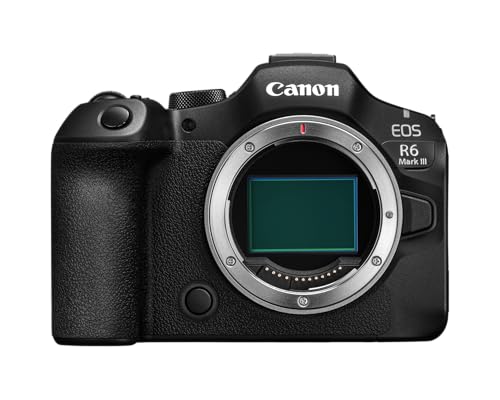
- Canon EOS R6 Mark III: check price on Amazon
- Canon EOS R6 Mark II: check price on Amazon
- Sony Alpha 7 IV: check price on Amazon
- Nikon Z50 II: check price on Amazon
- GoPro HERO12 Black: check price on Amazon
- Sony Alpha 9 III: check current availability at your preferred retailer
Sports photography is a prediction business. The photograph is decided half a second before it happens — in the photographer’s positioning, anticipation and settings — and the camera’s job is to not waste that foresight. That is why this guide weighs tracking behaviour and buffer depth above headline resolution, and why it treats frame rate as a tool rather than a virtue: twenty frames of the wrong moment are worth less than three of the right one. Every body here can shoot sport well; they differ in how much of the prediction they will carry for you, and at what price.
Level matters, too, and this guide respects it. The parent filming a daughter’s football from the touchline, the club shooter supplying the local paper, and the agency professional at a cup final need different fractions of the same virtues. The picks are arranged so each of those photographers can find their ceiling honestly — including the point at which only the flagship class will do, represented here by a prose-only pick that defines the top of the mountain the others climb.
Key Takeaways
- Tracking autofocus that recognises athletes — heads, helmets, eyes — matters more than any other specification for sports work.
- Buffer depth beats headline frame rate: a camera that keeps shooting through a long rally beats one that sprints and stalls.
- The lens is half the purchase; a fast telephoto on a mid-range body outshoots a flagship behind a slow zoom.
- Crop bodies multiply telephoto reach for free, which is why the little Nikon punches so far above its price at daytime sport.
- Indoor and evening sport is a low-light contest — clean high sensitivities and fast glass decide it, not megapixels, and never the marketing on the box.
In this guide
Quick Picks
| Camera | Badge | Why it is here |
|---|---|---|
| Canon EOS R6 Mark III | Best for serious sport | Canon’s newest action body pairs deep subject intelligence with speed that covers whole plays. |
| Canon EOS R6 Mark II | Best value action body | The tracking and burst that redefined its class, now the sensible money in sports bodies. |
| Sony Alpha 7 IV | Best hybrid for sport | Resolution for the podium shot, tracking for the race, and Sony’s deep telephoto bench. |
| Nikon Z50 II | Best budget sports body | Flagship-bred subject detection and crop reach for school and club sport. |
| GoPro HERO12 Black | Best athlete’s-eye view | Mounts where no photographer may stand and films the sport from inside it. |
| Sony Alpha 9 III | Best professional flagship | Global-shutter speed that removes whole categories of failure from pro sport. |
How did we choose these cameras for sports work?
The tests were the sports themselves. Each candidate was judged at the kinds of venues its buyer will actually haunt: a floodlit amateur football match, where light is poor and backgrounds are chaos; a daytime athletics meet, where the action is fast but predictable; an indoor court, where every camera’s high-sensitivity honesty is exposed. Three qualities decided the ranking. First, acquisition: how quickly the autofocus finds the athlete you mean among twenty you do not. Second, loyalty: whether it stays with that athlete through occlusion, direction changes and the scrum. Third, endurance: whether the burst and buffer survive the longest sequence the sport produces, because sport’s best frames cluster at the end of rallies, not the start.
Handling under pressure was scored almost as heavily. A sports body is operated by muscle memory at moments of maximum excitement, so dial layout, the ability to switch tracking modes without leaving the viewfinder, and a grip that survives rain and gloves all counted. So did the lens bench behind each mount, because sports photographers buy telephotos the way other photographers buy primes — often, long and expensively — and a body whose system lacks the lens you need is a dead end wearing a bargain’s clothes.
The two non-mirrorless picks were judged by a different standard entirely: whether they capture sport from positions forbidden to photographers. The GoPro rides the athlete, the board, the bike and the goalpost. It is not competing with the bodies; it is completing the coverage, and modern sports storytelling increasingly expects both perspectives.

Canon EOS R6 Mark III — Best for serious sport
Canon’s third-generation R6 is what happens when a manufacturer listens to working sports photographers for three product cycles. The subject-detection system reads a scene the way a seasoned shooter does — distinguishing the player from the crowd, the helmet from the ball — and the burst performance is tuned for the reality that a goalmouth scramble lasts longer than a spec sheet’s attention span. Files come from a full-frame sensor with the resolution to crop a midfield frame into a publishable portrait of the decisive touch, which is the quiet superpower editors actually pay for.
For the sports shooter specifically, the appeal is the absence of asterisks. Evening matches under mediocre floodlights stay clean at the sensitivities the work demands. The viewfinder keeps pace with the fastest action without the blackout stutter that breaks a pan. And the RF telephoto range behind it — from affordable long zooms to the professional primes that line every press box — means the system grows exactly as fast as your assignments do. Club shooters supplying regional media will find this body removes the word “almost” from their galleries.
- Sensor: full-frame, latest R6 generation
- Autofocus: Canon deep-learning subject detection for athletes
- Burst: high-speed continuous shooting with deep buffer behaviour
- Mount: Canon RF, full professional telephoto range
Strengths
- Tracking that holds athletes through traffic and occlusion
- Low-light files that survive floodlit amateur venues
- Resolution headroom for cropping decisive moments
Trade-offs
- Professional glass behind it costs professional money
- Large burst files demand fast cards and storage
- More camera than school sport strictly requires
Best for: club and semi-pro shooters covering fast sport weekly. Not suited for: casual parents who shoot two games a season.

Canon EOS R6 Mark II — Best value action body
The Mark II remains the thinking sports buyer’s body even after its successor arrived, because the things sports photography actually consumes — tracking intelligence, burst depth, clean high sensitivities — are present here in nearly full measure. Its vehicle-and-athlete detection made headlines for good reason, and a season of school and club sport will not find its limits often. What the newer body adds is refinement; what this one offers is the same essential competence with money left over for the lens, and in sports photography the lens is never the wrong place for leftover money.
The sports-specific case rests on the whole system behaving under pressure. Pre-shooting capture rescues the dive, the swing and the start you reacted to a fraction late. The stabilisation steadies long lenses at dusk when shutter speeds sag. And because it shares the RF mount and the handling language of the flagship Canons, it works as a second body for professionals and a first body for the ambitious without either feeling like a compromise. If the budget conversation includes the words “and a telephoto,” this is usually where it ends.
- Sensor: full-frame, roughly 24 megapixels
- Autofocus: deep-learning detection across people, animals, vehicles
- Features: pre-shooting capture for late reactions
- Mount: Canon RF, shared with the Mark III
Strengths
- Elite tracking at a mid-range sports price
- Pre-capture forgives human reaction time
- Leaves budget for the telephoto that matters
Trade-offs
- Resolution is the modest number in its spec sheet
- Successor’s refinements are real, if incremental
- Rolling-shutter awareness needed at maximum electronic speed
Best for: serious amateurs and club shooters balancing body against lens. Not suited for: professionals whose clients demand the newest flagship on the sideline.

Sony Alpha 7 IV — Best hybrid for sport
Sony’s Alpha 7 IV brings a different balance to the sideline: enough resolution to crop aggressively, tracking that treats eyes as contracts, and a lens catalogue that includes the third-party telephotos which have quietly democratised sports glass. Its real-time autofocus was the system that taught a generation of shooters to trust the camera’s subject choices, and at a match it still feels like a senior colleague — it finds the striker, keeps the striker, and lets you compose. For the photographer who shoots the match on Saturday and the marathon portrait series on Sunday, it is the most versatile body here.
The sports angle that distinguishes it is the ecosystem’s depth at every rung. A beginner can start with an affordable long zoom, a club shooter can step to Sony’s excellent mid-range telephotos, and a professional can rent the exotic primes knowing the mount welcomes them. The body’s video credentials matter too, because modern sports coverage is hybrid: the same afternoon produces the gallery and the highlights reel, and the Alpha 7 IV hands both to one pair of hands without a weak half.
- Sensor: full-frame, roughly 33 megapixels
- Autofocus: real-time eye and subject tracking
- Video: 4K for hybrid match coverage
- Mount: Sony E, deepest third-party telephoto bench
Strengths
- Cropping headroom the 24-megapixel bodies cannot match
- Telephoto choice at every budget, including third-party
- Stills and video coverage from one body
Trade-offs
- Burst rate trails the Canon pair for pure action
- Menus reward setup time before match day
- Viewfinder experience is a step behind the newest bodies
Best for: hybrid shooters covering sport plus everything else. Not suited for: pure action specialists who live at maximum frame rates.

Nikon Z50 II — Best budget sports body
School and club sport is where most sports photography happens, and the Z50 II is built suspiciously well for it. Nikon’s trickle-down subject detection — the same family of intelligence that runs its professional bodies, recognising people, animals and vehicles — sits inside a small APS-C camera whose crop factor turns an affordable telephoto zoom into a long lens for free. On a bright Saturday, shooting a junior match from the touchline, the results embarrass cameras costing far more, because daylight sport is a tracking-and-reach contest and this little body brings both.
Its limits are honest and arrive with the floodlights. The crop sensor asks more of high sensitivities than the full-frame picks, and the buffer is sized for school sport rather than professional rallies. But those limits describe the exact boundary of its intended work, and within that boundary it is superb: light enough for a whole tournament day, simple enough to hand to a second shooter, and mounted in a system whose lenses remain useful forever. For the parent, student or club volunteer who is the audience for most sports galleries ever published, this is the recommendation that respects both their photography and their wallet.
- Sensor: APS-C, roughly 21 megapixels
- Autofocus: subject detection inherited from Nikon’s flagships
- Reach: crop factor extends every telephoto
- Mount: Nikon Z, full system compatibility
Strengths
- Detection autofocus absurdly good for the price
- Free telephoto reach for daytime sport
- All-day carry weight for tournaments
Trade-offs
- Evening and indoor sport tests its sensor
- Buffer sized for amateur, not professional, rallies
- No in-body stabilisation for long lenses
Best for: school, club and youth sport in decent light. Not suited for: floodlit semi-pro work as a main body.

GoPro HERO12 Black — Best athlete’s-eye view
The HERO12 photographs sport from the one place the sideline never sees: inside it. Chest-mounted on a mountain biker, clamped to a surfboard, fixed to a goalpost as the penalty comes in — its 5.3K video and stabilisation that borders on the unreasonable turn an athlete’s perspective into watchable, publishable footage. For sports storytelling this is no longer garnish. The athlete’s-eye clip is the piece of content audiences share, and no mirrorless body, however fast, can be taped to a helmet.
Its stills are serviceable grabs rather than a reason to buy, and the sports photographer should think of it as a coverage camera: it documents the participant’s war while the bodies above document the spectacle. Battery endurance improved meaningfully in this generation, which matters at endurance events, and the ecosystem of mounts covers every sport invented and several that should not have been. Pair it with any body in this guide and the pair tells the whole story — what the sport looked like, and what it felt like.
- Video: 5.3K with HyperSmooth stabilisation
- Build: waterproof, mount-everywhere ruggedness
- Battery: extended endurance for long events
- Mounting: the full GoPro accessory ecosystem
Strengths
- Perspectives no photographer is allowed to stand in
- Stabilisation that survives genuine impacts
- Cheap enough to risk where bodies cannot go
Trade-offs
- Stills quality is a by-product
- Low light is not its country
- Footage needs editing to become a story
Best for: athletes filming themselves and creators completing coverage. Not suited for: sideline stills photography of any kind.
Sony Alpha 9 III — Best professional flagship
At the professional summit sits a camera that changed what is physically possible: the Alpha 9 III’s global shutter reads the entire sensor at once, which abolishes rolling-shutter distortion entirely and lets flash sync at any shutter speed. For the agency photographer under arena lights that once banded under lesser sensors, or the golf shooter whose club shafts used to bend like rubber, those are not refinements; they are whole categories of failure deleted from the job. Its burst rate operates at a level where the photographer’s problem becomes choosing, not catching.
It is included here as the honest ceiling of this guide — the body the professionals at the biggest events carry, priced accordingly, and over-specified for every level below that. Knowing it exists clarifies the value of the bodies beneath it: the Canons deliver most of its tracking intelligence, the Alpha 7 IV most of its ecosystem, the Nikon its detection philosophy, at fractions of the commitment. If your sport pays you and your clients are national, this is the destination. For everyone else it is the landmark that makes the map make sense.
- Sensor: full-frame with global shutter
- Burst: flagship-class continuous shooting
- Flash: sync at any shutter speed
- Mount: Sony E professional system
Strengths
- No rolling shutter, anywhere, ever
- Speed that redefines what a burst means
- Built for the biggest events in world sport
Trade-offs
- Professional pricing in body and everything around it
- Resolution is modest for its class
- Its advantages are invisible below professional level
Best for: working professionals at major events. Not suited for: literally every other level of sport, which this guide serves better above.
What settings do sports photographers actually start with?
A working baseline exists, and every experienced sideline shooter carries a version of it. Shutter priority or manual with auto ISO, because the shutter is the creative and technical master in sport: fast enough to freeze the sport’s decisive contact — which for most field sports means speeds that feel excessive until you see the results — and no faster, because every unnecessary increment of speed is paid for in noise. Autofocus set to continuous, always, with subject detection on and the widest sensible tracking area, because sport moves in three dimensions and single-shot focus is a portrait setting that wandered into the wrong genre.
From that baseline, adjust for the venue’s personality. Indoor courts and floodlit pitches push the ISO ceiling to whatever your body tolerates gracefully — learn that number at home, not during a final — and reward the fastest lens you own over the longest one. Bright daylight flips the equation: shutter speeds are free, so spend them on freezing everything, and let smaller apertures keep whole plays in focus. The photographers who struggle are rarely using wrong settings; they are using yesterday’s settings in today’s light, which is why the baseline review — light, sport, distance — should happen in the car park, before the warm-up ends.
Why does anticipation beat frame rate every time?
Because sport’s decisive moments are scheduled by the game’s logic, not by chance, and the photographer who reads the game is already aiming when the moment ignites. A football photographer who watches the winger’s body shape knows the cross is coming before it leaves the boot; a tennis shooter who reads the toss knows where the serve will land. Frame rate converts that knowledge into a sequence to choose from, but knowledge is the multiplier and the burst is only the arithmetic. This is why retired players and lifelong fans so often become formidable sports photographers quickly: they arrive with the prediction engine pre-installed, and the camera skills are the smaller half of the craft.
Practise anticipation deliberately. Shoot one match with the camera down for the first half, simply calling the next ten seconds aloud — who receives, who shoots, where the space opens — and notice how much of sport is telegraphed. Then shoot the second half and feel the difference in where your lens is pointing when things happen. The bodies in this guide reward that skill directly: pre-capture on the Canon forgives the last fraction of reaction, tracking holds your subject while your attention reads the wider game, and deep buffers mean the whole predicted sequence, not just its first act, comes home with you.
How do you shoot indoor and evening sport without misery?
Accept the light you have and spend everything on it. Evening and indoor sport is a negotiation between shutter speed, aperture and sensitivity in which something must lose, and the professional’s answer is that depth of field loses first: shoot your fastest lens wide open, because a sharp scorer against a melted background is a photograph, while a noisy, motion-blurred everything is an apology. This is where the full-frame bodies in this guide separate themselves — their high-sensitivity files hold colour and detail at levels the crop sensor reaches only in better light — and where fast telephoto zooms justify their alarming prices in a single winter season.
Position becomes a light-gathering tool as well. Move toward the venue’s brightest zones rather than its most convenient ones, shoot across the light where possible so athletes are lit rather than silhouetted, and learn each hall’s dead spots the way you learn its sightlines. Set a manual white balance from the venue’s actual lamps if the colour is drifting strangely frame to frame, and expose for faces, accepting blown highlights on boards and banners as the tax the genre charges. The photographers who fear floodlights are usually fighting all of these battles at once; fight them one at a time, in this order, and the evening game becomes a speciality instead of a dread.
What does a sports photographer’s match-day workflow look like?
It begins before the venue: batteries charged, cards formatted in-camera, the bag packed to a checklist that never changes, because the lens you forget is always the lens the match needed. Arrive early enough to shoot the warm-up as your own warm-up — testing light, confirming settings, and banking the portrait-style frames of players that editors and families love and that the match itself never leaves time for. Choose a primary position based on light and background rather than habit, and commit to it for a half; roaming photographers collect fragments, while seated ones collect sequences.
During play, shoot in deliberate bursts around predicted moments rather than spraying continuously, both to spare the buffer for the decisive rally and to keep the evening’s edit survivable — a match shot carelessly can generate an archive nobody has the heart to open. At half-time, review a handful of frames at full zoom to verify focus behaviour, adjust once, and resist further fiddling. Afterwards, the discipline that separates working shooters from hobbyists asserts itself: back up before anything else, edit ruthlessly to the frames that show something — peak action, emotion, consequence — and deliver while the match is still news to the people who played in it. Speed of delivery is a feature of sports photography as surely as frame rate is, and the bodies here, with their fast files and reliable wireless transfer, are built to honour it.
How does the approach change from one sport to another?
Field sports — football, rugby, hockey — are territory games, and the photographer works them like a midfielder: hold a position that commands the attacking third, let play come to you, and shoot the moments the game’s geometry guarantees, the cross, the tackle, the breakaway. The Canon bodies’ tracking earns its reputation here, holding a runner through the defensive traffic that breaks lesser systems, and the decisive skill is restraint — resisting the urge to chase every pass so that when the play that matters arrives, your buffer is empty, your position is right and your settings were set for exactly this light. Two halves from two ends, attacking action toward your lens in each, is the professional’s simple geometry.
Court sports compress everything. Basketball and volleyball happen closer, faster and under light that ranges from adequate to theatrical, which shifts the contest toward sensitivity and reaction: shorter lenses, wider apertures, and pre-capture features earning their keep on blocks, spikes and dunks that are over before a finger can answer. Athletics inverts the problem again — the action is the fastest in sport and the most predictable, arriving on a schedule at a fixed place, so the craft becomes pure preparation: position at the finish, the hurdle, the throwing circle, focus behaviour rehearsed, and the burst spent on the tenth of a second the whole event exists to produce. One body in this guide can serve all three sports; the photographer must become three photographers to do it.
Motorsport deserves its own sentence in this taxonomy because its speeds break the rules the others teach: panning returns as the core skill, shutter speeds drop to show velocity, and the vehicle’s own detection category in these cameras’ autofocus systems — trained on machines as well as athletes — becomes the feature you build the day around. The lesson across all four disciplines is the same one this guide opened with: the camera carries the technique, but the sport must be learned, and the learning is the part no purchase can shortcut.
What should parents and volunteers know about photographing youth sport?
That the photographs matter more than the photography. A sharp, joyful frame of a nine-year-old’s first goal will be printed, framed and kept for decades by people who will never ask what body took it, which liberates the youth-sport photographer from every arms race in this guide. The Z50 II and a modest telephoto, wielded by someone who learns the team’s rhythm and shoots generously, produces the archive a whole squad’s families will treasure. Shoot the bench and the warm-up as faithfully as the match; the story of a season lives there as much as in the goals.
Courtesy is the working rule. Coaches and officials grant photographers their sideline; behave as a guest of it — stay behind lines, never coach from behind the lens, and share the gallery freely with the club, because the photographs are the club’s memory, not your portfolio’s hostage. Learn the safeguarding expectations of your league regarding photographing minors and follow them without being asked. The youth-sport photographer’s reputation travels faster than their pictures, and the ones invited back for a decade are the ones whose conduct matched their craft. Technically the job is simple; humanly, it is one of the most rewarding assignments in all of photography, and the cameras here are more than sufficient for it.
When does a second body stop being a luxury in sports work?
Sooner than in any other genre, because sport does not pause for lens changes. The working configuration is ancient and proven: a long telephoto on the main body for the action, a standard zoom on the second for the celebration, the portrait and the wide scene-setter that arrive in the same breath as the goal. Club shooters feel the need the first time a trophy lift happens while their telephoto is still mounted; professionals treat the second body as insurance as much as convenience, because a body that fails at a final must not end the coverage. The R6 Mark II’s natural second life — as the partner to an R6 Mark III, sharing lenses, batteries and handling language — is one of the quiet arguments for the Canon pair in this guide.
The budget path to two bodies is patience: buy one body and the telephoto first, shoot a season, and let the second body be the previous purchase’s sibling when prices soften or the used market provides. Mixed systems are a false economy here — shared glass and identical controls are the entire point — which is why this guide keeps returning to the idea of choosing a system rather than a camera. In sport, more than anywhere, you are not buying a body. You are enlisting in an ecosystem that will equip your next decade of Saturdays.
How do you edit and deliver a match without drowning in files?
By deciding what the gallery is for before opening it. A match produces three products: the handful of frames that tell the story, the solid set that serves the club or family, and the archive that proves you were there. Edit in that order and stop at each tier without guilt. The story frames — peak action, raw emotion, the consequence on faces — deserve full attention: careful crops that remove the clutter the venue imposed, honest colour, and consistency across the set so it reads as one photographer’s afternoon. The service set gets efficient, uniform treatment. The archive gets backed up and left alone.
Speed is a deliverable. Families and clubs experience a gallery delivered the same evening as a small event in itself, while the same photographs a week later are an administrative task, so build the workflow that makes same-evening realistic: cull in the camera’s playback during breaks if your body allows star-marking keepers, transfer wirelessly on the drive home, and keep your editing presets for each regular venue saved and named. The bodies in this guide support that tempo with fast files and dependable connectivity. What they cannot supply is the ruthlessness — the willingness to publish twelve frames and shelve nine hundred — and that, like anticipation, is a skill the season teaches anyone willing to learn it.
What does rain do to a sports assignment, and how do you survive it?
Rain sorts sports photographers into the prepared and the finished. The bodies in this guide carry weather sealing that shrugs off showers when paired with sealed lenses, but sealing is a system: the lens mount, the hot shoe, the photographer’s own discipline about changing lenses under a jacket rather than in the open. A rain cover — bought, or improvised from a bag with the corners cut — over the body and lens barrel, a cloth that lives in a sealed pocket for the front element, and a second cloth kept dry for the end of the day: this humble kit has saved more assignments than any feature in any camera here. Shoot through it, because rain is also a gift — it empties backgrounds, saturates colours, and gives floodlit matches a drama that dry nights cannot buy.
Afterwards is where rain wins its quiet victories. Equipment put away damp corrodes and fogs; equipment dried patiently — caps off, compartments open, a night in moving air before the bag closes — serves for years. Cards come out and are backed up before any of that, because the files are the assignment and the hardware is replaceable. The photographers who build reputations at wet winter fixtures are not braver than anyone else; they are simply the ones whose kit and habits were arranged before the weather was consulted, and the same is true of heat, dust and cold at their own seasons. Professionalism in sport is mostly logistics wearing a camera.
How should a beginner choose their first sport to specialise in?
Choose the sport you already watch, because anticipation — this guide’s recurring sermon — is knowledge of the game wearing a camera. A lifelong football fan photographing football starts three seasons ahead of a better technician who must learn what a winger’s shoulder-drop means while also learning autofocus modes. Access matters next: the sport your child plays, your club plays, your town plays on a ground you can walk to. Repetition is the curriculum, and the sport that gives you forty matches a year will teach you more than the glamorous one that gives you four.
Then let the gear follow the speciality rather than precede it. A season of one sport produces a precise frustration list — the far touchline too distant, the hall too dark, the buffer too shallow — and that list, written from evidence, is the only shopping advice that has ever fully applied to anyone. The bodies in this guide were ranked to be reachable from that process: start where your sport and budget meet, and upgrade along the frustrations, in the order the season reveals them. Photographers who buy for the sport they have shoot more, learn faster and spend less, which is as close to a universal law as this unruly genre offers.
What separates a good sports photograph from a great one?
Peak, face and consequence — the old newsroom triad still grades every frame. Peak is the apex of the action, the instant the body’s geometry explains the sport; face is the emotion legible at full zoom, because sport is theatre and the audience reads faces; consequence is the frame that shows what the moment meant — the celebration, the despair, the table changed. A photograph with one of the three is publishable. A photograph with all three is the one that gets printed, framed and remembered, and the humbling truth is that it is usually made by positioning and patience rather than by any specification: the photographer was standing where consequence would happen, camera ready, because they had read the game a half-second further than everyone else.
This is the standard to hold the cameras here against, and it flatters none of them into irrelevance. Tracking, buffers and pre-capture exist to give your reading of the game more chances to become a frame; they multiply a skill they cannot replace. Buy the body your level and budget justify, then spend the season becoming the photographer whose anticipation deserves it. The great frame is waiting at a ground near you, on an ordinary Saturday, for exactly that combination.
How do you build a sports portfolio that opens doors?
A portfolio for sports work is judged in the first ten images, and it should be built like a match report: peak action first, because editors need to know instantly that you can freeze the decisive contact; then emotion, because clubs and families buy feeling as much as fact; then variety — different sports, different light, one terrible floodlit evening handled well — because the person hiring you is really asking whether you can be trusted at their venue, in their weather, with their athletes. Twenty ruthless frames beat two hundred hopeful ones, and every photographer who has made the jump from volunteer to paid will describe the same edit: the day they deleted their merely-good pictures, the work suddenly looked professional.
Sequence matters as much as selection. Show one complete play — the build-up, the strike, the reaction — to prove you shoot stories rather than lottery tickets, and include one frame that could only have been made by anticipation: the celebration begun before the ball crossed the line, the loser’s face in the winner’s moment. Caption everything with names, dates and venues, accurately and without embroidery, because in sports media a photographer’s captions are their character reference. Then put the portfolio where the work is: in front of the club secretary, the local paper’s picture desk, the league’s media volunteer — people who need photographs weekly and remember who supplied them reliably in the rain in November.
What does it cost to do sports photography properly for a season?
Less than the forums suggest, if the spending follows the season’s evidence. The unavoidable costs are the unglamorous ones: fast memory cards in pairs, batteries enough for the coldest evening, a monopod that saves your arms and steadies the longest lens, weather protection, insurance once the kit’s value would hurt to lose, and the travel that puts the kit in front of sport often enough to justify itself. Against that list, notice what is absent: the newest body. A generation-old action body — the R6 Mark II is this guide’s standing example — behind the right telephoto will outshoot a flagship behind the wrong one across an entire season, and the saving funds everything on the unavoidable list twice over.
The honest total also includes time, priced properly. A match is three hours with travel and editing, and the photographers who sustain the habit are the ones who built workflows — venue presets, delivery templates, a cull that takes minutes — that respect that arithmetic. Spend the season’s money in the order the frustrations arrive, keep the receipts of your mistakes as tuition rather than shame, and by the following season you will own a kit that looks, from the outside, exactly like a professional’s: not because it is new, but because every piece of it was chosen by a game that demanded it.
How has mirrorless changed what sports photography expects?
Within a decade, the genre’s floor has risen beyond recognition. Silent electronic shutters ended the photographer’s exile at golf and tennis; subject detection ended the era when a season’s skill was measured in focus-point gymnastics; pre-capture ended the tyranny of reaction time, quietly recording the instant before the photographer knew it mattered. The consequence for buyers is liberating: the mid-range bodies ranked here would have been flagship-class tools at the last Olympics but one, and the remaining gap to the professional summit concerns extremes — arena lighting pathologies, inhuman burst volumes, deadlines measured in seconds — that most sports photography never meets.
The consequence for photographers is a sterner one: the excuses have been abolished in ascending order. Sharp is now assumed. What distinguishes work is access, anticipation, background discipline and delivery speed — the human quartet no specification sheet sells. That is why this guide spends more words on positioning, portfolio-building and match-day logistics than on frame rates, and why its final advice to every level of reader is identical: pick the body that fits your sport and your season, then go and stand in the right place, in the right light, forty times. The camera has done its evolving. The rest is attendance.
A short note on the monopod, sport’s unsung tool
Ask a veteran sideline photographer for the purchase that changed their working life and many will name a stick. A monopod under a long telephoto does three jobs at once: it carries the lens’s weight through a three-hour assignment so your arms are fresh in the final minutes when matches are decided; it steadies the small vertical tremor that even stabilisation leaves behind at long focal lengths; and it disciplines your position, planting you in the spot you chose rather than drifting toward the action like a spectator. It costs less than a memory card set, fits every body and lens combination ranked here, and is the clearest example in this guide of the genre’s deepest truth — that sports photography rewards preparation in its least glamorous forms. Buy the camera for the moments; buy the monopod so you are still standing, steady and in position, when they arrive.
What should your first four weekends of sports shooting teach you?
Give the first weekend to one sport and one position, shooting far too much on purpose, because the edit afterwards is the lesson: tally how many frames were sharp, how many showed a peak, and how many you would show a stranger, and let those three humbling numbers set your practice. The second weekend, halve your shooting and double your watching — call plays before they happen, notice how often you were right, and feel anticipation begin to replace reaction. By the third weekend, work on backgrounds alone, moving until the clutter leaves the frame before the action enters it, and accept fewer photographs as the price of better ones. The fourth weekend, deliver: a tight gallery, captioned, to the club or the family, inside a day. That delivery — not any frame within it — is the moment you stop being a person with a camera at a match and become a sports photographer, and every body ranked above is capable of carrying you through all four weekends without once being the reason a photograph failed.
Comparison: all six picks at a glance
| Camera | Sensor | Character | Choose it if… |
|---|---|---|---|
| Canon EOS R6 Mark III | Full-frame | Serious action flagship-lite | You cover fast sport every week |
| Canon EOS R6 Mark II | Full-frame | Value action benchmark | Budget must stretch to a telephoto |
| Sony Alpha 7 IV | Full-frame | Hybrid all-rounder | Sport shares your camera with everything else |
| Nikon Z50 II | APS-C | Budget reach machine | Your sport is school and club, in daylight |
| GoPro HERO12 Black | Action camera | Inside-the-sport view | You are in the sport, not beside it |
| Sony Alpha 9 III | Full-frame global shutter | Professional summit | Your clients are national media |
What are the most common mistakes in sports photography?
Standing where the view is comfortable instead of where the light is good
The convenient spot is usually backlit, cluttered or both. Walk the venue, watch where faces are lit and backgrounds clean, and accept the longer walk. Position is the cheapest image-quality upgrade in the entire genre.
Chimping through the moment
Reviewing the last play while the next one develops is how photographers photograph everything except the goal. Trust the tracking, check focus at natural breaks, and let sequences finish before judging them. The screen will still be there at half-time.
Buying frames per second instead of glass
A mid-range body behind a fast telephoto produces professional sport; a flagship behind a slow kit zoom produces expensive frustration. Spend on the lens first, always, and let the bodies in this guide be chosen with what remains.
Final Recommendation
Weekly serious shooters should take the R6 Mark III; budget-balancers the R6 Mark II, which remains the genre’s sweet spot; hybrid shooters the Alpha 7 IV; and school-and-club photographers the Z50 II without a moment’s embarrassment — it will cover their sport superbly. Add the GoPro when the story needs the athlete’s eyes. And keep the Alpha 9 III in view as the professional summit: not a taunt, but a reminder that the bodies beneath it now carry most of its intelligence at prices the rest of us can defend. Whichever you choose, spend the first month the way the practice plan describes — one sport, one position, a ruthless edit and a delivered gallery — because the body will be ready on day one, and the season is waiting for the photographer to catch up with it. In sport, that catching-up is the whole pleasure: forty Saturdays of standing in the right place a half-second early, watching the game you love turn, frame by frame, into the story only you were positioned to tell.
Related guides
- Best Cameras for Youth Sports: Tracking, Reach and Bursts for the Sideline Parent
- Best Cameras for Sports Photos: Tracking, Bursts and the Right Body for Your Sport
Frequently Asked Questions
How many frames per second do I really need for sport?
Enough to cover a one-second moment with choices — which every interchangeable-lens body here provides. Beyond that, buffer depth and your own anticipation matter more than the headline number. Professionals chased sport for decades at rates today’s budget bodies exceed.
Which lens should a beginner buy for sports photography?
A telephoto zoom that reaches the far side of your venue, with the fastest aperture the budget allows. Reach first, speed second, and buy the focal lengths your sport’s geometry demands rather than the ones forums celebrate.
Can a crop-sensor camera shoot professional sport?
In daylight, absolutely — the crop reach is an advantage and modern detection autofocus is genuinely professional in behaviour. The ceiling appears in poor light, where full-frame sensitivity and fast glass pull away. Many working shooters run one of each.
Should I shoot JPEG or raw at matches?
Working shooters on deadline often shoot JPEG for speed of delivery; photographers with editing time shoot raw for rescue room in ugly light. A hybrid — raw for the match, JPEG discipline in exposure — serves most club shooters best.
How do I photograph my child’s sport without a professional budget?
Start with the Nikon in this guide and a modest telephoto, stand where the light flatters faces, and learn the game’s rhythm for three matches before judging your results. Anticipation is free, and it is the most professional tool on this page.
Why do my action shots look sharp but dull?
Usually background and moment, not focus — the two things no menu setting can supply and no amount of megapixels can rescue after the fact, which is why experienced shooters talk about position and patience far more than they talk about equipment. Dull frames show the play; great frames show the peak of the play against a clean background. Move for the background, wait for the peak, and delete the merely sharp without mercy.
Related Guides
Keep exploring with our companion reading: best cameras for photographing cars at speed, best cameras for wildlife and birds in flight and best cameras for low light and evening events. Each of those guides applies the same discipline used here — position before equipment, anticipation before frame rate — to its own demanding subject, and together they form a small library for the photographer whose weekends keep filling with things that move too fast for ordinary cameras.


