reviewstook.com is reader-supported. When you buy through links on our site, we may earn an affiliate commission.
Where to buy
Sports photography punishes hesitation. A winger cuts inside, a point guard pulls up at the elbow, a shortstop dives — and the moment is either on your card or it is a story you tell later. The best cameras for sports photos share three habits: they find a moving subject quickly, they keep finding it while everything around it moves too, and they fire long, calm bursts without choking on their own files. Everything else — resolution, video, pretty menus — is secondary to those three habits, and the six cameras below were chosen because each one demonstrates them at a different price and size.
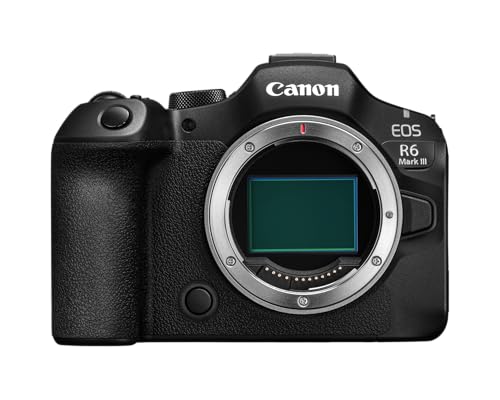
- Canon EOS R6 Mark III: check price on Amazon
- Canon EOS R6 Mark II: check price on Amazon
- Sony Alpha 7 IV: check price on Amazon
- Nikon Z50 II with Two Lenses: check price on Amazon
- GoPro HERO13 Black: check price on Amazon
- Insta360 Ace Pro 2: check price on Amazon
Four of the six are mirrorless bodies built for the sideline, because that is where most sports photographs are actually made: behind a fence, halfway up a bleacher, or along a touchline with a telephoto doing the travelling. The two action cameras cover the opposite assignment. Mounted on a helmet, a chest strap or the crossbar, they record the game from inside it, in weather and contact that would end a mirrorless body’s afternoon.
A word about lenses before the picks, because it decides more than the body does. Sports are played far away, usually in mediocre light, which means the telephoto you pair with any body below will shape your results as much as the sensor will. Budget for glass with the same seriousness you budget for the camera, and treat the body as the focusing brain that makes the glass useful.
What follows is organised the way photographers actually ask the question: which body for the touchline, which for the gym, which for a first season, and which two for the view from inside the action. Every pick earned its place by being the best answer to one of those questions rather than a diluted answer to all of them.
Key Takeaways
- Tracking autofocus that recognises people and holds an eye or a helmet is the single feature that separates sports cameras from general ones.
- The Canon EOS R6 Mark III leads this list for pure sideline work; the R6 Mark II delivers most of that ability for noticeably less.
- A crop sensor is an advantage at the fence: the Nikon Z50 II kit stretches every telephoto further without extra cost or weight.
- Evening games under lights reward clean high-ISO files more than extra megapixels you will crop away anyway.
- Action cameras are not substitutes for a sideline body — they are a second, opposite viewpoint, and the HERO13 Black and Ace Pro 2 split that job by daylight and darkness.
- Your keeper rate will rise faster from learning one venue’s light and sightlines than from any upgrade on this page.
In this guide
Quick Picks
| Camera | Badge | Why it is here |
|---|---|---|
| Canon EOS R6 Mark III | Best overall for field sports | People-aware tracking, deep bursts and files that hold up under floodlights and heavy crops. |
| Canon EOS R6 Mark II | Best value for serious amateurs | Almost the same sideline manners as its successor at a friendlier point in its life cycle. |
| Sony Alpha 7 IV | Best for mixed school and club sports | Stubborn real-time tracking plus the deepest lens catalogue in mirrorless for growing kits. |
| Nikon Z50 II with Two Lenses | Best first sports kit | Two lenses in the box and crop reach that turns modest zooms into genuine sideline tools. |
| GoPro HERO13 Black | Best athlete’s-eye view | Mounts where the game happens and survives the mud, spray and knocks of contact sport. |
| Insta360 Ace Pro 2 | Best for night games | A larger action-camera sensor that keeps evening footage cleaner than its rivals manage. |
How do we separate a sports camera from a camera that merely shoots fast?
Frame rate on a spec sheet is the least honest number in sports photography. A camera can rattle off frames and still be useless if the first frame is soft, the subject leaves the focus point by the third, or the buffer fills during the one play that mattered. So the judging here started with tracking behaviour: pointed at a player sprinting diagonally — toward the camera and across it at once, the hardest movement in team sport — does focus stay glued to that player’s face, or does it drift to a nearer teammate, a referee, the crowd?
Burst discipline came next. School and club sports are shot in greedy sequences: the build-up, the strike, the celebration, all inside five seconds, then again a minute later. Bodies that recover quickly between bursts, and whose file sizes do not swamp a card by half-time, ranked above bodies with a faster headline rate and a shallower well.
Finally, the evening test. A large share of amateur sport happens after work, under lights of wildly varying quality. Sensors that keep jerseys, skin tones and grass believable as sensitivity climbs were favoured, along with bodies whose controls can be worked by feel — gloves on, eyes up, play restarting — because the sports photographer who is looking at a menu is missing the photograph.
One more criterion ran underneath all three: honesty of the viewfinder and screen. What you see while tracking a subject should be the subject as it is now, not a smeared or delayed approximation. Lag and blackout sound like laboratory concerns until you try to follow a puck or a squash ball; the bodies ranked highest here are the ones whose view stays truthful at speed, because a photographer can only time a shutter for a moment they can actually see.

Canon EOS R6 Mark III — Best overall for field sports
Stand on a touchline with the R6 Mark III and the first thing you notice is how little negotiating the autofocus requires. Tell it you are photographing people and it goes looking for heads and eyes; a striker spinning away from a defender keeps a locked eye even when only half the face is visible, and when the face turns fully away the system settles on the head and shoulders instead of panicking into the background. That calm is what you are paying for. Sports are chaotic enough without a camera adding its own opinions about which player matters.
Under lights the full-frame files behave the way evening shooters need. Friday-night football, indoor basketball, a hockey rink with one dim corner — sensitivity climbs, and the images stay presentable: colours hold, noise looks like grain rather than static, and there is enough resolution left to crop a midfield duel into a tight frame for the club website. Cropping is the sideline tax nobody escapes, since even a long lens leaves you further from the play than you would like, and this body pays that tax more gracefully than most.
It also asks little of your hands. The dials sit where a Canon shooter’s fingers already live, the viewfinder keeps pace with a fast pan without smearing, and the in-body stabilisation takes the shake out of a long lens held through a cold second half. None of that sounds glamorous, and all of it is the difference between a body you fight and a body you forget — which is precisely when the good frames start arriving.
Weather deserves a mention, because outdoor seasons are long and rarely dry. The sealing on this body is built for drizzle on a November touchline and dust on a summer track, and the battery holds through a double-header without the anxious rationing smaller bodies demand. Pair it with a fast card and the workflow after the whistle is equally grown-up: files move quickly, previews render instantly, and a photographer filing for a club site can turn a gallery around before the players have finished their warm-down. None of this appears in highlight reels of specifications, yet it is the texture of every working weekend — a camera that stays ready, in the rain, in the cold, in the last minute of the last game, without asking you to think about it.
Spend a season with it and a subtler strength emerges: consistency of colour across a whole match. Jerseys stay the same red from the first minute to the last, skin tones do not drift as the light fails, and a gallery of four hundred frames edits into a coherent story instead of a patchwork. Editors notice this even when viewers cannot name it. For photographers building a portfolio or a relationship with a club’s media officer, that coherence is a professional signature, and it is one of the quiet reasons this body, rather than a marginally faster rival, takes the top slot for field sports on this page.
File handling after the final whistle completes the picture. Dual slots let you write a backup as you shoot or split stills from video, card speeds keep the buffer honest during a frantic last ten minutes, and the wireless transfer is quick enough for a touchline phone upload when a club wants the winning goal online before the crowd reaches the car park. Deadline features are invisible in a showroom and decisive in February.
- Format: full-frame mirrorless
- Autofocus: people and eye detection with deep subject tracking
- Burst: high-speed continuous, deep buffer for long plays
- Video: high-quality 4K for match clips and interviews
Strengths
- Focus that keeps its nerve in a crowded penalty area
- Evening files that survive aggressive cropping
- Controls you can run without lowering the camera
Trade-offs
- The most expensive body in this roundup
- Full-frame telephoto glass is a serious second purchase
- Overqualified for occasional touchline duty
Best for: club and school photographers who shoot sport most weekends and sell or publish the results. Not suited for: casual spectators who want a camera for two matches a season.

Canon EOS R6 Mark II — Best value for serious amateurs
If the Mark III is the current flagship manner at full price, the Mark II is the same education at alumni rates. Its people detection and tracking were the benchmark that rivals spent two years chasing, and team sports have not changed their geometry since: a winger is still a winger, a point guard still cuts the same way. In practice the older body loses very few frames its successor would have kept, and the money saved buys the telephoto that will improve your photographs far more than the small gap between these two bodies ever could.
Where the Mark II quietly excels is indoor work. Gymnasiums are where amateur sports photography goes to be humbled — cycling fluorescent light, yellow varnish reflections, shutter speeds fighting for every stop. The sensor’s high-sensitivity behaviour and the body’s fast, confident focusing in dim conditions make it the gym specialist of this list, and its stabilisation steadies the mid-range zooms most people actually shoot basketball with.
Video deserves its own sentence because so many club shooters are now one-person media departments: the same body that takes the stills at the whistle records clean 4K of the trophy lift and the coach’s interview, without a second camera in the bag or a mode change that eats the moment. For a parent building a recruiting reel or a volunteer running a school’s social accounts, that dual competence is the whole argument.
There is also a maturity argument that rarely gets made. The Mark II has been in photographers’ hands long enough that every quirk is documented, every accessory exists, and the used market is full of bodies bought by upgraders and barely run in. For a club shooter whose budget must cover insurance, a monopod and a season of travel as well as a camera, that ecosystem maturity is worth real money. Firmware has had time to settle, rental houses stock the body when yours is in for repair, and any working photographer you meet at a venue can lend you a battery because half of them own the same one. Buying the slightly older flagship is not a compromise position; for many sideline regulars it is simply the professional decision.
Handling in the wet is the other unglamorous test it passes. Sealed well enough for sideline rain, with dials large enough for cold fingers and a grip that stays secure when a monopod is doing the heavy work, the Mark II asks little of you physically across a long tournament day. Tournament shooting is a war of attrition against your own shoulders and attention span; a body that conserves both is, in the most literal sense, producing sharper photographs in the final match than a heavier or fussier rival would. That is the context in which its slightly older specification stops mattering entirely.
Its pre-capture trick deserves a footnote of its own: the camera can record frames from just before the shutter is fully pressed, which rescues the exact instant of a bat meeting a ball or a boot meeting a cross that human reactions arrive slightly too late for. Purists debate the sportsmanship of it; working photographers simply file the picture. Used sparingly, it is less a cheat than an admission that sport is faster than thumbs.
- Format: full-frame mirrorless, 24.2MP
- Autofocus: people, animal and vehicle detection
- Stabilisation: in-body, working with the lens
- Video: oversampled 4K that flatters indoor light
Strengths
- Benchmark tracking at a mid-life price
- The strongest gym and arena performer here
- Stills and video in one dependable body
Trade-offs
- Its successor bursts a little deeper
- Resolution leaves less room for extreme crops
- Canon’s menu system still rewards an evening of setup
Best for: serious amateurs stepping up from an entry body who shoot indoors and out. Not suited for: professionals who need the deepest possible buffer for agency deadlines.

Sony Alpha 7 IV — Best for mixed school and club sports
Sony built its sports reputation on tracking that refuses to let go, and the Alpha 7 IV carries that reputation into a body priced for mortals. Set focus on a midfielder and it clings through feints, screens and the brief disappearance behind a referee, re-emerging still locked on the same player rather than whichever shirt is nearest. For the photographer covering a whole school programme — soccer on Tuesday, volleyball on Thursday, the swim meet nobody else wants — that reliability across weird, varied venues is worth more than any single spec.
The files help in a different way. With more resolution than the Canons here, the Alpha 7 IV tolerates the shot every sideline parent knows: framed a touch wide because the play could break either way, then cropped hard to the moment it broke yours. Yearbook pages, banners in the gym lobby, a senior-night poster — those crops hold together, and the camera’s colour under mixed lighting saves editing time when you are processing three hundred frames the night before a deadline.
Then there is the catalogue behind it. No mirrorless system offers a longer bench of telephotos at every price, from sensible zooms a booster club can fund to professional glass you can rent for the championship game. Buying this body is partly buying that future: whatever your sports photography becomes in three years, a lens exists for it, and probably a used one at a fair price.
Sony’s customisation is the other half of its appeal once you live with it. Sports shooters develop strong opinions about which dial should govern what, and this body lets you rebuild its controls around your own habits — one button for eye detection, another for switching tracking sensitivity, a third for the crop mode that turns it into a longer lens at the cost of resolution. Set up properly, it disappears in the hand during play, which is the highest compliment a working camera can earn. The learning curve to reach that point is real, and the first evening with the manual should be treated as part of the purchase, but photographers who invest that evening tend to stop shopping for years.
One caution belongs in any honest account: the Alpha 7 IV rewards owners who shoot raw and edit, and slightly punishes those who do not. Its straight-from-camera colours are accurate rather than flattering, and under sodium gym lights the white balance needs a deliberate hand. None of this is difficult, and the files repay the effort generously, but a photographer who wants finished pictures with zero editing should know the camera expects a small partnership. In exchange it offers the most headroom of any body here — the files bend furthest in the edit before they break, which is why working shooters forgive the menus.
For the school-programme shooter there is one more practical gift: the same body covers the awards evening, the team portrait session and the drama production stills without a second camera. Administrators fund tools that multitask, and a camera that documents the whole life of a school, not merely its fixtures, is an easier budget conversation. Versatility is a specification too, even if it never appears on the box.
- Format: full-frame mirrorless, 33MP
- Autofocus: real-time tracking with eye detection for people
- Lenses: the widest native telephoto selection available
- Video: 4K with picture profiles for graded highlights
Strengths
- Tracking that survives screens, packs and referees
- Crop room that rescues wide-framed plays
- A lens roadmap for every stage of ambition
Trade-offs
- Continuous rate is a step behind the Canon pair
- Menus take patience to personalise
- Fast pans on video need care with rolling shutter
Best for: school and club shooters covering many sports with one system. Not suited for: burst-first specialists who live on motor-drive sequences.

Nikon Z50 II with Two Lenses — Best first sports kit
Every sports photographer has a first season, and it usually teaches the same lesson: you were too far away. This Nikon kit is engineered around that lesson. The crop sensor multiplies the reach of the included telephoto zoom, so the far touchline of a youth soccer field — a rumour through most starter kits — becomes a frame you can actually fill. Two lenses in the box means the wide zoom handles team photos and trophy shots while the telephoto does the season’s real work, and you are shooting on day one instead of saving for a second purchase.
Do not mistake the price class for toy focusing. The Z50 II inherited Nikon’s subject detection, and it tracks a runner or a cyclist with a composure that would have been professional-grade a generation ago. It will drop more frames than the full-frame bodies during a chaotic goalmouth scramble — that honesty matters — yet for the sports most beginners shoot, in daylight, at reasonable distances, its keeper rate surprises everyone who tries it.
The size changes your behaviour, too. A light body and compact zooms ride in a small sling bag, come along to away games without negotiation, and leave your arms fresh in the second half. Beginners improve fastest by shooting constantly, and the camera that gets carried is the camera that teaches. Add a second battery and a fast card and this kit is a complete first season, with a mount that welcomes serious glass when the photographer outgrows the box.
Parents ask one question about this kit more than any other: will it survive being learned on? The answer is reassuring. The body is solid without being precious, the controls teach proper photographic habits instead of touchscreen shortcuts, and the images it makes in a child’s first season are good enough to print and frame — which, for a family, is the entire point. It also moonlights gracefully: the same kit that shoots Saturday soccer handles holiday portraits and school concerts without complaint, so it earns its cupboard space in a household that cannot justify a single-purpose camera. A first sports camera should invite experimentation rather than intimidate, and this one pitches that balance about right.
Growth room deserves one more word, because starter kits are usually judged as dead ends. Nikon’s Z mount is shared with the company’s professional bodies, so the first serious telephoto a young photographer saves for — bought used, borrowed from a club, rented for a final — mounts straight onto this camera and works fully. Skills transfer, lenses transfer, even batteries and chargers transfer up the range. Compare that with the true dead-end kits beginners are often sold, where every component must be replaced at the first upgrade, and the Z50 II package starts to look less like an entry ticket and more like a foundation.
Video, often an afterthought at this price, is good enough to matter here: clean footage for a young athlete’s highlight reel, with the same tracking helping keep a moving subject framed. Many a recruiting video began life on a starter body like this one, shot by a parent who learned framing on Saturday mornings. The camera does not need to be a cinema tool; it needs to be present, understood and pointed at the right moment, and on all three counts it serves a beginner faithfully.
- Format: APS-C mirrorless, two-lens kit
- Reach: crop sensor stretches the telephoto zoom
- Autofocus: subject detection with tracking
- Kit: standard zoom plus telephoto zoom included
Strengths
- Genuine sideline reach straight out of the box
- Light enough to carry to every single game
- A mount with real growing room
Trade-offs
- Shorter bursts than the full-frame bodies
- Evening games push its sensitivity ceiling
- Kit zooms are a beginning, not an end
Best for: parents and students starting a first season of sports photography. Not suited for: shooters filing professional work under stadium deadlines.

GoPro HERO13 Black — Best athlete’s-eye view
There is a photograph no sideline body can take: the one from inside the ruck, over the handlebars, at the end of a paddle. The HERO13 Black exists for that territory. Bolted to a chest mount, a helmet or a goalpost, it records the game at arm’s length with a field of view wide enough to forgive any aim, and stabilisation smooth enough to make a mountain-bike descent look like a tracking shot. For sports photos specifically, its burst and frame-grab workflow turns video into stills — pull the exact frame where the skateboard leaves the coping, the wave closes, the glove makes the catch.
Durability is the quiet headline. Waterproof without a housing, unbothered by dust, mud and the occasional direct hit, it goes where contact happens instead of watching contact from a safe distance. Coaches have adopted this class of camera for a reason beyond spectacle: the wide, honest view shows spacing, footwork and decision-making that a telephoto compresses away, so the footage doubles as a teaching tool on Monday.
Understand its limits and it will not disappoint you. The small sensor wants daylight; dusk sessions soften and grain creeps in. There is no optical zoom, so distant action stays distant. Treat it as the second camera — the inside view that pairs with a sideline body’s outside view — and a sports story told with both is richer than either tells alone.
Workflow is where the HERO13 earns repeat use rather than novelty status. The companion app pulls clips and frame grabs to a phone in the car park, so a coach can show a player their start technique before the drive home, and the camera’s voice control means a gloved, muddy or chalked hand never has to find a button at the decisive second. Mounting options border on the absurd — clamps, straps, suction cups, magnetic latches — and that absurdity is useful, because the difference between a dull onboard shot and a revelatory one is usually twenty centimetres of camera placement. Experiment freely; the camera can take the consequences.
Audio is the dimension athletes forget until they hear it. Wind over a microphone ruins more action footage than shaky mounting ever has, and the HERO13’s wind handling, especially with its accessory options, keeps commentary and ambient roar usable at speed — the ski edges, the peloton’s hum, the crowd rising behind a goal-mounted unit. For stills shooters this sounds irrelevant until the first time a frame grab needs its matching clip for a club’s social post, at which point clean sound turns a novelty camera into a publishing tool. Small cameras live or die on these secondary virtues across a season.
Heat is the final practical note. Long summer tournaments cook small cameras, and the HERO13’s thermal manners — helped by its airflow-conscious design and battery choices — keep it recording through midday fixtures that shut down less careful rivals. A camera that stops at the hottest, brightest, most important hour of the tournament has failed at its one job, whatever its resolution claims say.
- Format: waterproof action camera
- Video: 5.3K with strong stabilisation
- Mounts: helmet, chest, bars and posts via a huge ecosystem
- Stills: frame grabs and burst photo modes
Strengths
- Views no other camera on this page can reach
- Survives the conditions contact sports create
- Frame grabs turn peak action into stills
Trade-offs
- Low light is not its friend
- No zoom — the action must come to it
- Battery life shortens in cold weather
Best for: athletes and coaches who want the participant’s view of the game. Not suited for: anyone expecting it to replace a telephoto on the sideline.

Insta360 Ace Pro 2 — Best for night games
Most action cameras surrender at sunset. The Ace Pro 2 was built by people who clearly resented that. Its sensor is large by action-camera standards, and the difference shows exactly where this list’s other small cameras struggle: evening training sessions, floodlit five-a-side, a night ski run under resort lights. Colours stay separated instead of collapsing into orange murk, and the noise that remains looks fine-grained rather than smeared, which matters when a frame grab becomes the photo a rider posts.
Daylight manners are equally considered. The flip screen lets a solo athlete frame a self-shot without a guessing game, the colour science is tuned to flatter skin and sky rather than punish them, and the stabilisation handles the chatter of gravel, cobbles and trail centres calmly. Battery endurance across a cold evening is respectable for the class, and the camera charges quickly between sessions — a small mercy that decides whether a camera gets used on weeknights at all.
Position it as the HERO13’s shadow-side sibling: where the GoPro owns bright, rough, mid-day chaos, the Ace Pro 2 owns the hours after the light goes. A two-action-camera kit sounds indulgent until you shoot a winter season, when half your sport happens in the dark and the footage from the wrong camera is simply unusable.
One more quality separates it in practice: how little correction its footage demands afterwards. Action-camera files often need rescue work — contrast added, colour coaxed back, horizons argued with — before they can sit beside mirrorless footage in the same edit. The Ace Pro 2’s files arrive closer to finished, which matters to the athlete who is also the editor, the coach and the social media manager. On a weeknight, with training again tomorrow, the camera whose footage is usable straight away is the camera that actually documents the season. That, as much as the sensor, is why it holds the night-games slot on this list against strong competition.
It is worth stating plainly who should not buy it: the daylight-first athlete. If your sport is midday surfing, summer skateparks and noon trail rides, the GoPro’s broader mount ecosystem and longer track record make it the safer first action camera, and this Insta360’s low-light advantage buys you little. The Ace Pro 2 is a specialist’s answer to a specific problem — sport that happens when the light is gone — and it is recommended here in exactly that spirit. Specialists chosen honestly outperform generalists chosen hopefully, in cameras as in players.
Its maker also deserves credit for the app experience after dark: reviewing footage on a phone in a cold car park, trimming the descent or the final set, and posting a frame grab before the drive home is a realistic weeknight workflow rather than a brochure promise. The best camera for night games is partly the one whose pictures escape the card the same evening.
- Format: action camera with large sensor
- Video: high-resolution with low-light processing
- Screen: flip-up for self-framing
- Build: waterproof, cold-tolerant for the class
Strengths
- The cleanest evening footage among small cameras here
- Self-framing screen for solo athletes
- Colours that need little correction
Trade-offs
- Mount ecosystem is younger than GoPro’s
- Still a fixed wide lens — proximity required
- Premium pricing for the category
Best for: evening and winter athletes whose sport lives under lights. Not suited for: sideline stills photographers, who need a real telephoto body.
What should you look for in the best cameras for sports photos?
Start with the focusing system, and be specific about it. You want subject detection that recognises people, continuous tracking that follows a chosen player rather than the nearest object, and an eye-detection mode that works at distance. Test any camera the same way: a subject running diagonally toward you. Straight-line tracking is easy; diagonal closing speed is where consumer systems unravel, and it is the exact movement sport produces constantly.
Next, read the burst specification like an accountant. The rate matters less than the depth — how many frames the camera holds before it slows — and the recovery, how soon it is ready again. Card format matters here as well, because fast cards clear buffers sooner and cost less per season than a body upgrade. Pair that with dual card slots if you shoot anything unrepeatable; a championship moment on a corrupted card is a story nobody believes.
Light is the third filter. Find out where you will actually shoot. Daylight field sports forgive almost any modern sensor. Gyms, rinks and floodlit fields do not: they demand clean files at high sensitivity and a viewfinder bright enough to follow play. If your calendar is mostly evening fixtures, weight this heavily — it is the reason two full-frame bodies and a large-sensor action camera sit on this list.
Finally, handle the camera with the lens you intend to use, at arm’s length, for two minutes. Sports photography is an endurance event disguised as a technical one. Weight, grip depth and dial placement decide whether your technique survives the second half, and no review — including this one — can feel that for you.
Do not overlook the second-hand arithmetic in all of this. Sports bodies live hard lives and depreciate honestly, which means last generation’s sideline tools circulate at prices that embarrass new entry-level kits. A used body from the class of the R6 Mark II, bought from a reputable dealer with a shutter count disclosed, can be the smartest money in this entire guide — provided you keep enough budget aside for the telephoto, because glass, again, is where sports photographs are truly made.
Access, finally, is a feature no manufacturer lists. A press pass, a club volunteer’s bib, permission to stand beyond the fence — these change your photographs more than any sensor generation. Whatever body you buy, spend equal effort becoming a known, trusted face at your venue. Doors open for regulars, and the best seat in the ground is worth more than the best camera in the catalogue.
How do you get sharper sports photos from any of these cameras?
Begin with shutter speed honesty. Freezing a sprinting athlete’s limbs takes a genuinely fast shutter; freezing just the torso while the background streaks takes a slower one and a smooth pan. Both are legitimate, but choosing by accident gives you the worst of each. Set the speed for the effect, then let sensitivity absorb the light cost — a sharp, slightly grainy frame beats a clean, blurred one every single time.
Position beats equipment after that. Learn where your sport’s decisive moments cluster — the far post, the top of the key, the last hurdle — and put yourself there before the play does, with the sun or the lights at your back and a clean background behind the action. Anticipation is a focusing aid no manufacturer sells: a photographer who knows the play starts the burst a half-second early, and the camera’s tracking has time to settle before the moment peaks.
Work the burst with restraint. Short, deliberate sequences around the peak of the action produce keepers; holding the shutter down for entire possessions produces thousands of near-identical frames and a card that fills before the decisive minute. Shoot the build-up in singles, the climax in a burst, and chimp less — the next play is already forming while you admire the last one.
Learn your sport’s grammar and the camera’s job gets easier still. Every game has a shape: the set piece that always develops at the far post, the fast break that always finishes at the same end, the celebration that always runs toward the same corner. Photographers who study that grammar pre-position and pre-focus, so the camera’s tracking starts from a half-second of advantage. Equipment multiplies preparation; it has never once replaced it, and the gap between two shooters with identical bodies is almost always this knowledge.
How should you set up the camera before the whistle blows?
Sports settings reward preparation because play offers no pauses for menu archaeology. Arrive with the unglamorous decisions already made: continuous autofocus with subject detection on, the widest tracking area your camera offers as the default, a fast continuous drive mode, and back-button focus if your hands have learned it — it separates the act of tracking from the act of shooting, which suits stop-start sports beautifully. Set a minimum shutter speed floor in your auto sensitivity settings so the camera defends sharpness before it defends clean files, because grain can be forgiven and blur cannot.
Then rehearse the venue, not just the camera. Walk the sightlines during warm-ups, note where the light pools and where it dies, pick your two or three positions for each half, and shoot the warm-up itself as a settings rehearsal — by the time the match starts, your exposure for that gym or that floodlit pitch should be a known quantity, not a discovery. Photographers who look calm during chaotic games are not calmer people; they simply did their worrying twenty minutes earlier.
Write those settings down, too. A notebook or a phone note per venue — the gym’s shutter and sensitivity at the far basket, the pitch’s exposure under its lights — turns every return visit into a head start. Clubs shoot in the same handful of buildings all season, and the photographer who treats each one as a solved problem spends the match watching play instead of negotiating with a light meter.
Which camera suits which sport on your calendar?
Different sports stress different parts of a camera, and matching the body to your actual fixture list saves money and frustration. Field sports played in daylight — soccer, rugby, lacrosse, baseball — reward reach and burst depth above all: the play develops far away and resolves in a two-second duel. That is Canon R6 territory, either generation, with the longest telephoto you can carry, while the Nikon kit serves the same sports at youth level where distances shrink and light is kind.
Indoor sports invert the priorities. Basketball, volleyball, gymnastics and ice hockey are games of terrible light and short distances, where sensitivity and focusing speed in gloom matter more than reach. The R6 Mark II’s gym manners and the Alpha 7 IV’s crop room both shine here, because a mid-range zoom you already own suddenly becomes long enough, and the contest moves to the sensor instead of the lens catalogue.
Participant sports — the ones where the photographer is also in the event, or strapped to someone who is — belong to the action cameras entirely. Cycling, skiing, surfing, climbing and motorsport from the cockpit cannot be photographed from a fence with any dignity. The HERO13 Black covers the bright, violent end of that world; the Ace Pro 2 covers its evenings and winters. Many photographers end up owning one camera from each half of this list, and that pairing, not any single body, is the honest answer to covering a whole sporting life.
Comparison Table
| Camera | Format | Strongest suit | Watch out for |
|---|---|---|---|
| Canon EOS R6 Mark III | Full-frame mirrorless | Tracking and evening files | Price of body and glass |
| Canon EOS R6 Mark II | Full-frame mirrorless | Indoor and gym work | Less crop headroom |
| Sony Alpha 7 IV | Full-frame mirrorless | Crop room and lens choice | Slower continuous rate |
| Nikon Z50 II with Two Lenses | APS-C kit | Reach per dollar | Evening sensitivity ceiling |
| GoPro HERO13 Black | Action camera | Mounted inside views | Needs daylight and proximity |
| Insta360 Ace Pro 2 | Action camera | Night and floodlit footage | Fixed wide perspective |
What are the most common mistakes in sports photography?
The classic error is buying resolution when the problem was reach. A distant player cropped from the centre of a huge file still looks distant — soft light, heat haze and all — while a modest file from a longer lens at the right position looks close and alive. Fix position and focal length first; pixels come last.
Second is trusting the centre focus point like a sniper and never letting tracking work. Modern subject detection exists precisely because athletes will not stay centred. Photographers who fight the system, reframing constantly to keep a single point on a moving player, exhaust themselves and miss the frames the camera was ready to hand them.
Third, neglecting the unglamorous kit: cards fast enough for your bursts, batteries for cold evenings, a rain cover that costs less than a repair. And fourth, shooting only the ball. The bench, the warm-up, the injured captain watching from the fence — sports stories live there too, and they are usually the frames families keep.
A fifth mistake is quieter: deleting in the camera. The frame that looks like a miss at arm’s length on a small screen — the tackle half out of frame, the celebration blurred at the edges — is sometimes the one with the feeling in it, and cards are cheap while moments are not. Cull at home, on a big screen, with the whole sequence in front of you. Sports photography is an editor’s game as much as a shooter’s, and the discipline of reviewing everything you shot is where next season’s positioning instincts come from.
And keep an honest archive. Back up the card before you edit, keep the raw files of your best work, and resist reformatting in the field. Storage is the cheapest insurance in photography, and the frame you delete in a hurry at nineteen is the one you will want for the retrospective at forty — or, more practically, for the player’s senior-night slideshow next spring.
Final Recommendation
Buy the Canon EOS R6 Mark III if sports are your main photographic life and the budget stretches: it is the most forgiving tool here for chaotic, dim, fast subjects. Choose the R6 Mark II when the same money must also cover a telephoto — the wiser allocation for most club shooters — and the Sony Alpha 7 IV when you cover many sports and venues and want crop room plus the deepest lens bench. Newcomers should start with the Nikon Z50 II kit and spend the savings on a season of access. Add the HERO13 Black for inside views in daylight, the Ace Pro 2 when your sport happens after dark, and any combination of these will out-shoot a photographer who bought one flagship and never learned the venue.
Whichever you choose, spend the first month shooting one sport at one venue until its light and rhythms are familiar. That apprenticeship, served with any body on this page, will teach you more about sports photography than the difference between the most and least expensive picks here — and it is the reason experienced photographers argue about position and anticipation far more than they argue about cameras.
Related guides
Frequently Asked Questions
How many megapixels do sports photos actually need?
Fewer than marketing suggests. Most sports images are published on screens or printed at modest sizes, where tracking accuracy and light matter far more than resolution. Extra megapixels earn their keep only when you crop heavily from fixed positions — one reason the Alpha 7 IV suits photographers stuck at the back of a bleacher.
Is a crop-sensor camera a real handicap for sports?
Usually the opposite outdoors. The reach multiplier puts affordable telephotos into play, and depth of field is more forgiving of small focus errors. The handicap appears indoors and at night, where the smaller sensor’s high-sensitivity files degrade sooner — match the sensor to your venue’s light, not to fashion.
What shutter speed freezes an athlete?
It depends on the sport’s fastest moving part. A runner’s torso freezes at moderate speeds while a tennis racket, a bat or a hockey stick needs far faster ones. When in doubt, go faster than feels necessary and let sensitivity rise; motion blur from too slow a shutter cannot be edited away afterwards.
Can an action camera replace a mirrorless body for sports?
No — they answer opposite questions. The mirrorless body watches the game from outside with reach and control; the action camera rides inside it with a wide, fixed view. Used together they tell a complete story. Used alone, each leaves half the story untold.
Should beginners buy a used professional body instead?
Sometimes. An older pro body offers rugged build and fast handling, but its focusing system may predate modern subject detection, which is the feature that helps beginners most. A current mid-range body with tracking — like the Z50 II kit here — is usually the kinder teacher.
Do I need weather sealing for outdoor sports?
If your season includes autumn and winter fixtures, treat sealing as close to essential. Cameras rarely die in dramatic downpours; they die across a season of drizzle, dust and condensation between a cold car and a warm clubhouse. A sealed body, a cheap rain cover for the lens, and the habit of drying kit overnight will carry any camera on this list through years of touchlines.
How long do sports camera batteries really last?
Longer in the brochure than on a February touchline. Cold drains cells, long bursts and bright screens drain them faster, and a double-header can empty what a single match would not. Carry at least one spare for any body here, keep it in an inside pocket where your body heat protects it, and rotate batteries rather than running one to death — the final ten minutes of a close game is exactly when the decisive frame arrives.
Related Guides
Keep building your sports kit and technique with our companion guides: best cameras for shooting races, best cameras for skate and best action cameras for recording.


