reviewstook.com is reader-supported. When you buy through links on our site, we may earn an affiliate commission.
Where to Buy One Camera That Writes the Blog and Films It Too
The best cameras for blogging and vlogging have to be bilingual. A blog still runs on still photographs — the recipe shot, the hotel room, the product on the desk — while its growth increasingly runs on video: the walkthrough, the review, the day-in-the-life that algorithms promote and readers increasingly expect. The best cameras for blogging and vlogging therefore refuse to specialise. They shoot a cover-worthy still in the morning, film a talking-head segment at noon with autofocus you never think about, and hand both files to your phone or laptop without a cable fight by evening.
This guide is written for creators who publish in both formats, or intend to. Four picks link to cameras in our verified pool, and two strong creator favourites outside it appear prose-only. The ranking logic is workflow, not specification worship: how fast can you go from idea to published, how good is the audio path, how forgiving is the autofocus when you are alone in front of the lens, and how small is the kit when the blog goes travelling. A camera that wins a laboratory comparison but slows your publishing rhythm will lose you more readers than a slightly softer lens ever could.
We also take a position some guides dodge: for a blog-and-vlog hybrid, the camera is only half the purchase. A microphone input, a screen you can see yourself in, and stabilisation that survives a walking monologue are not accessories to the decision — they are the decision. Every review below scores those things as first-class features, because your audience will forgive a modest sensor long before it forgives muffled speech or a face the autofocus kept abandoning.
Key Takeaways
- Hybrid creators need stills and video in equal measure; every pick here is genuinely fluent in both.
- Self-facing screens and eye autofocus matter more than resolution for solo creators filming themselves.
- Audio decides retention: prioritise a microphone input or a proven wireless path on any serious pick.
- The smallest cameras here publish fastest — pocketability is a content strategy, not a convenience.
- Interchangeable-lens picks cost more up front but grow with a channel instead of being replaced by it.
- Buy for the format you will actually sustain weekly; consistency outperforms image quality in audience growth.
In this guide
Quick Picks
| Pick | Badge | Why it fits blog-plus-vlog life |
|---|---|---|
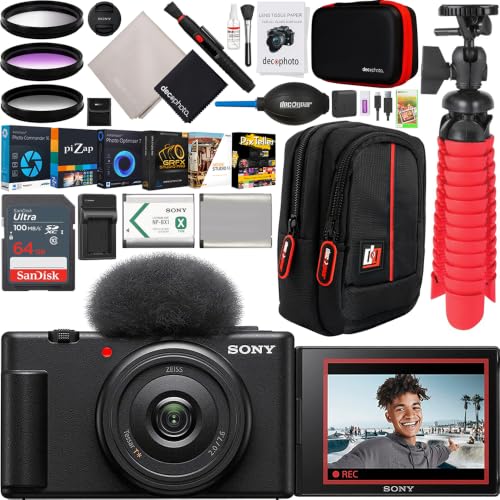
| Sony ZV-1F | Best all-in-one starter | Fixed wide lens, flip screen, strong built-in microphones and stills that flatter products and people alike. |
| DJI Osmo Pocket 3 | Best for travel vlogging | A gimbal-stabilised camera the size of a chocolate bar that makes walking footage look professionally crewed. |
| Nikon Z50 II | Best stills-led hybrid | A proper photo camera whose colour presets, eye autofocus and 4K video cover a photo blog that films. |
| Insta360 GO 3S | Best hands-free POV | A thumb-sized camera that mounts anywhere and captures the process shots blogs and vlogs both crave. |
| Sony ZV-E10 II | Best growth platform | Interchangeable lenses, creator-first controls and a huge accessory world for a channel on the rise. |
| Canon PowerShot V10 | Best pocket simplicity | A phone-shaped vlogging camera with a built-in stand that makes spontaneous filming nearly frictionless. |
How Did We Choose the Best Cameras for Blogging and Vlogging?
We scored the hybrid workflow end to end. Capture came first — stills quality for blog photography, video quality for vlogs, and autofocus that holds a solo creator’s eye without an operator. But capture is only the front half of publishing, so we scored the back half just as hard: how quickly files reach an editing device, whether vertical video is a native mode or an afterthought, whether the camera can livestream or serve as a webcam for the blog’s community calls, and how the battery story works across a full content day rather than a specification sheet’s best case.
Audio received a weighting most camera guides reserve for lenses. Blog audiences read; vlog audiences listen, and they leave bad audio faster than bad video. Built-in microphone quality, the presence of a microphone input or digital audio interface, wind protection and headphone monitoring all moved rankings. A camera with a gorgeous sensor and a muffled, unfixable voice path fell down the list no matter how its stills scored.
Finally, we weighted carry. Blogs are written in cafés, filmed in markets, photographed in rented kitchens and recorded on trains. The kit that fits a normal day bag — or a coat pocket — gets used on the ordinary Tuesday when content is actually made, and ordinary Tuesdays, compounded, are what an audience is. The six picks divide into pocket tools and system cameras deliberately, and the fit guidance below is blunt about which temperament each serves.
What Does a Week of Blogging and Vlogging Actually Demand?
Walk the week honestly. Monday is a desk day: product stills for a review post, shot overhead and at angles, needing colour that looks true under mixed window and lamp light. Tuesday is a talking piece to camera about the same product — twenty minutes of footage where autofocus, audio and a screen you can glance at decide whether the take is usable. Wednesday the blog leaves the house: a market, a maker, a neighbourhood, filmed walking-and-talking in available light with no crew and no second takes. Thursday is editing, where file transfer speed and battery discipline either respect your evening or consume it. Friday is community: a livestream or a Q&A recorded on the same camera, because your audience knows its look by now.
No single specification survives that week; a workflow does. The pocket cameras win Wednesday outright and hold their own on Tuesday. The system cameras win Monday’s stills and grow into Friday’s ambitions. The GO 3S exists for the shots none of the others can take at all — mounted inside the process, on the bike, under the shelf. Creators who recognise their own week in that sketch can now read the six reviews as casting decisions rather than a league table.

Sony ZV-1F — Best all-in-one starter
The ZV-1F is the camera we hand to a blogger who also wants to vlog and refuses to become a technician about it. Its fixed wide lens frames a desk, a kitchen counter or a face at arm’s length without decisions; the one-inch sensor behind it produces stills with genuine depth and video with colours that flatter skin without grading. Sony’s creator touches are practical rather than decorative: a button that melts the background for a talking segment, a product-showcase mode that snaps focus to whatever you hold up — the exact gesture every review blog performs weekly — and a flip screen with an unmistakable recording indicator so solo creators stop losing takes to a camera that was never rolling.
Audio is the surprise strength: the three-capsule built-in microphone captures a clear, forward voice that embarrasses most rivals’ internal efforts, and there is an input for the day an external microphone joins the kit. Stills are entirely respectable — this is a real camera for the blog’s photography, not a video toy — and the whole package charges over USB and disappears into a jacket. Its ceiling is real: no lens changes, modest zoom by walking, and low light that trails the bigger sensors below. But as the single purchase that starts a hybrid blog publishing this week, nothing here beats it.
- Format: compact, fixed wide-angle lens
- Sensor: 1-inch type for clean stills and video
- Video: 4K with eye autofocus and product showcase mode
- Audio: three-capsule internal microphone plus mic input
- Creator helpers: flip screen, background-defocus button, recording lamp
Strengths
- Product showcase focus is practically a dedicated feature for review bloggers.
- Built-in audio is good enough to delay the external microphone purchase honestly.
- Stills and video share one simple workflow, so publishing rhythm never stalls.
Trade-offs
- The fixed lens cannot zoom; distant subjects stay distant.
- Low-light video shows noise sooner than the interchangeable-lens picks.
- Serious photographers will miss a viewfinder on bright outdoor shoots.
Best for: new hybrid creators who want one simple camera publishing both formats immediately.
Not suited for: creators planning a lens collection or filming in dark venues weekly.

DJI Osmo Pocket 3 — Best for travel vlogging
The Pocket 3 is a camera on a motorised gimbal the size of a large lipstick, and for travel content it changes what one person can film. Walking footage — the backbone of travel vlogging — comes out floating and level in a way no handheld camera matches without a separate stabiliser rig. The one-inch sensor shoots handsome 4K video and perfectly serviceable stills, the rotating screen flips between horizontal and vertical in a twist, and face tracking keeps a solo traveller framed while the gimbal does the camerawork. It powers on in the time a moment takes to happen, which, on the road, is the feature that decides what gets filmed at all.
Blog stills from it are honest rather than exceptional — fine for web use, which is where blogs live — and its microphone system, especially paired with DJI’s wireless mic, gives travel speech a clarity that wind usually forbids. The honest limitations are a fixed moderate-wide view, a delicate gimbal that deserves its case, and a stills experience that will not satisfy a photography-led blog. But for the creator whose blog is a journey and whose vlog is the journey filmed, this tiny machine replaces a camera, a gimbal and a cameraman, and fits in the pocket they vacated.
- Format: gimbal-stabilised pocket camera
- Sensor: 1-inch type
- Video: smooth 4K with face and subject tracking
- Screen: rotating touchscreen for vertical and horizontal
- Creator helpers: instant start, wireless microphone pairing
Strengths
- Stabilisation quality makes solo walking footage look professionally produced.
- Starts and shoots faster than any rival here — moments survive contact with it.
- Vertical video is native and effortless for short-form spin-offs of blog posts.
Trade-offs
- Stills are the weakest of the serious picks; photo-led blogs should look below.
- The gimbal mechanism needs protection and dislikes sand and hard knocks.
- Fixed focal length limits creative framing for photography.
Best for: travel bloggers and vloggers who film while moving, alone, in real places.
Not suited for: studio-based creators or photography-first blogs.

Nikon Z50 II — Best stills-led hybrid
Some blogs are photographic essays that occasionally speak to camera, and for those creators the Z50 II is the correct centre of gravity. It is first a proper stills camera — APS-C sensor, interchangeable lenses, a viewfinder for considered composition — whose images carry the depth and low-light cleanliness that make a photo blog look authored rather than captured. Nikon’s built-in colour looks are a workflow gift: choose a rendering that suits your blog’s identity and publish stills that need almost no editing, a consistency audiences recognise subconsciously across posts.
The video side is far more than a courtesy. Eye-detection autofocus works while filming, the flip screen supports solo pieces, a dedicated product-review focus mode serves unboxings and craft demonstrations, and 4K footage matches the stills’ colour character so a post and its companion video feel like one publication. It is the largest pick here and the only one that asks you to choose lenses, which is precisely its growth story: the blog that starts on the kit zoom can add a bright prime for portraits or a macro for detail work as income and ambition arrive.
- Format: mirrorless, interchangeable lenses
- Sensor: APS-C
- Video: 4K with eye-detection autofocus
- Screen: tilting touchscreen plus electronic viewfinder
- Creator helpers: live colour presets, product-review focus mode
Strengths
- Stills quality leads this line-up, giving photo blogs a visibly authored look.
- Colour presets cut editing time across an entire content calendar.
- The lens system grows with the publication instead of being outgrown by it.
Trade-offs
- No in-body stabilisation, so walking vlog footage needs a stabilised lens or a gimbal.
- The kit is a bag item, not a pocket item, on travel days.
- Lens purchases become a recurring, enjoyable and undeniable expense.
Best for: photography-led blogs adding serious video without abandoning stills craft.
Not suited for: creators who want the camera to vanish into a pocket between shots.

Insta360 GO 3S — Best hands-free POV
The GO 3S is a camera the size of a thumb that detaches from its flip-screen case and mounts — magnetically, on a clip, on a pendant, on a shelf edge — wherever the interesting viewpoint is. For blogs and vlogs built around doing things — cooking, making, repairing, riding, training — it captures the maker’s-eye view that audiences find hypnotic and that no tripod camera can fake. The case works as remote screen, charger and controller; the camera itself records stabilised 4K, shrugs off splashes, and disappears so completely into a process that subjects and creators both forget it is filming, which is when footage turns honest.
As a blog’s only camera it would starve: battery life is measured in the short sessions its size dictates, stills are an afterthought, and low light is not its parish. As a blog’s second camera it is close to unfair advantage — the overhead whisking shot, the inside-the-engine shot, the dog’s-perspective shot that makes a post shareable. Creators whose content is a pair of hands doing something skilful should treat this as the specialist that makes their main camera’s footage three-dimensional.
- Format: modular thumb-sized camera with flip-screen case
- Video: stabilised 4K, horizon-locked options
- Mounting: magnetic system for body, hat, surfaces
- Creator helpers: case doubles as remote preview and charger
- Water resistance: splash and shallow-water ready
Strengths
- Viewpoints no other pick can reach make process content instantly distinctive.
- Hands-free recording lets makers demonstrate with both hands, naturally.
- The case-as-remote workflow is genuinely well thought out for solo creators.
Trade-offs
- Short recording sessions per charge suit clips, not long talking pieces.
- Stills and low-light performance are the weakest here by design.
- It complements a main camera rather than replacing one for most blogs.
Best for: makers, cooks, riders and instructors whose content is a process filmed from inside it.
Not suited for: creators needing one camera for long-form talking video and stills.
Sony ZV-E10 II — Best growth platform
Sony’s ZV-E10 II is the fixed-lens ZV-1F’s ambitious sibling: the same creator-first thinking — flip screen, product showcase, background defocus, excellent autofocus and audio options — rebuilt around interchangeable lenses and a larger APS-C sensor. For a blog-and-vlog hybrid with momentum, that architecture matters. Start on a versatile zoom for everything, add a bright prime when portraits and low-light venues arrive, and the camera keeps pace with the channel’s production values instead of capping them. Its video specification, colour options and livestreaming readiness are the deepest of the compact-system picks here.
We cover it prose-only because it sits outside this site’s verified pool, but creators comparing within Sony should understand the fork clearly: the ZV-1F is finished simplicity, the ZV-E10 II is a platform. Platforms demand decisions and reward them. If your blog’s income is growing and your filming is getting deliberate — lights, a microphone, a second angle — this is the body that absorbs that growth without a system change, and the second-hand lens market around it is the friendliest in the business.
- Format: mirrorless, interchangeable lenses
- Sensor: APS-C
- Video: high-specification 4K with creator colour modes
- Audio: microphone input and digital audio options
- Creator helpers: product showcase, defocus button, livestream-ready
Strengths
- The lens platform removes the ceiling fixed-lens creators eventually hit.
- Creator interface is the most polished of the system cameras here.
- Strong used-lens ecosystem keeps growth affordable over time.
Trade-offs
- No viewfinder, which stills photographers notice on bright days.
- No in-body stabilisation; lens choice must carry that duty.
- The platform only pays off if you actually buy beyond the kit lens eventually.
Best for: growing channels ready to build a small, deliberate lens kit.
Not suited for: creators who want the decision finished at the first purchase.
Canon PowerShot V10 — Best pocket simplicity
The V10 looks like a small phone that decided to be a camera: a wide lens, a large friendly sensor for its size, a built-in stand that props it on café tables, and a record button the size of a decision you cannot fumble. Canon aimed it squarely at vloggers who found even compact cameras too much apparatus, and for spontaneous, diary-style blogging video it is a delight — pull it out, stand it up, talk, publish. The stereo microphones are respectably clear, the screen flips for self-framing, and its stills cover a blog’s casual photography without embarrassment.
Its prose-only place here comes with clear-eyed limits: the fixed lens and modest low-light reach cap its ceiling, battery life suits a day of clips rather than a day of filming, and photography-led blogs will outgrow it quickly. But as a first vlogging camera for a written blog testing video — or as the always-in-the-bag second camera of a creator whose main body is a system camera — the V10’s friction is so low that content simply happens more often around it. In the attention economy of a growing blog, frequency is a feature no specification can substitute for.
- Format: pocket vlogging compact with built-in stand
- Sensor: 1-inch type
- Video: 4K with face tracking
- Audio: built-in stereo microphones
- Creator helpers: integrated stand, one-button recording, flip screen
Strengths
- The built-in stand turns any table into a tripod and any pause into a take.
- Operation is the simplest here — ideal for written blogs adding video cautiously.
- Size and shape make it the camera most likely to be carried daily.
Trade-offs
- Fixed lens and battery life limit long or ambitious filming days.
- Low-light video trails the larger-sensor picks noticeably.
- No upgrade path; it is a complete, finished, deliberately simple tool.
Best for: written bloggers adding video, and daily-diary vloggers who value spontaneity.
Not suited for: creators planning productions with lights, lenses and long sessions.
How Do the Best Cameras for Blogging and Vlogging Compare?
| Camera | Stills strength | Video strength | Carry | Growth path |
|---|---|---|---|---|
| Sony ZV-1F | Strong for its size | Excellent solo features | Jacket pocket | Finished tool |
| DJI Osmo Pocket 3 | Serviceable | Best-in-class movement | Any pocket | Finished tool |
| Nikon Z50 II | Best here | Very capable | Camera bag | Full lens system |
| Insta360 GO 3S | Minimal | Unique POV clips | On your body | Specialist second camera |
| Sony ZV-E10 II | Strong | Excellent, deep options | Small bag | Full lens system |
| Canon PowerShot V10 | Adequate | Effortless diary video | Any pocket | Finished tool |
Notice the table’s real divide: three finished tools that ask nothing further of your wallet, two systems that ask everything of your ambition, and one specialist that answers a question the others cannot phrase. Blogging careers have been built on every row of it.
What Audio Setup Does a Blogging Camera Deserve?
Begin with the camera’s own microphones and publish three pieces before buying anything; you need to hear your actual rooms, voice and habits, not a showroom’s. The first upgrade for nearly every creator is a small wireless or wired lavalier for talking pieces filmed beyond arm’s length, because voice clarity falls with distance faster than any other quality in your production. The second is wind protection — every outdoor vlogger learns that a furry windshield is not an accessory but a rescue service. Headphone monitoring, available on the system picks, closes the loop: hearing a take while recording it is the difference between discovering a buzzing cable at the shoot and discovering it in the edit, and only one of those discoveries can be fixed.
Room treatment is the free upgrade nobody buys because nobody sells it. A talking piece recorded in a soft-furnished room — curtains, cushions, a rug — sounds more professional on a modest camera than a flagship recording in a bare kitchen. Bloggers filming at home should spend their first production hour moving the recording corner toward softness before spending anything on microphones at all. Your audience will describe the result as “better quality” without ever knowing why, which is exactly how production value works.
How Do You Build a Sustainable Blog-and-Vlog Workflow?
Batch by location and light, not by topic. Film every talking segment for the fortnight in one seated session while the light and setup are right; shoot every product still in one overhead session while the desk rig is built. Batching converts setup time — the silent tax on solo creators — from a per-video cost into a weekly one, and it is the single habit that separates sustainable hybrid blogs from heroic, collapsing ones. Keep a running shot list on your phone so no filming day ends with the one photograph the post needed still untaken.
Then protect the pipeline’s boring middle: same-day file copies, a naming habit your future self can search, and an editing template with your titles, music and captions preset. The cameras here all transfer wirelessly or by card quickly enough; the workflow fails in the human gaps, not the technical ones. Publish on the rhythm you chose — and choose the rhythm the smallest sustainable week allows, because a hybrid blog’s audience forgives modest production and never forgives disappearance.
Which Mistakes Do Bloggers and Vloggers Make With Cameras?
Buying a cinema camera for a diary format
Large, deliberate cameras produce beautiful footage slowly. Diary and lifestyle formats live on speed and intimacy, and the audience reads a pocket camera’s immediacy as honesty. Match the apparatus to the format’s promise: the more your blog says “come with me”, the smaller the camera should be.
Neglecting stills because video is fashionable
Blog posts still rank, pin and get shared through their photographs, and a hybrid creator who lets stills quality slide is abandoning the channel that built the audience. Every pick here was required to shoot a proper still for exactly this reason — check the stills column of the comparison table before falling for any video specification.
Filming everything horizontally in a vertical world
Your blog lives horizontally; its discovery increasingly happens vertically, in short clips cut from the same shoots. Cameras with native vertical modes or rotating screens — the Pocket 3 above all — let one session feed both formats. Creators who ignore the second framing end up filming everything twice or not at all.
Upgrading cameras instead of lighting and audio
A modest lamp and a lavalier microphone transform a mid-tier camera’s output more than a flagship body transforms a dark, echoing room’s. Spend in the order the audience perceives: light first, sound second, camera third — then notice how rarely the third purchase still feels urgent.
Final Recommendation
Choose by the shape of your publishing week. The Sony ZV-1F is the default answer for a hybrid creator starting now — simple, capable in both formats, kind to solo workflows. Travellers should take the Pocket 3’s gimbal and never film a walking shot any other way. Photo-led blogs belong on the Nikon Z50 II, growing channels on the ZV-E10 II platform, and makers should add the GO 3S to whichever main camera they choose. Then publish this week, with the camera you have chosen, because the blogosphere’s graveyard is full of perfect kits awaiting a first post.
Related guides
- Best Digitl Cameras Under 300: Hybrid Video-and-Stills Picks Plus a Used-Buying Guide
- Best Cinematic Video Cameras Under 500.00: Video-First Picks, a Labelled Step-Up and a Used Route
- Best Cameras with Video for Teen Creators: Hybrid Picks Parents Can Trust
- Best Cameras for Website Video Blogs: Trust-Building Picks for Small Business Sites
- Best Cameras for Vlogging and Stick Work: 6 Picks for Walking, Talking Footage
- Best Cameras for Wedsinga (Weddings on Film): Ceremony-Proof Video Picks
- Best Cameras for Realtors: Six Picks for Personal Brand, Walkthroughs and Social Video
Frequently Asked Questions
Can one camera really do both blogging photography and vlogging well?
Yes — that is the design brief of every pick here. The fixed-lens models trade ultimate flexibility for speed, and the system models trade pocketability for growth, but none of them treats either format as an afterthought.
How important is a flip screen for a solo creator?
Close to essential. Framing yourself, confirming focus and checking that recording is actually happening all depend on seeing the screen from in front of the lens. Every pick here offers a self-facing screen in some form for that reason.
Should a blogger shoot video in 4K or 1080p?
4K gives editing headroom to crop and reframe — including vertical cuts — and future-proofs the archive. 1080p edits faster on modest computers and still looks clean on most screens. Many hybrids shoot 4K for features and 1080p for quick diary pieces.
What is the first accessory a hybrid creator should buy?
A microphone suited to your filming distance, then a small tripod or grip that fits your bag. Light comes third and transforms talking pieces; a second battery quietly underwrites all of it on long content days.
Can these cameras livestream for a blog’s community?
The system picks and the Sony compacts can serve as high-quality streaming cameras over USB or HDMI with the right setup, and all can record a community Q&A for upload. Check your platform’s requirements, but none of these will be the weak link.
How Should a Hybrid Creator Light a Talking Piece at Home?
Start with the window you already own. Sit facing it at an angle — not with it behind you, which turns every camera here into a silhouette machine — and let daylight do the work that product pages attribute to sensors. On grey days and evenings, one modest LED panel placed where the window would be, softened through a shower curtain or a cheap diffusion sheet if it looks harsh, reproduces the same forgiving light. The audience reads soft, directional light as “professional” more reliably than any other single upgrade, and it costs less than a camera bag.
Background light is the second half of the trick. A small lamp or a string of warm lights behind you separates you from the wall and gives the frame depth that viewers describe as cosy or cinematic depending on your niche. Keep the background’s brightest point dimmer than your face and the camera’s autofocus will stay loyal to your eyes instead of wandering to the lamp. Bloggers filming product segments should steal the same logic at desk scale: one soft source from the side, a dimmer warm accent behind the product, and stills and video both inherit the polish without a lighting crew or a lighting budget.
What Photography Techniques Does a Blog Actually Use Weekly?
The flat-lay is the blog still’s workhorse: camera directly overhead, subject arranged on a textured surface, window light from one side. The flip and tilting screens on these picks exist for this shot — compose from beside the camera rather than beneath it. Shoot the arrangement wider than the post needs; blog layouts crop unpredictably across devices, and the wide master file rescues every crop. The second workhorse is the detail crop: hands holding the product, a texture, a process mid-step. Detail shots carry a post’s middle the way quotes carry an interview, and they are where the larger sensors here quietly earn their keep in low café light.
The third technique is the honest portrait — you, the author, in the scene rather than behind it. Blogs with a visible author build trust measurably faster, and self-timers, phone-app remotes and face-tracking video stills make solo portraits routine on every pick. Build a small library of these on good days: the audience will meet them across months of posts, and the blog will feel inhabited rather than produced. None of this requires artistry to start; it requires the camera to be present, charged and quick, which is the entire design philosophy of the six cameras above.
How Do Short-Form Clips Change the Camera Decision?
A blog post now routinely spawns a sixty-second vertical summary, and cameras divide sharply on how gracefully they feed that second format. The Pocket 3’s rotating screen makes vertical a first-class citizen; the Sonys and Nikon shoot vertical-aware with guides and metadata that editing apps respect; the GO 3S reframes its wide capture into vertical in software without the quality collapse that cropping usually brings. Creators whose discovery strategy depends on short-form should weight this heavily: a camera that makes the vertical version effortless doubles the yield of every shoot day.
The practical routine is to decide the vertical moments before filming the horizontal piece — the reveal, the verdict, the before-and-after — and capture them deliberately in the same light and setup. Audiences can smell a reluctant crop, and they reward the creator whose short clips look intended. This is also where the V10 and Pocket 3 punch above their stills weight in a hybrid kit: as dedicated vertical companions to a system camera, they turn one production day into a week of multi-format publishing.
Which Camera Settings Should a Blogger Save and Forget?
Configure once, publish for a year. For stills: aperture-priority or full automatic with face detection on, auto white balance left alone unless a room turns everything orange, and the widest-quality JPEG your editing patience supports — RAW for the Nikon and Sony system shooters who genuinely edit, fine JPEG for everyone else. For video: set your region’s frame rate and stay there, turn on eye autofocus and never turn it off, enable the recording indicator and grid, and cap your ISO at a level you have test-watched on a big screen rather than a number a forum recommended.
Save these as a custom mode if the camera allows, because the deadliest beginner error is the inherited setting — the slow shutter from last night’s experiment haunting this morning’s product shoot. A saved “blog mode” that you return to by reflex converts the camera from a puzzle into an appliance, and appliances get used daily. Revisit the recipe twice a year, when the light changes with the seasons or a new format joins the calendar, and otherwise let muscle memory compound. Consistency of look across a hundred posts is a brand asset, and it is built almost entirely out of settings you stopped touching.
How Does a Hybrid Kit Grow Without Wasting Money?
Year one is the camera and the microphone it cries out for. Year two, for system owners, is one lens that answers a proven complaint: portraits that need softer backgrounds point to a bright prime; rooms that feel cramped point to a wider zoom; products that need closer detail point to a macro. Fixed-lens owners skip year two entirely, which is their platform’s hidden dividend. Year three is light — a panel, a stand, a backdrop that matches the blog’s visual identity — because by then your audience can see the difference and your income can justify it.
The discipline is to let the content calendar place every order. A purchase that serves a series already scheduled is an investment; a purchase serving an imagined future format is a lottery ticket with a lens mount. Creators who follow that rule find their kits stay small, current and fully depreciated by use — and that the camera question, which felt enormous at the start, quietly becomes the least interesting decision in a working creator’s week. That is the real destination this guide is steering toward.
Is a smartphone good enough to start a blog and vlog instead?
For the first ten posts, honestly yes — the best camera for validating an idea is the one in your pocket. The picks here earn their place when the phone’s limits start costing you: indoor light, audio at distance, the flat sameness of its look across a hundred posts, and the battery conflict between filming and living. Most successful hybrids keep the phone as a third camera rather than a rival.
How much should a hybrid creator budget beyond the camera?
Plan for a microphone, a small support, a spare battery and storage as the honest starter kit — together they typically add a modest fraction to the camera’s cost and return more quality per unit than stepping up a camera tier. Lighting can follow when a regular filming corner exists.
Which Pick Fits Each Blogging Niche?
Food blogs live overhead and in close-up: the ZV-1F’s product focus and flip screen handle the counter work, the GO 3S rides above the pan for the process shots that stop thumbs, and the Nikon’s stills give the finished dish its hero portrait. A food creator with the Sony and the Insta360 owns a two-camera studio that fits in an apron pocket, and the combination’s total cost stays below one serious lens — a fact worth sitting with before defaulting to a system camera for a kitchen-based publication.
Travel blogs split by temperament. The slow, photographic traveller belongs on the Nikon or the ZV-E10 II, building essays in stills with video woven through. The fast, daily-vlog traveller belongs on the Pocket 3, whose gimbal turns hostel corridors and night markets into cinema without a crew. Beauty and lifestyle creators should weight skin-tone rendering and the defocus button — the Sonys flatter faces by design — while tech reviewers should weight product showcase focus and macro detail, which points to the ZV-1F for the desk and the Nikon when the reviews grow into photography. Family bloggers, filming childhood at sprint speed, should take the V10’s one-button honesty or the Pocket 3’s tracking and accept that the best family camera is the one already in a hand when the moment detonates.
Why Do Serious Hybrids Eventually Run Two Cameras?
Not for spectacle — for angles and insurance. A talking piece filmed on one locked-off camera is a lecture; the same piece with a second angle for emphasis cuts is a programme. The second camera is rarely a second flagship: it is the GO 3S inside the process, the V10 on the shelf capturing the wide, the old compact kept when the system camera arrived. Two-camera thinking also insures the irreplaceable shoot — the interview, the event, the one-visit location — against the card failure or flat battery that otherwise writes the day off entirely.
Start the second-camera habit cheaply and deliberately. Use your phone first, matched as closely in colour as it allows, and learn the editing rhythm of cutting between angles. When the workflow proves itself, replace the phone with the specialist your content keeps asking for. Creators who grow this way end up with kits where every body has a job description, which is the precise opposite of the drawer full of overlapping cameras that impulse upgrading produces.
What Should a Travelling Hybrid Pack, Exactly?
One body, one lens or fixed camera, one microphone, one small support, two batteries, two cards, one charger that feeds everything over USB. That sentence is the whole packing list, and every item beyond it must argue its way into the bag against the weight of a day spent carrying it through stations and old towns. The pocket picks make the argument trivially easy — a Pocket 3 kit disappears into a daypack’s smallest pocket — while system owners earn their bulk only on trips where photography is the purpose rather than the companion.
Build the travel routine around the evening ritual: cards copied to the laptop or a portable drive, batteries on charge, tomorrow’s first location checked against the light. Ten minutes of ritual protects the entire trip’s archive, and the archive is the trip, as far as the blog is concerned. Travellers who keep the ritual publish from the road; travellers who skip it return home to a fortnight of archaeology and a audience that has wandered off. The camera is the least of it — but the six above all survive the ritual gracefully, which is more than many larger kits can claim.
How Do You Keep a Consistent Look Across Stills and Video?
A hybrid publication feels professional when a post’s photographs and its companion video look like relatives. The practical route is to choose one colour character and defend it everywhere: a camera’s built-in picture profile for video matched to its stills style, the same white-balance habit in the same rooms, and one editing preset applied with restraint to both formats. The Nikon’s shareable colour presets and the Sonys’ creator colour modes exist for exactly this discipline — they let the camera, not a Sunday evening in editing software, carry the blog’s visual identity.
Test the match deliberately before it matters. Photograph and film the same scene — your desk, your kitchen, your face by the window — and view them side by side. Adjust the video profile toward the stills, not the reverse, because stills are the blog’s archive and its search footprint. Once matched, write the settings into your saved blog mode and stop revisiting them; an audience bonds with a look the way it bonds with a voice, and both bonds break when the creator restyles every month in search of a better one. Consistency is the cheapest production value in this entire guide, and the cameras here make it unusually achievable.
How long should a hybrid creator keep a camera before upgrading?
Until the camera is the proven bottleneck in a format that earns — not views, but income or committed audience growth. For fixed-lens picks that is typically when low light or lens limits start refusing scheduled content; for system bodies, the body often outlasts two lens generations. Upgrading on a content calendar’s evidence, rather than a launch event’s excitement, is what separates a business expense from a hobby tax.
What Does the First Month on Each Pick Teach You?
The ZV-1F teaches speed. Within a fortnight its owners have usually filmed more usable talking segments than in their previous camera’s entire life, because the friction of starting has fallen to nearly zero — flip the screen, check the red frame, talk. The lesson generalises: in hybrid publishing, the setup you repeat beats the quality you admire. The Pocket 3 teaches movement — its owners start walking toward their subjects, through markets, around products, because the gimbal has quietly removed the penalty for motion, and their blogs gain a physical energy that desk-bound competitors cannot copy.
The Nikon teaches seeing. A month of its colour presets and viewfinder slows its owner down in the best way: stills get composed rather than grabbed, and the blog’s photography develops a recognisable signature that readers begin to identify before they read a word. The GO 3S teaches viewpoint — after a month of magnetic mounting, its owners stop asking where to put the camera and start asking where the camera could possibly go, which is the more creative question. The ZV-E10 II teaches systems: lens choices, audio chains, a desk rig that assembles itself. And the V10 teaches frequency — the modest, daily, unglamorous publishing rhythm on which every successful blog in history has actually been built.
Hold those lessons against your own temperament before ordering. The camera whose first-month lesson matches the skill your blog most lacks is, with unusual reliability, the right camera — whatever the comparison tables say.
How Do You Protect a Creator Camera’s Working Life?
Creator cameras live harder lives than hobby cameras: daily handling, café tables, travel bags, borrowed tripods and the occasional drop onto a kitchen floor. A simple case or wrap, a screen protector and a strap that is actually attached cover most of the risk for the pocket picks. System owners should add sensor awareness — change lenses indoors, body facing down, quickly — because a dusty sensor taxes every photograph until it is cleaned, and cleaning is a chore creators postpone while their archives quietly accumulate spots in every sky.
The digital side needs equal care. Creator archives are business assets: keep the working copy, a local backup and a cloud copy of finished pieces at minimum, and never format a card until the copies are verified rather than assumed. Batteries age under daily creator use, so rotate two and retire the one that swells or fades early. None of this is glamorous, and all of it is the difference between a camera that supports a publication for years and one that becomes a cautionary tale in someone else’s guide.
A final word for the creator still comparing at midnight: the audience you want cannot see your camera’s specification sheet, and never will. They can see whether you published this week, whether your face was in focus and lit like a person rather than a witness, whether your voice sounded like it was in the room with them. Every camera above clears those bars with room to spare. Pick the one whose size and habits fit the life you actually lead, set it up once using the recipes in this guide, and spend the saved deliberation on the next post. That trade — deliberation for publishing — is the whole business model of a successful hybrid blog. And when the first piece goes out and the comments arrive asking what camera you used, you will know the honest answer: the one that was charged, present and simple enough that the idea survived contact with a Tuesday. Every pick on this page was chosen to be exactly that camera, for a slightly different Tuesday. Choose yours, and go and make the thing.
What if a blog is purely written, with video only for social clips?
Then weight the stills column almost exclusively and treat video as a bonus: the Nikon Z50 II becomes the default recommendation, with the Pocket 3 or V10 added later purely as a clip machine for social distribution. The reverse also holds — a video-led channel with a companion newsletter should weight the video column and let the stills be serviceable. The hybrid middle, where most growing publications actually live, is what the headline ranking assumes; readers at either extreme should slide one pick in their favoured direction and stop there, rather than re-opening the entire decision. Re-opening decisions is the tax hybrid creators pay most often, because two formats generate twice the opinions about gear. The antidote is a calendar: if the camera serves the formats you have scheduled for the next two quarters, it is the right camera for the next two quarters, whatever launches in between. Write the decision down, close the tabs, and let the publication — not the product cycle — set the agenda from here.
Related Guides
Continue with best cameras for beginner bloggers, best cameras and microphones for youtube videos and best cameras for a podcast.


