reviewstook.com is reader-supported. When you buy through links on our site, we may earn an affiliate commission.
Where to buy
Nobody hires a stranger to sell the largest asset of their life anymore; they hire the person they have been watching for six months. That is the shift behind the best cameras for realtors in this guide — not cameras for photographing houses, but cameras for building the personal brand that wins the listing before the valuation meeting happens. The realtor’s camera films the market update from the car, walks the coming-soon tour, records the neighbourhood explainer, and turns its owner into the familiar face a seller already trusts. Houses appear in this guide, but the product being photographed is you.
- Sony ZV-1F: check price on Amazon
- DJI Osmo Pocket 3: check price on Amazon
- Canon EOS R6 Mark III: check price on Amazon
- Nikon Z50 II: check price on Amazon
- Insta360 X4: check price on Amazon
- OBSBOT Tiny 2: check price on Amazon
Read the distinction carefully, because it decides every verdict below. A listing agent’s camera serves the property: wide, level, honest. A realtor’s camera serves the person: flattering light on a face, audio that survives a windy street, a frame that finds your eyes and refuses to let go while you explain interest rates. The working week it must survive is a content week — two short videos, one walkthrough, one live question session, a neighbourhood piece — produced between appointments, usually alone, often in a parked car. Cameras were cut from this guide for failing that week even when their stills were magnificent.
The six survivors form a working creator’s kit at three levels of ambition. Two pocket devices handle the daily grind of talking-head clips and walkthroughs with zero crew. Two mirrorless bodies anchor the realtor who wants a signature look and room to grow. One 360 camera turns a single walk through a house into a virtual tour, a vertical teaser and a set of reframed stills. And one AI-tracking webcam covers the desk-bound half of brand building — the livestreams, webinars and market briefings — with a camera operator built into the lens.
Key Takeaways
- A realtor’s camera sells the realtor first: face, voice and consistency matter more than listing-photo width.
- The Sony ZV-1F and DJI Osmo Pocket 3 cover ninety percent of a solo realtor’s content week between them.
- Audio is the silent brand-killer — every pick here pairs sensibly with a wireless microphone.
- The Canon EOS R6 Mark III is the flagship for realtors building a signature cinematic look.
- Consistency of output beats production value: a decent camera used daily outbuilds a cinema camera used monthly.
- The Insta360 X4 turns one walkthrough into a virtual tour plus social cuts — the hardest-working listing tool here.
In this guide
Quick Picks
| Camera | Badge | Why it is here |
|---|---|---|
| Sony ZV-1F | Best everyday brand camera | Built for faces that talk: eye autofocus, flattering colour and a wide lens made for arm’s-length updates. |
| DJI Osmo Pocket 3 | Best walkthrough storyteller | Gimbal-smooth tours and doorstep pieces from a device that lives in a blazer pocket. |
| Canon EOS R6 Mark III | Best flagship for creators | The newest Canon full-frame hybrid for realtors whose brand is a cinematic signature look. |
| Nikon Z50 II | Best starter system | Small mirrorless with subject detection and friendly colour presets for a growing channel. |
| Insta360 X4 | Best virtual-tour machine | One walk captures every angle; reframe later into tours, teasers and stills. |
| OBSBOT Tiny 2 | Best desk and livestream camera | An AI PTZ webcam that follows you through presentations like a tiny camera operator. |
What did we test these cameras against — a listing, or a content week?
A content week, because that is the realtor’s actual workload. Each candidate lived through a simulated seven days: a Monday market update filmed in a car between appointments, a Tuesday coming-soon walkthrough shot alone, a Wednesday neighbourhood explainer on a breezy street, a Thursday live session answering buyer questions from a desk, and a Friday listing film with the realtor presenting on camera. Scoring weighted the face first — autofocus on eyes, skin tones under mixed light — then the voice, then the speed from bag to published clip, and only then traditional photographic virtues.
Two filters cut hard. The first was solo operability: any camera needing a second pair of hands, a laptop tether or a lighting rig for ordinary content lost marks it could not recover, because the realtor’s crew is the realtor. The second was vertical fluency. Social platforms are the brand’s shop window, and cameras that treat vertical video as a crop-afterthought — no rotating screen, no frame guides, awkward tripod geometry — taxed every working day. The survivors all shoot vertical as a first-class citizen.
Stills were not ignored; a realtor still needs listing support shots, headshots and neighbourhood photography. But they were weighted as the second language. A camera that films its owner beautifully and photographs competently outranks, for this guide’s reader, a stills champion that makes its owner look tired on camera. Brand is a face business now. The rankings simply admit it.

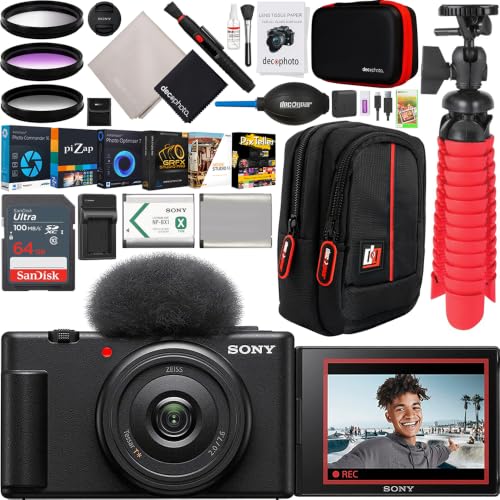
Sony ZV-1F — Best everyday brand camera
Sony designed the ZV-1F by watching what creators actually do, and what realtors actually do is talk to a lens at arm’s length in imperfect light. The camera answers with an ultra-wide fixed lens that frames face and shoulders with the room visible behind — context sellers read as “local expert in a real house” — face and eye autofocus that holds while you gesture, and colour science tuned to keep skin looking like skin under kitchen LEDs. A dedicated background-blur switch and product-showcase focus mode, built for reviewers, turn out to be oddly perfect for holding up a set of keys or a contract’s first page to the lens.
Its brand-building virtue is frequency. It starts instantly, fits the coat you are already wearing, and asks so little that the daily market update actually happens daily — the unglamorous mechanism by which personal brands are really built. The limits are a creator’s limits: no zoom when the neighbourhood shot wants reach, no interchangeable lens when ambitions grow, and low-light video that is good rather than flagship. Realtors who outgrow it will know exactly why, and will have an audience by then to justify the upgrade. As the first brand camera, nothing here is easier to say yes to.
- Sensor: 1-inch, roughly 20 megapixels
- Lens: fixed ultra-wide for arm’s-length framing
- Autofocus: face and eye priority, always on duty
- Audio: built-in directional microphone, wireless options
Strengths
- Faces stay sharp and flattering without effort
- Instant start keeps daily content daily
- Wide frame sells local context behind you
Trade-offs
- Fixed lens; no reach for distant subjects
- Not the low-light champion after dark
- Serious channels will eventually outgrow it
Best for: realtors starting a daily video habit. Not suited for: cinematic listing films as a signature style.

DJI Osmo Pocket 3 — Best walkthrough storyteller
The Pocket 3 is the camera that made the solo walkthrough presentable. Its three-axis gimbal erases the handheld wobble that used to mark agent-shot tours as amateur, its 1-inch sensor handles the bright-window contrast of real rooms gracefully, and its face tracking lets a realtor walk backwards through a house — talking, gesturing at the kitchen island — while the framing follows like a hired operator. The rotating screen flips to vertical for the teaser cut in the same pass, and the whole device returns to a jacket pocket before the next viewing arrives.
For brand work its party trick is movement: the neighbourhood walk-and-talk, the street-by-street explainer, the “three things happening on this block” piece filmed at a natural stroll. Gimbal footage at walking pace has a calm authority that static tripod clips lack, and viewers feel it as production value without being able to name it. Its constraints are focus-related rather than quality-related: no zoom, a gimbal that deserves a moment’s care in a crowded open house, and stills that serve social posts rather than listing sets. Pair it with the ZV-1F and a realtor owns the whole content week in two pockets.
- Sensor: 1-inch, mechanically stabilised
- Video: 4K with face and subject tracking
- Screen: rotates for native vertical shooting
- Carry: pocket-sized, ready in seconds
Strengths
- Walkthroughs glide like a crew shot them
- Tracking frees the presenter to present
- Vertical teasers without a second shoot
Trade-offs
- No zoom for detail inserts
- Gimbal wants care around crowds
- Stills are social-grade, not listing-grade
Best for: walkthrough-led brands and walking explainers. Not suited for: realtors who never film property at all.

Canon EOS R6 Mark III — Best flagship for creators
Some realtors compete on polish, and the R6 Mark III is the polish flagship. Canon’s newest full-frame hybrid brings the company’s celebrated colour — the skin tones that made Canon the default face of a generation of creators — together with serious video credentials, deep subject-detection autofocus and the RF lens system, where a fast wide prime gives listing films and presenter pieces a shallow-focus signature no pocket camera can imitate. This is the camera for the realtor whose listing films screen at community events and whose brand promise is visibly cinematic.
Flagships tax their owners in setup and in discipline. The R6 Mark III rewards an afternoon of customisation — buttons mapped, picture profiles chosen, a small rig with microphone and monitor habits — after which it works at professional speed. It is wasted on a realtor who posts twice a month; its value compounds with volume and ambition. Buy it when the channel already exists and the audience is asking, in effect, for better. Bought then, it is not an expense but the brand’s production department, and its stills quietly cover listing photography at the highest level as a side effect.
- Sensor: full-frame, Canon’s latest generation
- Autofocus: deep subject and eye detection
- Mount: Canon RF, including fast wide primes
- Video: high-end hybrid specification
Strengths
- Signature look pocket cameras cannot copy
- Colour that flatters presenters natively
- Listing stills at flagship level included
Trade-offs
- Demands setup time and shooting discipline
- Rig and lenses grow the real budget
- Overkill for occasional posters
Best for: established creator-realtors competing on polish. Not suited for: beginners still building the posting habit.

Nikon Z50 II — Best starter system
The Z50 II is where a realtor’s brand graduates from a fixed-lens camera to a system without graduating to flagship prices. Nikon’s compact body carries subject-detection autofocus descended from its professional line — people found and held while the realtor moves — a set of colour presets that includes skin-friendly looks applied in camera, and a flip screen that frames the solo presenter honestly. With a small wide zoom it shoots listing support stills and walkthroughs; with an affordable fast prime it discovers the blurred-background presenter look that signals “channel” rather than “clip”.
Its growth path is the argument. Lenses bought for the Z50 II introduce the realtor to Nikon’s Z system, shared with full-frame bodies, so the brand’s equipment can mature in step with its audience instead of being sold and replaced. The compromises are the class’s: an APS-C sensor works harder in dim evening light, and the body’s video specification, while strong, is not the flagship tier’s. For a realtor in year one of content — posting weekly, learning framing, finding a voice — those limits sit far beyond the current bottleneck, which is consistency. This camera removes every equipment excuse for inconsistency at a starter’s budget.
- Sensor: APS-C, roughly 21 megapixels
- Autofocus: multi-category subject detection
- Presets: in-camera looks including portrait-friendly colour
- Mount: Nikon Z, shared with full-frame bodies
Strengths
- A system that grows with the channel
- Presenter-friendly screen and presets
- Listing stills and video in one body
Trade-offs
- Evening light tests the smaller sensor
- Kit lens is a start, not a signature
- Video spec below flagship tier
Best for: realtors in their first serious content year. Not suited for: brands already producing at cinema level.

Insta360 X4 — Best virtual-tour machine
The X4 breaks the walkthrough’s oldest rule: you no longer choose the angle while walking. Its twin lenses capture the entire sphere in 8K 360 video, so one unhurried walk through a house — camera on a selfie stick that the software erases from the frame — records every room from every direction simultaneously. Back at the desk, the realtor reframes that single pass into a guided virtual tour, a vertical teaser that pans across the kitchen at the dramatic moment, and stills pulled from angles nobody consciously shot. For remote buyers and relocation clients, the resulting tour is the closest thing to standing in the hall.
The workflow shift is the honest cost. Reframing is editing, and editing is time: the X4’s app makes it intuitive, with AI-assisted framing that follows subjects, but a realtor should budget the desk hour the camera saves in the field. Resolution per reframed frame, while strong, does not match a dedicated camera pointed deliberately, and low-light interiors soften sooner than the 1-inch picks’. Used as the tour specialist alongside a face camera, though, it offers something no other pick can: a listing asset competitors cannot copy without owning one, produced from a single walk.
- Capture: 8K 360-degree video, twin lenses
- Reframing: angles chosen after the shoot
- Mounting: invisible selfie-stick effect
- Modes: single-lens action camera fallback
Strengths
- One walk yields tour, teasers and stills
- Remote buyers can look anywhere
- Relocation listings gain a signature asset
Trade-offs
- Reframing adds a desk hour per tour
- Dim interiors soften earlier
- Not a presenter camera for face content
Best for: relocation-heavy and remote-buyer practices. Not suited for: realtors who hate editing on principle.

OBSBOT Tiny 2 — Best desk and livestream camera
Half of brand building happens seated: the Thursday market briefing, the first-time-buyer webinar, the live Q&A where a neighbourhood learns to trust a voice. The Tiny 2 owns that half. It is a 4K webcam on a motorised gimbal with AI tracking — stand to gesture at a whiteboard of local price trends and it pans and tilts to follow, sit and it settles into a composed frame, raise a hand gesture and it zooms. Its large sensor for the class keeps a home office’s mixed light flattering, and voice control means the presentation never pauses for a mouse.
Judged as a webcam it has no peer in this guide; judged as a camera it is deliberately desk-bound, and no realtor should try to walk a listing with it. Its value is what it does to the seated formats: they stop looking like video calls and start looking like broadcasts, which is precisely the perceptual gap between a realtor who “does lives” and a realtor who hosts a show. For practices running weekly webinars or team briefings that double as content, the Tiny 2 professionalises the half of the brand the pocket cameras cannot reach.
- Sensor: large-for-class 4K webcam sensor
- Tracking: AI pan, tilt and zoom follow
- Control: voice and gesture commands
- Use: livestreams, webinars, video calls
Strengths
- Follows a moving presenter automatically
- Broadcast polish for desk formats
- Hands-free control mid-presentation
Trade-offs
- Desk-bound; no property work
- Needs a computer as its partner
- Tracking flair exceeds casual callers’ needs
Best for: webinar and livestream-led brands. Not suited for: field content of any kind.
Why does audio matter more than resolution for a realtor’s brand?
Because viewers forgive a soft picture and never forgive a hard listen. A market update at modest resolution with clear, close, warm voice feels like advice from a person in the room; the same update in glorious 4K with echoing kitchen audio feels like surveillance footage. The audience’s finger hovers for three seconds, and it is the sound, more than the image, that decides whether the finger moves on. Every camera in this guide was therefore judged partly as an audio platform: the quality of its built-in microphone for emergencies, and the grace with which it accepts a wireless lavalier for the real work.
The working rule for brand audio is distance. A camera microphone three metres away records the room; a lavalier at the collar records the realtor. Wind on a street explainer, traffic behind a neighbourhood piece, the hollow ring of an empty listing — all shrink to footnotes when the microphone rides on the person. Budget for the microphone before budgeting for the second camera. Realtors consistently report the same surprise: the week they fixed their audio, comments started quoting what they said instead of asking them to repeat it.
How often must a realtor actually post for a camera to pay off?
Often enough that the audience can set a clock by it, which in practice means two to four pieces a week sustained for months — a cadence only pocketable, instant-starting cameras survive. This is the arithmetic that ranks the ZV-1F and Pocket 3 above technically superior bodies for most readers: a flagship that demands a rig, a tripod and a free hour produces a beautiful video monthly, while the pocket pair produces a good video on Tuesday, Thursday and Saturday. Algorithms reward the rhythm; sellers, choosing between the realtor they saw once gloriously and the one they see every week competently, choose familiarity.
Build the cadence before building the kit. A month of phone-shot consistency proves the habit exists; the camera purchase then removes the habit’s friction — better faces, steadier tours, cleaner sound — rather than attempting to purchase motivation. Realtors who reverse the order own excellent cameras and quiet channels. The picks here are ordered, deliberately, from the habit upwards: pocket first, system second, flagship when the audience’s size makes polish the bottleneck rather than the excuse.
What does a realtor’s signature look actually consist of?
Three repeatable choices, not a camera. A framing habit — the same headroom, the same side of the frame for the neighbourhood sign or the car’s window light. A colour habit — one picture profile or preset, used until viewers recognise a thumbnail as yours before reading the name. And a setting habit — the two or three locations that become your studio: the office corner with the map, the doorstep angle, the driver’s seat with the good light. The Z50 II’s presets and the Canon’s colour both serve the colour habit; any pick serves the others, because habits live in the operator.
Resist redesigning the look quarterly. A signature compounds like interest: the fiftieth video in the same visual language is worth more than the first, because recognition is the asset being built. Change equipment when the work demands it, then hold the new look steady for a season. The realtors whose brands feel inevitable are rarely the ones with the newest camera; they are the ones whose frame a scrolling thumb identifies in half a second, in a feed full of people who bought cameras and changed their minds.
How do you film a neighbourhood, not just a house?
Walk it, at the hours buyers will live it. The neighbourhood piece that builds a brand is shot on foot at school-run time and again at dusk, because the product being sold is a Tuesday, not a postcode. The Pocket 3’s walking glide and the X4’s capture-everything pass both serve this: record the parade of shops, the park’s dog hour, the station approach at commuter pace, narrating the specifics only a local knows — which café queue is worth it, where the sun hits the square in October. Specificity is the moat; a rival can copy your camera by Friday but not your ten years on these streets.
Keep people kind and legal in the frame: film the street’s life without making strangers the content, favour wide establishing shots over close faces, and let your own face carry the piece to camera. The neighbourhood catalogue becomes a practice’s library — one film per district, refreshed yearly — and sellers cite it in valuation meetings with a sentence every realtor wants to hear: “We watched your video about our street.” No listing photograph ever earned that sentence. The brand camera did.
What should a realtor’s first ten videos be?
Ten answers to the questions sellers and buyers already ask you weekly, filmed where the answer lives. The valuation myth, explained on a doorstep. The chain explained from the driver’s seat. The street you know best, walked. A coming-soon tour. A sold story, told with the seller’s blessing outside the house that just exchanged. Each is a single idea, under three minutes, face to camera, with the microphone close and the framing steady — the format every pick in this guide exists to serve, and none of them requiring a crew, a script beyond bullet points, or permission from an algorithm to begin.
Judge the ten by completion, not by views. Early brand videos are seeds planted in a small orchard: their audience is the next fifty valuation meetings, where a seller who has watched three of them greets you as a known quantity. The camera’s return on investment hides in that greeting for months before it shows in any analytics. Realtors who understand this keep posting through the quiet quarter. Realtors who do not, stop at video four and describe content marketing as something that does not work in their town.
How does a realtor appear on camera without feeling like an actor?
By talking to one person instead of performing for a crowd. Choose the specific seller or buyer the video serves, picture them across a kitchen table, and let the camera — ZV-1F’s forgiving wide frame is built for exactly this intimacy — be the table’s third chair. Bullet points on a sticky note beside the lens replace the script; the slight imperfections of real speech read as honesty beside the polished advertisements viewers skip. Eye contact is a technical matter too: lens at eye height, gaze into the glass rather than at your own image on the flip screen, which sits a few degrees off and reads, subconsciously, as evasion.
Repetition cures the rest. The twentieth take of the twentieth video is unrecognisably easier than the first, and the audience cannot tell which of your videos was filmed in the awkward era once the catalogue is deep. Every realtor in this guide’s intended readership has a voice their clients already trust across a negotiating table. The camera’s only job — and the reason these six were chosen — is to stop taxing that voice with bad sound, lost focus and wobbling frames, and let it travel.
How do open houses become content instead of just events?
Film the open house as a story with a before, a during and an after. Before: the Pocket 3 walkthrough while the house is empty and perfect, plus a doorstep invitation piece that gives neighbours — the real audience, since neighbours become sellers — a reason to wander in. During: short vertical clips of the details visitors keep touching, the questions they keep asking, the light doing its afternoon trick in the back room. After: a same-evening recap to camera from the driver’s seat, honest about turnout and interest, which reads as professionalism precisely because it is not a sales pitch.
The discipline is consent and lightness. A small sign at the door, no lingering close-ups of strangers, and footage that features the house and its realtor rather than its visitors. Edited into the week’s rhythm, an open house stops being a Saturday consumed and becomes three pieces of content and a neighbourhood’s worth of familiarity. Realtors who work this loop find their open houses better attended over a season, because the street has been watching the realtor work it — a feedback loop no portal listing can buy.
What lighting does a solo realtor actually need?
Less than the internet insists, arranged more deliberately. The solo realtor’s studio is usually a car, an office corner or a listing’s best room, and each has one good window. Learn your three locations’ good hours — the driver’s seat at ten, the office corner after lunch, the south room before three — and schedule filming inside them. A camera with a 1-inch or larger sensor, which is every pick here except the webcam specialist, forgives the rest. Faces want light from in front and slightly above; the single most valuable lighting skill is turning yourself, not buying a panel, until the window is where it should be.
One small LED panel earns its place for evening and winter work, bounced off a wall or ceiling rather than aimed like a headlamp. Beyond that, lighting budgets for realtors show diminishing returns that microphones and consistency do not. The audience reads effort from steadiness, sound and rhythm long before it reads it from a three-point rig. Buy light last, and buy it small.
How should a realtor handle comments, lives and the camera’s social side?
Treat the live formats as the brand’s open surgery — the hour when the neighbourhood can ask anything and watch you think. The Tiny 2 exists for this: a weekly seated session, promoted in the day’s short videos, where market questions get answered at the length they deserve. Prepare three topics, welcome the wandering ones, and let the tracking camera follow you to the whiteboard when a price trend needs drawing. Lives build a different trust from edited video — unedited competence — and realtors who run them steadily become the patch’s default explainer.
Comments deserve the same production seriousness as filming. Reply on camera when a question recurs; the reply video serves the asker, the audience and the algorithm simultaneously, and it costs four minutes with a ZV-1F that starts instantly. Over a year, a realtor’s catalogue of answered questions becomes the most persuasive valuation document in the practice — proof, in the seller’s own feed, that this is the person who knows and who shows up. The camera is the smallest part of that system, which is why this guide keeps ranking for the showing up.
Why do relocation clients change the camera maths?
Because for a buyer moving three hundred miles, your video is not marketing — it is the viewing. Relocation clients shortlist from another time zone, on the strength of tours they can pause, rewind and walk through at midnight. The X4’s reframble sphere earns its premium here: a single pass becomes a tour the client navigates, closer to presence than any edited sequence. Pair it with a Pocket 3 presenter film for the narrative — schools, commute, the street’s character — and a realtor can serve a relocation buyer almost as well as a local one, which expands the practice’s market by exactly the radius of its reputation.
Relocation work also rewards the archive. Neighbourhood films, school-run explainers and seasonal street pieces compound into a library that answers a relocating family’s questions before they ask them. Build it deliberately, district by district, with the same camera and the same look, and the practice owns a local asset no portal can replicate and no rival can shortcut. This is brand building at its most literal: a body of filmed local knowledge, with your face as its presenter and your name as its channel.
What is the realtor’s editing workflow on a phone-only week?
Cut for the sentence, not the frame. The phone-only week — conferences, back-to-back valuations, a holiday worked lightly — is where brands go to die, unless the workflow shrinks to fit it. Shoot in short complete takes with the ZV-1F or Pocket 3, one idea per take, a breath at each end. Transfer wirelessly, trim heads and tails in the platform’s own editor, caption automatically and correct the names of streets by hand, and publish inside the hour. The result is ninety percent of the full workflow’s effect at ten percent of its cost, and the cadence — the asset that actually matters — survives the week.
Two habits keep phone-week quality respectable. First, record the voice properly even when everything else is improvised; the lavalier lives in the same pocket as the camera for a reason. Second, keep the framing grammar identical to the studio weeks — same headroom, same side of frame — so the audience never feels the production change. A brand’s visual consistency is a promise; the phone week is where the promise is kept under pressure, and audiences reward the keeping more than they ever rewarded the polish.
How do teams of realtors share one brand look?
Decide whose face leads, then standardise everything beneath the face. A team channel works when the framing, colour and formats are the firm’s while the presenters rotate — the same office corner, the same presets on every Z50 II the team owns, the same opening geography of street sign and doorstep. Issue the same pocket camera to every negotiator and the footage intercuts without a colourist. What must not rotate is the grammar: viewers subscribe to a pattern, and a team that shoots like five unrelated creators builds five small audiences instead of one practice-sized one.
Shared kit makes the standard physical. Custom modes stored with the house configuration, a shared preset for the edit, a common microphone discipline — these unglamorous agreements are the difference between a team brand and a folder of clips. Review together monthly, the way the listing teams in our sister guide review photographs: two videos side by side, one question — would a viewer know these came from the same practice? Standardisation-friendliness was itself a selection criterion for the six above.
When does a realtor’s channel deserve the flagship upgrade?
When three signals coincide. The cadence is real — months of steady posting that a better camera cannot be credited for. The audience is asking for more — longer films, evening events, cinema-style listing launches where the pocket cameras’ limits become visible to viewers rather than only to the owner. And the bottleneck has moved — ideas and consistency are abundant, and production value is genuinely the constraint on the next tier of work. At that point the R6 Mark III stops being a purchase and becomes a hire: the production department the channel has grown large enough to employ.
Upgrade in the wrong order and the signals lie. A flagship bought to create motivation produces a month of beautiful guilt. A flagship bought to serve an existing audience produces a visible step change that the audience itself notices and credits. The realtor’s brand, like the realtor’s practice, is built by doing the work at the current level until the current level is the problem. Equipment is the reward for that discipline and its amplifier — never its substitute.
How do you turn one listing into a week of brand content?
Strip-mine it, respectfully. The tour film is the trunk; everything else is branches. The doorstep piece announcing the listing. The vertical teaser of its single best surprise. The detail short — the staircase, the garden’s evening light, the kitchen’s one luxurious decision — filmed on the Pocket 3 in thirty seconds. The neighbourhood minute, locating the house in its street’s story. The sold follow-up, when it comes, told from the same doorstep. One property, five publications, and the realtor’s face bookending the series so the audience remembers whose listing it was.
The system works because each piece is cheap once the first is made: the house is dressed, the light is known, the camera bag is already in the hall. Realtors who batch this way stop experiencing content as a separate job competing with selling houses; it becomes the exhaust of selling houses, captured. Top of this ranking sit precisely the models that make the batching effortless — instant starts, rotating screens, tracking that replaces a colleague. Build the strip-mine habit on one listing a week and the catalogue compounds faster than any posting schedule drawn on a whiteboard.
What metrics tell a realtor the brand is actually growing?
Ignore the vanity counters and watch for local gravity. Saves and shares from accounts in your patch outweigh raw views from everywhere. Comments that ask real questions — about a street, a school catchment, a price — signal trust forming. Profile visits that convert to follows after a neighbourhood film tell you the library is working. And the metric that pays: valuation invitations where the seller mentions a video unprompted. Count those in a notebook. They are the channel’s true revenue line, and they lag the posting by a season, which is why so many realtors quit one season too early.
Review monthly, adjust one variable, and hold the rest steady. A new format, a new posting time, a longer explainer — tested singly against a stable baseline, so the result teaches something. The realtors who grow channels treat them with the same discipline they bring to a patch’s price data: measured, patient, suspicious of hunches. The camera’s contribution to all of this is simply to never be the reason a planned piece did not happen — charged, present, instant, forgiving. Judge every pick in this guide by that standard first and by its specifications second.
How should a camera-shy realtor use a partner or team member?
As the interviewer rather than the replacement. A colleague’s voice from behind the Pocket 3, asking the questions buyers ask, converts a monologue into a conversation — and conversation is the format in which most realtors are naturally persuasive, because it is the format of the valuation meeting. The camera stays on the expert; the questions carry the structure; the answers carry the brand. Many camera-shy realtors discover, three interviews in, that they were never shy about talking — only about performing — and the interview format removes the performance entirely.
Rotate the arrangement and the team gains a bench of presenters, each introduced inside the same visual grammar so the audience experiences one practice with several trusted faces. The listing’s negotiator explains the chain; the valuer walks the street; the newest recruit, filmed answering a first-time buyer’s question, signals a practice that teaches. All of it shoots on the same two pocket cameras with the same presets. The brand scales because the format, not the individual, is the star — and the format fits in a coat pocket.
What about headshots and the still photographs a brand still needs?
The face that moves through your videos should match the face on your board, your profile and your valuation pack, which means the still portrait deserves one deliberate session rather than a screenshot harvested from a clip. The mirrorless picks here — the Z50 II with a fast prime, the R6 Mark III natively — shoot portraits with the background separation and skin rendering a brand photograph needs, in the same office corner where the videos are filmed, so the whole identity coheres. Refresh yearly, or when the haircut changes materially; audiences forgive ageing and never forgive feeling misled at the door.
Beyond the portrait, a realtor’s stills are evidence of local life: the street in blossom, the new café’s queue, the school gates at three-thirty. Shot on whichever pick is in the pocket, captioned with the specific knowledge only a local has, these quiet photographs do brand work between the videos — proof of presence on the patch. A feed that is all talking heads exhausts; a feed that breathes between films, with the neighbourhood itself as a recurring character, builds the sense of a practice rooted somewhere real.
How do you keep a content habit alive through the busiest quarter?
Bank footage before the storm and shrink the format during it. In the calm weeks, film evergreen pieces ahead — the chain explainer, the survey walkthrough, the three neighbourhood films that answer perennial questions — and hold them against the quarter when valuations eat every daylight hour. When the storm arrives, the cadence survives on thirty-second formats: one sold board, one street fact, one answer filmed in the car on the ZV-1F between appointments. The audience experiences continuity; only the realtor knows the format contracted. What must never contract to zero is the rhythm itself, because a channel’s momentum, once stopped, costs a season to rebuild.
Protect the kit’s readiness as part of the system: cameras charged on the same Sunday rhythm as the week’s planning, cards cleared, the lavalier in the car rather than the office. Busy quarters expose every friction a calm quarter forgave. The realtors whose brands survive their best business quarters are the ones who treated content as infrastructure — maintained in advance, boring in its reliability — rather than as inspiration, which is always the first casualty of a ringing phone.
What is the one-page brand kit list?
One face camera, one movement camera, one microphone, one small light, one tripod that fits a car door pocket, and the discipline to keep all five charged and together. For most realtors that reads: ZV-1F, Pocket 3, a wireless lavalier, a pocket LED, and a mini tripod — a kit that fits a tote bag and films a week of brand content anywhere. Everything beyond the page is specialisation: the X4 for tours, the Tiny 2 for the desk, the flagship for the signature look. The page matters because a kit that can be listed on one page can be packed in one minute, and packing speed is posting speed.
Comparison: all six picks at a glance
| Camera | Sensor | Character | Choose it if… |
|---|---|---|---|
| Sony ZV-1F | 1-inch compact | Daily face camera | Your brand needs a video every day |
| DJI Osmo Pocket 3 | 1-inch gimbal | Moving storyteller | Walkthroughs and walking pieces lead your feed |
| Canon EOS R6 Mark III | Full-frame | Cinematic flagship | Your channel’s polish is the pitch |
| Nikon Z50 II | APS-C | Growing system | You want lenses and looks to grow with you |
| Insta360 X4 | 360 dual-lens | Tour machine | Remote buyers are your market |
| OBSBOT Tiny 2 | 4K webcam | Desk broadcaster | Webinars and lives carry your brand |
What are the most common mistakes realtors make on camera?
Buying production value before building the habit
The flagship-first realtor shoots three beautiful videos, discovers the rig takes an hour to assemble, and quietly returns to sporadic phone clips with worse morale than before. Sequence matters: pocket camera, daily habit, audience, then flagship. The R6 Mark III is a magnificent fourth step and a punishing first one, because equipment cannot substitute for the fifty unglamorous videos that teach a realtor framing, pacing and ease.
Filming the house and forgetting the face
Listings are full of tours in which the realtor never appears — competent, anonymous, interchangeable with every rival’s tour. The brand lives in the face and voice: open on camera, close on camera, and let the property footage play between your appearances like evidence in your argument. A seller choosing between three similar agents chooses the one they feel they know. The camera cannot know you for them unless you stand in front of it.
Recording important audio through the camera’s microphone
Echoing rooms, windy streets and traffic swallow more realtor videos than any focus failure. The fix is a wireless lavalier and the discipline to use it even for “quick” clips, because the quick clip is the brand. Every pick here accepts proper audio gracefully; none excuses skipping it. Viewers will watch a slightly soft image of a clear voice all day. They will not watch the reverse for ten seconds.
Final Recommendation
Start where your habit is, not where your ambition is. Most realtors should begin with the Sony ZV-1F for daily face content and add the DJI Osmo Pocket 3 when walkthroughs join the schedule — two pockets that between them cover the content week. Grow into the Nikon Z50 II when you want a system and a signature look, or step straight to the Canon EOS R6 Mark III when an existing audience makes polish the bottleneck. Add the Insta360 X4 for remote-buyer tours and the OBSBOT Tiny 2 when webinars become a show. Above all, buy the camera you will use on an ordinary Tuesday, because brands are built on Tuesdays.
Related guides
Frequently Asked Questions
Is a realtor’s camera different from a listing photographer’s camera?
Yes, in what each must flatter. The listing camera serves the property — width, level horizons, exposure mercy. The realtor’s camera serves the person — eye autofocus, skin tones, close audio, vertical fluency — because the brand asset is the realtor’s face and voice. Some bodies here do both respectably, but when the two jobs conflict, this guide ranked for the person, and a separate guide on this site ranks cameras for agents shooting their own listings.
Do I need to be on camera if I hate being on camera?
Almost every realtor hates the first ten videos; the feeling is weather, not climate. The format can start gently — voice over a Pocket 3 walkthrough, hands and voice on a neighbourhood piece — but a brand with no face in it builds at a fraction of the speed, because trust attaches to people. Most realtors find the discomfort gone by the second month of a steady cadence, replaced by the odd sensation of strangers greeting them by name.
Which matters more for social video: the camera or the microphone?
The microphone, and it is not close. Clear close audio holds viewers through modest images; beautiful images under echoing audio empty a video in seconds. Buy the camera that fits your format from this guide, then buy the wireless lavalier before any second lens or accessory. The picks here were all checked for graceful microphone pairing for exactly this reason.
Can one camera do my content and my listing photos?
The mirrorless picks can, honestly. The Z50 II and R6 Mark III shoot listing stills at a professional standard while serving as presenter cameras, which suits realtors who also photograph their own listings. The pocket picks and the X4 are specialists: superb at their brand jobs, inadequate as a listing set’s only camera. Match the purchase to the whole of your week, not to its most glamorous hour.
How long before content starts winning instructions?
Longer than a month, shorter than a year, and invisible until it is suddenly obvious. The mechanism is accumulated familiarity: a seller who has seen your face explain their street, their market and their anxieties invites you to the valuation as a known quantity. Track leading indicators — profile visits from local accounts, comments from your patch, sellers quoting your videos — rather than waiting for the phone to ring differently. It will.
Related Guides
Keep exploring with our companion reading: best cameras for real estate agents shooting their own listings, best cameras for recording events and open houses and best cameras for vlogging a professional brand.


