Disclosure: As an Amazon Associate, reviewstook.com earns from qualifying purchases. Links on this page are affiliate links; they cost you nothing extra. Prices and availability change often, so check the current Amazon listing before you buy.
Where to buy
Landscape kit is usually bought in reverse, the tripod and filters quietly consuming the budget after the body has taken its share, so confirm the exact configuration on Amazon while the whole kit is still a plan rather than a pile of receipts. Body-only boxes and two-lens bundles share shelf space and similar names, and a colour can sell out between your shortlist and your payday. The Fujifilm discussed later appears in none of the verified listings we checked, so it is covered in prose alone. If you are buying the body and a wide lens together, check both listings in the same session, since landscape budgets have a habit of approving each item separately and regretting the total.
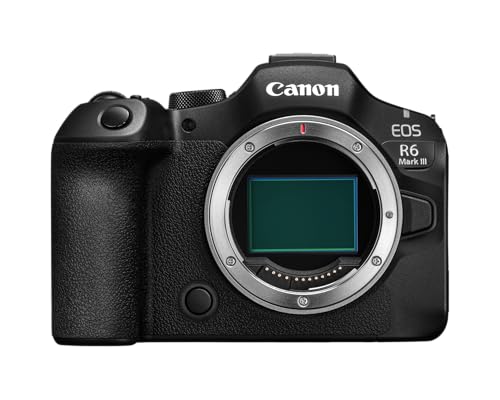
- Canon EOS R6 Mark III – check price on Amazon
- Sony a7 IV – check price on Amazon
- Panasonic LUMIX S5II – check price on Amazon
- For the Canon EOS R6 Mark II, check price on Amazon
- Nikon Z50 II with Two Lenses: check price on Amazon
- Fujifilm X-T5 – available from major camera retailers (prose-only pick in this guide)
Landscape photography is the only genre where the subject refuses all appointments. The light arrives when it arrives, the cloud gap opens for ninety seconds, and the photographer who walked ninety minutes to the viewpoint either captures the moment or describes it wistfully at breakfast. The best affordable cameras for landscape photography are therefore not judged by how they perform in a shop, but by how they behave at a cold viewpoint at dawn, on a tripod, in gloves, with weather deciding whether the morning was worth the alarm.
Walkers and travellers who frame mountains, coasts and forests share a practical creed: the camera must be worth its weight. Every gram carried uphill competes with water, layers and lunch, so a landscape body justifies itself through files that print large, batteries that survive a frosty week, and sealing that shrugs at the drizzle rolling off a ridge. Features that never leave the valley, exotic video modes and sports burst rates, earn no credit in the ranking below.
Affordable carries a particular meaning among landscape shooters, because this genre punishes cheapness and extravagance in unusual places. A bargain body on a wobbly tripod produces expensive disappointment, while a flagship body leaves nothing for the wide lens the genre actually runs on. The sweet spot, where all six picks live, is the tier where dynamic range and resolution stop embarrassing a careful photographer, and the remaining budget can flow toward glass, filters and fuel for the car.
Dynamic range deserves its headline status here. A landscape frame routinely contains a bright sky and a shadowed valley in the same exposure, and the sensor’s ability to hold both, while the photographer brackets less and worries less, is the closest thing this genre has to a superpower. Resolution follows, because landscape prints hang large, and weather sealing follows that, because the best light in Britain, the Pacific Northwest or the Alps usually arrives attached to weather. Every body below was imagined at that viewpoint, in that weather, before it was imagined anywhere else.
Read the badges as hiking advice as much as photography advice. Each pick names the walker it suits, the load it asks you to carry, and the compromise it makes with the mountain, so you can match a body to your actual boots rather than to somebody else’s summit photograph.
One discipline governed the ordering below: no body could win on files alone. A landscape camera is carried, frozen, rained on and trusted at the far end of a dark walk, so field manners counted alongside sensor manners in every comparison, and a fragile genius would have lost to a sturdy professional. Fortunately, at this tier, nobody had to choose between the two.
Key Takeaways
- First choice for most walkers: Canon’s EOS R6 Mark III, modern, sealed and stabilised. It is the guide’s starting point for a reason.
- Build a kit lens by lens: Sony’s a7 IV, thanks to a wide-angle shelf without rival.
- Full frame for less: Panasonic’s LUMIX S5II, with stabilisation that rescues dawn handheld shots.
- Proven Canon value: the EOS R6 Mark II, now priced as the sensible elder of its line.
- Lightest complete answer: Nikon’s Z50 II two-lens kit, wide to telephoto in one small bag.
- Colour and craft: Fujifilm’s X-T5, prose only, for photographers who think in film stocks.
- Budget rule for this genre: the tripod and wide lens are not accessories, they are half the camera.
In this guide
Quick Picks: Best Affordable Cameras For Landscape Photography
| Pick | Badge | Best for | Buying |
|---|---|---|---|
| Canon EOS R6 Mark III | Best Overall | Landscape shooters wanting one modern Canon body for everything | Check price on Amazon |
| Sony a7 IV | Best Lens Ecosystem | Walkers building a landscape kit lens by lens | Check price on Amazon |
| Panasonic LUMIX S5II | Best Value Full Frame | Budget-conscious landscape shooters wanting full frame | Check price on Amazon |
| Canon EOS R6 Mark II | Best Proven Performer | Canon landscape shooters wanting proven value | Check price on Amazon |
| Nikon Z50 II with Two Lenses | Best Lightweight Kit | Travellers and hikers prioritising a light pack | Check price on Amazon |
| Fujifilm X-T5 | Best Colour and Dials | Photographers who love tactile controls and colour recipes | Prose-only – see retailers |
How picks were chosen
Each candidate was assessed as a hill tool. Weight was weighed with its likely lens attached, battery claims were discounted for cold, and sealing was treated as a promise to be tested by drizzle rather than admired in a brochure. A body that needed cosseting lost marks no laboratory score could restore.
File quality was judged on the landscape’s home turf: a high-contrast valley at sunrise, a long exposure on a coast, a forest interior where greens separate the honest sensors from the approximate ones. Highlight recovery and shadow cleanliness mattered more than any measure of outright sharpness, because lenses supply sharpness and sensors supply forgiveness. Greens were interrogated separately, because woodland and pasture dominate more landscape portfolios than deserts and ice combined, and sensors reveal their character fastest in foliage.
Links follow verification throughout this guide. Five bodies carry confirmed listings; the Fujifilm does not, appearing in no source we could check, so it is discussed completely but without a buying destination. Its inclusion is a judgement about landscape photography, not about our linking rules, which bend for nobody.
Print behaviour closed the evaluation. Files from each finalist were considered at the sizes landscape photographers actually hang, because a sensor that charms on a monitor and disappoints on a wall has failed the genre’s only final exam.
The picks in detail: best affordable cameras for landscape photography reviewed

Canon EOS R6 Mark III – Best Overall
Arrive at a viewpoint by bicycle, on foot or by a bus that stops running at dusk, and the R6 Mark III’s party trick reveals itself: its in-body stabilisation turns a two-second handheld exposure in fading light from a lottery ticket into a repeatable technique. That single ability rewrites landscape logistics, because the tripod can stay home on speculative evenings and the camera still comes back with the photograph.
As Canon’s current-generation full-frame body in this line, it brings the newest processing and detection to a genre that mostly photographs rocks, yet benefits constantly from the refinements underneath: cleaner shadows when a valley floor needs lifting, dependable colour when dawn paints everything pink, and sealing that treats mountain weather as a working condition rather than an emergency.
Strengths
- Current-generation Canon full-frame files throughout
- In-body stabilisation helps where no tripod stands
- Weather-sealed confidence for mountain conditions
Trade-offs
- Newest-generation pricing applies in full
- Resolution class trails dedicated high-megapixel bodies
- RF wide lenses add significant kit cost
| Key specs | Full-frame Canon RF body, current R6 generation; in-body stabilisation; weather-sealed construction |
|---|
Landscape shooters migrating from older Canon bodies will find the transition painless, with familiar menus and the full RF catalogue ahead of them, including the wide zooms this genre consumes. Its files print handsomely at the sizes living-room walls demand, even if dedicated high-megapixel bodies out-resolve it on paper.
The objections are generational. Newest means dearest, the used market has not yet softened its price, and photographers whose entire output is enormous gallery prints may legitimately want more resolution than its class offers. RF wide-angle glass, the necessary companion purchase, adds its own serious line to the budget.
For the walker who wants one modern Canon body to cover landscapes and everything else a trip involves, family, wildlife detours, village evenings, it is the most complete answer here, and its stabilisation alone will rescue more photographs than any other single feature in this guide.
There is also a confidence dividend on multi-day trips. A sealed, current body with strong stabilisation covers the dawn shoot, the village market and the evening timelapse without a second camera in the pack, and consolidation is the landscape traveller’s favourite weight-saving strategy of all.
Even its video, a minor key for landscape stills shooters, earns field credit: dawn timelapses and slow pans across a misty valley come from the same body without a second rig, and many landscape photographers now sell exactly that footage to the tourism boards whose posters inspired them.
Best for: landscape shooters wanting one modern Canon body for everything / Not suited for: photographers chasing maximum megapixels above all

Sony a7 IV – Best Lens Ecosystem
Landscape kits are built one lens at a time, across years, and no mount rewards that patience like Sony’s. Wide zooms, standard zooms, fast primes for astro nights and exotic tilt options exist at every price, from native glass to a thriving third-party shelf, so the a7 IV functions less as a camera purchase and more as an admission ticket to the deepest landscape catalogue in the business.
Its raw files have earned their reputation in the field’s hardest classroom, the high-contrast sunrise. Highlights forgive a stop of optimism, shadows lift without disintegrating into noise, and the resulting prints hold the quiet gradations, mist thinning over a ridge, that landscape photographers actually frame. Compact body dimensions help on long approaches, where the camera rides in a hip belt rather than a dedicated pack.
Strengths
- Enormous choice of wide and standard zooms
- Strong raw files with forgiving highlights
- Compact body suits long approaches on foot
Trade-offs
- Menu depth takes real time to tame
- Some rivals seal their bodies more thoroughly
- Kit zooms undersell what the sensor can do
| Key specs | Full-frame Sony E-mount body; real-time tracking autofocus; 4K-class hybrid video |
|---|
The real-time tracking autofocus, seemingly a wildlife feature, earns landscape credit during the genre’s moving moments: waves timed against rocks, deer crossing a dawn meadow, a companion silhouetted on a ridge. Landscape work is slower than sport, not stationary, and this body covers the difference gracefully.
Criticisms are the familiar Sony ones. The menu system rewards study and punishes casual visitors, some rivals seal their bodies more convincingly against driven rain, and the kit zooms commonly bundled with it undersell the sensor so thoroughly that budgeting for a proper wide lens immediately is close to obligatory.
Buy it as a foundation. Photographers who expect to accumulate landscape glass for a decade will find no safer harbour, and the body itself remains capable long after the lens shelf becomes the impressive part of the kit.
Astro nights deserve a footnote in its favour. The mount’s fast wide primes, available from several makers at sane money, turn this body into a Milky Way tool with minimal extra investment, and landscape photographers who discover astro rarely go back to sleeping through clear mountain nights.
Best for: walkers building a landscape kit lens by lens / Not suited for: anyone wanting a video-first body

Panasonic LUMIX S5II – Best Value Full Frame
The S5II makes its case with a calculator. Full-frame landscape files, the dynamic range and low-light cleanliness the genre prizes, arrive at a mid-tier cost that leaves meaningful money for the wide lens and the tripod, the two purchases that actually determine a landscape kit’s ceiling. Budget-conscious shooters who refuse to leave full frame behind will find this the most persuasive arithmetic in the guide.
Its stabilisation is superb, and landscape work finds uses for it beyond the obvious. Dawn shots from a harbour wall while the tripod is still in the car, a waterfall framed handheld during a family walk, blue-hour cityscapes on a trip where photography was not the official purpose: the S5II converts those opportunistic frames from blurred regrets into keepers.
Strengths
- Full-frame files at a mid-tier cost
- Excellent stabilisation for dawn handheld shots
- High-resolution multi-shot modes reward tripod users
Trade-offs
- L-mount wide lens choice is slimmer
- Autofocus for wildlife is merely good
- Heavier than crop-sensor alternatives
| Key specs | Full-frame 24.2MP-class L-mount body; unlimited 4:2:2 10-bit recording per listing; phase hybrid autofocus |
|---|
Tripod workers are not forgotten. High-resolution multi-shot modes reward the deliberate photographer with enormous files for printing, and its unlimited 4:2:2 10-bit recording, per the listing, covers the timelapse and landscape-film experiments many stills shooters eventually attempt. Phase hybrid autofocus handles the genre’s modest focusing demands without fuss.
The L-mount’s wide-angle shelf is the honest caveat, slimmer than Sony’s or Canon’s, so verify your intended wide zoom exists before the body wins your heart. Autofocus for birds and sport is merely good, irrelevant on a tripod but relevant if your walking includes wildlife ambitions, and it outweighs the crop-sensor alternatives noticeably by the third hour uphill.
As a value proposition for pure landscape intent, though, it is formidable: the files of a flagship-class sensor, stabilisation that expands where you can shoot, and a price that respects the rest of the kit list.
Hotel-room editing reveals another quiet strength: its files from identical dawn conditions need less corrective surgery than most, because the sensor’s dynamic range absorbed the contrast at capture. Time saved in the evening is sleep earned before the next alarm, a currency landscape photographers spend carefully.
Pair it with one excellent wide zoom rather than two mediocre lenses and the value argument completes itself. Landscape photography rewards a single great wide lens more than any other genre, and this body’s pricing is precisely what makes that pairing affordable.
Best for: budget-conscious landscape shooters wanting full frame / Not suited for: bird and sport photographers

Canon EOS R6 Mark II – Best Proven Performer
There is a deep comfort in a camera the photographic world has already figured out. The R6 Mark II’s raw workflow is understood by every editor, its quirks are documented in a thousand forum threads, its accessories fill every shelf, and its stabilisation ranks among the finest available for the handheld vista, the viewpoint reached too late for tripod ceremony. Maturity, in landscape kit, is a feature with real cash value.
Its 24.2-megapixel files, per the listing, print beautifully at sensible sizes, and Canon’s colour gives dawn and dusk the warmth memory insists they had. Deep-learning detection, a people feature on paper, proves handy for the walker who also photographs the deer, the dog and the companions sharing the summit.
Strengths
- Mature, deeply understood raw workflow
- Stabilisation among the best for handheld vistas
- Now priced as the value Canon in the line
Trade-offs
- A generation behind on refinements
- Resolution will not satisfy gallery-print maximalists
- Its successor steals the flagship aura
| Key specs | Full-frame Canon RF body, 24.2MP per listing; deep-learning subject detection; oversampled 4K-class video |
|---|
Age has rearranged its price into the value seat of the Canon line. The successor’s arrival pushed this body into the territory where landscape buyers, who care little for generational novelty, happily shop. A landscape camera spends its life at base sensitivity on a tripod, a duty cycle where last generation and this one are separated by very little.
Name the compromises plainly: it is a generation behind on refinements, its resolution will not satisfy the gallery-print maximalist, and the flagship aura has officially moved house. None of those facts changes a single sunrise.
Canon landscape shooters who value the proven over the new will find this the easiest recommendation in the guide to act on, particularly those whose lens investment already lives in RF mount.
Second-hand buyers should hunt this body deliberately. Early owners upgrading to the successor release well-kept examples, and a landscape duty cycle, tripod-mounted at dawn, is gentler than the sports or event work that ages a shutter, making used R6 Mark II bodies unusually safe purchases.
Best for: Canon landscape shooters wanting proven value / Not suited for: buyers who must have the newest body

Nikon Z50 II with Two Lenses – Best Lightweight Kit
Some landscape photographers do not need a system; they need an answer, in one bag, by Friday. The Z50 II two-lens kit is that answer with unusual completeness: a compact APS-C body and two lenses covering wide to telephoto, the entire vocabulary of a walking holiday, in a package light enough that the camera actually attends the walk instead of being forgiven for staying at the cottage.
Nikon’s colour presets give beginners the dangerous pleasure of finished-looking files immediately, which keeps new landscape shooters shooting through the awkward first season when most hobbies quietly expire. The small body encourages a habit professionals preach and rarely practise: carrying the camera everywhere, so the unplanned rainbow over the valley is photographed rather than narrated.
Strengths
- Two-lens kit covers wide to telephoto in one bag
- Small body encourages carrying it everywhere
- Colour presets please beginners immediately
Trade-offs
- Crop sensor gathers less light at dusk
- Kit lenses are not weather sealed
- Serious landscape shooters will outgrow the glass
| Key specs | APS-C Nikon Z-mount kit with two lenses included per listing; colour presets and wireless sharing |
|---|
Physics sends its invoice at the edges. The crop sensor gathers less light as dusk deepens, the kit lenses are not weather sealed for ridge-top drizzle, and a serious landscape photographer will eventually outgrow the bundled glass, although the body makes a charming second camera when that day arrives.
Judge it as a beginning rather than a compromise and it shines. Hikers, travellers and new photographers get honest landscape files, genuine focal-length range and a total weight their knees will thank them for, at a cost that leaves the map, the boots and the hostel fund intact.
If your landscapes are discovered on journeys rather than pursued as expeditions, this kit’s completeness may serve you longer than a heavier system you learn to leave behind.
Families benefit in a way spec sheets miss: because the whole kit is unintimidating, a partner or teenager can be handed the camera at a viewpoint and return a genuinely good frame. Shared cameras accumulate shared albums, and landscape trips are usually shared journeys.
Its ceiling should be stated kindly but clearly: this is the beginning of a landscape journey, and photographers who fall seriously for dawn will eventually want sealing, range and glass it cannot offer. It will have earned that upgrade by teaching them, which is the highest praise a starter kit can receive.
Best for: travellers and hikers prioritising a light pack / Not suited for: full-frame purists printing very large
Fujifilm X-T5 – Best Colour and Dials
The X-T5 approaches landscape photography as a craft practised slowly, and its traditional exposure dials are the manifesto: aperture on the lens, shutter and sensitivity on physical wheels, the photographer’s eyes free to stay on the valley rather than on a screen. For deliberate tripod work, where a frame is composed over minutes, that tactile honesty is not nostalgia but ergonomics.
Fujifilm’s film simulations give landscapes a finished character at the moment of capture, which changes field behaviour. Instead of shooting everything neutral for later, X-T5 owners compose for a chosen look, the muted greens of one stock, the punch of another, and arrive home with files that already resemble the prints they imagined on the hill.
Strengths
- Film simulations give landscapes a finished look early
- Traditional dials suit deliberate tripod work
- Compact, handsome and weather resistant
Trade-offs
- No verified listing found, so it carries no buying link
- Crop sensor dynamic range trails full frame
- Video is a supporting act, not the headline
| Key specs | APS-C high-resolution-class Fujifilm X-mount body; traditional exposure dials; retro styling |
|---|
Its high-resolution APS-C sensor, weather-resistant retro body and compact X-mount lenses suit the walker who counts grams and appreciates objects. Crop-sensor dynamic range trails the full-frame picks in the most extreme dawn contrast, and video is a supporting act, but within a considered exposure, bracketed when necessary, its landscapes lack nothing essential.
The sourcing footnote from the introduction applies: no verified listing for the X-T5 appeared in the sources we checked, so it is discussed here without a buying link. Photographers who value dials and colour recipes will seek it out regardless, and rental is an excellent way to test whether its deliberate pace suits your temperament.
Choose it if the process is part of the pleasure. Landscape photography has always rewarded slowness, and this is the camera that builds slowness into its controls.
Woodland photographers gravitate to it for a specific reason: its colour recipes handle the genre’s treacherous greens with unusual taste, separating moss, fern and canopy without the neon exaggeration that makes forest photographs look like aquarium decorations.
Best for: photographers who love tactile controls and colour recipes / Not suited for: anyone needing a linked purchase today
Comparison table
| Camera | Badge | Key specs | Buying |
|---|---|---|---|
| Canon EOS R6 Mark III | Best Overall | Current-generation full-frame RF; in-body stabilisation; weather sealing | Check price on Amazon |
| Sony a7 IV | Best Lens Ecosystem | Full-frame E-mount; real-time tracking; enormous wide-lens catalogue | Check price on Amazon |
| Panasonic LUMIX S5II | Best Value Full Frame | Full-frame L-mount, 24.2MP class; unlimited 4:2:2 10-bit per listing | Check price on Amazon |
| Canon EOS R6 Mark II | Best Proven Performer | Full-frame RF, 24.2MP per listing; deep-learning detection; oversampled 4K | Check price on Amazon |
| Nikon Z50 II with Two Lenses | Best Lightweight Kit | APS-C Z-mount two-lens kit; colour presets; wireless sharing | Check price on Amazon |
| Fujifilm X-T5 | Best Colour and Dials | APS-C X-mount, high-resolution class; traditional exposure dials | Prose-only – see retailers |
How do you choose the right camera for landscape photography?
Start with the work, not the wishlist
Sketch your typical landscape outing honestly: the drive-up viewpoint at sunset, the six-hour ridge walk, the coastal path with a café at the end. Each outing taxes a different specification, weight, sealing, battery, and the camera that serves your commonest outing beats the camera that serves your most heroic one, because heroics happen twice a year and Tuesdays happen weekly.
Then ask where the photographs go. A screen-only archive forgives modest resolution; a wall of large prints does not. Intended output is the specification nobody lists and everybody should.
If most of your landscapes are reached by car, weight arguments soften and file arguments harden; if most are reached by boot, reverse the weighting without a moment’s guilt.
Photographers who work from a vehicle should also consider how a body behaves at the roadside: quick deployment, a screen readable in glare, and stabilisation for the unplanned stop are worth more there than any expedition virtue.
Sensor size versus system size
Full frame buys landscape shooters cleaner dawn shadows and shallower depth when a foreground flower must melt, while demanding larger lenses for the same reach. APS-C counters with a system a walker can carry all day without negotiating with their knees, at the cost of earlier noise as light fails.
The deciding question is your longest regular walk, not your most ambitious one. Systems are carried by the photographer you are most weekends, and an abandoned heavy kit photographs nothing at all.
Test the boundary at home: photograph your garden at dusk with both formats if you can borrow them, and inspect the shadows at print size rather than on a phone, where every sensor looks like a hero.
The lens question decides the decade
Landscape photography runs on wide glass. Before choosing a body, price the wide zoom and the standard zoom you will actually carry in each mount, and inspect the used shelves, because landscape lenses are bought slowly and kept for decades. A mount whose wide zoom costs half a body more than a rival’s has quietly decided your budget for you.
Also weigh filter threads and front-element design. Landscape shooters live behind ND and polarising filters, and a lens that accepts affordable screw-in filters saves money on every shoot for its entire life.
Check whether your intended wide lens is sealed and what its filter thread costs across a full ND set. Landscape glass is a decade-long relationship; court it properly.
Endurance is a specification
Cold eats batteries and distance eats spares. A landscape body should survive a frosty dawn, a day of intermittent shooting and a timelapse at dusk on disciplined power management, and its batteries should be affordable enough that carrying three is unremarkable. USB charging from the same power bank that feeds your phone simplifies multi-day trips enormously.
Storage endurance matters on expeditions. Bracketed dawn sequences and multi-shot modes fill cards at a rate holiday photography never approaches, so price fast, capacious cards into the system from the start.
On expeditions, standardise power across devices where you can. A camera, headtorch and phone drinking from one bank and one cable type is a system; three proprietary chargers is a raffle.
Handling beats headlines
Landscape handling happens in gloves, in wind, on a tripod head at chest height in the dark. Physical dials, a screen that tilts for low compositions, and buttons that can be found by touch outrank every headline mode. Fujifilm’s dials and Canon’s wheels are competing answers to the same frozen-fingered question.
Practise the tripod routine at home: mount, level, compose, expose, in the dark, by feel. The camera that cooperates with that rehearsal is the camera that will cooperate at the viewpoint.
Buttons deserve a winter test. Borrow the finalist on a cold evening, wear your actual gloves, and attempt the full tripod routine; the result will decide the purchase more honestly than any review.
Buy for the second year
In the second year, landscape photographers buy the lens they skipped, discover astro or coastal long exposure, and start printing. A system with room to grow, deep used markets, wide and exotic glass available, protects those discoveries from becoming a system change. Bodies date; ecosystems endure.
Buy the second year’s ecosystem at the first year’s budget by choosing value bodies inside deep mounts, a strategy this guide’s Panasonic and previous-generation Canon picks embody.
Resist the launch-cycle temptation to wait. Landscape seasons are finite and unrepeatable; the body available for this autumn’s colours beats the rumoured body arriving after they fall.
There is a discipline that protects the second year: never sell the old body until the new one has survived a full season. Landscape trust is earned in weather, and a hasty trade can strand you with an unproven companion at the best light of the year.
How to get the best from your camera for landscape photography
Landscape excellence is mostly logistics and patience wearing a photographic costume. The field routine below is the one seasoned walkers repeat, and it will improve your results on any body in this guide before you spend another unit of money.
The routine assumes a tripod for the main event and a camera bag organised the same way every time. Landscape mornings are won by removing decisions from the cold, dark minutes when willpower is scarce.
- Scout in daylight, shoot at the edges. Walk your location at noon to learn its compositions, then return for dawn or dusk when the light does the artistry. Knowing exactly where to stand removes the dawn panic that ruins more landscape photographs than any equipment flaw.
- Arrive an hour before the moment. Set up in civilised light, compose carefully, and be ready when the sky performs. Landscape light peaks briefly and without rehearsal; the photographers who look lucky are simply the ones already standing there, levelled and focused. The hour also buys you the location empty, which in popular valleys is a compositional advantage no filter can imitate.
- Build the frame from the foreground. Find an interesting stone, pool or tuft first, then let the background arrange itself behind it. Foreground anchors give landscape photographs their depth, and they are chosen on foot, in the field, not in the editing suite.
- Expose for the highlights, always. Let shadows fall dark if they must, because editing recovers shadow detail far more gracefully than blown sky. Check the histogram rather than the cheerful rear screen, and bracket when the valley’s contrast exceeds your sensor’s diplomacy. When in doubt, protect the sky and let the land go moody; viewers forgive a dark valley instantly and a white sky never.
- Slow down with filtration. A polariser for glare and wet rock, a neutral-density filter for moving water: these two transform landscape photographs more than any camera upgrade in this guide. Learn them on your local river before the expedition, not during it.
- Wait one weather change longer. Amateur landscape photographers leave when the rain starts; the light after rain, with washed air and dramatic cloud, is frequently the finest of the day. Sealed bodies and a dry cloth exist precisely for that extra half hour.
- Review the frame at home, large. Judge each outing’s best image at print size on a proper screen, and write down the one technical fault that cost you. A season of such notes improves a landscape photographer faster than a season of new equipment.
- Leave the viewpoint better than you found it. Landscape photographers return to the same stones for decades. Pack out litter, spare the fragile foreground you just used as an anchor, and the location will keep offering its compositions to you and to everyone who follows.
Master those habits and the differences among the bodies above shrink to weight, sealing and taste, which is where a landscape decision should be made: on the hill, not in the spreadsheet.
Keep a field notebook for locations as faithfully as for settings. Light behaves seasonally at a viewpoint, and the photographer who records that a valley performs in October has bought next year’s best photograph for the price of a pencil.
Common mistakes
Buying the headline instead of the session
A sports burst rate has never improved a sunrise, yet headline specifications steer landscape buyers every season. Shop for your sessions: the cold dawn, the long walk, the bright valley. Dynamic range, sealing and battery honesty win those mornings; frame rates watch from the car.
Write your three commonest outings on the inside of the kit bag lid; let them arbitrate every future purchase.
A dawn test is the antidote to brochure fever: borrow the finalist, set an alarm, and let a real sunrise grade it.
Ignoring the total kit cost
Landscape kits hide their true price in accessories: tripod, head, filters, wide lens, spare batteries, a bag that fits them all. Totalled honestly, several rankings here invert, and the value picks, the S5II and the Nikon kit, exist to fund the accessories that make landscape photography possible at all.
Keep an accessories ledger beside the body price from day one, and the true cost of the hobby stays visible.
Skipping the spare battery
Cold dawns drain batteries at a pace summer afternoons never hint at, and viewpoints are far from sockets. Carry spares inside a warm pocket, rotate them through the camera, and the finest light of the trip will never coincide with a dead body.
Warm spares rotate better: the battery from the pocket goes in, the cold one goes to warm, all day.
Veteran walkers tape a small label inside the battery door with the date of the last full charge cycle, a humble system that has saved more dawns than any charger advertisement.
Leaving protective gear at home
Coastal spray, moorland drizzle and waterfall mist all find sensors with malicious consistency. A rain cover, lens cloths in sealed bags and a blower weigh grams and save expeditions; the photographer cleaning a sensor in a tent at midnight has learned the lesson at full price.
Assign the cloth and cover a permanent pocket, checked by touch before the bag closes, like keys.
Never updating or checking settings
Landscape cameras return from family duty with settings scrambled: stabilisation left on atop a tripod, bracketing disabled, image size reduced. A written baseline, checked the night before every outing and restored after any firmware update, keeps the camera you configured ready for the dawn you planned.
After any borrowed-body weekend or firmware change, run the baseline checklist before the next dawn, not during it.
Related guides
- Best Cameras for Hobby Photography — A Ladder of Systems for a Lifetime of Seeing
- Best Cameras for Average User: Sensible Picks for Everyday Photography
- Best Cameras for Beginner Nature Photographers: Wildlife and Landscape Starters
- Best Cameras for Amature Portrait Photography
- Best Cameras for Aquarium Photography
Final recommendation
For most landscape buyers, the EOS R6 Mark III is the recommendation to beat: current Canon files, sealing for real weather, and stabilisation that liberates you from the tripod on speculative evenings. System builders accumulating glass over a decade should start with the a7 IV instead, and value hunters who refuse to leave full frame will find the S5II’s arithmetic irresistible. Between them, those two bodies cover the majority of serious landscape intent at this budget, one through modern completeness and the other through ecosystem depth.
The R6 Mark II remains the proven Canon bargain, the Nikon two-lens kit the lightest complete answer for journey-first photographers, and the X-T5 the craft lover’s prose-only indulgence. Whichever you carry, let the second purchase be a proper tripod; landscape photography is a partnership between a sensor and a stand.
Finally, a word for the photographers still shooting a phone at viewpoints: any body here, even the little Nikon kit, will change your relationship with the places you walk, because it will make you return to them at better hours. That, more than resolution, is the upgrade.
More detail: living with a camera for landscape photography
A landscape camera’s life is measured in dawns. Living with one teaches you its weather moods: how its battery truly behaves at freezing point, whether its dials accept your thickest gloves, how its files from a grey November morning grade beside the golden October ones. That fluency, accumulated across seasons, is what owners actually praise when they defend a body in an argument. Owners describe the same milestone: the morning they stopped checking the weather forecast for reasons to stay in bed, because the camera had made even doubtful dawns worth attending.
The relationship deepens through printing. A camera whose files hang on your wall acquires a status no upgrade easily displaces, and landscape photographers, who print more than most, often keep bodies far beyond their fashionable life. Choose files you will enjoy living with literally, on the wall, at breakfast.
Expect your style to migrate beneath the camera. The wide vistas of year one give way to intimate woodland frames, or coastal abstracts, and a good system accommodates the migration with lenses rather than demanding a divorce. That accommodation, more than any specification, is what you are buying.
Repairs and rentals form the hidden landscape infrastructure. A mount stocked by the hire shop in the gateway town to your favourite range is worth real peace of mind, because a dropped camera on day two of seven becomes an errand instead of an ending. Factor that map into the system you join.
There is a calendar effect too. Landscape bodies get judged across a full year of seasons, and a camera that delighted in June must still be trusted in January’s horizontal sleet. The picks above earned their places across that whole imagined year, not across a single golden weekend.
FAQ
How many megapixels does landscape photography need?
Fewer than the industry implies, more than a phone provides. The 24-megapixel class prints beautifully at the sizes most homes accommodate, while higher-resolution bodies buy cropping freedom for distant detail and larger gallery ambitions. Judge by your largest intended print, measured honestly in metres of wall, rather than by the biggest number on a shelf.
Remember that technique spends megapixels wisely: a level tripod, a considered composition and clean highlights make a modest file print larger than a careless frame from a giant sensor.
Above all, do not let a megapixel argument delay a season. Valleys do not wait for product cycles, and last year’s resolution has already produced this year’s exhibition walls.
Is full frame necessary for great landscapes?
No, and the X-T5 and Nikon kit in this guide produce exhibition-worthy work in skilled hands. Full frame helps most in extreme dawn contrast and at very large print sizes, advantages that matter to some landscape photographers weekly and to others never. Light, composition and patience outrank sensor dimensions in every landscape portfolio ever printed.
Rent the format you doubt for one serious outing. A dawn spent with a borrowed full-frame body will settle the argument for your eyes and your walls more conclusively than a hundred forum threads.
What lens matters most for landscapes?
A quality wide-to-standard zoom is the genre’s workhorse, covering grand vistas and intimate scenes in one barrel, followed by a standard zoom for compressed ridge layers. Buy the wide zoom before any prime, and choose it partly by its filter thread, since your filters must fit it for years.
Landscape veterans add a confession here: most own more lenses than they carry. The two-zoom discipline, wide plus standard, covers the overwhelming majority of published landscape work, and the bag stays light enough to reach the viewpoints where that work happens.
Do I need weather sealing for landscape work?
If your landscapes happen where weather happens, yes. Sealing does not make a camera waterproof, but it converts drizzle from an emergency into an inconvenience, and the finest landscape light frequently arrives with rain attached. Pair sealed bodies with sealed lenses where possible, and still carry the humble rain cover.
Sealing also resists dust and sand, the quieter enemies, which is why desert and coastal photographers treat it as mandatory even under cloudless skies.
Treat sealing as a system property, too. A sealed body behind an unsealed lens is a chain with a known weak link, so match the glass to the body’s promise where your climate demands it.
How useful is in-body stabilisation on a tripod?
On the tripod, switch it off or let the body detect the mount, since stabilisation can hunt when there is nothing to correct. Its landscape value appears off the tripod: viewpoints reached without one, blue-hour handheld frames, video pans across a valley. Think of it as insurance for the shots the tripod never attends.
It also steadies the photographer, indirectly: knowing handheld insurance exists encourages the extra viewpoint detour on the walk down, when light is fading and the tripod is already packed.
What filters should a landscape kit start with?
A circular polariser first, because its effect on glare, wet rock and foliage cannot be replicated in editing, then a neutral-density filter for long exposures of water and cloud. Buy them in the thread size of your largest lens and use step-up rings for the rest, a small economy that compounds across a kit.
Buy quality once in filters especially. Cheap glass in front of a good lens taxes every photograph for years, while one excellent polariser outlives several camera bodies.
Related guides
Landscape bags fill with predictable companions, and the guides below cover the tripods, bags and camera families that the bodies above are most often paired with. Tripods especially repay research, since a landscape body is only ever as steady as what it stands on.


