reviewstook.com is reader-supported. When you buy through links on our site, we may earn an affiliate commission.
Where to Buy a Camera That Sees Through Glass and Blue Light
Aquarium photography is a conspiracy of everything cameras dislike: a sheet of glass between you and the subject, light engineered for algae and coral rather than for sensors, animals in permanent motion in dim blue water, and reflections of yourself photobombing every frame. The best cameras for aquarium photography are chosen for that conspiracy. The best cameras for aquarium photography forgive low light without smearing the fish into watercolour, hold colour honestly under lighting that turns everything cyan, focus at the close distances where tank life actually happens, and — in one special case on this list — remove the glass from the equation entirely by going into the water themselves. Whether your aquarium is the reef tank glowing in your living room or the great public oceanariums, this guide is built from the glass side, where the photographers stand.
Two different assignments share this keyword, and we serve both. The home aquarist photographs their own tank: known inhabitants, controllable light, the privilege of a tripod and a darkened room — a studio discipline with gills. The public-aquarium visitor photographs other people’s oceans: no tripods in the crowd, no control of anything, fish at distances and depths the home tank never imposes — a street-photography discipline with sharks. The picks below are labelled for both assignments, because a camera that masters your reef at home may merely survive the oceanarium, and the honest guide says which is which.
Four picks are current models from our verified pool, linked; two are prose-only, outside the pool, recommended on their merits. And one principle governs the whole list: in aquarium work, technique defeats equipment faster than in almost any genre — but technique needs a camera whose low-light files, close focus and colour tools do not fight back. These six do not fight back.
Key Takeaways
- Reflections are the first enemy: shoot square-on to the glass, darken yourself and the room behind you, and the tank clears.
- Aquarium light is dim and blue by design — clean high-ISO files and honest white-balance control decide more than resolution.
- Fish move constantly; shutter speed and patient positioning beat burst-and-pray.
- Close focus is the home tank’s superpower: most tank life is small, near and best photographed in macro territory.
- The waterproof camera changes the genre: inside the water, there is no glass, no reflection and no blue ceiling on your angles.
- Public aquariums ban flash and often tripods — plan for fast lenses, steady hands and weekday crowds.
In this guide
Quick Picks
| Pick | Badge | Why it made the list |
|---|---|---|
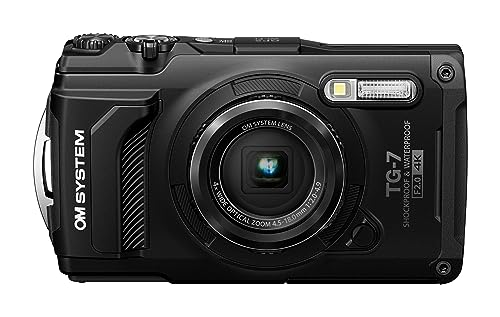
| OM SYSTEM Tough TG-7 | Best camera that goes in the water | Waterproof with microscope macro — photograph your tank’s inhabitants from inside their world, glass abolished. |
| Sony Alpha 7 IV | Best for public aquariums and low light | Clean high-ISO files and resolution for the big tanks, the sharks and the dim blue halls. |
| Panasonic LUMIX S5II | Best for aquarium video | Stabilisation and colour for filming tanks — the reef movie, the jellyfish ballet, the feeding hour. |
| Nikon Z50 II | Best home-tank starter body | A compact body that pairs with macro glass for the reef at home, at a starter’s commitment. |
| OM SYSTEM OM-5 | Best compact system for macro devotees | The macro ecosystem’s home address — focus stacking and small, bright lenses; prose-only in this guide. |
| Sony A6700 | Best crop body for serious tank work | Flagship-grade detection and video in a compact body that loves fast primes; prose-only here. |
How Did We Choose the Best Cameras for Aquarium Photography?
We began with the light, because aquarium light is the genre’s defining constraint. Tanks are lit for their inhabitants and for human eyes adapted to gloom; camera sensors face exposures that push ISO upward and colour that pushes everything toward the blue end of the world. So our first filter was the honest one-two: files that stay detailed and clean as sensitivity climbs, and white-balance tools — presets, Kelvin dialling, custom references — precise enough to negotiate with reef lighting and win. Cameras whose automatic white balance surrenders to cyan were cut regardless of their other gifts.
The second filter was distance, in the genre’s two directions. Home tanks are photographed at centimetres: close-focus ability, macro lens options and focus-stacking features scored heavily, because the coral polyp and the shrimp are the home aquarist’s portrait subjects. Public aquariums are photographed at metres, through crowd and glass: resolution for cropping, fast-lens ecosystems and stabilisation for the tripod-free halls scored there instead. A pick had to master at least one direction completely and survive the other.
Third came the glass itself — or its abolition. Through-glass work rewards fast apertures and clean files; in-water work rewards the TG-7’s unique passport. And finally, video: aquariums move, and for many keepers the film of the tank — the sway, the shoal, the feeding response — is the artefact that matters most, so hybrid strength was weighted as a first-class virtue rather than a bonus.
Whose Aquarium Are You Photographing?
Your own tank makes you a studio photographer with extraordinary privileges: you control the light’s schedule, the room’s darkness, the feeding that summons the shy, and the tripod that turns a dim tank into a long-exposure paradise where only the fish blur — beautifully, if you let them. Your disciplines are macro, patience and white balance, and your camera should be chosen for close focus and colour honesty above all.
The public aquarium makes you a photojournalist: the light is worse, the glass is thicker, the crowds are a tide, and the whale shark passes on its own schedule. Your disciplines are speed, high-ISO grace and the compositional opportunism of the street — and your camera should be chosen for low-light files, fast glass and the stabilisation that replaces the banned tripod. Name your assignment before you spend; the picks below are labelled, and the labels are the guide’s most useful sentences — more useful, we would argue, than any ranking, because a camera matched to its water will outperform a champion matched to the wrong one every single session.

OM SYSTEM Tough TG-7 — Best camera that goes in the water
Every other camera in this guide negotiates with glass. The TG-7 declines the negotiation. Waterproof far beyond any home tank’s depth, it goes inside the aquarium — held, mounted on a small grip, or rested on the substrate during a maintenance session — and photographs the inhabitants from within their own medium: no reflections, no glass distortion, no blue wall of distance, and angles the glass-side photographer cannot imagine. For the home aquarist, this is not a novelty. It is a second studio that happens to be submerged.
Its microscope modes complete the case. Tank life is small life — coral polyps, shrimp, snails, the fry in the breeding net — and the TG-7 focuses at millimetre distances with focus-stacking that renders a shrimp sharp from claw to tail. Above water it serves the glass side too, as the tough, pocketable camera of the public-aquarium family trip, indifferent to splashes at the touch pools and the rain on the way home.
The disciplines are real: in-water sessions belong with the tank’s maintenance rhythm, equipment rinsed and batteries managed like dive gear in miniature, and livestock welfare governing every placement — nothing rests on coral, nothing chases a fish around its own home. Its sensor is the smallest here and its low-light reach the shortest, which is precisely why it is the specialist and not the system. But for the aquarist who wants the inside view, there is no second camera in this guide that does what it does at all.
- Waterproofing: rated far beyond home-tank depths
- Macro: microscope modes with focus stacking
- Build: drop, freeze and crush proofing
- Role: in-water and macro specialist
- System: complete in itself
Strengths
- Abolishes glass, reflections and distance
- Macro that turns tank micro-life into portraits
- Tough enough for wet hands and family trips
Trade-offs
- Small sensor limits dim, distant public tanks
- In-water use demands livestock-first discipline
- No telephoto reach for the big oceanarium halls
Best for: home aquarists wanting the inside view and macro devotees. Not suited for: shark-tank distance work in dark halls.

Sony Alpha 7 IV — Best for public aquariums and low light
The public aquarium is a low-light endurance test wearing a family day out as camouflage, and the A7 IV is built for the test. Its full-frame files stay clean and detailed as the ISO climbs through the jellyfish hall’s gloom; its 33 megapixels crop the shark at the tank’s far wall into a portrait rather than a rumour; and its autofocus — with animal detection that reads a fish’s eye more often than it has any right to through glass — keeps moving subjects honest in conditions where lesser systems hunt and give up.
The lens bench is the co-conspirator: fast primes are the public aquarium’s true equipment, gathering the light the halls withhold, and Sony’s mount holds them at every level from the keen amateur’s first bright lens to the professional’s glass. With a fast prime fitted, the A7 IV shoots the oceanarium the way it asks to be shot — no flash (banned, and rightly), no tripod (banned, and manageably), shutter honest, files clean.
At home it moonlights superbly: the resolution serves the reef’s detail, the colour tools negotiate the tank’s lighting, and the same fast prime that conquered the oceanarium becomes the home tank’s portrait lens. If one body must serve both assignments — and most readers’ will — this is the one we would send through both doors.
- Sensor: full-frame, 33 megapixels
- Low light: clean high-ISO files for dim halls
- Autofocus: animal detection that works through glass
- Mount: Sony E — fast primes at every level
- Video: strong hybrid capability
Strengths
- The big-tank, dark-hall specialist
- Cropping reach for distant inhabitants
- Fast-lens ecosystem built for the genre
Trade-offs
- System cost grows with the glass it deserves
- Menus reward setup before the visit
- Macro at home needs a dedicated lens investment
Best for: public-aquarium devotees and dual-assignment photographers. Not suited for: in-water shooting or millimetre macro out of the box.

Panasonic LUMIX S5II — Best for aquarium video
Aquariums are cinema that never repeats, and the S5II is this guide’s filmmaker. Its stabilisation — among the finest in any camera — turns handheld filming in the oceanarium’s halls into footage that sways like the water rather than the walkway; its phase-detect autofocus tracks a ray’s glide and a keeper’s feeding round without the hunting that ruins tank films; and its colour science renders the blue world with a gentleness that keeps skin tones human on the glass side and coral colours true on the other.
At home, it is the reef film’s production house: long, heat-tolerant recording for the tank’s full evening cycle, flat profiles for the keeper who grades, and stabilisation that makes the slow tripod-free dolly along the glass a deliberate move rather than a wobble. The feeding hour, the cleaning crew’s emergence, the coral’s feeding response after lights-down — the tank’s cinema — is this camera’s home programme.
Stills are fully served by the same sensor and system, with the L-mount’s lenses — including the macro glass the home assignment craves — available as the kit grows. Choose the S5II when your aquarium memories move, and when the film of the tank matters as much as its portraits.
- Sensor: full-frame, 24.2 megapixels
- Stabilisation: class-leading, for handheld halls
- Autofocus: phase-detect tracking for moving inhabitants
- Recording: long, heat-tolerant sessions
- Mount: L-mount, macro options available
Strengths
- The aquarium film camera of the guide
- Handheld footage that moves like water
- Colour that respects both coral and skin
Trade-offs
- Resolution below the Sony for heavy cropping
- Stills-first macro devotees may prefer the OM ecosystem
- Full-frame glass budget applies
Best for: tank filmmakers, hybrid shooters, feeding-hour documentarians. Not suited for: pure macro stills specialists.

Nikon Z50 II — Best home-tank starter body
The home aquarist starting a system should start here: a compact, capable body whose virtues map precisely onto the home assignment. It is small enough to work at the tank’s glass without turning the living room into a studio, its subject detection finds the inhabitants’ eyes through the water, and Nikon’s colour and menus are the friendliest classroom for the white-balance negotiations the genre demands daily. Paired with a macro lens — the home tank’s defining purchase — it becomes a reef portrait studio of real seriousness.
The crop sensor’s deeper depth of field quietly serves macro work, where millimetres of focus are the currency, and its files in the home tank’s controlled light are clean and detailed. The public aquarium stretches it further — dimmer halls will show its smaller sensor’s limits sooner than the full-frame picks — but as the home assignment’s body, with the oceanarium as an occasional excursion rather than a weekly parish, it is honestly specified and honestly priced.
Buy it with the macro intention stated: body now, macro lens next, tripod and a darkened room completing the studio the living room was always capable of being. The reef will repay the discipline with portraits no visitor’s phone has ever taken of it.
- Sensor: APS-C — depth of field that serves macro
- Detection: subject and eye finding through water
- Size: compact for glass-side living-room work
- Menus: Nikon’s plain-spoken classroom
- System: Nikon Z, macro lenses available
Strengths
- The home tank’s natural starter body
- Compact, kind and macro-ready
- Files shine in controlled home light
Trade-offs
- Dim public halls test its sensor sooner
- Macro lens is a necessary second purchase
- Less cropping reach for distant tanks
Best for: home aquarists building a tank studio on a budget. Not suited for: oceanarium devotees shooting weekly in the gloom.
OM SYSTEM OM-5 — Best compact system for macro devotees
If the home tank’s small world is your whole assignment, the OM-5 is the address the macro congregation gives out. The Micro Four Thirds system doubles effective magnification for a given lens, its macro glass is compact and comparatively gentle in price, and the body’s computational gifts — focus stacking that assembles a fully-sharp shrimp from a slice of focus planes, high-resolution modes for the coral detail that prints large — read like a feature list written by aquarists. It is small enough to live at the tank side permanently, which is where home-aquarium cameras earn their keep.
The system’s low-light ceiling is the honest trade — the public halls will push it — but in the home studio, where light is yours and distances are millimetres, its combination of reach, stacking and size has no rival in this guide. Weather sealing shrugs off the wet-room reality of tank maintenance, splashes and humidity that system cameras usually fear.
Prose-only here, outside the verified pool: source it through OM SYSTEM’s channels and the macro community’s retailers, who will talk lenses and lighting with the fluency of fellow keepers. For the devotee of the small and the wet, it is the connoisseur’s door.
- Sensor: Micro Four Thirds — magnification advantage
- Macro: focus stacking and high-resolution modes
- Size: lives permanently at the tank side
- Sealing: humidity and splash tolerant
- Availability: prose-only — specialist channels
Strengths
- The macro devotee’s most complete compact system
- Stacking turns millimetre focus into full sharpness
- Small, sealed and always at hand
Trade-offs
- Low-light ceiling below the full-frame picks
- A system commitment for a specialist joy
- No purchase link in this guide
Best for: home-tank macro devotees and small-world specialists. Not suited for: dark public halls or distant subjects.
Sony A6700 — Best crop body for serious tank work
The A6700 packs Sony’s flagship-grade subject detection and video into a compact APS-C body, and for aquarium work the combination is pointed: detection that finds fish eyes through glass and water, video that serves the tank film with professional colour tools, and a size that works a crowded oceanarium without elbowing the public. With a fast prime it is a low-light instrument of real authority; with a macro, a home-tank studio body that punches far above its class.
Its crop sensor doubles as a reach extender in the big halls — the shark cropped less, the ray framed tighter — while its files stay clean deeper into the gloom than crop bodies of a few years ago could dream. The compromises are ergonomic and economic: a compact body’s controls and a single card slot where its full-frame sibling offers more, and an ecosystem whose best glass is priced for the committed.
Prose-only in this guide, outside the pool — find it through Sony’s channels. For the aquarist who wants one compact body to take both assignments seriously, it is the strongest crop-sensor argument on the page.
- Sensor: APS-C with flagship-grade processing
- Detection: advanced subject and eye recognition
- Video: professional colour and stabilisation tools
- Size: compact for crowded halls
- Availability: prose-only — maker’s channels
Strengths
- Detection and video depth in a small body
- Reach advantage in the big tanks
- Fast-prime low-light authority
Trade-offs
- Compact controls and single card slot
- Best glass is a committed investment
- No purchase link in this guide
Best for: serious dual-assignment aquarists wanting compact power. Not suited for: buyers wanting full-frame files or dual-slot security.
How Do the Best Cameras for Aquarium Photography Compare Side by Side?
| Camera | Assignment | Glass strategy | Standout trait |
|---|---|---|---|
| OM SYSTEM Tough TG-7 | Home, in-water | Abolished | Submerged macro, no reflections |
| Sony Alpha 7 IV | Public halls | Square-on, fast prime | Low-light files and cropping reach |
| Panasonic LUMIX S5II | Film, both | Stabilised handheld | Aquarium cinema without a tripod |
| Nikon Z50 II | Home studio | Tripod and macro | Starter body for the reef at home |
| OM SYSTEM OM-5 | Home macro | Millimetre work | Focus stacking, compact system |
| Sony A6700 | Both, compact | Fast prime | Flagship detection in a crop body |
How Do You Shoot Through Aquarium Glass Without Reflections?
The glass craft, in the order it is learned. First, angle: shoot square-on, lens parallel to the pane, because oblique angles invite the reflections and distortion that plague beginners’ tank photographs — the one honourable exception is the deliberate, close, angled shot where a rubber lens hood rests against the glass and seals the light out entirely, a street photographer’s trick that works beautifully in the halls. Second, darkness: wear dark clothing, darken the room behind you at home, and in public halls become the shadow — reflections are portraits of the photographer, and the photographer can choose to be invisible. Third, distance discipline: the closer the subject to the glass and the closer you to it, the less water and glass the light must survive — which is why the front-of-tank regulars out-photograph the mid-tank wanderers in every aquarium on earth.
Then the settings that serve the craft: shutter fast enough for the fish, aperture wide enough for the light, ISO allowed to climb where the camera’s files permit — every pick here was chosen for that permission — and white balance taken into your own hands, by Kelvin or by a grey reference photographed in the tank’s own light, because automatic systems surrender to blue with a consistency that would be admirable in any other cause. Shoot RAW where your workflow allows, and the blue negotiation can be finished at home, at leisure, with the coral as the judge.
What Are the Most Common Aquarium Photography Mistakes?
The flash, first and always: banned in most public aquariums, cruel to the inhabitants, and photographically useless anyway, since it lights the glass and the water’s particles rather than the fish. Second, shooting at an angle through thick glass and blaming the camera for the smear. Third, the tap — on the glass, for attention — which is a welfare violation dressed as a technique and will end your welcome anywhere it is seen. Fourth, auto white balance accepted without a fight. And fifth, photographing the tank you wish you had: the home aquarist who only shoots the reef’s best corner on its best day builds an archive of lies, while the honest record — growth, change, the new inhabitant’s first week, the old fish’s portrait — becomes the tank’s true history and the keeper’s real treasure.
How Do You Photograph Jellyfish, Rays and the Other Signature Exhibits?
Each great exhibit has its own photographic terms, and learning them is the public aquarist’s real curriculum. Jellyfish are lit sculptures in near-darkness: expose for the animal and let the world go black, slow the shutter until the pulse becomes a gesture, and treat the tank’s own lighting design as the portrait studio it secretly is — the one exhibit where a slower, more deliberate camera style beats the street-photographer’s reflexes. Rays and sharks in the great ocean tanks are distance and timing: position where the circuit brings them across the light, accept the crop the A7 IV’s resolution offers, and shoot the pass rather than the residence, because the pass is where the animal becomes a silhouette with intent.
The small exhibits reverse the terms again. Seahorses, frogfish and the reef’s camouflage artists reward the macro virtues in a public setting — close focus, patience, and the humility to let other visitors pass while the subject does nothing, beautifully, for minutes at a time. The touch pools and the children’s tanks belong to the tough cameras and the family documentary style. And the penguins — every aquarium’s comedians — are pure animal photography: fast, characterful, and best shot at their eye level with the burst armed and your dignity, like the pet photographer’s, cheerfully surrendered to the floor.
How Do You Run a Photography Session on Your Own Reef Tank?
Like a studio sitting, because it is one. Schedule it against the tank’s own rhythms: the lights at their full daytime spectrum for the fish portraits, the blue evening phase for the corals’ fluorescence — photographed with the room dark, the camera patient, and the colours allowed to be the alien palette they truly are. Feed lightly before the session if you want the shy inhabitants out, and give the glass its maintenance first; a cleaned pane is the home aquarist’s cheapest lens upgrade, and algae film has ended more home sessions than any camera limitation.
Work the tank in passes, as the portraitists work a sitter: the wide establishing frames, the inhabitants’ portraits at the glass, the macro pass along the rockwork, the behaviour — the cleaner shrimp’s station, the clownfish’s negotiations with its anemone — taken last and longest. Tripod for the still life, hand for the behaviour, white balance set deliberately for each lighting phase rather than chased photograph by photograph. Finish with the full-tank record, the aquarist’s equivalent of the family group shot, taken monthly from the same mark: across a year, those frames become the reef’s growth diary, and they are consistently the photographs keepers value most when a tank is eventually broken down or transformed. The archive outlives the aquascape; build it like it will.
What Is the Public Aquarium Photographer’s Code?
It is short and it is enforced by the community’s opinion long before any staff member intervenes. Never tap the glass. Never block a tank’s centre for longer than a family’s turn deserves — take your frames, yield the glass, return when the crowd breathes; the membership that lets you come on weekday mornings is the professional’s answer to the Saturday crush. Keep flash off not because the sign says so but because the animals’ eyes are not yours to spend. Help the child next to you see the seahorse you found; the photograph you are both there for improves in the sharing, and the aquarium’s whole purpose is standing, at that moment, in a wet-floored hall being delighted by fish.
Photographers who keep the code get the aquarium’s best gift in return: time. Time at the glass without guilt, familiarity with the inhabitants as individuals across a season of visits, the keepers’ nods and occasionally their knowledge — which ray is expecting, which tank feeds at four, which corner the frogfish has claimed this month. That knowledge is the real telephoto. It cannot be bought, only behaved into existence, and every camera in this guide performs better in the hands of a photographer the aquarium has adopted.
How Should You Edit Aquarium Photographs?
With restraint and a colour conscience. The edit’s first job is the white-balance negotiation deferred from the shoot — settle the water’s colour so the inhabitants read true: the tang yellow, the coral’s actual hue under your lights, skin on the glass side returned to human. The second job is contrast discipline: aquarium files arrive hazed by the water column and the glass, and the temptation to crush them into clarity produces the crunchy, electric look of the beginner’s reef album. Lift the haze gently, let the depths stay deep, and keep the blue that belongs — the goal is the tank as it felt, not the tank as a detergent advert.
Keep a record discipline too: date the growth frames, name the inhabitants while you still can, and let the archive’s order tell the tank’s story chronologically. Aquarists trade frags, lose elders, rescape whole worlds on a spring weekend; the photographs are the continuity. Edit them like the historical documents they quietly are, and the camera you chose from this guide becomes what it was always meant to be — the reef’s memory, kept in focus.
How Do You Choose Between These Cameras on a Real Budget?
By assignment share. Count your last twenty aquarium outings — home sessions against public visits — and let the majority choose the body, because the minority assignment can almost always be survived while the majority cannot be compromised. Home-dominant keepers: the Z50 II and macro lens, or the OM-5’s ecosystem, with the TG-7 as the inside-view indulgence that earns its place the first time it films the feeding response from the shrimp’s side of the glass. Public-dominant visitors: the A7 IV or the A6700, a fast prime, and the membership that buys the quiet mornings — a combination whose total cost should be compared honestly against the system cameras bought for home use and disappointed by weekly.
And keep the genre’s economics in perspective: aquarium photography’s recurring costs are inhabitants, admissions and time, and its decisive investments after the body are a lens and a routine, not a flagship. The aquarist who photographs their own tank weekly with the starter body in this guide will out-produce the oceanarium tourist with the flagship, because frequency is the genre’s multiplier. Buy for your frequency, and the camera will take care of the rest.
What Does a Season of Aquarium Photography Look Like?
For the home keeper, it follows the tank’s own calendar: the new inhabitant’s first fortnight, photographed daily and then weekly as it claims its territory; the coral growth series, same frame, same phase, month by month; the breeding event, the cleaning symbiosis, the rescape’s before and after. The camera lives at the tank side — one more argument for the compact picks — charged by the maintenance shelf, its card a standing archive rather than a per-trip event. Across a season the keeper stops visiting their own aquarium with a camera and starts inhabiting it with one, and the photographs change character accordingly: less tourism, more biography.
For the public devotee, the season is a membership used like a library card: the quiet weekday mornings for the great tanks, the feeding hours learned by heart, the special exhibitions photographed early in their run before the crowds find them, the inhabitants followed as individuals across visits — the ray with the marked fin, the turtle with the biography on the plaque you finally read. By the season’s end the aquarium is no longer a day out. It is a parish, with residents, and the camera has become the excuse for a relationship with a place and its animals that non-photographers walk through in an afternoon and never actually see.
What Separates a Tank Photograph From a Tank Snapshot?
Intention, visible in three places. The snapshot accepts the glass; the photograph negotiates with it — angle chosen, reflections abolished, the subject’s distance from the pane treated as a compositional decision. The snapshot accepts the light; the photograph schedules it, sets white balance like a professional, and knows which phase of the lighting day each subject keeps. And the snapshot accepts the animal’s position; the photograph predicts it, from the circuit, the station and the feeding rhythm, and is waiting when the animal arrives at the appointed place wearing its best behaviour.
None of those intentions requires the flagship of this guide — they require the photographer’s education, which every pick here supports and none replaces. That is the genre’s democracy and its demand: the water equalises equipment faster than any other photographic environment, and what remains decisive is the keeper’s knowledge of the animals and the visitor’s patience at the glass. Choose a camera that does not fight you, then go and learn your water. The inhabitants are already posing; they have simply been waiting for a photographer who understands the terms.
How Do You Photograph the Feeding — the Aquarium’s Great Set Piece?
Feeding concentrates everything the genre loves: behaviour, competition, the shy made bold, the whole community in one frame at one hour. At home, it is your production — the session this guide’s home-studio advice was built for — and the craft is anticipation: camera positioned on the station where the dominant fish takes its post, focus pre-set, the food introduced at the frame’s edge rather than its centre so the action travels through the composition. Shoot the approach and the aftermath as faithfully as the strike; the community’s politics are written in who waits, who darts and who cleans up.
In the public halls, feeding times are the published treasure of the membership — arrive early, claim the glass politely, and shoot the keeper’s ritual as part of the story, because the human-animal choreography of a great feeding is the aquarium’s signature theatre. Either way, the feeding is where your camera’s virtues get audited in public: focus that tracks, files that hold the gloom, a photographer who predicted rather than chased. Prepare for it like the set piece it is, and it will repay you with the session’s best frames on a schedule you can set your watch by — the only appointment in underwater photography that the animals reliably keep.
What About Filming the Tank for Other People — the Keeper’s Channel and the Family Abroad?
A growing share of aquarium photography never becomes stills at all: it becomes the tank’s broadcast — the evening film for the family group chat, the keeper’s channel documenting a reef’s progress, the oceanarium visit sent home to the grandparent who could not come. The craft overlaps the stills discipline and diverges at the edit: the tank film lives on duration and calm, long takes that let the water set the tempo, sound handled honestly — the room’s hush, the filter’s murmur, narration added later rather than shouted over the glass. The S5II’s stabilisation and recording stamina, and the TG-7’s inside view, are this guide’s natural broadcasters, and the keepers who film consistently discover what the stills-only keepers miss: the tank’s behaviour has a plot, and only duration reveals it.
Share the archive while it can do its work. A reef’s growth film is the aquarist community’s common language — advice, admiration and warning all travel in it — and a family’s aquarium films become, across years, the record of the children’s wonder at its most concentrated. The camera is the smallest part of that gift, but it is the part that must not fail at the feeding hour. Choose accordingly, and broadcast generously.
How Do You Start — the First Month With an Aquarium Camera?
Week one is glass school: one tank, one subject, and the reflection exercises — angles, dark clothing, the hood against the pane — until the pane disappears from your photographs entirely. Week two is the colour negotiation: white balance set three ways on the same scene, compared honestly, and banked as your tank’s or your aquarium’s preset. Week three is behaviour: one inhabitant, one circuit, one feeding, photographed by appointment rather than by chase. Week four is the print and the review — the month’s best frame large enough to judge, and the notebook entry that names the one discipline the next month will practise.
It sounds austere and it is actually the opposite: a month of small, completable assignments inside a world you already love looking at. By its end the camera will have stopped being the subject of your attention and become its instrument instead — which is the precise moment aquarium photography begins, and the moment every pick in this guide was chosen to deliver you to, intact and enthusiastic, with your files blue no longer.
Why Do Aquarists Become Photographers So Reliably?
Because keeping an aquarium is already photography conducted by other means: the composition of rock and coral, the management of light across a daily cycle, the patience to let a living system reveal itself on its own schedule, the diary-keeper’s attention to change. The camera does not introduce a new hobby to the aquarist; it gives the existing one a memory and an audience. That is why the home-tank photographer improves so fast — the looking was already trained, the subjects already known as individuals with names and histories, the light already understood as a variable with a timer, and the patience already practised across years of watching a living system do nothing, beautifully, until the moment it does everything at once. All the camera adds is the frame, and this guide exists to make sure the frame is worthy of everything that was already there.
The public devotee’s version is the same story at civic scale: the aquarium was already their cathedral, and photography is how attendance becomes devotion. Either way, you are not shopping for a gadget, a toy or a passing upgrade to a phone that was already struggling bravely at the glass. You are equipping an attention you already own — and attention, in this genre above all, is the equipment that was always doing the work.
What Should You Carry to a Public Aquarium — the Whole Kit in One Paragraph?
Less than you fear. The body with its fast prime fitted and the standard zoom in the bag for the great tanks; a microfibre cloth, because the glass at child height wears the day’s fingerprints and your square-on discipline deserves a clean pane; a spare battery and card, because the halls are cold and the feeding hours are long; and dark clothing, worn rather than carried, as the cheapest optical accessory in photography. Leave the tripod to the home studio, the flash to its exile, and the second body to the professionals. The aquarium rewards the light traveller: more tanks seen, more circuits learned, more patience left for the frogfish. Everything in this paragraph fits a small shoulder bag, and everything in this guide’s public assignment can be photographed with it — which is, in the end, the test of a kit: not what it contains, but what it lets you be present for.
How Do You Photograph the Tank at Night — the Keeper’s Secret Shift?
After the lights fall to their evening phase, the aquarium becomes a different country: corals extend their feeding polyps and fluoresce under the blue, nocturnal fish emerge from the rockwork’s daytime shadows, and the cleaning crew begins the shift the daylight visitor never sees. Photographing it is the home keeper’s privilege and discipline — the room blacked out, the camera on its tripod, exposures lengthened and white balance set for the blue world as it is rather than corrected toward a daylight that is not there. The fluorescence frames in particular are the genre’s jewels: colours no daylight shows, rendered by patience and a sensor that stays honest in near-darkness.
Keep the welfare rule that governs the whole guide: the night session observes, it does not illuminate. No torches swept across sleeping fish, no flash, no schedule bent for the camera’s convenience. The tank’s night belongs to its inhabitants, and the photographer is a guest with a tripod. Guests who behave get invited back by the only hosts who matter — and the archive of a tank photographed across its full twenty-four hours, day phases and night shift alike, is a document few keepers on earth possess, and none of them regrets the evenings that built it. It starts with any camera in this guide, a dark room, a comfortable chair, and the willingness to sit with the water after dark while the other country wakes up behind the glass.
What Is the One Session Every Aquarium Photographer Should Schedule This Month?
The dawn session — at home, the hour the tank’s lights first ramp and the inhabitants perform the day’s most honest behaviour for an audience of one; in public, the members’ early opening or the first quiet hour, when the halls belong to the animals and the glass is clean. Photograph it with the discipline this guide has built: the preset banked, the clothing dark, the circuits known, the feeding anticipated. Then print the best frame and put it where the tank’s care happens, because a keeper’s wall and an aquarium’s archive belong in the same room. The session costs an early alarm and returns the genre’s essential experience undiluted — water, light, animals, attention, and the quiet of a hall or a living room before the day begins — which is, after all the equipment talk, the entire reason the camera was bought.
Final Recommendation
Home aquarists: begin with the Nikon Z50 II and a macro intention, or the OM-5 prose-only if the small world is the whole devotion — and meet the TG-7, the one camera that photographs your tank from inside it. Public-aquarium devotees: the Sony Alpha 7 IV with a fast prime is the complete answer, with the A6700 as its compact alternative. Filmmakers take the Panasonic S5II and shoot the feeding hour like it matters, because it does. Whichever you choose, learn the glass craft — square-on, dark-clothed, patient — because in aquarium photography the technique is the sharpest lens you own, and it fits every camera in this guide, every tank you will ever keep, and every hall you will ever visit — which is more than can be said for any piece of glass ever ground.
Frequently Asked Questions
Why do my aquarium photos always come out blue?
Because water and aquarium lighting are blue, and your camera’s automatic white balance believes them. Take control: set a custom white balance from a grey or white reference in the tank’s light, dial the Kelvin warmer, or shoot RAW and settle the colour at home. The cameras in this guide all offer the tools; the blue is not a defect, it is an unmade decision.
Can I use flash in a public aquarium?
Assume no — most public aquariums prohibit it, for the inhabitants’ welfare, and the prohibition is one photographers should honour beyond the letter. Flash through glass also fails photographically, lighting the pane and the particles instead of the subject. The genre’s answer is the fast lens and the clean high-ISO file, which is why this guide is built from cameras that offer both.
What lens is best for aquarium photography?
For public halls, a fast prime — its light-gathering replaces the banned flash and tripod. For the home tank, a macro lens, because the inhabitants are small and near. Many aquarists own both and nothing else for years. The systems in this guide were chosen partly because both lenses exist inside them at sane prices.
How do I photograph fish that never stop moving?
Stop photographing the fish and start photographing the route. Fish swim circuits, defend stations and return to favourite perches; position on the circuit, pre-focus on the station, and let the subject arrive in your frame at your settings. Shutter speed honest, bursts short, patience long. The keeper frame in aquarium work is an appointment kept, not a chase won.
Is it safe to put a waterproof camera in my reef tank?
With discipline, yes — the TG-7’s ratings far exceed a home tank’s demands. Rinse the camera as its maker directs, keep sessions within the tank’s maintenance rhythm, never rest equipment on coral or livestock, and keep batteries and doors checked like the dive gear it miniaturises. The inhabitants’ welfare governs every placement; a camera that stresses the tank has failed before the shutter fires.
Why do my fish look sharp but my corals look dull?
Usually a lighting-phase problem rather than a camera problem. Corals photograph at their best under the tank’s full-spectrum daytime phase, with the camera’s white balance set for that phase deliberately; under the blue evening phase they fluoresce — spectacular, but a different photograph requiring its own exposure and colour decisions. Shoot each phase as its own assignment, with its own settings banked, and both subjects will start keeping their appointments with your expectations.
Can I photograph aquariums well with a phone?
Modern phones do surprisingly honourable work at bright home tanks and the larger, well-lit exhibits — their computational handling of mixed light is genuinely clever. They struggle where this guide’s cameras are chosen to win: the dim halls, the fast fish at distance, the macro world, and any situation where manual white balance and shutter control decide the frame. Use the phone for the visit’s record; bring the camera for the aquarium’s portraits.
Related Guides
The neighbouring waters: see our guides to cameras for animal pictures of every kind, tough cameras for underwater and adventure and the best cameras for beginners for the wider menagerie and the tools that serve it.


