Where to buy
Check the latest price, availability and delivery on Amazon. Orders are placed on Amazon. We may earn a commission from qualifying purchases.
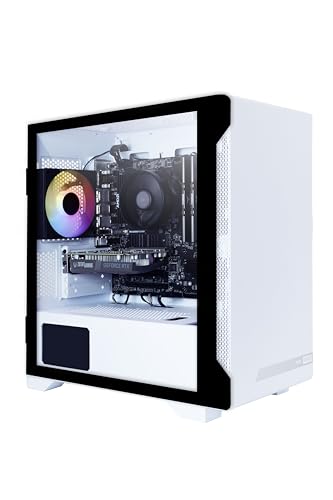
- Best overall compact gaming PC: ZOTAC MEK AI-Enhanced Gaming PC, Ryzen 5 5500, GeForce RTX 3050 — Check on Amazon
- GMKtec NucBox K8 Plus Mini PC, Ryzen 7 8845HS, 32GB DDR5, 1TB SSD, OCuLink — Check on Amazon
- Beelink SER8 Mini PC, Ryzen 7 8745HS, Radeon 780M, 135 × 135 × 44.7 mm — Check on Amazon
- HP Victus 15L Gaming Desktop TG02-1020h, Core i5-13400F, GeForce RTX 3050 — Check on Amazon
See 2 more Amazon options
- Beelink SER5 MAX Mini PC, Ryzen 7 7735HS, Radeon 680M, 24GB LPDDR5 — Check on Amazon
- GMKtec NucBox M6 Mini PC, Ryzen 5 6600H, Radeon 660M, 16GB DDR5 — Check on Amazon
Read the full guide ↓
Disclosure: As an Amazon Associate, reviewstook.com earns from qualifying purchases. Links to Amazon on this page are affiliate links; they cost you nothing extra. Listing details such as price and availability change often, so check the current Amazon listing before you buy.
Compact is a physical promise before it is a performance one. A compact gaming PC is the machine that fits the shelf under the TV, the corner of a desk that also has to hold a work laptop, the media cabinet with a door that must still close. At $700 that promise splits into two honest shapes. The first is the small tower: a case a fraction of a mid-tower’s volume that still holds a real desktop graphics card — at this budget, an RTX 3050 on a good day, which is entry-class silicon and is described that way throughout this guide. The second is the mini PC: a box of about a liter or less, built on a laptop chip with the strongest integrated graphics AMD makes, the Radeon 780M. Neither shape is a shrunken version of a much pricier rig, and this guide will not pretend otherwise. What $700 buys, chosen well, is a machine that plays modern games credibly at 1080p, disappears into a room, and — in the mini PC shape — keeps a genuine upgrade path open through an OCuLink port and a desktop graphics card docked beside it.
Three honesty notes frame everything below. First, there is no compact RTX 4060 tower at $700 in the current market; the discrete-GPU picks here are RTX 3050 class, and where a listing only fits this budget during sales, the review says so and tells you to check the price on Amazon before you buy. Second, the OCuLink upgrade path is real but it is not free and it is not included: a dock is a separate purchase, it needs its own power supply, and the graphics card is a third purchase on top. This guide counts those extra purchases honestly rather than letting the small box alone do misleading work. Third, small cases trade cooling headroom for size. Laptop-class chips in liter boxes run small fans that spin fast, and a compact tower has less air to move than the mid-tower it replaces; the reviews note noise and thermal character pick by pick, because a gaming PC that lives next to a television has to be tolerable at sofa distance, not just at a desk with headphones on.
In this guide
Quick Picks
Short on time, or comparing several options at once? Each row below names a buyer type and the product that suits it, with a link to the listing.
| Buyer type | Pick | Why it stands out | Link |
|---|---|---|---|
| Best overall compact | ZOTAC MEK AI-Enhanced Gaming PC, RTX 3050 | A real desktop GPU in a compact tower, at a price that actually sits inside this budget | Check on Amazon |
| Best mini PC / upgrade path | GMKtec NucBox K8 Plus, 32GB/1TB | About a liter, Radeon 780M, and a native OCuLink port for a future desktop GPU | Check on Amazon |
| Best for the living room | Beelink SER8, Ryzen 7 8745HS | 0.81 liters and among the quietest mini PCs independent reviewers have measured | Check on Amazon |
| Best brand-name compact tower | HP Victus 15L TG02-1020h | Roughly 15 liters, RTX 3050, a big-brand warranty — with an 8GB RAM caveat | Check on Amazon |
| Best value compact | Beelink SER5 MAX, Ryzen 7 7735HS | Radeon 680M and 24GB of RAM — most of the mini PC experience at a lower tier than the 780M picks; check price on Amazon | Check on Amazon |
| Smallest budget pick | GMKtec NucBox M6, Ryzen 5 6600H | Socketed DDR5 and dual SSD slots in the most budget-friendly box here; check price on Amazon | Check on Amazon |
How These Picks Were Chosen
Compact was applied as a measurable filter, not a vibe. Every pick is either a mini PC of roughly a liter or less, or a tower whose case is a clear step down from a standard mid-tower — the largest machine here, HP’s Victus 15L, is named for its roughly 15-liter volume and measures about 15.5 × 29.7 × 33.7 cm. Full-size towers that merely have “gaming” in the title were excluded however good their value, because they do not answer the search you actually made; if a big tower is acceptable on your desk, the wider $700 guides on this site cover stronger configurations for the same money.
We did not use these products ourselves. We read the maker listings and specification pages, the exact Amazon listings linked, and independent review coverage, and compared the things that decide a compact purchase: physical dimensions and volume, graphics class, memory size and whether it can ever be changed, storage size, the ports that matter at this size (OCuLink and USB4 above all), and what reviewers who measure such things report about fan noise. Prices are not printed as fixed numbers here, because mini PC pricing in particular swings hard: check the price on Amazon for the exact configuration before you buy. One pick below is notably volatile, and its review handles it as a buy-only-when-it-fits-this-budget recommendation rather than a standing one.
Two compact-specific tests sat on top of that. The first is the total-cost test: any pick whose appeal depends on hardware it does not include — an OCuLink dock, a power supply for that dock, a graphics card, a second stick of RAM — has that extra purchase named in its review. The second is the exit test: a compact PC is bought for a specific shelf, cabinet or desk corner, so each review states the size plainly enough to measure your space against, and flags the placements that cook small machines — sealed cabinets, VESA brackets hard against a hot monitor back, vents pushed to a wall.
The 6 Best Compact Gaming PCs Under $700
ZOTAC MEK AI-Enhanced Gaming PC — Ryzen 5 5500, GeForce RTX 3050, 16GB, 500GB
Who it suits: Buyers who want the compact shape without giving up a desktop graphics card — the strongest actual gaming performance in this guide, in a tower a fraction of a mid-tower’s size.
ZOTAC’s MEK line is the company’s compact tower family, and this configuration is the sensible one: a Ryzen 5 5500, a GeForce RTX 3050, 16GB of DDR4-3200, a 500GB NVMe SSD, Wi-Fi 6E and Windows 11 Home, behind a 650W 80+ Gold power supply that is honestly oversized for the parts — which in a small case is a virtue, because a supply loafing along at half load runs cooler and quieter than a small one straining. The RTX 3050 is the point of the machine. It is entry-class desktop silicon, and this guide describes it the way the evidence supports: modern games at 1080p on medium-to-high settings, high-refresh frame rates in esports titles, and DLSS available to stretch demanding games further. That is a clear step above every integrated-graphics pick below, and it is why this tower, not a mini PC, leads the guide. Check the price on Amazon for this listing — it is a pick that fits this budget as a regular purchase rather than only as a sale-day accident, which cannot be said of most RTX 3050 towers.
The compact compromises are the expected ones, stated plainly. The 500GB SSD is the tightest storage in this guide alongside the other 500GB-class picks, and two or three modern game installs will fill it; budget for a second drive or a larger replacement, which a tower at least makes easy. The platform is DDR4-era, so the upgrade story is a GPU swap within the supply’s generous headroom rather than a CPU platform with years of runway. And a compact tower still needs its vents respected: it wants open air on its intake side, not a sealed cabinet. Judged as what it is — the only shape at $700 that pairs small physical size with a real graphics card without depending on a sale — it is the complete answer to this search.
- A genuine desktop RTX 3050 in a compact tower — the gaming ceiling of this guide.
- 650W 80+ Gold power supply: cool, quiet headroom and room for a future GPU swap.
- A desktop RTX 3050 configuration that fits this budget without waiting for a sale — check price on Amazon.
Honest limitation: The 500GB SSD fills quickly with modern game installs, and the DDR4 platform is a dead end beyond a graphics-card upgrade.
Choose it if gaming performance per liter is the priority and a small tower fits your space. Skip it if the machine must hide behind a monitor or inside a media cabinet — that is the mini PCs’ job, below.

GMKtec NucBox K8 Plus Mini PC — Ryzen 7 8845HS, Radeon 780M, 32GB DDR5, 1TB SSD, OCuLink
Who it suits: Desk and living-room buyers who want the strongest integrated graphics in a liter-class box today, with the one upgrade path that can later turn a mini PC into a desktop-class gaming machine.
The K8 Plus measures about 132 × 125 × 58 mm — roughly a liter — and inside it is the configuration this guide’s other mini PCs are measured against: a Ryzen 7 8845HS with Radeon 780M graphics, 32GB of DDR5 in two SO-DIMM slots (expandable to 96GB), a 1TB SSD with a second M.2 slot beside it, dual 2.5GbE networking, dual USB4, HDMI 2.1 and DisplayPort outputs. The 780M is the strongest integrated graphics in this class, and the honest framing is the one used across this batch: 1080p at medium settings in demanding games, high frame rates in lighter and esports titles, and FSR upscaling to close the gap — credible gaming, not desktop-GPU gaming. What separates the K8 Plus from every other iGPU box here is on its back panel: a native OCuLink port, a PCIe 4.0 x4 connection that lets a desktop graphics card in an external dock do the rendering. No other pick in this guide has one built in.
Two conditions belong in bold. The first is price behavior. This 32GB/1TB listing’s price is volatile, and it climbed sharply during the late-2026 memory shortage. This is a buy-only-when-it-fits-the-under-$700-budget pick, full stop; when it sits well above that budget it is a bad purchase and the SER8 or SER5 MAX below are the correct answers. The second is the dock cost, covered in full in the OCuLink section further down: the port is included, nothing else is. A dock such as Minisforum’s DEG1 — check its price on Amazon — requires an ATX or SFX power supply that is not in the box, and the graphics card is a third purchase, so the docked setup is a substantial extra investment beyond the mini PC itself. OCuLink is also not hot-pluggable: you connect it powered down. Buy the K8 Plus for what it is on day one — the best liter-class gaming box here when its price behaves — and treat the port as an option you may exercise later, not as performance you have already paid for.
- Radeon 780M, 32GB of socketed DDR5 and 1TB of storage in about a liter.
- Native OCuLink port — the only true desktop-GPU upgrade path in this guide.
- Dual 2.5GbE, dual USB4 and a second M.2 slot: expansion beyond its size class.
Honest limitation: The listing’s price is volatile — check the price on Amazon and buy only when it fits this budget — and the OCuLink path is a substantial extra investment beyond the box before it renders a single frame.
Choose it if you will buy only when it fits the under-$700 budget and like the idea of docking a real GPU later. Skip it if the listing is sitting well above this budget, or you want discrete-GPU performance on day one — that is the ZOTAC above.

Beelink SER8 Mini PC — Ryzen 7 8745HS, Radeon 780M, 32GB DDR5, 1TB SSD
Who it suits: Living-room and bedroom buyers for whom the compact question is really a noise question — the machine that games beside a TV without announcing itself across the room.
The SER8 is the smallest full-strength box in this guide: 135 × 135 × 44.7 mm, about 0.81 liters, and 0.75 kg. Its Ryzen 7 8745HS is the 8845HS silicon without the AI engine — the same eight Zen 4 cores and the same Radeon 780M — and this listing’s headline configuration pairs it with 32GB of DDR5 and a 1TB PCIe 4.0 SSD, with triple 4K display output over HDMI 2.1, DisplayPort and USB4. The reason it earns its own slot, ahead of cheaper 780M boxes, is acoustic. Notebookcheck’s measured review of the SER8 recorded fan noise around 34.6 dB(A) under full load — among the quietest results the publication has recorded for a mini PC of this performance class, in a category where small fans in small boxes routinely measure far louder. At sofa distance, in a quiet room, that difference is the product. The 780M gaming story is the same honest one as the K8 Plus: 1080p medium in demanding titles, easy high frame rates in esports and older games, FSR where a title needs it.
The trade-offs are connectivity and configuration discipline. There is no OCuLink port: the eGPU route here is USB4, which tunnels the connection and gives up bandwidth the K8 Plus’s native port keeps — workable, but strictly the second-best version of the upgrade path, and the dock-plus-supply-plus-card arithmetic from the OCuLink section applies with a wider performance haircut. The listing is also a multi-configuration one, and its styles can sit in very different price tiers: check the price on Amazon for the exact style, because the 16GB/512GB and 32GB/1TB configurations are not interchangeable purchases, and bigger styles can climb well above this budget. Match the style name to the configuration in this review before paying, and treat any style priced over the $700 budget as a different purchase from the one described here.
- 0.81 liters and 0.75 kg — hides behind a TV or monitor and travels in a jacket pocket’s bigger cousin, a backpack.
- Measured around 34.6 dB(A) under load by Notebookcheck: the quiet pick, verified rather than claimed.
- Socketed DDR5 to 64GB and a second M.2 slot — rare upgrade room at this size.
Honest limitation: No OCuLink — eGPU expansion runs over USB4 with a bandwidth penalty — and the multi-style listing demands care: the configuration you want is not always the configuration at the attractive price.
Choose it if the PC lives in a quiet room and the 780M’s honest 1080p is enough. Skip it if a native OCuLink port is part of your plan — the K8 Plus is the pick that has one.

HP Victus 15L Gaming Desktop TG02-1020h — Core i5-13400F, GeForce RTX 3050, 8GB, 512GB
Who it suits: Buyers who want a compact tower from a major brand — real warranty, real support, a machine a non-technical household member can get serviced — and can accept one clearly flagged homework assignment.
The Victus 15L is the big-brand interpretation of compact: about 15.5 × 29.7 × 33.7 cm, roughly fifteen liters, 6.31 kg. That is several times the mini PCs’ volume and still a fraction of a mid-tower, narrow enough for a desk’s end or a shelf a full tower would never fit. This configuration pairs a Core i5-13400F with an RTX 3050 — the same entry-class desktop GPU as the ZOTAC, with the same honest 1080p framing — and HP’s ownership experience is the differentiator: a proper warranty channel, recovery tooling, and parts availability that no white-box brand matches. Check the price on Amazon for this model; between HP’s own sale cycles, third-party sellers can carry the listing at higher prices, so the buying rule is the familiar one — at or under the $700 budget it belongs in this guide, above that it does not.
The homework assignment is memory: this configuration ships with 8GB of RAM, which is below the working floor for modern gaming in 2026 — games will stutter and swap in situations where the GPU itself is coping. A second DDR4 stick is an inexpensive fix and the case is built to be opened, but it is a fix you must actually do, and its cost belongs in your total even though it is small. The second caveat is the proprietary side of big-brand SFF ownership: the power supply is an HP unit in an HP form factor, so the GPU upgrade ceiling is set by what that supply and case were designed around, not by the open market. Buy it as a finished, supported appliance with one cheap upgrade pending — not as a platform.
- Roughly 15 liters with a desktop RTX 3050 — compact by tower standards, roomy by mini PC ones.
- HP warranty and support: the lowest-risk ownership in this guide.
- A mid-range big-brand pick that fits the budget whenever HP’s sale pricing is live — check price on Amazon.
Honest limitation: 8GB of RAM as shipped is not enough for modern games — a second stick is effectively mandatory — and the proprietary power supply caps future GPU upgrades.
Choose it if brand support matters and you will add the RAM stick in week one. Skip it if you want the machine finished as it ships, or upgrade headroom matters more than support.

Beelink SER5 MAX Mini PC — Ryzen 7 7735HS, Radeon 680M, 24GB LPDDR5, 500GB SSD
Who it suits: Value-first compact buyers: most of the mini PC gaming experience — strong integrated graphics, a quiet palm-sized box — at a lower tier than the 780M picks.
The SER5 MAX runs the previous step of AMD’s integrated graphics, and the step is smaller in practice than the naming suggests. Its Ryzen 7 7735HS carries the Radeon 680M, one tier below the 780M in the K8 Plus and SER8, and pairs it with 24GB of RAM and a 500GB PCIe 4.0 SSD. Check the price on Amazon — this is a budget-tier pick positioned below the 780M models, not a premium one. The gaming framing steps down exactly one notch from the 780M picks: esports and older titles at 1080p with high frame rates, demanding modern games at 1080p low-to-medium or with FSR doing real work. For a large share of actual game libraries — the indie, strategy, and last-decade catalog most small PCs are bought for — the difference between this and the picks above it will never be visible. The box itself is the same disappear-behind-the-monitor proposition as its bigger sibling, from the brand whose Amazon storefront is the most established in the mini PC category.
The limitation is permanence. The 24GB of LPDDR5 is soldered: it is a generous amount today and it is the amount the machine dies with, because there is no slot to fill later. The 500GB SSD is the other half of that discipline — replaceable, unlike the RAM, but small enough that a serious game library means an external drive or an early upgrade. There is no OCuLink port, so the docked-GPU future belongs to the K8 Plus. What the SER5 MAX offers instead is the honest budget shape: accept the configuration as final, check the price on Amazon, and get a compact gaming PC whose only real compromise versus the $700 tier is one graphics tier and a smaller drive.
- Radeon 680M with 24GB of RAM — the value center of this guide; check price on Amazon.
- Same disappear-on-the-desk Beelink mini PC format as the SER8.
- A budget-tier position rather than a premium one: check the price on Amazon for the exact listing.
Honest limitation: The 24GB of RAM is soldered and can never be upgraded, and 500GB of storage is tight for a modern game library.
Choose it if a lower-priced finished-and-done machine beats a $700 model with headroom. Skip it if you keep machines for many years and want memory you can grow — the SER8 and K8 Plus both take socketed DDR5.

GMKtec NucBox M6 Mini PC — Ryzen 5 6600H, Radeon 660M, 16GB DDR5, 512GB SSD
Who it suits: The smallest-spend version of this search: a first compact gaming PC, a kids’-room or spare-TV machine, an emulation and back-catalog box — bought with open eyes about its graphics tier.
The M6 is the floor of the guide, and its review starts with the number that defines it: the Radeon 660M is a six-core integrated GPU, two tiers below the 780M picks, and it sets the machine’s honest ceiling. Esports titles, older AAA games and the indie catalog run well at 1080p; demanding modern releases are a 720p-or-FSR conversation. Within that ceiling, the hardware around the GPU is better than its budget tier suggests: a Ryzen 5 6600H, 16GB of DDR5 in SO-DIMM slots — socketed, unlike the SER5 MAX above it — a 512GB SSD with a second M.2 slot for growth, dual 2.5GbE networking, a full-feature USB4 port and Windows 11 Pro. Check the price on Amazon — as the budget-tier pick here, it is the one that leaves the most of this budget unspent, leaving room for the monitor, the controller and the games, or simply staying unspent.
The cautions are the class’s usual ones plus one of its own. The SSD is a PCIe 3.0 drive, a step slower than the 4.0 drives in the pricier picks, though in game loading the difference is minor. There is no OCuLink, so no docked future; the USB4 port is the only eGPU route and the weakest version of it. And GMKtec sells this model in several configurations, including barebones variants on related listings — confirm the listing you order is the complete 16GB/512GB Windows machine described here, not a kit expecting you to supply memory and storage. As a deliberately modest machine bought as a budget-tier pick, it is the guide’s easiest recommendation to a first-time buyer; as an attempt to play 2026’s heaviest releases, it is the wrong tool and the ZOTAC exists precisely for that job.
- The cheapest complete compact gaming PC here — check price on Amazon.
- Socketed DDR5 and dual M.2 slots: upgrade room the soldered rivals in its tier lack.
- Dual 2.5GbE and USB4 make it a capable little home-server second life later.
Honest limitation: The Radeon 660M is an esports-and-back-catalog GPU; demanding modern games mean 720p or aggressive upscaling, and there is no OCuLink port for a docked escape route.
Choose it if the budget is really in the lower tier and the game library is esports, indie and older titles. Skip it if current AAA releases at 1080p are the point — step up to the 780M picks or the ZOTAC.

Comparison Table
| Product | Size | Graphics | Best use | Link |
|---|---|---|---|---|
| ZOTAC MEK AI-Enhanced, RTX 3050 | Compact tower | RTX 3050 desktop | Strongest gaming here, small footprint | Check on Amazon |
| GMKtec NucBox K8 Plus, 32GB/1TB | ~132 × 125 × 58 mm, ~1L | Radeon 780M + OCuLink | Best mini PC and the docked-GPU future | Check on Amazon |
| Beelink SER8, 8745HS | 135 × 135 × 44.7 mm, 0.81L | Radeon 780M | Quiet living-room and bedroom gaming | Check on Amazon |
| HP Victus 15L TG02-1020h | ~15.5 × 29.7 × 33.7 cm, ~15L | RTX 3050 desktop | Brand-name support in a compact tower | Check on Amazon |
| Beelink SER5 MAX, 7735HS | Mini PC, sub-liter class | Radeon 680M | Most of the experience at a budget tier | Check on Amazon |
| GMKtec NucBox M6, 6600H | Mini PC, sub-liter class | Radeon 660M | Cheapest complete compact; check price on Amazon | Check on Amazon |
How to Choose a Compact Gaming PC Under $700
- Measure the space, then read dimensions, not adjectives. “Compact” and “mini” in listing titles mean nothing standardized. The picks here span 0.81 liters to roughly 15 — an eighteen-fold difference wearing the same label. Measure your shelf, cabinet or desk corner in centimeters, leave clearance on every vent side, and compare against the stated dimensions before ordering.
- Decide the shape first: tower or mini PC. A compact tower gives you a desktop graphics card and the strongest gaming at this budget. A mini PC gives you a machine that hides behind the display and sips power, with integrated graphics as the ceiling unless it has OCuLink. Everything else — brand, RAM, storage — is a detail inside that one decision.
- Learn the integrated-graphics ladder. At this budget it runs Radeon 660M (esports and older titles), 680M (a solid step up), 780M (the strongest iGPU here, credible 1080p medium in demanding games). One tier is worth roughly one settings notch. Listings that hide the iGPU model behind “Radeon Graphics” are hiding the thing you are paying for.
- Treat OCuLink as an option, not a feature you already own. A native OCuLink port (the K8 Plus) preserves a real upgrade; USB4 eGPU support (SER8, M6) is the same idea with a bandwidth penalty. Either way the dock, its power supply and the card are separate purchases — see the dedicated section below before valuing the port.
- Check whether the RAM can ever change. Socketed SO-DIMM machines (K8 Plus, SER8, M6) can grow from 16GB to 32GB or beyond. Soldered LPDDR5 machines (SER5 MAX) are finished at purchase — fine if the fitted amount is generous, a trap if it is 16GB.
- Count storage in game installs, not gigabytes. A 500GB drive holds the operating system and perhaps three modern titles. Every pick here with 500GB is a pick with an expansion plan — a second M.2 slot, an easy-open case, or an external drive — so confirm the plan exists before the library does.
- Ask where the heat goes. Mini PCs exhaust through small vents that must not face a wall or sit inside a closed cabinet; compact towers need intake clearance. A machine that thermal-throttles in its chosen home performs like the tier below it, without delivering this tier’s performance.
- Count the whole setup. The honest setup for several picks includes something extra: a RAM stick for the Victus, a second SSD for the 500GB machines, a dock chain for the OCuLink future. Compare the whole setup, not just the box, and let a pick that needs nothing extra (SER5 MAX, SER8 in its 32GB style) claim that as the advantage it is.
The OCuLink Upgrade Path, Counted Honestly
OCuLink is the reason a $700 compact guide can talk about desktop-class graphics at all, so it deserves its own arithmetic rather than a bullet point. The port itself is a PCIe 4.0 x4 connection — about 64Gbps — brought to the outside of the case. It is meaningfully faster than the 40Gbps USB4 link the other mini PCs here would use for the same trick, and because it is a direct PCIe connection rather than a tunneled one, a docked card over OCuLink performs closer to the same card in a desktop. Closer is not identical: the x4 link costs measurable performance against a full x16 slot, with the gap growing on high-end cards, and the connection is not hot-pluggable — you dock and undock powered down, like internal hardware, because that is what it electrically is.
Now the extra purchases, because this is where compact guides usually stop counting. The K8 Plus includes the port and nothing else. A dock such as Minisforum’s DEG1 — check its price on Amazon — is an open frame with a PCIe slot and a connector for a power supply — the supply itself, an ATX or SFX unit, is a second purchase the dock does not include, and the graphics card is a third. Add a midrange desktop card to the dock and supply and the full chain is a substantial investment beyond the mini PC itself: the docked setup becomes a commitment well beyond this budget by the time it renders its first frame at desktop class. That can still be the right purchase — it is bought in stages, the card can move to a future desktop, and the mini PC remains a complete, quiet computer whenever the dock is disconnected. But it is a staged plan, not a $700 one, and anyone whose real budget is $700 all-in should buy the ZOTAC tower or the strongest iGPU box and skip the port entirely. The port’s value is strictly to buyers who know they will spend the second tranche.
Small Cases, Real Thermals: Noise and Heat at This Size
Every machine in this guide cools laptop-class or entry-desktop parts with less air and smaller fans than a mid-tower uses, and the consequences are consistent enough to plan around. Small fans move air by spinning faster, which raises pitch; a mini PC under full gaming load is audible in a quiet room unless it was designed against that outcome — which is why the SER8’s independently measured ~34.6 dB(A) under load is treated in its review as a headline feature rather than a footnote. Towers have the easier physics: the ZOTAC’s oversized-for-the-parts power supply and the Victus’s larger case volume both buy slower fans and lower noise for the same work.
Placement decides the rest. A mini PC VESA-mounted behind a monitor sits in the monitor’s warm exhaust shadow and needs a gap, not contact. A compact tower in a media cabinet with the door closed will recycle its own hot air until it throttles — cabinet homes need an open back, a cut vent, or a different pick. Dust matters faster at this size, because small heatsinks clog sooner; a quarterly blast of compressed air is maintenance, not paranoia. Judge a compact PC in the room and the furniture it will actually live in, and the thermal story in these reviews will match the one you hear.
Common Buying Mistakes
- Believing “compact” in a title. Full-size towers are routinely listed as compact gaming PCs. Check the dimensions in centimeters and the volume in liters before anything else.
- Counting an OCuLink port as graphics performance. The port renders nothing; the dock, power supply and card that make it useful are substantial extra purchases, and none of them are in the box.
- Buying a mini PC for its USB4 eGPU support without knowing it is the slower path. USB4’s 40Gbps tunneled link gives up bandwidth that a native OCuLink port keeps — if docking is the plan, the port is the pick.
- Accepting 8GB of RAM as a finished configuration. The Victus in this guide is a good machine with one mandatory fix; listings that ship 8GB with no easy slot to fill are not bargains, they are stutter with a warranty.
- Ignoring whether RAM is soldered. A 16GB soldered machine is a machine with a fixed ceiling; the same money in a socketed box buys years of headroom.
- Sealing a small PC inside furniture. Closed cabinets and vents-to-the-wall placements throttle compact machines into the performance tier below — the most expensive free mistake in this category.
- Chasing a volatile listing when it sits above this budget. The K8 Plus can sit inside this budget or far above it, depending on when you check. Paying well over the budget converts the guide’s best-value pick into its worst; the right move is to wait or buy the SER8.
- Filling a 500GB SSD in the first month and blaming the PC. Modern installs are enormous; plan for a second drive with any 500GB pick from the start.
Final Recommendation
- Most compact buyers: ZOTAC MEK AI-Enhanced Gaming PC — the only discrete GPU here that fits this budget as a regular pick; check price on Amazon.
- Mini PC with a future: GMKtec NucBox K8 Plus, bought only when it fits the under-$700 budget.
- Living rooms and light sleepers: Beelink SER8.
- Brand-name peace of mind: HP Victus 15L, plus one RAM stick.
- Best value: Beelink SER5 MAX.
- Tightest budgets: GMKtec NucBox M6 as the budget-tier pick.
Our top two for compact buyers at this budget are the ZOTAC MEK, because a small tower with a real graphics card is the most complete answer this search has at $700, and the GMKtec K8 Plus — at the right price — because a liter of 780M performance with a native OCuLink port is the only pick that can grow into a desktop-class machine without being replaced. Between them they cover the two shapes of the search: small but expandable in the tower sense, and tiny but expandable in the docked sense. If noise rules the decision, the SER8 is the measured-quiet answer; if the budget is really in the lower tier, the SER5 MAX gives up one graphics tier and nothing else that matters. Shoppers working smaller still should see Best Compact Gaming PC Under $500, those with more room to spend Best Compact Gaming PC Under $800, and anyone whose space problem is the whole point can start with Best Compact Gaming PC For Small Spaces Under $700. Measure the shelf, count the whole setup including the extras each pick honestly needs, check the price on Amazon and the exact configuration style before you order — at this size, that homework is the difference between a machine that disappears into the room and one that disappoints in it.
Frequently Asked Questions
Is a mini PC or a compact tower better for gaming under $700?
For gaming performance alone, the compact tower — it holds a desktop graphics card, and the RTX 3050 in the ZOTAC and HP picks outruns every integrated GPU here. The mini PC wins on size, noise and power draw, and the OCuLink-equipped K8 Plus is the one mini PC that can close the performance gap later, at the extra cost described in this guide. Choose by which constraint is real: your space, or your settings menu.
What does OCuLink actually add, and what does it cost?
It adds a PCIe 4.0 x4 connection (about 64Gbps) to an external dock holding a desktop graphics card — faster and more direct than a USB4 eGPU link. It costs more than the port suggests: a dock — check its price on Amazon — a separate ATX or SFX power supply the dock does not include, and the card itself. Plan on a substantial extra investment beyond the PC, expect a small performance loss versus the same card in a desktop slot, and remember the connection is not hot-pluggable.
Can a Radeon 780M mini PC really game at 1080p?
Yes, with the settings honesty this guide applies throughout: demanding modern titles at 1080p medium, lighter and esports titles at high frame rates, and FSR upscaling where a game needs help. It is the strongest integrated graphics in this class, and it is still integrated graphics — the RTX 3050 towers in this guide are a clear tier above it, and no 780M machine here is presented as a 1440p or ray-tracing PC.
How loud is a mini gaming PC next to a TV?
It varies more by model than by size. Small fans in small boxes can be intrusive under load; the SER8 is the exception with independent measurements around 34.6 dB(A) under full load, which at sofa distance is unobtrusive. Whatever you buy, placement helps: open air around the vents, no sealed cabinet, and a gap behind a VESA-mounted box rather than contact with the monitor’s warm back panel.
Is 500GB of storage enough?
For the operating system and two or three modern games, yes; for a growing library, no. Every 500GB pick in this guide has an expansion route — a second M.2 slot in the K8 Plus and M6, an openable tower case in the ZOTAC and Victus — so the honest approach is to plan for a second drive as part of the purchase rather than discover the limit at the third install.
Why does the K8 Plus price move so much, and when should I buy it?
Mini PC pricing follows memory and SSD costs, and the late-2026 memory shortage pushed this listing well above this budget at times. The buying rule in the review stands: check the price on Amazon, and at or under the $700 budget it is one of the two best picks in this guide; above that, buy the SER8 or SER5 MAX instead and wait for the K8 Plus to fit the budget again.


