Where to buy
Check the latest price, availability and delivery on Amazon. Orders are placed on Amazon. We may earn a commission from qualifying purchases.
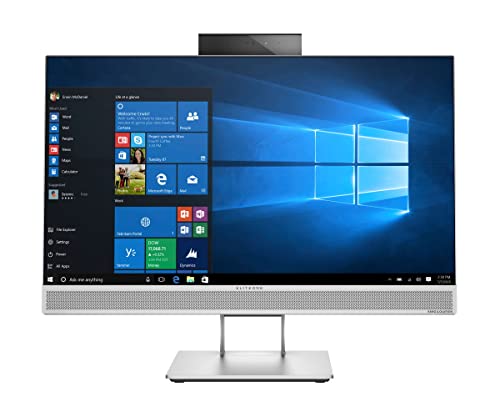
- Best overall: HP EliteOne 800 G4 All-in-One, 23.8″ FHD, Core i5-8500, 16GB RAM, 512GB SSD (Renewed) — Check on Amazon
- HP ProOne 600 G4 All-in-One, 21.5″, Core i5-8500T, 8GB RAM, 256GB SSD (Renewed) — Check on Amazon
- Dell OptiPlex 5260 All-in-One, 21.5″ FHD, Core i5-8400, 8GB RAM, 256GB SSD (Renewed) — Check on Amazon
- STGSivir All-in-One PC, 24″ FHD, 16GB RAM, 1TB SSD — Check on Amazon
See 2 more Amazon options
- MECHAZER All-in-One, 23.8″ Curved FHD, Core i7-7700HQ, 16GB RAM, 512GB SSD — Check on Amazon
- PINGDY All-in-One, 23.8″ FHD IPS, Ryzen 5 3500U, 8GB RAM, 512GB SSD — Check on Amazon
Read the full guide ↓
Disclosure: As an Amazon Associate, reviewstook.com earns from qualifying purchases. Links to Amazon on this page are affiliate links; they cost you nothing extra. Listing details such as price and availability change often, so check the current Amazon listing before you buy.
Start with the sentence the search term does not want to hear: there is no such thing as a 1440p gaming all-in-one under $400, and nothing in this guide becomes one by being listed here. Every machine below has a Full HD screen — 1920×1080 pixels — not a 2560×1440 one, and every one plays games on integrated graphics, the small graphics engine built into the processor, with no graphics card and no slot to add one later. If your plan is to sit in front of the built-in display and play modern games at 1440p, no purchase in this guide will do that, and any headline implying otherwise is selling you a resolution these machines do not have.
So what can the words “1440p gaming” honestly mean at this budget on this kind of computer? Two narrower, real things. The first is rendering below the panel: on the built-in 1080p screen, these machines play light, older and esports-style games by rendering at 720p or 1080p and letting the display show the result — perfectly respectable gaming, honestly labelled, as long as nobody calls it 1440p. The second is output: several picks here have a documented video output — HDMI or DisplayPort — that can feed a separate 1440p monitor you already own or buy later. On that external screen the desktop, video and light games can run at 1440p, because displaying a desktop at 2560×1440 is easy work; rendering a demanding modern game at that resolution is what takes a graphics card none of these machines has. This guide grades each pick on exactly those two axes: what it renders, and what it can output.
The rest of the honest framing matches the hardware. The sub-$400 all-in-one market splits into renewed ex-corporate business machines — off-lease HP and Dell units with 8th-generation Intel processors, SSDs and Windows 11 Pro — and new budget-brand machines whose modern-looking spec sheets sometimes hide much older processors. And the genuinely real routes to 1440p gaming are named where they belong: they start with a tower or a mini PC carrying a discrete graphics card, covered directly in our guides to the Best 1440p Gaming PC Under $400 and the Best Mini Gaming PC Under $400. Read on if an all-in-one’s one-box tidiness is the point of the purchase and light gaming at honest resolutions is enough — or if a 1440p monitor is already on your desk and you want to know which of these machines can actually drive it.
In this guide
Quick Picks
Short on time, or comparing several options at once? Each row below names a buyer type and the all-in-one that suits it, with a link to the listing.
| Buyer type | Pick | Why it stands out | Link |
|---|---|---|---|
| Best overall | HP EliteOne 800 G4 All-in-One (Renewed) | Strongest all-round spec here, with both HDMI and DisplayPort outputs documented for an external screen | Check on Amazon |
| Best value under budget | HP ProOne 600 G4 All-in-One (Renewed) | 8th-gen Core i5 business machine at the lower end of this budget, camera and Wi-Fi included | Check on Amazon |
| Best documented second-screen output | Dell OptiPlex 5260 All-in-One (Renewed) | DisplayPort output documented, a full-power six-core CPU, and a lower-tier position in this guide | Check on Amazon |
| Most storage, bought new | STGSivir All-in-One PC 24 | 1TB SSD and 16GB RAM in a new machine — with one big CPU caveat, covered below | Check on Amazon |
| Best screen experience | MECHAZER All-in-One 23.8″ Curved | The only curved display here, plus an HDMI output — buy only at or under $400, and only with Windows confirmed | Check on Amazon |
| Strongest integrated graphics | PINGDY All-in-One 23.8″ Ryzen 5 | Ryzen 5 3500U with Vega 8 graphics — renders light games better than any Intel pick here | Check on Amazon |
How These Picks Were Chosen
The starting set is the same six all-in-ones verified for our base guide to the best all in one pc under $400: real Amazon listings in the United States that fit this guide’s under-$400 budget, with every ASIN and specification carried over from that research unchanged. Prices on renewed listings move constantly, because each seller grades its own stock, so check the current price on Amazon for each pick before you buy. If the live listing is over the cap on the day you shop, the pick does not qualify.
What changes in this guide is the grading. Each machine was re-scored against the 1440p question in three parts. First, the built-in panel: all six are 1920×1080, so none earns credit toward 1440p gaming on its own screen, and the reviews grade what each integrated graphics engine can actually render there — 1080p at low settings for the strongest, 720p-class rendering for the weakest. Second, the video output: a pick earns external-1440p credit only where the base research documented an output — HDMI, DisplayPort, or both. Three picks have one; for the other three the research documented none, and those reviews say “not documented — check the live listing” instead of inventing a port. A 1440p monitor is also a separate purchase beyond this budget, and the guide treats it that way rather than folding it into the $400. Third, upscaling: DLSS is NVIDIA technology and not one pick here has NVIDIA graphics, so DLSS appears only to be ruled out. AMD’s FSR, where a game itself offers it, can run on integrated graphics — but as the buying advice below explains, FSR aimed at a 1440p screen still asks the chip to render roughly 1707×960 internally at its Quality setting, fewer pixels than a native 1080p frame, so on hardware of this class it is a presentation aid for light games on an external monitor, not a route to genuine 1440p gaming.
The complete-desk filter from the base guide still applies on top of all that: an all-in-one earns its place only if the box contains what a desk needs on day one — screen and computer, keyboard and mouse, Wi-Fi, and a webcam or an honest warning where one is missing — and the base guide’s listing-error findings are carried into these reviews at full size. A “Core i5” badge in this set spans a 2018 six-core and a dual-core with a 2011 model year in its own spec table; one listing mislabels its memory against the manufacturer’s datasheet; one title calls a six-core chip “Quad-Core”; one listing’s data says DOS against marketing promising Windows.
The 6 Best All-in-One PCs for 1440p Gaming Under $400
HP EliteOne 800 G4 All-in-One — Core i5-8500, 16GB RAM, 512GB SSD (Renewed)
Who it suits: Buyers who want the strongest all-in-one under $400 for everyday work and light gaming now, with the best-documented path to a 1440p monitor later — and who are comfortable buying renewed business hardware to get it.
On the first grading axis, the panel, the EliteOne starts level with everything else here: its 23.8-inch display is Full HD IPS at 1920×1080 — a genuinely good screen, the joint-largest in the guide, with the wide viewing angles IPS provides — but a 1080p screen, and no setting changes that. What it renders there is decided by the Intel UHD Graphics 630 integrated into its Core i5-8500, a proper six-core desktop processor from Intel’s 8th generation. That pairing handles video, everyday work and light or older games at 1080p with settings kept low; esports-style titles are happiest rendered at 720p and shown on the panel. That honest ceiling is the same one the other Intel picks have — the EliteOne’s advantage is everything around it: 16GB of RAM, double most of this guide, and a 512GB SSD, so the machine never feels strangled outside games either.
On the second axis, output, this is the best-documented machine in the guide. The listing includes both an HDMI output and a DisplayPort output, so an external 1440p monitor is a plug-and-play addition rather than a hope: desktop, documents, video and light games can run on that screen at 2560×1440, because driving a desktop at that resolution is trivial work for the UHD 630, while demanding games remain a 1080p-or-below proposition wherever they are displayed. The completeness supports the same story: built-in webcam, internal Wi-Fi, seven USB ports, keyboard, mouse and an Ethernet cable in the box, and a stated one-year manufacturer warranty — unusually reassuring for renewed stock, where 90 days is the norm. Two accuracy notes carry over from the base research. Amazon’s spec table calls the memory DDR5; HP’s own datasheet specifies DDR4-2666 in two SO-DIMM slots, upgradeable to 32GB, and the datasheet is the document to trust — check the live listing rather than its table. And this configuration sits toward the top of the budget rather than comfortably under it — check the current price on Amazon before you buy, and consider the same model with a 256GB SSD from refurbishers as the honest fallback if the 512GB listing is over the cap when you shop.
- Both an HDMI and a DisplayPort output are documented — the firmest footing here for an external 1440p screen.
- A 23.8-inch IPS panel at Full HD: joint-largest in the guide, and the best panel technology on offer.
- Six-core i5-8500 with 16GB of RAM and a 512GB SSD — no other pick balances the three as well.
- Webcam and Wi-Fi built in, a stated one-year warranty, and memory that HP’s datasheet allows to reach 32GB.
Honest limitation: The built-in screen is 1080p and the integrated graphics cap gaming at light titles rendered at 1080p or below — the 1440p part of this pick is an external monitor it can drive, not a resolution it games at — and it is a renewed 2018 machine that sits toward the top of this budget.
Choose it if you want the best all-rounder here and a documented way to feed a 1440p monitor today or later. Skip it if buying renewed bothers you, or your real goal is gaming at 1440p — that goal needs a graphics card, and no pick in this guide has one.

HP ProOne 600 G4 All-in-One — Core i5-8500T, 8GB RAM, 256GB SSD (Renewed)
Who it suits: Buyers who want the business-class formula — 8th-generation Core i5, SSD, Windows 11 Pro, camera included — at the lower end of this guide’s budget, and who will check one specification on the live listing before planning a second screen around it.
The ProOne 600 G4 is the EliteOne’s smaller corporate sibling. Its processor is an Intel Core i5-8500T, the low-power 35-watt member of the same 8th-generation family: six cores at a 2.1GHz base clock, boosting higher under load. The T suffix trades some peak speed in long, heavy tasks for a cooler, quieter machine, and for browsing, documents, calls and streaming video the difference is rarely felt. The graphics are the same Intel UHD Graphics 630, which fixes the gaming story in advance: light and older games rendered at 1080p with low settings, lighter still at 720p. The 21.5-inch built-in screen is Full HD class like every panel here — 1080p, not 1440p — and the listing does not promise the IPS panel technology of its bigger sibling, so expect narrower viewing angles if two people regularly watch together.
The output axis is where this review has to be careful, and the care is the point. The base research documented the ProOne’s completeness — keyboard and mouse included, Wi-Fi and Bluetooth built in rather than dongle-based, a camera for video calls — but it did not document a specific video output for this listing, so this guide will not name one. If an external 1440p monitor is part of your plan, confirm the video-out line on the live listing before ordering; if it is not there, the EliteOne above and the Dell below are the picks whose outputs are already proven on paper. What is proven is the value: this renewed listing, through an Amazon-fulfilled seller in Refurbished–Excellent condition, sits toward the lower end of this budget — a comparatively affordable route into a genuinely capable all-in-one here, leaving more of the budget for accessories, an external drive or a future monitor — check price on Amazon. The honest limits are capacity: 8GB of DDR4 memory and a 256GB SSD are the floor for comfortable Windows 11 multitasking rather than a luxury, and a large photo library will fill the drive sooner than expected. At that lower-tier position those are the right compromises — just do not let the low tag talk you into assuming a port the research never confirmed.
- Positioned toward the lower end of this guide’s budget — check price on Amazon.
- An 8th-gen six-core i5-8500T that runs cool and quiet on 35 watts.
- Keyboard, mouse, Wi-Fi, Bluetooth and a camera all in the box — nothing to add on day one.
- Windows 11 Pro, with Refurbished–Excellent grading.
Honest limitation: 8GB of RAM and a 256GB SSD are the minimum comfortable pairing for Windows 11, the 21.5-inch 1080p screen is the smallest class here, and the base research did not document a video output — an external 1440p monitor plan has to be verified on the live listing first.
Choose it if value is the priority, your work is browsing, documents, calls and streaming, and any second screen is a maybe rather than a plan. Skip it if a 1440p monitor is definitely coming — buy a pick with a documented output — or you know you need 16GB of RAM and 512GB of storage from day one.

Dell OptiPlex 5260 All-in-One — Core i5-8400, 8GB RAM, 256GB SSD (Renewed)
Who it suits: Buyers with a small desk — a kitchen counter, a bedroom corner, a front desk — who want Dell’s business build, a full-power desktop processor, and a documented DisplayPort for a second screen, at the lower end of this guide’s budget.
The OptiPlex 5260 is Dell’s 21.5-inch business all-in-one, and this renewed listing, sold by BLUE DIMOND COMPUTER and graded Refurbished–Excellent, runs an Intel Core i5-8400: a full desktop chip, six cores boosting to 4.0GHz, from the same 8th generation as the HP picks. Ignore the word “Quad-Core” in the Amazon title — the listing’s own description confirms six cores, and the i5-8400 has never been a quad-core part; it is a small, useful example of why this guide reads spec tables instead of headlines. Gaming is graded by the same Intel UHD Graphics 630 as the HPs, so the rendering story matches theirs: light and older titles at 1080p with low settings, esports-style games rendered at 720p, modern demanding games out of reach. The built-in 21.5-inch Full HD panel is a 1080p display, and the smaller physical size is the trade for the compact footprint.
Where the Dell separates itself is the documented output and its position in the budget. Its DisplayPort output is in the listing’s documented specification, so feeding an external 1440p monitor — desktop, video and light games at 2560×1440 — rests on paper rather than hope, the same external-screen arrangement as the EliteOne but positioned lower in this budget, with the exact position varying by seller and configuration — check the current price on Amazon. The port selection is the most office-ready here — three USB 3.1 ports, two USB 2.0, an SD card reader photographers genuinely use, and wired Ethernet — with a keyboard and mouse included. Two gaps must be counted honestly. There is no camera at all, per the listing description, so video calls need an external USB webcam, an additional purchase that still keeps the total well under budget. And Wi-Fi arrives as a USB dongle rather than an internal card, permanently occupying one of those USB ports. The warranty is the standard renewed 90-day window rather than the EliteOne’s stated year, and that shorter safety net is the real trade-off for the lower-tier position: test everything — every port, the dongle, the screen for dead pixels — in the first week, not the first month.
- A DisplayPort output on the documented spec sheet — the second-screen plan rests on paper.
- The full-power i5-8400, six cores boosting to 4.0GHz, inside the guide’s smallest chassis.
- Positioned toward the lower end of this budget, varying by seller and configuration — check price on Amazon.
- An SD card reader and five USB ports head the best connectivity list here; keyboard and mouse are included.
Honest limitation: There is no webcam at all, Wi-Fi comes via a USB dongle that consumes a port, the warranty is only 90 days, and the gaming ceiling is the same integrated-graphics one as every Intel pick — the 1440p story here is an external monitor, not rendered games.
Choose it if desk space is tight, the budget matters, and a documented DisplayPort for a second screen is on the plan. Skip it if you video-call every day and would rather not buy a webcam, or if 90 days of warranty cover feels thin for a machine with a previous corporate life.

STGSivir All-in-One PC 24 — 16GB RAM, 1TB SSD
Who it suits: Buyers who refuse to buy refurbished and want a new machine with big headline numbers — a 24-inch screen, 16GB of RAM and a 1TB SSD — and who will read this review’s central warning before ordering.
Start with the warning, because it decides both the everyday verdict and the 1440p one. The listing’s headline sells a “Core i5” with 16GB of RAM and a 1TB SSD, but the listing’s own specification table names the processor model: 3470T — an Intel Core i5-3470T from the 3rd generation, a dual-core chip from the early 2010s, with the spec table even listing a 2011 model year. That chip predates the 8th-generation processors in the renewed picks by roughly a decade, runs on two cores where they run on six, and no amount of memory or storage in the headline alters the gap. Graded on rendering, this is the weakest machine in the guide by a wide margin: its integrated graphics belong to that same early-2010s generation, so even the light-gaming story told for the other picks shrinks here to the oldest and lightest titles at low settings and reduced resolutions. Graded on output, the base research documented no video output for this listing either, so a second screen rests on nothing until the live listing proves a port.
What remains is what the base guide said remains: a complete, modern-looking, new desk setup that does the everyday jobs acceptably. The 24-inch Full HD display is the joint-largest here — still 1920×1080, like every panel in this guide — and the large SSD keeps Windows responsive while 16GB of RAM holds plenty of browser tabs, so browsing, email, documents, streaming and schoolwork all run fine. There is a built-in webcam, Wi-Fi and Bluetooth 5.0, and an RGB keyboard and mouse set. It is also one of the very few new, not renewed, all-in-ones in this budget band — check price on Amazon, including whether new or used copies are the ones that fit the budget when you shop. The current listing title specifies Windows 11 Home, though an older version described Windows 10 Home, so confirm the operating system line on the live page before ordering; a machine with this little processor headroom has no upgrade path worth the name, and what ships in the box is the computer you will live with.
- Bought new, with a retail returns process — no refurbished grading, no ex-corporate wear to wonder about.
- A 1TB SSD, the largest storage here, alongside a joint-best 16GB of RAM.
- The joint-largest screen at 24 inches, plus a webcam, Wi-Fi, Bluetooth 5.0 and an RGB keyboard-and-mouse set.
- Positioned at the top end of this budget — check price on Amazon.
Honest limitation: The processor is a 3rd-generation dual-core Core i5-3470T — by far the oldest and weakest CPU in this guide — hidden behind a headline that never says so; its integrated graphics are the weakest here, and no video output is documented, so it grades last on both the rendering and the output axes.
Choose it if buying new matters more to you than processor power and your workload is light everyday use. Skip it if gaming in any form, a second screen, or long service life matters — the renewed 8th-gen picks are far stronger on all three for the same money.

MECHAZER All-in-One 23.8″ Curved — Core i7-7700HQ, 16GB RAM, 512GB SSD
Who it suits: Buyers drawn to a curved screen and a fingerprint reader in a new all-in-one — and who are willing to do two minutes of homework on the live listing, because this pick carries the biggest verify-before-you-buy warning in the guide.
The hardware pitch is genuinely distinctive. The NX5-23C wraps a 23.8-inch curved Full HD (1920×1080) LED panel — the only curved display here — around an Intel Core i7-7700HQ, a 7th-generation mobile processor with four cores and eight threads boosting to 3.8GHz: a laptop chip rather than the desktop parts in the HP and Dell picks, but a strong one for its era, paired with 16GB of memory and a 512GB SSD. On rendering, its integrated graphics sit a generation behind the 8th-gen Intel picks and a clear step behind the PINGDY’s Vega 8: light and older games at 1080p with low settings, reduced resolutions for anything more ambitious. On output, this is one of three picks with a documented connector — one HDMI output — so an external 1440p monitor for desktop, video and light games is a documented possibility rather than a guess, subject to the two warnings below.
The first warning is price. Related curved variants sit above this guide’s budget, and this exact listing does not always sit at or under $400 — check the current price on Amazon before you buy. Treat it strictly as a conditional pick — at or under the cap it qualifies; above it, it does not. The second warning is more serious. In Amazon’s structured data the operating-system field reads “DOS” — no Windows installed at all — while MECHAZER’s marketing elsewhere promises Windows 11 Pro out of the box. One of those descriptions is wrong, and which one decides whether this is a computer or a project: a machine that boots to a DOS prompt needs an operating system supplied by you. So before ordering, read the OS line on the live listing and scan the recent buyer reviews; unless both clearly confirm Windows is installed, walk away. An independent roundup of this model adds a second check — it reports no built-in webcam — so anyone planning video calls should confirm the camera on the live listing as well. The memory, meanwhile, is DDR3-generation, one more sign of the older platform under the modern styling. Around those caveats sit dual-band Wi-Fi, Bluetooth 5.0, built-in speakers, six USB ports, a wired keyboard and mouse, and a stated one-year warranty. The hardware itself is not the problem with this pick; the listing is.
- A curved 23.8-inch Full HD panel — the only one here — with fingerprint login on top.
- An HDMI output on the documented specification, so an external 1440p screen is a paper-backed option.
- The i7-7700HQ brings four cores and eight threads, backed by 16GB of RAM and a 512GB SSD.
- Dual-band Wi-Fi, Bluetooth 5.0, built-in speakers, six USB ports and a stated one-year warranty.
Honest limitation: The operating system is in dispute — Amazon’s data says DOS, the brand’s marketing says Windows 11 Pro — so Windows must be verified on the live listing before buying, and its position against the $400 cap must be checked on the live listing as well, which makes this pick conditional twice over.
Choose it if the curved screen appeals, the live listing confirms Windows, and the price is at or under $400 on the day. Skip it if either check fails — an unclear OS or a price above the cap both end the argument, whatever the screen looks like.
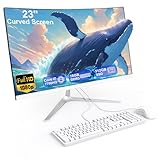
PINGDY All-in-One 23.8″ — Ryzen 5 3500U, 8GB RAM, 512GB SSD
Who it suits: Buyers who want the newest processor platform in this guide and the best integrated graphics available under $400 — for a new machine that renders light games better than anything else here, on its own 1080p screen.
The PINGDY is the platform outlier: where the other five picks run Intel processors from 2018 or earlier, its AMD Ryzen 5 3500U is a 2019 mobile chip with four cores and eight threads reaching 3.7GHz. But the processor is not why it leads on rendering — the graphics are. The 3500U’s integrated Radeon Vega 8 is a clear step beyond the Intel UHD 630 in the business picks: smoother video, happier light photo editing, and older or esports-style games at low settings, rendered at or near the panel’s 1080p, that the Intel machines would need to drop to 720p to run comfortably. That makes the PINGDY the best rendering pick in this guide — with the framing kept honest: Vega 8 is the best integrated graphics here, not gaming hardware, and it renders at 1080p and below on a panel that is itself 1080p. The listing markets this machine “for Gaming Office Study”; the gaming word in that phrase means the light end of the hobby, and this guide declines to stretch it any further.
On the output axis, discipline again: the base research documented the PINGDY’s Wi-Fi, Bluetooth, built-in speaker and included keyboard and mouse, but no video output, so an external 1440p monitor is not something this guide will promise on its behalf — check the live listing’s port list if a second screen is part of the plan, and treat the built-in IPS panel, with the wide viewing angles that make a shared family screen pleasant, as the display this pick is really selling. Two listing quirks deserve the same scrutiny applied elsewhere. One field of the spec table renders the processor as a “3450U”, and another labels the memory DDR3; in reality the 3500U belongs to a DDR4 platform, and the title and headline specification both name the 3500U — treat the errors as a prompt to confirm the configuration on the live listing and again on arrival, using Amazon’s returns process if what turns up differs. This review quotes no number: the pick qualifies only while the live listing sits at or under $400 — check the current price on Amazon — and not above the cap. And plan on the specification you order being the specification you keep — the listing promises no user-upgradeable memory or storage, so the 8GB and 512GB are permanent. For a buyer who wants new, wants AMD’s better graphics for light play on the built-in screen, and checks the live price against the cap, it is the most modern machine in this guide.
- The Ryzen 5 3500U is the newest processor in the guide — four cores, eight threads.
- Its Radeon Vega 8 integrated graphics out-render every other pick here.
- A 23.8-inch Full HD IPS panel, and 512GB of storage where cheaper picks offer half.
- Wi-Fi, Bluetooth, a built-in speaker, and a keyboard and mouse in the box.
Honest limitation: The listing’s spec table contains errors (a garbled processor name and a DDR3 memory label on a DDR4 platform), check the current price on Amazon against the $400 cap — no video output is documented, and 8GB of RAM with no promised upgrade path is the ceiling you live with.
Choose it if light gaming on the built-in screen is the priority and the live price is within budget. Skip it if you need 16GB of RAM, a documented output for a 1440p monitor, or a long warranty — the renewed business picks cover those better.

Comparison Table
All six picks side by side, graded on the two questions this guide asks: what the machine renders in games, and whether a video output for an external screen is documented. Prices are not printed here because each renewed seller sets its own figure and listings change often — check the current price on Amazon for each pick before you buy.
| Model | Built-in screen | Graphics / realistic render level | Video out (as documented) | Price | Link |
|---|---|---|---|---|---|
| HP EliteOne 800 G4 (Renewed) | 23.8″ FHD IPS | Intel UHD 630 — light games at 1080p low, lighter at 720p | HDMI + DisplayPort | Check price on Amazon | Check on Amazon |
| HP ProOne 600 G4 (Renewed) | 21.5″ FHD class | Intel UHD 630 — light games at 1080p low, lighter at 720p | Not documented — check live listing | Check price on Amazon | Check on Amazon |
| Dell OptiPlex 5260 (Renewed) | 21.5″ FHD | Intel UHD 630 — light games at 1080p low, lighter at 720p | DisplayPort | Check price on Amazon | Check on Amazon |
| STGSivir All-in-One 24 | 24″ FHD | Early-2010s Intel integrated — oldest, lightest titles only | Not documented — check live listing | Check price on Amazon | Check on Amazon |
| MECHAZER 23.8″ Curved | 23.8″ FHD curved | 7th-gen Intel integrated — light games at 1080p low or below | HDMI | Check live price | Check on Amazon |
| PINGDY All-in-One 23.8″ | 23.8″ FHD IPS | Radeon Vega 8 — best here; light games at 1080p low | Not documented — check live listing | Check live price | Check on Amazon |
How to Choose an All-in-One for 1440p Gaming Under $400
Separate the two resolutions in your head first. Display resolution is what a screen can show; render resolution is what the graphics hardware actually draws, frame by frame, in a game. They only have to match in marketing. Every built-in panel here displays 1920×1080, and the integrated graphics render light games at 1080p with low settings at best, 720p for anything more demanding. A 1440p screen displays 2560×1440 — about 78% more pixels than 1080p — so a machine already working hard to render 1080p is not secretly capable of 1440p because a monitor enters the picture. Once that distinction is clear, every buying decision below it gets simpler.
Decide which honest version of “1440p” you actually want. There are three real options at this budget. Option one: light gaming on the built-in 1080p screen, rendered at 720p–1080p — every pick here does some version of this, the PINGDY best. Option two: an all-in-one driving an external 1440p monitor for desktop, video and light games — real, but only on the picks with a documented video output (the EliteOne’s HDMI and DisplayPort, the Dell’s DisplayPort, the MECHAZER’s HDMI), and the monitor is a separate purchase outside the $400. Option three: actual 1440p gaming, rendered natively at 2560×1440 — not available in an all-in-one at this price at all; the honest route is a different form factor, starting with our guide to the Best 1440p Gaming PC Under $400 for towers, or the Best Mini Gaming PC Under $400 if desk space still matters. Naming your option before you shop is the whole skill.
Do not let upscaling vocabulary close the gap for you. DLSS is NVIDIA’s upscaling technology and requires NVIDIA graphics hardware — which no pick in this guide has, so DLSS is simply not available on any machine here, whatever a listing’s keyword stuffing implies. AMD’s FSR is the counterpart that can run inside supported games on integrated graphics, including the Vega 8, but understand its arithmetic first: FSR’s Quality setting aimed at a 1440p display still renders roughly 1707×960 internally — fewer pixels than a full 1080p frame — before reconstructing the rest. On hardware that treats native 1080p as its ceiling, that polishes light games on an external 1440p screen; it does not make demanding games run at 1440p. In-game resolution scaling — rendering at 720p on a 1080p panel — is the humble version of the same trick, and the one these machines will actually use most.
Verify the video output on the live listing, in writing. Half the picks in this guide have no documented video output in the base research. That does not prove the port is absent — marketplace listings omit things constantly — but a second-screen plan must be confirmed before money moves: find the port list on the live listing or the manufacturer’s datasheet, confirm the output is an output (an HDMI-in, for showing another device’s picture, is a different feature), and only then count an external 1440p monitor as part of the setup. If the listing will not confirm it, buy a pick whose output is already documented.
Keep the base guide’s processor discipline. The resolution question does not repeal the generation question. A “Core i5” badge in this set spans a 2018 six-core and a 2012-era dual-core whose own spec table lists a 2011 model year; the model number’s first digit after the hyphen is the generation, and at this budget an 8th-generation Intel chip or the Ryzen 5 3500U is the sweet spot. Add the standing rules: 8GB of RAM and a 256GB SSD are floors, not targets; an SSD is non-negotiable; and count day-one accessories — one pick here has no webcam at all and takes Wi-Fi from a USB dongle — before comparing listings.
Accept the upgrade ceiling before you buy. No all-in-one in this guide can accept a graphics card, so the rendering ceiling you buy is the rendering ceiling you keep — the single fact that separates this form factor from a tower at the same money. Business models soften the smaller limits — the EliteOne’s memory can grow to 32GB per HP’s datasheet, and corporate SSDs are usually replaceable — while slim consumer all-in-ones should be treated as sealed. If gaming might become the priority later, the tower guides linked above keep that door open; if the tidy one-box desk is the priority and light gaming is genuinely enough, the picks here are the honest way to buy it.
Common Buying Mistakes
Believing a 1440p claim for a machine with a 1080p screen. It is the mistake this guide exists to prevent. Every panel here is 1920×1080; a headline, search snippet or keyword-stuffed title pairing one of these machines with “1440p gaming” describes a resolution the product does not contain. Check the panel’s resolution in the specification table, in pixels, and let that number settle what the machine is.
Confusing “can display it” with “can render it.” Integrated graphics from 2018–2019 will happily light up a 1440p monitor with a desktop, a browser and a film, because displaying a desktop is easy. Rendering a modern game at 2560×1440 is a different workload by an order of magnitude — the workload a graphics card exists for. Buyers who merge the two end up with a beautiful monitor showing a game running at 720p: fine, as long as it was the plan and not the surprise.
Assuming a video output exists because the category usually has one. Three of the six picks here have no documented video output in verified research. Planning a 1440p monitor around an unconfirmed port risks a machine that cannot feed the screen at all. The fix costs two minutes: confirm the port, by name, on the live listing or datasheet, before ordering — or choose the EliteOne or the Dell, whose outputs are already documented.
Trusting the headline instead of the spec table. A “Core i5” badge covered both the joint-best and the weakest processor in this guide; a listing title called a six-core chip “Quad-Core”; spec tables labeled DDR4 machines as DDR5 and DDR3, and garbled a processor’s name outright. Titles are written to earn clicks. The specification table and the manufacturer’s datasheet are where the full processor model, the memory type and the screen resolution are stated plainly — and two minutes spent there decides whether the machine that arrives is the machine you researched.
Assuming the operating system, and forgetting the accessory arithmetic. At least one listing’s own data says DOS while its marketing promises Windows — a computer without an operating system is an installation project, not a bargain. And the sticker price stops being the price when a webcam (one pick has none) or a Wi-Fi adapter has to be added, or when a 90-day renewed warranty is compared against a stated year as if they were the same specification. Compare complete, working, covered setups.
Paying over the cap for yesterday’s listing. Prices on renewed and budget listings move constantly: a model that fits the budget one month can sit above it the next with nothing changed but the number. Every pick in this guide earned its place at or under $400 — two of them conditionally. If the live price has drifted above the cap, wait, choose the pick that is in budget today, or step up deliberately — see our guide to the Best All In One PC Under $500 — rather than quietly overpaying for the same hardware.
Final Recommendation
Buy with the resolution arithmetic settled and the choice becomes straightforward. For most buyers, the HP EliteOne 800 G4 (Renewed) is the all-in-one to buy under $400: the strongest all-round specification here — 23.8-inch IPS screen, six-core 8th-generation processor, 16GB of RAM, 512GB SSD, webcam, stated one-year warranty — and the best-documented external-screen story, with both HDMI and DisplayPort outputs ready for a 1440p monitor used for desktop, video and light games. If it is over the cap on the day you shop, the HP ProOne 600 G4 (Renewed), positioned toward the lower end of this budget — check price on Amazon — is the value answer for work on the built-in screen, and the Dell OptiPlex 5260 is the compact pick whose documented DisplayPort keeps the second-screen option open while also sitting toward the lower end of the budget. The PINGDY is the choice when light gaming on the built-in panel matters most, thanks to its Vega 8 graphics; the MECHAZER’s curved screen earns its place only when it fits the cap — check the current price on Amazon — and its Windows installation is confirmed; and the STGSivir is a new everyday machine whose decade-old processor should be bought understood, not discovered. Companion guides cover the same machines for Best All In One PC For Streaming Under $400, for Best All In One PC For Small Spaces Under $400, and for Best All In One PC For Beginners Under $400. But if this guide’s honest summary — no 1440p panel, no graphics card, rendering at 1080p and below — does not match what you actually want, believe it now rather than after delivery: the same $400 spent on a tower from our Best 1440p Gaming PC Under $400 guide is the real route to the resolution in this page’s title.
Frequently Asked Questions
Can any all-in-one under $400 actually game at 1440p? No. Every machine in this guide has a 1920×1080 built-in screen and integrated graphics with no way to add a graphics card. What is possible: light games rendered at 720p–1080p on the built-in panel, and — on the picks with a documented video output — an external 1440p monitor driven for desktop, video and light games. Native 1440p gaming needs a discrete graphics card, which at this budget means a tower or a mini PC.
What is the difference between render resolution and display resolution? Display resolution is the grid of pixels a screen can show — 2560×1440 for a 1440p panel. Render resolution is the grid the graphics hardware actually draws each frame of a game at. When the render resolution is lower — a game rendered at 720p on a 1080p screen — the display stretches the image to fit: softer, but far easier on the hardware. Integrated graphics survive by rendering low and displaying high; a graphics card is what lets the two numbers match at 1440p.
Can I connect a 1440p monitor to one of these all-in-ones? On three picks, the documentation says yes: the HP EliteOne 800 G4 lists both HDMI and DisplayPort outputs, the Dell OptiPlex 5260 lists a DisplayPort output, and the MECHAZER lists an HDMI output. For the other three, the base research documented no video output, so confirm the port list on the live listing before planning around one. Remember the monitor is a separate purchase beyond the $400, and it upgrades your desktop and video to 1440p — not the rendering power behind games.
Does FSR or DLSS make these machines 1440p-capable? No. DLSS requires NVIDIA graphics hardware, which none of these machines has. AMD’s FSR can run inside supported games on integrated graphics, but its Quality setting aimed at a 1440p screen still renders roughly 1707×960 internally — fewer pixels than a 1080p frame — so on hardware of this class it polishes light games on an external monitor rather than unlocking a new resolution tier.
Which pick renders games best on its own screen? The PINGDY, because its Ryzen 5 3500U carries Radeon Vega 8 — the strongest integrated graphics in this guide — and handles older and esports-style games at low settings around 1080p where the Intel picks drop to 720p. The UHD 630 machines are a step behind; the STGSivir’s early-2010s graphics are the weakest here by a wide margin. All remain integrated graphics: light gaming is every pick’s ceiling.
If not an all-in-one, what should I buy for 1440p gaming at this budget? A machine with a discrete graphics card. At $400 that realistically means a tower — see the Best 1440p Gaming PC Under $400 guide — or a compact system from the Best Mini Gaming PC Under $400 guide if desk space is the constraint that drew you to an all-in-one.


