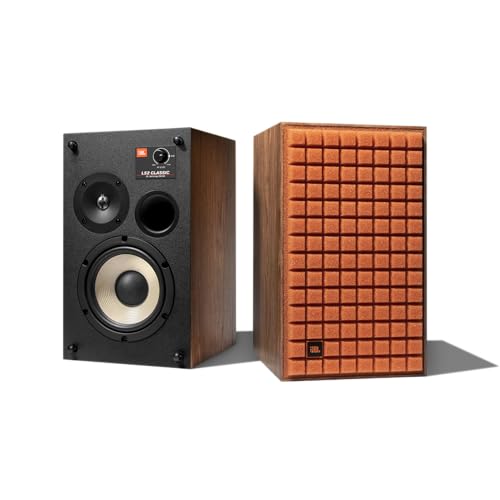
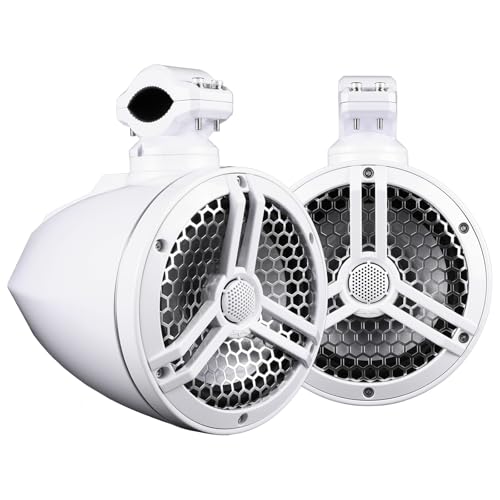
Best full range speakers give you one driver that covers the band from low notes to high notes, with no crossover splitting the sound between a woofer and a tweeter. That single-driver design is the heart of this guide. A full-range driver keeps the voice and the instruments on one cone, which many listeners describe as a direct and coherent sound.
The listings in this guide use the words full range in two ways, and it helps to know the difference before you buy. Some picks are raw full-range drivers, such as the Dayton Audio PC83-8 and the PRV AUDIO 8FR250, which you mount in a cabinet you build or buy. Other picks are finished speakers, such as the KICKER KB6B pair, which arrive ready to wire to an amplifier and mount on a wall. Both kinds belong here, because both are sold as full-range speakers, but they suit different buyers.
This guide compares published specs and design traits. We have not used these speakers ourselves, so every claim below traces to a spec printed in the listing title or to a basic design trait of the driver size, cone material, and impedance. Use the comparison table to match a pick to your room, your amplifier, and your build plans.

In this guide
Quick picks: best full range speakers
| # | Product | Where to buy |
|---|---|---|
| 1 | PRV AUDIO 8FR250 | Check on Amazon |
| 2 | PRV AUDIO 6FR200 | Check on Amazon |
| 3 | Dayton Audio PC83-8 | Check on Amazon |
| 4 | Dayton Audio ND91-4 | Check on Amazon |
| 5 | Visaton R10S | Check on Amazon |
| 6 | KICKER KB6B | Check on Amazon |
How the picks were chosen
We started with listings that name a full-range model in the title, then kept only the ones where the brand and every model code in the title match the product. A listing that called a midrange driver a full-range speaker was dropped, and so were multi-way bookshelf speakers, soundbars, subwoofers, and portable Bluetooth speakers that never claim full-range design.
We favoured a spread of sizes and uses: an 8 inch pro audio driver, a 6 inch pro audio driver, small 3 inch and 3.5 inch drivers for compact builds, a 4 inch driver for small cabinets, and a finished weatherproof pair for indoor and outdoor rooms. That spread covers DIY cabinet builders, pro audio rigs, and buyers who want a finished pair with no build work.
Power handling, impedance, sensitivity, and cone material came straight from the listing titles. Where a title states no wattage, the table says so plainly instead of guessing a number. Sensitivity matters here because a full-range driver with a high sensitivity figure plays loud on modest amplifier power, while a small driver in a compact cabinet gives up deep bass in exchange for size.
Best full range speakers: the picks in detail
PRV AUDIO 8FR250 8 Inch Full Range Speaker
The PRV AUDIO 8FR250 is the big driver in this guide. Its 8 inch cone, 8 ohm impedance, 250 watt continuous program power, 125 watt RMS power, and 93.5 dB sensitivity suit pro audio systems, PA cabinets, and large DIY builds where output matters. It is sold as a single unit, so a stereo pair needs two units and a matching cabinet for each.
A sensitivity figure of 93.5 dB is high for a full-range driver, which means this driver can play loud without demanding huge amplifier power. The 8 inch cone moves more air than the smaller drivers in this guide, so it carries more weight in the low end before a subwoofer enters the picture. Builders who want a loud single-driver rig with real presence start here.
Key specs: 8 inch full-range driver; 8 Ohms; 250 watts continuous program power; 125 watts RMS; 93.5 dB sensitivity; sold as a single unit.
Strengths:
- High 93.5 dB sensitivity plays loud on modest amplifier power.
- 8 inch cone gives more low-end weight than smaller full-range drivers.
- 250 watt program handling suits pro audio and PA cabinet builds.
Trade-offs:
- Sold as a single unit, so a pair needs two units and two cabinets.
- Needs a cabinet and crossover-free wiring plan; it is a raw driver, not a finished speaker.
- 8 inch size needs a larger cabinet than the compact drivers in this guide.
Who it fits: DIY builders, pro audio rigs, and PA cabinets where loud single-driver output matters.
Best for: loud pro audio and large DIY builds. Not suited for: small rooms or buyers who want a finished speaker with no build work.
Check price on Amazon: PRV AUDIO 8FR250
PRV AUDIO 6FR200 6 Inch Full Range Speaker
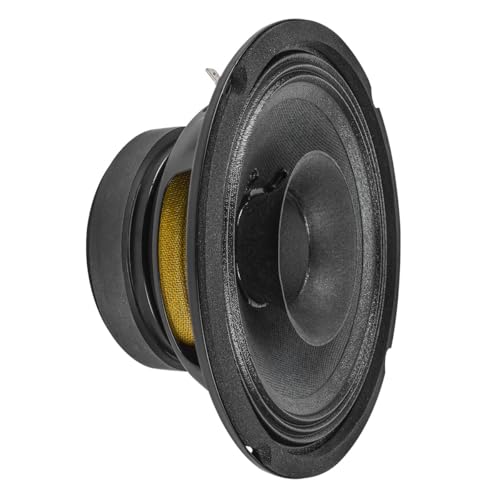
The PRV AUDIO 6FR200 is the 6 inch sibling of the 8FR250, with the same 8 ohm impedance and the same pro audio design in a smaller frame. Its title lists 200 watts continuous program power, 100 watts RMS power, and 92.5 dB sensitivity. It is sold as a single unit for pro audio systems.
The 6 inch size is a useful middle step. It fits cabinets that are too small for an 8 inch driver while keeping the high sensitivity that makes PRV AUDIO drivers easy to drive. A pair of 6FR200 units in compact cabinets gives a coherent single-driver sound for a workshop, a garage rig, or a small PA setup.
Key specs: 6 inch full-range driver; 8 Ohms; 200 watts continuous program power; 100 watts RMS; 92.5 dB sensitivity; sold as a single unit.
Strengths:
- 92.5 dB sensitivity keeps amplifier demands modest.
- 6 inch size fits cabinets too small for an 8 inch driver.
- 200 watt program handling suits small PA and workshop rigs.
Trade-offs:
- Sold as a single unit, so a pair needs two units.
- Needs a cabinet; it is a raw driver, not a finished speaker.
- 6 inch cone gives up some low-end weight next to the 8 inch 8FR250.
Who it fits: Builders who want pro audio output in a cabinet smaller than an 8 inch driver needs.
Best for: compact PA cabinets and workshop rigs. Not suited for: buyers who want a finished speaker with no build work.
Check price on Amazon: PRV AUDIO 6FR200

Dayton Audio PC83-8 3 Inch Full-Range Poly Cone Driver
The Dayton Audio PC83-8 is a 3 inch full-range driver with a poly cone and an 8 ohm impedance. Its small size suits compact cabinets, desktop builds, line arrays, and small sealed boxes where a larger driver will not fit. Dayton Audio is a familiar name in DIY audio, and the PC83-8 is one of its small full-range drivers.
A 3 inch poly cone keeps the build light and simple, and the poly cone material resists moisture better than a paper cone. The 8 ohm impedance is an easy load for most amplifiers. This driver works well as the heart of a small single-driver speaker, or as one of several identical drivers in a line array.
Key specs: 3 inch full-range poly cone driver; 8 Ohms; Dayton Audio PC83-8.
Strengths:
- Compact 3 inch size fits small cabinets, desktops, and line arrays.
- Poly cone resists moisture better than a paper cone.
- 8 ohm impedance is an easy load for most amplifiers.
Trade-offs:
- 3 inch cone gives limited deep bass on its own.
- Small size limits maximum output next to larger drivers.
- Needs a cabinet and, in larger rooms, a subwoofer for deep bass.
Who it fits: DIY builders making compact speakers, desktop rigs, or line arrays.
Best for: compact builds and small-room single-driver speakers. Not suited for: large rooms or bass-heavy use without a subwoofer.
Check price on Amazon: Dayton Audio PC83-8

Dayton Audio ND91-4 3-1/2 Inch Aluminum Cone Full-Range Neo Driver
The Dayton Audio ND91-4 is a 3.5 inch full-range driver with an aluminum cone, a neo magnet, and a 4 ohm impedance. The aluminum cone is rigid for its weight, which suits a small driver that must stay controlled across the band. The neo magnet keeps the motor compact behind the cone.
The 4 ohm impedance is the key detail to plan around. A 4 ohm driver draws more current than an 8 ohm driver, so your amplifier must support a 4 ohm load. Many modern amplifiers do, but a small amp built only for 8 ohm loads is a poor match. Check your amplifier specs before you order.
Key specs: 3-1/2 inch aluminum cone full-range driver; neo magnet; 4 Ohms; Dayton Audio ND91-4.
Strengths:
- Aluminum cone is rigid and suits a small driver working across the band.
- Neo magnet keeps the motor compact.
- 3.5 inch size suits compact cabinets with more cone area than a 3 inch driver.
Trade-offs:
- 4 ohm load needs an amplifier that supports 4 ohms.
- Small cone gives limited deep bass without a subwoofer.
- Aluminum cone calls for careful cabinet damping in a DIY build.
Who it fits: DIY builders who want a rigid aluminum-cone driver and own a 4 ohm capable amplifier.
Best for: compact DIY builds with a 4 ohm capable amplifier. Not suited for: amplifiers built only for 8 ohm loads.
Check price on Amazon: Dayton Audio ND91-4

Visaton R10S 4 Inch Full Range Speaker
The Visaton R10S is a 4 inch full-range speaker with an 8 ohm impedance. Its 4 inch size sits between the compact 3 inch drivers and the large pro audio drivers in this guide, which makes it a flexible pick for small sealed or ported cabinets, desktop speakers, and small room rigs.
A 4 inch cone gives more low-end presence than a 3 inch driver while still fitting a cabinet that sits on a desk or a shelf. The 8 ohm impedance suits a wide range of amplifiers, from small desktop amps to full-size receivers. It is a straightforward single-driver pick with no complex wiring.
Key specs: 4 inch full-range speaker; 8 Ohms; Visaton R10S.
Strengths:
- 4 inch size balances compact cabinets with fuller sound than a 3 inch driver.
- 8 ohm impedance suits a wide range of amplifiers.
- Simple single-driver design with no crossover to wire.
Trade-offs:
- 4 inch cone still gives limited deep bass in a large room.
- Needs a cabinet; it is a driver, not a finished speaker.
- Title states no wattage, so plan amplifier power from your room size, not from a printed figure.
Who it fits: DIY builders who want a mid-size full-range driver for a desk, shelf, or small room.
Best for: small-room DIY speakers and desktop builds. Not suited for: large rooms or deep bass without a subwoofer.
Check price on Amazon: Visaton R10S
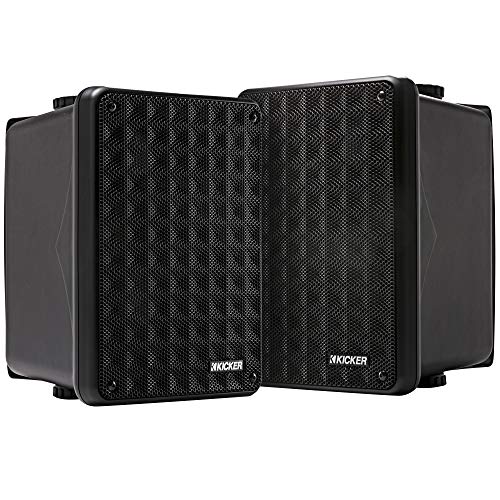
KICKER KB6B 2-Way Full Range Indoor Outdoor Speakers
The KICKER KB6B is the finished pair in this guide. Its title lists a 6.5 inch woofer, a 2×5 inch horn tweeter, weatherproof build, and indoor plus outdoor use for a patio, garage, poolside, or in-home room. It is sold as a pair, so one order covers a stereo setup.
Weatherproof build is the reason to pick the KB6B over a raw driver. You can mount the pair on a patio wall or in a garage without building a cabinet or worrying about damp air. The horn tweeter helps high notes carry in open outdoor spaces, where a small soft dome can get lost. Indoors, the same pair works as a straightforward stereo set.
Note the design difference: the KB6B is a 2-way speaker, so a woofer and a tweeter share the work, while the other picks in this guide use one driver for the full band. The listing still calls it a full-range speaker because the pair is voiced to cover the full band. If single-driver purity matters most to you, pick a raw driver above. If a finished weatherproof pair matters more, the KB6B is the pick.
Key specs: Pair of 2-way full-range speakers; 6.5 inch woofer; 2×5 inch horn tweeter; weatherproof; indoor and outdoor use; KICKER KB6B.
Strengths:
- Finished weatherproof pair needs no cabinet build.
- Horn tweeter helps high notes carry in open outdoor spaces.
- One order covers a stereo pair for patio, garage, or in-home use.
Trade-offs:
- 2-way design splits sound between woofer and tweeter, unlike single-driver picks.
- Needs a separate amplifier; no built-in amp is listed.
- Outdoor mounting needs proper brackets and wiring care.
Who it fits: Buyers who want a finished weatherproof pair for a patio, garage, poolside, or in-home room.
Best for: outdoor rooms and buyers who want a finished pair. Not suited for: single-driver purists who want one cone for the full band.
Check price on Amazon: KICKER KB6B
Comparison table
| Model | Key feature | Memory and power | Who it fits |
|---|---|---|---|
| PRV AUDIO 8FR250 | 8 inch driver, 93.5 dB | 250 W program / 125 W RMS | Loud pro audio and large DIY builds |
| PRV AUDIO 6FR200 | 6 inch driver, 92.5 dB | 200 W program / 100 W RMS | Compact PA cabinets and workshop rigs |
| Dayton Audio PC83-8 | 3 inch poly cone, 8 Ohms | Not listed | Compact builds, desktops, line arrays |
| Dayton Audio ND91-4 | 3.5 inch aluminum cone, neo | Not listed | Compact DIY builds, 4 ohm amps |
| Visaton R10S | 4 inch driver, 8 Ohms | Not listed | Small-room DIY and desktop builds |
| KICKER KB6B | 6.5 inch woofer, horn tweeter | Not listed | Outdoor rooms, finished pair buyers |
Buying guide
Start with the use, not the size. A DIY builder needs a raw driver and a cabinet plan, while a buyer who wants music on a patio needs a finished weatherproof pair. The PRV AUDIO drivers and the Dayton Audio and Visaton drivers are raw drivers. The KICKER KB6B is a finished pair. Mixing up those two kinds is the most common buying error in this category.
Check the cone material against the room. A poly cone, such as the one on the Dayton Audio PC83-8, resists moisture and suits a garage, a workshop, or a damp room. An aluminum cone, such as the one on the Dayton Audio ND91-4, is rigid and suits a small driver that must stay controlled across the band. A paper cone is light and responsive, but it dislikes damp air. Match the material to the room, not just to the look.
Match impedance to your amplifier. Four of the six picks are 8 ohm loads, which most amplifiers support. The Dayton Audio ND91-4 is a 4 ohm driver, so it needs an amplifier that supports 4 ohm loads. An amplifier built only for 8 ohm loads can overheat or shut down on a 4 ohm driver, so check the amplifier specs before you order.
Size sets the bass limit. An 8 inch cone moves more air than a 3 inch cone, so the PRV AUDIO 8FR250 carries more low-end weight than the Dayton Audio PC83-8. No single full-range driver in this guide replaces a subwoofer for deep bass in a large room. If deep bass matters, plan for a subwoofer alongside the full-range pair.
Read the listing title in full before you buy. Some full-range listings sell a single unit, such as both PRV AUDIO drivers, while others sell a pair, such as the KICKER KB6B. A single unit needs a second unit for stereo, and a pair needs no second order. The title also tells you the impedance, the size, and the power handling, so it is the most reliable source for matching a driver to your build.
Use and care
Raw drivers need a cabinet before they can play. A driver mounted on a bare bench gives thin sound and can suffer damage at high volume, because the front and rear sound waves cancel each other without a baffle. Mount each driver in a sealed or ported cabinet matched to its size, and seal the edges so air does not leak around the frame.
Keep paper and poly cones clean and dry. A soft brush clears dust from a cone, and a dry cloth wipes the frame. Do not press the cone centre with a finger, and do not spray cleaner straight onto a driver. For the weatherproof KICKER pair, a damp cloth is enough for the cabinet, and the mounting brackets deserve a check each season for rust or loose screws.
Store spare drivers in their boxes, cone up, away from heavy items. A cone dent changes the sound, and a bent frame can rub the voice coil. If a driver starts to buzz or rattle, check the mounting screws first, then the cabinet seals, before you blame the driver itself.
Many builders play new drivers at moderate volume for the first hours before judging the sound. A fresh suspension can feel stiff out of the box, so give the driver some easy playing time, then listen again. Keep the volume moderate during that period, and do not push a new driver to its limits on day one.
Common mistakes
Buying a midrange driver by mistake is the first error. A midrange driver covers only the middle band, so it needs a woofer and a tweeter to cover the full band. Check that the title says full range and that the model code matches the listing you want. The Skar Audio midrange listings in our search looked close, but their titles say midrange, so they did not make this guide.
Ignoring impedance is the second error. A 4 ohm driver on an amp built only for 8 ohm loads is a poor match, and an 8 ohm driver on a 4 ohm only amp wastes power. The impedance figure is printed in every title in this guide, so there is no reason to guess.
Expecting deep bass from a 3 inch driver is the third error. A small full-range driver gives clear mids and highs in a compact cabinet, but deep bass needs cone area and cabinet volume. Pair a small driver with a subwoofer, or step up to a 6 inch or 8 inch driver, if bass weight matters to you.
Forgetting the second unit is the fourth error. Both PRV AUDIO drivers sell as a single unit. A stereo setup needs two. Count the units in your cart before you check out, and count the cabinets too, so the pair arrives together.
Final recommendation
For most DIY builders, the Visaton R10S is the balanced starting point: a 4 inch full-range driver with an 8 ohm load, a size that fits a desk or shelf cabinet, and no complex wiring. If you want maximum output for a pro audio rig, step up to the PRV AUDIO 8FR250, and if you want a finished pair with no build work, the KICKER KB6B is the only finished pair in this guide.
Whichever pick you choose, match the impedance to your amplifier, count single versus pair listings before you order, and plan a cabinet or a mounting spot first. A full-range speaker rewards careful matching more than a big budget, and the six picks above cover the main sizes and uses without forcing you into a multi-way design.
If you are still unsure, start small and learn the sound before you spend more. A 3 inch or 4 inch driver in a simple sealed box costs little, teaches you how a cabinet shapes the sound, and tells you whether the single-driver voice suits your ears. You can move up to a larger PRV AUDIO driver later, or add a subwoofer, once you know what your room is missing. The best full range speakers are the ones that fit your room, your amplifier, and your plans, not the ones with the biggest numbers on the listing.
Full-range drivers vs multi-way speakers
A full-range driver uses one cone for the whole band, so there is no crossover point where the sound hands over from a woofer to a tweeter. Fans of the design point to a coherent voice and a simple build with no crossover parts to wire. Critics point to the physics: one cone must be light enough for high notes and large enough for low notes, so a single driver always trades deep bass against high-end detail.
A multi-way speaker splits the band across two or three drivers, so each driver works in a narrow range. That split gives deeper bass and cleaner highs in a finished speaker, but it adds crossover parts and a handover point between drivers. The KICKER KB6B in this guide is a 2-way speaker, so it sits on the multi-way side while still being sold as a full-range pair. The other five picks are true single-driver full-range units.
Your choice comes down to build style. A single-driver build is simpler to wire and tune, and it suits listeners who value a direct vocal sound. A multi-way finished pair is simpler to buy and mount, and it suits rooms where bass weight and outdoor use matter more than driver purity. Neither design is wrong; they solve different problems.
Matching impedance and power
Impedance, measured in Ohms, tells you how much current a driver draws from an amplifier. An 8 ohm driver draws less current than a 4 ohm driver at the same volume, so most amplifiers support 8 ohm loads with ease. The Dayton Audio ND91-4 is the only 4 ohm pick in this guide, and it needs an amplifier that lists 4 ohm support.
Power handling, measured in watts, tells you how much power a driver can take without damage. The PRV AUDIO titles print both program power and RMS power: 250 watts program and 125 watts RMS for the 8FR250, and 200 watts program and 100 watts RMS for the 6FR200. RMS is the steady figure to plan around, while program power is the short peak figure. The Dayton Audio and Visaton titles print no wattage, so the table says so plainly.
Sensitivity, measured in dB, tells you how loud a driver plays on a given amount of power. The 8FR250 lists 93.5 dB and the 6FR200 lists 92.5 dB, which are high figures that suit modest amplifiers. A driver with a lower sensitivity figure needs more amplifier power for the same volume. When you compare two drivers, check all three figures together, because a high wattage figure means little if the sensitivity is low and the amplifier is small.
Where full-range speakers shine
A full-range driver shines where the voice matters most. Because one cone carries the voice from low notes to high notes, a vocal track stays on a single point of sound instead of splitting across a woofer and a tweeter. That trait suits small rooms, desktop nearfield listening, and vocal-heavy music, where a listener sits close and hears the handover point of a multi-way speaker most clearly.
The design also shines in DIY culture. A single-driver build needs no crossover, so a first-time builder can focus on the cabinet: a sealed box for tight sound, a ported box for more bass, or a line array of several small drivers for a tall, even sound field. The Dayton Audio PC83-8 suits a line array of identical drivers, while the Visaton R10S suits a small sealed box on a desk. Each build teaches the same lesson: the cabinet shapes the sound as much as the driver does.
Outdoor and workshop rooms are a third home for full-range speakers. The KICKER KB6B pair mounts on a patio wall and plays through damp air, while the PRV AUDIO drivers fill a garage or workshop with loud, clear sound from a simple cabinet. In both cases the appeal is the same: a simple design with few parts to fail, playing loud enough for an open space without a complex setup.
Frequently asked questions
What is a full-range speaker?
A full-range speaker uses one driver to cover the band from low notes to high notes, with no crossover splitting the sound. Some listings also call a finished speaker full range when the pair is voiced to cover the full band, such as the KICKER KB6B in this guide.
Do full-range speakers need a subwoofer?
It depends on the size and the room. A small 3 inch driver in a compact cabinet gives limited deep bass, so a subwoofer helps in a larger room. An 8 inch driver such as the PRV AUDIO 8FR250 carries more low-end weight, but no single driver in this guide replaces a subwoofer for the deepest bass.
What impedance should I choose?
Most amplifiers support 8 ohm loads, and five of the six picks in this guide are 8 ohm or part of a finished pair. The Dayton Audio ND91-4 is a 4 ohm driver, so it needs an amplifier that supports 4 ohm loads. Check your amplifier specs before you order a 4 ohm driver.
Can I use a full-range driver in a car?
Some full-range drivers are sold for car audio, such as the Rockford Fosgate and DS18 models in our search, but the picks in this guide focus on home, DIY, pro audio, and outdoor rooms. A car install needs a driver sized for the door or dash, plus wiring that suits the car, so check the size and impedance first.
Are full-range drivers good for a first DIY build?
Yes, because a single-driver build has no crossover to wire and no handover point to tune. A 3 inch or 4 inch driver in a small sealed cabinet is a common first build. Start with the Visaton R10S or the Dayton Audio PC83-8, plan the cabinet size first, and add a subwoofer later if you want deeper bass.
Why do some full-range listings sell a single unit?
Pro audio drivers such as the PRV AUDIO 8FR250 and 6FR200 sell as a single unit because builders buy the exact count they need for a cabinet or a line array. A stereo pair needs two units. Finished pairs such as the KICKER KB6B sell as a pair, so one order covers stereo.
Can a full-range speaker replace a bookshelf pair?
It can, if the use matches. A finished full-range pair such as the KICKER KB6B works as a stereo set in a patio or a garage. A raw full-range driver needs a cabinet first, so it replaces a bookshelf speaker only after a build. A 2-way bookshelf pair usually gives deeper bass than a small single driver, so keep a subwoofer in mind if bass weight matters.
What cabinet size does a full-range driver need?
It depends on the driver size and the cabinet design. A 3 inch driver such as the Dayton Audio PC83-8 fits a small sealed box, while an 8 inch driver such as the PRV AUDIO 8FR250 needs a larger cabinet to breathe. A sealed box gives tight sound and a ported box gives more bass from the same driver. Check the driver size first, then pick a cabinet plan that matches it, and seal every joint so air does not leak.
More from Reviewstook: Best Audiophile Speakers of All Time, Best Home Theater Speakers, Best Bose Speakers.