reviewstook.com is reader-supported. When you buy through links on our site, we may earn an affiliate commission.
Where to buy
A sprinter leaves the blocks in less than a blink, a border collie changes direction mid-stride, and a skateboard leaves a ramp for exactly as long as gravity allows. Finding the best digital cameras for action shots means finding bodies that respect that violence of timing: autofocus that clings to a moving subject, buffers that swallow long bursts without choking, and shutters quick enough to slice motion into something sharp rather than something suggested.
Two families share this guide, and they solve opposite halves of the problem. Mirrorless cameras with interchangeable lenses bring deep buffers, subject-detection autofocus and fast glass to sidelines, tracks and dog parks. Compact action cameras bring waterproof toughness and a fixed, everything-in-focus lens to places where the photographer is moving as hard as the subject — on a bike, in surf, strapped to a helmet. Neither family substitutes for the other, and the honest buyer decides first which kind of movement fills their weekends.
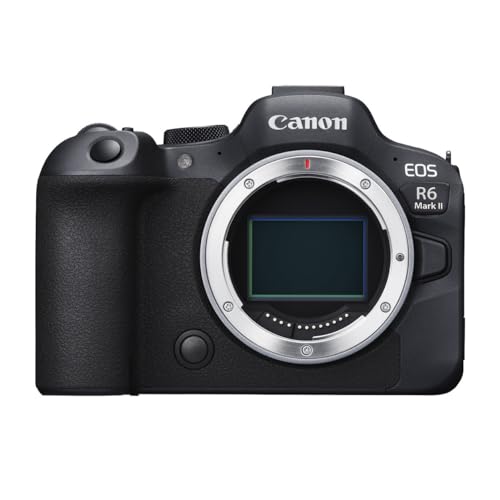
- Canon EOS R6 Mark II: linked pick, full-frame mirrorless whose subject-detection autofocus was built for sport
- Sony Alpha 7 IV: linked pick, full-frame body whose real-time eye autofocus flatters fast portrait-style action
- Nikon Z50 II with Two Lenses: linked pick, compact mirrorless sold with two zooms, an action apprenticeship in one box
- GoPro HERO13 Black: linked pick, waterproof action camera that freezes the rider, surfer and skier from inside the sport
- DJI Osmo Action 5 Pro: linked pick, action camera whose larger sensor keeps dusk sessions and shaded trails usable
- Panasonic LUMIX S5II: linked pick, full-frame body whose phase hybrid autofocus finally gave Panasonic fans an action option
Technique threads through every section below because action photography punishes equipment faith. A camera can track a runner beautifully and still return mush if the shutter drags, the panning is jerky, or the photographer stood where the background turned every frame into visual noise. Read the picks as instruments inside a method: fast shutter discipline, pre-focusing, anticipation of peak moments, and backgrounds chosen before the subject arrives. The bodies here reward that method generously, and expose its absence just as clearly.
Key Takeaways
- Tracking autofocus and buffer depth matter more for action stills than headline megapixels ever will.
- Electronic shutters reach extraordinary burst speeds but can warp fast limbs and wheels; mechanical shutters stay honest at lower rates.
- Action cameras freeze the photographer’s own movement, while mirrorless bodies freeze distant subjects through fast lenses.
- Pre-focus on the spot where the peak moment happens and let the subject arrive into your sharpness.
- A shutter near 1/2000 second stops most running and cycling; wings, bats and wheels may demand even faster.
- Every pick below is linked from our verified pool, so names and identifiers can be checked directly at the listing.
In this guide
Quick Picks
| Pick | Badge | Why it earns its place |
|---|---|---|
| Canon EOS R6 Mark II | Fastest tracking all-rounder | Deep buffer, animal and vehicle detection, and bursts that keep calculating focus between frames. |
| Sony Alpha 7 IV | Steadiest eye-tracking hybrid | Real-time eye autofocus for people, animals and birds, with a mature lens catalogue behind it. |
| Nikon Z50 II with Two Lenses | Lightweight kit for learning speed | Subject detection inherited from bigger Nikons, plus kit zooms covering wide scenes to distant play. |
| GoPro HERO13 Black | Toughest participant camera | Burst photo modes, rugged waterproofing and a lens that keeps everything from glove to horizon sharp. |
| DJI Osmo Action 5 Pro | Low-light action camera pick | A bigger sensor than most action rivals, strong stabilisation and long battery life for evening sport. |
| Panasonic LUMIX S5II | Phase-detect value for movers | Phase hybrid autofocus, strong stabilisation and a friendlier price path into full-frame action work. |
How did we separate genuine action tools from fast-sounding spec sheets?
Burst rate was interrogated rather than admired. A camera advertising a huge frame rate earns nothing here unless its buffer sustains that rate long enough to cover a play developing — a dive, a jump sequence, a rally — and unless its autofocus keeps calculating between frames instead of coasting on the first lock. We favoured bodies whose tracking modes name the subjects our readers actually chase: people, animals, vehicles and birds, because generic contrast hunting loses a galloping dog against grass every single time.
Shutter behaviour formed the second filter. Rolling-shutter distortion on electronic modes, blackout between frames, and the practical difference between a viewfinder that shows the moment and one that replays the recent past all decided rankings as much as any frame-rate figure. A photographer timing a hurdle clearance needs to see the hurdle, not a slideshow of where the athlete used to be.
The third filter was honesty about lenses. No body on this list freezes a distant subject by itself; it needs a fast-aperture lens that lets the shutter stay quick in fading light. Picks were judged as systems — what glass exists for the mount, what that glass costs in weight on a sideline, and whether the body’s stabilisation helps a panning photographer or fights them. Action cameras were judged by the opposite standard: how completely they remove lens decisions so the wearer can simply move.

Canon EOS R6 Mark II — Fastest tracking all-rounder
Canon’s R6 Mark II treats a moving subject less like a target and more like an appointment it refuses to miss. Its autofocus recognises people, animals and vehicles, then holds the eye or the helmet or the dog’s head while the subject crosses clutter, changes pace and turns away. For the parent on a touchline or the volunteer photographing the local cycling race, that recognition is the difference between reviewing a sequence and excavating one good frame from forty near misses.
Consider the dog-agility round, where this body earns its badge in the messiest conditions amateur action offers. A terrier explodes from a tunnel, veers toward a jump at an angle no handler predicted, and crosses a background of legs, banners and other dogs. The R6 Mark II’s animal detection keeps its grip through that chaos, the electronic shutter pours frames into a buffer deep enough to cover the whole obstacle sequence, and the photographer comes home with the airborne moment instead of the approach and the landing with nothing between.
Shutter choice becomes a creative decision rather than a limitation here. The electronic mode runs extremely fast for silent work at events where a clattering shutter draws looks, while the mechanical mode keeps rolling-shutter warping away from spinning wheels and flailing limbs. Wise owners match mode to subject: electronic for runners and riders, mechanical for bats, rackets and anything that rotates or whips.
Handling supports long days of waiting for short seconds of action. The grip fills a gloved hand, the joystick nudges the focus point without a thumb expedition, and dual card slots let a nervous shooter mirror every frame. Battery appetite grows with heavy electronic bursting, so a spare in the pocket is standard sideline kit rather than paranoia.
The honest cost of this performance is the lens bill that follows the body home. Fast telephoto glass for the RF mount is superb and priced like it, and the body’s talents only fully surface when the lens feeding it opens wide enough to keep shutter speeds high at dusk. Budget for the pairing, not the purchase, and the camera stops being an expense and becomes a system.
- Class: Full-frame mirrorless, interchangeable lenses
- Action signature: Subject detection for people, animals and vehicles
- Burst character: Very fast electronic bursts with a deep buffer
- Stabilisation: In-body, helpful for panning at slower speeds
- Cards: Dual slots for mirrored sideline insurance
Strengths
- Tracking that survives cluttered, chaotic backgrounds
- Buffer deep enough for whole jump sequences
- Mechanical shutter available when limbs whip
Trade-offs
- Fast RF telephoto lenses carry serious prices
- Electronic bursts drain batteries quickly
- Rolling shutter can bend wheels in electronic mode
Best for: sideline photographers chasing dogs, riders and team sport
Not suited for: buyers expecting the kit lens to freeze dusk football
Keep one habit with this body and it will repay you weekly: set the tracking case to your sport before the whistle, not during the first breakaway. The R6 Mark II remembers settings faithfully, and the photographer who banks a configuration per venue — track, field, arena — stops menu-diving at the exact moments the camera was bought to capture.

Sony Alpha 7 IV — Steadiest eye-tracking hybrid
Sony’s Alpha 7 IV built its action reputation on a single, almost unfair trick: it finds eyes. Human eyes, animal eyes, bird eyes — the camera locates them inside a moving head and parks focus there with a persistence that feels less like automation and more like an assistant who never blinks. Action portraits, where a face must stay perfect while everything else explodes into motion blur, are this body’s home ground.
Picture a martial-arts grading shot in a hired hall with miserable light. Strikes arrive faster than a photographer can consciously track, heads snap around, and the background is a soup of white uniforms. The a7 IV’s eye detection rides the student’s face through combinations, the ten-frames-per-second burst covers each technique, and the frames that matter — contact, extension, expression — arrive sharp exactly where a viewer’s own eye travels first.
Its burst rate is the modest figure on this list, and the guide will not pretend otherwise. Ten frames each second samples a jump less densely than Canon’s torrent, so timing matters more: anticipate the peak rather than carpet-bombing it. Many experienced action shooters prefer exactly that discipline, and the a7 IV rewards it with files of lovely depth from its 33-megapixel sensor — enough resolution to crop a too-distant subject into a usable frame.
The lens argument may be Sony’s strongest. The E mount has been open to third-party makers for years, so fast zooms and primes exist at several price levels, and a buyer can climb from an affordable fast zoom toward professional glass without changing bodies. For action work that economics matters enormously, because the lens usually decides the photograph while the body merely enables it.
Video quietly strengthens the case for hybrid shooters who film the same events they photograph. Strong 4K recording and the same eye-tracking intelligence carry across modes, so a coach analysing technique or a parent cutting a highlights reel gets coherent quality from one bag. Heat and record limits ask for sensible management on long summer days, a fair trade at this tier.
- Class: Full-frame mirrorless, 33-megapixel class sensor
- Action signature: Real-time eye autofocus for people, animals, birds
- Burst character: Around ten frames per second, timing-friendly
- Lens mount: Sony E, with deep third-party support
- Hybrid note: Capable 4K video sharing the same tracking brain
Strengths
- Eye focus that survives spinning, striking subjects
- Cropping headroom from a generous sensor
- Lens catalogue at every budget level
Trade-offs
- Burst rate trails the fastest rivals here
- Peak-moment timing matters more
- Menus reward an evening of customisation
Best for: martial arts, dance, portraits in motion and hybrid shooters
Not suited for: spray-and-pray shooters who refuse to time a peak
Assign the eye-autofocus toggle to a custom button on day one. Switching between human and animal detection mid-event — the dog show that follows the junior football — takes one press instead of a menu pilgrimage, and the a7 IV’s customisation depth exists precisely so its intelligence is reachable at the speed of the subjects it tracks.

Nikon Z50 II with Two Lenses — Lightweight kit for learning speed
The Z50 II kit is the apprentice’s answer to action photography: a small APS-C body carrying subject-detection autofocus inherited from Nikon’s professional line, bundled with two zooms that together span the walk to the park and the throw from the far touchline. Nothing here outruns the full-frame flagships, and that is not the assignment. The assignment is a young photographer learning to freeze motion without carrying a bag that discourages the learning.
Watch it work at a school sports day, the natural habitat of this kit. The standard zoom covers the podium, the sack race and the medal grin; the longer zoom reaches the far bend of the running track where the 200-metre final resolves. Subject detection keeps young faces locked as they sprint toward the lens — historically the shot that humiliates beginner autofocus — and the burst is quick enough to catch the lean at the tape.
Size is a genuine action feature that spec sheets underrate. A camera light enough to hold at eye level through a whole tournament produces more sharp frames than a heavier marvel lowered to waist height by aching arms in the second half. The Z50 II’s grip, dials and touchscreen keep settings reachable while the photographer’s attention stays on the field, and its colour presets let a beginner share finish-line shots before the bus leaves.
The kit zooms impose the honest ceiling. Their apertures narrow at the long end, so evening matches under weak floodlights force sensitivity upward and shutter speeds downward at exactly the wrong moment. Treat the bundle as the training ground it is: master tracking, panning and positioning with it, then let one fast prime or a brighter zoom become the graduation present the system grows toward.
Nikon’s small-body ergonomics deserve a sentence of praise from anyone who has fumbled a rival at a crucial play. The mode dial clicks with certainty, the viewfinder sits comfortably against glasses, and the whole kit packs into a schoolbag-sized case. Action photography begins with being present, and this is the kit most likely to actually be there.
- Class: APS-C mirrorless with two kit zooms
- Action signature: Subject detection inherited from professional Nikons
- Coverage: Wide scenes to distant play across the two lenses
- Carry: Light enough for all-day tournaments
- Growth path: Brighter Z-mount glass when skills outgrow the kit
Strengths
- Two-lens coverage without a second purchase
- Detection autofocus in a genuinely small body
- Easy colour presets for instant sharing
Trade-offs
- Kit zoom apertures limit dusk action
- Smaller sensor trails full-frame in dim light
- Buffer suits school sport, not professional volume
Best for: students, school sport and families learning action technique
Not suited for: floodlit evening leagues as the main assignment
Learn panning on this kit before upgrading anything. A slow-shutter pan of a cyclist at the park — subject crisp, background streaming — teaches more about action photography in one afternoon than a season of standing still at maximum burst, and the Z50 II’s lightness makes the hundred attempts that lesson requires feel like play rather than labour.

GoPro HERO13 Black — Toughest participant camera
Every other pick in this guide watches the action; the HERO13 Black joins it. Bolted to a chest harness, a handlebar or a surfboard nose, it photographs sport from the participant’s skeleton outward — hands on grips, board on wave face, trail dropping away. Its fixed lens holds focus from near foreground to horizon, which removes the entire autofocus problem by declining to have one, and its photo bursts fire fast enough to harvest the exact frame a jump peaks.
Take the mountain-bike descent as its proving ground. A mirrorless camera at the trailside captures the rider beautifully for the half-second they pass; the GoPro rides the whole run, grabbing burst stills at the drop, the berm and the creek crossing, each frame sharp because depth of field does the focusing and stabilisation irons out the violence. The resulting images look like participation rather than observation, and for many riders that is the truer document of the day.
Waterproofing without a housing changes what action shots are attempted. Surf sessions, kayak rolls, rainy-season trail runs and the mud of a winter cyclocross all become photographic territory rather than equipment anxiety. The camera shrugs at impacts that would end a mirrorless afternoon, and its replaceable lens cover turns a scratched optic from a repair bill into a pocket-money swap.
The compromises are optical and absolute. A fixed wide lens means distant subjects stay distant; the start line photographed from the crowd will not become a portrait of the winner. Low light coaxes noise from the small sensor sooner than from the big bodies here, and stills, while strong, serve the burst-and-select workflow better than the single crafted exposure. This is a camera of moments seized wholesale.
Battery discipline separates happy owners from frustrated ones. Cold mornings and high frame rates shorten runs, so spares ride in an inside pocket where body heat keeps them willing. Mounts deserve the same respect: a loose adhesive pad at speed becomes litter and loss, while a tether costs almost nothing and has saved more GoPros than any case ever made.
- Class: Waterproof action camera, fixed wide lens
- Action signature: Fast photo bursts from the participant viewpoint
- Focus story: Deep depth of field, no hunting
- Durability: Waterproof body, replaceable lens cover
- Mounts: Chest, helmet, bar and board ecosystems
Strengths
- Photographs sports no sideline camera can enter
- Burst stills survive mud, spray and crashes
- Everything-in-focus lens removes AF anxiety
Trade-offs
- Distant subjects cannot be pulled closer
- Small sensor noise arrives early in dim light
- Cold and burst modes shorten battery runs
Best for: riders, surfers, skiers and anyone inside the action
Not suited for: touchline portraits of distant players
Set the burst before the run, not at the top of it with gloves on and friends waiting. The HERO13 rewards the rider who configures photo bursts and lens mode in the car park, then spends the descent thinking about the trail — the camera’s whole philosophy is that the sport comes first and the photography rides along prepared.

DJI Osmo Action 5 Pro — Low-light action camera pick
DJI’s Osmo Action 5 Pro attacks the action camera’s oldest weakness: the dying of the light. Its larger sensor gathers more of a dusk skatepark or a forest trail at last light, so photo bursts stay cleaner and colours keep their nerve after the GoPro class begins to smear. Evening is when amateur sport actually happens — after work, after school — and a camera that extends the usable day by an hour owns a real advantage.
Subject tracking, borrowed from DJI’s drone thinking, adds a trick no fixed-lens rival here matches in video and a useful discipline in stills: the camera keeps a chosen subject centred in its awareness as the wearer moves. For the solo rider filming and photographing themselves at a pump track, that awareness turns a static mounted camera into something resembling a patient friend with good reflexes.
Battery endurance is the quiet headline. Long sessions between charges suit endurance events — the sportive, the trail marathon support point, the full day at the bike park — where the camera must outlast the photographer’s own stamina. Dual screens help the solo creator frame self-portraits and start-line shots without a phone, and the magnetic mounting system swaps the camera between chest, bar and tripod faster than gloves can fumble a screw.
Stabilisation in stills-adjacent work matters more than newcomers expect. Burst frames from a vibrating handlebar or a running chest mount blur at the pixel level even when the shutter is fast, and DJI’s steadying hand keeps the harvest rate high. The photographer reviews a sequence and finds most frames usable, rather than mining a long burst for one sharp survivor.
Against the GoPro it trades a little ecosystem sprawl for sensor and stamina; against the mirrorless bodies it concedes lenses, reach and depth-of-field artistry entirely. Buy it as the evening-proof participant camera and it has no serious rival on this list. Buy it to photograph your child’s distant football match and it will disappoint you honestly and immediately.
- Class: Waterproof action camera, larger 1/1.3-inch class sensor
- Action signature: Subject tracking with strong stabilisation
- Endurance: Long battery life for full-day events
- Screens: Front and rear touch displays for solo framing
- Mounting: Magnetic quick-release across accessories
Strengths
- Cleanest dusk stills in the action-camera class
- Battery that outlasts whole event days
- Fast mount swaps with cold or gloved hands
Trade-offs
- Fixed lens, no reach toward distant play
- Accessory ecosystem younger than GoPro’s
- Tracking helps framing, not telephoto envy
Best for: evening riders, trail runners and endurance-event shooters
Not suited for: distant stadium subjects or shallow-depth portraits
Charge it the night before and mount it the morning of; this camera’s virtues are stamina virtues, and they evaporate when it starts the day half-fed. Owners who treat the Action 5 Pro like an endurance athlete — rested, fuelled, positioned early — get the all-day witness its designers intended, from first trailhead light to the last lap in the gloaming.

Panasonic LUMIX S5II — Phase-detect value for movers
For years Panasonic’s cameras were the ones action shooters admired and then walked past, undone by contrast-only autofocus that hunted at the worst moments. The S5II ended that era with phase hybrid focusing, and the result is a full-frame body that finally tracks a runner, a cyclist or a charging spaniel with conviction. It enters this guide as the value door into serious full-frame action, priced below the Canon while conceding remarkably little that matters on a touchline.
Follow it around a grassroots athletics meet. The phase system locks the sprinter early in the drive phase and holds through the dip, the burst is brisk rather than torrential, and the in-body stabilisation steadies a long lens during the slow pans that follow the distance races. Files from the 24-megapixel sensor print handsomely and crop politely, and the colour science flatters skin under mixed stadium light without a fight in editing.
Where the S5II charms working shooters is endurance ergonomics. The body shrugs at weather, the fan-assisted design philosophy of its sibling keeps heat anxiety low in the line, and battery life across a meet feels generous rather than rationed. Menus have grown friendlier than Panasonic veterans remember, and the joystick-plus-touch combination keeps the focus point moving at the speed of the meet.
Its tracking, while transformed, still asks a touch more technique than Canon’s set-and-forget brilliance. Busy backgrounds can seduce the focus point sideways, and the wise S5II owner constrains the focus area to the lane, the pitch zone, the part of the world where the subject legitimately lives. That small discipline closes most of the gap the price difference bought.
L-mount glass completes the value story. Sigma and Leica share the mount alongside Panasonic, so a fast zoom can arrive from whichever maker prices it kindest this season, and the alliance keeps growing. An action system is a decade of lenses wearing one body after another; the S5II is a sensible first body for that decade, and a hard one to regret.
- Class: Full-frame mirrorless, 24.2-megapixel class sensor
- Action signature: Phase hybrid autofocus, a first for its line
- Stabilisation: Strong in-body system aiding panned shots
- Mount: L-mount alliance with Sigma and Leica glass
- Build: Weather-sealed for grassroots conditions
Strengths
- Full-frame tracking at a friendlier entry price
- Stabilisation that flatters handheld telephoto work
- Three brands of lenses compete for your bag
Trade-offs
- Tracking needs focus-area discipline in clutter
- Burst speed is brisk, not class-leading
- Smaller used-market depth than Canon or Sony
Best for: grassroots athletics, club sport and value-led upgraders
Not suited for: shooters who refuse to manage a focus area
Draw a small map of your venue in the settings: limit the focus area to the strip of pitch where play actually happens, save it, and reuse it weekly. The S5II rewards that cartography with tracking that feels a class above its price, because you have removed the distractions its autofocus was politely trying to consider.
Why does shutter speed matter more than resolution when the subject moves?
Resolution describes how much detail a still subject surrenders; shutter speed decides whether a moving subject surrenders any at all. A forty-megapixel file of a winger at 1/250 second is a beautiful, enormous smear, while a modest sensor at 1/2000 second delivers the boot, the ball and the grimace in usable clarity. Motion blur is the one defect no editing suite can reverse, which is why action photographers speak about shutter speed the way sailors speak about weather — as the condition everything else obeys.
Working numbers help more than theory. Walkers and posed celebrations survive at 1/500 second. Runners, cyclists and playing children generally freeze near 1/1600 to 1/2000. Wingbeats, bat swings, spinning wheels and a dog shaking off pond water may demand 1/3200 or faster, and each step upward steals light that must be repaid through aperture or sensitivity. The picks in this guide earn their places by making those repayments painless: fast glass options, clean high-sensitivity files, and autofocus that stays accurate while the exposure triangle spins.
The deliberate exception proves the rule beautifully. Panning — tracking the subject with the camera while the shutter drags at 1/60 or 1/125 — trades a frozen background for a streaming one and turns speed into something visible rather than implied. Master the frozen frame first, because it is the grammar of action photography; then learn the pan, because it is the poetry. Bodies with good stabilisation and predictable tracking, like several above, make both dialects easier to speak.
How should you set up before the action starts?
Arrive early enough to photograph the warm-up, because the warm-up is where the afternoon’s settings are earned. Meter the light at the far end of the pitch as well as the near, decide whether the sky or the shade governs exposure, and set a shutter floor below which the camera may not wander. Continuous autofocus, a tracking mode matched to the subject species, and the burst set to a rate your cards and patience can sustain: these are decisions to bank before the whistle, while nothing is moving faster than a jog.
Position is the second setup, and it outranks every menu. Kneel where the background is clean — a hedge, a shadowed stand, open water — because a sharp subject against chaos reads as chaos with a sharp subject in it. Put the peak moment’s geography in front of you: the jump, the finish line, the goal mouth, the gate the dog must clear. Photographers of action do not chase moments around a venue; they choose a stage, prepare it, and let the performance arrive on schedule.
Finally, rehearse the failure plan. Format cards at home, never at the venue. Carry the spare battery where a hand finds it without eyes. Know which dial rescues exposure when clouds gut the light mid-play. The best digital cameras for action shots forgive many things, but they cannot format a card during a breakaway or invent a battery at the final whistle, and the photographers who look lucky are usually the ones who rehearsed.
What separates freezing a subject from telling its story?
A frozen frame proves the camera worked; a story frame proves the photographer saw. The difference usually lives at the edges of the peak moment — the intake of breath before the dive, the loser’s face as the winner’s arms rise, the small hand reaching for a father’s after the race. Action photographers who only harvest peaks fill cards with technically perfect, emotionally interchangeable frames, and editors yawn over them in any sport you care to name.
Shoot the approach and the aftermath with the same seriousness as the climax. The approach carries context: the runway, the gathering crowd, the weather closing in. The aftermath carries consequence: exhaustion, embrace, the medal bitten in disbelief. Bursts are for the climax, where milliseconds divide frames; the approach and aftermath reward single, considered exposures from a photographer watching like a journalist rather than harvesting like a machine.
Sequence thinking binds the three acts together. A triptych of approach, peak and aftermath, shot from one prepared position, tells more truth about an afternoon than thirty isolated peaks from six scattered spots. The bodies in this guide support both temperaments — their buffers serve the harvest, their handling serves the witness — and the mature action photographer learns to switch temperaments deliberately, several times a match, as the story’s temperature changes.
How do you photograph action after the light begins to fail?
Dusk is the action photographer’s examination, because every variable turns hostile together: shutter speeds beg for light that no longer exists, floodlights mix colours like a spilled paint box, and subjects move into shadow exactly when the play matters most. The defence begins with the lens. A fast aperture is not a luxury in this hour; it is the whole ballgame, and it is why this guide keeps returning buyers to glass before bodies when the budget forces a choice.
Sensitivity discipline comes next. Modern full-frame sensors — the Canon, Sony and Panasonic above — hold files together at sensitivities that film photographers would have considered witchcraft, and the wise shooter tests their own tolerance at home rather than discovering it on deadline. Know the setting where your files stop pleasing you, set it as the ceiling, and let the shutter fall where it must below that line; a slightly soft frame of the winning goal outlives a pin-sharp frame of nothing because the camera refused the light.
Action cameras play their own dusk card differently. The DJI’s larger sensor stretches the trail session into the gloaming, while the GoPro’s answer is to get closer — mounted on the participant, lit by the scene itself, forgiving of grain because the viewpoint is irreplaceable. Both answers respect the same law: after dark, proximity beats magnification, and the photographer who moves nearer needs less light than the one who zooms from the shadows.
Which action shots should beginners practise first?
Begin with the dog and the thrown ball, the finest free tuition in action photography. The subject is willing, the repetitions are endless, the light is a garden at noon, and the skills — tracking a crossing subject, timing the leap, kneeling for a clean background — transfer directly to every paid or precious subject that follows. A hundred frames of a leaping collie will teach autofocus modes more honestly than a manual read twice.
Graduate to the bicycle at the park gate, where panning can be rehearsed at walking risk. Track the rider smoothly, squeeze rather than jab the shutter, and review ruthlessly: the frame where the rider is crisp and the railings stream is worth the fifty that failed, and the failure pattern — usually a twist at the moment of exposure — is visible in every blurred frame like a signature. Correct the twist and the technique is yours for life.
Save the stadium for last, because it combines every difficulty at professional speed: distance, dusk, clutter, and subjects who will not repeat the moment for your benefit. By the time a beginner arrives there with the Z50 II kit or an S5II and one bright lens, the garden and the park gate have built the reflexes the stadium assumes. Action photography looks like a talent and behaves like a curriculum, and the cameras in this guide are graded, deliberately, from first lesson to final examination.
How do autofocus cases and zones change your hit rate?
Modern tracking systems offer a bewildering shelf of modes, and action shooters who leave everything on automatic-wide wonder why the camera falls in love with referees, fences and advertising boards. The focus area is a fence you build around the subject’s legitimate world. A wide zone suits a lone runner against sky; a small zone or single point suits a player threading through a crowd, because it forbids the camera from adopting every passer-by as a new best friend.
Subject-detection cases add a second layer of judgement: how stubbornly the camera should cling when something crosses in front, and how eagerly it should accelerate after a subject that changes pace. A goalkeeper’s dive wants maximum stubbornness through the traffic of the penalty box. A bird bursting from a hedge wants instant release and reacquisition. The bodies in this guide expose these dials to different depths, and the photographer who maps one preset per sport — then saves it — stops negotiating with menus while the play develops without them.
Review discipline completes the system. After each event, study the misses at full magnification and classify them honestly: wrong zone, wrong case, focus parked on the wrong athlete entirely, or plain shutter drag masquerading as a focus fault. Each class has a different cure, and lumping them together as bad autofocus sends owners shopping for bodies when the fault was a setting, a stance or a shutter speed chosen by an automatic mode with no respect for the occasion.
What should you pack for a full day of action shooting?
The action photographer’s bag is a study in seconds and spares. Two bodies if the work matters, because a failure at the final is not a shopping opportunity; one body and a calm temperament if it does not. Lenses divide by distance: a fast standard zoom for the near touchline, a longer telephoto for the far half of the pitch, and the humility to leave at home whatever has not earned its weight by the third event running.
Power and storage outrank glass in the failure statistics. Bursts devour cards at a rate daylight photographers find indecent, and a card filled during the medal ceremony is a small tragedy with a long memory. Carry twice the capacity the day seems to need, formatted and labelled, and batteries in the same spirit — one in the body, one warm in a pocket, one resting in the bag for the evening session under lights.
The unglamorous layer decides comfort across a long meet: a kneeling pad for touchlines, tape for a loose hood, a cloth for the front element when drizzle arrives, and water for the photographer, whose concentration is equipment too. Rain covers deserve rehearsal at home, because fitting one for the first time during a downpour, one-handed, while the race restarts, is a farce nobody schedules twice. Preparation is the least photogenic part of action photography and the part the photographs depend on most.
How do you keep action photography honest and welcome at events?
Access is a privilege that behaviour renews or revokes. The photographer who stays behind the rope, keeps clear of officials’ sightlines and never crosses a warm-up lane keeps being invited back; the one who treats a school meet like a war zone discovers that next season’s gate is closed to every camera, including the polite ones. Ask where photographers may stand, accept the answer gracefully, and remember that at children’s events the organisers’ safeguarding rules outrank any frame you imagine you are owed.
Consent shapes the archive as well as the afternoon. Team photographs for a club’s own channels sit comfortably inside most memberships; a stranger’s child, isolated and identifiable, published to a public gallery, deserves a parent’s agreement first. The cameras in this guide make technically superb images of anyone, which increases rather than decreases the photographer’s duty to aim them thoughtfully. Sharpness is a skill. Discretion is a character trait, and events remember the second longer than the first.
Finally, share the harvest. The club that receives a folder of finish-line frames, the rider who finally sees their own descent, the parent whose child’s first goal exists as more than a rumour — these are the currencies that buy next season’s access and goodwill. Action photography at the amateur level is a community craft wearing professional tools, and the photographers who thrive in it treat the community as the client, the subject and the point, all at once.
How do the six action tools compare at a glance?
The table sorts the six by the job they truly do. Sideline bodies watch distant movement through lenses; participant cameras ride inside it; the kit teaches it. Match the row to your weekends rather than to a specification you admire in the abstract, because every camera here freezes something beautifully and something else not at all.
| Pick | Badge | Choose it when | Think twice when |
|---|---|---|---|
| Canon EOS R6 Mark II | Fastest tracking all-rounder | sideline photographers chasing dogs, riders and team sport | buyers expecting the kit lens to freeze dusk football |
| Sony Alpha 7 IV | Steadiest eye-tracking hybrid | martial arts, dance, portraits in motion and hybrid shooters | spray-and-pray shooters who refuse to time a peak |
| Nikon Z50 II with Two Lenses | Lightweight kit for learning speed | students, school sport and families learning action technique | floodlit evening leagues as the main assignment |
| GoPro HERO13 Black | Toughest participant camera | riders, surfers, skiers and anyone inside the action | touchline portraits of distant players |
| DJI Osmo Action 5 Pro | Low-light action camera pick | evening riders, trail runners and endurance-event shooters | distant stadium subjects or shallow-depth portraits |
| Panasonic LUMIX S5II | Phase-detect value for movers | grassroots athletics, club sport and value-led upgraders | shooters who refuse to manage a focus area |
Which mistakes ruin more action frames than any camera flaw?
Standing too far away with too short a lens leads the casualty list. Beginners crop a distant speck and blame the sensor, when the honest faults were geography and glass: get closer, or get longer, or choose the participant camera that abolishes distance altogether. The second killer is the wandering shutter — auto modes that let speed sag to 1/250 as clouds pass, smearing the one play of the match. Lock a shutter floor and defend it.
The third mistake is chimping through the next moment: head down reviewing the last burst while the counterattack develops. Review at breaks, shoot through plays, and trust the buffer you paid for. Fourth comes the centre-frame habit, parking the subject dead middle with dead space ahead of their run; compose with room in front of movement and the frame breathes. None of these errors requires a new camera to fix, which is precisely why they persist — they are free to correct and therefore easy to postpone.
A fifth error deserves its own warning because it masquerades as thrift: shooting every event on the oldest, slowest card in the drawer. Fast bursts strangle on slow media, buffers stall mid-sequence, and the camera sits blinking while the restart happens without it. Cards are the cheapest component in the entire action system and the one most directly wired to its speed; buy them like the performance parts they are, retire them when they stutter, and never let a five-pound saving referee a five-hundred-pound afternoon.
Final Recommendation
Choose by the movement you actually live beside. Dogs, riders and team sport from the touchline belong to the Canon R6 Mark II first, with the Panasonic S5II as the value route into the same territory and Sony’s a7 IV crowned wherever faces in motion are the prize. The Nikon kit is the apprenticeship, bought to be outgrown happily. When the action is your own — trail, wave, slope — the GoPro HERO13 and DJI Action 5 Pro divide the honours between toughness and dusk.
Whichever body leaves the shop with you, spend the first weekend on the curriculum rather than the contest: the dog, the bicycle, the garden at noon. The best digital cameras for action shots are not the ones with the largest numbers on the box; they are the ones whose tracking, buffers and handling disappear beneath a photographer’s growing anticipation, until the peak moment arrives and the camera is simply, reliably, ready.
One last calibration before the money moves: borrow or rent your finalist for a single real event if any channel near you allows it, because an afternoon of your own sport teaches more than a month of other people’s reviews. Shoot your dog, your club, your commute-side skatepark — whichever movement fills your actual life — and review the card that evening with a cold eye. The body whose misses you understand and whose hits arrive where you aimed is the right body, whatever a specification table argued in the shop. Action photography is a relationship between anticipation and machinery, and like every relationship worth keeping, it should be entered with evidence rather than hope.
Related guides
Frequently Asked Questions
What shutter speed freezes a running child or dog?
Start at 1/2000 second for a crossing runner and climb toward 1/3200 for a dog at full stretch or shaking off water. A subject running straight toward the camera tolerates a slower speed than one crossing the frame, because crossing motion traverses more pixels per second. If the light will not fund those speeds, widen the aperture before accepting blur.
Is an electronic shutter or a mechanical shutter better for sport?
Electronic shutters deliver the fastest bursts and silent operation, which suits ceremonies and wildlife, but their readout can bend spinning wheels, bats and propellers. Mechanical shutters read the whole frame more honestly at lower burst rates. Bodies like the Canon above offer both, and experienced shooters match the mode to whatever rotates in the scene.
Can an action camera replace a mirrorless camera for sports?
Only for the participant viewpoint. A mounted GoPro or DJI photographs the rider’s own run with an immediacy no sideline body can imitate, yet its fixed wide lens cannot isolate a distant player or soften a background. Most serious action shooters who own both treat them as two positions on the same field, not as rivals for one job.
Why do my action shots look sharp on the camera screen but soft at home?
The small screen forgives what a monitor prosecutes: slight motion blur, focus parked on a shoulder instead of an eye, and noise smoothed by a tiny preview. Zoom the review image fully on the camera after the first burst of the day; that single habit catches focus-mode errors while the event can still be re-shot, instead of at midnight over a card of regrets.
How many frames per second do I honestly need?
School sport and pets thrive between eight and fourteen frames per second in most hands. Elite sequences — a dive, a hurdle strike, a skateboard trick — reward the twenty-plus rates of the fastest bodies because the peak occupies fewer milliseconds. Buy buffer depth alongside rate; a torrent that stops after one second samples less action than a stream that flows for four.
What is the cheapest upgrade for better action photographs?
Position, and it costs nothing: kneel closer, with a clean background, where the peak moment will happen. After position, a brighter lens transforms more frames than a new body, because it funds the shutter speeds action demands. The expensive upgrade should be the last resort of a photographer who has already exhausted the free ones.
Related Guides
Speed appears across this site in other disguises, so continue with the best action cameras for recording the best digital cameras for sports photography the best cameras for pet photography.


