reviewstook.com is reader-supported. When you buy through links on our site, we may earn an affiliate commission.
Where to buy
A hummingbird’s wing beats faster than your eye can follow, a water drop crowns for a thousandth of a second, and a skateboarder’s board leaves the coping with violence that a slow shutter renders as weather. Finding the best digital cameras for stop action shots is a hunt for freezing power, and this guide treats that power as a technique before it treats it as a purchase. Three distinct weapons stop motion — a genuinely fast shutter speed, a burst of flash whose duration is shorter than any shutter, and focus arranged in advance so the subject is frozen inside a zone of sharpness it cannot escape. The cameras below were chosen for how completely they hand those weapons to the photographer.
Two neighbouring guides should be acknowledged so this one can stay in its lane. Our sports system guide is about choosing equipment for a season of fixtures; our action shots guide is about anticipating the peak moment. This guide is narrower and more mechanical: the physics of making movement hold still. Shutter ceilings, flash duration, pre-focus and zone focus, high-speed bursts used as a net rather than a hope — if your subject is a wing, a wheel, a splash or a spinning gymnast, and your question is how to make it stop, you are in the right room.
- Canon EOS R6 Mark II: linked pick, mechanical and electronic shutter choices for honest freezing
- Sony Alpha 7 IV: linked pick, flash-friendly discipline and eye focus for freezing faces in motion
- GoPro HERO13 Black: linked pick, tiny shutters and huge depth of field for participant-speed subjects
- DJI Osmo Action 5 Pro: linked pick, fast electronic exposure in dusk light where others smear
- Insta360 Ace Pro 2: linked pick, high-frame capture for dissecting the fastest small motions
- Nikon Z50 II: linked pick, the learner’s freezing camera with detection that teaches timing
One honest warning before the technique. Freezing is addictive and slightly dishonest: a stopped wing or a suspended drop shows the world in a way no witness ever saw it, and part of this craft is deciding when the frozen truth is the story and when the blur was. The picks below serve the freezing; the judgement about when to use it remains, properly, yours.
Key Takeaways
- Shutter speed stops motion only relative to the subject’s speed across the frame — magnification is the hidden variable.
- Flash freezes harder than any shutter: at low power its burst can last a tiny fraction of the exposure.
- Pre-focus and zone focus remove autofocus from the race entirely; the subject enters sharpness you built earlier.
- Mechanical shutters keep fast limbs honest; electronic shutters can bend wheels, bats and wings.
- Light is the price of freezing — every stop of shutter speed must be bought with aperture, sensitivity or flash.
- Bursts are a net for timing, not a substitute for it; the densest net still needs the right pond.
In this guide
Quick Picks
| Pick | Badge | Why it earns its place |
|---|---|---|
| Canon EOS R6 Mark II | Shutter-choice champion | Fast mechanical ceiling plus electronic speed, with detection to hold the subject. |
| Sony Alpha 7 IV | Flash-and-face freezer | Dependable sync behaviour and eye focus for freezing expressions mid-motion. |
| GoPro HERO13 Black | Participant-speed freezer | Deep focus and fast exposure from inside the movement itself. |
| DJI Osmo Action 5 Pro | Dusk motion specialist | A larger sensor keeps shutter speeds honest when the light thins. |
| Insta360 Ace Pro 2 | Motion dissection tool | High-frame recording to slow the fastest gestures for study. |
| Nikon Z50 II | Freezing tutor | Detection autofocus and honest feedback while timing skills form. |
How fast a shutter do you really need to stop a moving subject?
The honest answer is a question back: how fast is the subject crossing your frame? A runner crossing a wide shot at distance may freeze politely at a moderate speed, while the same runner’s foot, framed tightly at the finish line, is travelling across the sensor so quickly that only the fastest settings hold it. Magnification multiplies motion. This is why freezing advice quoted as single numbers always disappoints somebody — the number was measured at a different distance, with a different lens, on a different subject.
Direction matters as much as speed. Movement toward or away from the camera changes size more than position, and freezes more easily than movement across the frame; the crossing subject at right angles to your position is the sternest test in photography. Panning photographers exploit this daily, but the stop-action purist wants the subject arrested, not accompanied — which means paying the full shutter price for crossing motion, in light that rarely wants to sell it.
Then there is the subject’s own internal speed. A cyclist’s torso may freeze while the pedalling feet and the wheel’s spokes — moving at several times the body’s speed relative to the ground — still smear. Wings, racket heads, drumsticks, skipping ropes and a dog’s shaking ears all outrun the body that carries them. Experienced freezers expose for the fastest part of the subject they care about and let the rest follow, which is why the shutter ceilings and flash behaviour of the cameras below matter more than their comfort features.
Why does flash stop motion harder than the fastest shutter?
Because the exposure that matters is the one the light makes. In a darkened room, a camera can sit with its shutter open while almost nothing registers — until the flash fires for a sliver of time and writes the entire picture in that sliver. At reduced power, a speedlight’s burst becomes extraordinarily brief, far briefer than a mechanical shutter’s fastest travel, and subjects photographed by it — drops, splashes, bursting balloons, a dancer’s leap in a studio — freeze with a hardness daylight photography cannot buy at any price.
The technique inverts normal instincts. Lower flash power means a shorter burst and a harder freeze, so the flash moves closer, the aperture opens, and the ambient light is excluded until it contributes nothing but the background the photographer chooses. High-speed sync, the mode that pairs flash with fast shutters outdoors, plays by different rules and softens the freeze; the studio method described here is the purist’s tool, and the cameras below were judged on how gracefully they cooperate with external flash — sync connections, reliable triggering, and live view that behaves in the dark.
Flash also buys freezing where shutter speed is bankrupt. Evening sport under weak floodlights, indoor arenas where sensitivity is already at its ceiling — a permitted flash, where the sport and the venue allow it, converts an impossible shutter into an easy one. The ethics and rules of flash at live events are real constraints, addressed later in this guide; the physics, where flash is welcome, is unambiguous.
How did we judge these cameras as freezing tools rather than general cameras?
Shutter architecture came first: the fastest honest mechanical speeds, the behaviour of electronic modes on rotating and whipping subjects, and whether the photographer can choose between them without a menu expedition. Flash cooperation came second — sync reliability, external triggering, and exposure tools that survive a dark studio. Third came the focus arrangements this technique depends on: back-button focus, focus peaking and magnification for manual pre-focus, and customisable zones for zone focusing.
Sensor behaviour at the sensitivities freezing demands ran through every judgement. Stopping motion spends light recklessly, so files must stay presentable where the shutter forces them to live. Finally, burst character was assessed as a timing net: not the largest number, but the density and duration that let a photographer bracket an unrepeatable instant — a bursting balloon, a diver’s entry — with frames on both sides of the peak.

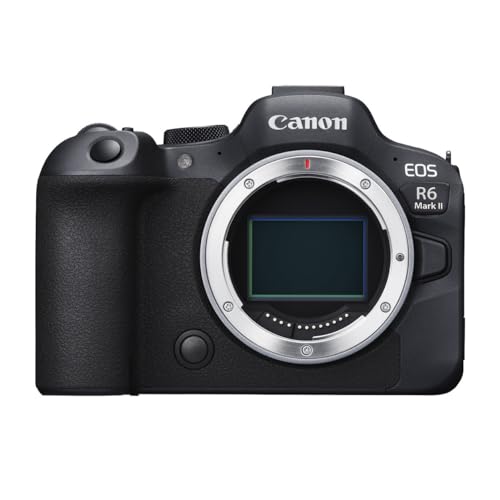
Canon EOS R6 Mark II — Shutter-choice champion
Freezing begins with a decision most cameras make for you: which shutter. The R6 Mark II leaves the decision where it belongs. Its mechanical shutter delivers the honest freeze — both curtains travelling physically, no readout skew to bend a bat, a wing or a wheel spoke — while its electronic mode offers silence and extraordinary burst density for subjects whose geometry forgives it. A stop-action photographer owns both tools in one body and chooses per subject, which is the entire discipline in miniature.
Watch the choice at work at a cyclo-cross race in January light. The riders’ bodies cross the frame at speeds a fast mechanical setting arrests cleanly, spokes honest, mud suspended in comma shapes around the tyres. Switch to the wings of the startled pigeons at the course’s edge and the calculation changes — electronic density to net the takeoff, accepting the slight risk in the fastest feathers for the sake of frames on both sides of the leap. The body supports both judgements without a bag change.
Pre-focus craft is well served. Back-button focus separates the act of focusing from the act of firing, so the photographer can lock sharpness on the hurdle, the feeder, the marked stone in the stream, then wait with a still finger for the subject to enter the trap. Focus magnification and peaking make manual pre-focus precise rather than hopeful, and the detection modes stand ready for the subjects that refuse to use the marked spot.
Flash behaviour completes the freezing kit. The body syncs reliably with external lights for the studio branch of the craft — drops, splashes, leaping dancers — and its files at the sensitivities evening work demands hold together when flash is forbidden and shutter speed must be bought with gain instead. Dual slots quietly protect a session whose best frame cannot be re-dropped or re-splashed.
Costs are the system’s usual ones. The fastest freezing at dusk wants bright RF glass, priced professionally; electronic bursts consume cards and batteries at a rate that must be staged. Neither dents the verdict for the photographer whose subject is motion itself: this is the most complete freezing instrument in the guide.
- Class: Full-frame mirrorless, RF mount
- Freezing signature: Mechanical honesty plus electronic density
- Focus craft: Back-button and magnification for pre-focus traps
- Flash note: Reliable sync for studio freezing
- Cards: Dual slots for unrepeatable sessions
Strengths
- Both shutter philosophies in one body
- Pre-focus tools that make traps precise
- Files that survive high-sensitivity freezing
Trade-offs
- Bright RF glass is the real freezing budget
- Dense bursts eat cards quickly
- Electronic mode still bends the fastest geometry
Best for: serious freezers working across daylight, dusk and studio
Not suited for: buyers wanting one automatic mode to decide everything
Build a shutter decision card for your bag: mechanical for bats, wings and wheels; electronic for runners, riders and silence. The R6 Mark II makes the choice available at a dial’s distance — the card makes it at the speed of the subject, which is the only speed that matters here.

Sony Alpha 7 IV — Flash-and-face freezer
Some stop-action subjects have faces, and faces raise the stakes: a frozen gymnast is a diagram, but a frozen gymnast with her expression sharp is a portrait of effort. The Alpha 7 IV’s eye autofocus is the freezing tool for that branch of the craft, holding the eye of a dancer, a martial artist or a leaping dog while the shutter does its violence to the rest of the motion. Where the subject’s story lives in its face, this is the body that keeps the story legible.
Its flash manners suit the studio branch equally. Sony’s system cooperates with a wide world of triggers and lights, exposure is predictable, and the body’s customisation lets a photographer store a freezing configuration — manual focus trap, flash exposure habits, drive mode — that loads as one recall when the session turns from ambient to strobe. In a darkened studio photographing drops and splashes, predictability is worth more than novelty.
The a7 IV’s burst rate is the moderate figure in this company, and this guide will not inflate it. Ten frames a second nets a leap less densely than the Canon’s torrent — yet for the flash branch of freezing, burst hardly matters: the flash fires once per exposure, and the photographer’s timing, not the frame rate, catches the crown of the splash. For ambient freezing, anticipation carries the same load it does in the sports guide, and many freezers prefer the smaller harvest.
Resolution quietly serves the craft. Freezing often happens at a distance the lens cannot close — the kingfisher’s plunge pool, the far end of the arena — and the a7 IV’s files allow the crop that brings the frozen instant to presentation size. Combined with the E mount’s bright primes, which buy shutter speed at apertures other systems envy, the body assembles into a freezing kit greater than its burst figure suggests.
Reservations are heat on long video-adjacent days — largely irrelevant to this stills discipline — and the menu evening required to build the custom recalls. For the photographer freezing faces and studio moments, the trade is gladly made.
- Class: Full-frame mirrorless, E mount
- Freezing signature: Eye focus for faces in violent motion
- Flash note: Predictable sync and trigger ecosystem
- Crop story: Resolution rescues distant frozen instants
- Lens story: Bright primes that buy shutter speed
Strengths
- Expressions stay sharp inside frozen motion
- Studio flash behaviour without surprises
- Bright lens shelf at every budget
Trade-offs
- Burst density trails the Canon
- Custom setup needs an evening
- Timing matters more than automation
Best for: dancers, martial arts, animals and studio splash work
Not suited for: maximum-density nets for unrepeatable instants
Store two recalls on this body — ambient freeze and studio flash — and practise switching between them blind. Freezing sessions change their light the way weather changes its mind, and the a7 IV rewards the photographer whose hands already know where the other discipline lives.

GoPro HERO13 Black — Participant-speed freezer
Change the standpoint and the freezing problem transforms. From inside the motion — chest-mounted on the mountain biker, fixed to the skateboard’s world, riding the kayak — the subject is the photographer’s own limbs and equipment, moving at speeds a distant telephoto never sees. The HERO13 freezes that world with the action camera’s twin gifts: an exposure fast enough to arrest a gloved hand mid-grip, and depth of field so deep that focus, the telephoto freezers’ eternal negotiation, simply leaves the conversation.
Its burst photo modes are the freezing mechanism here. A jump, a trick, a rapid’s crux move lasts a second or less; the burst harvests the sequence wholesale, and the photographer selects the arrested instant afterwards with the leisure the moment itself refused. This is stop-action as trawling rather than marksmanship, and for participant sports it is often the only honest method — nobody times a shutter at the lip of a drop.
Waterproof toughness extends the territory. Surf, whitewater, winter slush and mud are freezing subjects in themselves — the suspended sheet of water over a board, the snow exploding from a carved turn — and this camera photographs them from distances measured in centimetres, where its wide lens turns proximity into drama. A mirrorless body at those distances would be a rescue operation, not a photo shoot.
The concessions are the family ones. Low light coaxes noise from the small sensor and tempts its exposure toward smear, so dusk sessions freeze less hard than noon ones; distant subjects are beyond its grammar entirely; and its stills, however sharp, serve the burst-and-select method rather than the single composed exposure. Within the participant’s radius, none of that matters. Outside it, the other picks take over.
Battery and mounting discipline decide whether the freeze happens at all — spares warm against the body in winter, mounts tethered, the burst mode armed before the run rather than at its start. Riders who build that routine own a freezer that travels where the motion is fastest: at zero distance.
- Class: Waterproof action camera, fixed wide lens
- Freezing signature: Burst stills from inside the motion
- Focus story: Depth of field abolishes the focus race
- Territory: Surf, snow, mud and whitewater
- Method: Trawl the burst, select the instant
Strengths
- Freezes the participant’s own fastest moments
- Works at splash distance without protection drama
- Burst selection replaces impossible timing
Trade-offs
- Dusk light softens its freezing
- No reach toward distant subjects
- Small-sensor files for large prints
Best for: riders, surfers, skiers and paddlers freezing their own sport
Not suited for: sideline freezing of other people’s sport
Arm the burst before the run and review nothing until the bottom. The HERO13’s freezing philosophy is abundance followed by editing; riders who stop mid-slope to inspect frames lose both the light and the rhythm that made the photographs worth taking.

DJI Osmo Action 5 Pro — Dusk motion specialist
Freezing fails at dusk for a simple reason: shutter speed is bought with light, and the light has gone home. The Osmo Action 5 Pro’s larger sensor than most action rivals is therefore a freezing feature, not a luxury — it holds shutter speeds in the arresting zone deeper into the evening, keeping a trail runner’s stride, a skater’s evening session and a dog’s last beach sprint sharp when smaller-sensored cameras have surrendered to smear.
Its stabilisation serves the freeze in an unexpected way. A stabilised camera can be held still enough that the only motion in the frame is the subject’s — and a subject frozen against a calm background reads sharper than the same subject inside a shaking frame. For the photographer panning deliberately at the edge of freezing, that steadiness is the difference between intentional background motion and accidental mush.
Like its GoPro rival, it freezes by proximity and burst rather than by reach: mounted on the bike, the board, the dog’s harness for the squirrel’s-eye view of the chase. Its files at dusk carry cleaner colour than the action class usually manages, which matters when the frozen instant is also the day’s best photograph rather than merely its sharpest.
Battery stamina extends the dusk session usefully — evening sport rarely respects a single battery’s schedule — and the body’s toughness matches the family standard: rain, mud and the occasional meeting with the ground are working conditions. Mounts and spares follow the same discipline as every fixed camera in this guide.
Its boundaries mirror its rival’s. It will not freeze a distant striker, its lens is wide and only wide, and studio flash craft belongs to the mirrorless picks. Judged where the light is thin and the subject is near, it is the action camera that keeps freezing after the others have started painting with motion.
- Class: Waterproof action camera, larger sensor
- Freezing signature: Honest shutter speeds at dusk
- Steadiness note: Stabilisation isolates subject motion
- Session story: Battery stamina for evening sport
- Method: Proximity and burst, not reach
Strengths
- Evening freezing where rivals smear
- Cleaner dusk colour than its class
- Calm frames that make sharpness legible
Trade-offs
- Fixed wide lens only
- No studio flash role
- Distant subjects out of grammar
Best for: evening riders, runners and beach-dusk action
Not suited for: telephoto freezing or flash studio work
Learn its dusk limit on your own evening run before trusting it with anyone else’s. Every action camera has a minute when the light falls below its freezing honesty; knowing yours to the minute turns that boundary from a disappointment into a scheduling fact.

Insta360 Ace Pro 2 — Motion dissection tool
Some stop-action work is not about the photograph but about the truth of the movement: the golf coach dissecting a swing’s wrist angle, the physiotherapist studying a landing, the skateboarder who needs to see exactly where the board left the foot. The Ace Pro 2 serves that analytical branch with high-frame-rate recording that stretches a half-second gesture into a study session, on a tough little body that mounts where the action is.
Recording at very high frame rates is freezing by other means — instead of one arrested instant, the whole motion arrives slowed until its mechanics confess. The camera’s low-light behaviour, a stated strength of its design, keeps evening training sessions analysable, and its flip screen lets a solo athlete set the frame, perform the movement and review it on the spot, which is the feedback loop coaching actually runs on.
As a stills freezer it follows the action-camera pattern: proximity, bursts, deep focus, toughness. Waterproofing puts it at the pool’s edge for stroke analysis and on the trail for gait study in weather that would retire a phone. Its files integrate with the review habits of modern coaching — slowed, zoomed, annotated — more naturally than a mirrorless body’s stills, however beautiful those stills are.
The honest limits are the family’s: no telephoto grammar, no flash studio role, and low light that eventually negotiates. Analysis users should also note that the highest frame rates trade resolution, so the dissection is of shape and timing rather than of fine texture — which, for a wrist angle or a landing knee, is precisely the information being purchased.
For the athlete-photographer hybrid — the rider who films the line and studies the body position in the same device — it may be the most useful pick in this guide. Freezing, in their hands, is not an art effect. It is homework, and this is the camera that makes homework portable.
- Class: Waterproof action camera, flip screen
- Freezing signature: High-frame recording for dissection
- Coaching note: Set, perform and review solo
- Light story: Evening sessions stay analysable
- Trade: Top frame rates exchange resolution for time
Strengths
- Movement slowed until mechanics confess
- Solo coaching loop in one device
- Tough placement at pools and trails
Trade-offs
- Analysis over fine texture
- No reach, no flash role
- Stills follow the burst pattern
Best for: coaches, athletes and technique students
Not suited for: gallery stills of distant action
Fix the camera’s position for a whole training block and mark it with tape. Comparable angles turn slowed footage into measurements; a wandering viewpoint turns it into entertainment. The Ace Pro 2 rewards the analyst who treats placement as part of the experiment.

Nikon Z50 II — Freezing tutor
Every freezer in this guide began as a beginner whose first hundred frames were honest smears. The Z50 II is the camera to learn the craft on, because its subject detection forgives the beginner’s worst freezing sin — focus arriving after the moment — while its honest feedback teaches the rest. Set a fast shutter, stand at the park, and let its detection hold the sprinting dog or the skatepark’s rotation while your own timing catches up with your ambitions.
The crop sensor quietly assists the tuition. Its narrower view magnifies the subject’s crossing speed — the sternest test, as this guide’s opening explained — yet also fills the frame with the action at modest lens lengths, so the learner practises freezing with the kit zoom rather than with a telephoto priced like a car. Lessons learned at this magnification transfer whole to any larger system the photographer later adopts.
Its burst is quick enough to demonstrate the net principle: fire through the jump and watch the peak choose itself in review. That experience — seeing the frames before and after the instant you intended — teaches anticipation faster than any article, including this one. The camera’s colour presets then deliver the first genuinely frozen photograph to the photographer’s wall within the same afternoon, which is the encouragement the whole craft runs on.
Limits arrive with ambition, as they should. Evening light will push its smaller sensor toward noise at freezing speeds sooner than the full-frame picks; the buffer suits school and park sport rather than professional volume; and flash craft at the studio level will eventually ask for a bigger system’s ecosystem. A tutor is not diminished by the student’s graduation.
For families, the calculus is simpler still: this is the camera that freezes the childhood that will not repeat — the bicycle’s first solo metres, the paddling pool’s suspended splash — with detection doing the focusing and a fast shutter doing the arresting. Those photographs are the genre’s most important ones, whatever the spec sheets say.
- Class: APS-C mirrorless, Z mount
- Freezing signature: Detection that forgives beginner timing
- Tuition note: Crop magnification teaches the hard lesson early
- Burst story: Nets the jump for review-based learning
- Growth path: Brighter Z glass as ambition grows
Strengths
- Focus help while timing skills form
- Frame-filling practice without telephoto prices
- Same-day frozen results to build on
Trade-offs
- Dusk freezing noisier than full-frame
- Buffer sized for learning, not volume
- Studio flash ecosystem is a later step
Best for: learners, families and park-sport beginners
Not suited for: professional freezing volume in dark venues
Spend the first month freezing one subject repeatedly — the same dog, the same skate ramp, the same garden sprinkler. Repetition isolates the variables until shutter, position and timing separate in your mind, and the Z50 II’s forgiving focus lets you study one variable at a time instead of failing at all three.
How do pre-focus and zone focus remove autofocus from the race?
Autofocus, however brilliant, is a negotiation conducted during the moment. Pre-focus ends the negotiation in advance. The photographer chooses the exact place the peak will occur — the hurdle’s bar, the bird feeder’s perch, the diving block’s edge, the point where the sprinkler’s arc crosses the sun — focuses there manually or by a half-press locked and left, and then simply waits. When the subject arrives, the shutter fires into sharpness that was arranged minutes ago. Trap photography of this kind produces the sharpest action frames in existence, because focus was never asked to hurry.
Zone focus widens the trap into a field. By stopping the aperture down and focusing at a chosen distance, the photographer builds a slab of acceptable sharpness — from this fence post to that one — inside which anything is frozen and focused. Street sports, skateparks and playgrounds reward the method: the action moves through the zone unpredictably, but the zone is patient, and the camera’s only job is exposure and timing. The smaller-sensor and action picks in this guide are natural zone tools, their depth of field building wide slabs for free.
The method’s discipline is measurement. Know the zone’s near and far edges by testing them on still objects at your chosen settings; mark the ground where the trap sits; and resist refocusing when excitement arrives. Freezers who trust their zones come home with sequences that autofocus artists envy — every frame in the slab sharp, the photographer’s whole attention spent on the one variable left: the instant.
What light does freezing demand, and how do you find it?
Freezing is the most light-hungry discipline in photography, because the shutter’s brevity must be paid for somewhere: a wider aperture, a higher sensitivity, or added light of your own. The daylight freezer works near the sun’s generosity and still watches the budget; the dusk freezer spends sensitivity until the files complain; the studio freezer prints money with flash. Planning a freezing session therefore starts with a lighting decision, not a camera setting — where will the stops come from?
Position is the free source. Backlight that rims a frozen splash also brightens the exposure’s hardest-working edges; a subject crossing a sunlit gap between shadows offers a stage where fast speeds are affordable; the last hour’s low sun freezes warmly at speeds noon would laugh at. Freezers scout light the way anglers scout water — for the bright seam where the subject must pass and the shutter can afford its violence.
Accept the discipline’s tax honestly. Some motion, in some light, cannot be frozen with the equipment that exists, and the mature response is to change the picture — pan with the subject, embrace the blur as the story, or return when the light is richer. The cameras in this guide push the boundary outward considerably; they do not repeal it, and knowing where it stands on a given evening is itself a professional skill.
How do you freeze water, wings and wheels — the three hardest subjects?
Water first, because it teaches the flash lesson best. A drop’s crown exists for a thousandth of a second and no shutter chases it honestly; the studio method — dark room, open shutter, low-power flash — arrests it by making the light do the timing. Outdoors, water freezes by shutter where it must: the fountain’s sheet, the wave’s lip, the dog’s shake, each wanting the fastest speed the daylight sells, shot from the side where the crossing motion is greatest and the sparkle honest.
Wings divide into two problems. The wing’s body — the bird — freezes at speeds that flatter the photographer’s confidence, while the wingtips travel at multiples of the body’s speed and demand either the shutter’s ceiling or the humility to accept their blur as anatomy. Bird photographers learn to shoot the glide and the hover, when wings slow their labour, and to let the takeoff’s violence read as motion where it must. The frozen wing that results is partly technique and partly diplomacy with physics.
Wheels expose the electronic shutter’s character most rudely. A rolling readout meets a rolling wheel and produces the famous leaning ellipse, which is why cyclists and motorsport remain mechanical-shutter country at the sharp end. Freeze a wheel honestly and you have also frozen its spokes into a star; pan with it and the spokes blur while the hub rides sharp — two true photographs of the same machine, and the freezer’s maturity lies in choosing which truth the assignment asked for.
When is flash at live action unfair, unsafe or simply banned?
The physics of flash freezing is seductive enough to need its ethics stated plainly. Flash startles: horses, gymnasts at the balance point, players at the moment of a strike and animals of every kind can react to a burst of light in ways that range from a ruined performance to a dangerous one. Venues and sports therefore regulate flash tightly, and the photographer’s first freezing skill at any live event is asking — the steward, the coach, the organiser — before the first frame rather than apologising after it.
Where flash is banned, its absence is not the end of freezing but a change of method: faster glass, higher sensitivity, the lit seams of the venue, traps set where the action must pass through the best light the building owns. The dusk and indoor sections of this guide exist for those evenings. A freezer who can work only with a strobe owns one tool; a freezer who reads light owns the craft.
Studio flash carries its own courtesy — warning collaborators before a session of bright bursts, minding eyes during long splash sessions, and remembering that models and dancers are freezing their bodies at the photographer’s request. The hardest freezes in this guide’s studio branch are collaborations, and they read that way in the photographs.
What practice drills build freezing skill fastest?
The garden sprinkler is the cheapest academy in photography. Its arc is predictable, its drops are honest, and an afternoon spent freezing it at every shutter speed your light allows will teach your hands the relationship between speed, distance and magnification more permanently than a shelf of manuals. Photograph it crossing, approaching and backlit, and keep the failures — they are the tuition receipts.
The pendulum drill teaches traps. Hang a swinging weight, mark its lowest point, pre-focus there, and fire as it passes until the arrested frames are routine; then move the trap to the swing’s edge, where the weight slows and turns, and learn the different character of freezing at a motion’s pause. Athletes, swings, dives and dances all contain such pauses, and the freezer who hunts them needs less shutter than the one who fights motion at its fastest.
Finally, the one-subject month, borrowed from this guide’s Nikon section and worth repeating as a method: the same dog, ramp, fountain or training session, frozen weekly until the variables separate. Skill in this craft is not information — the information fits in this article — but calibration, and calibration only arrives by repetition against a subject whose behaviour you already know.
How does high-speed sync differ from the studio flash method?
Confusion between the two flash techniques thaws more photographs than any other misunderstanding in this craft. High-speed sync pulses the flash rapidly so it can partner with a very fast shutter in daylight — useful for freezing a rider against a bright sky with fill light — but the exposure each part of the sensor receives is still governed by the shutter, and the flash’s freezing advantage is largely spent. The studio method does the opposite: a slow or open shutter in darkness, one brief flash burst, and the light itself becomes the shutter.
Choosing between them is choosing the battlefield. Outdoors, where ambient light cannot be excluded, high-speed sync and a fast shutter share the work and the freeze is as hard as the shutter allows. Indoors, where the room can be darkened and the subject brought to the light, the studio method freezes an order of magnitude harder and costs nothing but patience and a cooperative space. The mirrorless picks in this guide support both arrangements; the photographer’s job is knowing which room they are standing in.
Power discipline separates the methods in practice. Studio freezing runs the flash low and close, chasing the shortest burst; sync work outdoors runs it high and still loses to the sun. A freezer who carries one small light and understands both doctrines owns more of the day than a freezer with a bag of lights and one doctrine — a recurring moral of this guide, in which knowledge keeps outperforming inventory.
How should a frozen sequence be edited and presented?
The burst’s harvest needs a ruthless editor. From a net of forty frames around a leap, the frozen canon is usually one: the frame where the motion’s shape is most legible — limbs extended into geometry, the splash at its architectural peak, the expression that explains the effort. Keep also, occasionally, the frame before the peak, whose coiled anticipation flatters the chosen one by comparison when the two are shown together. Delete the rest without ceremony; a freezer’s archive should read as decisiveness, not as attendance.
Processing should protect the freeze’s honesty. Sharpening and clarity pushed hard will halo the suspended droplets and fray the wing’s edge into evidence of effort; the frozen instant is already the effect, and it needs light handling — exposure, colour, a crop that honours the geometry — rather than cosmetic surgery. Noise, where the light taxed the sensor, can be softened, but a whisper of grain in a genuinely arrested moment reads as authenticity to any viewer who has tried the same shot.
Presentation completes the craft. A frozen sequence shown as a triptych — approach, arrest, aftermath — teaches the eye what the single frame cannot, and coaches and scientists use the dissection picks in this guide for exactly that grammar. Shown alone, the arrested frame should be printed or published large enough for its detail to justify its existence: a thousandth of a second, examined at leisure, is the whole point of the discipline.
How do the six freezing tools compare at a glance?
| Pick | Freezing method | Best subjects | Watch out for |
|---|---|---|---|
| Canon EOS R6 Mark II | Shutter choice, traps, flash | Sport, wildlife, studio moments | Bright glass budget |
| Sony Alpha 7 IV | Eye focus plus flash duration | Dancers, faces, splashes | Burst density |
| GoPro HERO13 Black | Burst trawl at zero distance | Riders, surfers, own-body motion | Dusk smear |
| DJI Osmo Action 5 Pro | Fast exposure in thin light | Evening trails and beaches | Fixed wide view |
| Insta360 Ace Pro 2 | High-frame dissection | Technique and coaching subjects | Resolution at top rates |
| Nikon Z50 II | Detection-assisted learning | Dogs, skateparks, family motion | Dark-venue noise |
Which mistakes thaw more frozen photographs than any equipment limit?
Trusting autofocus at the moment of peak is the classic: the system hunts for a pupil or a jersey number while the wing completes its beat, and the frame that returns is a portrait of the background. The trap and zone methods in this guide exist because that failure is structural, not personal. Second comes the shutter chosen by habit — the speed that worked for the runner applied to the hummingbird — because freezing speeds are per-subject arithmetic, not a personality trait.
Electronic shutter innocence follows: the beautifully silent burst in which every wheel is an ellipse and every bat a banana. The distortion is not a defect to apologise for but a property to assign correctly — mechanical for the whipping geometries, electronic for the flowing ones. And the flash branch has its own classic error, full power chosen for brightness, which lengthens the burst and softens the very freeze the flash was bought to harden.
Finally, the unmarked trap. A pre-focused position that exists only in the photographer’s optimism — never tested on a still object, never measured to the ground — produces a session of almost-sharp heartbreak. Freezing is a craft of millimetres and microseconds wearing the clothes of luck; the mistakes above are all, at root, refusals to do the quiet preparation that makes the luck unnecessary.
Final Recommendation
One closing thought belongs to every freezer: the stopped instant is a beginning, not a trophy. The photograph that arrests a wing or a wave earns its keep when a viewer lingers over it and feels time’s texture — and that lingering is arranged by composition, light and honesty long before it is arranged by shutter speed. Build your freezing around the method your subject demands. For the complete craft — shutter choice, traps, flash and field work in one body — the Canon EOS R6 Mark II leads this guide, with the Sony Alpha 7 IV the pick when the frozen subject has a face that must stay perfect. Participants freeze themselves best with the GoPro HERO13 Black, evening movers with the DJI Osmo Action 5 Pro, students of motion with the Insta360 Ace Pro 2, and beginners with the forgiving Nikon Z50 II. Whichever body you choose, spend the first sessions on the unglamorous foundations: measure your trap, learn your subject’s true crossing speed, keep a notebook of the speeds that worked for each subject you chase, and let the shutter be the last thing you blame when a frame comes home soft.
Frequently Asked Questions
What shutter speed freezes a hummingbird or a splashing drop?
For wings in daylight, only the fastest settings your light can afford will hold the wing’s hardest-working tips, and many photographers accept a sharp body with honestly blurred wingtips as the truthful picture. For drops and splashes, stop negotiating with the shutter entirely and use flash at low power in a darkened space — the burst’s brevity freezes what no shutter speed in this guide can reach, which is why the studio method has its own section above.
Is electronic or mechanical shutter better for stop action?
Mechanical, whenever the subject whips, spins or rolls — bats, wings, wheels, ropes — because its exposure happens everywhere at once and geometry stays honest. Electronic wins on silence and burst density for flowing subjects whose shapes forgive its scanning readout. The professional habit is not loyalty to either but a per-subject decision, ideally written on the card in your bag before the session starts.
How does zone focusing work for action?
Choose an aperture that builds a deep slab of sharpness, focus at the distance where the action will be, and confirm the slab’s near and far limits on still objects at those exact settings. Then photograph anything that enters the slab with only exposure and timing to manage. It is the oldest action technique in photography — older than autofocus by generations — and in skateparks, playgrounds and street sport it still beats chasing focus from frame to frame.
Why are my frozen photos sharp but noisy?
Because freezing spends light and sensitivity pays the bill. A fast shutter in modest light forces the camera to amplify, and amplification shows. The cures are positional and optical rather than electronic: shoot where the light is richest, open the aperture with brighter glass, add flash where the subject allows, or accept a degree of honest grain as the texture of a real instant. Noise reduction in editing handles the rest more gracefully than it did even a few years ago.
Can I freeze action at night or indoors without flash?
Within limits the dusk picks in this guide exist to stretch. Bright lenses, the highest sensitivity your standards tolerate, and subjects crossing lit seams — a stadium’s bright patch, a streetlamp’s pool — will freeze more than pessimism expects. Beyond that boundary, the honest options are flash where permitted, a pan that trades freezing for velocity, or a different photograph. Knowing which evening you are in is the skill; the cameras merely extend the evenings available.
Do I need a burst mode if I use pre-focus traps?
The trap guarantees sharpness, not timing, so a modest burst through the subject’s passage still earns its place — the peak of a leap occupies a few hundredths of a second inside the trap’s second of occupancy. Fire a short, deliberate sequence as the subject crosses the marked ground rather than a hopeful barrage, and the harvest stays small enough to edit with pleasure. Trap plus short burst is the combination most working freezers actually use.
How do I freeze a subject moving straight toward the camera?
Approach motion is freezing’s kindest geometry, because the subject grows rather than crosses, and growth is slower than crossing at the same speed. Exploit it by positioning on the subject’s line — the runner’s lane, the dog’s recall path, the cyclist’s descent — with focus trapped at the distance where the framing will be fullest. Autofocus systems with subject detection, like the mirrorless picks here, also perform at their best on approach, tracking the enlarging face or number plate. The risk is collision rather than blur, so choose positions with an exit: beside the lane, never inside it, and let the subject’s speed be the only dangerous thing in the arrangement.
Related Guides
Freezers building the wider craft should read the system choices in the best digital cameras for sports, the moment-hunting in the best digital cameras for action shots, and the session discipline of the best digital cameras for recording video for the subjects that deserve to move after all.


